
Starmer met Taylor Swift at concert after getting free tickets
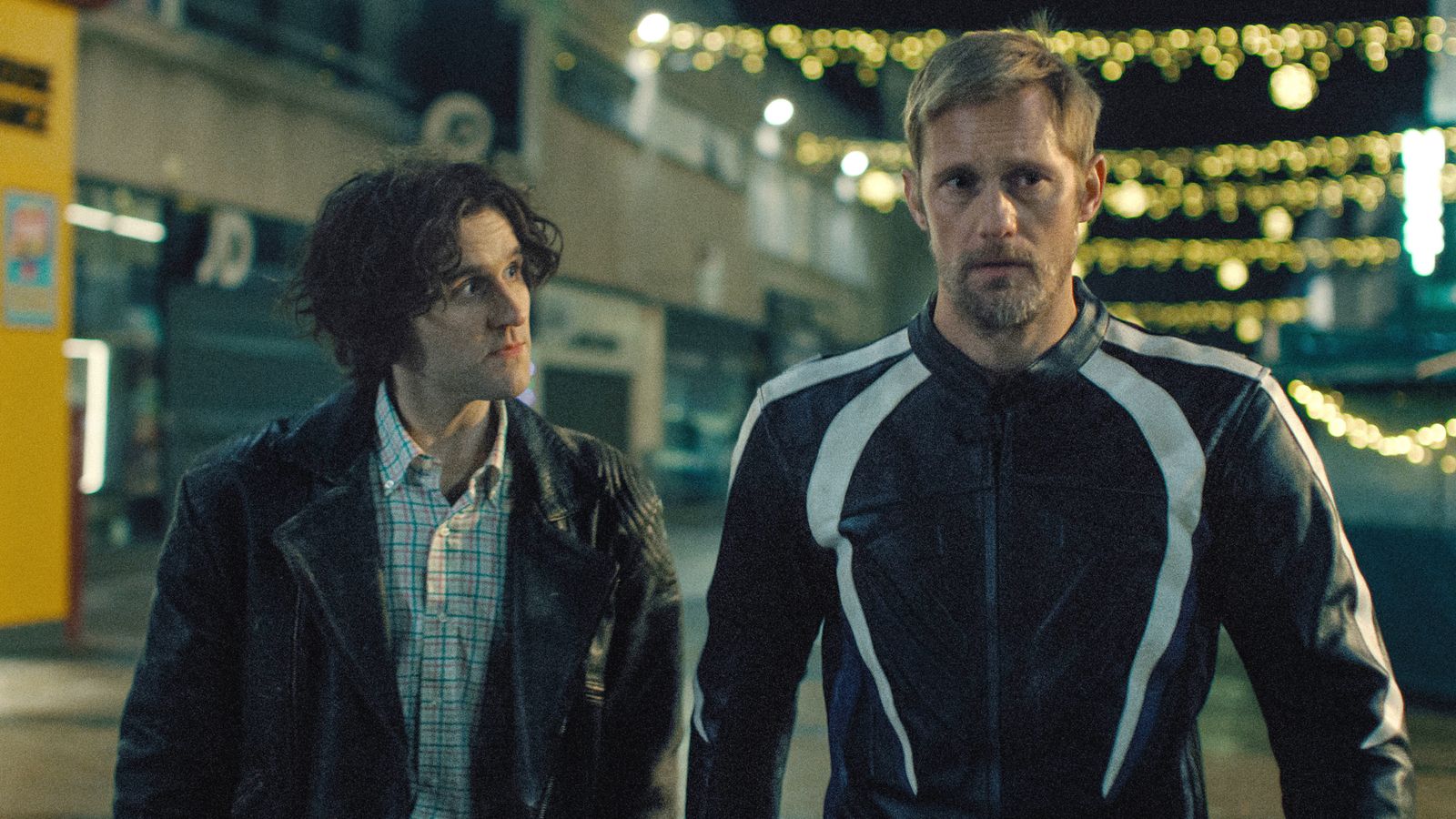
Biker romance Pillion has picked up the top prize at the British Independent Film Awards.
The film’s first-time feature writer and director Harry Lighton was also named best debut screenwriter at the ceremony, held at the Roundhouse in Camden, London, on Sunday evening.
Starring Harry Melling as sweet and timid Colin, and Alexander Skarsgard as rugged biker Ray, the film picked up four prizes in total – including craft wins for best costume design and make-up and hair.
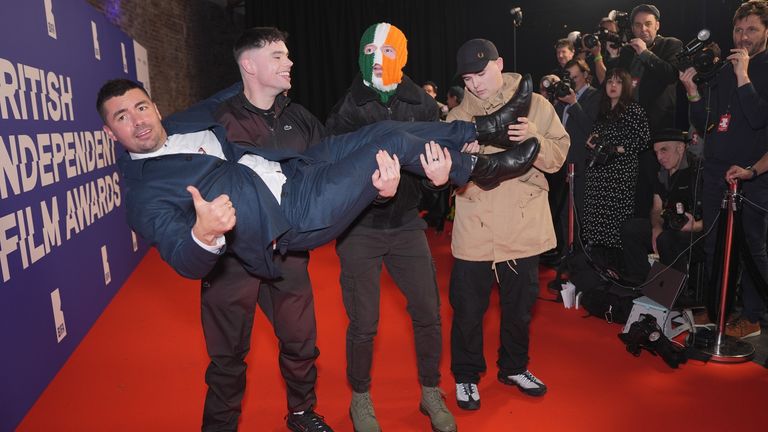
Members of Kneecap holding director Rich Peppiatt. Pic: PA
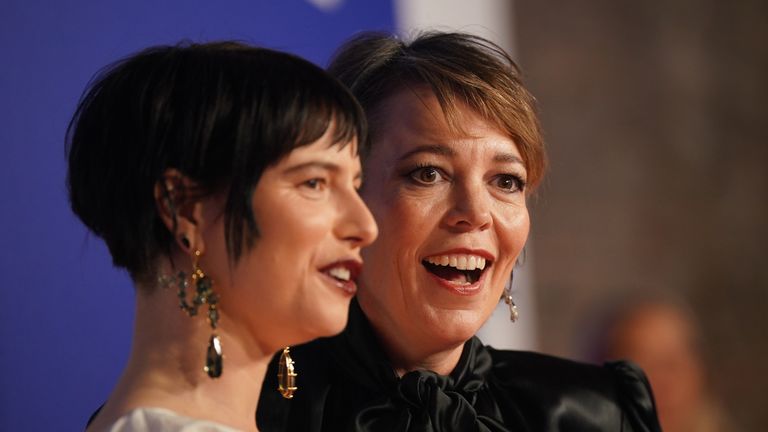
Jessie Buckley and Olivia Colman. Pic: PA
Tom Basden and Tim Key took home the BIFA awards for best joint lead performance and best screenplay, for their debut feature The Ballad Of Wallis Island. Also starring Carey Mulligan, the film tells the story of a faded folk musician and his former partner who reluctantly reunite for an eccentric fan.
Elsewhere in the acting categories, Robert Aramayo was honoured with the best lead performance award for his portrayal of Tourette’s campaigner John Davison in I Swear, with the supporting performance award going to Jay Lycurgo for his role in pressure-cooker school drama Steve, also starring Oscar-winner Cillian Murphy.
Newcomer Posy Sterling’s portrayal of a mother fighting for custody of her children in Lollipop earned her the breakthrough performance award, while the best ensemble performance prize went to the cast of Warfare – including Will Poulter, Kit Connor, Joseph Quinn and Charles Melton.
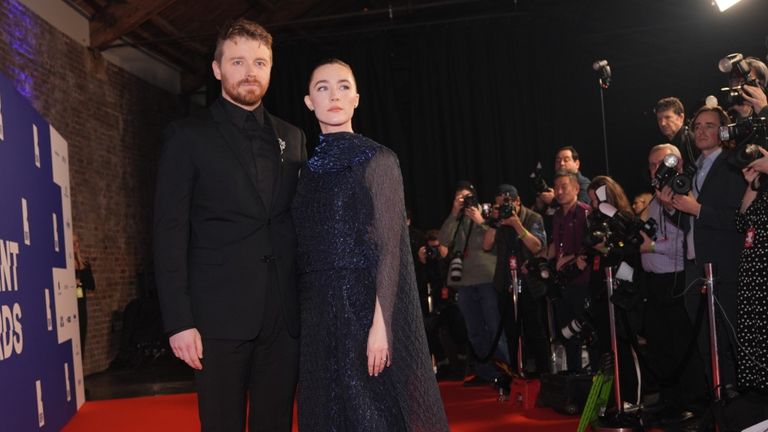
Jack Lowden and Saoirse Ronan. Pic: PA
This year’s ceremony also celebrated cinema itself, with the inaugural cinema of the year award going to The Magic Lantern Cinema in the Welsh coastal town of Tywyn.
The BIFA for best international independent film was awarded to Sentimental Value, Joachim Trier’s intimate exploration of family, memories and the reconciliatory power of art.
Behind the camera, Akinola Davies Jr was named best director for his debut feature My Father’s Shadow, a story of two brothers who first come to understand their father at a pivotal moment in both his life and Nigerian history, while The Douglas Hickox Award for best debut director went to Cal McMau for prison drama Wasteman.
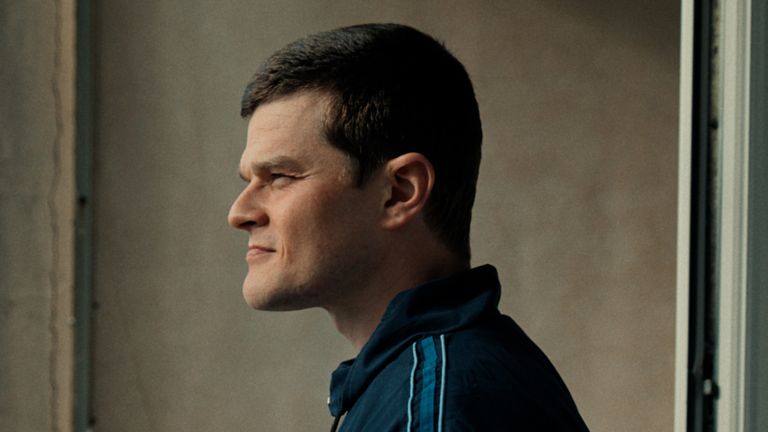
Robert Aramayo in I Swear. Pic: StudioCanal
And in the documentary categories, Myrid Carten’s exploration of mental health and addiction within her family, A Want In Her, picked up three BIFAs – best feature documentary, The Raindance Maverick Award, and best debut director for a feature documentary.
Elsewhere, Emily Watson, star of films including Gosford Park, Punch-Drunk Love and War Horse, and TV series including Chernobyl and Dune: Prophecy, was awarded the outstanding contribution to British film prize.
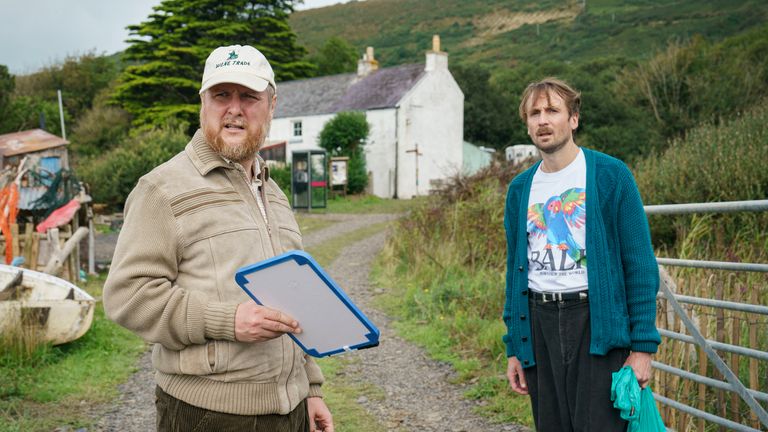
Tim Key (left) as Charles Heath and Tom Basden as Herb McGwyer in The Ballad Of Wallis Island. Pic: Focus Features, LLC/ Alistair Heap
Production company Warp Films – behind films such as Dead Man’s Shoes and This Is England, as well as the recent critically acclaimed series Adolescence – was honoured with the BIFA special jury prize for its “unflinching and uncompromising” commitment to telling “raw and relevant stories”.
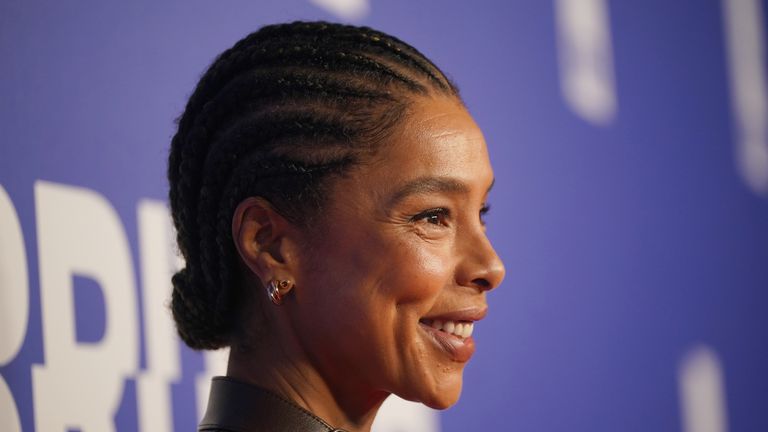
Sophie Okonedo. Pic: PA
Read more from Sky News entertainment:
King pays tribute following death of Tom Stoppard
AI actress creator insists she’s not out to steal jobs
Founded in 1998, the BIFAs aim to celebrate, promote and support talent and creativity in British independent film.
Previous winners of the best independent film award include Kneecap, the semi-autobiographical story of Irish-language rappers Kneecap, and Oscar winner The Favourite.
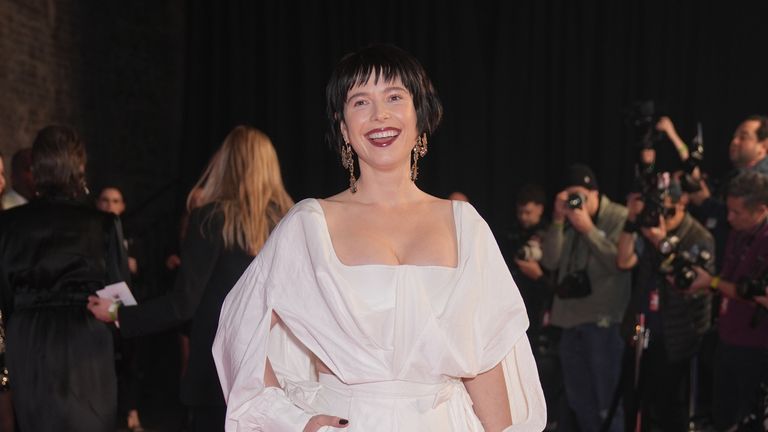
Jessie Buckley. Pic: PA
This year’s ceremony was hosted by comedians Lou Sanders and Harriet Kemsley, with Carey Mulligan, Stephen Merchant, Ruth Wilson, Billy Crudup and Celia Imrie among the star presenters.
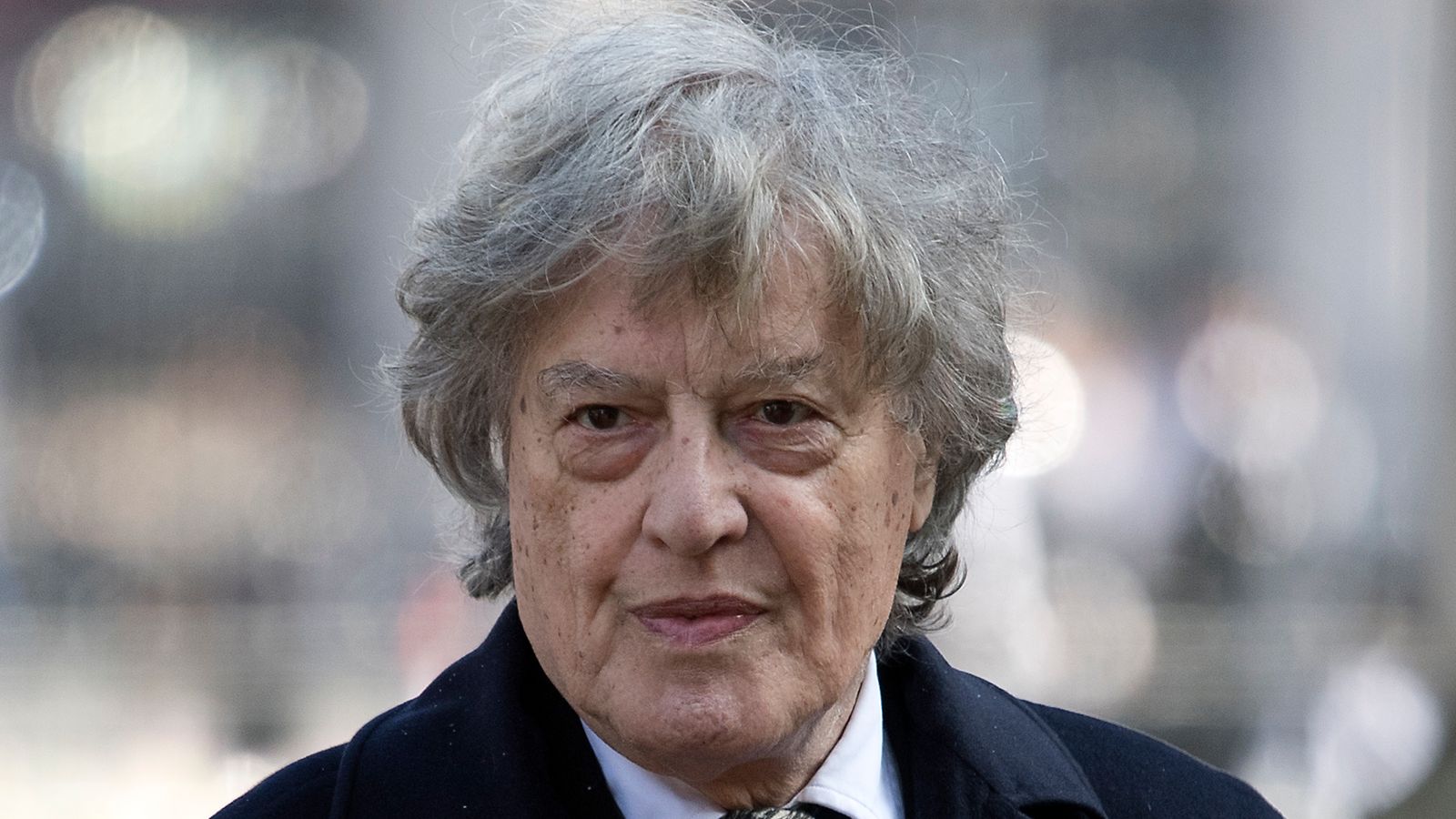
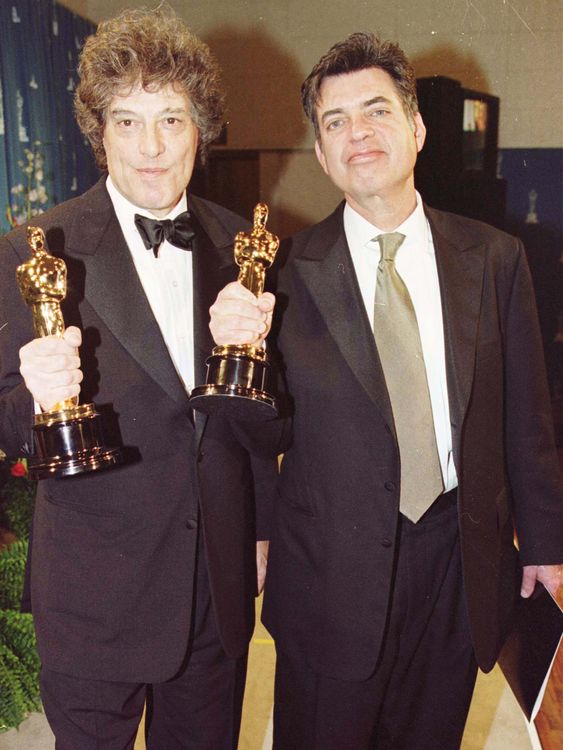
Playwright Sir Tom Stoppard, who won an Oscar and a Golden Globe for Shakespeare In Love, has died at the age of 88.
A statement from United Agents said: “We are deeply saddened to announce that our beloved client and friend, Tom Stoppard, has died peacefully at home in Dorset, surrounded by his family.
“He will be remembered for his works, for their brilliance and humanity, and for his wit, his irreverence, his generosity of spirit and his profound love of the English language.
“It was an honour to work with Tom and to know him.”
King Charles said in a tribute: “My wife and I are deeply saddened to learn of the death of one of our greatest writers, Sir Tom Stoppard. A dear friend who wore his genius lightly, he could, and did, turn his pen to any subject, challenging, moving and inspiring his audiences, borne from his own personal history.
“We send our most heartfelt sympathy to his beloved family. Let us all take comfort in his immortal line: ‘Look on every exit as being an entrance somewhere else’.”
Sir Tom’s entertainment career spanned more than six decades, in which he won a host of Tony and Olivier awards, as well as the Golden Globe and Academy Award with Marc Norman for their 1998 screenplay Shakespeare In Love – starring fellow Oscar-winner Gwyneth Paltrow.
Sir Tom Stoppard in 1999. Pic: PA
His work, known to blend intellect, emotion and humour, often explored philosophical and political themes, challenging societal norms to remind audiences of the power of thought.
His other award-winning plays included Rosencrantz And Guildenstern Are Dead, The Real Thing and Travesties.
The playwright also wrote prolifically for TV, radio and film, including adapting Leo Tolstoy’s novel Anna Karenina for the 2012 film starring Keira Knightley and Jude Law, and TV series Parade’s End with Benedict Cumberbatch and Rebecca Hall – adapted from novels by Ford Madox Ford.
He received countless accolades and honours during his career, including being knighted by the late Queen for his services to literature in 1997.
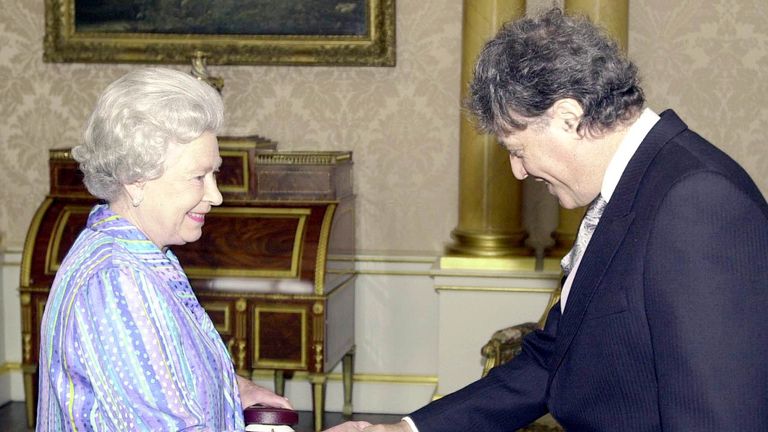
Queen Elizabeth II shakes Sir Tom’s hand before presenting him with the insignia of a Member of the Order of Merit in 2000. File pic: PA
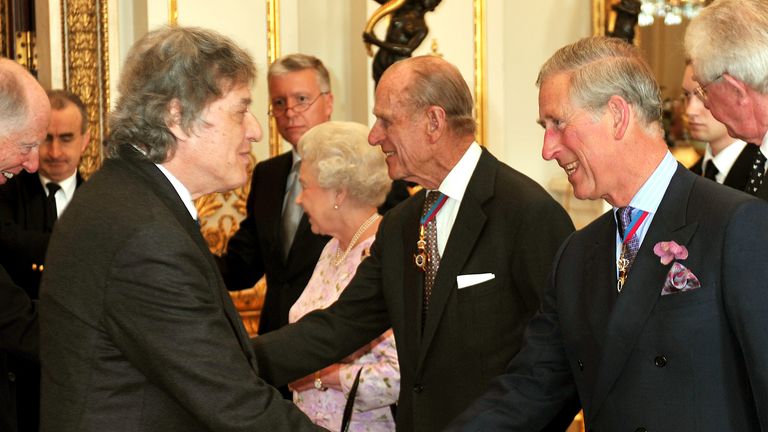
Sir Tom meets then Prince Charles in 2009. File pic: PA
He won the David Cohen Prize For Literature in 2017, following in the footsteps of laureates Harold Pinter, Hilary Mantel and Seamus Heaney.
Sir Tom released his semi-autobiographical work titled Leopoldstadt in 2020 – set in the Jewish quarter of early 20th century Vienna – which later won him an Olivier award for best new play and also scooped four Tony awards.
The West End play, which featured his son Ed Stoppard, also saw him honoured by PEN America, the literary and human rights organisation, which handed him the Mike Nichols Writing for Performance Award.
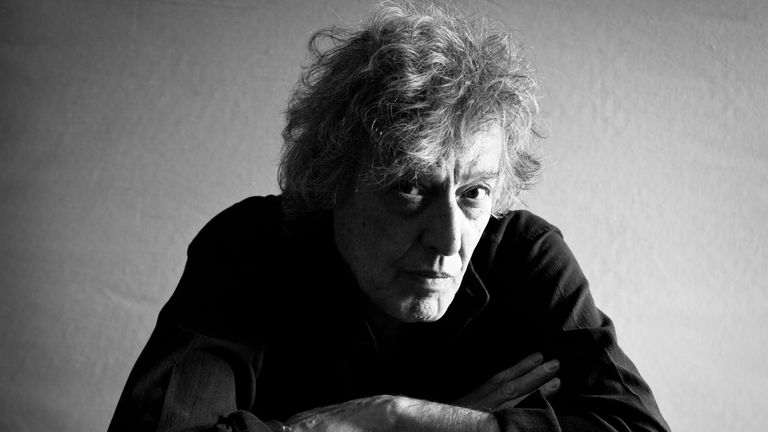
Pic: Matt Humphrey/PA
From refugee to playwrighting sensation
Sir Tom was born Tomas Straussler in Czechoslovakia, but fled and changed his name amid the Nazi occupation, finding refuge in Britain in 1946.
He became a journalist in Bristol in 1954 before becoming a theatre critic and writing plays for radio and TV, including The Stand-Ins, later revised as The Real Inspector Hound, and Albert’s Bridge first broadcast by BBC Radio.
His career took off with hit play Rosencrantz And Guildenstern Are Dead, which premiered at the Edinburgh Fringe Festival in 1966, before it was produced for the National Theatre and on Broadway, winning four Tony awards in 1968 including best play.
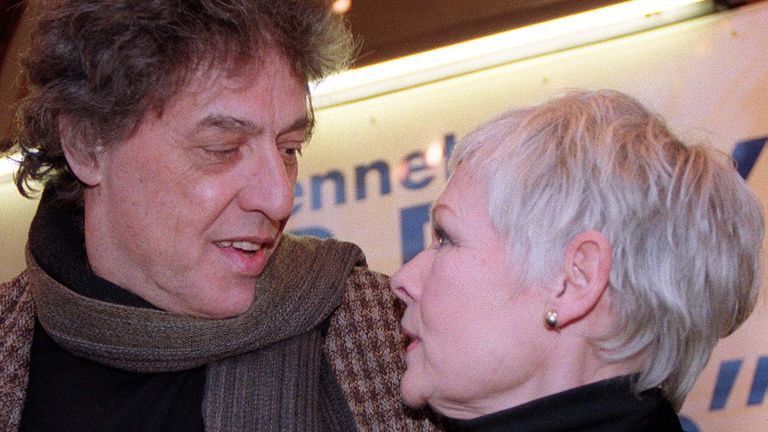
Sir Tom Stoppard and Dame Judi Dench at a photocall in London in 1999. File pic: PA
Sir Tom began advocating on behalf of Soviet and Eastern Bloc dissidents after writing Every Good Boy Deserves Favour, a play inspired by his friendship with Viktor Fainberg, who had been imprisoned in Czechoslovakia by the Soviets.
Much later, in 2002, his trilogy of plays set in 19th century Russia, The Coast Of Utopia, were staged at the National Theatre.
His most recent plays include Heroes, Rock ‘n’ Roll and The Hard Problem.
Entertainment
PM’s rap battle with Sky’s Beth Rigby goes viral – and one of the AI satirists behind it explains why


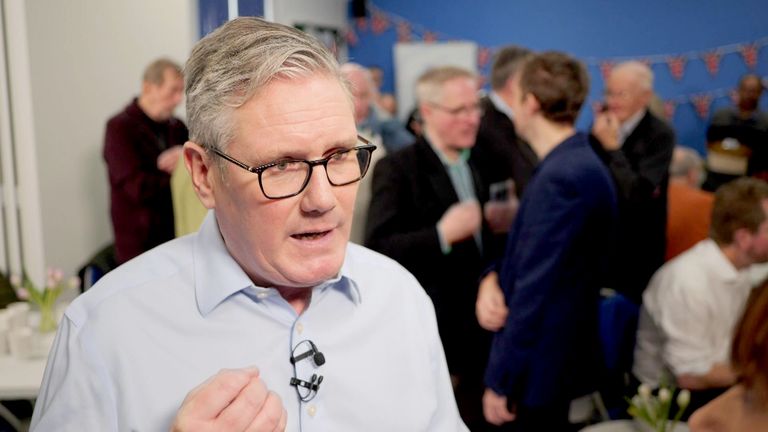
Satire has long been an occupational hazard for politicians – and while it has long been cartoons or shows like Spitting Image, content created by artificial intelligence (AI) is increasingly becoming the norm.
A new page called the Crewkerne Gazette has been going viral in recent days for their videos using the new technology to satirise Rachel Reeves and other politicians around the budget.
On Sky’s Politics Hub, our presenter Darren McCaffrey spoke to one of the people behind the viral sensations, who is trying to remain anonymous.
He said: “A lot of people are drawing comparisons between us and Spitting Image, actually, and Spitting Image was great back in the day, but I kind of feel like recently they’ve not really covered a lot of what’s happening.
“So we are the new and improved Spitting Image, the much better Have I Got News For You?”
He added that those kinds of satire shows don’t seem to be engaging with younger people – but claimed his own output is “incredibly good at doing” just that.
Examples of videos from the Crewkerne Gazette includes a rapping Kemi Badenoch and Rachel Reeves advertising leaky storage containers.
They even satirised our political editor Beth Rigby’s interview with the prime minister on Thursday, when he defended measures in the budget and insisted they did not break their manifesto pledge by raising taxes.
“Crewkerne Man” says providing satire for younger people is important as Labour is lowering the voting age.
Asked why he is trying to be anonymous, the man said the project is not about one person – or even the whole group – but rather their output.
He also claimed the UK is “increasingly seeing arrests – especially with comedians”, pointing to the Graham Linehan case.
“So we just never know where the Labour Party is going to drive the policy next, in regards to free speech,” he said.
“So for me, certainly it’s a matter of safety.”
Watch Beth Rigby’s actual interview with Sir Keir Starmer below.
The prime minister defends the budget
-
 Sports2 years ago
Story injured on diving stop, exits Red Sox game
-
 Sports3 years ago
‘Storybook stuff’: Inside the night Bryce Harper sent the Phillies to the World Series
-
 Sports2 years ago
Game 1 of WS least-watched in recorded history
-
 Sports3 years ago
Button battles heat exhaustion in NASCAR debut
-
 Sports3 years ago
MLB Rank 2023: Ranking baseball’s top 100 players
-
Sports4 years ago
Team Europe easily wins 4th straight Laver Cup
-
 Environment3 years ago
Japan and South Korea have a lot at stake in a free and open South China Sea
-
 Environment1 year ago
Here are the best electric bikes you can buy at every price level in October 2024