
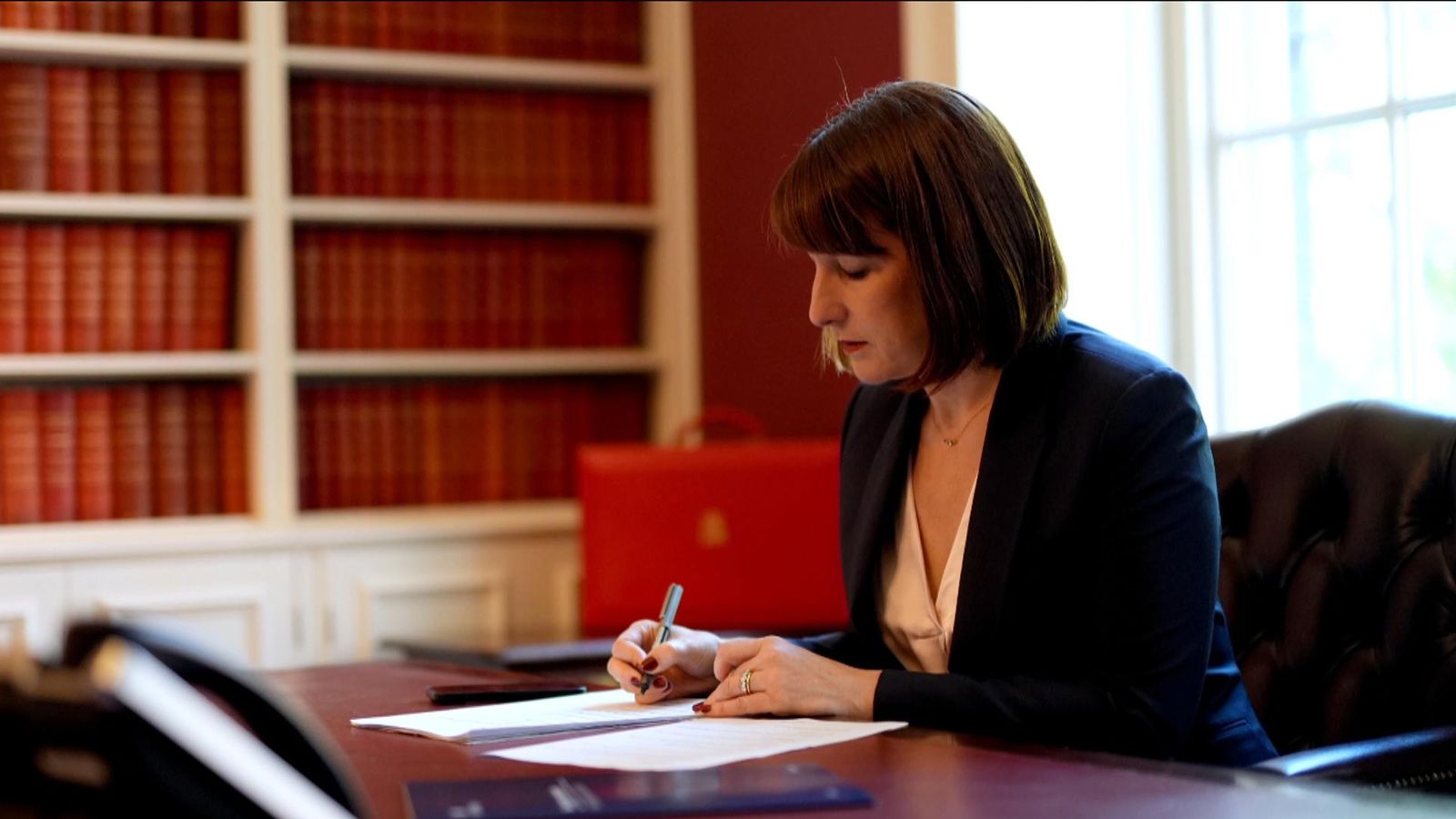
Chancellor Rachel Reeves to change public finance rules to borrow more for investment

Rachel Reeves will rewrite the government’s fiscal rules in next week’s budget to allow her to increase borrowing for public investment by around £50bn.
Speaking to Sky News in Washington DC, the chancellor said that the self-imposed rule under which borrowing must be falling by the fifth year of economic forecasts will be redefined from the current measure of public sector net debt.
Ms Reeves would not be drawn on what measure will replace the current rule but there is speculation that she will favour using public sector debt net of financial liabilities (PSNFL).
Under this definition, investments such as the government’s student loans book are defined as assets rather than liabilities, which on current measures would allow a further £53bn of borrowing.
Charge motorists for every mile they drive, chancellor urged – Money latest
The chancellor said the second fiscal rule, under which day-to-day spending must be funded from government revenue rather than borrowing, would be unchanged.
Growing consensus
Ms Reeves cited support for increasing the debt threshold from leading British economists, as well as the International Monetary Fund, which this week said public investment should be protected and was “badly needed” in the UK.
She insisted the change was necessary to end years of declining public investment and deliver on Labour‘s promise to deliver growth.
“Under the plans that I have inherited from the previous Conservative government, public sector net investment as a share of our economy was due to decline steeply during the course of this parliament,” she said.
“I don’t want that path for Britain when there are so many opportunities in industries from life sciences to carbon capture, storage and clean energy to AI and technology, as well as the need to repair our crumbling schools and hospitals.”
Read more on the budget:
What could Chancellor Rachel Reeves announce?
Chancellor Rachel Reeves looking to ‘find £40bn’ in budget
Ms Reeves denied that she was effectively fiddling the rules to get around her manifesto pledge not to increase income tax, VAT or national insurance.
“The rule that really bites is the first rule, the stability rule, to get day-to-day spending funded by tax receipts. That’s something that the previous government weren’t even trying to achieve and we will show in the budget next week how we will deliver on that promise.
“The second role is about being responsible. By seizing the opportunities, but doing it in a way where we are making sure we’re getting value for money for every pound of taxpayers’ money spent.
“Of course we’ll put guardrails in place to ensure that every pound of taxpayers’ money that is spent is spent wisely, and will involve the National Audit Office and the Office of Budget Responsibility in that.”
The first test of the change in the debt rule will be the reaction of bond markets, which rose slightly on Thursday following reports of Ms Reeves’s plans.
Taken together, the redefined fiscal rules set the terms of a budget that is likely to see tax rises and public spending cuts balanced by more freedom to borrow.

Keep up with all the latest news from the UK and around the world by following Sky News
Tax rises not ruled out
Ms Reeves did not rule out a raft of tax rises, including adding national insurance to employers’ pension contributions, from which public sector employers may be exempt.
“I was clear in the statement I made to the House of Commons in July that there will be difficult decisions in this budget around spending, welfare and taxation. But the precise details I will set out to the House of Commons next week.
“I will be a responsible chancellor. I will be honest and transparent about the challenges we face, but also how we’ll fix them to wipe the slate clean after the mismanagement we’ve seen in the last few years under the Conservatives.”
Gareth Davies, shadow exchequer secretary, said: “Before the election Rachel Reeves promised that she would not ‘fiddle’ the fiscal rules, and now it seems she is going to do exactly that. Remarkably she is announcing this not to Parliament, but to the IMF in advance of the budget.
“This is already having real world effects, with borrowing costs rising. This uncertainty over additional borrowing risks interest rates staying higher and for longer. It’s families up and down the country who would pay the price.”
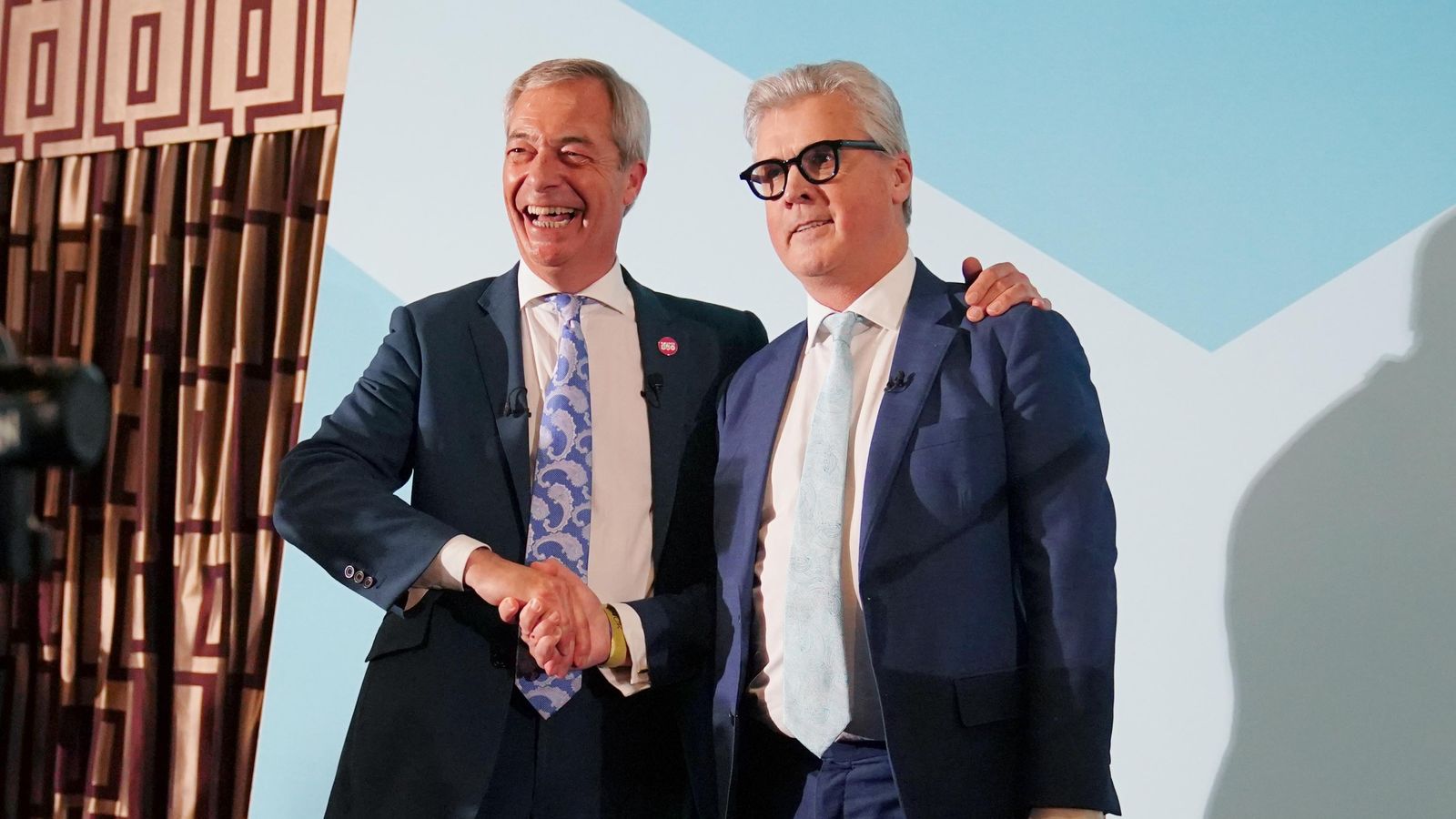
Millionaire Tory donor Malcolm Offord has defected to Reform UK, saying he would be campaigning “tirelessly” to “remove this rotten SNP government”.
Nigel Farage announced the former Conservative life peer’s defection during a rally in the Scottish town of Falkirk, where regular anti-immigration protests have taken place outside the Cladhan Hotel – which is being used to house asylum seekers.
Mr Farage, Reform UK’s leader, said he was “delighted” to welcome Greenock-born Lord Offord to Reform, describing his defection as “a brave and historic act”.
He added: “He will take Reform UK Scotland to a new level.”
During a speech, Lord Offord, who previously donated nearly £150,000 to the Tories, said he would be quitting the Conservative Party and giving up his place in the House of Lords as he prepares to campaign for a seat in Holyrood in May.
The 61-year-old said he wanted to restore Scotland to a “prosperous, happy, healthy country”.
“Scotland needs Reform and Reform is coming to Scotland,” he told the rally.
Read more:
Nigel Farage dismisses school racism claims as ‘banter in a playground’
Farage allegations are deeply shocking – but will they deter voters?
“Today I can announce that I am resigning from the Conservative Party. Today I am joining Reform UK and today I announce my intention to stand for Reform in the Holyrood election in May next year.
“And that means that from today, for the next five months, day and night, I shall be campaigning with all of you tirelessly for two objectives.
“The first objective is to remove this rotten SNP government after 18 years, and the second is to present a positive vision for Scotland inside the UK, to restore Scotland to being a prosperous, proud, healthy and happy country.”
The latest defection comes as Mr Farage finds himself at the centre of allegations of racism dating back to his time in school.
Claims made against Nigel Farage
Sky News reported on Saturday that a former schoolfriend of Mr Farage claimed he sang antisemitic songs to Jewish schoolmates – and had a “big issue with anyone called Patel”.
Jean-Pierre Lihou, 61, was initially friends with the Reform UK leader when he arrived at Dulwich College in the 1970s, at the time when Mr Farage is accused of saying antisemitic and other racist remarks by more than a dozen pupils.
Mr Farage has said he “never directly racially abused anybody” at Dulwich and said there is a “strong political element” to the allegations coming out 49 years later.
Reform’s deputy leader Richard Tice has called the ex-classmates “liars”.
A Reform UK spokesman accused Sky News of “scraping the barrel” and being “desperate to stop us winning the next election”.

The European Commission’s proposal to expand the powers of the European Securities and Markets Authority (ESMA) is raising concerns about the centralization of the bloc’s licensing regime, despite signaling deeper institutional ambitions for its capital markets structure.
On Thursday, the Commission published a package proposing to “direct supervisory competences” for key pieces of market infrastructure, including crypto-asset service providers (CASPs), trading venues and central counterparties to ESMA, Cointelegraph reported.
Concerningly, the ESMA’s jurisdiction would extend to both the supervision and licensing of all European crypto and financial technology (fintech) firms, potentially leading to slower licensing regimes and hindering startup development, according to Faustine Fleuret, head of public affairs at decentralized lending protocol Morpho.
“I am even more concerned that the proposal makes ESMA responsible for both the authorisation and the supervision of CASPs, not only the supervision,” she told Cointelegraph.
The proposal still requires approval from the European Parliament and the Council, which are currently under negotiation.
If adopted, ESMA’s role in overseeing EU capital markets would more closely resemble the centralized framework of the US Securities and Exchange Commission, a concept first proposed by European Central Bank (ECB) President Christine Lagarde in 2023.
Related: Bank of America backs 1%–4% crypto allocation, opens door to Bitcoin ETFs
EU plan to centralize licensing under ESMA creates crypto and fintech slowdown concerns
The proposal to “centralize” this oversight under a single regulatory body seeks to address the differences in national supervisory practices and uneven licensing regimes, but risks slowing down overall crypto industry development, Elisenda Fabrega, general counsel at Brickken asset tokenization platform, told Cointelegraph.
“Without adequate resources, this mandate may become unmanageable, leading to delays or overly cautious assessments that could disproportionately affect smaller or innovative firms.”
“Ultimately, the effectiveness of this reform will depend less on its legal form and more on its institutional execution,” including ESMA’s operational capacity, independence and cooperation “channels” with member states, she said.
Related: Grayscale Chainlink ETF draws $41M on debut, but not ‘blockbuster’

The broader package aims to boost wealth creation for EU citizens by making the bloc’s capital markets more competitive with those of the US.
The US stock market is worth approximately $62 trillion, or 48% of the global equity market, while the EU stock market’s cumulative value sits around $11 trillion, representing 9% of the global share, according to data from Visual Capitalist.
Magazine: EU’s privacy-killing Chat Control bill delayed — but fight isn’t over
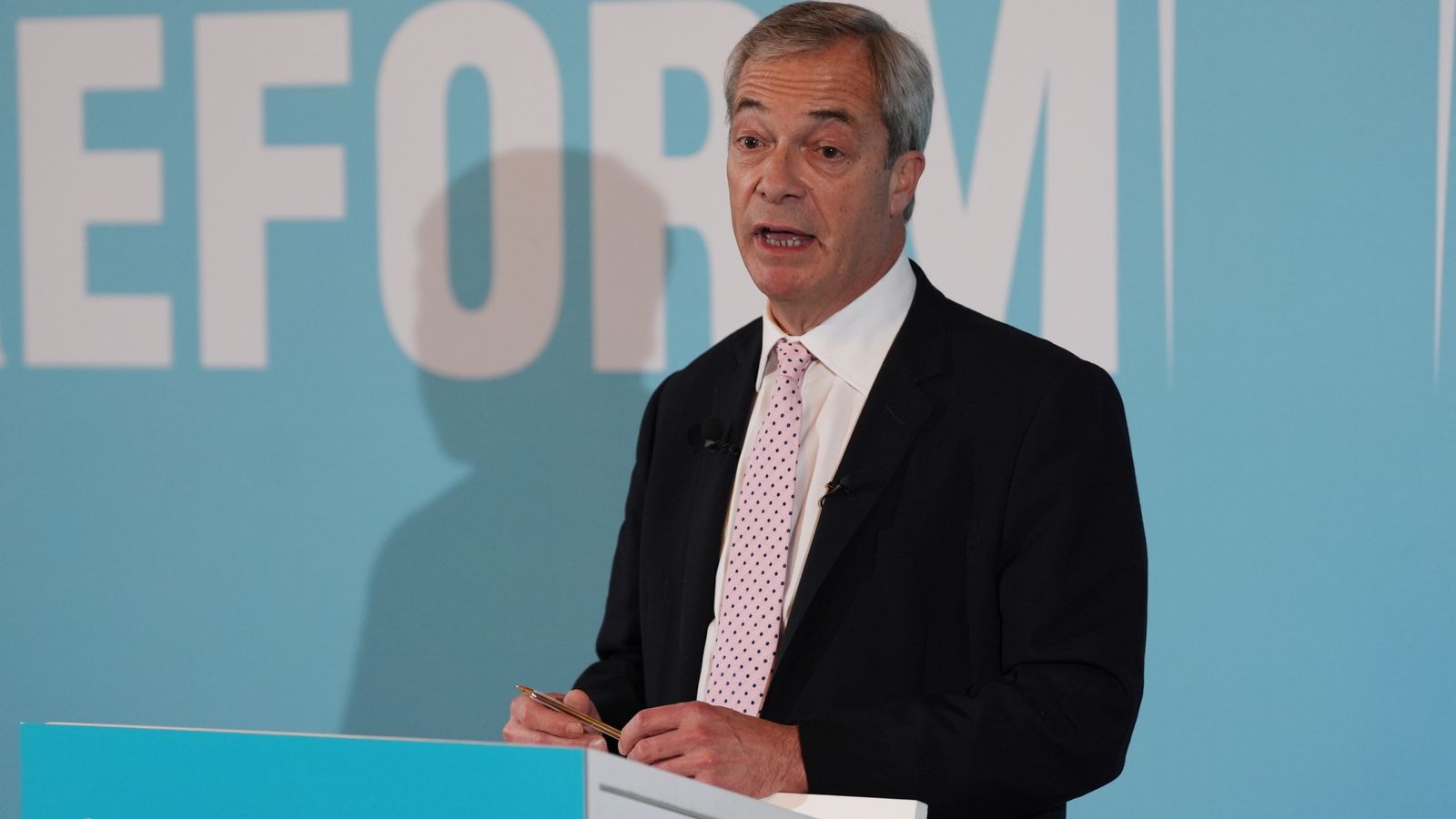

Nigel Farage sang antisemitic songs to Jewish schoolmates – and had a “big issue with anyone called Patel”, a former schoolfriend has claimed.
Jean-Pierre Lihou, 61, was initially friends with the Reform UK leader when he arrived at Dulwich College in the 1970s, at the time when Mr Farage is accused of saying antisemitic and other racist remarks by more than a dozen pupils.
But Mr Lihou, who is half-German and said he went for a couple of sleepovers at Mr Farage’s parent’s house, told Sky News’ Amanda Akass that it “soon become obvious he was not quite the same person I thought he was”.
Warning: This article contains references to antisemitic slurs which readers may find offensive
Another former pupil, Stefan Benarroch, who was in the year below Mr Farage and is Jewish, said that Mr Farage was “not a kid” when he made alleged antisemitic remarks and his behaviour was “unacceptable in any era”.
Mr Farage has said he “never directly racially abused anybody” at Dulwich and said there is a “strong political element” to the allegations coming out 49 years later. Reform’s deputy leader Richard Tice has called the ex-classmates “liars”.
A Reform UK spokesman accused Sky News of “scraping the barrel” and were “desperate to stop us winning the next election”.
Jean-Pierre Lihou said he was initially a friend of Nigel Farage
‘People were hurt by it‘
Mr Lihou told Sky News Mr Farage used to direct antisemitic songs at his Jewish friend Peter Ettedgui, who is one of the main former classmates to have spoken out against the Reform leader.
“He used to sing: ‘Gas them all, gas them out, gas them all, into the chambers they crawl’ – and the rest of those horrible words,” he said.
“You think, when somebody is obviously distressed by that, why do you keep doing it? The humour wears off… when you see this, and because I’m German I’m particularly sensitive to anyone making that kind of analogy.”
Mr Lihou also said Mr Farage used to “pass comment on anyone that wasn’t white, particularly Indians”.
He said: “He had a great big issue with anyone called Patel because I think the school had at one point more Patels than Smiths. That seemed to irk him.
“Anybody who wasn’t white, he was likely to have a comment pretty much throughout my school life, especially Jewish people. I think that was the worst thing because you could obviously see that people were hurt by it.”

Stefan Benarroch told Sky News Nigel Farage was ‘not a kid’ when he made antisemitic remarks to classmates
‘He was truly ghastly’
Mr Benarroch, who was also friends with Mr Ettedgui, told Sky News: “His behaviour as a teenager was unacceptable by any standards and in any era. He was truly ghastly at Dulwich College.”
He said he would never have come across Mr Farage “had I not been a Jew”.
“He and his minions – and one of his minions, in particular, was my tormentor at Dulwich – they would spot us coming out of Jewish prayers on a Friday,” he added.
“So his behaviour at 16, 17, 18 – and you are a man at 18, you’re technically an adult – was truly appalling. So we’re not talking about a kid here.”
The property developer said the racism allegations are “not just about Nigel Farage as a teenager, this is also about Nigel Farage as an adult”.
“His behaviour as a teenager was unacceptable by any standards and in any era. He was truly ghastly at Dulwich College,” he added.
Nigel Farage demands apology from BBC
‘These things don’t leave you’
Mr Benarroch, who is no longer a practising Jew, added: “I was terrified of his bullies, he had these guys hanging around with him who were instructed to have a go at us as these young, nice Jewish boys.
“I don’t recall ever having direct contact with Nigel Farage, but certainly I was very much a witness to his tormenting of others, especially Peter Ettudgui.
“He [Mr Farage] was so extreme, these things don’t leave you, they don’t leave your body, as such.”

Nigel Farage in his school days
On Thursday, Mr Farage launched into a tirade at the BBC after one of its reporters asked about the claims, with the politician reading out a letter he said was from someone he went to school with.
He quoted the unnamed Jewish pupil as saying there was “plenty of macho, tongue-in-cheek schoolboy banter” and said sometimes it “was offensive, but never with malice”.
The problem for Farage is the story is only getting bigger

Allegations about Nigel Farage’s schooldays have hit the headlines since the early days of the Brexit campaign in 2013.
He has always dismissed such claims as ‘politically motivated’ and insisted recently he has ‘never directly racially abused anybody’.
But now with the prospect of Prime Minister Farage looking ever more likely – former classmates have decided now is the moment to speak up about their concerns, almost fifty years later.
The allegations are deeply shocking. Jean-Pierre Lihou told me Farage used to sing a sickening song about the Nazi gas chambers, which began ‘gas them all, gas them out, gas them all, into the chambers they crawl’.
Lihou claims Farage said non-white pupils should be sent home and had a particular issue with the fact that at one point the school had more pupils with the surname ‘Patel’ than ‘Smith’.
Stephan Benarroch meanwhile told my colleague Ali Fortescue he witnessed Farage ‘tormenting others’ and was himself ‘terrified’ by Farage’s ‘gang of bullies’ who he claims ‘were instructed to have a go at us as these young, nice Jewish boys’ on their way back from Friday prayers.
The Guardian – whose investigation last month prompted a renewed focus on the issue – reports that 28 former teachers and pupils have come forward to report witnessing antisemitic or racist behaviour from him.
A group of Holocaust survivors are now calling on Farage to either admit whether he said the words he’s accused of saying, and apologise, or accuse those who said he did of lying.
His political opponents – battered for so long in the polls by Reform UK – are keen to pile on the pressure too. Both Labour and Liberal Democrats have urged him to ‘come clean’ and apologise.
The Tories have also argued that if it’s true, Farage should say sorry, though Kemi Badenoch has certainly been more nuanced in her response than other political rivals, making the point that what most people may say as teenagers is very different from what they would say as adults.
The problem for Farage is that far from going away – the story is only getting bigger.
He’s clearly hugely frustrated by this – as evidenced by the angry tirade he launched against the BBC this week when their reporter asked about the allegations. He argued it’s ‘double standards’ to criticise what he was alleged to have said 49 years ago, at a time when broadcasters were still showing blackface in The Black and White Minstrel Show. He also read out a letter he said had been sent to him by a Jewish contemporary pupil, who described ‘plenty of macho, tongue-in-cheek schoolboy banter’ – which, while sometimes ‘offensive’, was ‘never with malice’.
Reform have hit back against our story in bullish fashion, accusing Sky News of scraping the barrel in a desperate attempt to stop Reform UK winning the next election.
Of course the question of who will win the next election isn’t down to journalists – but voters.
And the jeopardy for Reform is whether these allegations will deter enough potential voters – particularly wavering Tories – to disrupt what has thus far been an unstoppable wave of support.
Read more:
Farage dismisses school racism claims as ‘banter in a playground’
Farage needs to explain ‘racist’ comment allegations, says PM
‘It was not schoolboy banter’
Mr Benarroch rejected Mr Farage’s claim it was just “schoolboy banter” and said he has continued to show the same views, just in a less obvious way.
“You tell that [that it was banter] to the guys, to Peter who had ‘Hitler should have gassed you’ said to him,” he said.
“Peter Ettedgui was tormented by Nigel Farage.
“The point I’m making is, he’s a grown man now. He’s a highly intelligent politician with nuance when it suits him, and so clearly he’s not going around saying ‘Hitler should have gassed you all’, obviously.”
The former Dulwich student said Mr Farage had “kept the most disgraceful company imaginable” in the US during the 2010s on radio and TV shows.
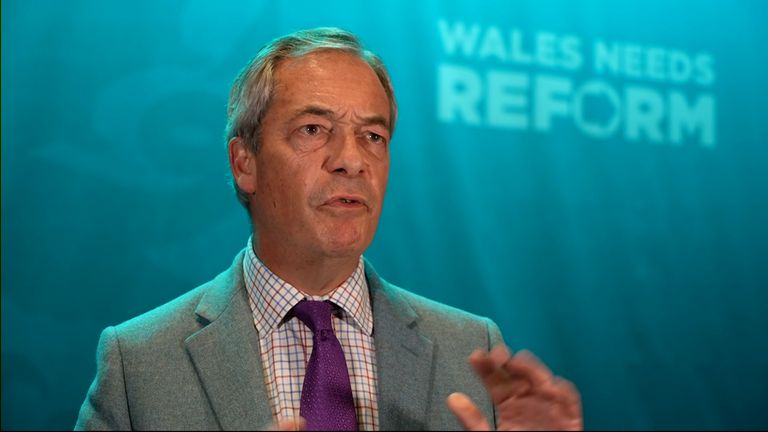
‘Did you racially abuse fellow pupils?’
He specifically named Rick Wiles, a far-right American conspiracy theorist whose YouTube channel was banned in 2020 after calling Donald Trump’s impeachment a “Jew coup”.
Mr Benarroch, who said he is not part of any political party, said “there is no political motivation” behind his allegations, but accused Reform and Mr Farage of making “a political statement” by calling them liars.
On Thursday, Mr Farage said he had received multiple letters from former pupils in support of him.
He said a letter from a Jewish schoolmate, said: “While there was plenty of macho tongue-in-cheek schoolboy banter, it was humour, and yes, sometimes it was offensive… but never with malice.
“I never heard him [Farage] racially abuse anyone.”
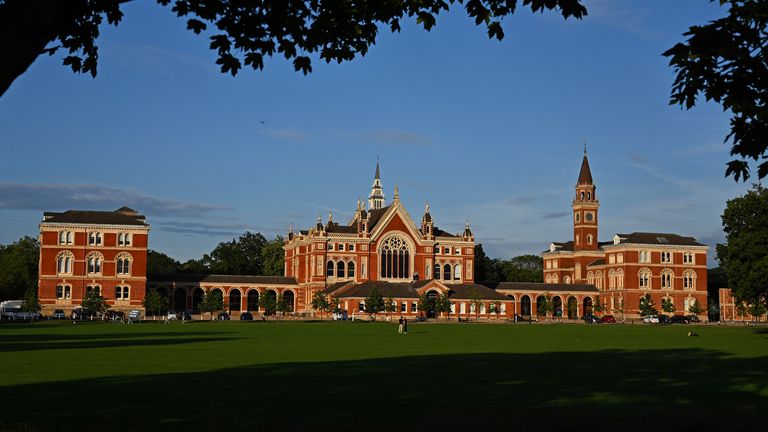
Dulwich College is an all boys private school in south London. Pic: Reuters
A Reform UK spokesman “accused Sky News of scraping the barrel”.
He said: “This ridiculous interview has nothing to do with Nigel Farage himself but apparently someone who knew him at school almost 50 years ago.
“Sky News are desperate to stop us winning the next election.”
-
 Sports2 years ago
Story injured on diving stop, exits Red Sox game
-
 Sports3 years ago
‘Storybook stuff’: Inside the night Bryce Harper sent the Phillies to the World Series
-
 Sports2 years ago
Game 1 of WS least-watched in recorded history
-
 Sports3 years ago
Button battles heat exhaustion in NASCAR debut
-
 Sports3 years ago
MLB Rank 2023: Ranking baseball’s top 100 players
-
Sports4 years ago
Team Europe easily wins 4th straight Laver Cup
-
 Environment3 years ago
Japan and South Korea have a lot at stake in a free and open South China Sea
-
 Environment1 year ago
Here are the best electric bikes you can buy at every price level in October 2024