

BLUETTI Handsfree Backpack Series: the ultimate solar power station for adventurers and creatives

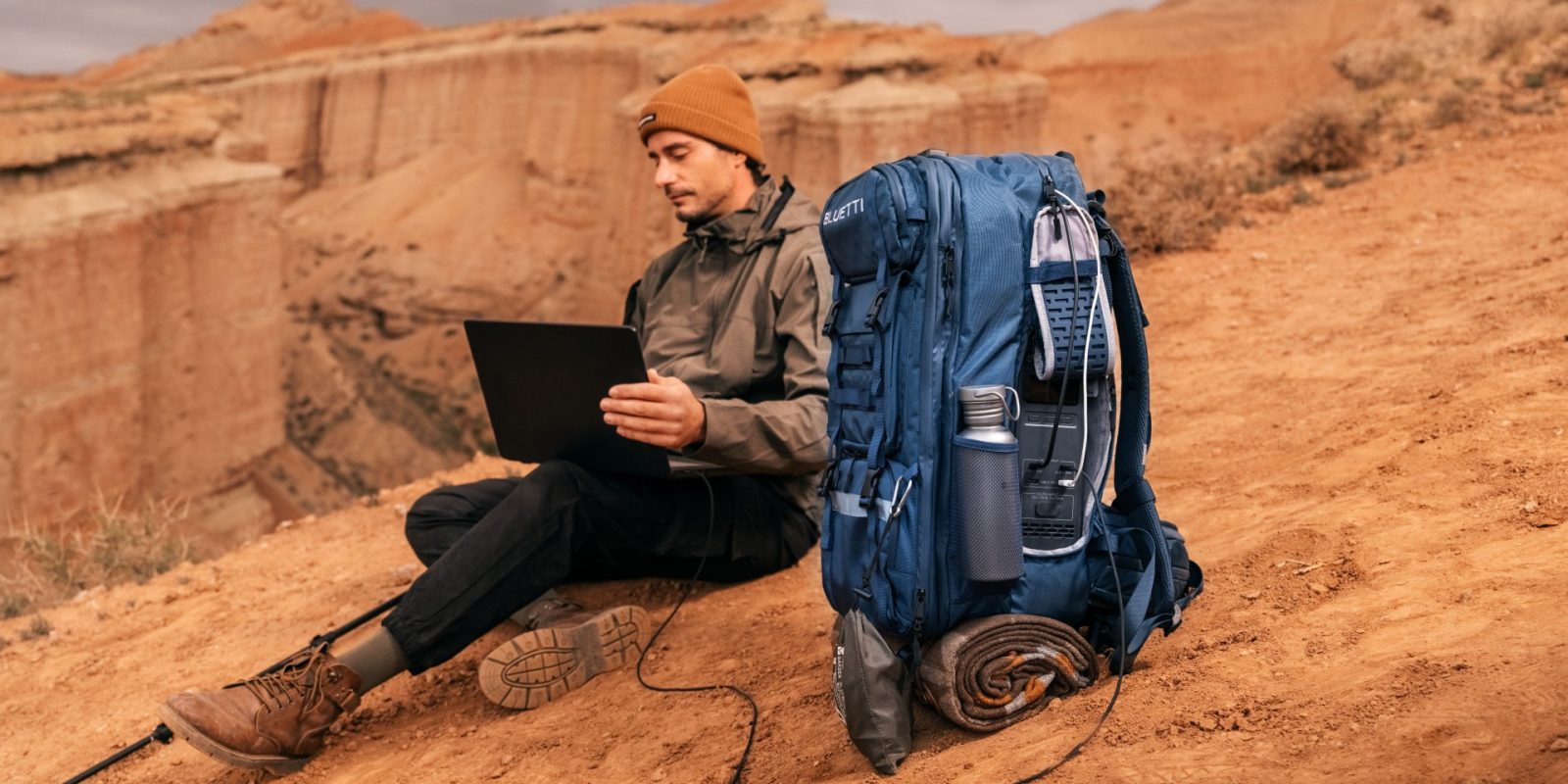
Outdoor exploration just got a lot more nimble and high-tech with the new BLUETTI Handsfree Backpack Series – Handsfree 1 and Handsfree 2. This all-in-one backpack power station redefines what it means to stay powered on the go.
BLUETTI has a special limited-time early bird offer, but it disappears on November 15, so don’t wait!
Whether you’re a hiker, photographer, backpacker, drone operator, journalist, remote filmmaker, or digital nomad, we’ve all been there – struggling with power banks, tangled cables, and extra bags just to keep our devices running during outdoor adventures. BLUETTI’s new Handsfree Series changes the game.
Imagine a sleek, all-in-one backpack that not only stores your essentials but also keeps your devices fully charged, effortlessly. No more juggling gear – just hands-free power so you can focus on what matters most: the adventure.
BLUETTI Handsfree Backpack Series: Storage and power in one pack
The BLUETTI Handsfree Series offers two models: Handsfree 1 and Handsfree 2. Each one is more than just a versatile backpack – they’re complete energy solutions with a detachable portable power station and a foldable solar panel.
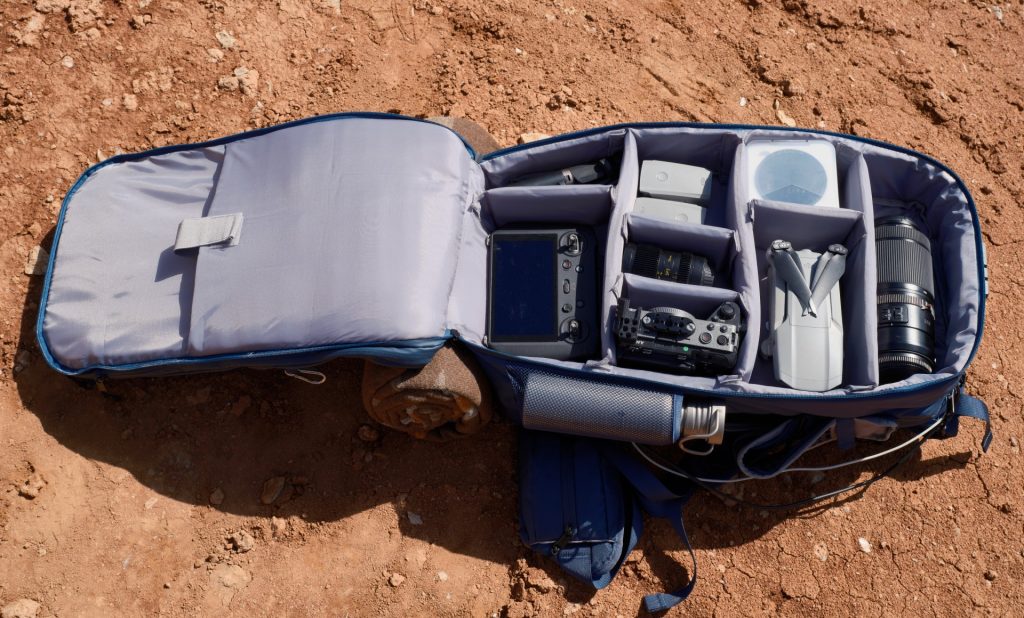
BluePack backpacks are built for ultimate organization and convenience. With dedicated compartments, MOLLE straps, versatile hooks, and mounts, your camera, drone, and personal items all have their perfect place. Plus, the ultra-thin power station keeps your gear charged and ready –no matter where your adventure takes you.
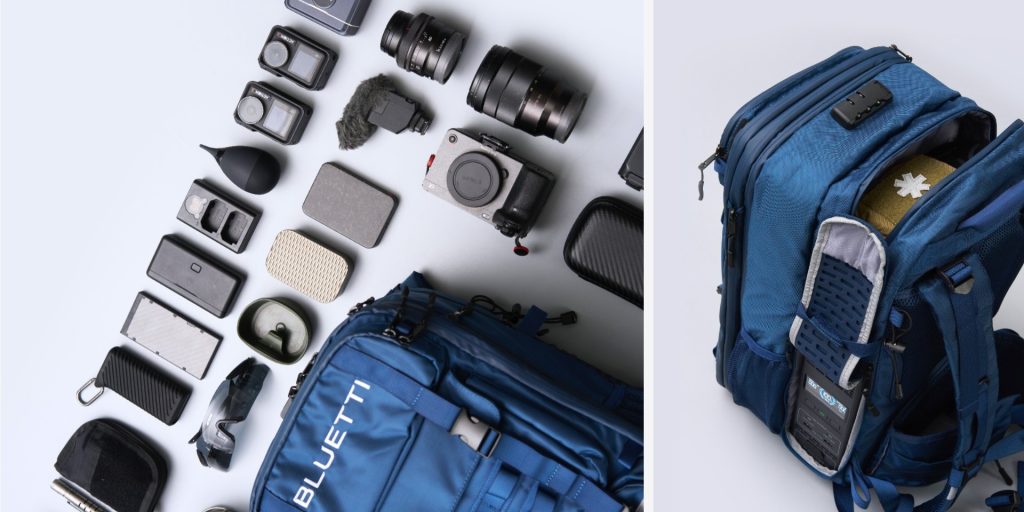
Charge your devices on the go
BLUETTI’s Handsfree Series truly lives up to its name. Equipped with five output ports including an AC outlet, 2 Type-C (100W) ports, and two USB-A ports, it can charge multiple devices at once, keeping everything powered up. Plus, with app control, you can monitor all your devices in real-time without having to take off the backpack.
Even better, the side-access charging port design means you don’t have to remove the backpack to plug in your devices. That way, you can charge your gadgets with minimal fuss, even if you’re trekking through a forest or up a mountain.

Ultra-thin and comfortable: Power without the bulk
You might expect powerful tech like this to be bulky, but the Handsfree Series shatters those expectations. Its ultra-thin power station is the width of a smartphone – three times slimmer than traditional portable power stations – seamlessly fitting into the backpack without adding extra weight or bulk.
Designed by BLUETTI’s outdoor gear specialists, the ErgoBLUE ergonomic support system evenly distributes the load, reducing strain and making it comfortable to carry for hours. The backpack features breathable mesh materials and supports up to 66 pounds (30 kg) of gear, making it perfect for long hikes, motorcycle rides, or bike-packing adventures.

Unlimited charging: Turbocharged and solar-powered
The Handsfree backpack power station charges quickly and efficiently, whether you’re using mains power, solar, a battery, or your vehicle. Thanks to Turbocharging technology, it reaches 80% charge in just 45 minutes and fully charges in under 1.5 hours.
For true off-the-grid adventurers, the Handsfree Series can be paired with additional portable solar panels to boost battery life by up to 30%. With fragmented solar charging technology, the power stations automatically pause when clouds roll in and resume when the sun returns, maximizing energy efficiency every step of the way. Want to livestream from the wilderness? Now you can.
Safety first: Reliable and durable power
Powering your adventure is great, but staying safe is crucial. The Handsfree Series features automotive-grade lithium iron phosphate (LiFePO4) battery cells, offering over 4,000 charging cycles and a lifespan of 10 years. These battery cells are built to perform in extreme temperatures, ranging from -20°C to 40°C.
BLUETTI has also integrated its BLUETOPUS AI-BMS (Battery Management System), which prevents overcharging, overvoltage, and other hazards, keeping your power station and devices safe. Plus, the entire system is water resistant (IP65 rating), meaning it will stay safe and dry even in harsh weather conditions.
Price and availability
The highly anticipated BLUETTI Handsfree Series is available at a special early-bird price, but DON’T WAIT! These prices end on November 15:
About BLUETTI
BLUETTI has been committed to promoting sustainability and providing clean energy solutions since its inception. By offering eco-friendly energy storage solutions for both indoor and outdoor use, BLUETTI aims to provide exceptional experiences for our homes while also contributing to a sustainable future for our planet. This commitment to sustainable energy has helped BLUETTI expand its reach to over 100 countries and gain the trust of millions of customers worldwide.
Follow BLUETTI on Twitter/X here and on Facebook here.
All photos: BLUETTI
FTC: We use income earning auto affiliate links. More.
Environment
India’s inflation rises to 0.71% in November as decline in food, fuel prices loses steam


EV and battery supply chain research specialists Benchmark Mineral Intelligence reports that 2.0 million electric vehicles were sold globally in November 2025, bringing global EV sales to 18.5 million units year-to-date. That’s a 21% increase compared to the same period in 2024.
Europe was the clear growth leader in November, while North America continued to lag following the expiration of US EV tax credits. China, meanwhile, remains the world’s largest EV market by a wide margin.
Europe leads global growth
Europe’s EV market jumped 36% year-over-year in November 2025, with BEV sales up 35% and plug-in hybrid (PHEV) sales rising 39%. That brings Europe’s total EV sales to 3.8 million units for the year so far, up 33% compared to January–November 2024.
France finally returned to year-to-date growth in November, edging up 1% after spending most of 2025 in the red following earlier subsidy cuts. The rebound was led by OEMs such as the Volkswagen Group and Renault, a wider selection of EV models, and France’s “leasing social” program, aimed at helping lower-income households switch to EVs.
Italy also posted a standout month, logging record EV sales of just under 25,000 units in November. The surge followed the launch of a new incentive program designed to replace older ICE vehicles. The program earmarks €597.3 million (about $700 million) in funding for the replacement of around 39,000 gas cars.
The UK expanded access to its full £3,750 ($4,400) EV subsidy by adding five more eligible models: the Nissan Leaf (built in Sunderland, with deliveries starting in early 2026), the MINI Countryman, Renault 4, Renault 5, and Alpine A290.
US market slows after federal tax credit’s premature death
In North America, EV sales in the US did tick up month-over-month in November, following a sharp October drop after federal tax credits expired on September 30, 2025. Brands including Kia (up 30%), Hyundai (up 20%), Honda (up 11%), and Subaru (232 Solterra sales versus just 13 the month before) all saw gains, but overall volumes remain below levels when the federal tax credit was still available.
Policy changes aren’t helping. In early December, Trump formally “reset” US Corporate Average Fuel Economy (CAFE) standards, lowering the required fleetwide average to about 34.5 mpg by 2031. That’s a steep drop from the roughly 50.4 mpg target under the previous rule. Automakers can now meet the standard largely through gas vehicles, reducing pressure to scale BEVs and PHEVs.
Those loosened rules are already reflected in investment decisions, such as Stellantis’ $13 billion plan to expand US production by 50%, with a heavy focus on ICE vehicles. Earlier this year, Trump’s big bill set fines for missing CAFE targets to $0, further weakening the incentive for OEMs to electrify.
That’s some foolish policymaking, considering the world reached peak gas car sales in 2017. The US under Trump will be left behind, just as it will be with its attempts to revive the coal industry.
China still dominates, exports surge
China remains the backbone of global EV sales, even as growth slows. The Chinese market grew 3% year-over-year and 4% month-over-month in November. Year-to-date, EV sales in China are up 19%, with 11.6 million units sold.
One of the biggest headlines out of China is exports. BYD reported a record 131,935 EV exports in November, blowing past its previous high of around 90,000 units set in June. BYD sales in Europe have jumped more than fourfold this year to around 200,000 vehicles, doubled in Southeast Asia, and climbed by more than 50% in South America.
Global snapshot
Global EV sales from January to November 2025 vs January to November 2024, YTD %:
- Global: 18.5 million, +21%
- China: 11.6 million, +19%
- Europe: 3.8 million, +33%
- North America: 1.7 million, -1%
- Rest of World: 1.5 million, +48%
The takeaway: EV demand continues to grow worldwide, but policy support – or the lack thereof – is increasingly shaping where this growth shows up.
“Overall, EV demand remains resilient, supported by expanding model ranges and sustained policy incentives worldwide,” said Rho Motion data manager Charles Lester.
Read more: EV sales *still* have not fallen, cooled, slowed or slumped. Media is lying to you.

If you’re looking to replace your old HVAC equipment, it’s always a good idea to get quotes from a few installers. To make sure you’re finding a trusted, reliable HVAC installer near you that offers competitive pricing on heat pumps, check out EnergySage. EnergySage is a free service that makes it easy for you to get a heat pump. They have pre-vetted heat pump installers competing for your business, ensuring you get high quality solutions. Plus, it’s free to use!
Your personalized heat pump quotes are easy to compare online and you’ll get access to unbiased Energy Advisors to help you every step of the way. Get started here. – *ad


FTC: We use income earning auto affiliate links. More.

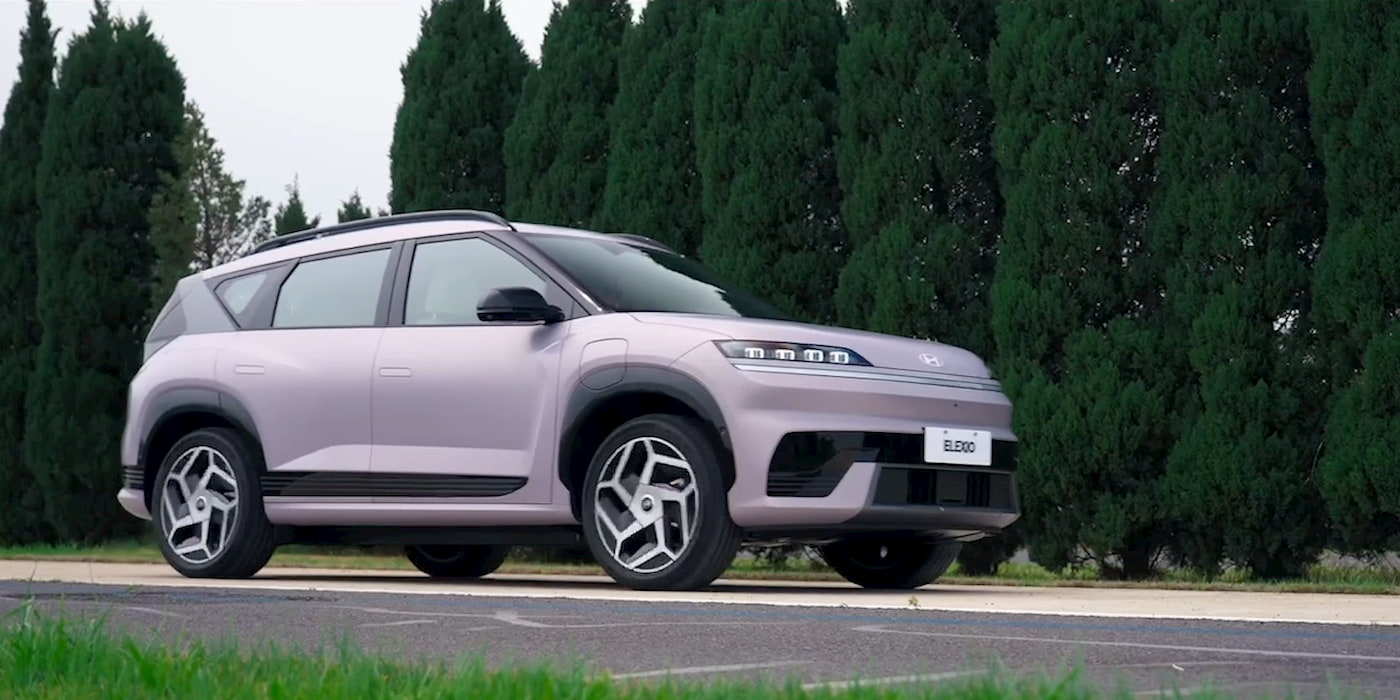
The Elexio is Hyundai’s first electric SUV custom-tailored for the Chinese market, but now it’s headed overseas.
Hyundai is bringing the Elexio electric SUV overseas
Hyundai’s midsize electric SUV was spotted on a carrier truck in Melbourne, Australia, alongside a few of its other vehicles.
Although the Elexio is built by Hyundai’s joint venture with BAIC Motor, Beijing-Hyundai, “tailor-made for Chinese consumers,” we had a feeling it would be sold overseas.
A few months ago, Don Romano, CEO of Hyundai Australia, hinted that the midsize electric SUV could arrive in The Land Down Under. Romano told journalists during an IONIQ 9 launch event that the Elexio’s launch in Australia was “under evaluation,” calling it “a promising vehicle.”
Hyundai confirmed the rumors shortly after, saying the new midsize electric SUV would launch in Australia in early 2026.
According to CarsGuide, the Elexio was caught on a car carrier in Melbourne on Wednesday morning ahead of its official launch.
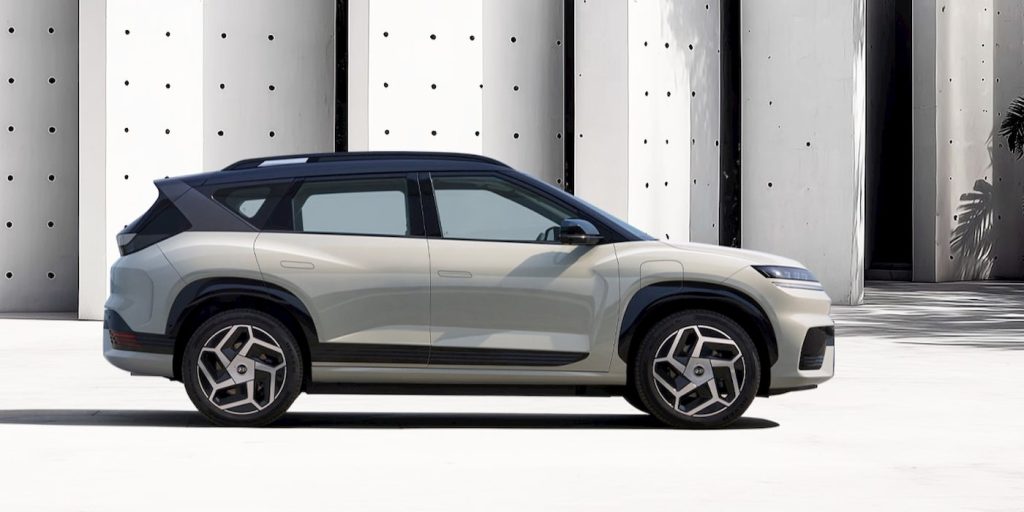
Powered by an 88.1 kWh battery, the Elexio delivers up to nearly 450 miles (722 km) CLTC range. It’s based on the E-GMP platform, which underpins all IONIQ models and Kia’s EV lineup, with single and dual-motor (AWD) powertrain options. The electric SUV can also recharge from 30% to 80% in about 27 minutes.
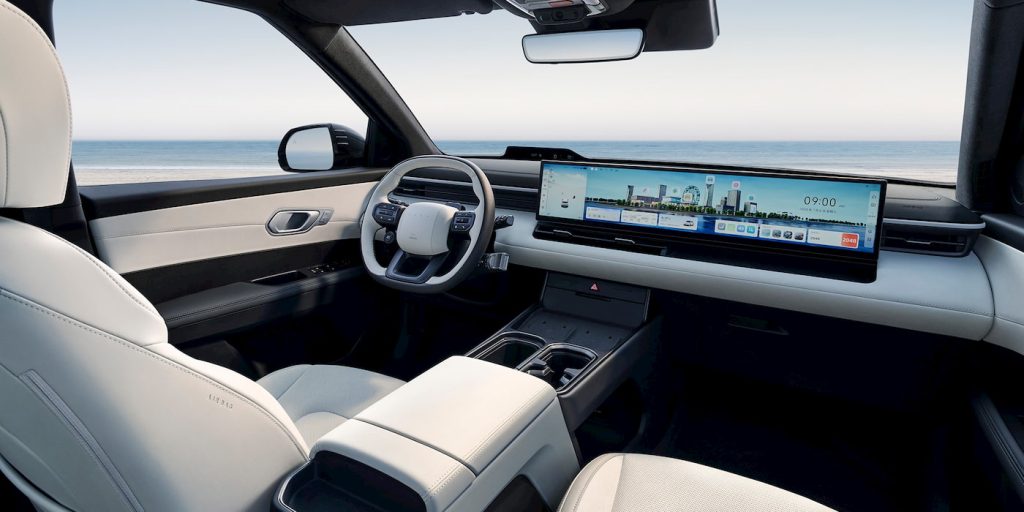
The interior is packed with advanced Chinese tech, including Huawei’s advanced driver-assistance systems (ADAS) and a Qualcomm Snapdragon 8295 chip that powers the massive 27″ 4K widescreen display.
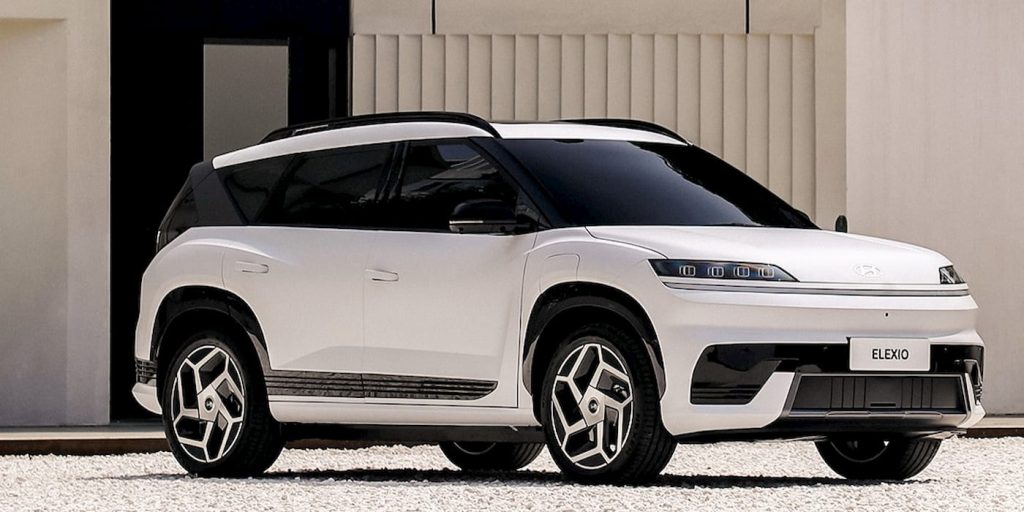
The Elexio is 4,615 mm long, 1,875 mm wide, and 1,698 mm tall, with a wheelbase of 2,750 mm, which is a bit shorter than the Tesla Model Y. It’s closer in size to the BYD Yuan Plus, sold overseas as the Atto 3.
Hyundai’s midsize electric SUV is expected to compete with some of Australia’s top-selling EVs, including the Tesla Model Y and Geely EX5.
Prices have yet to be announced, but given the IONIQ 5 starts at $76,200 (AUD), before on-road costs, the Elexio should be slightly cheaper.
In China, the Elexio is available in three trims: Fun, Smart, or Tech, with pre-sale prices starting at RMB 119,800 ($16,900).
Although the electric SUV is launching in Australia and possibly other overseas markets like New Zealand, it’s not expected to be a true global vehicle. Hyundai designed it specifically for Chinese buyers, leveraging local tech and design elements.
For those in the US, if you’re looking for a midsize electric SUV, the IONIQ 5 is worth a look with 300+ miles of range, fast charging, and a spacious, tech-filled interior. With leases starting at just $189 a month, the IONIQ 5 is cheaper than most gas-powered cars in its class. You can use our link to find the Hyundai IONIQ 5 models closest to you.
FTC: We use income earning auto affiliate links. More.
-
 Sports2 years ago
Story injured on diving stop, exits Red Sox game
-
 Sports3 years ago
‘Storybook stuff’: Inside the night Bryce Harper sent the Phillies to the World Series
-
 Sports2 years ago
Game 1 of WS least-watched in recorded history
-
 Sports3 years ago
Button battles heat exhaustion in NASCAR debut
-
 Sports3 years ago
MLB Rank 2023: Ranking baseball’s top 100 players
-
Sports4 years ago
Team Europe easily wins 4th straight Laver Cup
-
 Environment3 years ago
Japan and South Korea have a lot at stake in a free and open South China Sea
-
 Environment1 year ago
Here are the best electric bikes you can buy at every price level in October 2024