Connect with us

Published

on

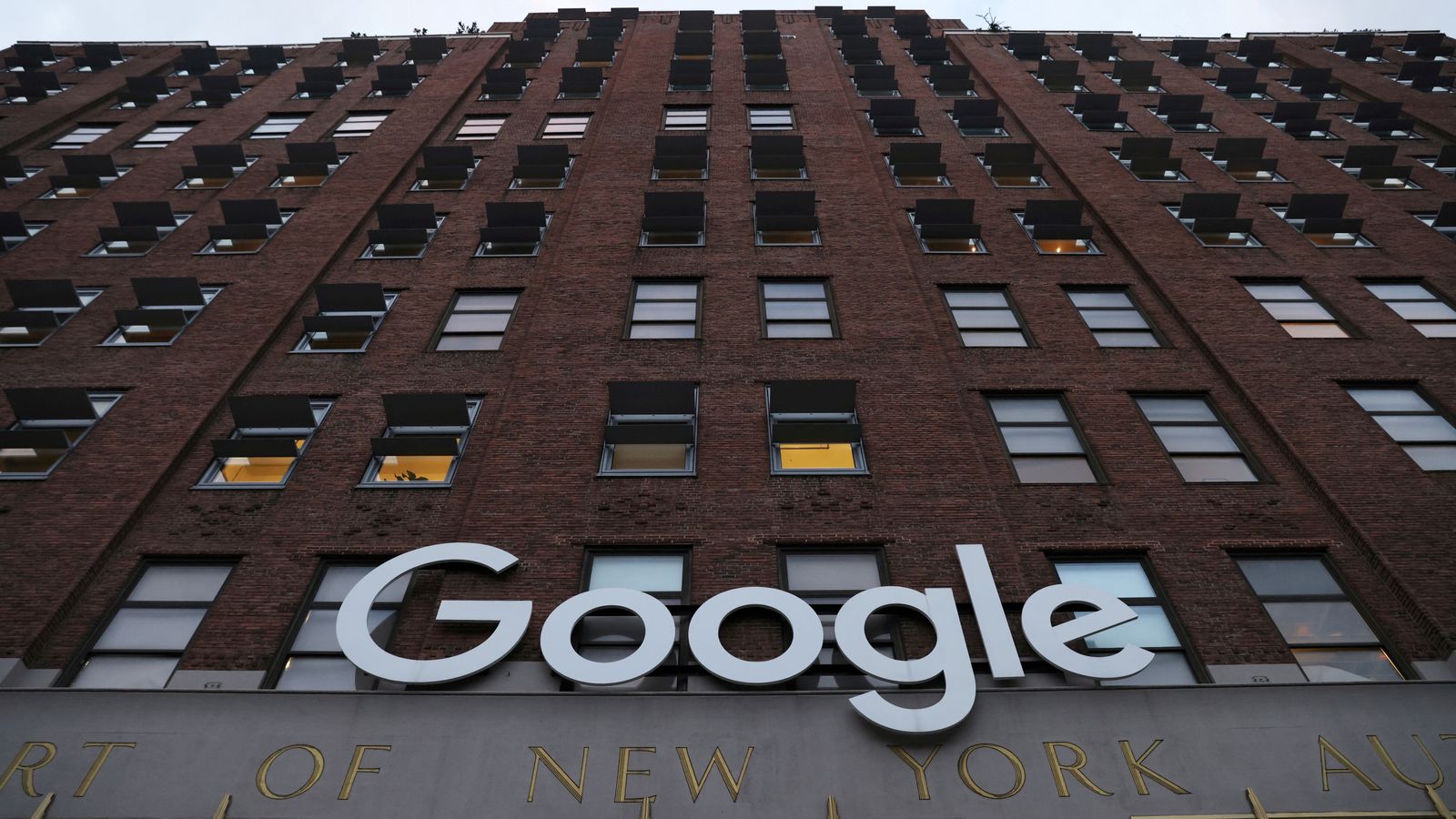
Google has reportedly racked up a fine of more than two undecillion rubles – two followed by 36 zeros – after it removed state-run and pro-government accounts from YouTube.

Put another way, an undecillion is a trillion times a trillion times a trillion.

The fine is far greater than the world’s total GDP, estimated at $110 trillion by the International Monetary Fund.

Google – which owns YouTube – has a current stock market value of $2.16 trillion, so probably won’t be stumping up the cash any time soon.

The fine is also still growing due to non-payment and, if not paid within nine months, will start to double every day, reported state news agency Tass.

The mind-boggling amount has grown because Google hasn’t restored YouTube accounts belonging to 17 Russian TV channels, according to Russia’s RBC News.

It claims a judge in the case said at a hearing on 28 October that he was considering “a case in which there are many, many zeros”.

More on Google

Google can reportedly only return to the Russian market if it complies with the court decision.

Read more from Sky News:
Musk summoned to court over $1m giveaways to voters
Mayan city discovered hidden in Mexico jungle

The case was first filed privately in 2020 after the accounts of the Tsargrad TV channel and RIA FAN were blocked due to US sanctions laws, reported RBC.

It then escalated after the start of the Ukraine war when YouTube blocked accounts belonging to the likes of Sputnik and RT after which Russian authorities got involved.

Continue Reading

World

Giving up territory would be ‘unacceptable’, says Ukraine’s armed forces chief

Published

on

By

Giving up territory would be 'unacceptable', says Ukraine's armed forces chief

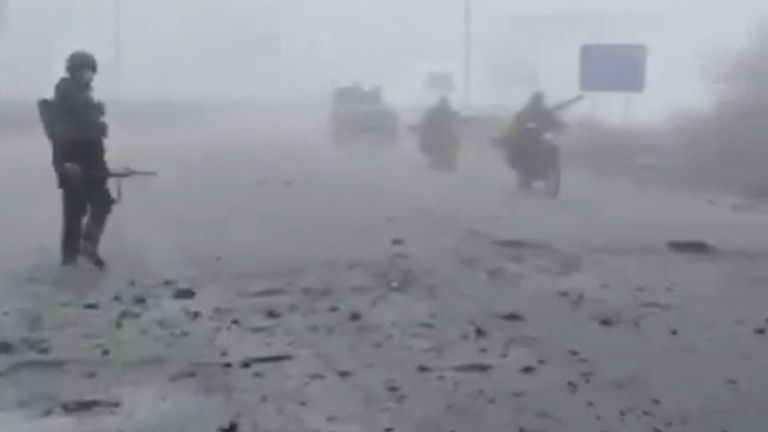
It would be “unacceptable” for Ukraine to “simply give up territory” in any peace deal with Russia, the head of the Ukrainian armed forces has told Sky News. 

General Oleksandr Syrskyi said a “just peace” can only be achieved if fighting is halted along current frontlines and then for negotiations to take place.

Signalling a complete lack of trust in claims by the Kremlin that it wants to end its war, he accused Vladimir Putin of using an attempt by Donald Trump to broker peace talks as “cover” while Russian troops try to capture more land by force on the battlefield.

Ukraine peace talks – latest

General Oleksandr Syrskyi said Russia is using peace talks as 'cover' to grab more Ukrainian territory
Image:
General Oleksandr Syrskyi said Russia is using peace talks as ‘cover’ to grab more Ukrainian territory

Please use Chrome browser for a more accessible video player

What Ukrainian troops think about giving up Donbas

The rare intervention offers the clearest indication yet of the Ukrainian military’s red lines as Washington tries to negotiate a settlement that – according to an initial draft – would require Kyiv to surrender the whole of the Donbas region in the east of the country to Moscow.

President Volodymyr Zelenskyy, backed by the UK and other European allies, has been trying on the diplomatic front to strengthen Ukraine’s position.

But President Putin has said Russia would either seize the Donbas militarily or Ukrainian troops would have to withdraw.

Europe’s fate at stake

Speaking frankly, General Syrskyi, commander-in-chief of the armed forces of Ukraine, signalled that his country’s soldiers would fight on if diplomacy fails – and he warned that the fate of the whole of Europe is at stake.

In an exclusive interview in the basement of a building in eastern Ukraine – the location of which we are not disclosing for security reasons – he said Ukraine’s main mission “is to defend our land, our country, and our population”.

“Naturally, for us it is unacceptable to simply give up territory. What does it even mean – to hand over our land? This is precisely why we are fighting; so we do not give up our territory.”

A Ukrainian soldier fires a self-propelled howitzer in Kostiantynivka in Donetsk. Pic: Reuters
Image:
A Ukrainian soldier fires a self-propelled howitzer in Kostiantynivka in Donetsk. Pic: Reuters

Rescuers work at the site of apartment buildings hit by a Russian airstrike in Sloviansk, Ukraine. Pic: Reuters
Image:
Rescuers work at the site of apartment buildings hit by a Russian airstrike in Sloviansk, Ukraine. Pic: Reuters

Many troops have died fighting for Ukraine since Russia first seized the peninsula of Crimea and attacked the regions of Donetsk and Luhansk, which comprise the Donbas, in 2014.

Hundreds of thousands of Ukrainian civilians were then mobilised to fight alongside professional soldiers following Putin’s full-scale invasion in February 2022.

Russia well short of original goal

Nearly four years on, Russia occupies almost a fifth of Ukraine, including large parts of the Donbas, but well short of an original goal of imposing a pro-Kremlin government in Kyiv.

Asked whether the sacrifice of those people who gave their lives defending their country would be in vain if Ukraine is forced to hand over the land it still controls in the Donbas to Moscow, General Syrskyi, speaking in Ukrainian through a translator, said: “You know, I do not even allow myself to consider such a scenario.

“All wars eventually end, and of course we hope ours will end as well. And when it does, a just peace must be established.

“In my understanding, a just peace is peace without preconditions, without giving up territory. It means stopping along the current line of contact.”

Please use Chrome browser for a more accessible video player

Ukrainians not surprised about lack of progress in peace talks

Pic: Reuters
Image:
Pic: Reuters

The commander then broke into English to say that this means: “Stop. A ceasefire. And after that negotiations, without any conditions.”

Switching back into Ukrainian, he said: “Any other format would be an unjust peace, and for us it is unacceptable.”

Ukraine’s contingency plans

While Ukraine’s will and ability to fight are key in confronting Russia’s much larger army, so too is the supply of weapons, ammunition and other assistance from Kyiv’s allies, most significantly the US.

But, with the White House under Donald Trump, becoming less predictable, the Ukrainian military appears to be considering contingency plans in case US aid stops.

Asked whether Ukraine would be able to continue fighting if President Trump did halt support, General Syrskyi said: “We are very grateful to our American partners and all our allies who have been supporting us throughout this war with weapons and equipment.

“We hope they will continue providing full support. But we also hope that our European partners and allies, if necessary, will be ready to provide everything required for our just war against the aggressor.

“Because right now we are defending not only ourselves, but all of Europe. And it is crucial for all Europeans that we continue doing so, because if we are not here, others will be forced to fight in Europe.”

Pic: Reuters
Image:
Pic: Reuters

General’s assessment of fighting on ground

A decorated commander, with the call sign “snow leopard”, General Syrskyi has been conducting combat operations against Russia’s invasion for more than a decade.

He was made military chief in February 2024 after President Volodymyr Zelenskyy sacked the previous top commander. General Valerii Zaluzhnyi is now Kyiv’s ambassador to London.

General Syrskyi offered his assessment of the fight on the ground, saying:

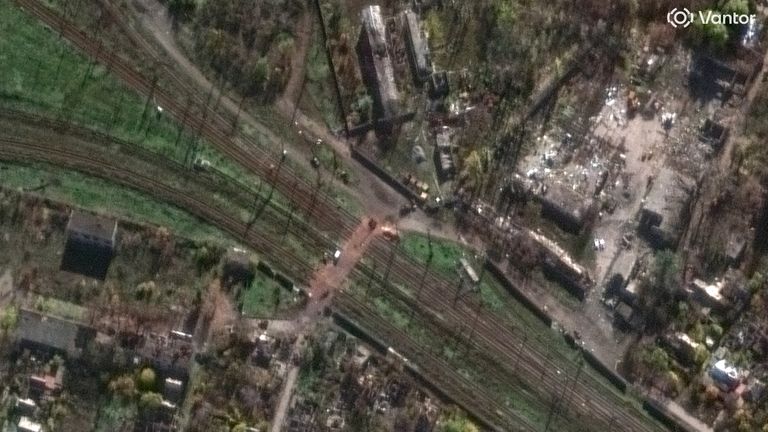
• Ukrainian troops still control the northern part of the fortress city of Pokrovsk in the Donbas and will keep battling to retake the rest of it, contrary to Russian claims to have captured what has been a key target for Moscow for the past 16 months.

• Russia is firing between 4,000 to 5,000 one-way attack drones at Ukrainian positions along the frontline every day as well as 1,500 to 2,000 drones that drop bombs. But Ukraine is firing the same volume – and even more – back. “In terms of drones, there is roughly parity. At the moment, we are deploying slightly more FPV [first person view] drones than the Russians.”

• Russia’s armed forces still have double the volume of artillery rounds of Ukraine’s, but the range and lethality of drone warfare mean it is harder to use artillery effectively. Now, 60% of strikes are carried out by drones.

• More than 710,000 Russian soldiers are deployed along a frontline that stretches some 780 miles (1,255km), with the Russian side losing around 1,000 to 1,100 soldiers a day, killed or wounded “and a majority are killed”.

The Russian army is currently “attempting to advance along virtually the entire frontline,” General Syrskyi said.

Where are the harshest battles?

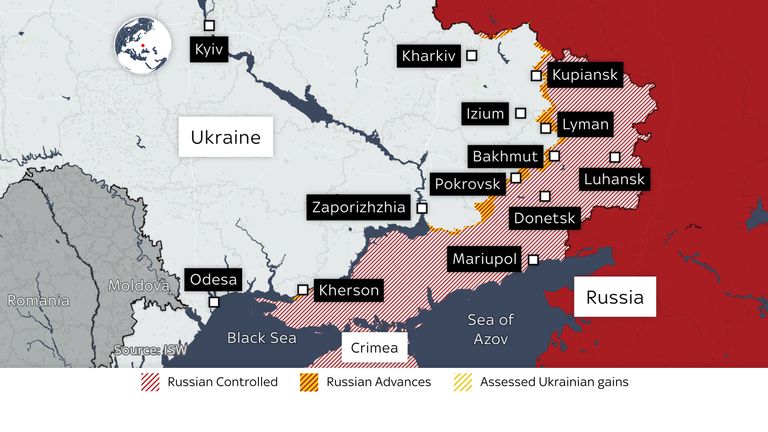
The fiercest battles are around Pokrovsk, as well as the northeastern city of Kupiansk, in Kharkiv region, the Lyman area, also in the Donbas, and near a small city called Huliaipole, in the Zaporizhzhia region of southeastern Ukraine.

“The Ukrainian army is conducting a strategic defensive operation, aiming to contain the enemy’s advance, prevent them from breaking deeper, inflict maximum losses, and carry out counter-offensive actions in those sectors where we see the enemy is vulnerable,” the commander said.

“Our strategy is to exhaust the Russian army as much as possible, prevent its advance, hold our territory, while simultaneously striking the enemy in the near rear, the operational depth, and… into Russia itself, with the aim of undermining its defence capability and industrial capacity.”

Please use Chrome browser for a more accessible video player

Peace deal: Russia ‘in no mood to compromise’

He is referring to a capability Ukraine has developed to launch long-range drones, laden with explosives, deep into Russia to strike military targets as well as oil refineries.

The operation is aimed at destroying fuel for the tanks, warships and jets that are attacking Ukraine and – crucially – reducing oil revenues that help to fund Russia’s war machine.

Sea drones crash into Russia’s warships

The Ukrainian military is also deploying explosive sea drones that are smashed into Russian warships as well as tankers used to transport sanctioned Russian oil.

Asked if his forces were ready – and had sufficient manpower – to keep fighting if necessary, General Syrskyi said: “We have the resources to continue conducting military operations.”

Yet Ukraine is suffering from a shortage of troops on the frontline.

Soldiers and wider society are also exhausted and facing another winter of war.

No sign of Moscow winding down war effort

President Putin has an advantage when it comes to troop numbers and firepower over time, which makes continued support to Kyiv from its allies more vital than ever.

General Syrskyi cautioned that Moscow showed no sign of winding down its war effort despite the Russian leader telling President Trump he is prepared to negotiate.

Read more on Sky News:
Hugs ahead of India-Russia talks
New Russia sanctions ‘pointless’

“So we do everything so that if the enemy continues the war, and you can see that although we want peace, a fair peace, the enemy continues its offensive, using these peace talks as cover,” he said.

“There are no pauses, no delays in their operations. They keep pushing their troops forward to seize as much of our territory as possible under the cover of negotiations.”

He added: “So we are just forced to wage this war… protecting our people, our cities and towns, and our land.”

The commander said this is what motivates his soldiers.

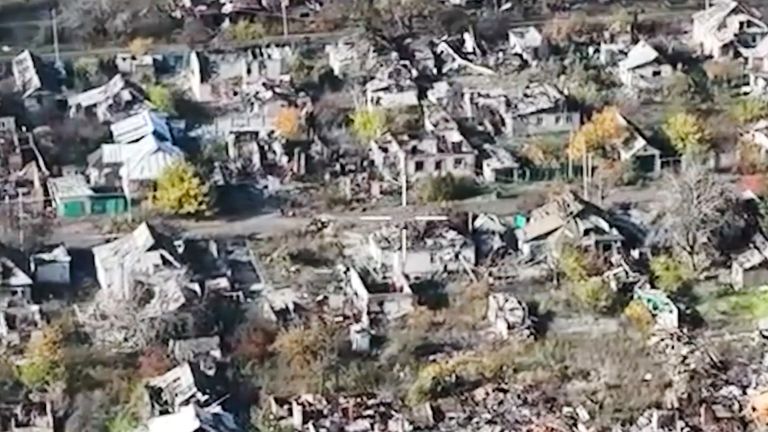
“If we do not do this, we can see clearly what the Russian army leaves behind, only ruins, only deaths.”

As for whether the UK and other European nations should be preparing their people for the possibility of a wider war with Russia, the general said: “Of course, the armed forces of every country ensure reliable protection of their citizens, their children, and their territory.

“With the existence of aggressive states, above all the Russian Federation and its allies, this issue is extremely urgent.

“Everything must be done to ensure the capability to maintain a level of defence, and armed forces modern enough to repel aggression, both individually and in support of the allies.”

Continue Reading

World

Major city may have to evacuate as water supplies run low

Published

on

By

Major city may have to evacuate as water supplies run low

Iran’s capital is counting down to “day zero” – the day the water runs out and the taps run dry.

Reservoirs that supply Tehran’s 15 million residents are almost empty.

The Karaj dam, which supplies a quarter of the city’s drinking water, is just 8% full.

Water rationing has begun in some areas, with the flow from taps reduced or even stopped altogether overnight.

President Masoud Pezeshkian has urged people to use water sparingly – or the city, or at least parts of it, may even have to evacuate.

So what’s going on?

Rain should start falling in the autumn after Iran’s hot dry summer.

But according to the country’s National Weather Forecasting Centre, this has been the driest September to November period in half a century, with rainfall 89% below the long-term average.

The combination of low rainfall and high heat has lasted for more than five years, leaving the country parched.

But the weather – and the shadow of climate change – aren’t the only factors in Tehran’s water crisis.

According to the Centre for Strategic and International Studies, the population of the city has almost doubled from 4.9 million in 1979 to 9.7 million today.

But water consumption has risen even faster, quadrupling from 346 million cubic metres in 1976 to 1.2 billion cubic metres now. Increasing wealth has allowed more people to buy washing machines and dishwashers.

To supplement supplies from reservoirs, Tehran has had to turn to natural aquifers underground, which provide between 30% and 60% of its tap water in recent years.

But that puts the city in direct competition with farmers who draw on the water to irrigate crops.

Levels are falling by 101 million cubic metres a year around Tehran, according to analysis in the journal Science Advances. That’s water that has accumulated from many decades of rain – and will take at least as long to replenish.

Read more from Sky News:
Could a volcanic eruption have spread the Black Death?
The words you have mispronounced all year – and how to say them

Professor Kaveh Madani, the former deputy head of Iran’s environment department and now director of the United Nations University Institute for Water, Environment and Health, said chronic mismanagement of natural resources has led to what he calls water bankruptcy.

He told Sky News: “These things were not created overnight.

“They’re the product of decades of bad management, lack of foresight, overreliance and false confidence in how much infrastructure and engineering projects can do in a country that is relatively water short.”

Government ministers blame the water shortage on climate change, water leaks from pipes and the 12-day war with Israel.

Whatever the reason, it underlines the threat of water scarcity to global cities. Tehran is not alone.

Please use Chrome browser for a more accessible video player

Water crisis: Will Britain’s taps run dry?

Cape Town in South Africa narrowly avoided taps running dry eight years ago after a city-wide effort to save water.

Even London, known for its rain, is at risk. Supplies haven’t kept up with population growth and booming demand.

As Tehran has found, droughts that are being made more likely and more severe with climate change can expose the fragility of water supply.

Continue Reading

World

Israel allowed to take part in Eurovision 2026 – as several countries withdraw

Published

on

By

Israel allowed to take part in Eurovision 2026 - as several countries withdraw

Israel will be allowed to compete in next year’s Eurovision Song Contest, organisers have said – with several broadcasters saying they will now boycott the event.

Dutch broadcaster AVROTROS, Spain’s RTVE, Ireland’s RTE and Slovenia’s RTV immediately issued statements saying they will not participate in the 2026 contest following the European Broadcasting Union’s general assembly meeting on Thursday.

Members from 37 countries were asked to vote in a secret ballot on whether they were happy with tougher new rules announced last month, without going ahead with a vote on participation next year.

It followed criticism from some broadcasters of Israel’s role in Eurovision amid the war in Gaza, and allegations that voting at this year’s contest had been manipulated in favour of their contestant.

Spain, represented by Melody earlier this year, is one of the countries that has said it will not take part in 2026. Pic: Reuters
Image:
Spain, represented by Melody earlier this year, is one of the countries that has said it will not take part in 2026. Pic: Reuters

In a statement, the EBU, which organises Eurovision, said members had shown “clear support for reforms to reinforce trust and protect neutrality”. Sky News understands 11 countries voted against only accepting the rule changes.

Golan Yochpaz, chief executive of Israel’s public broadcaster KAN, said during the meeting that attempts to remove them from the contest could “only be understood as a cultural boycott”, according to a statement shared by the organisation.

Israel’s president Isaac Herzog posted on X following the announcement, saying: “Israel deserves to be represented on every stage around the world, a cause to which I am fully and actively committed… I hope that the competition will remain one that champions culture, music, friendship between nations, and cross-border cultural understanding.”

Boycott announcements – what have broadcasters said?

Ireland, represented by EMMY in Basel 2025, have also said they will not participate in 2026. Pic: EBU
Image:
Ireland, represented by EMMY in Basel 2025, have also said they will not participate in 2026. Pic: EBU

The broadcasters from Spain, Ireland, Slovenia and the Netherlands had all said earlier in the year that they would not participate in 2026 should Israel be allowed to continue in the competition.

In a statement following the general assembly meeting, RTE confirmed Ireland‘s position.

“RTE feels that Ireland’s participation remains unconscionable given the appalling loss of lives in Gaza and the humanitarian crisis there which continues to put the lives of so many civilians at risk,” the broadcaster said.

AVROTROS, broadcaster for the Netherlands, said that “under the current circumstances, participation cannot be reconciled with the public values that are fundamental to our organisation”.

Claude singing C'est La Vie for The Netherlands at this year's event. Pic: Reuters
Image:
Claude singing C’est La Vie for The Netherlands at this year’s event. Pic: Reuters

General director Taco Zimmerman said it had not been an easy decision, adding: “Culture unites, but not at any price. What has happened over the past year has tested the limits of what we can uphold.”

Confirming its withdrawal, Spain‘s RTVE highlighted how its board of directors had agreed in September that the country would withdraw “if Israel was part of it”.

This is a big deal for Eurovision, as Spain is one of the “Big Five” broadcasters – a group which also includes France, Germany, Italy and the UK. While the host broadcaster – as last year’s winners, this is Austria this year – will often contribute the most towards the cost of staging the contest, the Big Five will also make up a significant amount.

Members met at the European Broadcasting Union headquarters in Geneva, Switzerland. Pic: REUTERS/Denis Balibouse
Image:
Members met at the European Broadcasting Union headquarters in Geneva, Switzerland. Pic: REUTERS/Denis Balibouse

Slovenian broadcaster RTV said it was pulling out of the competition “on behalf of the 20,000 children who died in Gaza”.

In her address to members before the decision, Natalija Gorscak, RTV Slovenia board chairwoman, said: “For the third year in a row, the public has demanded that we say no to the participation of any country that attacks another country. We must follow European standards for peace and understanding.

“Eurovision has been a place for joy and happiness from the very beginning, performers and audiences have been united by music, and it should remain that way.”

Eurovision ‘is for broadcasters, not governments’

This year's Eurovision Song Contest was won by JJ from Austria, so they will host in 2026. Pic: AP
Image:
This year’s Eurovision Song Contest was won by JJ from Austria, so they will host in 2026. Pic: AP

But Austria’s broadcaster ORF said it was happy with the decision and is looking forward to hosting next year.

Roland Weissman, ORF director-general, said the contest “is a competition for broadcasters, not governments”, and that he had personally advocated for Israel’s participation.

“In the spirit of fostering cultural dialogue and supporting and strengthening the democratic role of public broadcasters, it was important not to burn any bridges,” he said, adding that concerns raised by some members had been taken “very seriously”.

“Naturally, I would regret it if broadcasters were to decide against participating,” he added. “I see the Eurovision Song Contest in Vienna as an opportunity to emphasise what unites us rather than what divides us – United by Music.”

Politics has always played a part in Eurovision, despite the EBU’s insistence that it remains politically neutral.

Countries have pulled out or been banned in previous years – most notably Russia in 2022, just days after the invasion of Ukraine.

But this exodus could be Eurovision’s biggest political crisis yet, with suggestions that other broadcasters may follow suit.

Iceland’s broadcaster RUV said its board would discuss participation at a meeting next Wednesday, after previously agreeing to a motion to recommend Israel be expelled.

Remember Monday represented the UK at Eurovision in 2025. Pic: MANDOGA MEDIA/picture-alliance/dpa/AP
Image:
Remember Monday represented the UK at Eurovision in 2025. Pic: MANDOGA MEDIA/picture-alliance/dpa/AP

The BBC, which broadcasts the competition in the UK, said it supported the decision for Israel to be allowed to take part. “This is about enforcing the rules of the EBU and being inclusive,” it said in a statement.

Earlier this year, outgoing BBC director-general Tim Davie said the corporation was “aware of the concerns” raised, but the song contest had “never been about politics”.

Eurovision chaos has been brewing for some time – so what happens next?


Katie Spencer

Katie Spencer

Arts and entertainment correspondent

With a slew of countries quitting Eurovision over Israel’s inclusion, the competition has been thrown into chaos.

This has been brewing for some time. A few months ago, the row had become such a point of contention that the EBU announced plans for an emergency vote. Crucially, that was called off when a Gaza ceasefire was announced.

So instead, at its big assembly meeting, countries were only allowed to vote on rule changes being introduced – another issue that allegedly involved Israel amid accusations of unfair voting practices.

If you read the EBU’s post-meeting statement, you’d think it had gone swimmingly. But while it made it sound like everyone was in agreement, Sky News understands 11 countries in fact voted against the changes.

Denied an actual vote on Israel’s participation, it triggered a domino effect of countries quitting – the Netherlands, Ireland, Spain and Slovenia.

Arguably, Spain pulling out could have the biggest effect. It’s one of the key financial backers of the contest – and that could potentially impact the ability to stage it in the grand way we’ve become to accustomed to.

So what happens next?

The contest prides itself on maintaining political and cultural neutrality, positioning itself as celebrating music and peace rather than politics.

But for now, the big question is: who will be left singing?

How have the rules changed?

In November, the EBU announced it was changing its voting system. This followed allegations of “interference” by Israel’s government earlier this year.

The rule changes announced in November came after Israeli singer Yuval Raphael received the largest number of votes from the public at the 2025 event, held in Basel, Switzerland, in May – ultimately finishing as runner-up to Austria’s entry after the jury votes were counted.

But a number of broadcasters raised concerns about Israel’s result.

Key changes to next year’s competition include:

• Clearer rules around promotion of artists and their songs
• Cap on audience voting halved
• The return of professional juries to semi-finals
• Enhanced security safeguards

It was these changes members were secretly balloted on at the general assembly. With a “large majority” voting that they were happy with these changes, the EBU said there was no need for a further vote on participation.

Speaking after the discussion, EBU president Delphine Ernotte Cunci said the result “demonstrates members’ shared commitment to protecting transparency and trust in the Eurovision Song Contest, the world’s largest live music event”.

Thanking members for their “thoughtful, respectful and constructive contributions” during the session and throughout the year, she said these discussions had led to “meaningful changes” to the rules, ensuring the contest “remains a place for unity and cultural exchange”.

Continue Reading

Trending