

Spain floods: Epicentre now a bizarre medley of debris – as video shows miraculous rescue

To walk through the streets of Paiporta is to see nature at its most vicious.
Everywhere, there is chaos in this town. Lives have been ripped apart, turned upside down and ended.
Spain floods latest: Looting breaks out as flood deaths surpass 150
You can’t drive into Paiporta, a suburb about 4 miles to the southwest of Valencia, so we cover the final mile by foot. For most of the walk, we pass past fruit groves. The sun is getting warmer.
It could be a normal day. Except then you arrive in the town, and normality has gone.
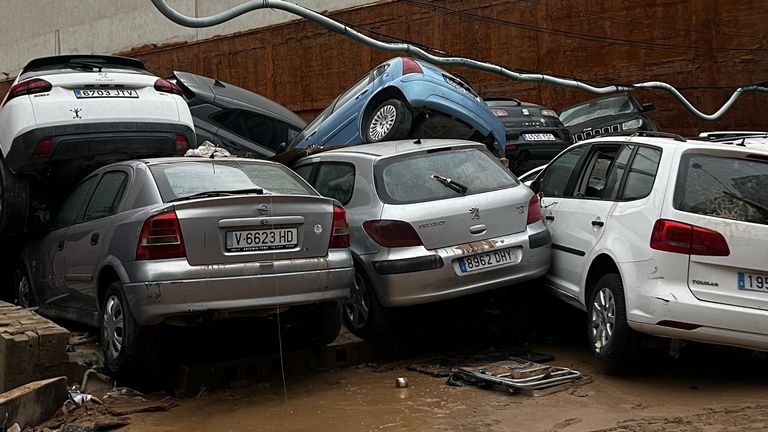
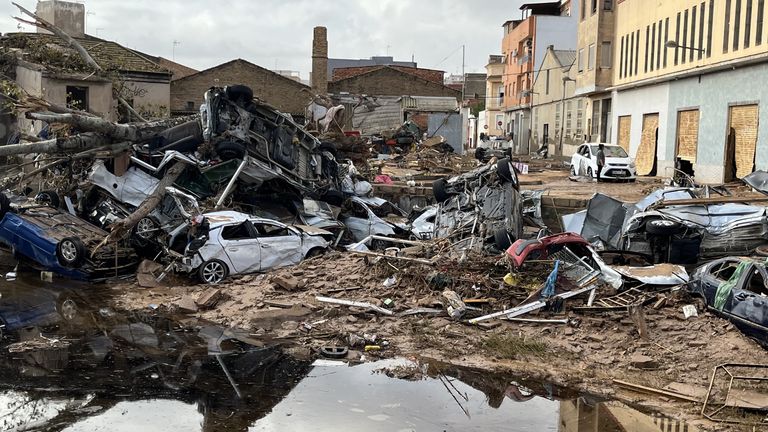
We turn a corner and find a road that has been wholly blocked by a wall of cars, thrown together.
To the side, a family is wading through their garage, which is under three feet of water.
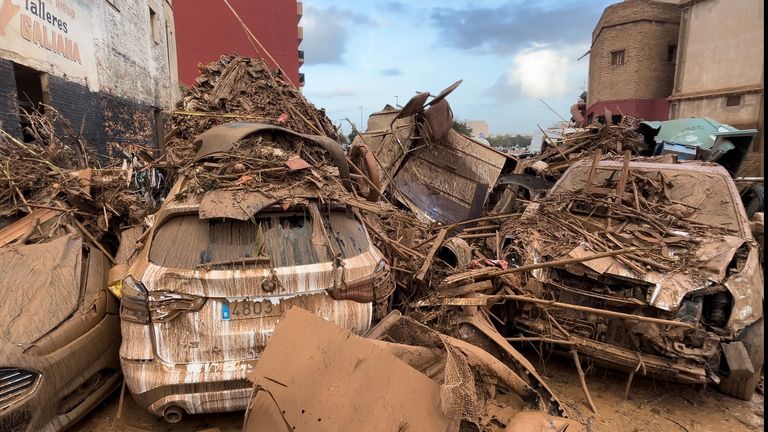
All around is a bizarre medley of debris. Most of it is coated in thick, sticky mud that clings to everything – the road, your clothes and all these chunks of everyday life that have been swept away and mixed together.
So there is a child’s shoe, a beer chiller, a jumper, a corkscrew and a lump of an engine block. All of them muddled, muddy and sad.
“We have to clean,” says the woman, staring at the endless water in her garage. Her son is wading in, pulling out possessions.
There were three motorbikes in here, two of them new. All of them are ruined. Everything in sight is ruined. But they know they are lucky.
Down the road, on the other side of the wall of cars, they knew a couple who were in their car when the flood water came, with shocking speed.
They both died – two of forty people who are known to have died in this town so far.
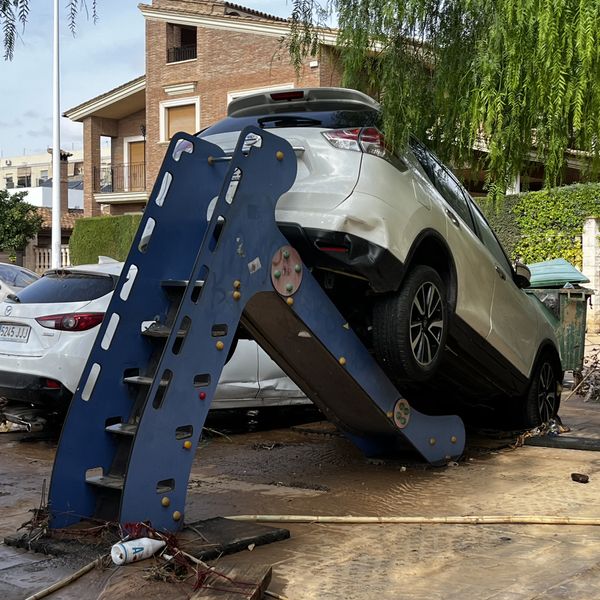
The damage is utterly random. A car lies, absurdly, on top of a children’s slide. Paving stones lie in a pile while front doors flap open, offering a view of homes that have been engulfed by water and mud.
Outside, there are people trying to push the water away, using brooms and shovels.
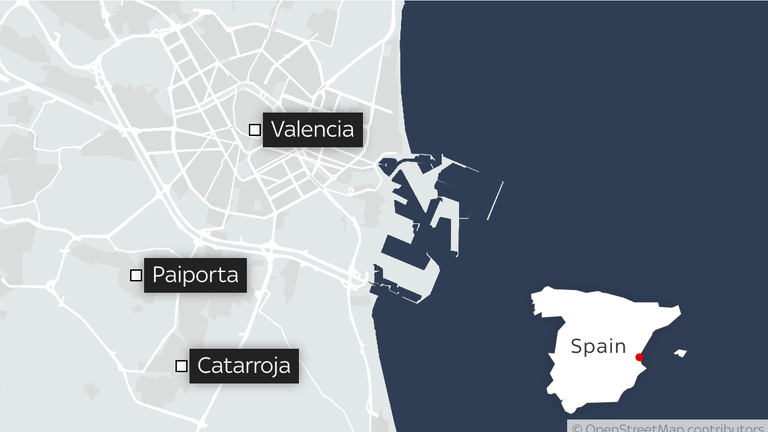
Down the road, we visit Catarroja, normally a pretty town that welcomes plenty of tourists.
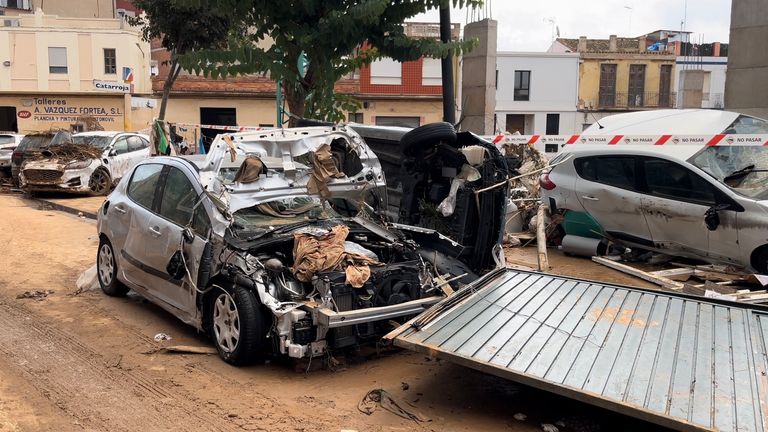
Now the main high street is covered in pebbles and as we drive in, we have to gingerly avoid holes in the road, industrial dustbins that have rolled into the street, and a long line of crumpled vehicles.
Everywhere we go, in fact, it is the cars that are the symbol of these floods – tossed around carelessly, thrown into gardens, into a playground, into rivers and streams, on top of each other and into houses.
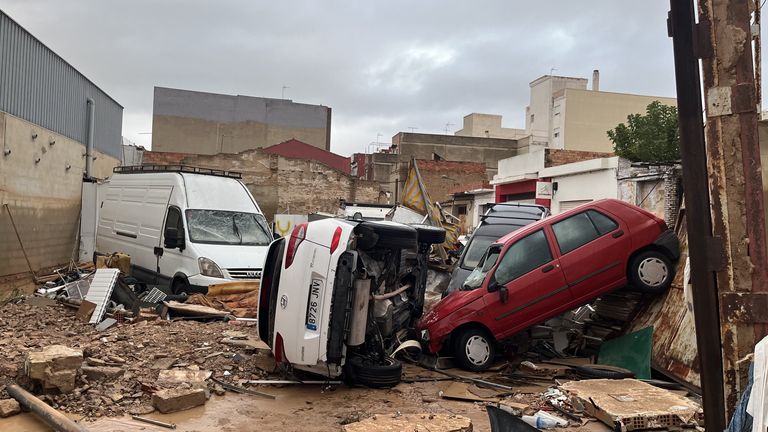
They are smashed, upturned, filthy, and broken, and the cars have, in turn, broken so much else. When the water rushed through these towns, it picked them up and used them as weapons.
A woman walks past, pleading with me to tell the world that they have no water and no food. Everything has been cut off and the shops are shut.
Half an hour later, I see her and a friend walking along the street with a shopping trolley loaded with food, arguing with other people. They have, quite clearly, helped themselves to what they needed.

Keep up with all the latest news from the UK and around the world by following Sky News
Read more:
Spain’s floods hit ‘like a tsunami’
How trapped British woman escaped chest-high floods
What caused the floods in Spain?
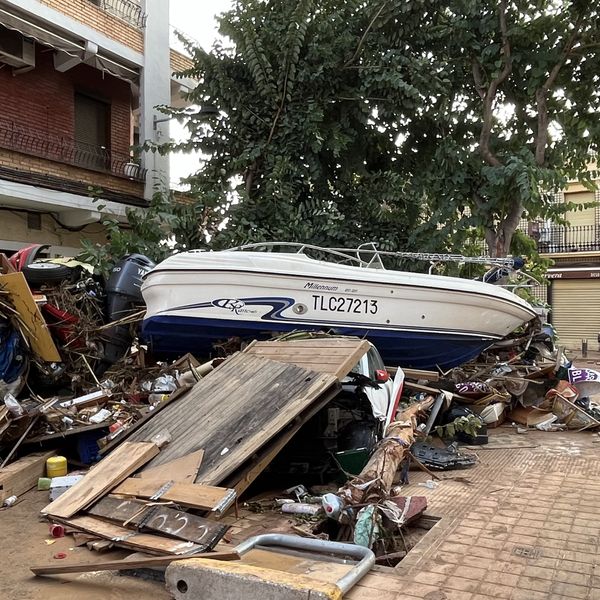
Across the road, half-wedged in a tree, is a boat. We are a decent way from the sea, and nobody seems to know whose boat it is, or where it came from.
But there it is, a symbol of how this flood created such instant discordant chaos.
We meet Veronica, walking along with her two children. She is taking them to a grandparent, whose house is out of town.
She tells me that they had precious little warning before the flood hit – merely a request earlier in the day to take children home from school because there was a storm on the way.
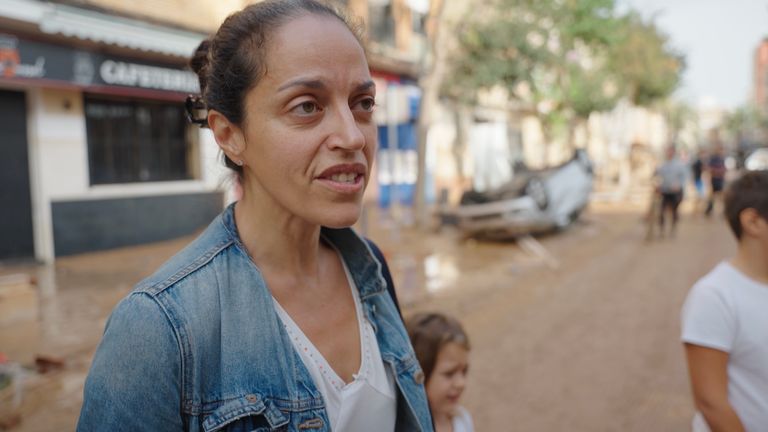
Veronica, who is taking her children out of town
“One minute there was just rain and then there was two metres of water,” she says.
“It was very scary. People have been hurt and some people have died. Now we have to help each other to repair this town.”
She looks around. “It will take a long time.”
There are happier stories, tales of survival and courage. Three young girls come to talk to us in the street, showing us a video of their father rescuing a man from the water at the very moment their road had turned into a churning river (VIDEO AT TOP).
The man, a local called Luis, is being swept along, desperate to survive.
Their father, leaning out of the window of the family’s apartment, has thrown down a rope and is clinging on.
As we watch, you can hear the screams of the man and the encouraging shouts of the onlookers.
Slowly, slowly, he is pulled out of the water and clambers over a balcony to safety.
The girls burst with pride; their father, clearly, saved this man’s life. In the midst of this horror, there are shards of valour and joy.
World
‘At least 59 killed’ in Gaza after Israeli military opens fire near aid centre and carries out strikes
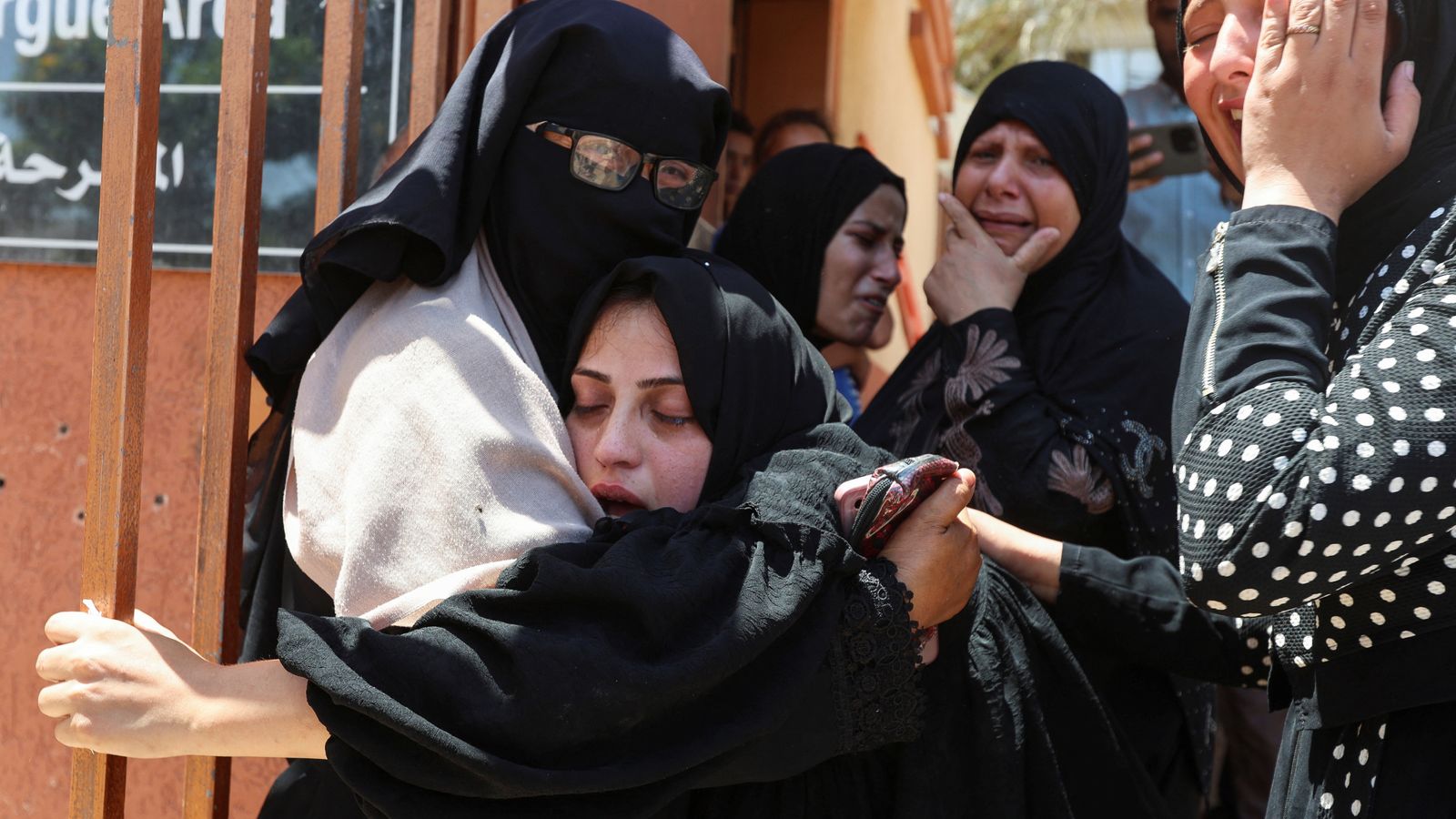
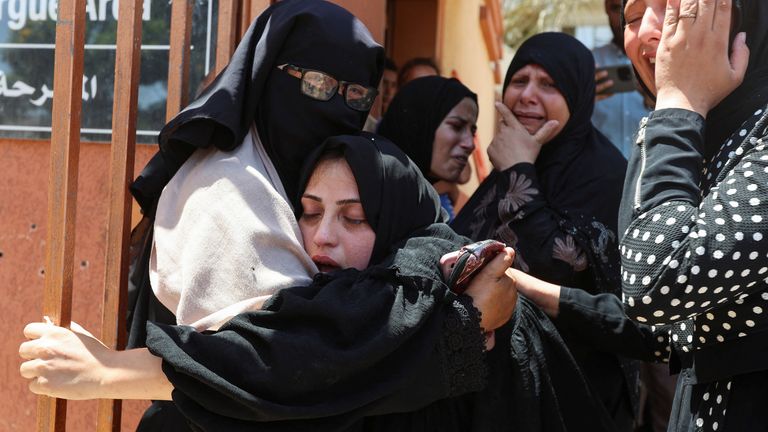
At least 59 Palestinians have reportedly been killed after the Israeli military opened fire near an aid centre in Gaza and carried out strikes across the territory.
The Red Cross, which operates a field hospital in Rafah, said 25 people were “declared dead upon arrival” and “six more died after admittance” following gunfire near an aid distribution centre in the southern Gazan city.
The humanitarian organisation added that it also received 132 patients “suffering from weapon-related injuries” after the incident.
The Red Cross said: “The overwhelming majority of these patients sustained gunshot wounds, and all responsive individuals reported they were attempting to access food distribution sites.”
The organisation said the number of deaths marks the hospital’s “largest influx of fatalities” since it began operations in May last year.
The IDF has said it fired “warning shots” near the aid distribution site but it was “not aware of injured individuals” as a result.
It said in a statement: “Earlier today, several suspects were identified approaching IDF troops operating in the Rafah area, posing a threat to the troops, hundreds of metres from the aid distribution site.
“IDF troops operated in order to prevent the suspects from approaching them and fired warning shots.”
Palestinians mourn a loved one following the incident near the aid centre. Pic: Reuters
Mother’s despair over shooting
Somia Alshaar told Sky News her 17-year-old son Nasir was shot dead while visiting the aid centre after she told him not to go.
She said: “He went to get us tahini so we could eat.
“He went to get flour. He told me ‘mama, we don’t have tahini. Today I’ll bring you flour. Even if it kills me, I will get you flour’.
“He left the house and didn’t return. They told me at the hospital: your son…’Oh God, oh Lord’.”
Asked where her son was shot, she replied: “In the chest. Yes, in the chest.”
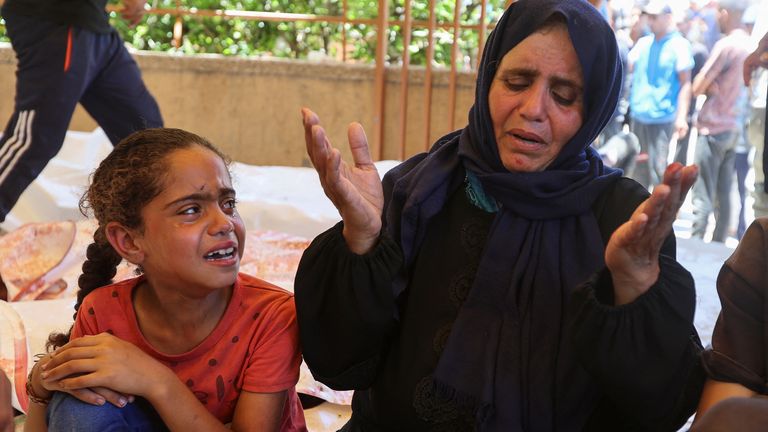
Somia Alshaar, pictured with her daughter, says her son was shot dead. Pic: Reuters
‘A policy of mass murder’
Hassan Omran, a paramedic with Gaza’s ministry of health, told Sky News after the incident that humanitarian aid centres in Gaza are now “centres of mass death”.
Speaking in Khan Younis, he said: “Today, there were more than 150 injuries and more than 20 martyrs at the aid distribution centres… the Israeli occupation deliberately kills and commits genocide. The Israeli occupation is carrying out a policy of mass murder.
“They call people to come get their daily food, and then, when citizens arrive at these centres, they are killed in cold blood.
“All the victims have gunshot wounds to the head and chest, meaning the enemy is committing these crimes deliberately.”
Israel has rejected genocide accusations and denies targeting civilians.
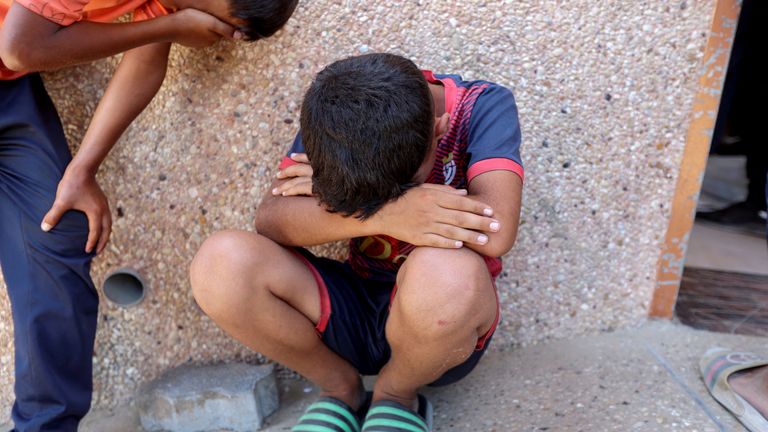
Two boys mourn their brother at Nasser Hospital in Khan Younis. Pic: Reuters
‘Lies being peddled’
The Gaza Humanitarian Foundation (GHF), the controversial US and Israeli-backed group which operates the distribution centre near Rafah, said: “Hamas is claiming there was violence at our aid distribution sites today. False.
“Once again, there were no incidents at or in the immediate vicinity of our sites.
“But that’s not stopping some from spreading the lies being peddled by ‘officials’ at the Hamas-controlled Nasser Hospital.”
The Red Cross said its field hospital in Rafah has recorded more than 250 fatalities and treated more than 3,400 “weapon-wounded patients” since new food distribution sites were set up in Gaza on 27 May.
Read more:
‘At least 798 killed’ at Gaza aid points
’10 children killed’ waiting for Gaza health clinic to open
Israel says permanent ceasefire ‘questionable’
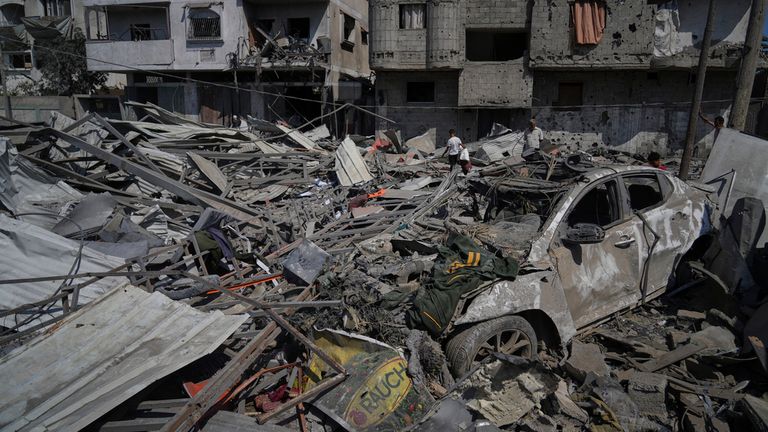
Palestinians inspect the wreckage after an Israeli airstrike in Deir al Balah. Pic: AP
It comes after four children and two women were among at least 13 people who died in Deir al Balah, in central Gaza, after Israeli strikes pounded the area starting late on Friday, officials in Al Aqsa Martyrs hospital in the territory said.
Fifteen others died in Israeli airstrikes in Khan Younis, in southern Gaza, according to Nasser Hospital.
The Israel Defense Forces (IDF) has not responded to a request for comment on the reported deaths.

Listen to The World with Richard Engel and Yalda Hakim every Wednesday
Israeli has been carrying out attacks in Gaza since Hamas-led militants killed some 1,200 people and took 251 hostages on 7 October 2023.
Hamas still holds 50 hostages, with fewer than half of them believed to be alive, after most of the rest were released in ceasefire agreements or other deals.
Israel’s offensive in Gaza has killed more than 57,000 Palestinians, more than half of them women and children, according to Gaza’s health ministry, which does not distinguish between civilians and combatants in its count.
US President Donald Trump has said he is closing in on another ceasefire agreement that would see more hostages released and potentially wind down the war.
But after two days of talks this week with Israeli Prime Minister Benjamin Netanyahu, there were no signs of a breakthrough.
Keep up with all the latest news from the UK and around the world by following Sky News
The latest fatalities in Gaza comes as a 20-year-old Palestinian-American man was beaten to death by settlers in the Israeli-occupied West Bank on Friday, the Palestinian Health ministry said.
Sayafollah Musallet, also known as Saif, was killed during a confrontation between Palestinians and settlers in Sinjil, north of Ramallah, the ministry said.
A second man, Hussein Al-Shalabi, 23, died after being shot in the chest.
Mr Musallet’s family, from Tampa Florida, has called on the US State Department to lead an “immediate investigation”.
A State Department spokesperson said it was aware of the incident but it had no further comment “out of respect for the privacy of the family and loved ones” of the reported victim.
The Israeli military said the confrontation broke out after Palestinians threw rocks at Israelis, lightly injuring them.
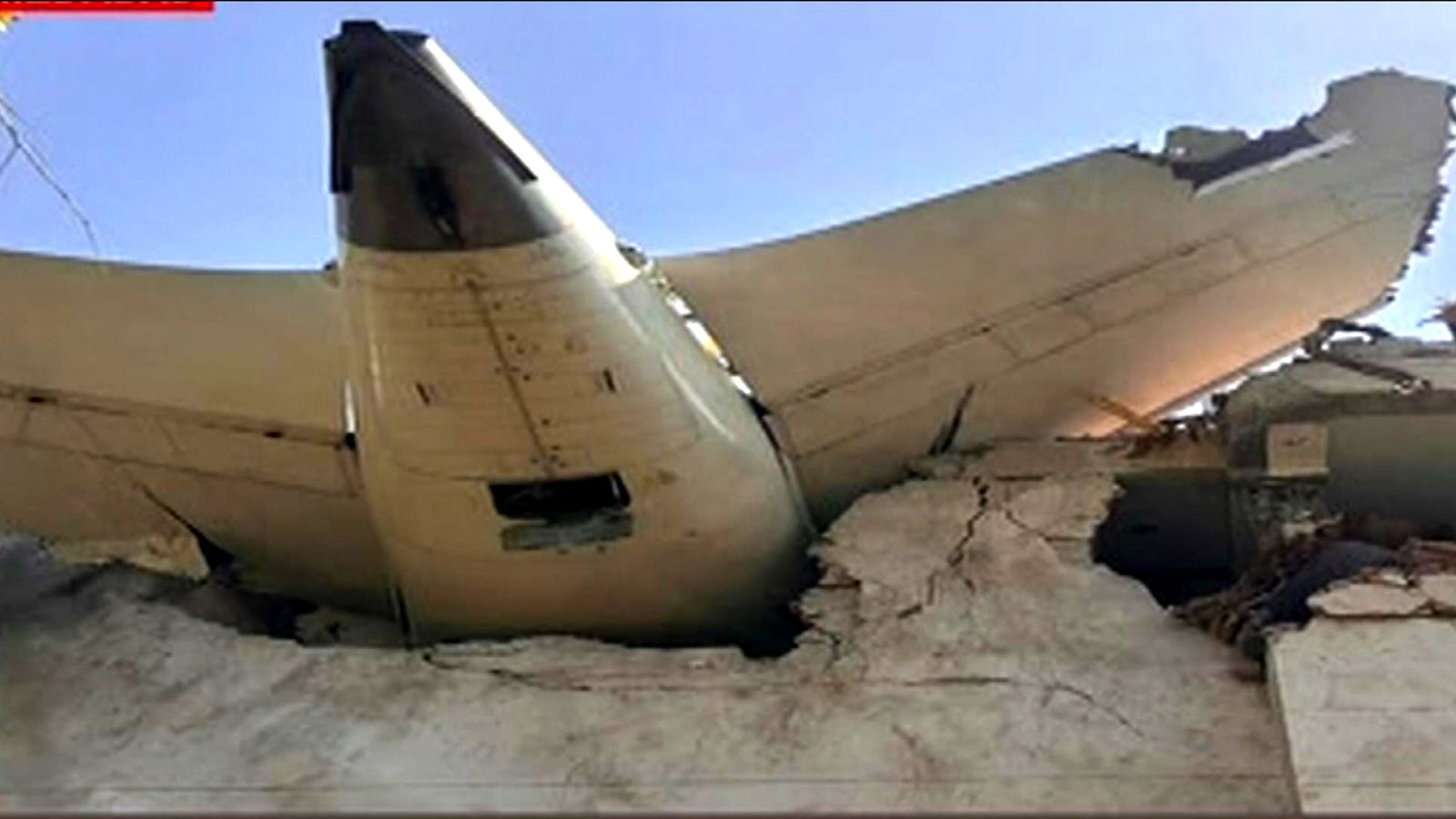

As investigators continue to piece together the full picture, early findings of the Air India crash are pointing towards a critical area of concern — the aircraft’s fuel control switches.
The flight, bound for London Gatwick, crashed just moments after taking off from Ahmedabad airport on 12 June, killing all but one of the 242 people on board the plane and at least 19 on the ground.
According to the preliminary report by India’s Aircraft Accident Investigation Bureau (AAIB), the two engine fuel control switches on the plane were moved from the “RUN” to “CUTOFF” position.
These switches control fuel flow to the engines and should only be used when the aircraft is on ground, first to start the engines before a flight and later to shut them down at the gate.
They are designed so they’re unlikely to be changed accidentally, pointing to possible human error on the Air India flight.
The findings include the final conversation between the pilots and show there was confusion in the cockpit as well.
When one pilot asked the other why he cut off the fuel, he responded to say he did not do so.
The Air India plane before the crash. Pic: Takagi
Moments later, a Mayday call was made from the cockpit, but the plane could not regain power quickly enough and plummeted to the ground.
Captain Amit Singh, founder of Safety Matters Foundation, an organisation dedicated to aviation safety, told Sky News: “This exchange indicates that the engine shutdowns were uncommanded.
“However, the report does not identify the cause – whether it was crew error, mechanical malfunction, or electronic failure.”
Previous warning of ‘possible fuel switch issue’
“The Boeing 787 uses spring-loaded locking mechanisms on its fuel control switches to prevent accidental movement,” Mr Singh explained.
But a previous bulletin from the Federal Aviation Administration (FAA) “warned that these switches might be installed with the locking feature disengaged,” he said.
This could “make them susceptible to unintended movement due to vibration, contact, or quadrant flex”, he added.
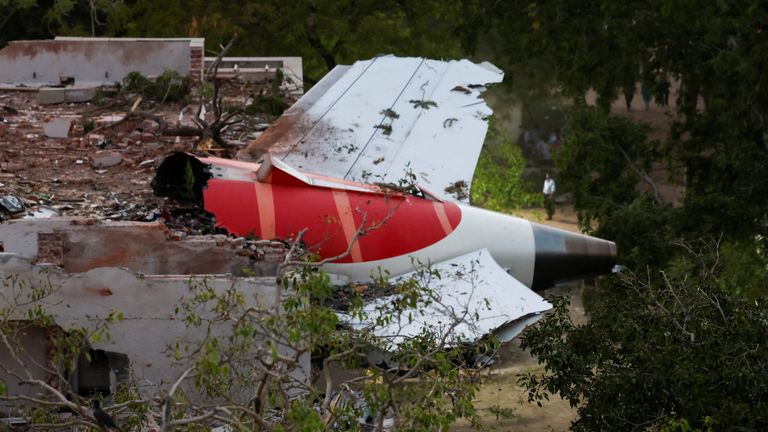
The plane’s tail lodged in a building. Pic: Reuters
Speaking to Sky News, aviation expert Terry Tozner said: “The take-off was normal, the aircraft rotated at the correct speed left the ground and almost immediately, the cut-off switches were selected to off, one then two.
“But nobody has said with any clarity whether or not the latch mechanisms worked okay on this particular aircraft. So we can only assume that they were in normal working order.”
In India, there has been a backlash over the findings, with some saying the report points to pilot error without much information and almost dismisses the possibility of a mechanical or electric failure.
Indian government responds
India’s civil aviation minister Kinjarapu Ram Mohan Naidu has been quick to respond, saying: “We care for the welfare and the wellbeing of pilots so let’s not jump to any conclusions at this stage, let us wait for the final report.
“I believe we have the most wonderful workforce of pilots and crew in the whole world.”

India plane crash survivor carries brother’s coffin
Both pilots were experienced, with around 19,000 flying hours between them, including more than 9,000 on Boeing 787s.
The report says the aircraft maintenance checks were on schedule and that there are no signs of fuel contamination or a bird strike.
So far, no safety recommendations have been issued to Boeing or General Electric, the engine manufacturers.
Concern over destroyed flight recorder
Mr Singh said “the survivability of the flight recorders also raises concern”.
The plane’s rear flight recorder, designed to withstand impact forces of 3,400 Gs and temperatures of 1,100C for 60 minutes, “was damaged beyond recovery”.
Read more:
Everything you need to know about the crash
Air India’s lone survivor is nothing short of miracle
“The Ram Air Turbine (RAT), which deploys automatically when both engines fail and power drops below a threshold, was observed as deployed in CCTV footage when the aircraft was approximately 60ft above ground level,” Mr Singh said.
“This suggests that the dual engine failure likely occurred before the official timestamp of 08:08:42 UTC, implying a possible discrepancy.”
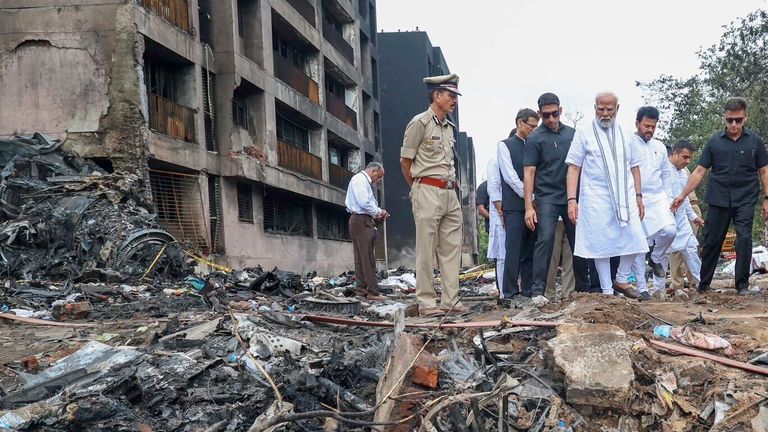
India’s Prime Minister Narendra Modi visiting the crash site. Pic: X/AP
Listen to The World with Richard Engel and Yalda Hakim every Wednesday
Mr Singh said it was also “of particular note” that the plane’s emergency locator transmitter (ELT) did not send any signal after the crash.
“Was the ELT damaged, unarmed, mis-wired, or malfunctioning?” he said.
The report has generated more questions than answers on topics including human error, power source failures and mechanical or electrical malfunction.
The final report is expected to take a year. Meanwhile, families grapple with the unimaginable loss of loved ones in one of the worst disasters in India’s aviation history.
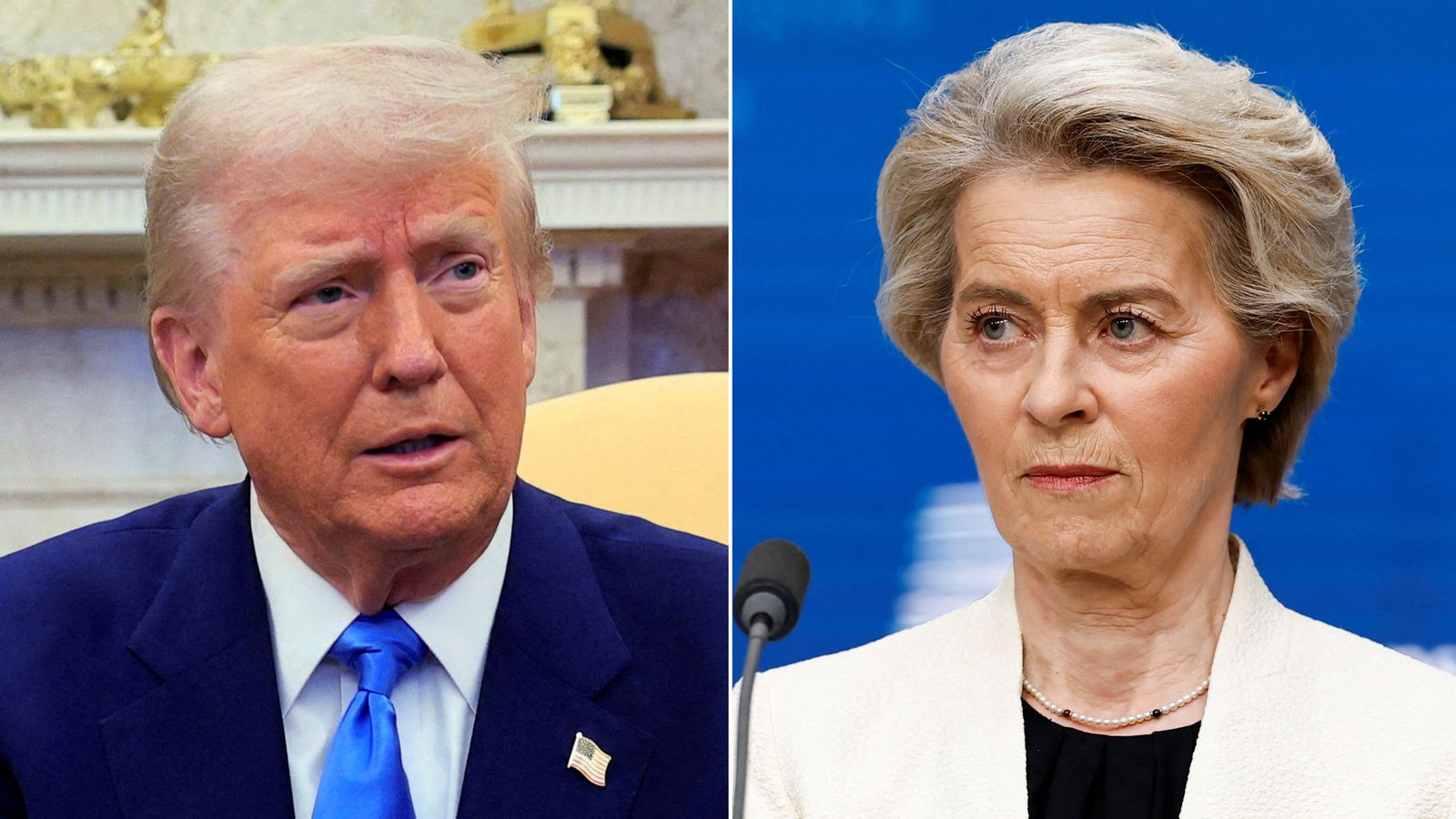

Donald Trump has announced he will impose a 30% tariff on imports from the European Union from 1 August.
The tariffs could make everything from French cheese and Italian leather goods to German electronics and Spanish pharmaceuticals more expensive in the US.
Mr Trump has also imposed a 30% tariff on goods from Mexico, according to a post from his Truth Social account.
Announcing the moves in separate letters on the account, the president said the US trade deficit was a national security threat.
In his letter to the EU, he wrote: “We have had years to discuss our trading relationship with The European Union, and we have concluded we must move away from these long-term, large, and persistent, trade Deficits, engendered by your tariff, and non-Tariff, policies, and trade barriers.
“Our relationship has been, unfortunately, far from reciprocal.”
In his letter to Mexico, Mr Trump said he did not think the country had done enough to stop the US from turning into a “narco-trafficking playground”.
The president of the European Commission, Ursula von der Leyen, said today that the EU could adopt “proportionate countermeasures” if the US proceeds with imposing the 30% tariff.
Ms von der Leyen, who heads the EU’s executive arm, said in a statement that the bloc remained ready “to continue working towards an agreement by Aug 1”.
“Few economies in the world match the European Union’s level of openness and adherence to fair trading practices,” she continued.
“We will take all necessary steps to safeguard EU interests, including the adoption of proportionate countermeasures if required.”
Ms von der Leyen has also said imposing tariffs on EU exports would “disrupt essential transatlantic supply chains”.
Meanwhile, Dutch Prime Minister Dick Schoof said on the X social media platform that Mr Trump’s announcement was “very concerning and not the way forward”.
He added: “The European Commission can count on our full support. As the EU we must remain united and resolute in pursuing an outcome with the United States that is mutually beneficial.”
Mexico’s economy ministry said a bilateral working group aims to reach an alternative to the 30% US tariffs before they are due to take effect.
The country was informed by the US that it would receive a letter about the tariffs, the ministry’s statement said, adding that Mexico was negotiating.
Read more US news:
Trump plans to hit Canada with 35% tariff
More than 160 missing after Texas floods
Robot performs realistic surgery
How ‘liberation day’ unfolded
Trump’s tariff threats and delays
On his so-called “liberation day” in April, Mr Trump unleashed “reciprocal tariffs” on many of America’s trade partners.
The US president said he was targeting countries with which America has a trade imbalance.
However, since then he’s backed down in a spiralling tit-for-tat tariff face-off with China, and struck a deal with the UK.
The US imposed a 20% tariff on imported goods from the EU in April but it was later paused and the bloc has since been paying a baseline tariff of 10% on goods it exports to the US.
In May, while the US and EU where holding trade negotiations, Mr Trump threated to impose a 50% tariff on the bloc as talks didn’t progress as he would have liked.
However, he later announced he was delaying the imposition of that tariff while negotiations over a trade deal took place.
As of earlier this week, the EU’s executive commission, which handles trade issues for the bloc’s 27-member nations, said its leaders were still hoping to strike a trade deal with the Trump administration.
Without one, the EU said it was prepared to retaliate with tariffs on hundreds of American products, ranging from beef and auto parts to beer and Boeing airplanes.
-
 Sports3 years ago
‘Storybook stuff’: Inside the night Bryce Harper sent the Phillies to the World Series
-
 Sports1 year ago
Story injured on diving stop, exits Red Sox game
-
 Sports2 years ago
Game 1 of WS least-watched in recorded history
-
 Sports2 years ago
MLB Rank 2023: Ranking baseball’s top 100 players
-
Sports4 years ago
Team Europe easily wins 4th straight Laver Cup
-
 Sports2 years ago
Button battles heat exhaustion in NASCAR debut
-
 Environment2 years ago
Japan and South Korea have a lot at stake in a free and open South China Sea
-
 Environment2 years ago
Game-changing Lectric XPedition launched as affordable electric cargo bike