

Two Tesla Cybertrucks were destroyed in separate crashes in Mexico within days


Two Tesla Cybertrucks were destroyed in separate crashes that happened in Mexico within just two days.
We haven’t seen a lot of Cybertruck crashes yet. That’s simply because there are not many Cybertrucks in the world yet.
That’s especially true in Mexico, considering the price of the Cyebrtruck, which results in a tiny market for it in the country, and the fact that deliveries south of the border started just a few weeks ago.
That’s why it is surprising to see the two Cybertrucks involved in two big crashes in Mexico within just a few days.
The first accident happened in Mexico City on Friday when, according to local news, a 23-year-old driver lost control of the vehicle and crashed into a gate:

No injuries were reported, but the vehicle looks like a total loss on top of the damage on the house’s gate.
The second crash happened early on Saturday in Guadalajara and the circumstances around the crash are not clear, but the aftermath is absolutely terrifying:
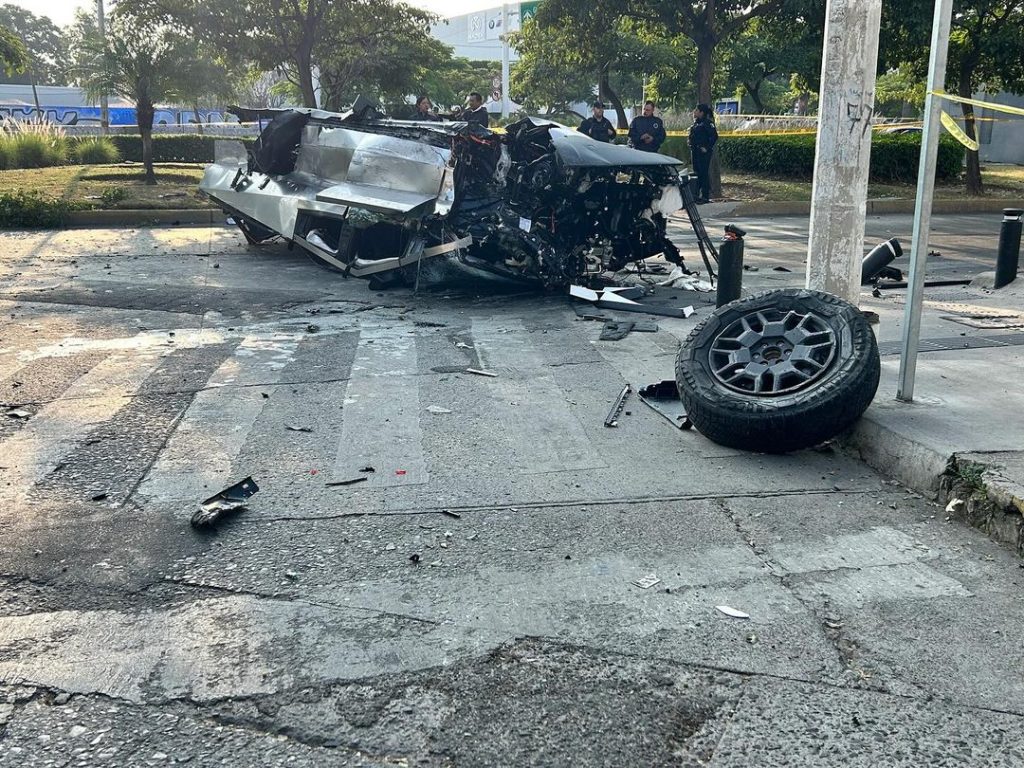
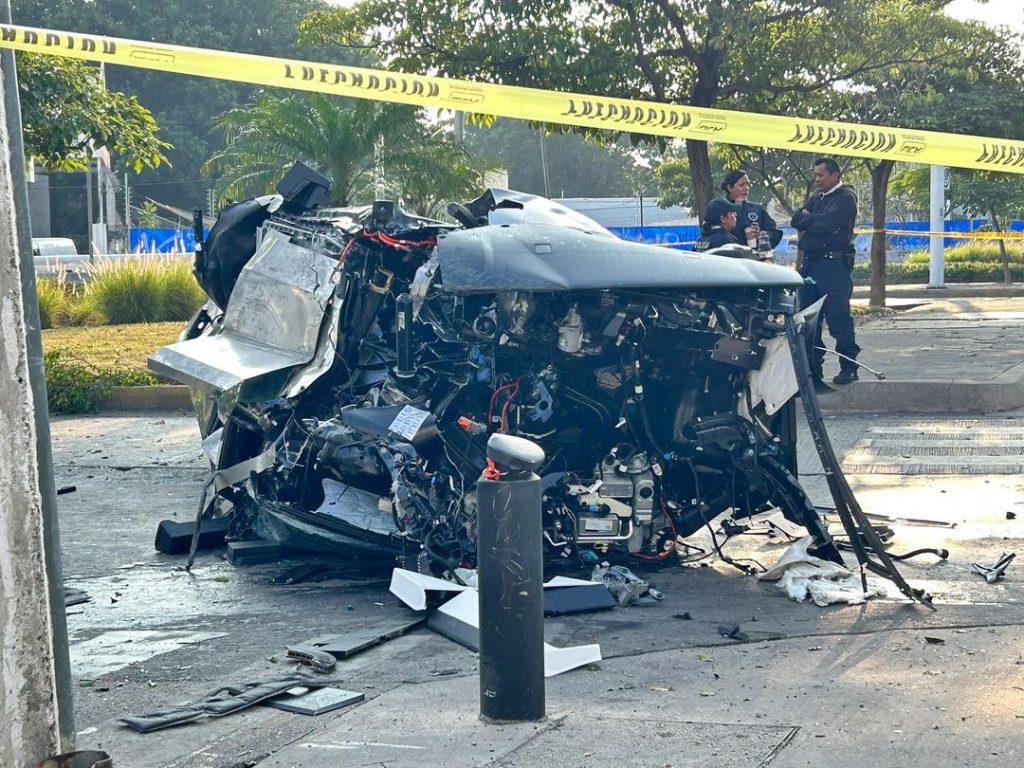
The good news is that no one died, but all three passengers, a 17-year-old girl, a 19-year-old man, a 60-year-old man, and an 18-year-old woman who was found on the pavement by emergency responders but believed to have been ejected from the Cybertruck, were all transported to the hospital.
The Cybertruck appears to have rolled over several times – something that is exceptionally hard to do with electric vehicles but especially Tesla vehicles.
The Cybertruck has yet to be independently crash-tested by safety agencies. Tesla could potentially find some value in inspecting those two crashes in Mexico considering they are amongst the first major crashes involving Cybertrucks.
FTC: We use income earning auto affiliate links. More.
Environment
This solid-state EV battery maker is going public after a real-world test clears 745+ miles


Its solid-state batteries are already showing promise with real-world tests delivering over 745 miles of range on a single charge. Now, Factorial Energy is going public as it aims to bring the promising new battery tech to market as soon as 2027.
Factorial Energy to accelerate solid-state EV battery tech
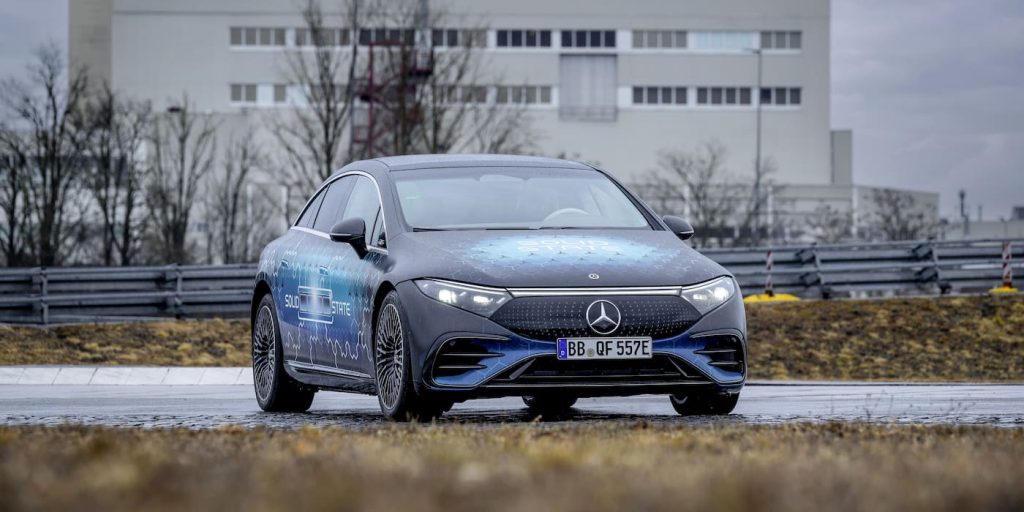
A modified Mercedes EQS, fitted with solid-state EV batteries, drove over 745 miles (1,200 km) without stopping in September. And it still had some charge left.
The battery cells that Mercedes is already calling “a true gamechanger” were supplied by US-based solid-state specialist, Factorial Energy.
Factorial is working with Mercedes-Benz, Stellantis, Hyundai Motor, and other major OEMs to commercialize the promising new battery tech.
The batteries may be in vehicles sooner than expected. Factorial is planning to tap into the public markets to fund its next growth stage through a business merger with Cartesian Growth Corporation III.
Cartersian III is a special-purpose acquisition company, or SPAC, designed as a blank-check company to acquire a business for listing on a public stock exchange.
Factorial’s CEO, Dr Siyu Huang, called the agreement “a pivotal inflection point” as it transitions from the lab to real-world testing and commercialization. “We’ve proven our solid-state platform delivers what customers want – longer range, lighter weight, and greater cost efficiency,” Huang said.
The battery cells have been proven on public roads, as seen in the Mercedes EQS equipped with Factorial’s 106 Ah cells.

Jeep and Ram maker Stellantis verified 77 Ah cells in lab testing, “demonstrating high energy density, fast charging, and robust performance across temperature extremes.”
Outside of electric vehicles, Factorial plans to offer solid-state battery cells for other markets, including defense, aerospace, and robotics.
The proposed merger is expected to close in mid-2026. Once closed, the company will list on the Nasdaq exchange under the ticker symbol FAC. The merger values Factorial at about $1.1 billion, and provides the company with $100 million to fund growth.

During an interview with The New York Times, Huang said Factorial’s batteries could be powering EVs as soon as 2027. According to Huang, they will likely launch in high-performance or luxury models at first, such as the Dodge Charger Daytona, before becoming more widely available.
Factorial is not worried about US automakers, such as Ford, pulling back on EV plans, because it believes new battery technology will help boost adoption.
“The existing battery is not big enough and it’s not light enough, it’s not efficient enough,” Huang said during the interview, adding that “there needs to be a next generation to address the issues that our U.S. consumers are facing.”
Are Factorial’s solid-state EV batteries the answer? That’s what the battery specialist is banking on.


FTC: We use income earning auto affiliate links. More.
Environment
Fed chair candidate Hassett says U.S. is way behind the curve on lowering interest rates


National Economic Council Director Kevin Hassett said Tuesday that the Federal Reserve is not cutting interest rates quickly enough, even though the U.S. economy grew at a much faster-than-expected pace in the third quarter.
Hassett, a leading contender to succeed Federal Reserve Chairman Jerome Powell when his term ends in May, said the artificial intelligence boom is boosting economic growth while simultaneously putting downward pressure on inflation.
“If you look at central banks around the world, the U.S. is way behind the curve in terms of lowering rates,” the top White House economic advisor told CNBC in a “Money Movers” interview.
U.S. economic growth came in at an annual rate of 4.3% in the third quarter, faster than the Dow Jones consensus of 3.2%. Hassett said 1.5% of that growth was due to President Donald Trump’s tariffs reducing the U.S. trade deficit.
The Fed lowered interest rates by a quarter point on Dec. 10, the third cut this year, but the central bank indicated that the pace of future reductions could be slower.
Three Fed governors voted against the quarter-point move, the most dissents since 2019. After this month’s meeting, Powell said the decision to cut a quarter point was a “close call.”
Trump has repeatedly bashed the Fed for not lowering rates as quickly as he would like. Hassett’s candidacy has raised concerns among some Fed watchers that he is too close to the president.
Hassett told CNBC last week that the Fed’s independence is “really important.”
Trump said in an address to the nation last week that he will announce his nominee for Fed chair soon, emphasizing that he will pick “someone who believes in lower interest rates by a lot.”
The president’s primetime speech focused on affordability. His approval rating on the economy stood at 37% in a CBS News/YouGov published on Sunday.
When asked about Trump’s sagging approval rating, Hassett said that public sentiment often does not reflect the economic numbers.
“In the end, it turns out that I think it has a lot to do with news coverage and how people are processing, their glimpse of the outside world,” Hassett said.

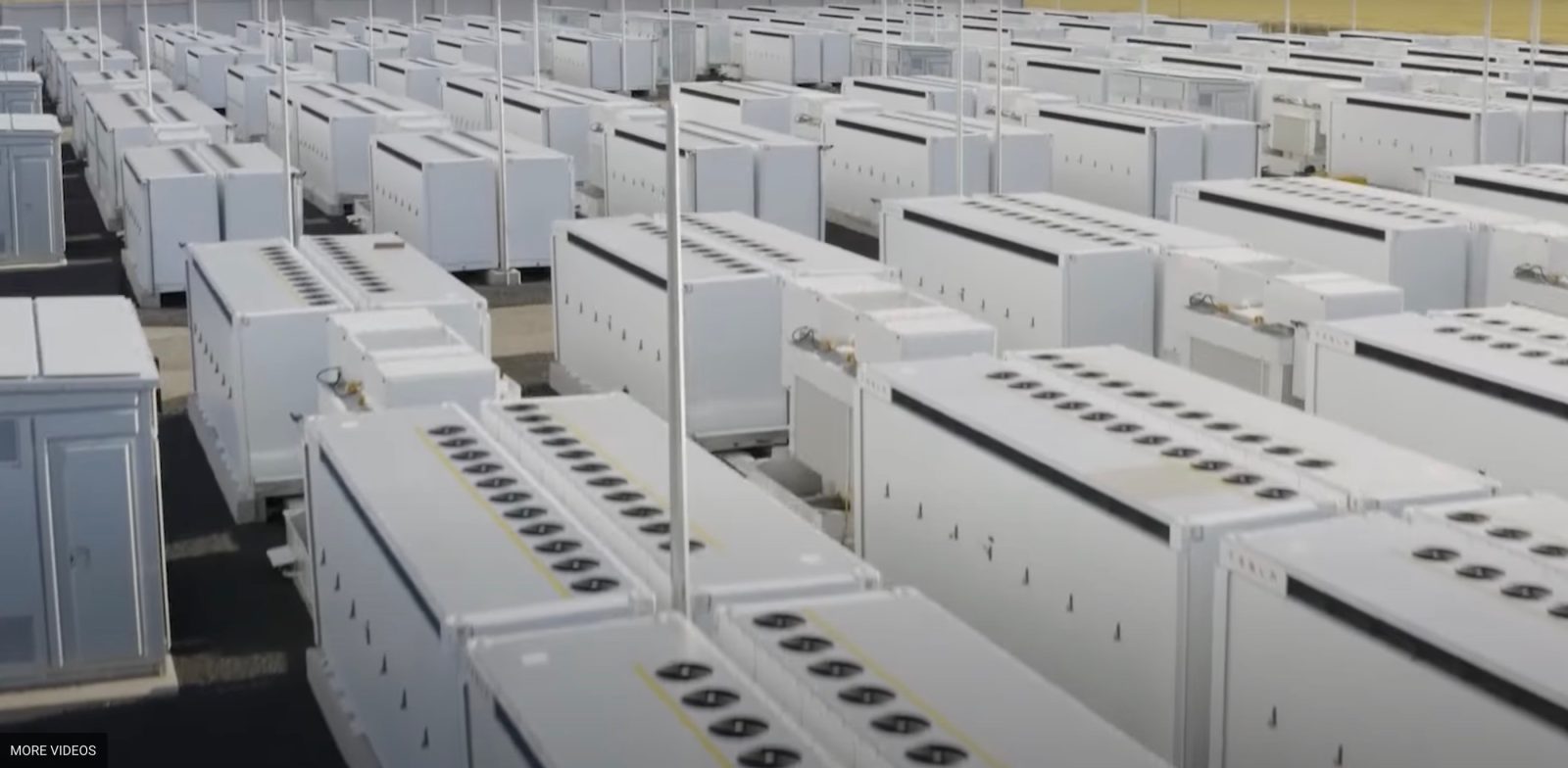
Tesla Energy has secured another massive Megapack project in the UK. Matrix Renewables announced today that it has signed a full EPC agreement with Tesla for a 500 MW / 1 GWh battery energy storage system in Scotland.
The UK has been one of Tesla’s strongest markets for energy storage. We have frequently reported on the company deploying large-scale Megapack projects in the region, including the Pillswood project, which was previously one of Europe’s largest.
Now, a new project is set to dwarf many existing installations.
Matrix Renewables, a global renewable energy platform, confirmed the deal in a press release today. The company stated it has signed a “Full EPC (Engineering, Procurement, and Construction) agreement” with Tesla for a standalone system located in Eccles, Scotland.
The specs are impressive: 500 MW of power capacity and 1 GWh of energy capacity.
While the press release refers to it generally as a “battery energy storage system (BESS),” a project of this size and the specific partnership with Tesla confirms the use of Megapacks.
Mike Snyder, VP of Energy and Charging at Tesla, commented on the announcement:
“We are excited to support Matrix Renewables with their entry into the UK, bringing Tesla’s track record in the market together with Matrix Renewables’ expertise and vision. We highly value the partnership with their team and look forward to executing this landmark project together.”
The project is strategically located along key transmission corridors between Scotland and England. This is a critical spot for grid flexibility, as wind generation in Scotland often exceeds local demand and needs to be transmitted south or stored.
Sergio Arbeláez, Managing Director, Europe & Latam at Matrix Renewables, added:
“We are delivering infrastructure at the scale required to support the UK’s transition to a clean, secure, and resilient power system. This installation demonstrates our ability to execute complex, utility-scale storage projects through strong partnerships and a long-term strategic vision.”
Matrix says that all planning conditions have been discharged and full consent has been secured to commence construction.
This 1 GWh project joins a rapidly growing list of GWh-scale Megapack projects globally. Tesla has been ramping up production at its Lathrop Megafactory in California to meet this exact type of demand, and it recently secured a multi-billion dollar contract for over 15 GWh of deployment in the US.
Electrek’s Take
This is a huge project. For context, 1 GWh of energy capacity is roughly enough to power hundreds of thousands of homes for the two-hour duration of the battery.
Tesla’s energy division is the only part of the business that is growing financially, and large projects like this one add to the momentum.
The UK grid is becoming a fascinating case study for renewables. They have massive wind potential in the north, but the load centers are in the south. Projects like this one in Eccles are going to be essential to stop curtailment (turning off wind turbines when there’s nowhere for the power to go) and instead store that cheap energy for peak times.
I wouldn’t be surprised if this project also utilizes Tesla’s Autobidder software, which has been a standard feature for most of their large UK deployments to manage real-time trading on the energy market.
FTC: We use income earning auto affiliate links. More.
-
 Sports2 years ago
Story injured on diving stop, exits Red Sox game
-
 Sports3 years ago
‘Storybook stuff’: Inside the night Bryce Harper sent the Phillies to the World Series
-
 Sports2 years ago
Game 1 of WS least-watched in recorded history
-
 Sports3 years ago
Button battles heat exhaustion in NASCAR debut
-
 Sports3 years ago
MLB Rank 2023: Ranking baseball’s top 100 players
-
Sports4 years ago
Team Europe easily wins 4th straight Laver Cup
-
 Environment3 years ago
Japan and South Korea have a lot at stake in a free and open South China Sea
-
 Environment1 year ago
Here are the best electric bikes you can buy at every price level in October 2024