

Spending calculator: Which prices are rising and falling fastest?

Inflation has risen for the second month in a row to 2.6% in November.
Today’s percentage is above the Bank of England’s 2% target and marks an increase from October, when inflation climbed to 2.3% after three months of decline.
This is due to the higher cost of clothing, petrol and diesel, compared to last year, the ONS said.
But how does all of this affect the cost of groceries, clothing and leisure activities? Use our calculator to find out.
Which prices are increasing fastest?
Olive oil was the item with the largest price increase, with prices for 500ml to one litre rising from £7.22 to £9.21, an increase of 28%.
Olive oil has consistently had high price increases and experts have put that price rise down primarily to poor olive yields due to last year’s heatwaves in southern Europe.
However, they expect a significantly better harvest in the 2024-25 season, thanks to significant rainfall in Spain. The harvest could be double the size of last year’s, which may lead to lower prices in the coming months.
With Christmas fast approaching, many festive staples are seeing price increases, with carrots and potatoes up by nearly a fifth. On the drinks front, a 70cl bottle of cream liqueur has risen by 4%, but there’s good news for Champagne lovers with a bottle now costing 0.5% less.
Food and drink products are responsible for seven of the 10 biggest increases since last year.
Of non-food items, hair gel increased the most, by a fifth from £3.33 to £4.11.
Top five price rises:
• Olive oil (500ml-1litre): up 28%, £7.22 to £9.21
• Iceberg lettuce (each): up 24%, 80p to 99p
• Hair gel (150-200ml): up 23%, £3.33 to £4.11
• Hand rolling tobacco pack (30g): up 22%, £20.46 to £24.97
• Plums (per kg): up 20%, £2.91 to £3.48
Overall, 50 of the 156 types of food and drink tracked by the ONS have actually become cheaper since last year.
Crumpet lovers have reason to celebrate-prices for a pack of 6-9 crumpets have dropped by 8%, along with some dairy-free spread to top them with.
Overall, 142 out of the 444 products in our database are cheaper than they were 12 months ago.
Top food price decreases:
• Pulses (390-420g): down 12%, 76p to 67p
• Frozen prawns (per kg): down 9%, £18.87 to £17.20
• Canned tomatoes (390-400g): down 8%, 72p to 66p
• Dairy free spread/margarine (450-500g): down 8%, £2.17 to £1.99
• Crumpets (pack of 6-9): down 8%, £1.00 to 92p
Of non-supermarket items, kerosene has been the biggest price faller – by a more than a fifth.
What is the effect of long-term inflation?
The price changes described above compare the cost of items to where they were a year ago.
However, inflation has now been at high levels for an extended period of time.
The war in Ukraine, COVID, Brexit, and other supply chain pressures have all contributed to spiralling costs in recent years.
Inflation reached a 40-year high of 11.1% in October 2022.
Keep up with all the latest news from the UK and around the world by following Sky News
While the headline inflation figure has come down markedly, any amount of inflation means that prices are still rising, and building on already inflated costs.
We’ve compared the costs of shopping items with what they were three years ago to see what the cumulative impact of inflation has been.
The biggest price rise for groceries over that time has been for olive oil (500ml to one litre), which has increased nearly two-and-a-half times (146%), from £3.74 to £9.21 in the past three years.
Iceberg lettuce is up by four-fifths, with one costing 99p now compared with 54p in October 2021.
Use our calculator to see how much prices in your shopping basket have risen in total since three years ago.
Who is worst affected?
Richard Lim, chief executive of Retail Economics, says: “It’s the least affluent households that are going to see much higher rates of inflation as they spend more of their income on food and energy.”
We’ll continue to update our spending calculator over the coming months so you can see how you’ll be affected.
Follow the Daily podcast on Apple Podcasts, Google Podcasts, Spotify, Speaker
Methodology
The ONS collects these prices by visiting thousands of shops across the country and noting down the prices of specific items. There are upwards of 100,000 prices published every month, from more than 600 products.
The items that form the “official shopping basket” change each year to reflect how the purchasing habits of the population have changed. For example in March 2021, after a year of the pandemic, hand gel, loungewear bottoms and dumbbells were added, while canteen-bought sandwiches were among the items removed.
Where there aren’t the exact equivalent items available at a survey shop, ONS officials pick the best alternative and note that they’ve done this so it’s weighted correctly when the averages are worked out.
Shops are weighted as well, so the price in a major chain supermarket will have a greater impact on the average than an independent corner shop.
We will be updating these figures each month while the cost of living crisis continues.
During the pandemic, more of the survey was carried out over the phone and work is ongoing to digitise the system to be able to take in more price points by getting data from supermarket receipts, rather than making personal visits.
Data journalists: Daniel Dunford, Amy Borrett, Ben van der Merwe, Joely Santa Cruz and Saywah Mahmood
Interactive: Ganesh Rao
Design: Phoebe Rowe, Brian Gillingham
The Data and Forensics team is a multi-skilled unit dedicated to providing transparent journalism from Sky News. We gather, analyse and visualise data to tell data-driven stories. We combine traditional reporting skills with advanced analysis of satellite images, social media and other open-source information. Through multimedia storytelling, we aim to better explain the world while also showing how our journalism is done.

Shares in The Magnum Ice Cream Company (TMICC) have fallen slightly on debut after the completion of its spin-off from Unilever amid a continuing civil war with one of its best-known brands.
Shares in the Netherlands-based company are trading for the first time following the demerger.
It creates the world’s biggest ice cream company, controlling around one fifth of the global market.
Primary Magnum shares, in Amsterdam, opened at €12.20 – down on the €12.80 reference price set by the EuroNext exchange, though they later settled just above that level, implying a market value of €7.9bn – just below £7bn.
The company is also listed in London and New York.
Money latest: The cheapest days to travel by plane
Unilever stock was down 3.1% on the FTSE 100 in the wake of the spin off.
The demerger allows London-headquartered Unilever to concentrate on its wider stable of consumer brands, including Marmite, Dove soap and Domestos.
The decision to hive off the ice cream division, made in early 2024, gives a greater focus on a market that is tipped to grow by up to 4% each year until 2029.
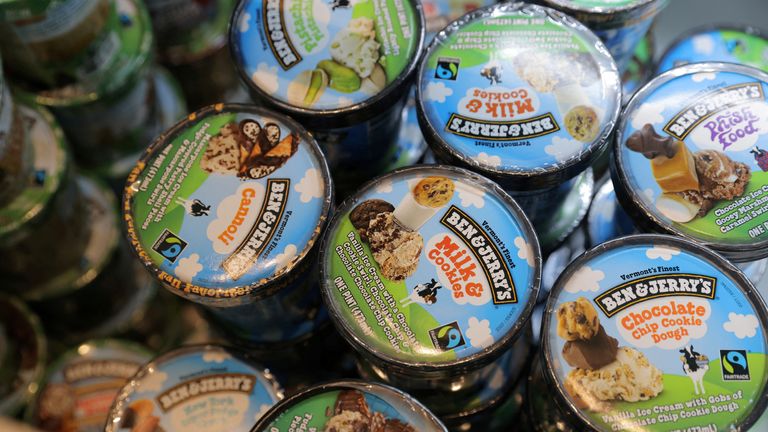
Ben & Jerry’s accounts for a greater volume of group revenue now under TMICC. Pic: Reuters
But it has been dogged by a long-running spat with the co-founders of Ben & Jerry’s, which now falls under the TMICC umbrella and accounts for 14% of group revenue.
Unilever bought the US brand in 2000, but the relationship has been sour since, despite the creation of an independent board at that time aimed at protecting the brand’s social mission.
The most high-profile spat came in 2021 when Ben & Jerry’s took the decision not to sell ice cream in Israeli-occupied Palestinian territories on the grounds that sales would be “inconsistent” with its values.
Unilever responded by selling the business to its licensee in Israel.
A series of rows have followed akin to a tug of war, with Magnum refusing repeated demands by the co-founders of Ben & Jerry’s to sell the brand back.
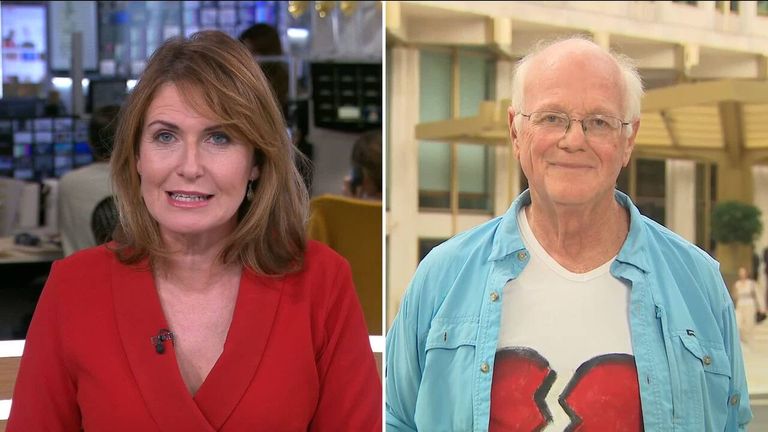
Sept: ‘Free Ben & Jerry’s’
Magnum and Unilever argue its mission has strayed beyond what was acceptable back in 2000, with the brand evolving into one-sided advocacy on polarising topics that risk reputational and business damage.
TMICC is currently trying to remove the chair of Ben & Jerry’s independent board.
It said last month that Anuradha Mittal “no longer meets the criteria” to serve after internal investigations.
An audit of the separate Ben & Jerry’s Foundation, where she is also a trustee, found deficiencies in financial controls and governance. Magnum said the charitable arm risked having funding removed unless the alleged problems were addressed.
The Reuters news agency has since reported that Ms Mittal has no plans to quit her roles, and accused Magnum of attempts to “discredit” her and undermine the authority of the independent board.
Magnum boss Peter ter Kulve said on Monday: “Today is a proud milestone for everyone associated with TMICC. We became the global leader in ice cream as part of the Unilever family. Now, as an independent listed company, we will be more agile, more focused, and more ambitious than ever.”
Commenting on the demerger, Hargreaves Lansdown equity analyst Aarin Chiekrie said: “TMICC is already free cash flow positive, and profitable in its own right. The balance sheet is in decent shape, but dividends are off the cards until 2027 as the group finds its footing as a standalone business.
“That could cause some downward pressure on the share price in the near term, as dividend-focussed investment funds that hold Unilever will be handed TMICC shares, the latter of which they may be forced to sell to abide by their investment mandate.”
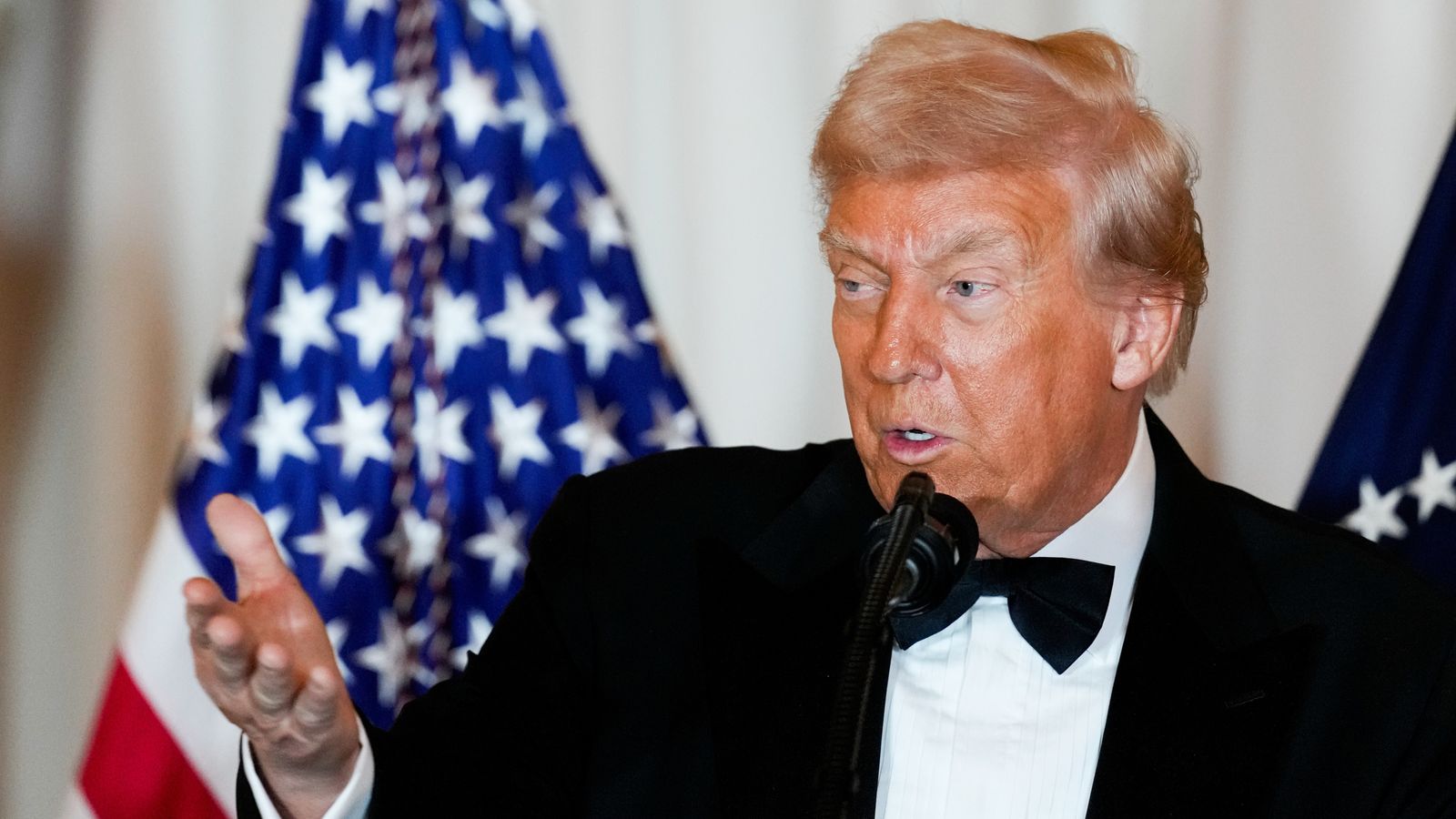

Donald Trump has said he will be “involved” in the decision on whether Netflix should be allowed to buy Warner Bros, as the $72bn (£54bn) deal attracts a media industry backlash.
The US president acknowledged in remarks to reporters there “could be a problem”, acknowledging concerns over the streaming giant’s market dominance.
Crucially, he did not say where he stood on the issue.
Money latest: The cheapest days to travel by plane
It was revealed on Friday that Netflix, already the world’s biggest streaming service by market share, had agreed to buy Warner Bros Discovery’s TV, film studios and HBO Max streaming division.
The deal aims to complete late next year after the Discovery element of the business, mainly legacy TV channels showing cartoons, news and sport, has been spun off.
But the deal has attracted cross-party criticism on competition grounds, and there is also opposition in Hollywood.
Netflix agrees $72bn takeover of Warner Bros
The Writers Guild of America said: “The world’s largest streaming company swallowing one of its biggest competitors is what antitrust laws were designed to prevent.
“The outcome would eliminate jobs, push down wages, worsen conditions for all entertainment workers, raise prices for consumers, and reduce the volume and diversity of content for all viewers.”
File pic: Reuters
Republican Senator, Roger Marshall, said in a statement: “Netflix’s attempt to buy Warner Bros would be the largest media takeover in history – and it raises serious red flags for consumers, creators, movie theaters, and local businesses alike.
“One company should not have full vertical control of the content and the distribution pipeline that delivers it. And combining two of the largest streaming platforms is a textbook horizontal Antitrust problem.
“Prices, choice, and creative freedom are at stake. Regulators need to take a hard look at this deal, and realize how harmful it would be for consumers and Western society.”
Paramount Skydance and Comcast, the parent company of Sky News, were two other bidders in the auction process that preceded the announcement.
The Reuters news agency, citing information from sources, said their bids were rejected in favour of Netflix for different reasons.
Paramount’s was seen as having funding concerns, they said, while Comcast’s was deemed not to offer so many earlier benefits.
Paramount is run by David Ellison, the son of the Oracle tech billionaire Larry Ellison, who is a close ally of Mr Trump.
The president said of the Netflix deal’s path to regulatory clearance: “I’ll be involved in that decision”.
On the likely opposition to the deal. he added: “That’s going to be for some economists to tell. But it is a big market share. There’s no question it could be a problem.”
Business
Young people may lose benefits if they don’t engage with help from new £820m scheme, government warns

Young people could lose their right to universal credit if they refuse to engage with help from a new scheme without good reason, the government has warned.
Almost one million will gain from plans to get them off benefits and into the workforce, according to officials.
Latest updates from the Politics Hub
Pic: iStock
It comes as the number of young people not in employment, education or training (NEET) has risen by more than a quarter since the COVID pandemic, with around 940,000 16 to 24-year-olds considered as NEET as of September this year, said the Office for National Statistics.
That is an increase of 195,000 in the last two years, mainly driven by increasing sickness and disability rates.
The £820m package includes funding to create 350,000 new workplace opportunities, including training and work experience, which will be offered in industries including construction, hospitality and healthcare.
Around 900,000 people on universal credit will be given a “dedicated work support session”.
That will be followed by four weeks of “intensive support” to help them find work in one of up to six “pathways”, which are: work, work experience, apprenticeships, wider training, learning, or a workplace training programme with a guaranteed interview at the end.
However, Work and Pensions Secretary Pat McFadden has warned that young people could lose some of their benefits if they refuse to engage with the scheme without good reason.
“Doing nothing should not be an option,” he told Sky News’ Sunday Morning with Trevor Phillips.
“If someone just took that attitude, yes, they would then be subject to, you know, the obligations that are already part of the system.”
“What I want to see is young people in the habit of getting up in the morning, doing the right thing, going to work,” he added.
“That experience of that obligation, but also the sense of pride and purpose that comes with having a job.”

Some young people on benefits will be offered job opportunities in construction. Pic: iStock
Read more from Sky News:
Child poverty strategy unveiled – but not everyone’s happy
Universal credit claimants soar by over million in a year
The government says these pathways will be delivered in coordination with employers, while government-backed guaranteed jobs will be provided for up to 55,000 young people from spring 2026, but only in those areas with the highest need.
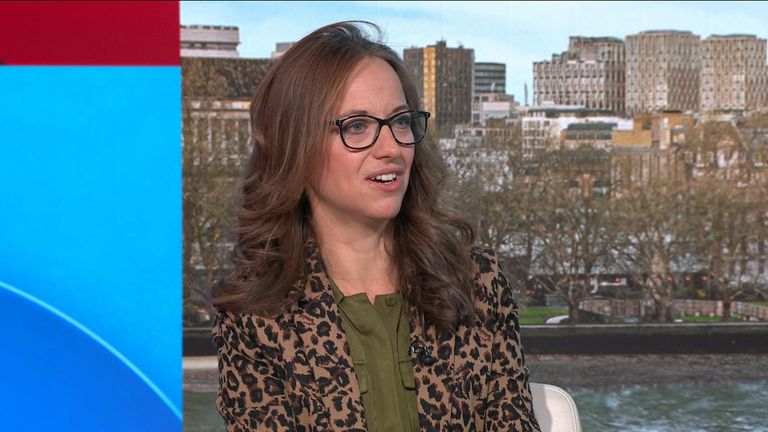
However, shadow work and pensions secretary Helen Whately, from the Conservatives, said the scheme is “an admission the government has no plan for growth, no plan to create real jobs, and no way of measuring whether any of this money delivers results”.
She told Sky News the proposals are a “classic Labour approach” for tackling youth unemployment.
Youth jobs plan ‘the wrong answer’
“What we’ve seen today announced by the government is funding the best part of £1bn on work placements, and government-created jobs for young people. That sounds all very well,” she told Sunday Morning with Trevor Phillips.
“But the fact is, and that’s the absurdity of it is, just two weeks ago, we had a budget from the chancellor, which is expected to destroy 200,000 jobs.
“So the problem we have here is a government whose policies are destroying jobs, destroying opportunities for young people, now saying they’re going to spend taxpayers’ money on creating work placements. It’s just simply the wrong answer.”
Ms Whately also said the government needs to tackle people who are unmotivated to work at all, and agreed with Mr McFadden on taking away the right to universal credit if they refuse opportunities to work.
But she said the “main reason” young people are out of work is because “they’re moving on to sickness benefits”.
Ms Whately also pointed to the government’s diminished attempt to slash benefits earlier in the year, where planned welfare cuts were significantly scaled down after opposition from their own MPs.
The funding will also expand youth hubs to help provide advice on writing CVs or seeking training, and also provide housing and mental health support.
Some £34m from the funding will be used to launch a new “Risk of NEET indicator tool”, aimed at identifying those young people who need support before they leave education and become unemployed.
Monitoring of attendance in further education will be bolstered, and automatic enrolment in further education will also be piloted for young people without a place.
-
 Sports2 years ago
Story injured on diving stop, exits Red Sox game
-
 Sports3 years ago
‘Storybook stuff’: Inside the night Bryce Harper sent the Phillies to the World Series
-
 Sports2 years ago
Game 1 of WS least-watched in recorded history
-
 Sports3 years ago
Button battles heat exhaustion in NASCAR debut
-
 Sports3 years ago
MLB Rank 2023: Ranking baseball’s top 100 players
-
Sports4 years ago
Team Europe easily wins 4th straight Laver Cup
-
 Environment3 years ago
Japan and South Korea have a lot at stake in a free and open South China Sea
-
 Environment1 year ago
Here are the best electric bikes you can buy at every price level in October 2024