

2024 review: Some of the year’s big moments in eight charts

What a year 2024 was.
A massive election – well, two massive elections on either side of the Atlantic, and more elsewhere around the planet – followed by changes of government and plenty of economic milestones along the way. So let’s remind ourselves of some of the big moments of the year, in chart form.
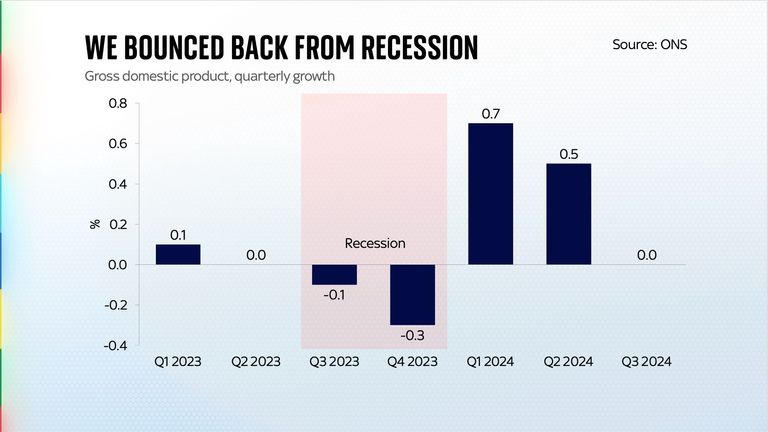
We begin with the big economic picture. Growth. This time last year, the UK was (unbeknownst to us at the time) actually in recession. The news was only confirmed in the spring of this year, but for two successive quarters in the second half of last year, economic growth fell.
What’s equally intriguing is what happened next: a rapid bounce-back as gross domestic product increased by more than expected in the first two quarters of the year. Since then, it has tailed off markedly, causing some consternation in the Treasury.
Indeed, an initial estimate of 0.1 per cent growth in the third quarter of 2024 was revised down to zero growth – stagnation.
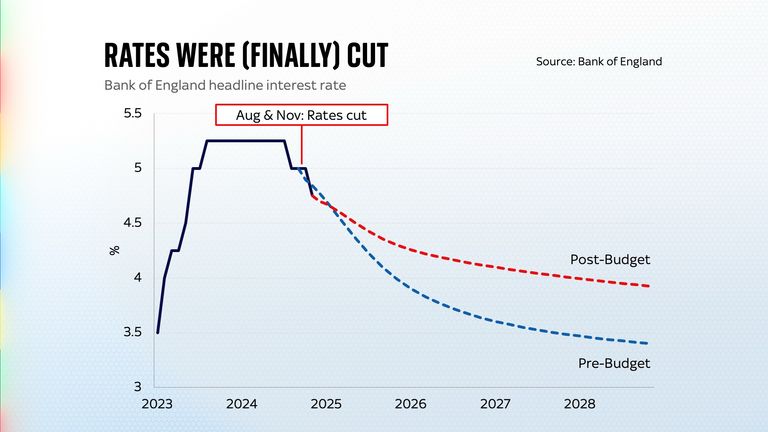
Still, interest rates are now finally on the way down. They were cut in August for the first time following the cost of living crisis, and are expected to fall further next year. However, the scale of those expected falls is considerably smaller now than before the Budget. Why? Because the government is planning to borrow and spend considerably more next year.
That wasn’t the only policy in the Budget. Alongside those increases in borrowing and spending, Chancellor Rachel Reeves decided to introduce some significant tax raises – chief among them a big increase in employers’ National Insurance contributions.
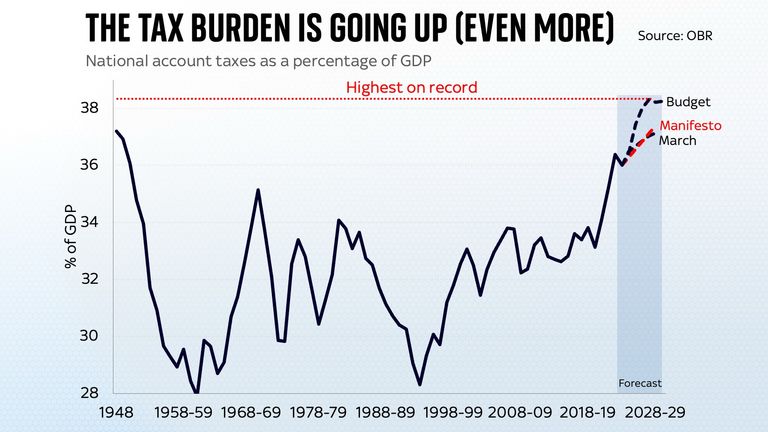
And while Labour insists this will not be visible on your pay check – and hence isn’t breaking their pre-election pledge – we will, as a nation, be paying considerably more in taxes as a result. Indeed, the tax burden, the total amount of tax incurred by the population as a percentage of GDP, is now heading up to the highest level on record. This is, it’s worth saying, a stark contrast with the costed measures Labour put in their manifesto.
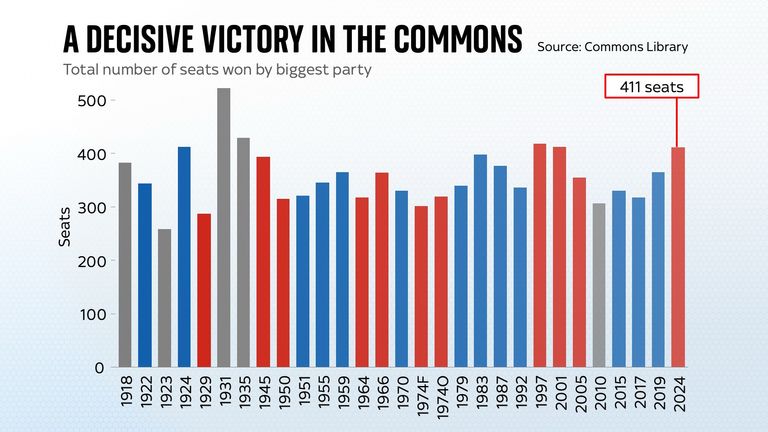
*There were two general elections in 1974 – in February and October
That brings us to the election itself – an election in which Labour rode to an extraordinary landslide, winning more than 400 seats for the first time since the glory days of Tony Blair. It represented an immense comeback for the party, following such a drubbing in 2019. However, there are some important provisos to note.
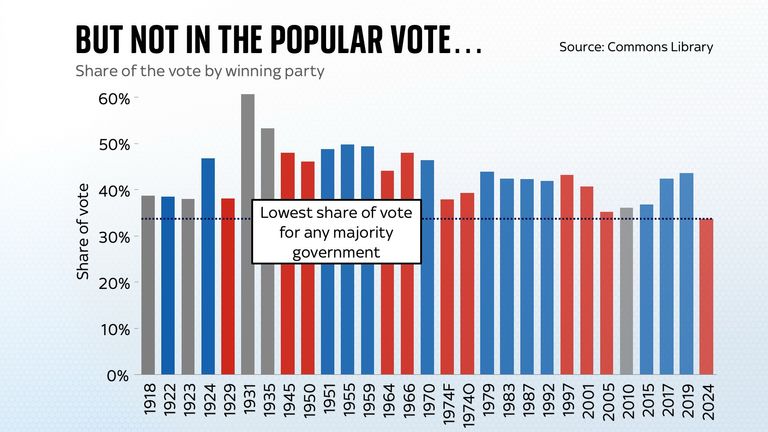
Chief among them is the fact that the party won the smallest share of the vote of any winning party in the modern era. This was not a landslide victory in terms of overall popular support.
Among the issues that has resounded this year, both before the election and after, was migration. This time last year the data suggested that net migration into the UK had peaked at just over 750,000.
But then, last month, new data brought with it a shocking revision. In fact, the Home Office had both undercounted the number of people coming into the country and overcounted the number leaving. The upshot was a new figure: in fact 906,000 more people had entered than departed in the year to last summer. Not just a new record – a totally gobsmacking figure.
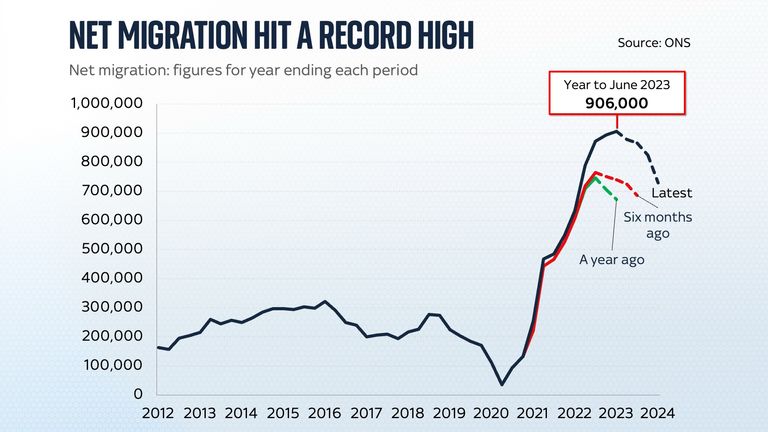
The vast, vast majority of that migration was not the “small boats” so much has been made of but legal migration, more or less equally divided between work and study. It was to some extent the consequence of the post-COVID bounceback and, even more so, changes in government policy as post-Brexit migration rules came into force.
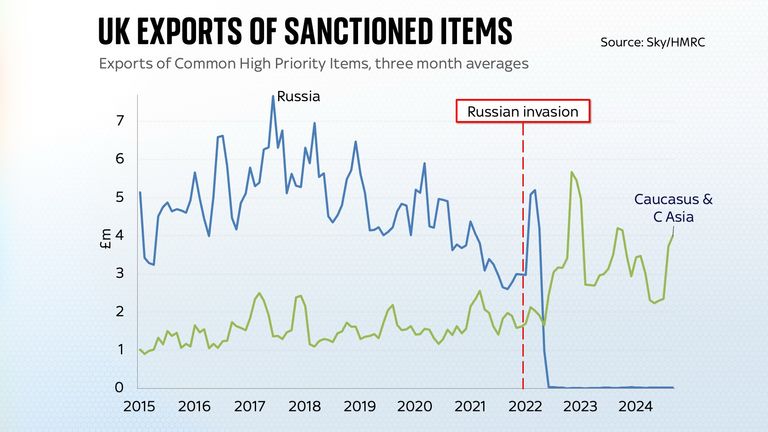
Another issue which came to light throughout the year was something else: the leakiness of Britain’s sanctions regime with Russia. While government ministers like to boast about how this is the toughest regime on Russia in history, our analysis found that sanctioned British goods are routinely being shipped into Russia via its neighbours in the Caucasus and Central Asia.
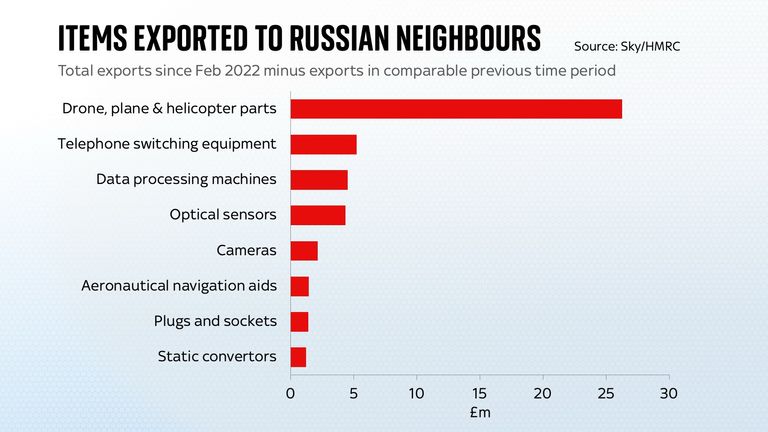
In a series of investigations, we tracked how this carousel works for the trade of cars, which get sent to countries like Azerbaijan before being shuffled around the Caucasus and entering Russia via Georgia and other routes. But that same carousel is likely being used for equipment like drone parts and radar equipment. We know it’s being sent to Russian neighbours. We know it’s ending up on the battlefield. The data tells a stark story about the reality of the sanctions regime – and helps illustrate how Russia is continuing to keep its forces armed and equipped with components from the West.
The first-ever Capture case has been delayed at the Court of Appeal as the Post Office asks for an extension to respond, Sky News has learned.
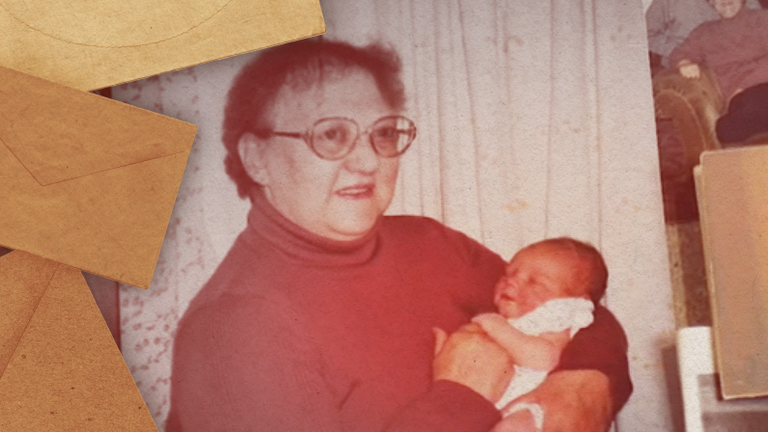
Pat Owen, a former sub postmistress who has since passed away, was convicted of stealing in 1998 based on evidence from computer software.
The system, known as Capture, was used in up to 2,500 branches in the 1990s, before the infamous Horizon system was introduced.
Hundreds of sub-postmasters were wrongfully convicted between 1999 and 2015 as part of the Horizon scandal.
Earlier this year, Sky News unearthed a 1998 report showing the Capture software was also faulty.
That report, commissioned by the solicitors acting for Mrs Owen in 1998, was served on the Post Office and may never have been seen by the jury in her case.
‘All we want is her name cleared’
Ms Owen was given a suspended prison sentence and fought to clear her name subsequently – but died in 2003.
Her case was referred by the Criminal Cases Review Commission (CCRC) to the Court of Appeal in October.
The Post Office had until 5 December to respond to papers put forward by Mrs Owen’s defence team but they have now asked for an extension until 30 January.
Ms Owen’s daughter, Juliet Shardlow, described the family’s suffering at the lengthening wait.
“I need to emphasise the profound impact the ongoing delay is having on our family,” she said.
“The continuous uncertainty only compounds our heartache, stress, and anxiety.
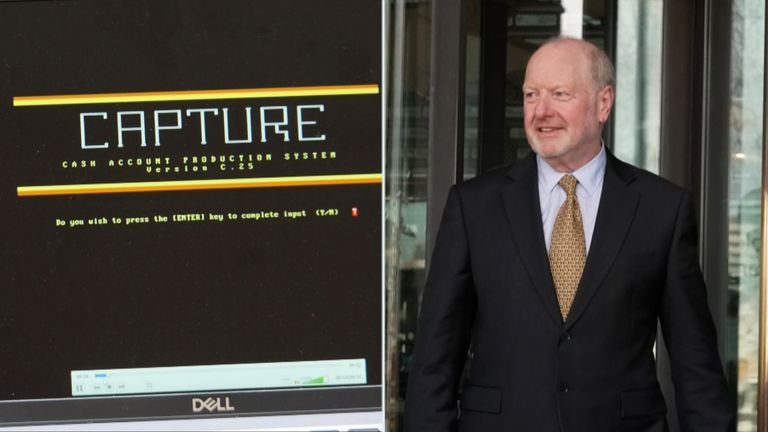
Alan Bates: New redress scheme ‘half-baked’
“It has become the last thing I think about before I go to sleep and the first thing when I wake up.
“We have waited 27 years for justice, and this additional wait feels never-ending.”
Ms Owen’s case is the first time a conviction based on Capture has reached the Court of Appeal since the scandal was exposed.
Read more from Sky News:
Corporate manslaughter charges considered in Post Office scandal
21 ‘Capture’ cases investigated for miscarriages of justice
Lawyers have said that if Ms Owen is exonerated posthumously, it may “speed up” the handling of others.
CCRC chair Dame Vera Baird also told Sky News in the summer it could be a “touchstone case” for other victims.
The CCRC is also continuing to investigate around 30 other “pre-Horizon” convictions.
A Post Office spokesperson said: “We have sought an extension of time to fully consider and respond to the CCRC’s Statement of Reasons in Ms Owen’s case.
“We deeply regret the impact our request for further time will have on Ms Owen’s family.
“We have a duty to carefully consider the evidence presented in the Statement of Reasons submitted by the CCRC and do everything we can to fully assist the Court when it considers this conviction.”
Meanwhile, the first-ever redress scheme for victims of the Post Office Capture IT scandal was launched this autumn.
The Capture Redress Scheme will provide payments of up to £300,000, and more in “exceptional” cases, to former postmasters who suffered financial losses.
-
 Sports2 years ago
Story injured on diving stop, exits Red Sox game
-
 Sports3 years ago
‘Storybook stuff’: Inside the night Bryce Harper sent the Phillies to the World Series
-
 Sports2 years ago
Game 1 of WS least-watched in recorded history
-
 Sports3 years ago
Button battles heat exhaustion in NASCAR debut
-
 Sports3 years ago
MLB Rank 2023: Ranking baseball’s top 100 players
-
Sports4 years ago
Team Europe easily wins 4th straight Laver Cup
-
 Environment3 years ago
Japan and South Korea have a lot at stake in a free and open South China Sea
-
 Environment1 year ago
Here are the best electric bikes you can buy at every price level in October 2024