
New Year Honours: Hundreds of unsung heroes receive recognition in latest list

More than 1,200 people from across the UK have made it on to this New Year’s honours list, with a lot of famous faces getting recognised.
But while Gareth Southgate, Stephen Fry and Keely Hodgkinson may make the headlines, hundreds of unsung heroes have been recognised for their services to the country’s communities.
Here’s a small selection of the honour recipients from around the UK.
‘A bereaved mother is not to be messed with’
The co-founders of a group supporting families affected by male violence have been made Officers of the Order of the British Empire (OBE) in the New Year Honours.
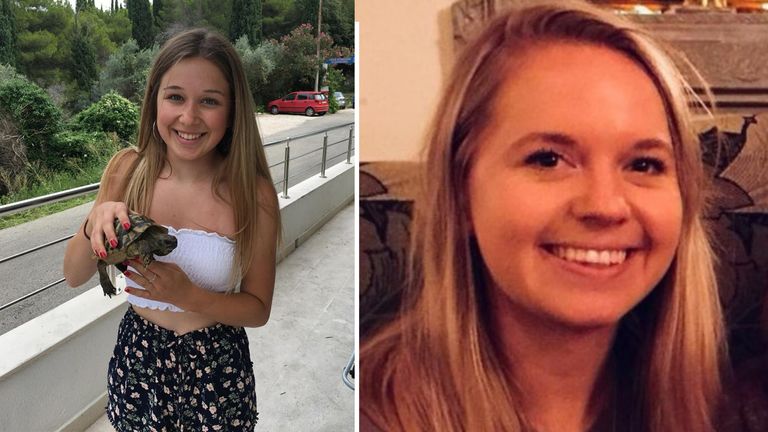
Carole Gould and Julie Devey, co-founders of Killed Women, started campaigning after their daughters, Ellie Gould and Poppy Devey Waterhouse, were murdered in their homes.
(Left to right) Ellie Gould and Poppy Devey Waterhouse who were murdered in their homes. Pics: PA/West Yorkshire Police
Both daughters were killed when they ended relationships with their killers.
Now, Ms Gould and Ms Devey are campaigning to see an increase in the starting tariff for murders in the home, from 15 years to 25 years, the same as for killings outside the home.
They say it is “insulting and disrespectful to those women to say that their lives are worth 10 years less”.
“By accepting the OBEs it will continue to shine a light on our campaigning and will keep the many unjust issues surrounding violence against women and girls in the spotlight,” said the co-founders in a statement.
“A bereaved mother is not to be messed with.”
Read more:
Southgate, Fry and Khan knighted
Stand-out names on New Year Honours list
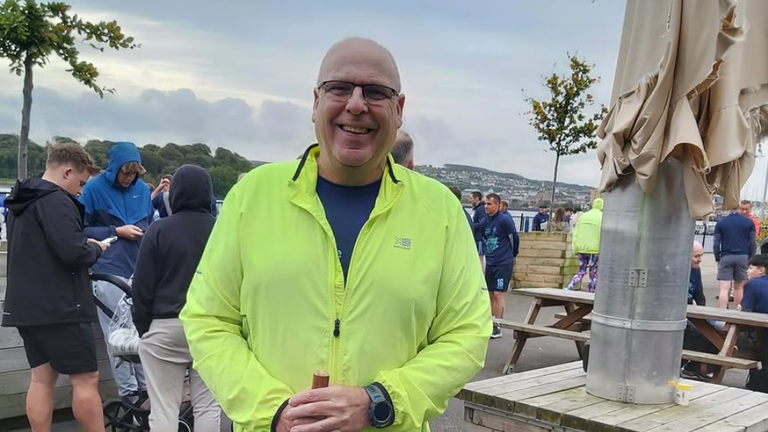
Ivan Black began raising money after his brother Ian died from leukaemia. Pic: Ivan Black/Facebook
‘All I’ve ever wanted to do is help one person’
A man who raised more than £700,000 for cancer charities said being made a Member of the Order of the British Empire (MBE) has pushed him to raise even more.
Ivan Black, 62, from Co Tyrone, began raising money after his brother Ian died from leukaemia aged 23.
He then lost his sister to breast cancer and his father to stomach cancer.
“All I’ve ever wanted to do is help one person,” he said.
“When I received the notification I couldn’t read the letter, I had tears in my eyes.”
Mr Black said he wanted to dedicate the honour to everyone who is battling cancer.
He said: “My brother, my sister, my father, this is all for them.
Joint youngest recipient
The joint-youngest person on the honours list is also being recognised for her charitable work in cancer.
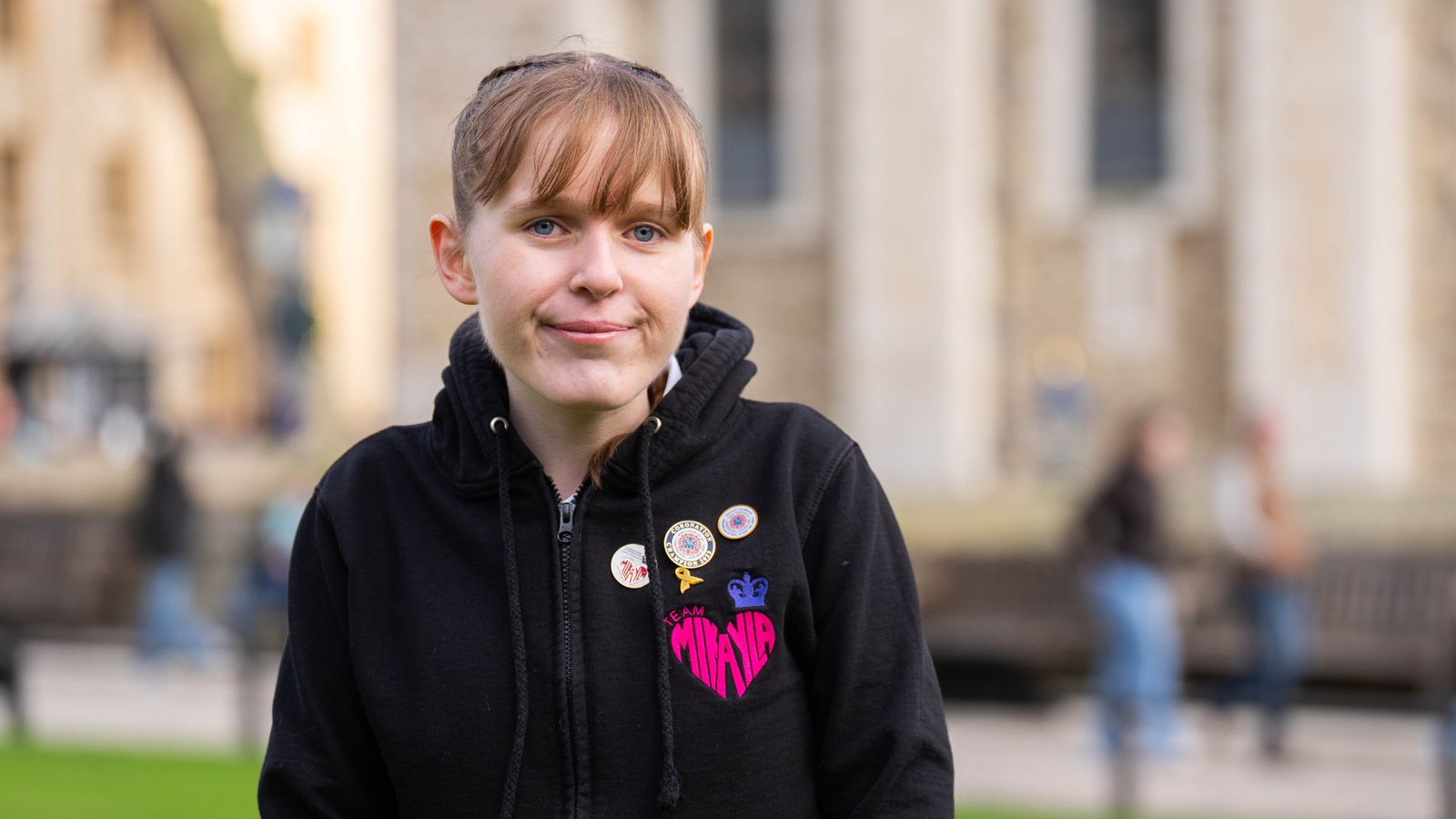
18-year-old Mikayla Beames was diagnosed with cancer at just four years old.
She has now been awarded a British Empire Medal (BEM) after founding Team Mikayla, a charity that grants the wishes of children suffering from cancer and has raised more than £300,000 to do so.
‘Working families are in need of support’
The founder of Pregnant Then Screwed, a parental rights organisation, said her MBE is “important recognition” of the struggles faced by working families.
Joeli Brearley, who is stepping down from the charity after ten years, said being recognised for her services to working families is “what it’s always been about”.
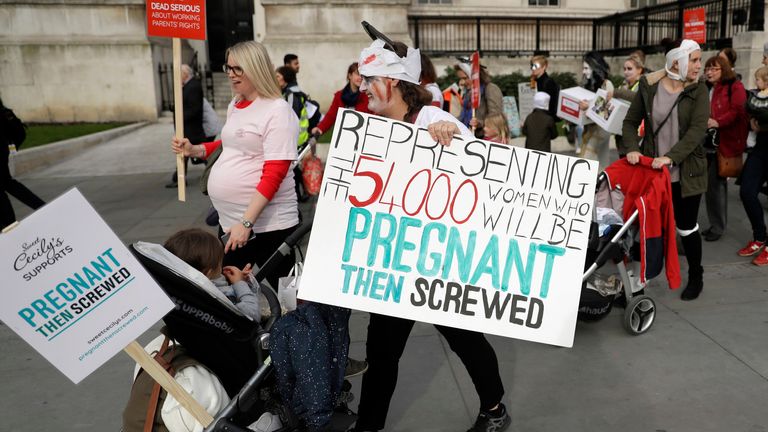
Joeli Brearley takes part in a protest in 2017. File pic: AP
“I think that people don’t really understand how much working families are in need of support right now,” she said.
“The childcare crisis, the issues of parental leave, low-paid work, there’s just so many problems.
Ms Brearley said the charity should “hold [Labour’s] feet to the fire” on its manifesto pledges as it reviews parental leave and introduces new employment rights.
Read more from Sky News:
Edinburgh’s Hogmanay cancelled due to ‘extreme weather’
President Biden leads tributes to Jimmy Carter
One of UK’s oldest golf clubs fights for its future
OBE for shipwreck hunting may boost mission
A shipwreck hunter who has been made an OBE hopes the honour will help bring a historic anchor back to the UK to commemorate the Windrush generation.
David Mearns is part of a team trying to bring the anchor of HMT Empire Windrush to the surface.
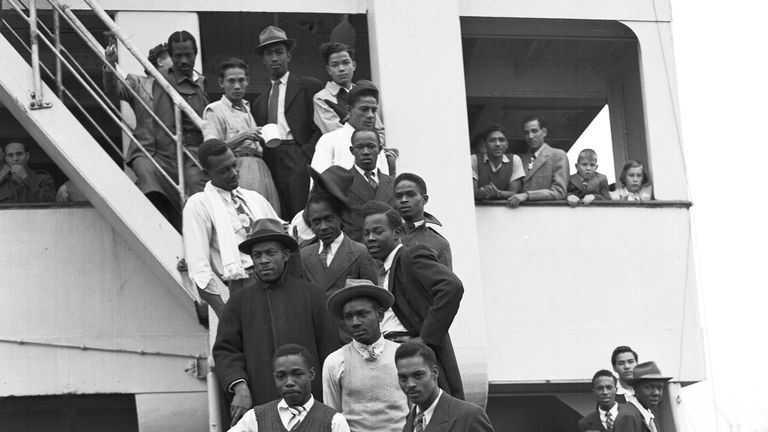
Jamaican men, mostly ex-Royal Air Force servicemen, pose for a photo aboard the HMT Empire Windrush in 1948. Pic: AP
The ship arrived in Essex in 1948, carrying primarily Caribbean migrants answering Britain’s call to address post-war labour shortages.
It sank off the coast of Algeria in 1954 and now, the Windrush Anchor Foundation is trying to recover its 1.5-tonne anchor to put it on permanent display.
“We want to recover that stern anchor, restore it, and bring it back to England and use it as a centrepiece in a public monument, a memorial to celebrate the contributions that the Windrush generations and their descendants have made to this country in terms of immigration and a positive force for multicultural Britain,” said the 66-year-old.
“I will volunteer my time gladly to make that project happen – it’s five years in the making, and hopefully this OBE will help raise the profile of that.
Mr Mearns said he has located 29 major shipwrecks in the past.
UK
‘I didn’t know where to turn’: Why ethnic minorities with gambling addictions struggle to get help

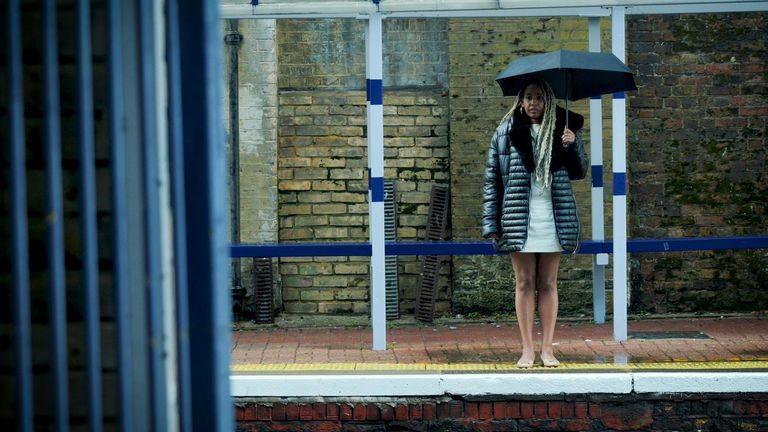
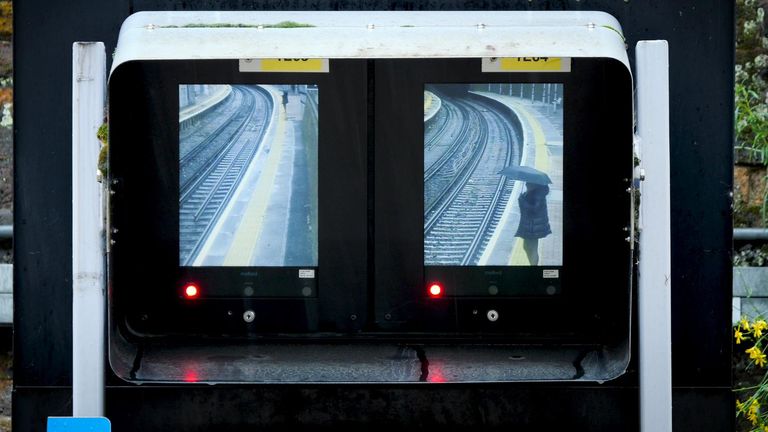
On a dark December morning two years ago, Kiki Marriott left her flat and started walking.
Content warning: This article contains references to suicide.
It was 5am, and she was heading for the station.
“I was numb at that point,” she says.
“I was just so done with trying to survive and just existing… feeling extremely lonely and isolated and didn’t know where to turn.”
She was trapped in a cycle of addiction, gambling all hours and taking cocaine for the maximum buzz.
‘I didn’t know where to turn,’ says Kiki
“I sat at the train station thinking about my daughter, thinking about the mistakes that I’ve made in the past, thinking that I didn’t want to live this life any more.”
Kiki was waiting for the first train.
But that train was late. And she changed her mind.
Instead of taking her own life, she decided to seek help.
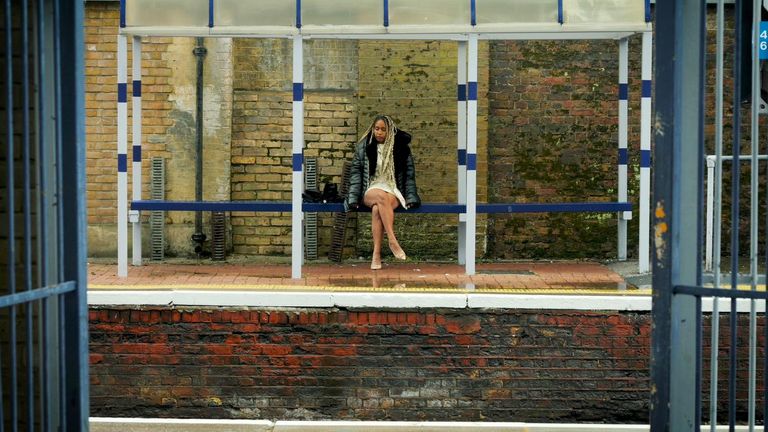
Yet what she would find on that journey of recovery would shock her.
“I just realised that there wasn’t anybody that looked like me, sounded like me, and it got me to thinking, well I can’t be the only black woman suffering with a gambling or cocaine addiction.”
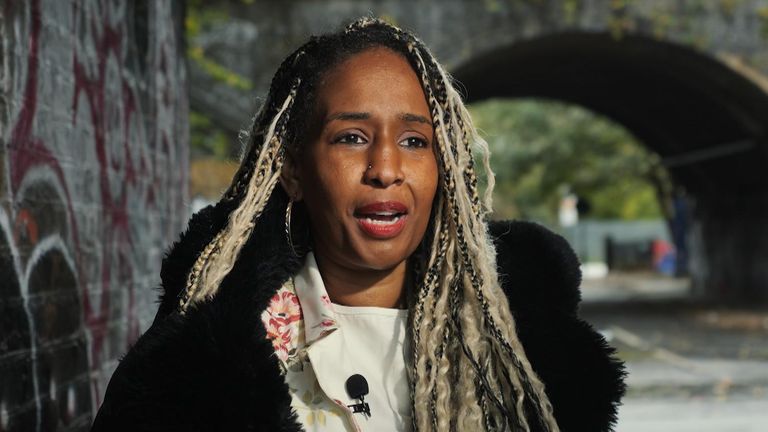
‘I can’t be the only black woman suffering addiction’
Racial disparities
Research has shown that people from ethnic minority backgrounds are less likely to gamble than white people, but are more likely to suffer harm from gambling.
Despite that, too often they do not seek help.
And YouGov statistics shared exclusively with Sky News shed a light on why.
The survey of 4,000 adults for GamCare, which runs the National Gambling Helpline, found that two-thirds of people from ethnic minority backgrounds who’d gambled in the past year had spent more money than they’d planned, double the amount of white respondents.
They were also more than twice as likely to hide their gambling and nearly three times as likely to feel guilt.
Kiki is not surprised.
“For me, coming from a black community, a black background, what goes on indoors stays behind closed doors,” she says.
“You keep your mouth shut, and you handle your business yourself.”
And when she considered what an addict looked like, it wasn’t someone like her.
“I just thought it’s an old white man’s thing – that they go into the bookies, and they have a drink and they bet.
“I thought, well, that’s not me.”
But Dharmi Kapadia, a senior sociology lecturer from Manchester University, who focuses on racial inequality, thinks there’s more than just cultural pressure at play.
“These explanations of stigma have become dominant,” she says.
“We’ve found that what’s more important is that people don’t want to go and get help from gambling services because of previous racist treatment that they’ve suffered at the hands of other statutory services, for example, when they went to the GP.”
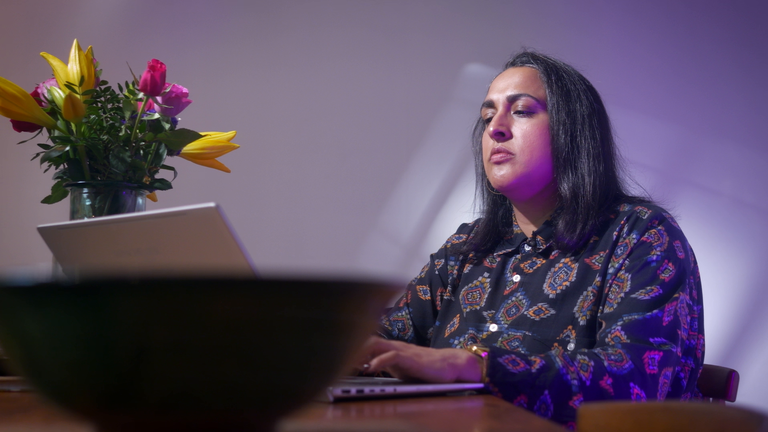
Dharmi Kapadia thinks there’s more than just cultural pressure at play
‘I needed to change’
The stigma felt very real for Kiki, so she hid what she was doing.
“I’ve had trauma in my life. I’ve been sexually abused as a child.
“As the years have gone on, a traumatic event happened in my family that really changed the dynamics of my life and that’s when I moved on from scratch cards to online slots.”
She became hooked – betting around the clock, spending her benefits on 10p and 20p spins on online slots and borrowing money from those around her.
Eventually her daughter moved out when she was 15.
“That’s when everything escalated. I didn’t have that responsibility of keeping up appearances.
“Before that, gas, electric, food shopping, all those things had to be in place.
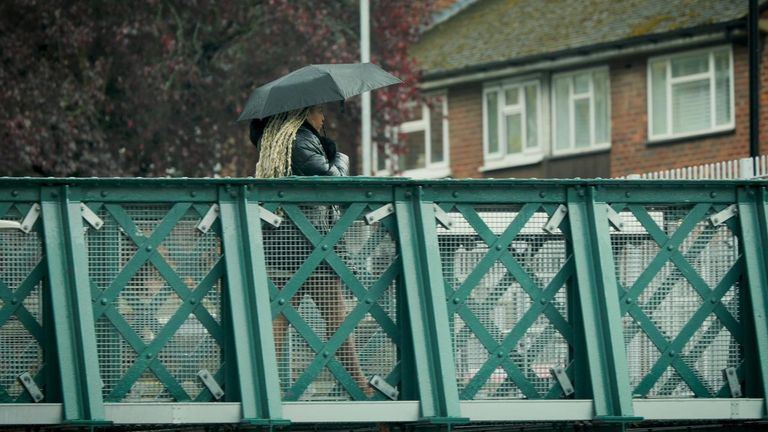
“I just lived and breathed in my bedroom at that point and yeah, it was very lonely.”
When Kiki left the station that day, she called the National Gambling Helpline.
“For the first time in my life, I was completely honest about everything that I was doing – the lies, the manipulation when I was in active addiction, the secrecy.
“I was completely transparent because I wanted to change. I needed to change.”
‘Where’s all the women?’
Since then, she has undergone constant therapy, including a six-week stint in rehab.
And as she headed home in the taxi, her phone rang.
It was Lisa Walker, a woman who understood gambling addiction. She had won £127,000 playing poker at 29 before losing everything and ending up homeless with her young children.
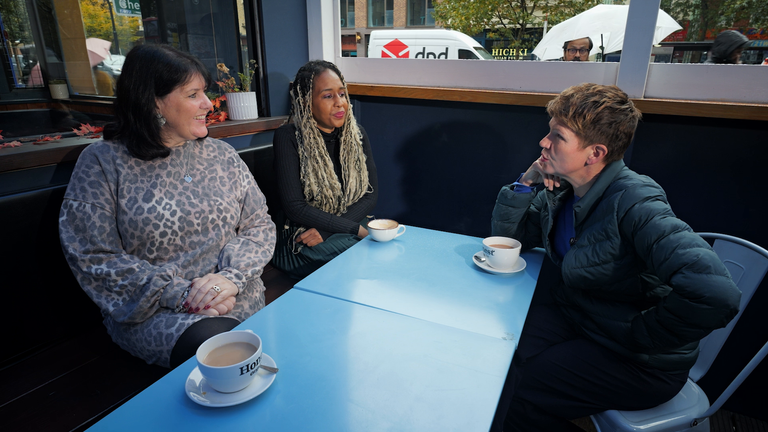
Lisa Walker (left) sought help from Gamblers Anonymous and was among very few women at her meetings
When she finally asked for help, she too felt she was different, walking into a Gamblers Anonymous meeting to find she was one of only two women in a room with 35 men.
“I was thinking, where’s all the women?” says Lisa.
“I can’t be the only woman in the world with a gambling addiction, so that got me thinking, what services are out there for women?”
It was the catalyst to set up support for female gamblers in April 2022.
Since then, Lisa has helped close to 250 women, but all but four have been white.
One of those four was Kiki.
‘There’s no getting away from it’
“It just baffles me… Why aren’t they reaching out for support? Is it the shame? Is it stigma?” says Lisa.
But another concern is that it’s simply too easy to hide the gambling.
“Getting on the train this morning, 90% of people are on their phones, and we don’t know whether they’re playing slots,” she says.
“I could probably sit here now and sign up for 50 online casinos and probably get over a thousand free spins.
“I just think there’s no getting away from it because it’s 24 hours a day.”
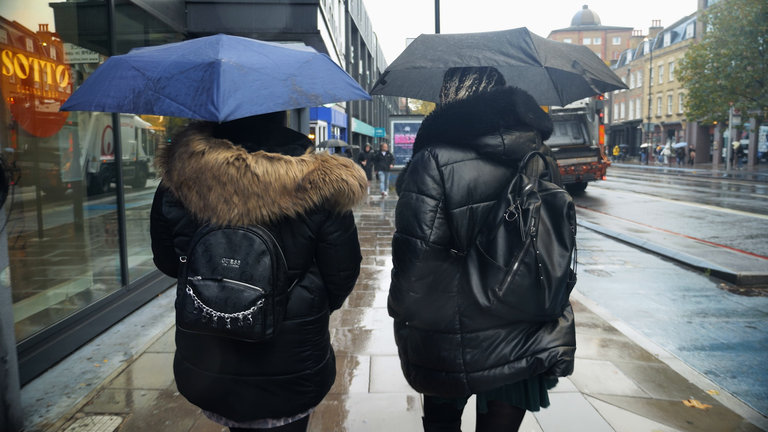
Kiki says she now has an ‘amazing’ relationship with her daughter
Kiki’s flat in Woolwich, where once she couldn’t even go to the bathroom without gambling, has become the place where she runs her own online peer mentoring groups.
“Feeling understood and validated for your experiences, for how you was raised… the core beliefs that you’re taught from a young age, to have somebody that looks like you, talks like you, has the same cultural background… it’s extremely important to make you feel understood, to make you feel validated,” she says.
‘You can learn from it’
Kiki will need to attend support groups for life to keep her addictions at bay.
But she has a clear goal, just as Lisa did.
“My focus is to help other people, help empower other people to choose themselves, to show them that there is light after so much darkness… that you don’t have to be a victim of your circumstances, that you can choose to grow from it and learn from it and heal from it,” she says.
For Kiki, there was so much at stake.
“It was either I was going to die or I was going to become a woman and a mother that my daughter could come back to and respect again.”
And that has happened. Kiki’s daughter is 19 now.
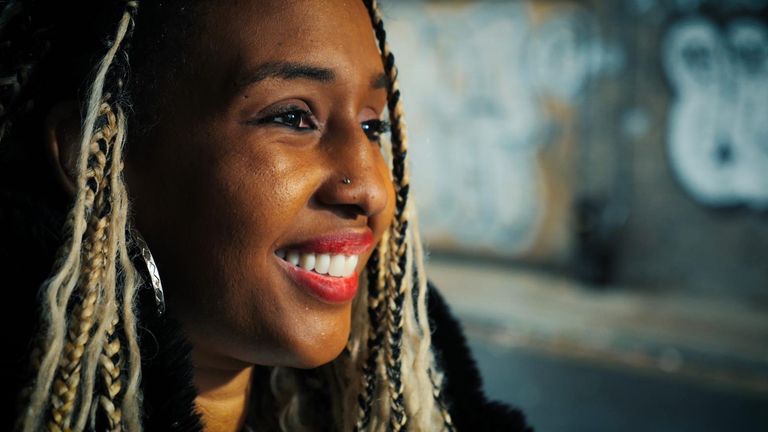
Kiki now helps others suffering from gambling addiction
“We’ve got an amazing relationship today. I’ve took full accountability for the mistakes that I’ve made.
“She’s extremely proud of where I am today.”
It’s more than Kiki could have dreamt of two years ago.
Now all she wants is to help others escape the endless cycle of addiction.
Anyone feeling emotionally distressed or suicidal can call Samaritans for help on 116 123 or email jo@samaritans.org in the UK. In the US, call the Samaritans branch in your area or 1 (800) 273-TALK
To speak to an adviser on the National Gambling Helpline, call 0808 8020 133

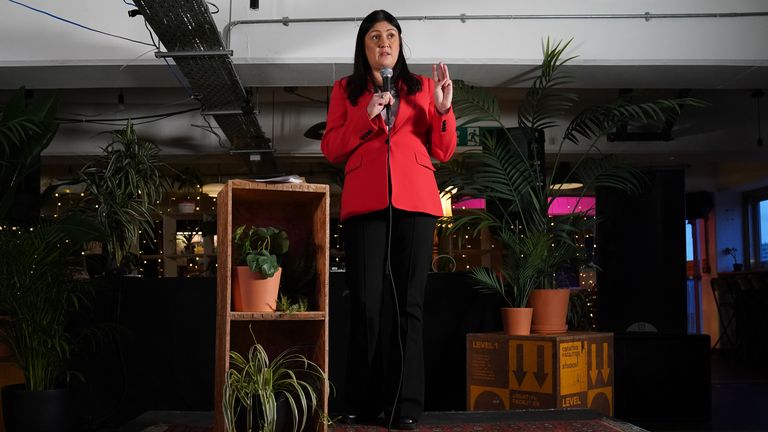
Sir Keir Starmer has declared it his “moral mission” to “turn the tide on the lost decade of young kids left as collateral damage”.
The government launches its 10-year youth plan today, which has pledged £500m to reviving youth services.
Culture Secretary Lisa Nandy has also warned that young people are now “the most isolated in generations” and face challenges that are “urgent and demand a major change in direction”.
But despite the strong language, the Conservatives have warned that “under Labour, the outlook for the next generation is increasingly bleak”.
Lisa Nandy is on Sky News from 7am – follow live
Launching the 10-year strategy, Sir Keir said: “As a dad and as prime minister, I believe it is our generation’s greatest responsibility to turn the tide on the lost decade of young kids left as collateral damage. It is our moral mission.
“Today, my government sets out a clear, ambitious and deliverable plan – investing in the next generation so that every child has the chance to see their talents take them as far as their ability can.”
What’s in the government’s strategy?
Under the plans, the government will seek to give 500,000 more young people across England access to a trusted adult outside their homes – who are assigned through a formal programme – and online resources about staying safe.
The prime minister said the plans will also “ensure” that those who choose to do apprenticeships rather than go to university “will have the same respect and opportunity as everyone else”.
The plan comes following a so-called “state of the nation” survey commissioned by Ms Nandy, which heard from more than 14,000 young people across England.
Launching the strategy, she said: “Young people have been crystal clear in speaking up in our consultation: they need support for their mental health, spaces to meet with people in their communities and real opportunities to thrive. We will give them what they want.”
Read more:
Child poverty strategy launched
Young people may lose benefits
Lisa Nandy will speak about the plan on Sky News on Wednesday morning. Pic: PA
But the Conservatives have criticised the government for scrapping the National Citizen Service (NCS), which ended in March this year.
Shadow culture secretary Nigel Huddlestone said “any renewed investment in youth services is of course welcome”, but said Labour’s “economic mismanagement and tax hikes are forcing businesses to close, shrinking opportunities while inflation continues to climb”.
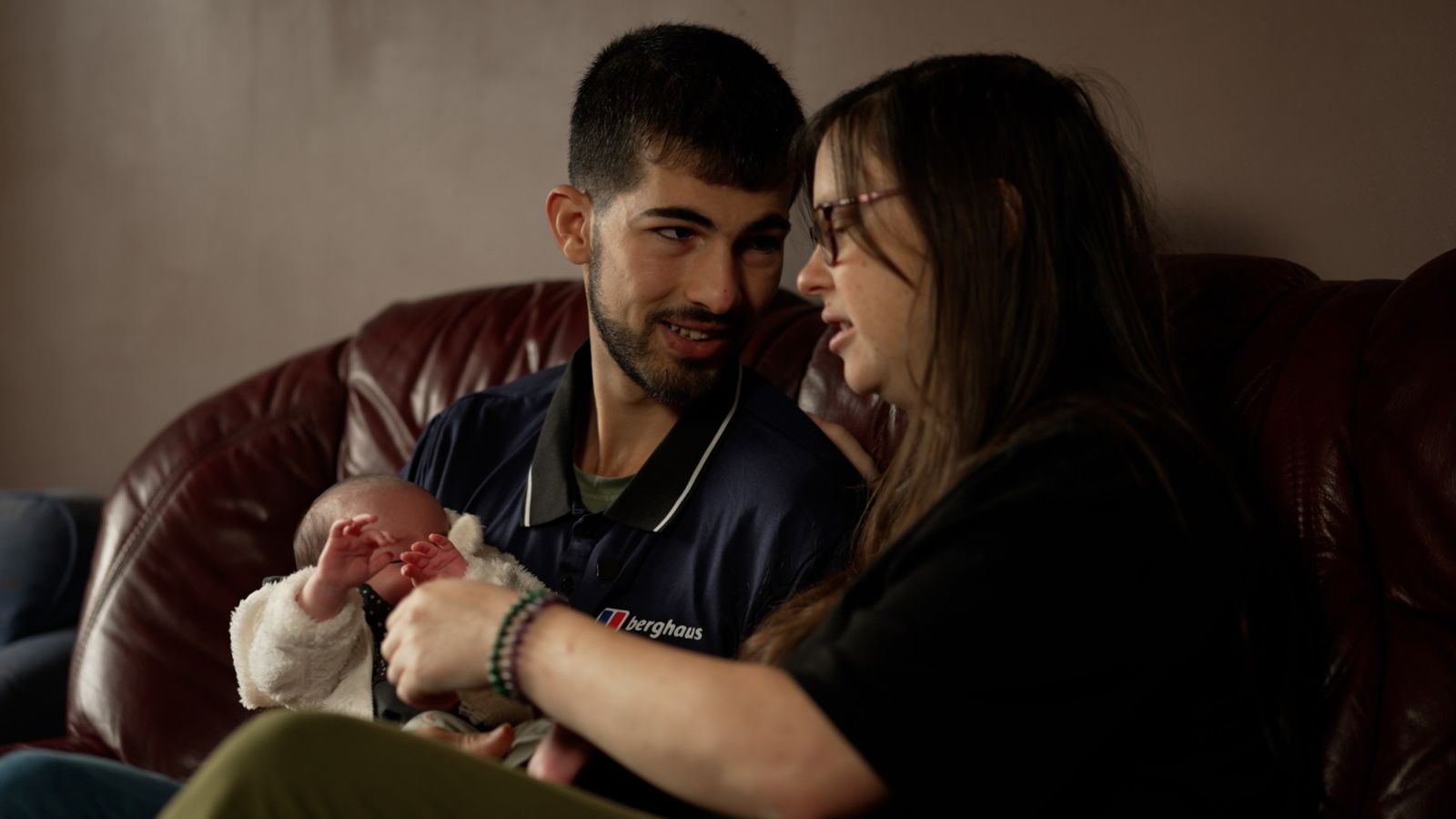
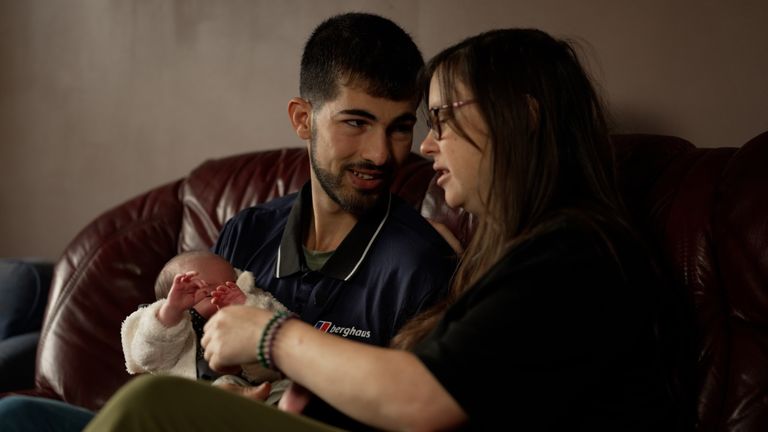
“The system is more than broken – it crossed that limit a long time ago,” says Palestinian asylum seeker Ibrahim Altaqatqa.
Ibrahim came to the UK two years ago on a tourist visa – then claimed asylum.
In the time he’s been waiting to have his claim processed, he’s met his partner Yvonne, who is English, and five weeks ago their baby daughter Alisha was born.
Ibrahim with partner Yvonne and five-week-old daughter Alisha
But his asylum claim remains unresolved, and he says he can’t return to his home near Hebron in the West Bank because of his political activism.
“I can’t just be stuck like this,” he says. “I can’t just waste day after day of my life waiting for somebody to say ‘OK, we give you a decision’.”
He wants to move on with his life and be allowed to work, he says.
“I don’t think you need two years to process any asylum claim. I don’t think there’s any case that’s complicated to that level. I’m not single any more. I’ve got other responsibilities now.”
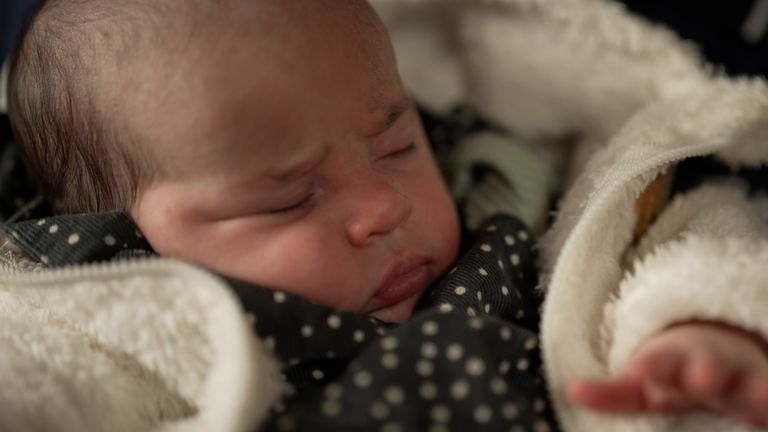
Alisha was born in the UK five weeks ago
‘I’d be happy to join hotel protests’
Formerly a farmer in the Golan Heights, Ibrahim says he’s well aware of the shifting public mood over immigration and shares frustration over the money being spent on asylum seekers.
“I don’t think they are putting their anger toward the right group,” he says. “On many occasions, I spoke with a lot of them – the people who were protesting by the hotel.
“I said ‘if you are really angry and if you really want to save your country, I will be more than happy to come with you and let’s go together to protest’.”

Protests over plans to house asylum seekers in barracks
Ibrahim says he stayed in three Home Office-funded asylum hotels and claims at one point he got scabies.
He claims the food and conditions were so bad at one point, he left and slept on the streets.
Huge backlog of asylum claims
Meanwhile, the National Audit Office (NAO), the UK’s independent public spending watchdog, has published a study on the processing and costs of people claiming asylum, examining the causes of delays and inefficiencies.
It analysed a sample of 5,000 asylum claims lodged almost three years ago and found 35% of them have so far been granted, while 9% of the claimants have been removed from the UK.
But the claims of more than half – 56% – remain unresolved.
Ruth Kelly, NAO chief analyst, says ministers have tended to take “short-term reactive interventions to fix problems, but then these have led to other pressures forming elsewhere in the system and new backlogs forming”.
“That’s led to wasted funds, poor outcomes for asylum seekers, and harm to the government’s ability to meet its obligations to citizens.”
The NAO estimates in the last year the Home Office and Ministry of Justice spent nearly £5bn on asylum – more than £2bn of that on asylum hotels.
It says there is a lack of a “whole system” approach within the Home Office; no shared objectives and there needs to be more robust shared data.
The NAO said it found the Home Office’s effectiveness and value for money are being undermined because of fundamental barriers that mean people seeking asylum spend extended periods waiting in the system.
Read more on Sky News:
Asylum seeker taxi ban
Rise in asylum seekers in hotels
How immigration system is changing
The government has announced a raft of new measures to overhaul the asylum system but the watchdog points out they will take time and parliamentary approval to introduce.
In November, the home secretary acknowledged some people who are coming to the UK are economic migrants seeking to abuse the system, with even genuine refugees passing through other safe countries searching for the most attractive place to seek refuge.
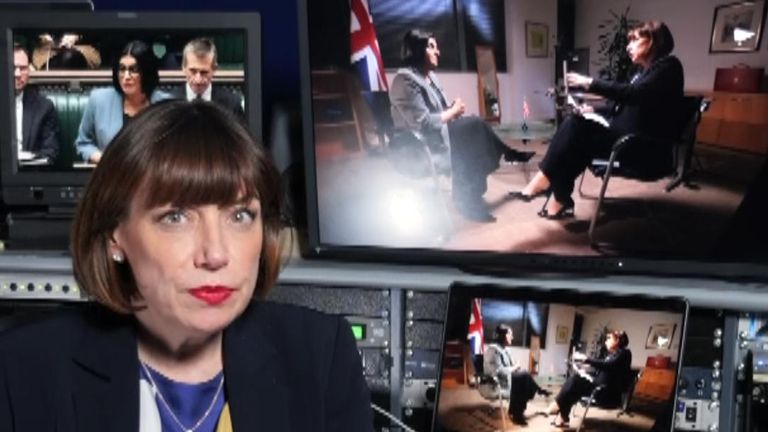
Beth Rigby: The two big problems with Labour’s asylum plan
Government vows to ‘restore order’
With asylum claims falling across Europe but rising in the UK, the government says it wants to reduce illegal migrant arrivals and increase the removal of people with no right to be in the UK.
A Home Office spokesperson said the home secretary “recently announced the most sweeping changes to the asylum system in a generation to deal with the problems outlined in this report.
“We are already making progress – with nearly 50,000 people with no right to be here removed, a 63% rise in illegal working arrests and over 21,000 small boat crossing attempts prevented so far this year.
“Our new reforms will restore order and control, remove the incentives which draw people to come to the UK illegally and increase removals of those with no right to be here.”
-
 Sports2 years ago
Story injured on diving stop, exits Red Sox game
-
 Sports3 years ago
‘Storybook stuff’: Inside the night Bryce Harper sent the Phillies to the World Series
-
 Sports2 years ago
Game 1 of WS least-watched in recorded history
-
 Sports3 years ago
Button battles heat exhaustion in NASCAR debut
-
 Sports3 years ago
MLB Rank 2023: Ranking baseball’s top 100 players
-
Sports4 years ago
Team Europe easily wins 4th straight Laver Cup
-
 Environment3 years ago
Japan and South Korea have a lot at stake in a free and open South China Sea
-
 Environment1 year ago
Here are the best electric bikes you can buy at every price level in October 2024