
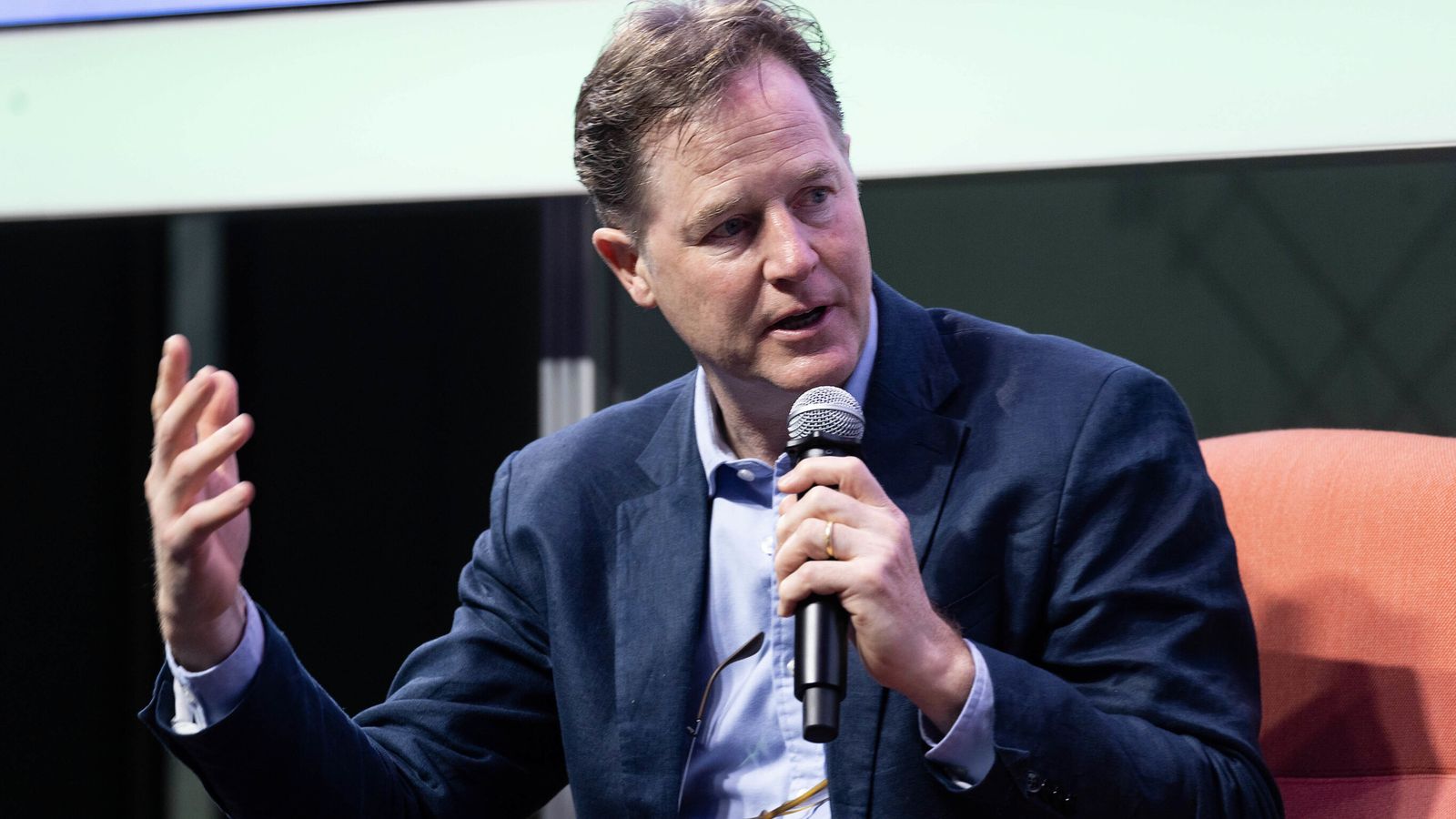
Nick Clegg to step down from Meta role – with prominent Republican Joel Kaplan to replace him

Former deputy prime minister Sir Nick Clegg has said he is stepping down from his role at Facebook parent firm Meta.
He said it was the “right time for me to move on” from president of global affairs.
With Donald Trump just weeks from being sworn in, he will be replaced by former Republican White House deputy chief of staff Joel Kaplan, who served under George W Bush from 2006 to 2009.
Sir Nick said: “As a new year begins, I have come to the view that this is the right time for me to move on from my role as president, global affairs at Meta.
“It truly has been an adventure of a lifetime!”
The ex-Liberal Democrat leader joined Meta as vice‑president for global affairs and communications in 2018 after losing his seat as an MP the year before.
He was promoted in 2022, with Mark Zuckerberg saying the move put Sir Nick on a par with himself and that he would lead “on all our policy matters”.
Sir Nick reportedly enjoys a multi-million-dollar salary and shares package at the company.
His job has focussed on developing policy at a time of increasing concern over misinformation, handling of user data, and harmful content.
The 57-year-old also helped set up the Facebook Oversight Board, an independent panel that makes important content moderation decisions.
However, with Mr Trump about to become president, having a well-known Republican in such a senior role could be beneficial.
The incoming president and Meta had strained relations after the 2020 election, with Mr Trump accusing the company of suppressing content that would have hurt Joe Biden.
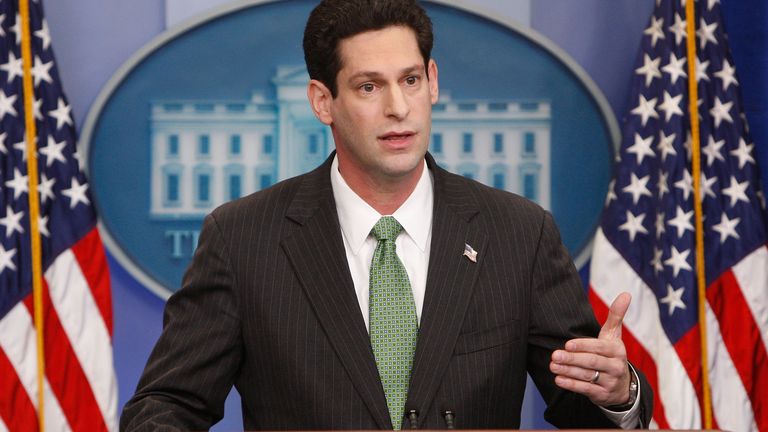
Joel Kaplan (pictured in 2008) worked for President George W Bush. Pic: AP
Meta has also donated $1m to Trump’s inaugural fund, a company spokesperson told Reuters news agency.
Announcing his departure on Facebook, Sir Nick added: “My time at the company coincided with a significant resetting of the relationship between ‘big tech’ and the societal pressures manifested in new laws, institutions and norms affecting the sector.
“I hope I have played some role in seeking to bridge the very different worlds of tech and politics – worlds that will continue to interact in unpredictable ways across the globe.”
He said it had been an “extraordinary privilege to gain a front row insight into what makes Silicon Valley such an enduring hub of world leading innovation”.
Sir Nick said he would move on to “new adventures” after spending a few months handing over to Mr Kaplan, his current deputy.
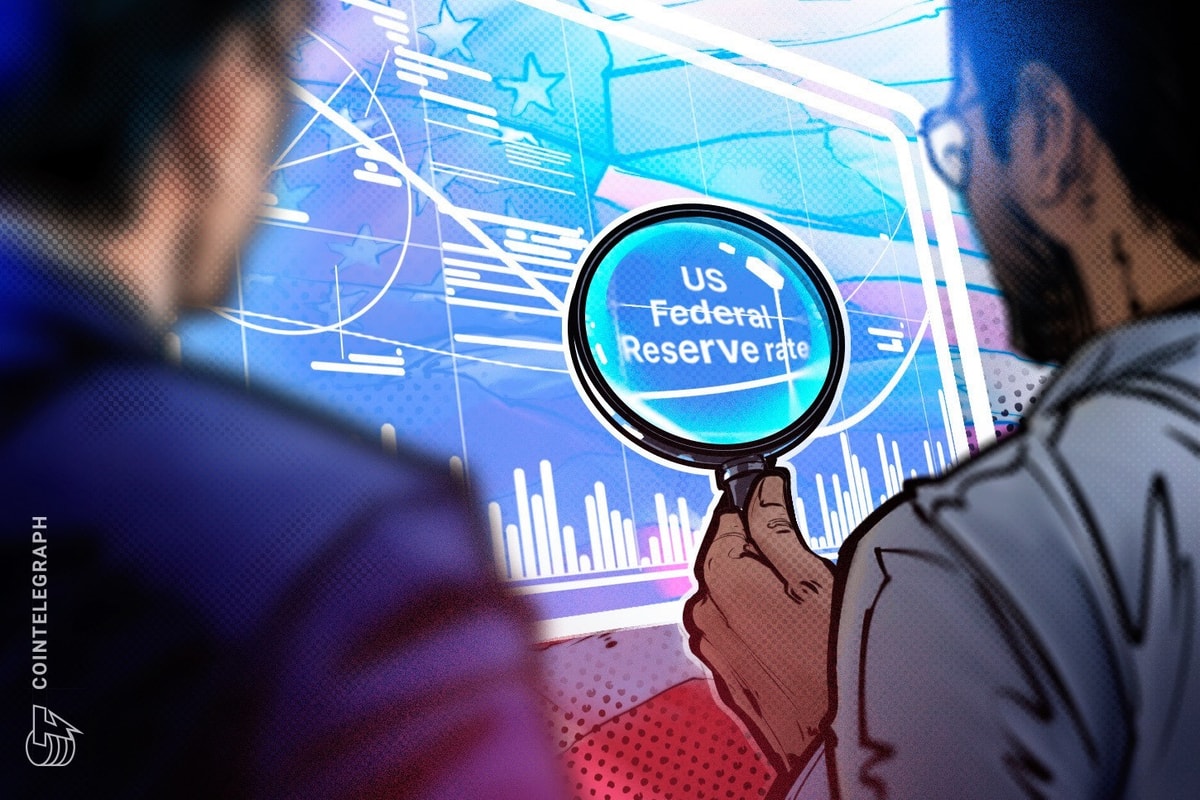

The US Federal Reserve has withdrawn a 2023 guidance that limited how Fed-supervised banks, including uninsured ones, engaged with crypto, as US regulators continue to pivot positively toward digital assets.
The 2023 guidance required uninsured banks to follow the same rules as federally insured institutions, based on the principle that similar activities pose similar risks and should be subject to identical regulation.
This prevented uninsured banks from engaging in activities that weren’t permitted for national banks, like crypto services, which automatically disqualified Fed membership because the institution’s primary activities weren’t allowed.
Fed says financial system has evolved since 2023
The Fed said a key reason for withdrawing the guidance was that it was outdated and “the financial system and the Board’s understanding of innovative products and services have evolved.”
“As a result, the 2023 policy statement is no longer appropriate and has been withdrawn,” it said.
Caitlin Long, the CEO of the crypto‑focused Custodia Bank, applauded the move in an X post on Wednesday, explaining the 2023 guidance was why her institution’s application for a master account was previously denied.
A master account with the Fed enables a financial institution to hold balances directly with the US central bank and access its core payment systems, allowing for payment settlement in central bank money rather than relying on another bank as an intermediary.
Related: Trump’s views on interest rates will hold ‘no weight’ at Fed: Hassett
“The Fed broke the law by citing this very guidance in the Custodia denial, even tho the guidance hadn’t become official yet, that didn’t happen until Feb 2023,” Long said.
“But most of that team is now gone or out of power at the Fed. Nature is healing. Thank you VCS Bowman & Gov Waller!” she added.
New guidance to boost bank innovation
The move on Wednesday came as the Federal Reserve issued new guidance to establish a formal pathway for both insured and uninsured Federal Reserve-supervised state member banks to pursue “innovative activities,” such as cryptocurrencies, provided risk-management expectations are met, according to a statement on Wednesday by the Fed.

Fed vice chair for Supervision Michelle Bowman said that by “creating a pathway for responsible, innovative products and services, the Board is helping ensure that the banking sector remains safe and sound while also modern, efficient, and effective.”
Fed decision wasn’t unanimous
Fed Governor Michael Barr dissented to the decision, arguing that the principle of equal treatment among banks helps maintain a level playing field and prevents regulatory arbitrage.
“This principle continues to hold true today. Therefore, I cannot agree to rescind the current policy statement and adopt a new one that would, in effect, encourage regulatory arbitrage, undermine a level playing field, and promote incentives misaligned with maintaining financial stability. I dissent,” he said.
Barr has been accused of being linked to Operation Chokepoint 2.0, a federal effort to debank crypto companies. However, he was also previously an adviser at Ripple and has pushed for responsible stablecoin regulation.
Magazine: Unstablecoins: Depegging, bank runs and other risks loom


Binance, the world’s largest cryptocurrency exchange by trading volume, is considering a strategic reshuffling to strengthen its presence in the US market, a move that could see Binance co-founder Changpeng “CZ” Zhao’s majority stake in the company reduced.
Zhao’s controlling stake in Binance has been a “major hurdle” to the company expanding to strategically critical US states, according to Bloomberg, citing people familiar with the matter. Although no concrete plans have been announced, the conversation surrounding any potential action remains reportedly “fluid.”
The company is also considering partnerships with US-based companies, including asset manager BlackRock and decentralized finance (DeFi) platform World Liberty Financial (WLFI), which is linked to US President Donald Trump, to strengthen its footprint in the country.
Rumors of Binance’s return to the US began to circulate in October after Trump pardoned Zhao, fueled by speculation from crypto industry executives and comments that Zhao made on social media.
“Will do everything we can to help make America the capital of crypto and advance Web3 worldwide,” Zhao said in October after the pardon.
In June 2019, Binance announced that it would stop serving US customers, and a separate company, called Binance.US and operated by BAM Trading Services, was formed to provide regulatory-compliant services to US users.
In 2023, the US Securities and Exchange Commission alleged that Binance Holdings Ltd. operated both Binance.com and BAM Trading Services.
Binance.US does not feature crypto derivatives or access to the global Binance exchange’s liquidity and operates as a completely separate crypto exchange.
Cointelegraph reached out to Binance and Binance.US but did not receive a response by the time of publication.
The US is considered a key market for crypto exchanges and is ranked as the number two for global crypto adoption, according to Chainalysis’ 2025 Global Crypto Adoption Index. Expanding to the US would open up US liquidity to the world’s largest crypto exchange.

Related: Binance names co-founder Yi He co-CEO alongside Richard Teng
Several US lawmakers voice opposition to the CZ pardon and the crypto industry
Trump’s pardon of Zhao in October drew backlash from several Democratic Party lawmakers in the US, including Massachusetts Senator Elizabeth Warren and California Congresswoman Maxine Waters.
Waters said the pardon was a form of pay-to-play and accused Trump of doing political favors for the crypto industry that “helped line his pockets.”
Warren, who is one of the most vocal critics of the crypto industry, also criticized the pardon, characterizing it as “corruption.”
The comments reflect pockets of resistance among some Democratic lawmakers to the crypto industry’s continued expansion in the US and could signal potential opposition to Binance returning to the US.
Magazine: Unstablecoins: Depegging, bank runs and other risks loom
-
 Sports2 years ago
Story injured on diving stop, exits Red Sox game
-
 Sports3 years ago
‘Storybook stuff’: Inside the night Bryce Harper sent the Phillies to the World Series
-
 Sports2 years ago
Game 1 of WS least-watched in recorded history
-
 Sports3 years ago
Button battles heat exhaustion in NASCAR debut
-
 Sports3 years ago
MLB Rank 2023: Ranking baseball’s top 100 players
-
Sports4 years ago
Team Europe easily wins 4th straight Laver Cup
-
 Environment3 years ago
Japan and South Korea have a lot at stake in a free and open South China Sea
-
 Environment1 year ago
Here are the best electric bikes you can buy at every price level in October 2024