

UK to ‘mainline AI in the veins’ under new plans from Sir Keir Starmer


The government will “mainline AI into the veins” of the UK, with plans being unveiled today by Sir Keir Starmer.
The prime minister is set to promise investment, jobs and economic growth due to a boom in the sector.
It comes as his government battles against allegations they are mismanaging the economy and stymied growth with the budget last autumn.
The government’s announcement claims that, if AI is “fully embraced”, it could bring £47bn to the economy every year.
And it says that £14bn is set to be invested by the private sector, bringing around 13,000 jobs.
The majority of those would be construction roles to build new data centres and other infrastructure, with a smaller number of technical jobs once the work is finished.
Sir Keir said: “Artificial Intelligence will drive incredible change in our country. From teachers personalising lessons, to supporting small businesses with their record-keeping, to speeding up planning applications, it has the potential to transform the lives of working people.
“But the AI industry needs a government that is on their side, one that won’t sit back and let opportunities slip through its fingers. And in a world of fierce competition, we cannot stand by. We must move fast and take action to win the global race.”
The prime minister added that he wants Britain to be “the world leader” in AI.
The government announcement said: “Today’s plan mainlines AI into the veins of this enterprising nation.”
Read more:
UK to ‘lose AI leadership’ without data strategy
How to protect your privacy from AI
To achieve this, the government will implement all 50 recommendations made by Matt Clifford following his review last year.
This includes creating new AI “growth zones” – the first of which is set to be in Culham, Oxfordshire, where the UK’s Atomic Energy Authority is based.
These zones will get faster planning decisions and extra power infrastructure.
Is the AI boom turning into a market bubble?
The government also wants to increase UK computing power 20-fold by 2030, including by building a brand-new supercomputer.
Labour cancelled a planned supercomputer when it entered office, as it claimed it wasn’t funded. The new venture is expected to be a joint public-private project.
The government says its plans will have three pillars. This includes laying the foundations with new AI growth zones and the new supercomputer.
The second is to boost AI take up by the public and private sectors. New pilots for AI in the public service are set to be announced, and Sir Keir has written to all cabinet ministers, telling them to drive AI adoption and growth.
And the third pillar is keeping ahead of the pack, with the government set to establish a “team” to keep the UK “at the forefront of emerging technology”.
The announcement was welcomed by a slew of technology bosses.
👉Listen to Politics At Jack And Sam’s on your podcast app👈
Chris Lehane, the chief global affairs officer at OpenAI, which released ChatGPT, said: “The government’s AI action plan – led by the prime minister and [Science] Secretary Peter Kyle – recognises where AI development is headed and sets the UK on the right path to benefit from its growth.
“The UK has an enormous national resource in the talent of its people, institutions and businesses which together, can leverage AI to advance the country’s national interest.”
The shadow secretary for science, innovation and technology, Alan Mak, said: “Labour’s plan will not support the UK to become a tech and science superpower. They’re delivering analogue government in a digital age.
“Shaping a successful AI future requires investment, but in the six months leading up to this plan, Labour cut £1.3bn in funding for Britain’s first next-generation supercomputer and AI research whilst imposing a national insurance jobs tax that will cost business in the digital sector £1.66bn.
“AI does have the potential to transform public services, but Labour’s economic mismanagement and uninspiring plan will mean Britain is left behind.”
Business
Facewatch: The controversial tech that retailers have deployed to tackle shoplifting and violence
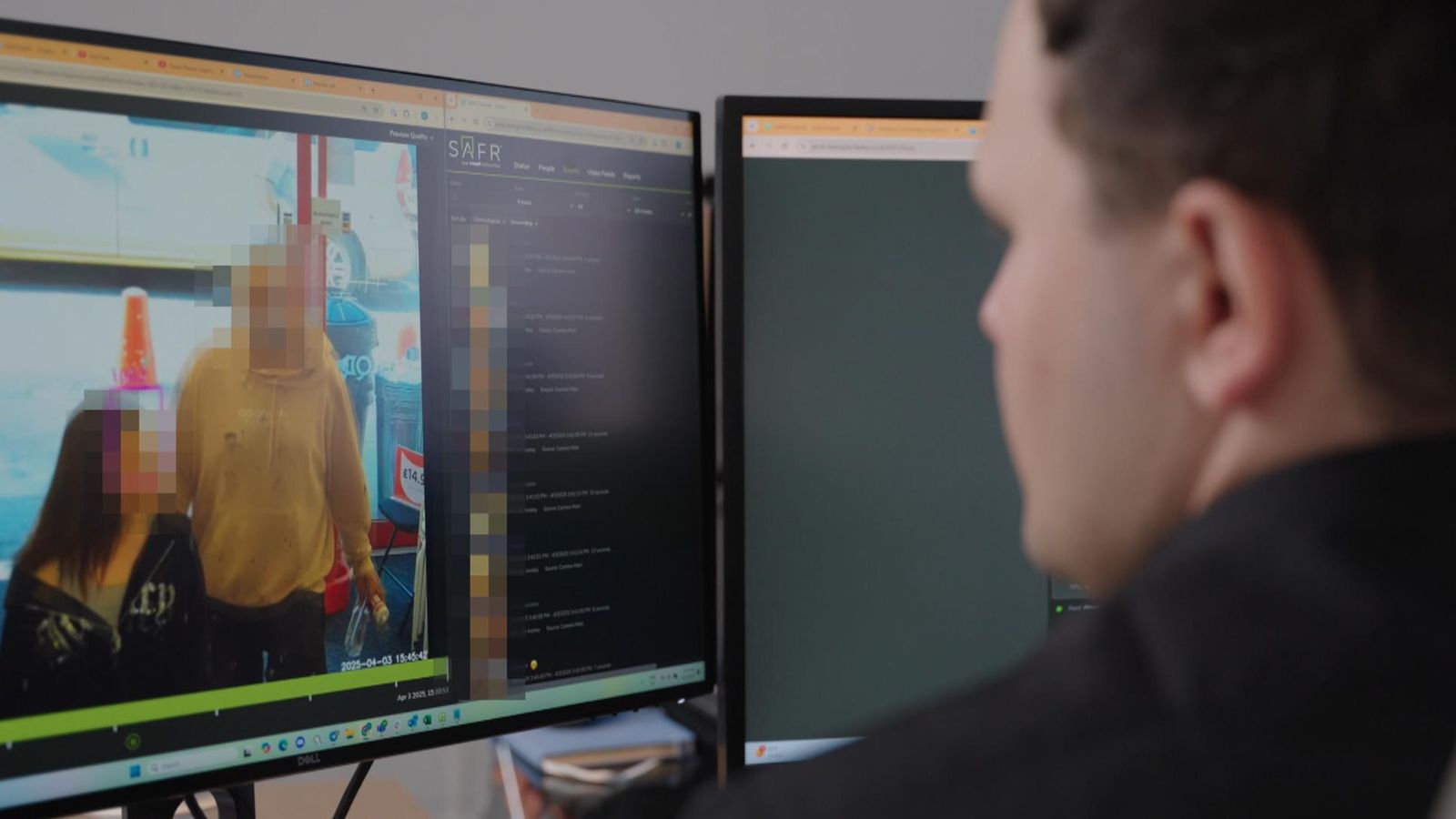
The Christmas period is upon us, and goods are flying off the shelves, but for some reason, the tills are not ringing as loudly as they should be.
Across the country, the five-finger discount is being used with such frequency that retailers are taking action into their own hands.
With concerns about the police response to shoplifting, many are now resorting to controversial facial recognition technology to catch culprits before they strike.
Sainsbury’s, Asda, Budgens and Sports Direct are among the high-street businesses that have signed up to Facewatch, a cloud-based facial recognition security system that scans faces as they enter a store. Those images are then compared to a database of known offenders and, if a match is found, an alert is set off to warn the business that a shoplifter has entered the premises.
It comes as official figures show shoplifting offences rose by 13% in the year to June, reaching almost 530,000 incidents. Figures reported in August showed more than 80% result in no charge.
At the same time, retailers are reporting more than 2,000 cases of violence or abuse against their staff every day. Faced with mounting losses and safety concerns, businesses say they are being forced to take security into their own hands because stretched police forces are only able to respond to a fraction of incidents.
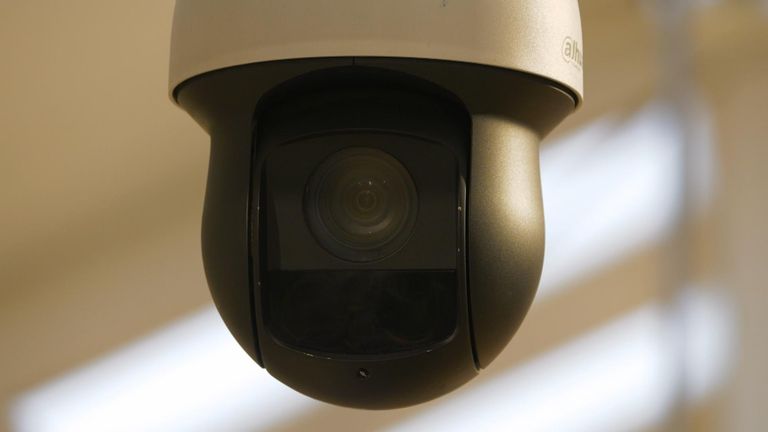
A Facewatch camera
At Ruxley Manor Garden Centre in south London, managing director James Evans said theft had become increasingly brazen and organised, with losses from shoplifting now accounting for around 1.5% of turnover. “That may sound small, but it represents a significant hit to the bottom line,” he said, pointing out that thousands of pounds’ worth of goods can be stolen in a single visit.
“We have had instances where the children get sent in to do it. They know that the parents will be waiting in the car park and they’ll know that there’s nothing that we can do to stop them.”
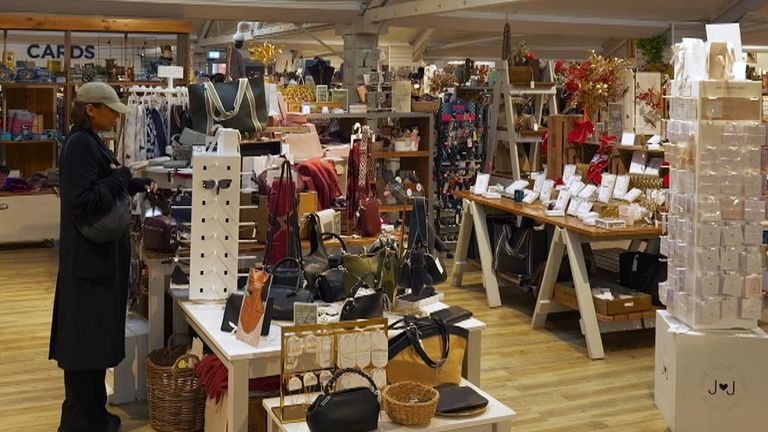
Gurpreet Narwan is seen at the garden centre while being shown how Facewatch works
Staff members here have also had their fair share of run-ins with shoplifters. In one case, employees trying to stop a suspected shoplifter were nearly struck by an accomplice in a car. “This is no longer just about stock loss,” said James, “It is about the safety of our staff.”
However, the technology is not without its critics. Civil liberties groups have warned that the expansion of this type of technology is eroding our privacy.
Silkie Carlo, director of Big Brother Watch, called it “a very dangerous kind of privatised policing industry”.
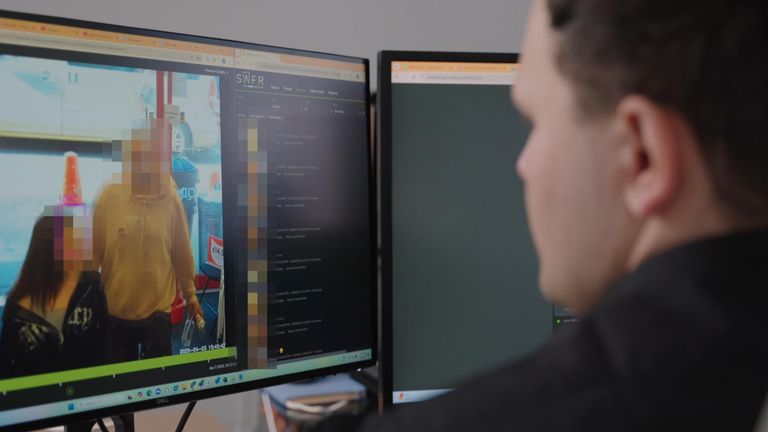
Facewatch is seen in operation as retailers look to crack down on crime.
“[It] really threatens fairness and justice for us all, because now it’s the case that just going to do your supermarket shopping, a company is quietly taking your very sensitive biometric data. That’s data that’s as sensitive as your passport, and [it’s] making a judgement about whether you’re a criminal or not.”
Silkie said the organisation was routinely receiving messages from people who said they had been mistakenly targeted. They include Rennea Nelson, who was wrongly flagged as a shoplifter at a B&M store after being mistakenly added to the facial recognition database. Nelson said she was threatened with police action and warned that her immigration status could be at risk.
Gurpreet’s profile can be seen on the Facewatch database
“He said to me, if you don’t get out, I’m going to call the police. So at that point I turned around and I was like, are you speaking to me? Then he was like yes, yes, your face set off the alarm because you’re a thief… At that point, I was around six to seven months pregnant and I was having a high-risk pregnancy. I was already going through a lot of anxiety and, so him coming over and shouting at me, it was like really triggering me.”
The retailer later acknowledged the error and apologised, describing it as a rare case of human mistake.
Read more:
Elon Musk closer to becoming first-ever trillionaire
William and George help prepare Christmas lunch for the homeless
A spokesperson for B&M said: ‘This was a simple case of human error, and we sincerely apologise to Ms Nelson for any upset caused. Reported incidents like this are rare. Facewatch services are designed to operate strictly in compliance with UK GDPR and to help protect store colleagues from incidents of aggressive shoplifting.”
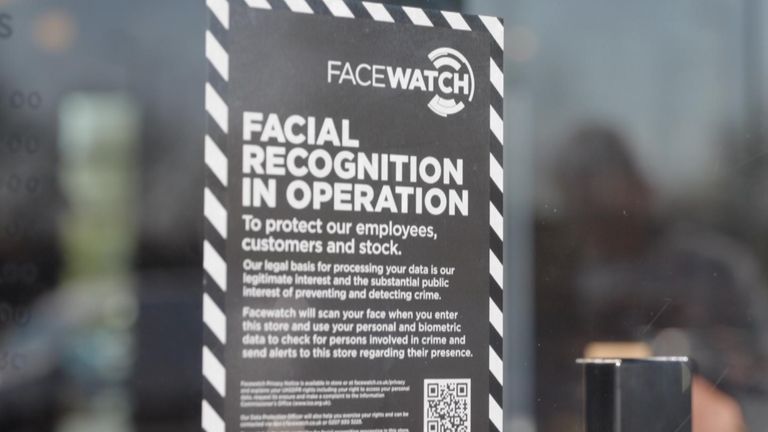
The cloud-based technology has critics who argue that it amounts to a misuse of personal data and privacy
Nick Fisher, chief executive of Facewatch, said the backlash was disproportionate.
“Well, I think it’s designed to be quite alarmist, using language like ‘dystopian’, ‘orwellian’, ‘turning people into barcodes’,” he said.
“The inference of that is that we will identify people using biometric technology, hold and store their own, store their data. And that’s just, quite frankly, misleading. We only store and retain data of known repeat offenders, of which it’s been deemed to be proportionate and responsible to do so… I think in the world that we are currently operating in, as long as the technology is used and managed in a responsible, proportionate way, I can only see it being a force for good.”
Yet, there is obviously widespread unease, if not anger, at the proliferation of this technology. Businesses are obviously alert to it, but the bottom line is calling.
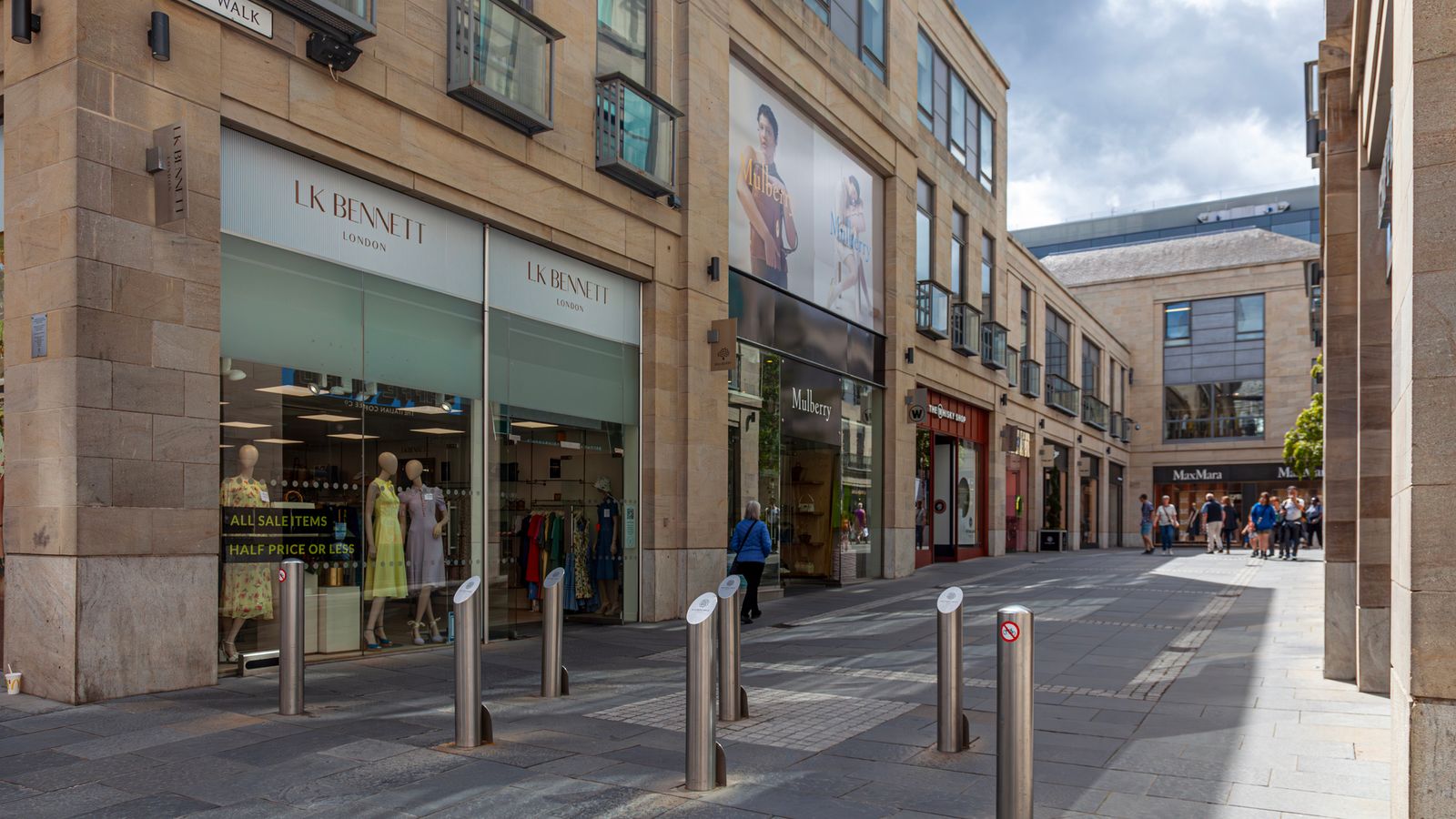
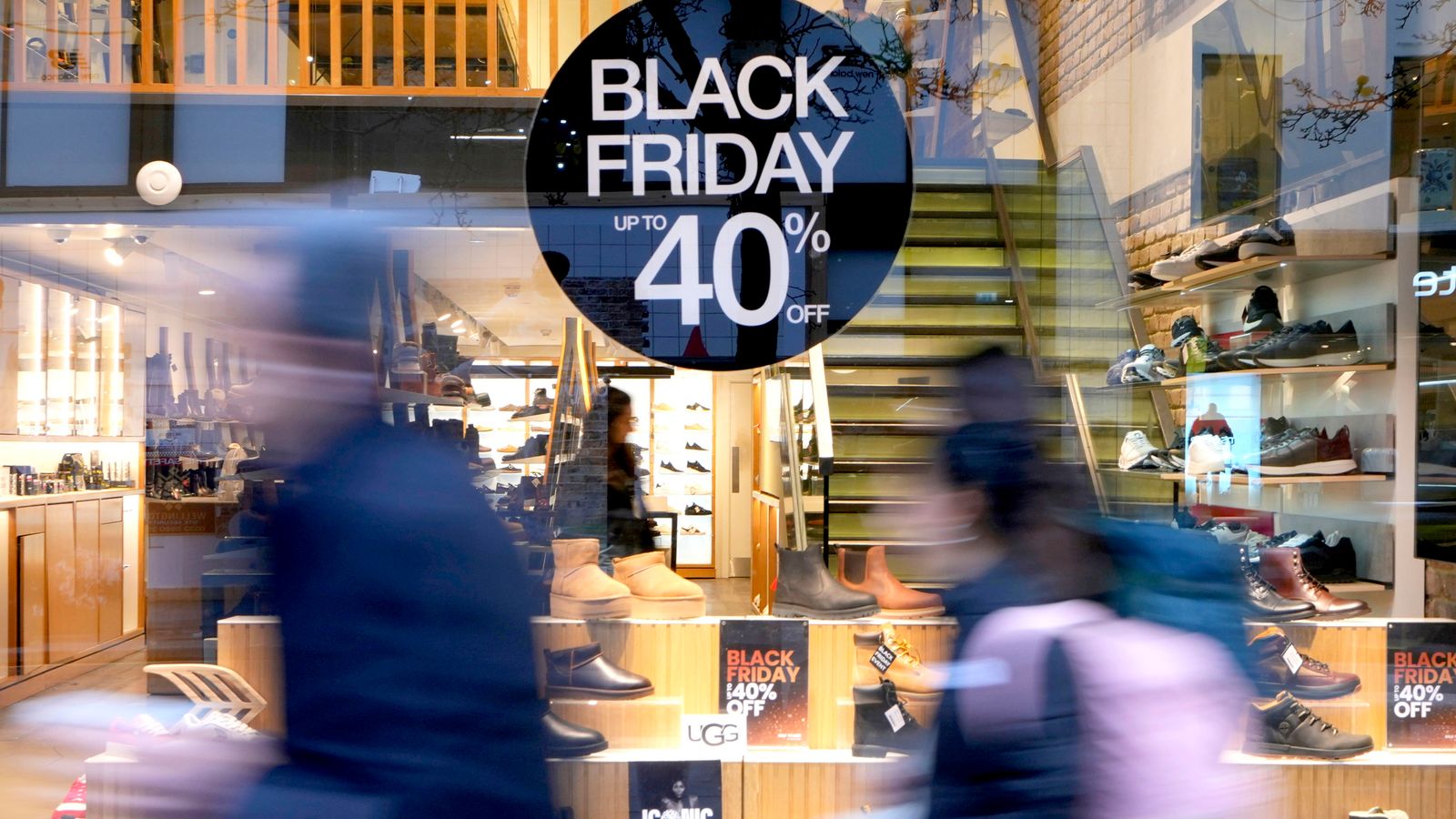

Black Friday sales do not appear to have provided much cheer for retailers amid continued consumer caution, according to official figures.
The Office for National Statistics (ONS) reported a 0.1% decline in sales volumes during November, compared to the previous month, when the data is adjusted for seasonal effects due to the pre-Christmas shopping bonanza falling in December last year.
Economists polled by the Reuters news agency had expected growth of 0.4%. The dip was worse when the effects of fuel sales were excluded.
Rolling three-month data showed positive sales volumes were only propped up by strength in September.
Money latest: The graduates who may want to pay off their student loan early
ONS senior statistician Hannah Finselbach said: “Retail continued to grow in the three months to November, helped by a strong performance from clothing and tech shops.
“This year November’s Black Friday discounts did not boost sales as much as in some recent years, meaning that once we adjust for usual seasonality, our headline figures fell a little on the month.
“Meanwhile, our separate household survey showed that although some people said they were planning to do more shopping… this Black Friday than last, almost twice as many said they were planning to do less.”
The data was released against a backdrop of widespread consumer and business caution in the run-up to the budget on 26 November – held just two days before Black Friday – although promotional activity was already well underway before Rachel Reeves’s speech.
That period was dominated by on-off signals over income tax hikes and black holes in the public finances, but the budget itself largely backdated many of the most painful measures towards the end of the parliament.
While the ONS data does little to boost retailers’ expectations for the Christmas season, there was a crumb of comfort to take from a closely-watched survey released just beforehand.
GfK’s consumer confidence index nudged up to its joint-highest level this year – though it remained deep in negative territory.
The biggest upwards contribution came from a willingness to make major purchases, despite perceptions for personal finances weighing amid continuing cost-of-living pressures in the economy.
Neil Bellamy, GfK’s consumer insights director, said: “Consumers resemble a family on a festive winter hike, crossing a boggy field – plodding along stoically, getting stuck in the mud and hoping that easier conditions are not far off.”
We have had better economic news since the survey was completed.
It was revealed this week that a much larger decline in the rate of inflation, to 3.2% from 3.6%, had allowed the Bank of England to cut interest rates to 3.75%.
It promises a boost to spending power as borrowing costs come down further, with wage growth still rising above that pace for price growth.
It is now hoped that the end of the budget circus will spark some life into the economy following two consecutive monthly contractions for output and a surge in the unemployment rate.
Much of the increase has been attributed to the retail and hospitality sectors reacting to sharp rises in employment costs under the Labour government.
Consumer spending accounts for around 60% of the UK economy.
Richard Carter, head of fixed interest research at Quilter Cheviot, said of the outlook: “Markets do not believe growth is coming to the UK anytime soon.
“Indeed, the UK is likely to slip into recession if the latest GDP figures are anything to go by, and there is little sign of positive momentum being generated.”
-
 Sports2 years ago
Story injured on diving stop, exits Red Sox game
-
 Sports3 years ago
‘Storybook stuff’: Inside the night Bryce Harper sent the Phillies to the World Series
-
 Sports2 years ago
Game 1 of WS least-watched in recorded history
-
 Sports3 years ago
Button battles heat exhaustion in NASCAR debut
-
 Sports3 years ago
MLB Rank 2023: Ranking baseball’s top 100 players
-
Sports4 years ago
Team Europe easily wins 4th straight Laver Cup
-
 Environment3 years ago
Japan and South Korea have a lot at stake in a free and open South China Sea
-
 Environment1 year ago
Here are the best electric bikes you can buy at every price level in October 2024