Connect with us

Published

on

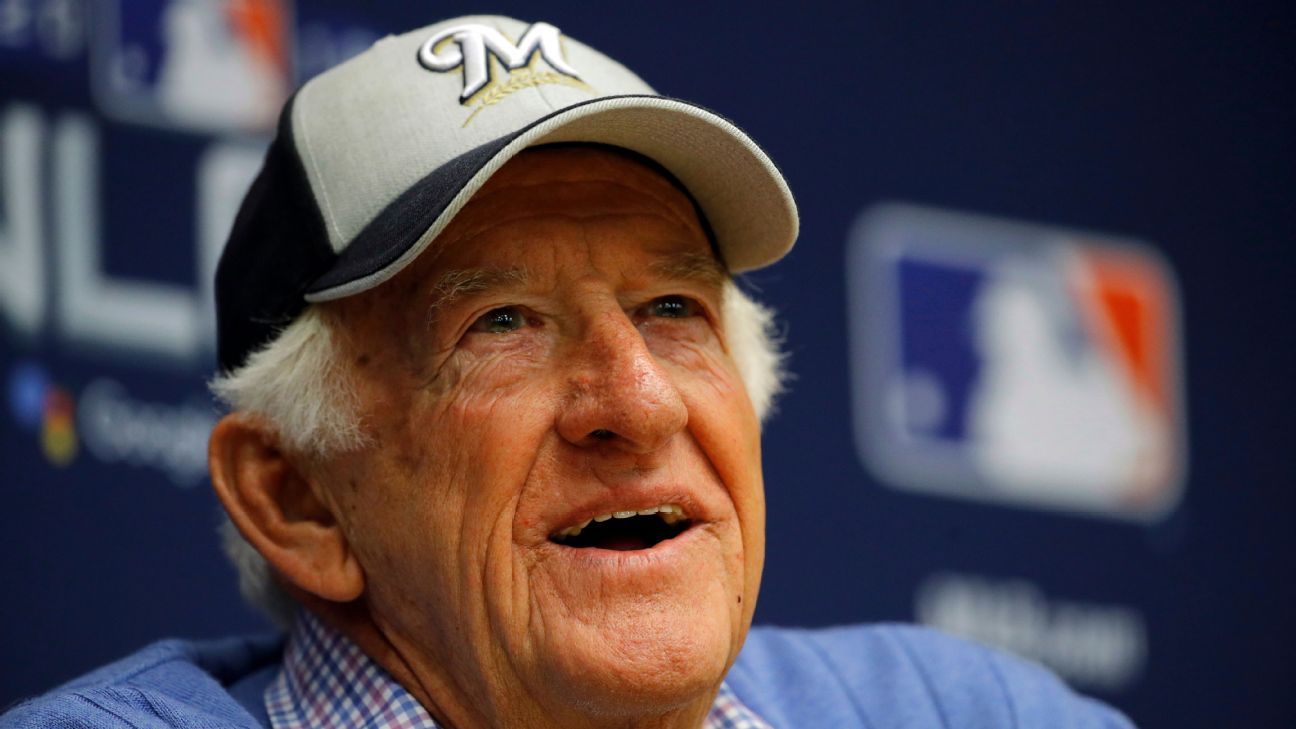
MILWAUKEE — Bob Uecker, the voice of his hometown Milwaukee Brewers who after a short playing career earned the moniker “Mr. Baseball” and honors from the Hall of Fame, has died. He was 90.

The team announced Uecker died Thursday morning, calling it “one of the most difficult days in Milwaukee Brewers history.” In a statement released by the club, Uecker’s family said he had battled small cell lung cancer since early 2023.

“Even in the face of this challenge, his enthusiasm for life was always present, never allowing his spirit to falter,” the family said.

“Bob was the genuine item: always the funniest person in any room he was in, and always an outstanding ambassador for our National Pastime,” MLB commissioner Rob Manfred said in a statement. “We are grateful for this baseball life like no other, and we will never forget him. On behalf of Major League Baseball, I extend my deepest sympathy to Bob’s family, his many friends across the game, Brewers fans, and the countless baseball fans who admired him.”

Uecker was best known as a colorful comedian and broadcaster who earned his nickname during one of his numerous appearances on Johnny Carson’s late-night show.

Born and raised in Milwaukee, Uecker was a beloved member of the baseball community and a pillar of the sport in Wisconsin.

When the Brewers clinched the NL Central title in 2024, manager Pat Murphy threw an arm around Uecker in the locker room, pulling him in tight as players white-knuckled their corks, ready to shower him in champagne.

“There is no one — there is no one — who epitomizes a champion the way this man does right here,” Murphy proclaimed as the players chanted “UUUUUECK.”

“What an example for us to be with every single day — Bob Uecker.”

Uecker signed his first professional contract with the Milwaukee Braves in 1956 and reached the majors in 1962. He’d last six seasons in the big leagues as a backup catcher, finishing with a .200 average and 14 homers.

He won a World Series ring with St. Louis in 1964 and also played for Atlanta and Philadelphia.

“Career highlights? I had two,” he often joked. “I got an intentional walk from Sandy Koufax, and I got out of a rundown against the Mets.”

Uecker also befriended former Brewers owner and MLB commissioner Bud Selig, who initially hired him as a scout. Selig liked to joke about how Uecker’s initial scouting report was stained with mashed potatoes and gravy.

Selig eventually brought Uecker to the broadcast booth. Uecker became the voice of the Brewers in 1971, in the second year after the team moved from Seattle.

Uecker remained with the club from that point on and became one of the Brewers’ most indelible figures. Brewers manager Craig Counsell grew up in the Milwaukee area and remembered spending summer days throwing a baseball against the roof and catching it while listening to Uecker’s broadcasts.

“There’s no single person in this franchise’s history who has been as iconic and as important as Bob Uecker,” said Jeff Levering, a member of the Brewers’ broadcast team since 2015.

Even as his celebrity status grew nationwide, Uecker savored the opportunity to continue calling games to fans in his hometown.

“To be able to do a game each and every day throughout the summer and talk to people every day at 6:30 for a night game, you become part of people’s families,” Uecker once said. “I know that because I get mail from people that tell me that. That’s part of the reward for being here, just to be recognized by the way you talk, the way you describe a game, whatever.”

Uecker was honored by the Hall of Fame with the Ford C. Frick Award in 2003 and spent nearly 20 minutes keeping the Cooperstown, New York, crowd of about 18,000 in stitches.

“I still — and this is not sour grapes by any means — still think I should have gone in as a player,” he quipped.

“Ueck” got his big break off the field after opening for Don Rickles at Al Hirt’s nightclub in Atlanta in 1969. That performance caught Hirt’s attention, and the musician set him up to appear on “The Tonight Show” with Johnny Carson. He became one of Carson’s favorite guests, making more than 100 appearances.

Carson was the one who dubbed Uecker “Mr. Baseball.” And the name stuck.

But Uecker’s comedy was just a part of his abilities. His warm storytelling and delivery made him a natural to become one of the first color commentators on network TV broadcasts in the 1970s with ABC. In the ’90s, he teamed up with Bob Costas and Joe Morgan for the World Series.

From there, Uecker reached most households as one of the Miller Lite All-Stars in popular commercials for the beer brand based out of Milwaukee and he later launched his TV acting career in 1985 on the ABC sitcom, “Mr. Belvedere.”

Uecker played George Owens during the successful 122-episode run of the series that lasted six years, as the head of the family and sportswriter in a home that brings in a butler who struggles to adapt to an American household.

In a bit of casting that kept things pretty close to home, Uecker also played a prominent role in the movies “Major League” (1989) and “Major League II” (1994) as crass announcer Harry Doyle for a down-and-out Cleveland franchise that finds a way to become playoff contenders.

“I’m part of American folklore, I guess,” Uecker told The Associated Press in 2003. “But I’m not a Hollywood guy. Baseball and broadcasting are in my blood.”

His wry description of a badly wayward pitch — “Juuuust a bit outside!” — in the movie is still often-repeated by announcers and fans at ballparks all over.

Uecker’s acting left some to believe he was more about being funny than a serious baseball announcer, but his tenure and observations with the Brewers were spot on, especially when games were tight. Equally enjoyable were games that weren’t, when Uecker would tell stories about other major leaguers, his own career and his hobbies as an avid fisherman and golfer.

“I don’t think anyone wants to hear somebody screwing around when you got a good game going,” Uecker said. “I think people see ‘Major League’ and they think Harry Doyle and figure that’s what Bob Uecker does. I do that sometimes, I do. But when we’ve got a good game going, I don’t mess around.”

In his later years, he took a serious approach to his health, swimming daily leading up to heart surgery in April 2010. Very soon after the procedures, doctors said Uecker returned to walking several miles and was ahead in recovery.

Uecker pushed to return to the booth and began calling games again in July, saying he bribed the doctors by allowing them to throw out the first pitch.

“You talk about all the things Bob has done, he never wanted to leave Milwaukee,” Selig said. “Above all, he made himself into a great play-by-play announcer. That’s what he did. He’s everything to this franchise and loves every minute of it.”

Uecker’s own career provided him most of his material. His former teammates said Uecker would do impressions of other broadcasters on the bus, but Uecker turned the spotlight on himself after his playing career was over.

“I signed with the Milwaukee Braves for $3,000. That bothered my dad at the time because he didn’t have that kind of dough,” he said. “But he eventually scraped it up.”

Another classic: “When I came up to bat with three men on and two outs in the ninth, I looked in the other team’s dugout and they were already in street clothes.”

Uecker also presided over the stirring ceremony that closed Milwaukee County Stadium in 2000. When the Brewers’ new stadium opened as Miller Park in 2001, the team began selling “Uecker Seats” high in the upper deck and obstructed for a $1.

The stadium, now known as American Family Field, has two statues in Uecker’s honor. There’s a statue outside the stadium and another one in the back of Section 422, a nod to the Miller Lite commercial in which he famously said, “I must be in the front row!” while getting taken to one of the worst seats in the ballpark.

After the Brewers were eliminated from the playoffs in 2024, Uecker’s last season, he made sure to visit the locker room and offer support to players in a way only he could.

“That was kind of tough. All the other stuff, it is what it is. … Talking to Ukie, one on one, was tough,” outfielder Christian Yelich said at the time. “He means a lot. He means a lot. I’ve gotten to know him pretty good over the last seven years. … He’s right over there. Just a great guy, a great guy.”

The Associated Press contributed to this report.

Continue Reading

Sports

Wetzel: Kiffin is no victim, and he needs to own that he just quit on a title contender

Published

on

By

Wetzel: Kiffin is no victim, and he needs to own that he just quit on a title contender

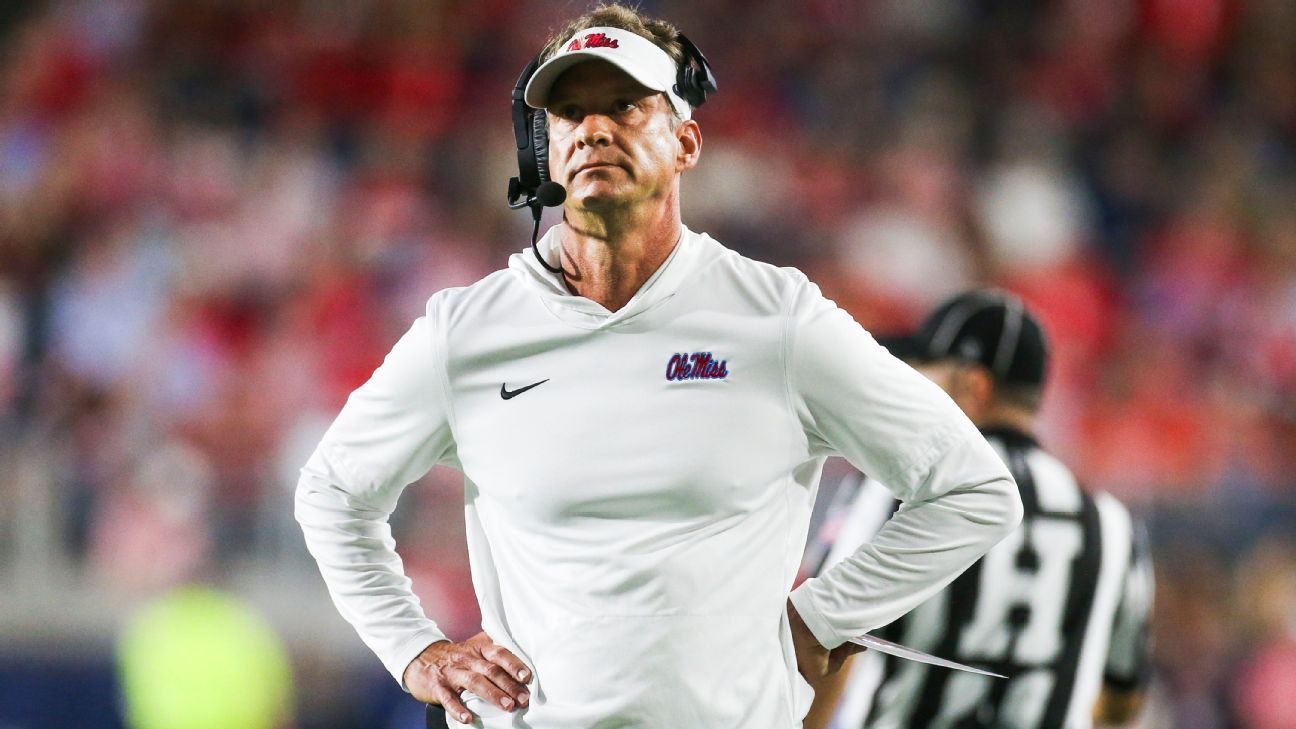
As victims go, Lane Kiffin doesn’t seem like one.

He could have stayed at Ole Miss, made over $10 million a year, led his 11-1 team into a home playoff game and become an icon at a place where he supposedly found personal tranquility. Or he could’ve left for LSU to make over $10 million a year leading a program that has won three national titles this century.

Fortunate would be one description of such a fork in life’s road. The result of endless work and talent would be another.

But apparently no one knows a man’s burdens until they’ve walked a mile in his hot yoga pants.

Per his resignation statement on social media, it was spiritual, familial and mentor guidance that led Kiffin to go to LSU, not all those five-star recruits in New Orleans.

“After a lot of prayer and time spent with family, I made the difficult decision to accept the head coaching position at LSU,” he wrote.

In an interview with ESPN’s Marty Smith, Kiffin noted “my heart was [at Ole Miss], but I talked to some mentors, Coach [Pete] Carroll, Coach [Nick] Saban. Especially when Coach Carroll said, ‘Your dad would tell you to go. Take the shot.'” Kiffin later added: “I talked to God, and he told me it’s time to take a new step.”

After following everyone else’s advice, Kiffin discovered those mean folks at Ole Miss wouldn’t let him keep coaching the Rebels through the College Football Playoff on account of the fact Kiffin was now, you know, the coach of rival LSU.

Apparently quitting means different things to different people. Shame on Ole Miss for having some self-esteem.

“I was hoping to complete a historic six-season run … ,” Kiffin said. “My request to do so was denied by [Rebels athletic director] Keith Carter despite the team also asking him to allow me to keep coaching them so they could better maintain their high level of performance.”

Well, if he hoped enough, Kiffin could have just stayed and done it. He didn’t. Trying to paint this as an Ole Miss decision, not a Lane Kiffin decision, is absurd. You are either in or you are out.

Leaving was Kiffin’s right, of course. He chose what he believes are greener pastures. It might work out; LSU, despite its political dysfunction, is a great place to coach ball.

Kiffin should have just put out a statement saying his dream is to win a national title, and as good as Ole Miss has become, he thinks his chance to do it is so much better at LSU that it was worth giving up on his current players, who formed his best and, really, first nationally relevant team.

At least it would be his honest opinion.

Lately, 50-year-old Kiffin has done all he can to paint himself as a more mature version of a once immature person. In the end, though, he is who he is. That includes traits that make him a very talented football coach. He is unique.

He might never live down being known as the coach who bailed on a title contender. It’s his life, though. It’s his reputation.

One of college sports’ original sins was turning playcallers into life-changers. Yeah, that can happen, boys can become men. A coach’s job is to win, though.

A great coach doesn’t have to be loyal or thoughtful or an example of how life should be lived.

This is the dichotomy of what you get when you hire Kiffin. He was on a heater in Oxford, winning in a way he never did with USC or Tennessee or the Oakland Raiders.

That seemingly should continue at resource-rich LSU. Along the way, you get a colorful circus, a wrestling character with a whistle, a high-wire act that could always break bad. It rarely ends well — from airport firings to near-riot-inducing resignations to an exasperated Nick Saban.

LSU should just embrace it — the good and the not so good. What’s more fun than being the villain? Kiffin might be a problem child, but he’s your problem child. It will probably get you a few more victories on Saturdays. He will certainly get you a few more laughs on social media.

It worked for Ole Miss, at least until it didn’t. Then the Rebels had to finally push him aside. This is Lane Kiffin. You can hardly trust him in the good times.

If anything, Carter had been too nice. He probably should have demanded Kiffin pledge his allegiance weeks back, after Kiffin’s family visited Gainesville, Florida, as well as Baton Rouge.

Instead, Kiffin hemmed and hawed and extended the soap opera, gaining leverage along the way.

Blame was thrown on the “calendar,” even though it was coaches such as Kiffin who created it. And leaving a championship contender is an individual choice that no one else is making.

Blame was put on Ole Miss, as if it should just accept desperate second-class hostage status. Better to promote defensive coordinator Pete Golding and try to win with the people who want to be there.

To Kiffin, the idea of winning is seemingly all that matters. Not necessarily winning, but the idea of winning. Potential playoff teams count for more than current ones. Tomorrow means more than today. Next is better than now.

Maybe that mindset is what got him here, got him all these incredible opportunities, including his new one at LSU, where he must believe he is going to win national title after national title.

So go do that, unapologetically. Own it. Own the decision. Own the quitting. Own the fallout. Everything is possible in Baton Rouge, just not the Victim Lane act.
Continue Reading

Sports

Sources: BYU coach Sitake focus of PSU search

Published

on

By

Sources: BYU coach Sitake focus of PSU search

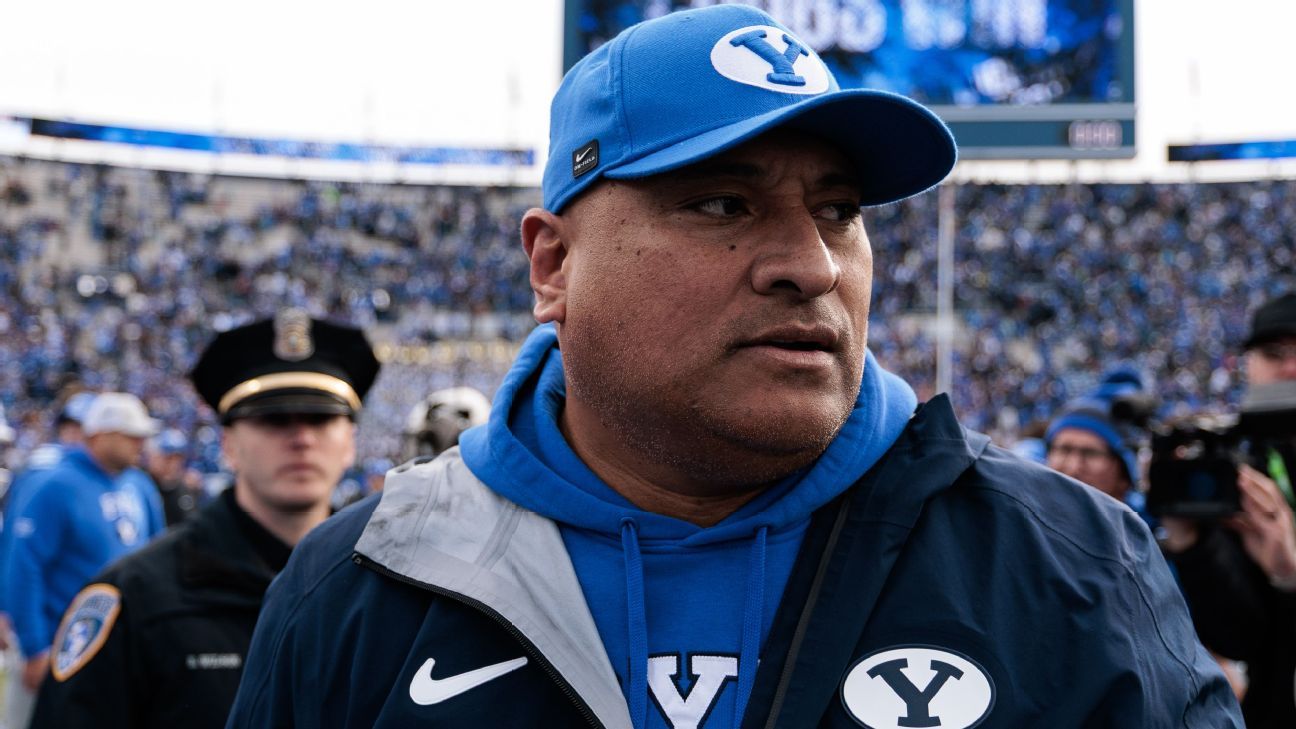
The Penn State coaching search, which has gone quiet in the past few weeks, has focused on BYU coach Kalani Sitake, sources told ESPN on Monday.

The sides have been in discussions, but sources cautioned that no deal has been signed yet. The sides have met, and there is mutual interest, with discussions involving staffing and other details of Sitake’s possible tenure in State College.

No. 11 BYU plays Saturday against No. 5 Texas Tech in the Big 12 title game, with the winner securing an automatic bid in the College Football Playoff. On3 first reported Sitake as Penn State’s top target.

Sitake has been BYU’s coach since 2016, winning more than 65% of his games. He guided BYU to an 11-2 mark in 2024, and the Cougars are 11-1 this year. This is BYU’s third season in the Big 12, and the transition to becoming one of the league’s top teams has been nearly instant.

Penn State officials were active early in their coaching search, which included numerous in-person meetings around the country. That activity has quieted in recent weeks, sources said, even as candidates got new jobs and others received new contracts to stay at their schools.

BYU officials have been aggressive in trying to retain Sitake, according to sources, and consider it the athletic department’s top priority.

BYU plays a style that’s familiar to the Big Ten, with rugged linemen and a power game that’s complemented by a creative passing offense in recent years.

This week, Sitake called the reports linking him to jobs “a good sign” because it means “things are going well for us.”

James Franklin was fired by Penn State in October after going 104-45 over 12 seasons. Franklin’s departure came after three straight losses to open league play. He led Penn State to the College Football Playoff semifinals in January 2025.

Sitake has won at least 10 games in four of his past six seasons at BYU. After going 2-7 in conference play while adjusting to the Big 12 in 2023, BYU has gone 15-3 the past two years and found a quarterback of the future in true freshman Bear Bachmeier.

Sitake has no coaching experience east of the Mountain Time Zone. He was an assistant coach at BYU, Oregon State, Utah, Southern Utah and Eastern Arizona.

Sitake, who played high school football in Missouri, played at BYU before signing with the Cincinnati Bengals in 2001.

He is BYU’s fourth head coach since his mentor, LaVell Edwards, took over in 1972.

Continue Reading

Sports

Blues’ Snuggerud (wrist surgery) to miss 6 weeks

Published

on

By

Blues' Snuggerud (wrist surgery) to miss 6 weeks

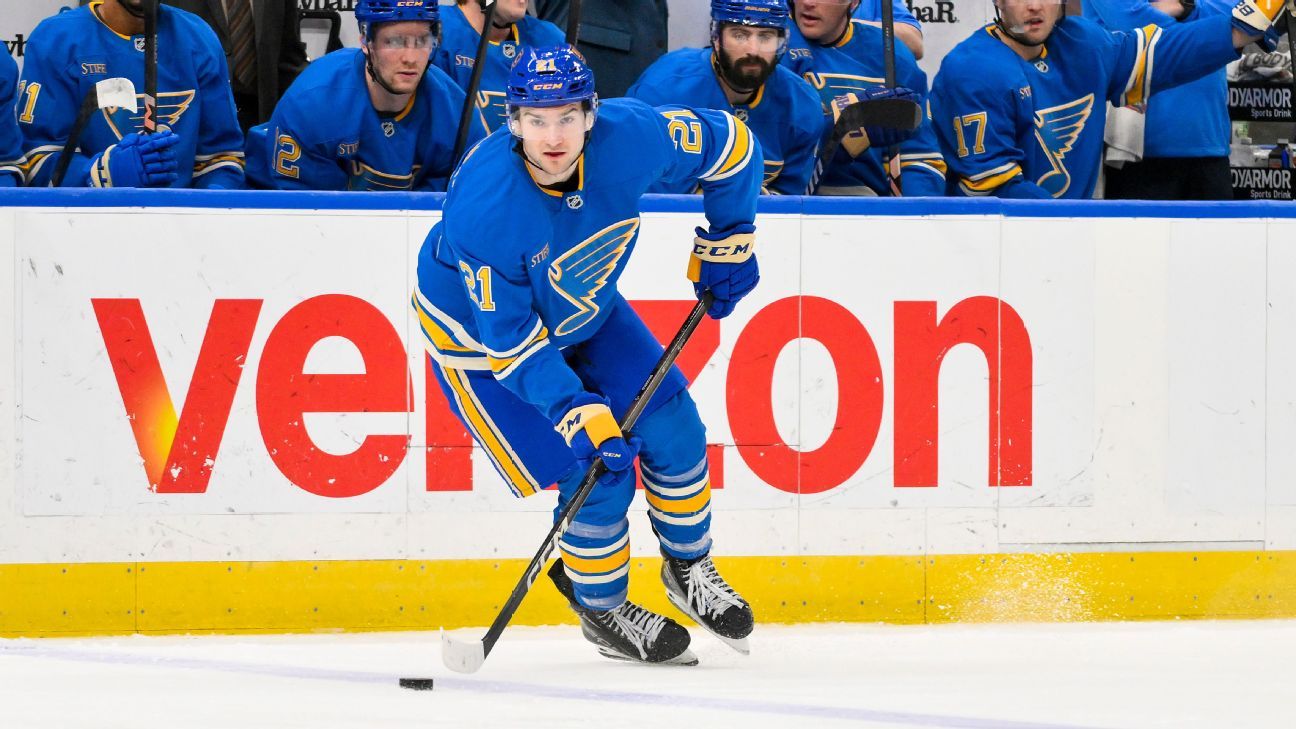
St. Louis Blues rookie forward Jimmy Snuggerud will miss up to six weeks to have surgery on his left wrist, the team announced Monday morning.

The 21-year-old Snuggerud, who was a first-round pick by the Blues in 2022, used the opening quarter of the season to establish himself as a top-nine forward. His five goals were two away from being tied for the team lead while his 11 points are tied for sixth. He is also seventh in ice time among Blues forwards at 15:26 per game.

His performances also allowed him to maintain a presence within a rookie class that has seen several players make an impact. Snuggered entered Monday tied for eighth in goals among first-year players.

It appears the earliest Snuggerud could return to the lineup, should the six-week timeline hold, would be mid-January. That would allow him to play about 10 games before the NHL enters the Olympic break. The Blues play their last game before the break on Feb. 4.

Snuggerud isn’t the only injury the Blues are managing, with the team also announcing that forward Alexey Toropchenko is week-to-week after sustaining what they described as scalding burns to his legs in a home accident. He’s the second NHL player this season to sustain an injury at home, with Florida Panthers forward Eetu Luostarinen out of the lineup indefinitely after a “barbecuing mishap” that Panthers coach Paul Maurice shared with reporters on Nov. 19.

Toropchenko has a goal and two points while averaging 11:29 in ice time over 17 games this season.

Those absences are the latest developments in what has seen the Blues, which made the playoffs last season, endure one of the most challenging starts of any team in the NHL through the first quarter of this season.

St. Louis (9-10-7) entered Monday as part of a cluster of five teams that are within two points of the Chicago Blackhawks for the final wild-card spot in the Western Conference.

Continue Reading

Trending