

The real problem with high-power electric bikes on mountain bike trails

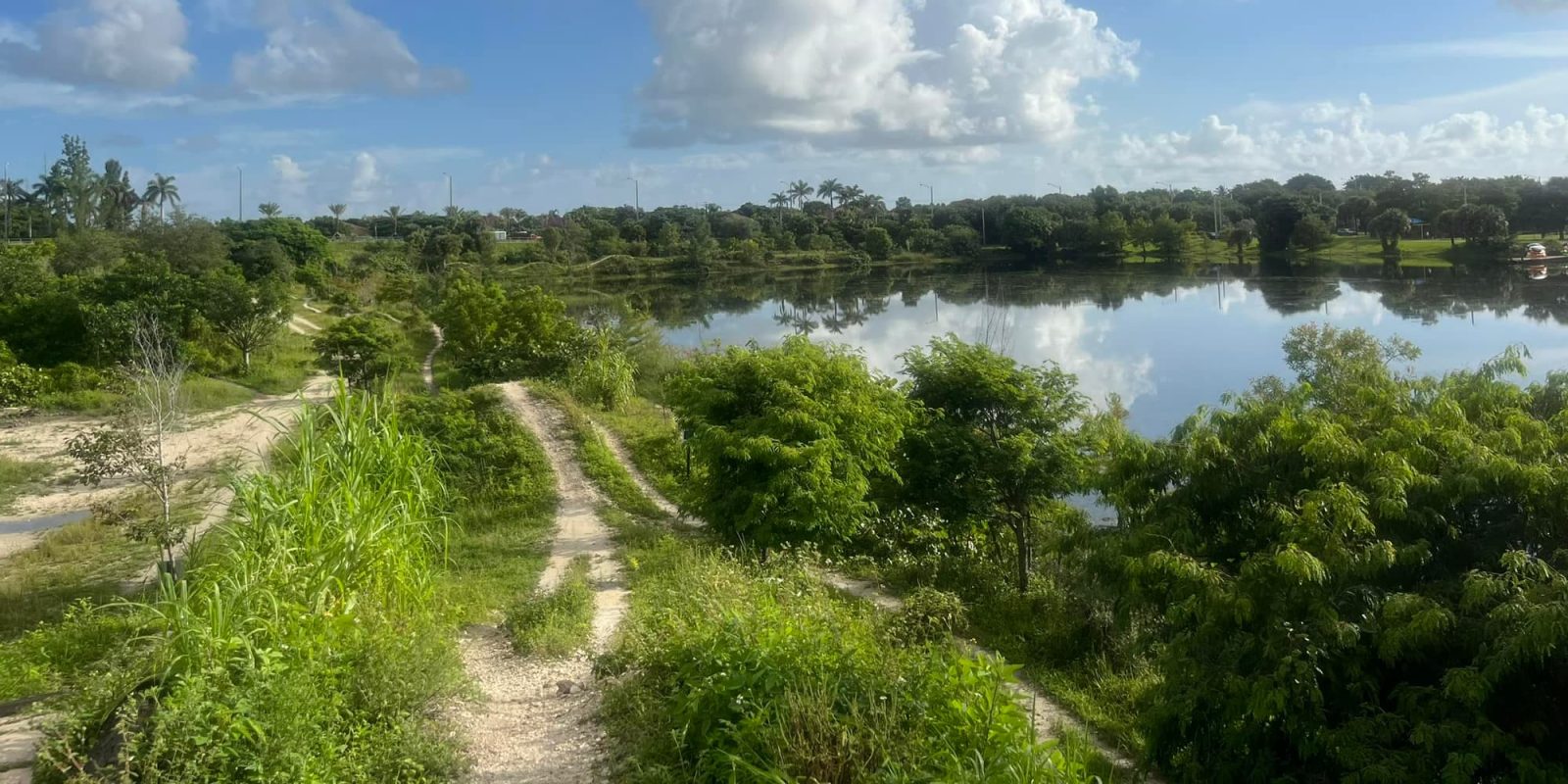
As electric trail bikes like Sur Rons and Talarias gain popularity among off-road enthusiasts, a growing conflict is emerging on mountain bike trails. These powerful machines, capable of speeds and torque far beyond that of a traditional mountain bike, are raising concerns among trail users, land managers, and environmental advocates.
First though, some semantical housekeeping. The term “e-bike” is often used to cast a pretty wide net, encompassing everything from cute little folder e-bikes to much more powerful electric motorbikes. Similar to the way motorcycle riders often talk about their “bikes”, the term “e-bike” in colloquial discussion is just that: colloquial.
The term “electric bicycle”, on the other hand, is an actual regulatory designation that lets most electric mountain bikes and other commuter-style e-bikes fit under the legal definition of bicycles. To oversimplify it, the e-bike that looks like a typical mountain bike is an electric bicycle. The one that looks like a motorcycle or dirt bike is probably not an electric bicycle.
That’s an important distinction because it’s becoming a major issue on mountain bike trails all over North America and in many other parts of the world.
Unlike a typical 50 lb electric mountain bike that can output an amount of power roughly in line with a healthy adult, electric motorbikes like those from Sur Ron, Talaria, and other brands can weigh 2-3x as much while outputting 5-10x the amount of power as a typical electric mountain bike. They’re a blast to ride, but like many things in life, there’s a time and a place. Their proliferation of Sur Ron-style electric motorbikes has been wreaking havoc on mountain bike trails where such bikes are almost always illegal.
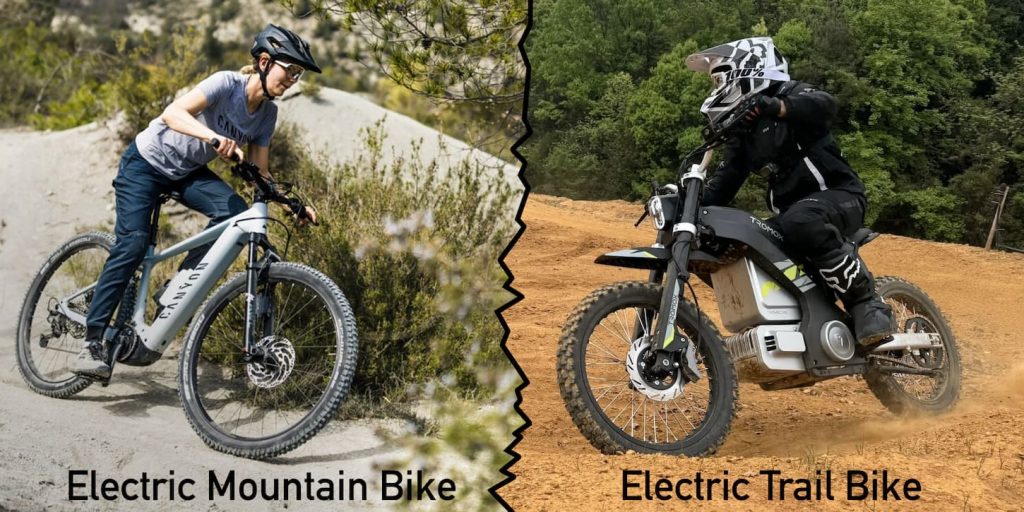
Mountain bike trails are carefully designed to handle the wear and tear of typical mountain bikes. Normal electric mountain bikes, which have electric motor power levels similar to human pedaling power, typically mesh fairly well with mountain bike trails.
However, the high torque and weight of bikes like Sur Rons and Talarias can wreak havoc on these trails. Such power motorbikes are often responsible for increased erosion, deeper ruts, and widening of trails in areas where these bikes are being used. It’s often not just a matter of normal trail wear, but rather damage that can take significant time and resources to repair.
Trail widening, often caused by riders veering off designated paths, also leads to environmental degradation, harming vegetation and wildlife habitats.
Mountain bike trails are often designated for non-motorized use, and electric trail bikes with such high-power motors and large tires are almost never allowed. Some mountain bike parks have begun accepting Class 1, 2, and/or 3 e-bikes, but Sur Rons and Talarias are almost always prohibited due to their much higher performance. Their power and speed far exceed what’s allowed for e-bikes under most regulations, putting them squarely in the category of motorized vehicles like dirt bikes and ATVs.
Weight also plays a major role. The risk of serious injuries is also higher due to the mass and momentum of these larger machines. With top speeds often exceeding 40 mph (64 km/h), electric motorbikes are significantly faster than traditional electric bicycles or pedal bikes. This speed disparity creates hazardous conditions for slower-moving trail users.
When combined with the fact that many riders of powerful electric motorbikes are new to the sport after buying or being gifted a Sur Ron-style bike, that high speed can be even more dangerous in the hands of a novice rider.
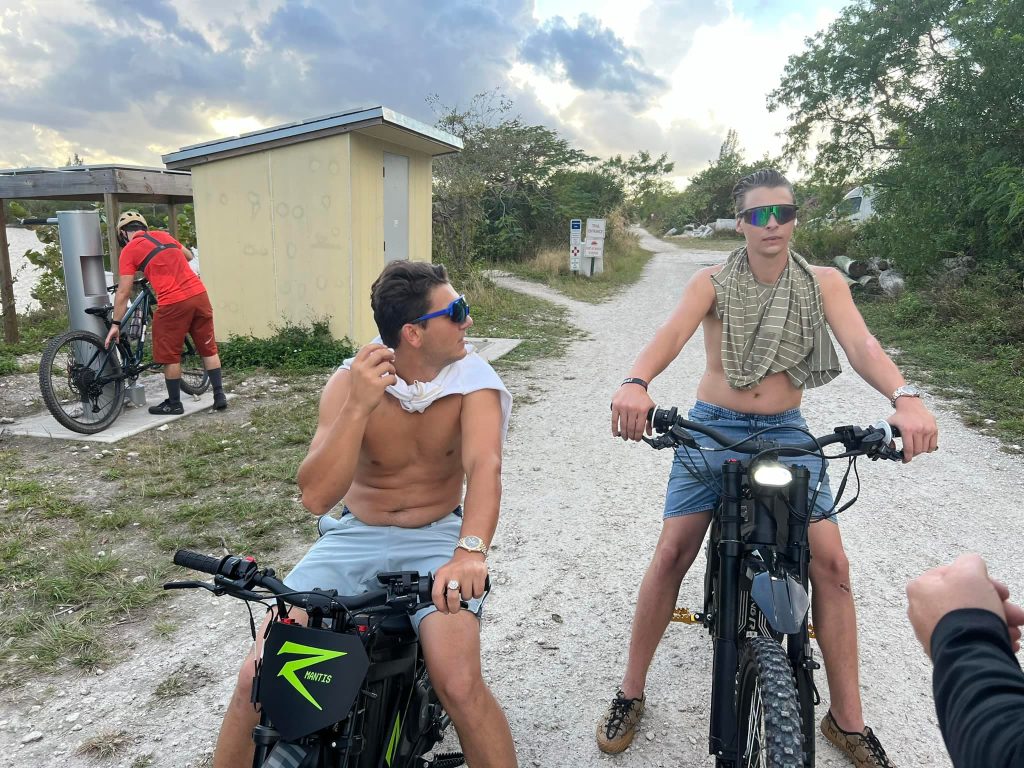
Just last week, two riders on Talarias were kicked out of Quiet Waters Park Mountain Bike Trails in South Florida, a volunteer-maintained mountain bike trail system that permits Class 1 electric bicycles (e-bikes that are pedal-assisted up to 20 mph or 32 km/h and 750W of power).
As a lead volunteer in the trail building and maintenance team at the park, Nick Calabro was there when the riders were confronted by a county worker and asked to leave. “Multiple riders reported interactions with them, from encountering them riding in the wrong direction to not wearing required helmets, and of course not even being allowed to ride those bikes on the trails,” Calabro explained to Electrek.
According to Calabro, the pair had purchased trail day passes for mountain bike riders, but then brought their much larger and more powerful Talaria motorbikes into the park.
The two were seen on video attempting to fight the trail volunteers after being asked to leave the park. The interaction took place just a few yards from a sign with the posted rules of the park (seen at 0:11 in the video below).
Such interactions represent a small but growing phenomenon on mountain bike trails, where traditional mountain bike culture and trail etiquette clash head-on with Sur Ron riders unfamiliar with the practices and terrain.
Fortunately, many other locations exist that are ideal for electric motorbikes that fall outside the realm of traditional electric mountain bikes.
Off-highway vehicle (OHV) trails that are designed for motorized vehicles like UTVs, ATVs, and dirt bikes, are ideal locations to ride powerful electric trail bikes. Such trails are built with higher power vehicles in mind, and aren’t as delicate as mountain bike trails.
Forestry/backcountry dirt roads, gravel roads, and fire roads can provide a mix of typical off-road riding and exploration, though don’t offer the same type of topography.
Motocross tracks are also excellent locations for Sur Ron and Talaria-style bikes, which can use the features for more thrilling jumps and berm riding.
Private land (with the landowner’s permission) is perhaps one of the best places for these powerful electric motorbikes due to their ability to overland and explore areas beyond the beaten path.
As the popularity of powerful electric trail bikes continues to rise, the question of how and where they should be ridden remains a contentious one. But with their ability to ride much rougher terrain as well as their increased impact on that terrain, one thing is for sure: delicate mountain bike trails aren’t the place for such powerful bikes.
FTC: We use income earning auto affiliate links. More.


Tesla’s Q2 results are in, and they are way, way down from Q2 of 2024. At the same time, Nissan seems to be in serious trouble and the first-ever all-electric Dodge muscle car is getting recalled because its dumb engine noises are the wrong kind of dumb engine noises. All this and more on today’s deeply troubled episode of Quick Charge!
We’ve also got an awesome article from Micah Toll about a hitherto unexplored genre of electric lawn equipment, a $440 million mining equipment deal, and a list of incompetent, corrupt, and stupid politicians who voted away their constituents’ futures to line their pockets.
Source Links
Prefer listening to your podcasts? Audio-only versions of Quick Charge are now available on Apple Podcasts, Spotify, TuneIn, and our RSS feed for Overcast and other podcast players.
New episodes of Quick Charge are recorded, usually, Monday through Thursday (and sometimes Sunday). We’ll be posting bonus audio content from time to time as well, so be sure to follow and subscribe so you don’t miss a minute of Electrek’s high-voltage daily news.
Got news? Let us know!
Drop us a line at tips@electrek.co. You can also rate us on Apple Podcasts and Spotify, or recommend us in Overcast to help more people discover the show.
If you’re considering going solar, it’s always a good idea to get quotes from a few installers. To make sure you find a trusted, reliable solar installer near you that offers competitive pricing, check out EnergySage, a free service that makes it easy for you to go solar. It has hundreds of pre-vetted solar installers competing for your business, ensuring you get high-quality solutions and save 20-30% compared to going it alone. Plus, it’s free to use, and you won’t get sales calls until you select an installer and share your phone number with them.
Your personalized solar quotes are easy to compare online and you’ll get access to unbiased Energy Advisors to help you every step of the way. Get started here.
FTC: We use income earning auto affiliate links. More.


Jaque Silva | Nurphoto | Getty Images
OpenAI is distancing itself from Robinhood‘s latest crypto push after the trading platform began offering tokenized shares of OpenAI and SpaceX to users in Europe.
“These ‘OpenAI tokens’ are not OpenAI equity,” OpenAI wrote on X. “We did not partner with Robinhood, were not involved in this, and do not endorse it.”
The company said that “any transfer of OpenAI equity requires our approval — we did not approve any transfer,” and warned users to “please be careful.”
Robinhood announced the launch Monday from Cannes, France, as part of a broader product showcase focused on tokenized equities, staking, and a new blockchain infrastructure play. The company’s stock surged above $100 to hit a new all-time high following the news.
“These tokens give retail investors indirect exposure to private markets, opening up access, and are enabled by Robinhood’s ownership stake in a special purpose vehicle,” a Robinhood spokesperson said in response to the OpenAI post.
Robinhood offered 5 euros worth of OpenAI and SpaceX tokens to eligible EU users who signed up to trade stock tokens by July 7. The assets are issued under the EU’s looser investor restrictions via Robinhood’s crypto platform.
“This is about expanding access,” said Johann Kerbrat, Robinhood’s SVP and GM of crypto. “The goal with tokenization is to let anyone participate in this economy.”
The episode highlights the dynamic between crypto platforms seeking to democratize access to financial products and the companies whose names and equity are being represented on-chain
U.S. users cannot access these tokens due to regulatory restrictions.

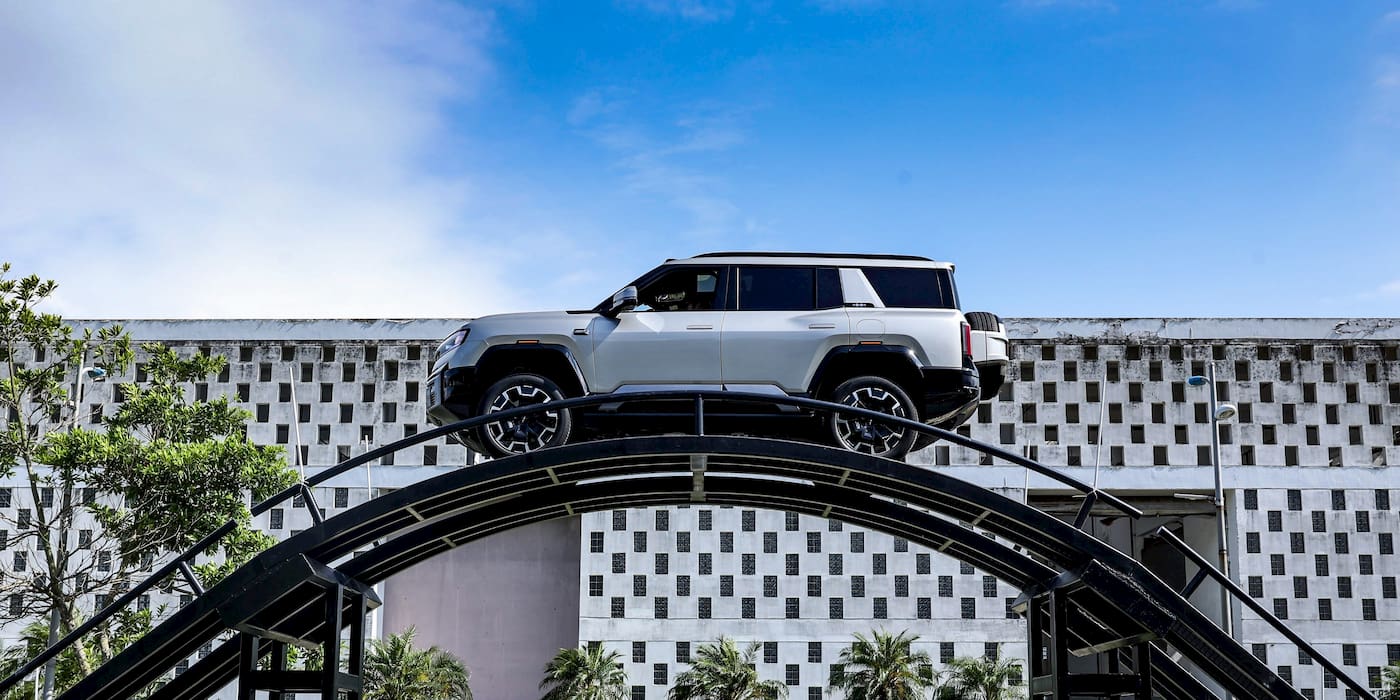
Despite the warnings, BYD continues introducing new discounts. On Wednesday, BYD’s luxury off-road brand began offering over 50% Huawei’s smart driving tech.
BYD introduces new discounts on smart driving tech
After BYD cut prices again in May, the China Automobile Manufacturers Association (CAMA) warned that the ultra-low prices are “triggering a new round of price war panic.”
Although they didn’t single out BYD, it was pretty obvious. BYD slashed prices across 22 of its vehicles by up to 34%, triggering several automakers to follow suit in China.
BYD’s cheapest EV, the Seagull, typically starts at about $10,000 (66,800 yuan). After the price cuts, the Seagull is listed at under $8,000 (55,800 yuan).
It doesn’t look like China’s EV leader plans to slow down anytime soon. Fang Cheng Bao, BYD’s luxury off-road brand, introduced new discounts on Huawei’s smart driving tech on Wednesday.
The limited-time offer cuts the price of Huawei’s Qiankun Intelligent Driving High-end Function Package to just 12,000 yuan ($1,700).
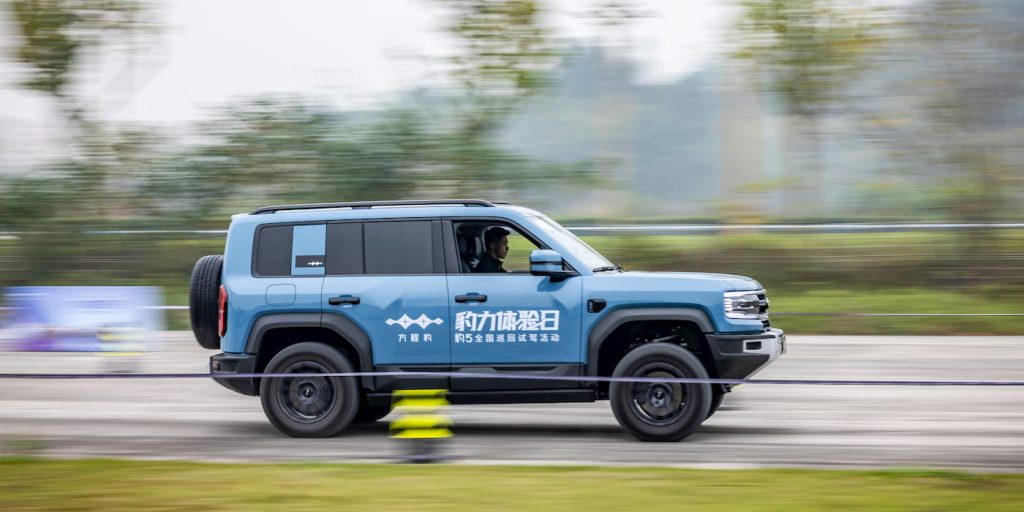
Buyers who order the smart driving tech in July will save over 50% compared to its typical price of 32,000 yuan ($4,500).
Earlier this year, Fang Chang Bao launched the Tai 3, its most affordable vehicle, starting at 139,800 yuan ($19,300). The Tai 3 is about the size of the Tesla Model Y, but costs about half as much.
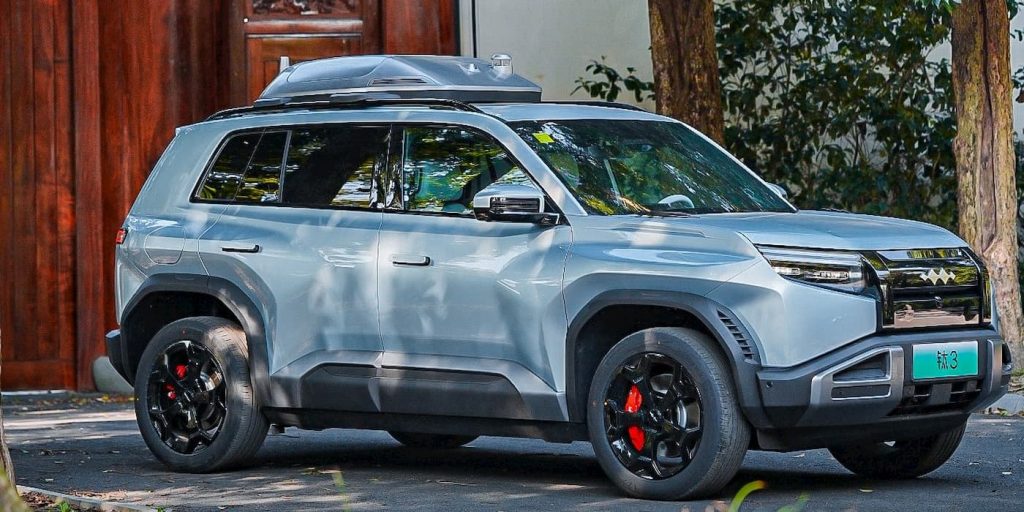
The Tai 3 will spearhead a new sub-brand of electric SUVs following the more premium Bao 8 and Bao 5 hybrid SUVs.
BYD’s luxury off-road brand sold 18,903 vehicles last month, up 50% from May and 605% compared to last year. Fang Cheng Bao has now sold over 10,000 vehicles for three consecutive months.
The Chinese EV giant sold 382,585 vehicles in total in June, an increase of 12% from last year. In the first half of the year, BYD’s cumulative sales reached over 2.1 million, a YOY increase of 33%.
FTC: We use income earning auto affiliate links. More.
-
 Sports3 years ago
‘Storybook stuff’: Inside the night Bryce Harper sent the Phillies to the World Series
-
 Sports1 year ago
Story injured on diving stop, exits Red Sox game
-
 Sports2 years ago
Game 1 of WS least-watched in recorded history
-
 Sports2 years ago
MLB Rank 2023: Ranking baseball’s top 100 players
-
Sports4 years ago
Team Europe easily wins 4th straight Laver Cup
-
 Environment2 years ago
Japan and South Korea have a lot at stake in a free and open South China Sea
-
 Sports2 years ago
Button battles heat exhaustion in NASCAR debut
-
 Environment2 years ago
Game-changing Lectric XPedition launched as affordable electric cargo bike