
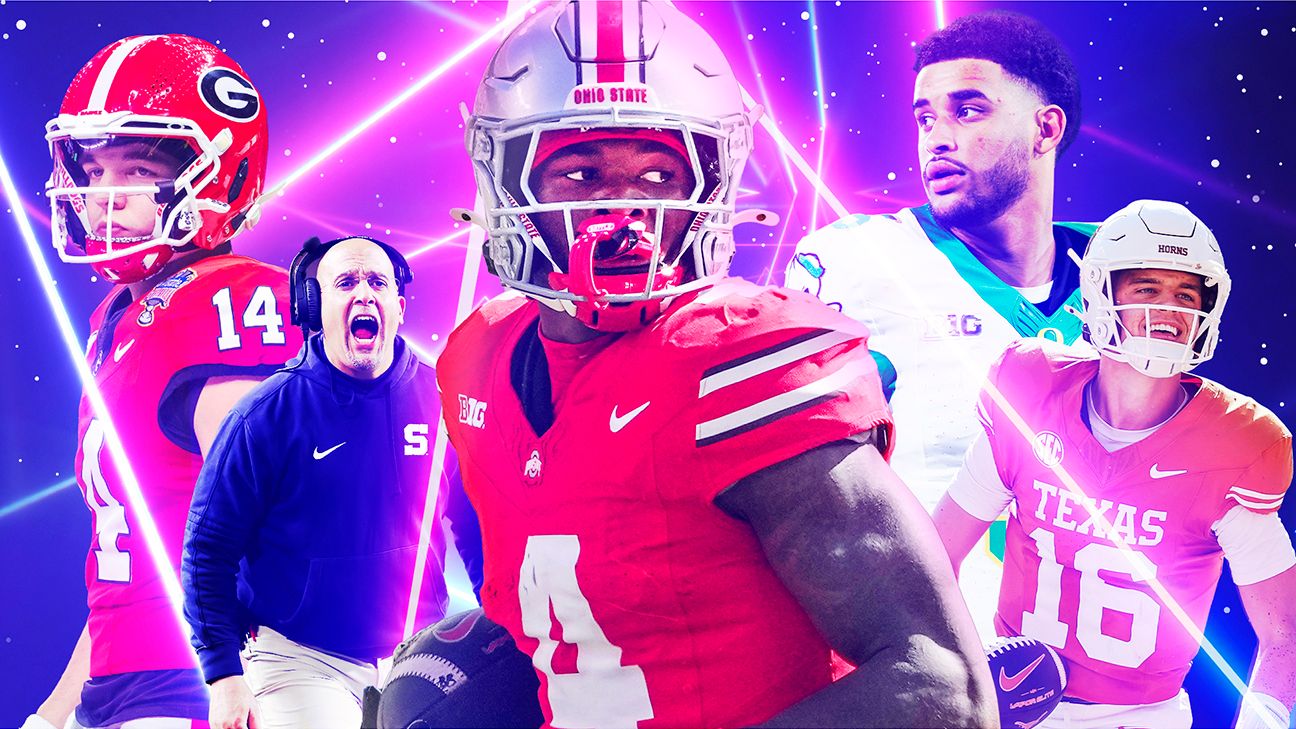
2025 Way-Too-Early Top 25: Where do Ohio State and Notre Dame rank?


-
Mark Schlabach
ATLANTA — Ohio State’s high-powered offense proved to be too much for Notre Dame in the Buckeyes’ 34-23 victory in Monday’s national title game.
The Buckeyes captured their first national title in 10 years and first under coach Ryan Day. It was the school’s seventh national championship overall.
Even with Ohio State having a boatload of players who are expected to move on and be chosen in April’s NFL draft, the Buckeyes are No. 1 in ESPN’s Way-Too-Early Top 25 for 2025.
The Buckeyes will still have star players, such as receiver Jeremiah Smith and safety Caleb Downs, and they’ll plug holes with another top recruiting class and group of transfers.
Ohio State will be looking for a new quarterback as well, but it won’t be alone among the potential CFP contenders. Notre Dame, Texas, Georgia, Oregon and others will be developing new signal-callers, too.
Here’s the 2025 ESPN Way-Too-Early Top 25:

2024 record: 14-2, 7-2 Big Ten
Key returning players: WR Jeremiah Smith, WR Carnell Tate, S Caleb Downs
Key losses: RB TreVeyon Henderson, WR Emeka Egbuka, QB Will Howard, G Donovan Jackson, LB Cody Simon, S Lathan Ransom, DE Jack Sawyer, DE JT Tuimoloau, CB Denzel Burke
2025 outlook: After winning the program’s third national championship since 2002, the Buckeyes are going to undergo a bit of a makeover — but so are most of the other Big Ten contenders. The core group of seniors who came back in 2024 — led by Sawyer, Henderson, Egbuka and others — will be missed. Julian Sayin, a five-star prospect who transferred from Alabama, will probably be QB1 after Devin Brown and Air Noland entered the transfer portal. Sayin will have the luxury of throwing to Smith, the best receiver in the FBS, and the Buckeyes picked up tailback CJ Donaldson (West Virginia) and tight end Max Klare (Purdue) from the portal. Ohio State’s offense will be even better if RB Quinshon Judkins decides to come back. Some younger players will have to step up on the defensive line and in the secondary, but at least Downs is coming back.
2024 record: 13-3, 7-1 SEC
Key returning players: QB Arch Manning, RB Quintrevion Wisner, LB Anthony Hill Jr., DE Colin Simmons, DE Trey Moore, S Michael Taaffe
Key losses: QB Quinn Ewers, WR Matthew Golden, OT Kelvin Banks Jr., OT Cameron Williams, S Andrew Mukuba, CB Jahdae Barron, TE Gunnar Helm
2025 outlook: In their first season in the SEC, the Longhorns more than proved they were good enough to compete, reaching the SEC title game and CFP semifinals. With Ewers moving on, the highly anticipated Manning era will kick off in 2025. The Longhorns will have to rebuild their offensive line and replace some key receivers, including Golden and Isaiah Bond. There are big losses up front, with Banks, Williams, center Jake Majors and guard Hayden Conner departing. There’s a good nucleus returning on defense, led by linebackers Hill and Simmons, but three of the top four defensive backs are leaving. The Longhorns added linebacker Brad Spence (Arkansas) and defensive linemen Cole Brevard (Purdue) and Travis Shaw (North Carolina) from the portal. Texas opens the season Aug. 30 at Ohio State, a big early test for Manning.
2024 record: 13-3, 8-1 Big Ten
Key returning players: QB Drew Allar, RB Kaytron Allen, RB Nicholas Singleton, C Nick Dawkins, DE Dani Dennis-Sutton, S Zakee Wheatley, CB A.J. Harris
Key losses: DE Abdul Carter, TE Tyler Warren, S Jaylen Reed, G Sal Wormley, DT Dvon J-Thomas, LB Kobe King
2025 outlook: With Allar, Allen and Singleton returning, the Nittany Lions might get a senior boost like Ohio State did in 2024. Penn State came up short against Notre Dame in a CFP semifinal game at the Orange Bowl, but it was coach James Franklin’s best season. If Allar can take another step as a passer, and Franklin can find him some capable receivers, the Nittany Lions might be even better on offense in 2025. Harrison Wallace III and Omari Evans, the team’s two top receivers in 2024, entered the transfer portal. Penn State added Troy’s Devonte Ross, who caught 76 passes for 1,034 yards with 11 touchdowns in 2024, and USC’s Kyron Hudson. Carter and King are big losses on defense, and so is former coordinator Tom Allen, who left for Clemson. The Nittany Lions host Oregon and Indiana in Happy Valley and play at Ohio State on Nov. 1.
2024 record: 14-2
Key returning players: RB Jeremiyah Love, RB Jadarian Price, WR Jordan Faison, WR Jaden Greathouse, LB Drayk Bowen, S Adon Shuler
Key losses: QB Riley Leonard, TE Mitchell Evans, DT Rylie Mills, S Xavier Watts, CB Benjamin Morrison, LB Jack Kiser, DT Howard Cross III
2025 outlook: With two solid coordinators and vastly improved recruiting, the Fighting Irish seem to be only scratching the surface under dynamic head coach Marcus Freeman. The Irish recovered from a shocking early loss to Northern Illinois at home to reach the CFP National Championship game. They’ll miss Leonard’s leadership, but the coaching staff is excited about freshman CJ Carr, the grandson of former Michigan coach Lloyd Carr, who was rated the No. 2 pocket passer in the 2024 recruiting class by ESPN. He battled an elbow injury on his throwing arm this past season. Backup Steve Angeli will compete with Carr for the job. There’s plenty of depth coming back on the offensive line, along with Love and tailback Jadarian Price. The Irish could use more game-changing receivers — they added Malachi Fields (Virginia) and Will Pauling (Wisconsin) from the portal. A few key players will have to be replaced on defense, and tackles Jared Dawson (Louisville) and Elijah Hughes (USC) and safeties DeVonta Smith (Alabama) and Jalen Stroman (Virginia Tech) should help fill some holes.
2024 record: 11-3, 6-2 SEC
Key returning players: QB Gunner Stockton, RB Nate Frazier, TE Oscar Delp, TE Lawson Luckie, LB CJ Allen, LB Raylen Wilson, S KJ Bolden, CB Daylen Everette
Key losses: QB Carson Beck, G Tate Ratledge, RB Trevor Etienne, LB Jalon Walker, S Malaki Starks, S Dan Jackson, LB Smael Mondon Jr., DE Mykel Williams
2025 outlook: The Bulldogs seemed a bit disjointed throughout much of the 2024 season, but they still won an SEC championship and reached the CFP for the fourth time in the past eight seasons. Stockton played well in his first start, a 23-10 loss to Notre Dame in the CFP quarterfinals. He will go into the offseason as the front-runner to replace Beck, who left for Miami. Georgia has to do a better job of blocking up front, catching the football and tackling on defense. It’s time for Kirby Smart to get back to the basics. The Bulldogs added former Texas A&M receiver Noah Thomas and USC receiver/kick returner Zachariah Branch from the portal. Safeties Jaden Harris (Miami) and Adrian Maddox (UAB) were important pickups with Starks and Jackson leaving. Georgia’s schedule won’t be quite as hard as it was in 2024, but the team still plays Alabama, Ole Miss and Texas at home and Tennessee, Auburn, Florida (in Jacksonville, Florida) and Georgia Tech on the road.
2024 record: 13-1, 9-0 Big Ten
Key returning players: WR Evan Stewart, LB Devon Jackson, LB Teitum Tuioti, LB Matayo Uiagalelei, RB Noah Whittington, C Iapani Laloulu
Key losses: QB Dillon Gabriel, WR Tez Johnson, WR Traeshon Holden, RB Jordan James, OT Josh Conerly Jr., OT Ajani Cornelius, DE Jordan Burch, DT Derrick Harmon, CB Jabbar Muhammad
2025 outlook: The Ducks went 13-0 and captured a Big Ten title in their first season in the league. But their dream season came to a crashing halt with an ugly 41-21 loss to Ohio State in the CFP quarterfinals. Now, Oregon coach Dan Lanning faces a massive rebuilding job on both sides of the ball. But with a No. 1 recruiting class and a few transfer portal pickups on the way, there’s reason to believe the Ducks won’t fall too far. Former five-star prospect Dante Moore, who redshirted in 2024 after transferring to UCLA, is the favorite to replace Gabriel. Stewart’s return is a boost, and receiver Dakorien Moore of Duncanville, Texas, was the jewel of Oregon’s recruiting class. The Ducks are going to need plenty of young players to step up on defense, with only a few starters returning.
2024 record: 10-4, 7-1 ACC
Key returning players: QB Cade Klubnik, WR Antonio Williams, WR Bryant Wesco Jr., LB Sammy Brown, LB Wade Woodaz, DL T.J. Parker, DL Peter Woods, OT Blake Miller
Key losses: RB Phil Mafah, LB Barrett Carter, S R.J. Mickens, TE Jake Briningstool, G Marcus Tate, DL Payton Page
2025 outlook: Maybe Clemson coach Dabo Swinney is doing it the right way, and we were all wrong. Swinney caught plenty of flak for not utilizing the transfer portal after his team’s ugly 34-3 loss to Georgia in the opener. However, the Tigers rebounded to win another ACC title and reach the CFP. They’ll undoubtedly be the team to beat in the league in 2025, with Klubnik, Williams, Woodaz, Parker, Woods and Miller all electing to return for another season. With Williams, Wesco and T.J. Moore coming back, Clemson’s passing game might be even better. Finding a No. 1 tailback, after Mafah’s eligibility ended and Jay Haynes tore his ACL in the ACC championship game, will be a priority in the spring. The defense will have a new leader after Swinney fired coordinator Wes Goodwin and replaced him with Penn State’s Tom Allen. And guess what? Clemson signed three players from the portal: edge rushers Jeremiah Alexander (Alabama) and Will Heldt (Purdue) and receiver Tristan Smith (Southeast Missouri State).
2024 record: 9-4, 5-3 SEC
Key returning players: QB Garrett Nussmeier, RB Caden Durham, WR Aaron Anderson, LB Whit Weeks, CB Ashton Stamps, LB Harold Perkins Jr., S Jardin Gilbert
Key losses: WR Kyren Lacy, WR CJ Daniels, OT Will Campbell, OT Emery Jones Jr., TE Mason Taylor, G Garrett Dellinger, G Miles Frazier, LB Greg Penn III, DE Bradyn Swinson
2025 outlook: After the Tigers lost at least three games for the third straight season under Brian Kelly, they seem to be all-in heading into 2025. LSU added more than a dozen players from the transfer portal, including defensive ends Patrick Payton (Florida State) and Jack Pyburn (Florida), receivers Nic Anderson (Oklahoma) and Barion Brown (Kentucky), offensive linemen Braelin Moore (Virginia Tech) and Josh Thompson (Northwestern) and cornerback Mansoor Delane (Virginia Tech). Nussmeier threw for 4,043 yards with 29 touchdowns this past season, and his return might give LSU an edge over other SEC contenders. Rebuilding the offensive line and shoring up a defense that surrendered 24.3 points per game will be areas of focus in the offseason. It has to be better in 2025, right?
2024 record: 11-2, 7-2 Big 12
Key returning players: QB Jake Retzlaff, RB LJ Martin, WR Chase Roberts, WR/KR Keelan Marion, LB Harrison Taggart, LB Isaiah Glasker, LB Jack Kelly, S Tanner Wall
Key losses: CB Jakob Robinson, DE Tyler Batty, DE Isaiah Bagnah, CB Marque Collins, S Crew Wakley, OT Brayden Keim, C Connor Pay
2025 outlook: If the 2024 season was any indication, you could probably pick any of four teams (or more) to win a Big 12 title. Arizona State, BYU and Colorado were unlikely contenders this past season, and the Cougars are bringing back top playmakers Retzlaff, Martin, Roberts and Marion. There are a couple of starters who will have to be replaced on the offensive line, but reinforcements from the transfer portal should help. On defense, four of the top five tacklers should return, although BYU will have to reload up front. Kalani Sitake has built a solid program that should contend in the Big 12 each season. The Cougars won’t play Arizona State or Kansas State during the regular season, and road games at Iowa State and Colorado might be tricky.
2024 record: 9-4, 5-3 SEC
Key returning players: QB LaNorris Sellers, WR Mazeo Bennett Jr., LT Josiah Thompson, S Jalon Kilgore, DE Dylan Stewart, DE Bryan Thomas Jr., S DQ Smith
Key losses: S Nick Emmanwori, DT T.J. Sanders, DE Kyle Kennard, LB Debo Williams, LB Demetrius Knight Jr., G Kamaar Bell, C Vershon Lee, G Torricelli Simpkins III, RB Raheim Sanders
2025 outlook: After a bounce-back campaign in which the Gamecocks won four more games than in 2023 — including victories over Texas A&M, Missouri and Clemson — they’ll have to replace the heart and soul of their defense this offseason. There are big personnel losses at all three levels, including Sanders and Kennard up front and Emmanwori on the back end. Three additions from the portal — defensive tackle Gabriel Brownlow-Dindy (Texas A&M), LB Shawn Murphy (Florida State) and end Jaylen Brown (Missouri) — might be able to help. Sellers will be working under new offensive coordinator Mike Shula, and improving his pocket presence and consistency will be a priority. Rahsul Faison, who ran for 1,109 yards with eight touchdowns at Utah State in 2024, will get a chance to replace leading rusher Sanders. If Sellers improves, the Gamecocks might be an even bigger surprise in 2025.
2024 record: 11-3, 7-2 Big 12
Key returning players: QB Rocco Becht, RB Carson Hansen, RB Abu Sama III, LB Kooper Ebel, S Jeremiah Cooper, CB Jontez Williams, DL Domonique Orange, LB Caleb Bacon, TE Benjamin Brahmer
Key losses: WR Jaylin Noel, WR Jayden Higgins, C Jarrod Hufford, OT Jalen Travis, S Beau Freyler, DE Joey Petersen, DT J.R. Singleton, CB Myles Purchase, S Malik Verdon, CB Darien Porter
2025 outlook: After one of the best seasons in program history (the Cyclones had never won 10 games or more), there’s one goal left for Matt Campbell to achieve — win the program’s first conference title in 113 years. With Becht and two good tailbacks returning, Iowa State has some firepower returning on offense. But it will greatly miss Noel and Higgins, who each caught at least 80 passes with more than 1,100 yards in 2024. Iowa State is bringing in transfer receivers Xavier Townsend (UCF) and Chase Sowell (East Carolina). A few key contributors are leaving on defense, but much of one of the better secondaries in the FBS is coming back. The Cyclones play Kansas State in Dublin, Ireland, to open the season and will host BYU and Arizona State at home.
2024 record: 9-4, 5-3 SEC
Key returning players: RB Jam Miller, WR Ryan Williams, WR Germie Bernard, C Parker Brailsford, OT Kadyn Proctor, DE LT Overton, LB Justin Jefferson, CB Zabien Brown
Key losses: QB Jalen Milroe, LB Jihaad Campbell, G Tyler Booker, S Malachi Moore, LB Que Robinson, DT Tim Smith
2025 outlook: The Crimson Tide’s first season under coach Kalen DeBoer was frustrating for Alabama fans, who had grown accustomed to Nick Saban’s consistency over the previous 16 seasons. The Tide lost more than three games in a season for the first time since Saban’s first campaign in 2007. Given DeBoer’s track record of success, expect a second-year leap in the SEC — but maybe not back into CFP title contention quite yet. Replacing Milroe will be a focus in the spring; Ty Simpson, onetime Washington transfer Austin Mack and five-star prospect Keelon Russell will battle for the job. The offensive line has a couple of holes to plug, but the receiver corps should be great with Williams and Bernard returning.

2024 record: 10-3, 6-3 Big Ten
Key returning players: QB Luke Altmyer, RB Aidan Laughery, OT J.C. Davis, C Josh Kreutz, CB Xavier Scott, LB Gabe Jacas, LB Dylan Rosiek, SS Matthew Bailey, FS Miles Scott, RB Josh McCray
Key losses: WR Pat Bryant, WR Zakhari Franklin, NT TeRah Edwards, DE Dennis Briggs Jr., LB Seth Coleman
2025 outlook: The Illini are coming off a breakthrough year under coach Bret Bielema, producing the program’s first 10-win season since the 2001 squad went 10-2 and played in the Sugar Bowl. Now, the challenge is putting together back-to-back successful seasons — Illinois hasn’t had consecutive winning campaigns since going 7-6 in 2010 and 2011. All of the pieces are there for the Illini to run it back in 2025, especially after Davis, Scott and others decided to return. Bryant and Franklin will be missed on the perimeter. Bielema added West Virginia’s leading receiver, Hudson Clement, and Ball State’s Justin Bowick from the portal. All five starters are coming back on the offensive line. The Illini surrendered 21.7 points per game in 2024, but they should be better with so many starters returning. Illinois plays three difficult road games at Indiana, Washington and Wisconsin, and hosts USC and Ohio State at home.

2024 record: 11-3, 7-2 Big 12
Key returning players: QB Sam Leavitt, WR Jordyn Tyson, RB Kyson Brown, S Myles Rowser, S Xavion Alford, LB Keyshaun Elliott, LB Jordan Crook, CB Javan Robinson, DE Clayton Smith
Key losses: RB Cam Skattebo, WR Xavier Guillory, LB Caleb McCullough, S Shamari Simmons, C Leif Fautanu
2025 outlook: There’s no question the Sun Devils are going to face an uphill climb in replacing Skattebo’s production on offense. Not only did the All-America running back pile up 1,711 yards with 21 touchdowns on the ground, but he had 605 receiving yards and even threw for a score. Kanye Udoh, who ran for 1,117 yards with 10 touchdowns at Army last season, should be first in line to replace Skattebo. ASU brings back some key players in Leavitt and Tyson, who were outstanding in their first seasons in the desert. Cornerbacks Nyland Green (Purdue) and Adrian Wilson (Washington State) might help shore up a secondary that ranked 81st against the pass (226.7 yards) in 2024.
2024 record: 11-3, 8-0 ACC
Key returning players: QB Kevin Jennings, S Isaiah Nwokobia, G Logan Parr, OT Savion Byrd, OT PJ Williams, S Ahmaad Moses, CB Jaelyn Davis-Robinson
Key losses: RB Brashard Smith, DL Jared Harrison-Hunte, C Jakai Clark, DE Elijah Roberts, LB Kobe Wilson, WR Key’Shawn Smith
2025 outlook: After reaching the ACC title game and the CFP in their first season in the league, the Mustangs will have plenty of work to do in the offseason to get back into contention. The good news is that quarterback Jennings, despite a rough performance in a 38-10 loss to Penn State in a CFP first-round game, is returning. The bad news: There are plenty of playmakers on both sides of the ball departing. Leading rusher Brashard Smith, leading receivers Roderick Daniels Jr. and Key’Shawn Smith, and top defensive linemen Roberts and Harrison-Hunte are all departing. SMU coach Rhett Lashlee is bringing in at least a dozen new players through the portal — quarterback Tyler Van Dyke (Wisconsin), center Addison Nichols (Arkansas) and defensive end DJ Warner (Kansas) are among the most notable.

2024 record: 9-4, 5-4 Big 12
Key returning players: QB Avery Johnson, RB Dylan Edwards, WR Jayce Brown, TE Garrett Oakley, C Sam Hecht, LB Austin Romaine, S VJ Payne, LB Desmond Purnell
Key losses: RB DJ Giddens, WR Keagan Johnson, OT Easton Kilty, DE Brendan Mott, LB Austin Moore, S Marques Sigle, CB Jacob Parrish
2025 outlook: The Wildcats won at least nine games for the third straight season in 2024, and their record would have been better if not for dropping three of their last four regular-season games. Johnson is back after piling up 3,317 yards of offense with 32 scores. Replacing Giddens won’t be easy, but onetime Colorado player Edwards ran for 546 yards last season. Brown’s decision to return bolsters the receiver corps, which added Jerand Bradley (Boston College), Jaron Tibbs (Purdue) and Caleb Medford (New Mexico). Mott, Moore and Sigle were key players on defense. Cornerback Amarion Fortenberry (South Alabama), safety Gunner Maldonado (Arizona) and edge player Jayshawn Ross (Alabama) were intriguing pickups from the portal. Kansas State opens the season against Iowa State in Dublin, Ireland, and plays Army at home.

2024 record: 11-2, 8-1 Big Ten
Key returning players: WR Elijah Sarratt, WR Omar Cooper Jr., OT Carter Smith, G Drew Evans, LB Aiden Fisher, CB D’Angelo Ponds, S Amare Ferrell, DE Mikail Kamara
Key losses: QB Kurtis Rourke, RB Justice Ellison, TE Zach Horton, C Mike Katic, LB Jailin Walker, S Shawn Asbury II, NT CJ West, DT James Carpenter
2025 outlook: Fresh off the greatest season in the 126-year history of the Indiana program, in which the Hoosiers won more than nine games for the first time and reached the CFP, coach Curt Cignetti is trying to reload through the transfer portal again. The Hoosiers are bringing in nearly 20 transfers, led by former Cal quarterback Fernando Mendoza, who threw for 3,004 yards with 16 touchdowns and six interceptions in 2024. Tailback Lee Beebe Jr. (UAB), receiver Makai Jackson (Appalachian State) and tight end Holden Staes (Tennessee) were important additions on offense as well. Defensively, the Hoosiers have good production returning at linebacker and cornerback. Kamara’s return gives them a pass-rushing threat, and defensive tackles Hosea Wheeler (Western Kentucky) and Dominique Ratcliff (Texas State) could fill holes in the interior line. Indiana’s nonconference schedule is soft (Old Dominion, Kennesaw State and FCS program Indiana State at home), and it’ll play Big Ten road games at Iowa, Oregon and Penn State.
2024 record: 8-5, 4-4 SEC
Key returning players: C Jake Slaughter, LT Austin Barber, QB DJ Lagway, RB Jadan Baugh, RB Ja’Kobi Jackson, WR Eugene Wilson III, TE Hayden Hansen DE Tyreak Sapp, DE George Gumbs Jr.
Key losses: LB Shemar James, WR Elijhah Badger, WR Chimere Dike. RB Montrell Johnson Jr.. DT Cam Jackson, QB Graham Mertz. P Jeremy Crawshaw, CB Jason Marshall Jr.
2025 outlook: Florida coach Billy Napier likes to say that momentum matters in college football, and his Gators are carrying plenty into the offseason after closing 2024 with a four-game winning streak. End-of-the-season and bowl results can be fool’s gold as well, so it might be a bit premature to get carried away about the Gators. More than anything, Florida fans should have hope after Lagway looked like a star in the making during the streak. The Gators will also bring back Baugh, another impressive freshman in 2024, and Slaughter, their All-America center. J.Michael Sturdivant (UCLA) transferred in to help a depleted receiver corps. Napier also signed two four-star wideout recruits, Dallas Wilson and Vernell Brown III. The biggest concern: Florida will again play one of the most difficult schedules in the FBS. The Gators have home games against Texas, Georgia (Jacksonville) and Tennessee and road contests at LSU, Miami, Texas A&M and Ole Miss.
2024 record: 10-3, 6-2 SEC
Key returning players: QB Nico Iamaleava, WR Mike Matthews, RB Peyton Lewis, LB Arion Carter, CB Jermod McCoy, CB Rickey Gibson III, LB Jeremiah Telander
Key losses: RB Dylan Sampson, DE James Pearce Jr., WR Squirrel White, WR Bru McCoy, WR Dont’e Thornton Jr., C Cooper Mays, OT John Campbell Jr., G Javontez Spraggins
2025 outlook: After winning nine games or more for the third straight season and reaching the CFP, Josh Heupel has some work to do this offseason, especially on offense. It wouldn’t be surprising to see UT take a step back in 2025. The Volunteers are losing Sampson, the SEC’s leading rusher with 1,491 yards and 22 touchdowns, and their top three receivers (McCoy and Thornton exhausted their eligibility, and White entered the transfer portal). Three starting offensive linemen will also have to be replaced. The Vols added former Arizona guard Wendell Moe Jr. and five-star tackle prospect David Sanders. There’s a solid nucleus coming back on defense, but Tennessee will miss Pearce’s production on the edge. The Volunteers will open the season against Syracuse in Atlanta, and they’ll play Georgia at home and Alabama and Florida on the road.

2024 record: 9-4, 5-3 ACC
Key returning players: WR Chris Bell, RB Isaac Brown, LB TJ Quinn, LB Stanquan Clark, C Pete Nygra, RB Duke Watson, S D’Angelo Hutchinson, OT Trevonte Sylvester
Key losses: QB Tyler Shough, WR Ja’Corey Brooks, DE Ashton Gillotte, DE Ramon Puryear, CB Quincy Riley, S M.J. Griffin, S Tamarion McDonald, G Michael Gonzalez
2025 outlook: The Cardinals lost four games for the second straight season under Jeff Brohm, but there’s no question the 2024 campaign could have been much better. Louisville dropped three games by seven points — against Notre Dame, SMU and Miami — then somehow lost at Stanford 38-35 on Nov. 16. Brohm landed former USC quarterback Miller Moss to lead the offense, and Brown is a blossoming star after breaking Lamar Jackson’s freshman rushing record with 1,173 yards to go with 11 touchdowns. The offensive line should be a strength, even after left tackle Monroe Mills transferred to Virginia. The Cardinals have added 20 players from the portal to shore up both sides of the ball, including top defensive end Clev Lubin (Coastal Carolina), linebacker Darius Thomas (Western Kentucky) and cornerback Jabari Mack (Jacksonville State).

2024 record: 8-5, 5-4 Big Ten
Key returning players: LB Ernest Hausmann, LB Jaishawn Barham, DE TJ Guy, DE Derrick Moore, DL Rayshaun Benny, S Rod Moore, C Greg Crippen, G Giovanni El-Hadi, K Dominic Zvada, TE Marlin Klein
Key losses: DT Mason Graham, DT Kenneth Grant, CB Will Johnson, S Makari Paige, DE Josaiah Stewart, TE Colston Loveland, RB Kalel Mullings, RB Donovan Edwards, OT Myles Hinton
2025 outlook: The Wolverines salvaged coach Sherrone Moore’s first season by stunning rival Ohio State 13-10 and knocking off Alabama 19-13 in the ReliaQuest Bowl. If Michigan is going to build on that momentum, it will have to get better quarterback play from freshman Bryce Underwood, the No. 1 prospect in the 2025 ESPN 300, or Fresno State transfer Mikey Keene. Moore fired offensive coordinator Kirk Campbell and replaced him with Chip Lindsey, who called plays at North Carolina the previous two seasons. Lindsey will try to revamp an offense that failed to produce a 40-yard passing play in 2024. The Wolverines are losing two potential first-round picks in Graham and Grant. They added former Alabama five-star recruit Damon Payne Jr. to help fill one of the holes. Defensive coordinator Wink Martindale interviewed with the Indianapolis Colts and Atlanta Falcons, so it’s unclear if he’ll remain in college football in 2025.

2024 record: 8-5, 5-3 SEC
Key returning players: QB Marcel Reed, RB Le’Veon Moss, RB Rueben Owens, OT Trey Zuhn III, LB Taurean York, CB Will Lee III, S Dalton Brooks, LB Scooby Williams
Key losses: DE Nic Scourton, DT Shemar Turner, DE Shemar Stewart, DB Jaydon Hill, CB BJ Mayes, WR Noah Thomas, WR Jabre Barber
2025 outlook: Mike Elko’s first season at Texas A&M turned south when the Aggies dropped four of their last five games after a 7-1 start. The good news is Reed is returning, along with Moss and Owens, who suffered season-ending leg injuries in 2024. The Aggies hit the portal hard to beef up their receiver corps, adding NC State’s Kevin Concepcion, Mississippi State’s Mario Craver and Texas Tech’s Micah Hudson (although his future with the team is reportedly unclear). Even better, every offensive starter is expected to return. There are massive holes on the defensive front, and a couple of key players will have to be replaced in the secondary. Texas A&M plays road games at Notre Dame, LSU, Missouri and Texas.

2024 record: 10-3, 6-2 ACC
Top returning players: RB Mark Fletcher Jr., RB Jordan Lyle, OT Markel Bell, G Matthew McCoy, DE Rueben Bain Jr., CB OJ Frederique Jr., OT Francis Mauigoa
Key losses: QB Cam Ward, OT Jalen Rivers, WR Xavier Restrepo, WR Jacolby George, WR Isaiah Horton, RB Damien Martinez, TE Elijah Arroyo, LB Francisco Mauigoa, DE Tyler Baron, DL Simeon Barrow Jr., DB Mishael Powell
2025 outlook: The Hurricanes will have to replace much of the core that looked loaded for bear in 2024 but came up short again with a late-season loss at Syracuse. Ward, a Heisman Trophy finalist, won’t be easily replaced. Miami is banking on former Georgia starter Carson Beck fully recovering from surgery to repair his ulnar collateral ligament (UCL) in his throwing elbow. He isn’t expected to resume throwing until sometime this spring. The Hurricanes will have to restock their receiver room after the top six pass catchers from 2024 left, but they did get CJ Daniels (LSU), one of the top wideouts in the portal. The Hurricanes have also brought in cornerbacks Charles Brantley (Michigan State), Emmanuel Karnley (Arizona) and Ethan O’Connor (Washington State) and safety Zechariah Poyser (Jacksonville State) to improve a porous secondary. Miami coach Mario Cristobal fired defensive coordinator Lance Guidry and replaced him with Minnesota’s Corey Hetherman.

2024 record: 12-2, 7-0 Mountain West
Key returning players: QB Maddux Madsen, TE Matt Lauter, OT Kage Casey, DT Braxton Fely, DE Jayden Virgin-Morgan, LB Marco Notarainni, S Ty Benefield, S Zion Washington
Key losses: RB Ashton Jeanty, G Ben Dooley, WR Prince Strachan, DE Ahmed Hassanein, S Seyi Oladipo
2025 outlook: The Broncos claimed a second straight Mountain West Conference title and reached the CFP. Now they’ll begin life after Jeanty, who ran for an FBS-high 2,601 yards (890 more than Skattebo, the next-closest player) with 29 touchdowns in 2024. Obviously, it won’t be easy. Sire Gaines and Jambres Dubar will probably share carries, and the Broncos added former Fresno State tailback Malik Sherrod from the portal. The good news is that four starting offensive linemen are returning, including All-MWC tackle Casey on the left side. The defense brings back a plethora of experienced and productive players, starting with leading tackler Benefield and top sack man Virgin-Morgan. The Broncos play at Notre Dame on Oct. 4.

2024 record: 10-3, 5-3 SEC
Key returning players: QB Austin Simmons, WR, Cayden Lee, TE Dae’Quan Wright, LB TJ Dottery, LB Suntarine Perkins, DT Zxavian Harris
Key losses: QB Jaxson Dart, WR Jordan Watkins, WR Tre Harris, WR Antwane Wells Jr., LB Chris Paul Jr., CB Trey Amos, DT Walter Nolen, S Trey Washington, S John Saunders Jr., DE Jared Ivey, DE Princely Umanmielen
2025 outlook: The Rebels invested heavily in the transfer portal to make a run at an SEC championship this past season, but came up short and missed the CFP after a late loss at Florida. Ole Miss will undergo a big face-lift in 2025, with Dart and most of his top receivers leaving, as well as much of the offensive line. Pregame might not be as much fun in the Grove this fall. The defensive line will have a new look, with Umanmielen, Ivey, Nolen and JJ Pegues all departing. There are big losses in the secondary, too. Simmons, a left-handed passer, looked good in limited action in 2024. Kiffin is bringing in De’Zhaun Stribling (Oklahoma State), Deuce Alexander (Wake Forest) and Caleb Odom (Alabama) to replenish the receiver room. Pass rushers Princewill Umanmielen (Nebraska) and Da’Shawn Womack (LSU) were important pickups on defense.
Teams also considered: Auburn, Texas Tech, Missouri, Georgia Tech, Baylor, Duke, Washington, Nebraska, Iowa, Army, Colorado

-
Adam Rittenberg
The wildest college football coaching cycle — perhaps ever — has reached the hiring phase.
Schools around the Power 4 that fired their coaches in the first two months of the season — or, in Stanford’s case, way back in late March — are targeting candidates and finalizing deals. Interestingly enough, one of the first major coaches to lose his job, Penn State’s James Franklin, was the first noninterim coach to be hired, as he is headed to Virginia Tech.
New hires always come with hope and optimism, grand proclamations and the chance to get programs on the right track. But not all hiring processes are the same. The financial component with jobs is essential — what schools are willing to spend not just on their head coach, but the assistants and support staff and, perhaps most important, the team roster.
We will be reviewing all of the major coaching hires in the 2025-26 cycle, evaluating how each coach fits in the job, their major challenges and what it will take to be successful. We will also assign an initial letter grade for each hire.
Jump to: LSU | Ole Miss | Florida | Arkansas | Auburn
Stanford | Oklahoma State | Virginia Tech

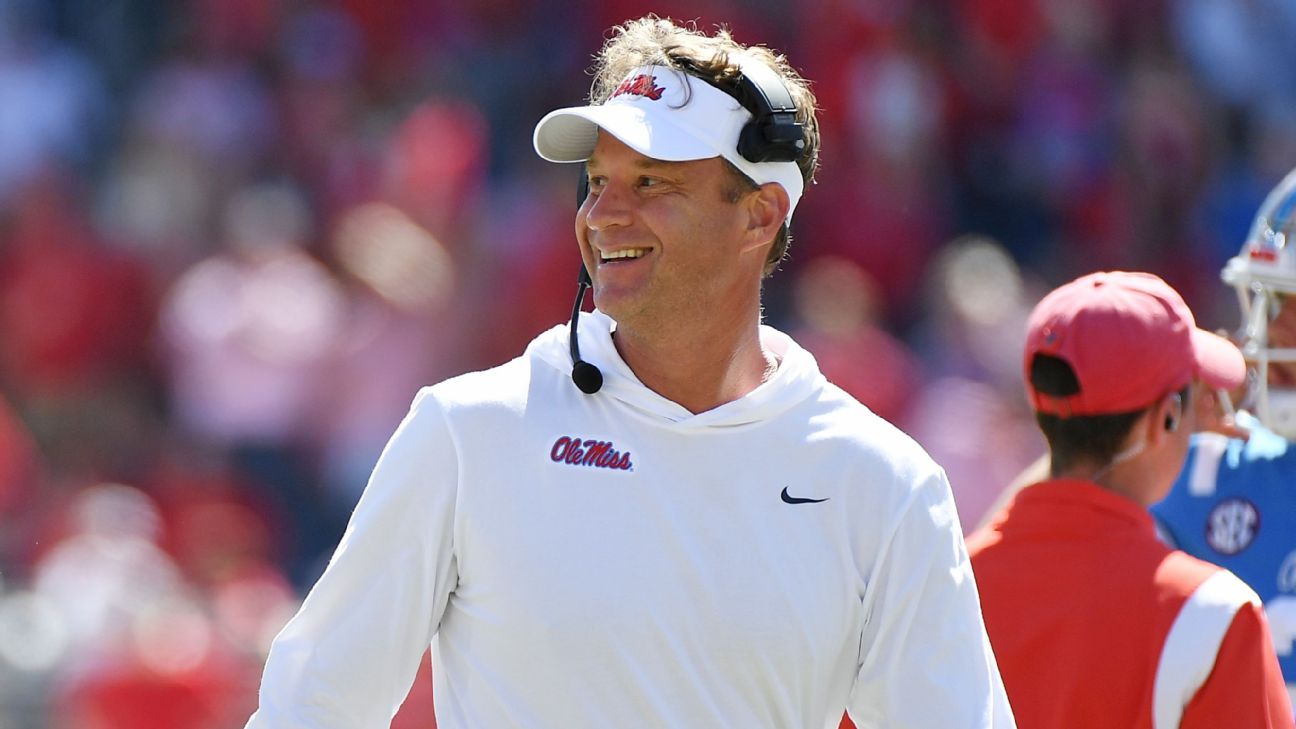
LSU hires Ole Miss’ Lane Kiffin
Why is this a good fit?
LSU got the coach it wanted ahead of other suitors, further confirming that its coaching job, despite the drama and dysfunction, remains one of the best in college football. Kiffin left a great situation at the height of his powers because he knows that LSU can consistently compete for national titles in ways that other programs simply cannot. In Kiffin, LSU gains a coach accustomed to the bright lights and the big stadiums, who can attract and develop talent and potentially restore the program to national powerhouse status. LSU can offer the big stage Kiffin lacked at Ole Miss, and wanted again.
Kiffin hasn’t worked at LSU but knows the SEC well after stops at Ole Miss, Alabama and Tennessee. Like Kiffin did at Ole Miss, he should put together an excellent staff that can scour Louisiana, Texas and the surrounding areas for top talent. He certainly will try to bring some of Ole Miss’ top players with him. Kiffin brings the offensive chops that LSU lacked at the end of Kelly’s tenure. He’s one of the nation’s best at identifying and developing quarterbacks, and the emergence of running back Kewan Lacy and others underscores that the Kiffin plan works on offense. — Adam Rittenberg
Biggest challenges Kiffin will face
LSU has a reputation as a place where it is possible to win championships, and that expectation will be placed on Kiffin immediately – especially with the money he is being paid. The Tigers pride themselves on this fact as Nick Saban, Les Miles, then Ed Orgeron all won national titles. Brian Kelly was an awkward fit from the start and never truly got the vibe down on the Bayou. Kiffin has his own unique way of running a program, but he has to find a way to work with all the different “cooks in the kitchen” so to speak. The entire state is heavily invested in LSU football, and though Kiffin has an extremely high profile, he is moving to an even bigger spotlight in Baton Rouge — the only Power 4 school in the state. Kiffin must embrace that, and everything that comes with it. As coveted as he was in this cycle, Kiffin has never won a conference title and finding a way to get over the hump at a school like LSU has to happen. This will be his best shot to get it done, and the clock will start ticking as soon as his first press conference ends. — Andrea Adelson
Grade: A-
The fixation around Kiffin the past few weeks would normally be attached to a multi-time national championship winner, or at least a coach who has won a Power 4 conference title. Kiffin did tremendous work at Ole Miss but still needs to show he can win the biggest games consistently. LSU is a national championship-or-bust type of program, and Kiffin will be judged at the very highest level, which he craves. He brings the right ingredients to get it done in Baton Rouge, especially his work with quarterbacks. — Rittenberg
Ole Miss makes DC Pete Golding new head coach
Why is this a good fit?
Under normal circumstances, Ole Miss could run a complete coaching search, thoroughly assess candidates currently in head-coaching roles, and others who might help build on the historic success under Lane Kiffin. But these are the strangest of times in Oxford, as Kiffin exits for LSU, a College Football Playoff first-round game looms for the Rebels, and emotions are running extremely high. Kiffin certainly will try to poach the roster for top pieces, and Ole Miss must do what it can to protect as many players as possible. Golding was the lead recruiter for many of them. He’s well-liked by players and won’t need to familiarize himself with Oxford, the administration and how Ole Miss is set up to compete.
Golding, 41, might not have been on the wish list for other SEC jobs just yet, but Ole Miss found itself in a unique situation. He’s a Louisiana native who has spent his entire career in the region, first at his alma mater Delta State and other smaller programs, and then Southern Miss and UTSA before getting his big break with Nick Saban at Alabama in 2018. Golding spent five seasons as a coordinator under Saban, and helped the Crimson Tide to a national title in 2020, before joining Kiffin at Ole Miss. He gives Ole Miss a chance not only for success in this year’s CFP, but can minimize disruptions during a very bumpy coaching transition.
What will be Golding’s biggest challenge?
Golding should be able to handle the next few weeks, but his true readiness for the enormity of the job is unclear. Again, he didn’t emerge as a candidate for the other SEC openings in this cycle, which suggests some external concern about his ability to handle such a role. Any first-time coaching job brings its challenges and even though Golding knows Ole Miss, he hasn’t been the face of the program. He’s also replacing a coach who put together the team’s most successful run since John Vaught in the late 1950s and early 1960s.
Although Golding has shown his talents in recruiting and with schematics, how will he handle the media? How does he do in front of donors and other key stakeholders with the university? Perhaps he just needed the chance, which he now has, but assistant coaches that are shielded from the media often take some time to get fully comfortable.
Grade: B
Coaching hires can’t be evaluated in a vacuum, and Golding’s ultimate success or failure at Ole Miss will be judged by what he accomplishes beyond the 2025 season. But what happens in Ole Miss’ first CFP appearance, after losing Kiffin to a rival SEC school, absolutely does matter, too, and Golding gives Ole Miss a chance to prolong a really special season. There’s little doubt he will continue to compile strong rosters. He will need a strong supporting staff, especially a talented offensive coordinator hire, to ultimately sustain and even elevate the program. The key question here is whether other SEC programs missed out on a great candidate in Golding, or will Ole Miss suffer for making an in-the-moment decision that could backfire long-term? — Rittenberg

Why is this a good fit?
Florida fans: Sumrall isn’t Billy Napier. Yes, he’s another promising Group of 5 coach from a program in Louisiana, just as Napier was when he came to Gainesville. But Sumrall is a different personality who comes from the opposite side of the ball and has more ties to the SEC, where he both played (Kentucky) and coached (Ole Miss, Kentucky). He’s more comfortable than Napier was in being the face of a major program and will delegate to his coordinators while compiling a strong staff. Although Auburn seemed like a more natural spot for Sumrall because of his connections to the state, Florida gives him an even bigger platform at the lone SEC program in one of the nation’s top talent-producing states.
The other thing Sumrall brings is wins. He won Sun Belt titles in both of his seasons at Troy and went to the American Conference title game in his first year at Tulane. Sumrall has succeeded in different ways and with different types of quarterbacks. He hasn’t won in the Power 4 or at a program like Florida, which is an understandable concern. But Sumrall is ready for the opportunity and should be able to foster the consistency Florida has lacked for far too long. Florida didn’t have a talent problem under Napier, and Sumrall should continue to excel in personnel while translating it better on the field. — Rittenberg
Biggest challenges Sumrall will face
Where do we start? First and foremost, Sumrall has to find a way to win over a fan base that thought it had a shot at landing Lane Kiffin. Whether that was a reality or not, Gators fans had their hopes up that Kiffin would choose them. With that, Sumrall has to convince fans he is not another version of Napier. Once Sumrall has done that, he has to find a way to win at what has proved to be one of the hardest jobs to crack in the SEC. Florida has not won an SEC title since 2008, and while there remains a belief it is one of the best jobs in the country, Florida goes through coaches at a fairly frequent clip. If past is precedent, Sumrall will be given a year or two to find success before the fan base starts to turn on him; four years max to compete for a championship. Expectations are sky high, and Sumrall will be given no leeway to learn on the job. — Adelson
Grade: B+
Sumrall has the ingredients to become the next great SEC coach. He’s an excellent communicator who connects with a range of people and should get Florida fans excited about the future, even if they might be skeptical at first because of his background. Florida isn’t where I initially saw him ending up in a wild coaching cycle, but if the school gives him some time, he should stabilize and elevate the Gators’ on-field performance and start getting more out of very talented rosters there. — Rittenberg

Why is this a good fit?
Silverfield has quietly become a really successful coach in the region, and certainly seems ready for a Power 4 opportunity like Arkansas. Although he hasn’t generated as much buzz as Tulane’s Jon Sumrall and other American Conference coaches, he has beaten many of them in head-to-head matchups and boasts a 29-9 record since the start of the 2023 season, including an AP Top 25 finish last fall. Silverfield led Memphis to a win against Arkansas earlier this season and has beaten four consecutive Power 4 opponents, including West Virginia and Iowa State in bowl games the past two seasons.
He has led Memphis since late 2019 but been at the program since 2016, so he understands the recruiting landscape and where Arkansas must look for players. Arkansas’ location can be a challenge for acquiring talent, but Silverfield shouldn’t be intimidated by it. He also brings a strong background on offense to Fayetteville and should compile a staff that has similar knowledge to the area and possibly the SEC.
What are the biggest challenges for Silverfield?
The SEC is only getting tougher with the additions of Texas and Oklahoma, the emergence of Texas A&M, Ole Miss and Vanderbilt, and the pressure on a traditional heavyweight like Florida to start making the CFP. Where does Arkansas really fit in the SEC pecking order? Silverfield likely will have to do more with less initially and win games against programs that have been on steadier footing. His real challenge will be trying to energize and unite the financial hubs around the Arkansas program, which give the program a chance to accelerate but haven’t always been harnessed.
Athletic director Hunter Yurachek was blunt earlier this year about the increased resources needed to better compete in the SEC. Arkansas seemingly could access those individuals and corporations with the right coach and vision. That’s where Silverfield comes in, as Arkansas can use those relationships to overcome some of its baked-in obstacles. Silverfield will need a strong introductory period, as Arkansas fans might not know him that well and need to embrace his personality and leadership style. The first offseason will be critical to make sure the program doesn’t fall further behind.
Grade: B
Silverfield’s consistency and success tended to go under the radar at a program like Memphis, where people have grown accustomed to really strong seasons. But his steady leadership style, shown in 2023, 2024 and most of this year, should help an Arkansas program that needs clear direction. He hasn’t coached in the SEC, and there could be a learning curve, but he shouldn’t be surprised walking in the door at Arkansas after spending so much time with Memphis. — Rittenberg

Why is this a good fit?
Every SEC school asks its head coaches to be engaged in recruiting, and Auburn is no exception. Although Auburn never got the results it wanted with Hugh Freeze, the school’s approach toward NIL and acquiring talent — a major draw when it tried to lure Lane Kiffin from Ole Miss — showed up on the roster. Golesh is the type of head coach who could harness Auburn’s established personnel apparatus and really maximize things going forward. He’s about as hands-on in the recruiting space as head coaches get. When Golesh was offensive coordinator at Tennessee, I remember sitting in his office and seeing him monitor all the recruiting transactions from social media on a giant screen. Golesh will get after it to upgrade Auburn’s roster and use all the resources available to him. He won’t be intimidated by the SEC recruiting scene and has ties to multiple states, including Florida and Ohio.
Golesh also brings an offensive background that should energize Auburn fans, especially after how poorly things went on that side of the ball under Freeze. He spent time with Matt Campbell early in his career, and then with Josh Heuepel at both UCF and Tennessee. South Florida ranks in the top five nationally in both scoring and total offense this season, and its defense shined in wins against Boise State and Florida.
What will be Golesh’s biggest challenge?
The challenge at Auburn is almost always the same. Can the head coach truly capitalize on the best parts of the place — an advantageous recruiting location, strong financial resources and a large and extremely devoted fan base — while navigating the big donors and other significant forces that have clashed too often over time and ultimately held back the program’s progress? Golesh is a strong communicator and brings a good mix of experience to the Plains, most notably his two seasons as an SEC coordinator at Tennessee.
He hasn’t been an SEC head coach, though, and he will need to show he won’t be pushed around or swayed by the forces that have doomed Auburn in the past. Golesh’s staff hires at Auburn will be especially important on defense, as South Florida made strides on that side this season but also struggled in key losses to Memphis and Navy. The other element worth watching is how Golesh balances the personnel element, undoubtedly his passion, with some of the other key responsibilities that come with managing an exciting but complicated program like Auburn.
Grade: B+
Despite no Power 4 head-coaching experience, Golesh checks a lot of boxes with his background, having worked in the Big Ten, Big 12 and SEC, and in the Midwest, South and Southeast. His time at Tennessee should really help him at a program like Auburn, which has a chance to move up in the SEC pecking order but will need a smart, aggressive approach. Golesh’s record of 23-15 doesn’t really jump off the page, and he hasn’t been part of a conference championship just yet. But his assertive vision as a recruiter gives Auburn a chance to quickly improve its roster and win more in an increasingly difficult SEC. — Rittenberg

Why is this a good fit?
Pritchard understands Stanford — its advantages, limitations and possibilities — better than most. He played quarterback for the Cardinal from 2006 to 2009, ahead of Andrew Luck’s run, and then spent the first 13 years of his coaching career with his alma mater, until joining the Washington Commanders‘ staff in 2023. He won’t be blindsided by what he’s walking into at Stanford. He also has a very close relationship with Luck, who is truly directing the program. There will be no feeling-out period between head coach and general manager.
Pritchard, 38, was part of Stanford’s seismic shift under Jim Harbaugh, quarterbacking the team to a signature win against USC in 2007. He then witnessed Stanford’s rise to a consistent contender and, more importantly, saw how things went downhill so quickly after COVID and in the portal/NIL era. His ability to learn from those difficult times and ensure Stanford avoids them will be important. But again, he’s not doing this alone, as he comes in immediately aligned with Luck. — Rittenberg
What will be Pritchard’s biggest challenge?
Generating momentum. Few people share as close an association with some of the biggest moments in Stanford history as Pritchard, but during those heights, the Cardinal never truly resonated broadly within a competitive San Francisco Bay Area sports market. With the collapse of the Pac-12 and six losing seasons in the past seven years, Stanford football has essentially become irrelevant locally. Building a program under those circumstances is difficult.
The academic side of things will always be a draw and should, in theory, help the program limit excessive outgoing transfers, but there also needs to be a robust NIL program. At Stanford that doesn’t have to be a problem. The university’s alumni base is notably wealthy, but it also has not proved to be a group eager to part with large sums of money to help field a better football team. That’s perhaps more of an issue that Luck will be responsible for dealing with, but it is very much part of the hand Pritchard has been dealt.
Beyond the structural challenges, this is just a team that needs a talent upgrade. They don’t have the players right now to compete at a high level. — Kyle Bonagura
Grade: C+
Luck didn’t make the most imaginative hire here. He went with a close friend who needs no introduction to Stanford and the vision for success there. But Pritchard hasn’t been a head coach before and wasn’t mentioned as being on the radar for many other college or NFL jobs. Stanford is really betting on potential here. He only really knows Stanford, which might work out in this case, but he also must learn from what happened toward the end of David Shaw’s tenure and chart out a new path. — Rittenberg

Why is this a good fit?
Oklahoma State needed a coach who knew the Big 12 and the region, and someone who could bring a clear vision, especially on offense. Quarterback play was central to Oklahoma State’s identity under Mike Gundy, and Morris has become one of the best talent identifiers in recent years. Oklahoma State needs to accelerate its recruiting, but likely won’t have the first choice for players, and Morris has repeatedly shown the ability to find and develop under-the-radar players. Ideally, he can bring quarterback Drew Mestemaker and others to Stillwater, and perhaps more importantly, make Oklahoma State an attractive destination for top offensive performers again.
Morris played and coached in the Big 12 at Texas Tech and spent time at Houston early in his career, so he won’t be unfamiliar with the key characteristics of a program like Oklahoma State. He’s not a Gundy disciple, but he can respect what Gundy did to elevate the program, while implementing his own vision, which worked both at Incarnate Word and at North Texas. — Rittenberg
What will be Morris’ biggest challenge?
The answer here is twofold: 1) Morris must live up to the unprecedented levels of consistent success his predecessor brought Oklahoma State; 2) Morris will also have to figure out exactly how to take the Cowboys’ football program to the future.
On the first point, whomever Oklahoma State chose to hire this cycle was going to be replacing a coach who won more — and more consistently — than any other figure in program history. Before 2023, the Cowboys made 18 consecutive bowl appearances under Gundy, winning eight or more games in 13 of those seasons. Past leading Oklahoma State to the very top of the sport and turning the program into a national brand, Gundy’s greatest achievement was transforming a school that had registered back-to-back 10-win seasons only once before he took over in 2005 into a perennial winner. Morris, who made two playoff appearances at Incarnate Word and has North Texas contending for the American this fall, has a history of producing quick turnarounds. Getting Oklahoma State upright — which will likely require a massive roster and staff overhaul — should be his first objective. From there, Morris will be judged on the expectations set by Gundy before him.
How does Morris take Oklahoma State into the future? Gundy’s initial, outspoken reluctance, then too-little, too-late embrace of college football’s NIL/transfer portal era hurt the Cowboys on the field and laid the groundwork for his unceremonious departure earlier this fall. Oklahoma State has fallen behind in terms of roster budgeting compared to its Big 12 counterparts, and industry sources suggested that the Cowboys’ ability to present improved resources would be a key piece of the hiring process. Morris has built a career on making more out of less, and that will serve him well in Stillwater. He has also proven capable of navigating the transfer portal and the current complexities of the sport. With help from Oklahoma State (and its boosters), Morris must take steps to modernize the program. If he can, a Big 12 conference landscape that remains wide open outside of Texas Tech could once again be Oklahoma State’s for the taking. — Eli Lederman
Grade: A-
Morris is only 40 (cue the Gundy memes), hasn’t been a Power 4 head coach, and before this season had only middling results with North Texas. His quarterback track record is his superpower, though, and Oklahoma State needs a renaissance at the position after things fell off too sharply. Morris can recruit Texas and build up the roster. Time will tell if he has the expertise to win one-score games in a league where programs are extremely similar. — Rittenberg
0:32
Paul Finebaum: Is Virginia Tech an upgrade for James Franklin?
Paul Finebaum weighs in on James Franklin reportedly being hired as Virginia Tech’s next coach.

Why is this a good fit?
When Franklin was fired and almost immediately announced his intentions to coach in 2026, Virginia Tech emerged as a natural landing spot for the 53-year-old. He has spent most of his career near the mid-Atlantic region, twice serving as a Maryland assistant, leading programs in Vanderbilt and Penn State and even working within the state at James Madison in 1997.
He understands the key recruiting areas extremely well. Franklin ultimately was fired for not winning the biggest games at Penn State, but he still won a lot of them (104) and understands how to build a consistently successful program. Virginia Tech ultimately had to do more of the selling here and convince a veteran coach that it was financially serious enough to contend in the ACC. Franklin isn’t shy about asking for what he needs, and he wouldn’t take the job if he didn’t feel that Virginia Tech’s investments are sufficient to compete for ACC championships. — Rittenberg
What will be Franklin’s biggest challenge?
This hire would not have happened without the financial investment Virginia Tech is about to make in football. The Hokies have languished behind their ACC counterparts in nearly every area — from staffing to salaries to NIL — and some of that has to do with an outdated way of thinking. The one through line has been the thought that the Hokies could win the way Frank Beamer won. That is a big reason why they hired Brent Pry, who served as Franklin’s defensive coordinator, as head coach in November 2021. That clearly did not work, as Pry never won more than seven games in a season. Virginia Tech pledged to add $229 million to its overall athletics budget over the next four years — a huge concession that the old model no longer works in this new era of college football.
But Franklin has to get the entire athletic department to believe the old Beamer days truly are over and things must be done his way. That is challenge No. 1. The second challenge is to restore Virginia Tech’s prowess in recruiting its home state. Franklin had success taking players out of Virginia Tech’s backyard and turning them into stars at Penn State. Will he be able to do the same now at Virginia Tech, which has lost an enormous amount of ground to powers outside the state? The high school players being recruited now were toddlers the last time Virginia Tech was a nationally respected program playing in BCS games. They don’t remember the Hokies being elite. Convincing players to stay in state will be a challenge, but one that Franklin can achieve given his track record. — Adelson
Grade: A
Virginia Tech’s two post-Frank Beamer hires were a coach who had not led a Power 4 program (Justin Fuente) and a first-time head coach (Brent Pry). In Franklin, Virginia Tech gets a proven winner from the Big Ten and SEC, who knows the region extremely well and will be extremely motivated to compete for league titles and CFP appearances.
Franklin’s big-stage shortcomings are a concern but perhaps not as much for a program like Virginia Tech, which is seeking to become a consistent conference title contender again. — Rittenberg
-
Adam Rittenberg
The wildest college football coaching cycle — perhaps ever — has reached the hiring phase.
Schools around the Power 4 that fired their coaches in the first two months of the season — or, in Stanford’s case, way back in late March — are targeting candidates and finalizing deals. Interestingly enough, one of the first major coaches to lose his job, Penn State’s James Franklin, was the first noninterim coach to be hired, as he is headed to Virginia Tech.
New hires always come with hope and optimism, grand proclamations and the chance to get programs on the right track. But not all hiring processes are the same. The financial component with jobs is essential — what schools are willing to spend not just on their head coach, but the assistants and support staff and, perhaps most important, the team roster.
We will be reviewing all of the major coaching hires in the 2025-26 cycle, evaluating how each coach fits in the job, their major challenges and what it will take to be successful. We will also assign an initial letter grade for each hire.
Jump to: LSU | Ole Miss | Florida | Arkansas | Auburn
Stanford | Oklahoma State | Virginia Tech
LSU hires Ole Miss’ Lane Kiffin
Why is this a good fit?
LSU got the coach it wanted ahead of other suitors, further confirming that its coaching job, despite the drama and dysfunction, remains one of the best in college football. Kiffin left a great situation at the height of his powers because he knows that LSU can consistently compete for national titles in ways that other programs simply cannot. In Kiffin, LSU gains a coach accustomed to the bright lights and the big stadiums, who can attract and develop talent and potentially restore the program to national powerhouse status. LSU can offer the big stage Kiffin lacked at Ole Miss, and wanted again.
Kiffin hasn’t worked at LSU but knows the SEC well after stops at Ole Miss, Alabama and Tennessee. Like Kiffin did at Ole Miss, he should put together an excellent staff that can scour Louisiana, Texas and the surrounding areas for top talent. He certainly will try to bring some of Ole Miss’ top players with him. Kiffin brings the offensive chops that LSU lacked at the end of Kelly’s tenure. He’s one of the nation’s best at identifying and developing quarterbacks, and the emergence of running back Kewan Lacy and others underscores that the Kiffin plan works on offense. — Adam Rittenberg
Biggest challenges Kiffin will face
LSU has a reputation as a place where it is possible to win championships, and that expectation will be placed on Kiffin immediately – especially with the money he is being paid. The Tigers pride themselves on this fact as Nick Saban, Les Miles, then Ed Orgeron all won national titles. Brian Kelly was an awkward fit from the start and never truly got the vibe down on the Bayou. Kiffin has his own unique way of running a program, but he has to find a way to work with all the different “cooks in the kitchen” so to speak. The entire state is heavily invested in LSU football, and though Kiffin has an extremely high profile, he is moving to an even bigger spotlight in Baton Rouge — the only Power 4 school in the state. Kiffin must embrace that, and everything that comes with it. As coveted as he was in this cycle, Kiffin has never won a conference title and finding a way to get over the hump at a school like LSU has to happen. This will be his best shot to get it done, and the clock will start ticking as soon as his first press conference ends. — Andrea Adelson
Grade: A-
The fixation around Kiffin the past few weeks would normally be attached to a multi-time national championship winner, or at least a coach who has won a Power 4 conference title. Kiffin did tremendous work at Ole Miss but still needs to show he can win the biggest games consistently. LSU is a national championship-or-bust type of program, and Kiffin will be judged at the very highest level, which he craves. He brings the right ingredients to get it done in Baton Rouge, especially his work with quarterbacks. — Rittenberg
Ole Miss makes DC Pete Golding new head coach
Why is this a good fit?
Under normal circumstances, Ole Miss could run a complete coaching search, thoroughly assess candidates currently in head-coaching roles, and others who might help build on the historic success under Lane Kiffin. But these are the strangest of times in Oxford, as Kiffin exits for LSU, a College Football Playoff first-round game looms for the Rebels, and emotions are running extremely high. Kiffin certainly will try to poach the roster for top pieces, and Ole Miss must do what it can to protect as many players as possible. Golding was the lead recruiter for many of them. He’s well-liked by players and won’t need to familiarize himself with Oxford, the administration and how Ole Miss is set up to compete.
Golding, 41, might not have been on the wish list for other SEC jobs just yet, but Ole Miss found itself in a unique situation. He’s a Louisiana native who has spent his entire career in the region, first at his alma mater Delta State and other smaller programs, and then Southern Miss and UTSA before getting his big break with Nick Saban at Alabama in 2018. Golding spent five seasons as a coordinator under Saban, and helped the Crimson Tide to a national title in 2022, before joining Kiffin at Ole Miss. He gives Ole Miss a chance not only for success in this year’s CFP, but can minimize disruptions during a very bumpy coaching transition.
What will be Golding’s biggest challenge?
Golding should be able to handle the next few weeks, but his true readiness for the enormity of the job is unclear. Again, he didn’t emerge as a candidate for the other SEC openings in this cycle, which suggests some external concern about his ability to handle such a role. Any first-time coaching job brings its challenges and even though Golding knows Ole Miss, he hasn’t been the face of the program. He’s also replacing a coach who put together the team’s most successful run since John Vaught in the late 1950s and early 1960s.
Although Golding has shown his talents in recruiting and with schematics, how will he handle the media? How does he do in front of donors and other key stakeholders with the university? Perhaps he just needed the chance, which he now has, but assistant coaches that are shielded from the media often take some time to get fully comfortable.
Grade: B
Coaching hires can’t be evaluated in a vacuum, and Golding’s ultimate success or failure at Ole Miss will be judged by what he accomplishes beyond the 2025 season. But what happens in Ole Miss’ first CFP appearance, after losing Kiffin to a rival SEC school, absolutely does matter, too, and Golding gives Ole Miss a chance to prolong a really special season. There’s little doubt he will continue to compile strong rosters. He will need a strong supporting staff, especially a talented offensive coordinator hire, to ultimately sustain and even elevate the program. The key question here is whether other SEC programs missed out on a great candidate in Golding, or will Ole Miss suffer for making an in-the-moment decision that could backfire long-term? — Rittenberg
Why is this a good fit?
Florida fans: Sumrall isn’t Billy Napier. Yes, he’s another promising Group of 5 coach from a program in Louisiana, just as Napier was when he came to Gainesville. But Sumrall is a different personality who comes from the opposite side of the ball and has more ties to the SEC, where he both played (Kentucky) and coached (Ole Miss, Kentucky). He’s more comfortable than Napier was in being the face of a major program and will delegate to his coordinators while compiling a strong staff. Although Auburn seemed like a more natural spot for Sumrall because of his connections to the state, Florida gives him an even bigger platform at the lone SEC program in one of the nation’s top talent-producing states.
The other thing Sumrall brings is wins. He won Sun Belt titles in both of his seasons at Troy and went to the American Conference title game in his first year at Tulane. Sumrall has succeeded in different ways and with different types of quarterbacks. He hasn’t won in the Power 4 or at a program like Florida, which is an understandable concern. But Sumrall is ready for the opportunity and should be able to foster the consistency Florida has lacked for far too long. Florida didn’t have a talent problem under Napier, and Sumrall should continue to excel in personnel while translating it better on the field. — Rittenberg
Biggest challenges Sumrall will face
Where do we start? First and foremost, Sumrall has to find a way to win over a fan base that thought it had a shot at landing Lane Kiffin. Whether that was a reality or not, Gators fans had their hopes up that Kiffin would choose them. With that, Sumrall has to convince fans he is not another version of Napier. Once Sumrall has done that, he has to find a way to win at what has proved to be one of the hardest jobs to crack in the SEC. Florida has not won an SEC title since 2008, and while there remains a belief it is one of the best jobs in the country, Florida goes through coaches at a fairly frequent clip. If past is precedent, Sumrall will be given a year or two to find success before the fan base starts to turn on him; four years max to compete for a championship. Expectations are sky high, and Sumrall will be given no leeway to learn on the job. — Adelson
Grade: B+
Sumrall has the ingredients to become the next great SEC coach. He’s an excellent communicator who connects with a range of people and should get Florida fans excited about the future, even if they might be skeptical at first because of his background. Florida isn’t where I initially saw him ending up in a wild coaching cycle, but if the school gives him some time, he should stabilize and elevate the Gators’ on-field performance and start getting more out of very talented rosters there. — Rittenberg
Why is this a good fit?
Silverfield has quietly become a really successful coach in the region, and certainly seems ready for a Power 4 opportunity like Arkansas. Although he hasn’t generated as much buzz as Tulane’s Jon Sumrall and other American Conference coaches, he has beaten many of them in head-to-head matchups and boasts a 29-9 record since the start of the 2023 season, including an AP Top 25 finish last fall. Silverfield led Memphis to a win against Arkansas earlier this season and has beaten four consecutive Power 4 opponents, including West Virginia and Iowa State in bowl games the past two seasons.
He has led Memphis since late 2019 but been at the program since 2016, so he understands the recruiting landscape and where Arkansas must look for players. Arkansas’ location can be a challenge for acquiring talent, but Silverfield shouldn’t be intimidated by it. He also brings a strong background on offense to Fayetteville and should compile a staff that has similar knowledge to the area and possibly the SEC.
What are the biggest challenges for Silverfield?
The SEC is only getting tougher with the additions of Texas and Oklahoma, the emergence of Texas A&M, Ole Miss and Vanderbilt, and the pressure on a traditional heavyweight like Florida to start making the CFP. Where does Arkansas really fit in the SEC pecking order? Silverfield likely will have to do more with less initially and win games against programs that have been on steadier footing. His real challenge will be trying to energize and unite the financial hubs around the Arkansas program, which give the program a chance to accelerate but haven’t always been harnessed.
Athletic director Hunter Yurachek was blunt earlier this year about the increased resources needed to better compete in the SEC. Arkansas seemingly could access those individuals and corporations with the right coach and vision. That’s where Silverfield comes in, as Arkansas can use those relationships to overcome some of its baked-in obstacles. Silverfield will need a strong introductory period, as Arkansas fans might not know him that well and need to embrace his personality and leadership style. The first offseason will be critical to make sure the program doesn’t fall further behind.
Grade: B
Silverfield’s consistency and success tended to go under the radar at a program like Memphis, where people have grown accustomed to really strong seasons. But his steady leadership style, shown in 2023, 2024 and most of this year, should help an Arkansas program that needs clear direction. He hasn’t coached in the SEC, and there could be a learning curve, but he shouldn’t be surprised walking in the door at Arkansas after spending so much time with Memphis. — Rittenberg
Why is this a good fit?
Every SEC school asks its head coaches to be engaged in recruiting, and Auburn is no exception. Although Auburn never got the results it wanted with Hugh Freeze, the school’s approach toward NIL and acquiring talent — a major draw when it tried to lure Lane Kiffin from Ole Miss — showed up on the roster. Golesh is the type of head coach who could harness Auburn’s established personnel apparatus and really maximize things going forward. He’s about as hands-on in the recruiting space as head coaches get. When Golesh was offensive coordinator at Tennessee, I remember sitting in his office and seeing him monitor all the recruiting transactions from social media on a giant screen. Golesh will get after it to upgrade Auburn’s roster and use all the resources available to him. He won’t be intimidated by the SEC recruiting scene and has ties to multiple states, including Florida and Ohio.
Golesh also brings an offensive background that should energize Auburn fans, especially after how poorly things went on that side of the ball under Freeze. He spent time with Matt Campbell early in his career, and then with Josh Heuepel at both UCF and Tennessee. South Florida ranks in the top five nationally in both scoring and total offense this season, and its defense shined in wins against Boise State and Florida.
What will be Golesh’s biggest challenge?
The challenge at Auburn is almost always the same. Can the head coach truly capitalize on the best parts of the place — an advantageous recruiting location, strong financial resources and a large and extremely devoted fan base — while navigating the big donors and other significant forces that have clashed too often over time and ultimately held back the program’s progress? Golesh is a strong communicator and brings a good mix of experience to the Plains, most notably his two seasons as an SEC coordinator at Tennessee.
He hasn’t been an SEC head coach, though, and he will need to show he won’t be pushed around or swayed by the forces that have doomed Auburn in the past. Golesh’s staff hires at Auburn will be especially important on defense, as South Florida made strides on that side this season but also struggled in key losses to Memphis and Navy. The other element worth watching is how Golesh balances the personnel element, undoubtedly his passion, with some of the other key responsibilities that come with managing an exciting but complicated program like Auburn.
Grade: B+
Despite no Power 4 head-coaching experience, Golesh checks a lot of boxes with his background, having worked in the Big Ten, Big 12 and SEC, and in the Midwest, South and Southeast. His time at Tennessee should really help him at a program like Auburn, which has a chance to move up in the SEC pecking order but will need a smart, aggressive approach. Golesh’s record of 23-15 doesn’t really jump off the page, and he hasn’t been part of a conference championship just yet. But his assertive vision as a recruiter gives Auburn a chance to quickly improve its roster and win more in an increasingly difficult SEC. — Rittenberg
Why is this a good fit?
Pritchard understands Stanford — its advantages, limitations and possibilities — better than most. He played quarterback for the Cardinal from 2006 to 2009, ahead of Andrew Luck’s run, and then spent the first 13 years of his coaching career with his alma mater, until joining the Washington Commanders‘ staff in 2023. He won’t be blindsided by what he’s walking into at Stanford. He also has a very close relationship with Luck, who is truly directing the program. There will be no feeling-out period between head coach and general manager.
Pritchard, 38, was part of Stanford’s seismic shift under Jim Harbaugh, quarterbacking the team to a signature win against USC in 2007. He then witnessed Stanford’s rise to a consistent contender and, more importantly, saw how things went downhill so quickly after COVID and in the portal/NIL era. His ability to learn from those difficult times and ensure Stanford avoids them will be important. But again, he’s not doing this alone, as he comes in immediately aligned with Luck. — Rittenberg
What will be Pritchard’s biggest challenge?
Generating momentum. Few people share as close an association with some of the biggest moments in Stanford history as Pritchard, but during those heights, the Cardinal never truly resonated broadly within a competitive San Francisco Bay Area sports market. With the collapse of the Pac-12 and six losing seasons in the past seven years, Stanford football has essentially become irrelevant locally. Building a program under those circumstances is difficult.
The academic side of things will always be a draw and should, in theory, help the program limit excessive outgoing transfers, but there also needs to be a robust NIL program. At Stanford that doesn’t have to be a problem. The university’s alumni base is notably wealthy, but it also has not proved to be a group eager to part with large sums of money to help field a better football team. That’s perhaps more of an issue that Luck will be responsible for dealing with, but it is very much part of the hand Pritchard has been dealt.
Beyond the structural challenges, this is just a team that needs a talent upgrade. They don’t have the players right now to compete at a high level. — Kyle Bonagura
Grade: C+
Luck didn’t make the most imaginative hire here. He went with a close friend who needs no introduction to Stanford and the vision for success there. But Pritchard hasn’t been a head coach before and wasn’t mentioned as being on the radar for many other college or NFL jobs. Stanford is really betting on potential here. He only really knows Stanford, which might work out in this case, but he also must learn from what happened toward the end of David Shaw’s tenure and chart out a new path. — Rittenberg
Why is this a good fit?
Oklahoma State needed a coach who knew the Big 12 and the region, and someone who could bring a clear vision, especially on offense. Quarterback play was central to Oklahoma State’s identity under Mike Gundy, and Morris has become one of the best talent identifiers in recent years. Oklahoma State needs to accelerate its recruiting, but likely won’t have the first choice for players, and Morris has repeatedly shown the ability to find and develop under-the-radar players. Ideally, he can bring quarterback Drew Mestemaker and others to Stillwater, and perhaps more importantly, make Oklahoma State an attractive destination for top offensive performers again.
Morris played and coached in the Big 12 at Texas Tech and spent time at Houston early in his career, so he won’t be unfamiliar with the key characteristics of a program like Oklahoma State. He’s not a Gundy disciple, but he can respect what Gundy did to elevate the program, while implementing his own vision, which worked both at Incarnate Word and at North Texas. — Rittenberg
What will be Morris’ biggest challenge?
The answer here is twofold: 1) Morris must live up to the unprecedented levels of consistent success his predecessor brought Oklahoma State; 2) Morris will also have to figure out exactly how to take the Cowboys’ football program to the future.
On the first point, whomever Oklahoma State chose to hire this cycle was going to be replacing a coach who won more — and more consistently — than any other figure in program history. Before 2023, the Cowboys made 18 consecutive bowl appearances under Gundy, winning eight or more games in 13 of those seasons. Past leading Oklahoma State to the very top of the sport and turning the program into a national brand, Gundy’s greatest achievement was transforming a school that had registered back-to-back 10-win seasons only once before he took over in 2005 into a perennial winner. Morris, who made two playoff appearances at Incarnate Word and has North Texas contending for the American this fall, has a history of producing quick turnarounds. Getting Oklahoma State upright — which will likely require a massive roster and staff overhaul — should be his first objective. From there, Morris will be judged on the expectations set by Gundy before him.
How does Morris take Oklahoma State into the future? Gundy’s initial, outspoken reluctance, then too-little, too-late embrace of college football’s NIL/transfer portal era hurt the Cowboys on the field and laid the groundwork for his unceremonious departure earlier this fall. Oklahoma State has fallen behind in terms of roster budgeting compared to its Big 12 counterparts, and industry sources suggested that the Cowboys’ ability to present improved resources would be a key piece of the hiring process. Morris has built a career on making more out of less, and that will serve him well in Stillwater. He has also proven capable of navigating the transfer portal and the current complexities of the sport. With help from Oklahoma State (and its boosters), Morris must take steps to modernize the program. If he can, a Big 12 conference landscape that remains wide open outside of Texas Tech could once again be Oklahoma State’s for the taking. — Eli Lederman
Grade: A-
Morris is only 40 (cue the Gundy memes), hasn’t been a Power 4 head coach, and before this season had only middling results with North Texas. His quarterback track record is his superpower, though, and Oklahoma State needs a renaissance at the position after things fell off too sharply. Morris can recruit Texas and build up the roster. Time will tell if he has the expertise to win one-score games in a league where programs are extremely similar. — Rittenberg
0:32
Paul Finebaum: Is Virginia Tech an upgrade for James Franklin?
Paul Finebaum weighs in on James Franklin reportedly being hired as Virginia Tech’s next coach.
Why is this a good fit?
When Franklin was fired and almost immediately announced his intentions to coach in 2026, Virginia Tech emerged as a natural landing spot for the 53-year-old. He has spent most of his career near the mid-Atlantic region, twice serving as a Maryland assistant, leading programs in Vanderbilt and Penn State and even working within the state at James Madison in 1997.
He understands the key recruiting areas extremely well. Franklin ultimately was fired for not winning the biggest games at Penn State, but he still won a lot of them (104) and understands how to build a consistently successful program. Virginia Tech ultimately had to do more of the selling here and convince a veteran coach that it was financially serious enough to contend in the ACC. Franklin isn’t shy about asking for what he needs, and he wouldn’t take the job if he didn’t feel that Virginia Tech’s investments are sufficient to compete for ACC championships. — Rittenberg
What will be Franklin’s biggest challenge?
This hire would not have happened without the financial investment Virginia Tech is about to make in football. The Hokies have languished behind their ACC counterparts in nearly every area — from staffing to salaries to NIL — and some of that has to do with an outdated way of thinking. The one through line has been the thought that the Hokies could win the way Frank Beamer won. That is a big reason why they hired Brent Pry, who served as Franklin’s defensive coordinator, as head coach in November 2021. That clearly did not work, as Pry never won more than seven games in a season. Virginia Tech pledged to add $229 million to its overall athletics budget over the next four years — a huge concession that the old model no longer works in this new era of college football.
But Franklin has to get the entire athletic department to believe the old Beamer days truly are over and things must be done his way. That is challenge No. 1. The second challenge is to restore Virginia Tech’s prowess in recruiting its home state. Franklin had success taking players out of Virginia Tech’s backyard and turning them into stars at Penn State. Will he be able to do the same now at Virginia Tech, which has lost an enormous amount of ground to powers outside the state? The high school players being recruited now were toddlers the last time Virginia Tech was a nationally respected program playing in BCS games. They don’t remember the Hokies being elite. Convincing players to stay in state will be a challenge, but one that Franklin can achieve given his track record. — Adelson
Grade: A
Virginia Tech’s two post-Frank Beamer hires were a coach who had not led a Power 4 program (Justin Fuente) and a first-time head coach (Brent Pry). In Franklin, Virginia Tech gets a proven winner from the Big Ten and SEC, who knows the region extremely well and will be extremely motivated to compete for league titles and CFP appearances.
Franklin’s big-stage shortcomings are a concern but perhaps not as much for a program like Virginia Tech, which is seeking to become a consistent conference title contender again. — Rittenberg
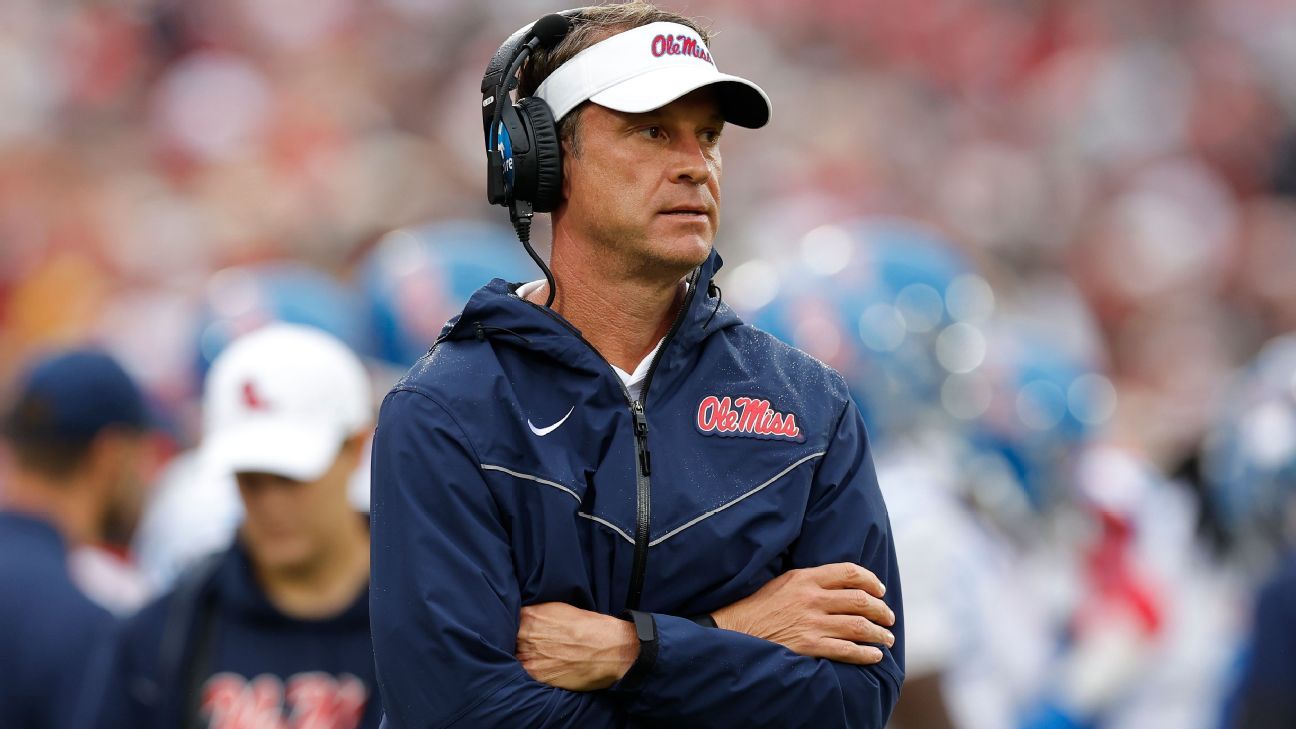
-
Mark Schlabach
Close
Mark Schlabach
ESPN Senior Writer
- Senior college football writer
- Author of seven books on college football
- Graduate of the University of Georgia
LSU‘s courtship of Lane Kiffin has come to an end, as he’s leaving the school to take the job in Baton Rouge and will not coach Ole Miss in the College Football Playoff.
He announced both things Sunday afternoon, the culmination of a weeks-long saga that hung over the sport, prompted viscous debate and puts Kiffin in the unprecedented position of a head coach leaving his team and not coaching them in the College Football Playoff.
“After a lot of prayer and time spent with family, I made the difficult decision to accept the head coaching position at LSU,” Kiffin said in a statement Sunday.
His deal with LSU is for seven years and is worth approximately $12 million annually, with the potential for bonuses, a source told ESPN’s Pete Thamel. That would make him one of the highest-paid coaches in the sport.
Kiffin, 50, and the Rebels just wrapped up an 11-1 regular season with a 38-19 win over rival Mississippi State, all but assuring them a berth in the 12-team College Football Playoff.
After saying he would decide Saturday whether he’ll coach at Ole Miss or LSU in 2026, Kiffin met with Rebels athletics director Keith Carter and chancellor Glenn Boyce for a couple of hours at the chancellor’s home in Oxford.
He also sought the advice of former Alabama coach Nick Saban and Las Vegas Raiders coach Pete Carroll, his former boss at USC, over the past few weeks.
Kiffin expressed his appreciation for his time at Ole Miss in a statement released on social media. He also took issue with Ole Miss athletic director Keith Carter, who Kiffin said “denied” his request to coach in the College Football Playoff.
“I was hoping to complete a historic six season run with this year’s team by leading Ole Miss through the playoffs, capitalizing on the team’s incredible success and their commitment to finish strong, and investing everything into a playoff run with guardrails in place to protect the program in any areas of concern,” Kiffin said in his statement.
“My request to do so was denied by Keith Carter despite the team also asking him to allow me to keep coaching them so they could better maintain their high level of performance. Unfortunately, that means Friday’s Egg Bowl was my last game coaching the Rebels.”
Ole Miss responded quickly, as sources told ESPN that they’d promoted defensive coordinator Pete Golding to the school’s full-time coach soon after Kiffin left the football building for LSU.
Kiffin’s decision was supposed to come Saturday, and there was a delay in part because the result of the Iron Bowl late Saturday impacted whether or not Ole Miss would have played this week. He met with Rebels athletics director Keith Carter and chancellor Glenn Boyce for a couple of hours at the chancellor’s home in Oxford on Saturday.
Kiffin also met with some players in the football building on Sunday, and he pointed out in his statement that the players wanted him to coach in the CFP.
Part of the drama unfolding Saturday revolved around Ole Miss staff members and who would end up going with Kiffin. The Rebels’ brass wanted to protect their staff to keep things as normal as possible for the postseason. Kiffin would obviously take some of his staff with him, and the timing of those departures came into focus as discussions went on during the day.
Ole Miss officials are being aggressive with staff salaries, as there’s a high focus on retention, sources told ESPN.
On the offensive side for Ole Miss, quarterback coach Joe Judge, a longtime NFL coordinator and head coach, has agreed to stay on staff, sources told ESPN. Judge’s role hasn’t been formalized yet, but Ole Miss officials and Golding made clear early on he was a priority staff member to stay in Oxford. He coached Trinidad Chambliss and Jaxson Dart while in Oxford.
The naming of Golding as the head coach will lead to continuity at Ole Miss in 2026 and beyond, especially on the defensive side of the ball.
A former Ole Miss player himself, Golding is in his third season on the Rebels’ staff after serving five years as a top defensive assistant at Alabama under Saban.
Kiffin’s decision included an only-in-the-SEC drama that ensnared three prominent schools, as Florida had expressed interest in Kiffin earlier in their search. When that wasn’t reciprocated, they hired Tulane coach Jon Sumrall.
Kiffin has guided the Rebels to a 55-19 record in his six seasons — only Alabama (67-12) and Georgia (71-8) have more wins in the SEC since the start of the 2020 season. The Rebels have the eighth-most wins among power-conference teams during that stretch.
LSU has a championship brand in multiple sports; state-of-the-art facilities; a rabid, regional fan following; and a legendary, historic home football venue in Tiger Stadium (nicknamed Death Valley), which towers over the banks of the Mississippi River and holds 102,000 spectators — 38,000 more than Vaught-Hemingway Stadium.
The lone football coach of LSU’s past four who did not win a national championship was Kelly. He was fired in late October during his fourth season — a seismic development that also led then-athletic director Scott Woodward to resign under pressure from Louisiana Gov. Jeff Landry.
The Associated Press contributed to this report.
-
 Sports2 years ago
Story injured on diving stop, exits Red Sox game
-
 Sports3 years ago
‘Storybook stuff’: Inside the night Bryce Harper sent the Phillies to the World Series
-
 Sports2 years ago
Game 1 of WS least-watched in recorded history
-
 Sports3 years ago
Button battles heat exhaustion in NASCAR debut
-
 Sports3 years ago
MLB Rank 2023: Ranking baseball’s top 100 players
-
Sports4 years ago
Team Europe easily wins 4th straight Laver Cup
-
 Environment3 years ago
Japan and South Korea have a lot at stake in a free and open South China Sea
-
 Environment1 year ago
Here are the best electric bikes you can buy at every price level in October 2024