
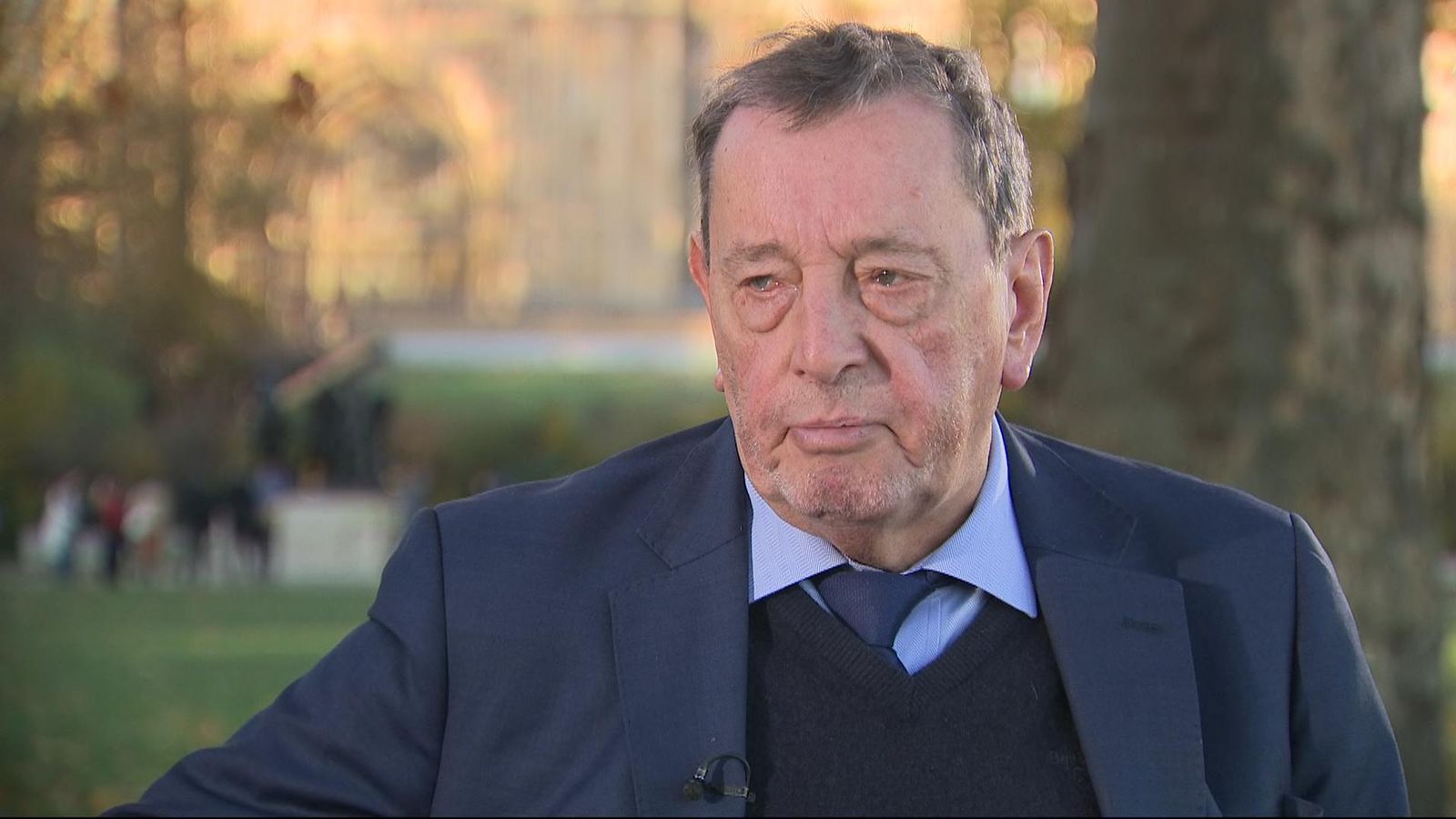
Former home secretary calls for cap on political donations as govt says it’s ‘not a priority’

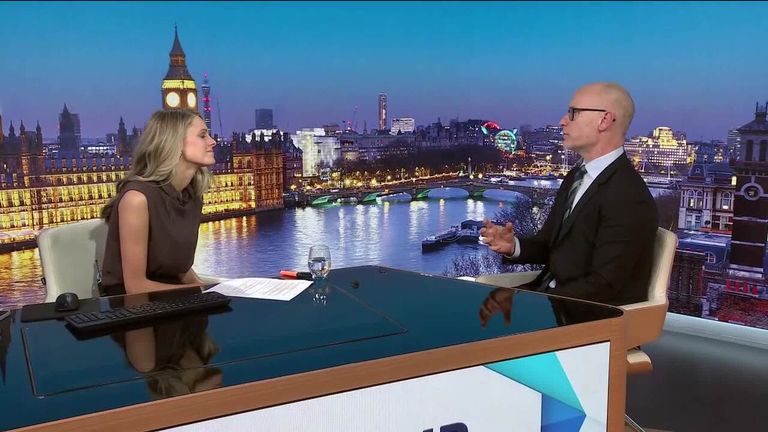
Former home secretary Lord Blunkett has called for a cap on political donations made by companies and stricter rules on “where money originates”.
The Labour stalwart – who is now a member of the House of Lords – told Sky News that he is not against firms or trade unions being able to give cash to parties but “it seems sensible to have an upper ceiling” on how much.
Politics Live:Starmer refuses to back Heathrow expansion during PMQs
He also called for the “prevention of smart ways” of foreign money entering British politics.
While political parties are banned from accepting foreign donations, critics say “loopholes” mean people abroad can still give money via a UK-based company.
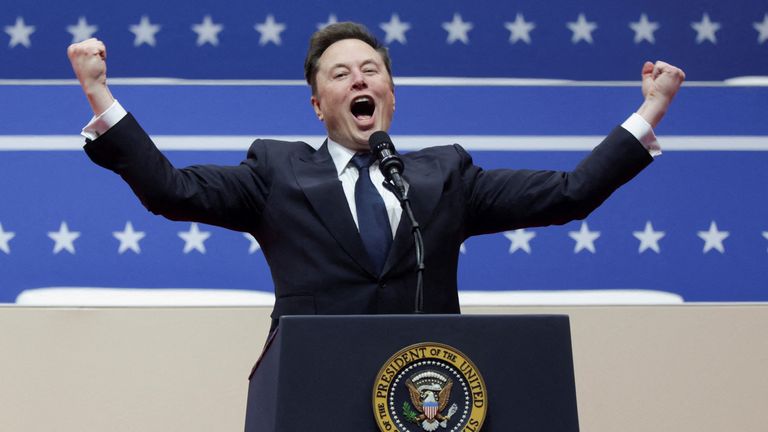
The issue has been in the spotlight amid reports X owner Elon Musk could give millions to Reform UK.
The world’s richest man was born in South Africa and has American citizenship so wouldn’t be able to donate directly. However he has set up a new company in the UK, X.AI LONDON, which was incorporated and registered with Companies House in December.
Elon Musk. Pic: Reuters
Speaking in the House of Lords last week, Lord Blunkett urged the government to act now “to safeguard our future” and “see off those – whether they are malign state actors or multibillionaires – who seek to interfere in our democracy”.
It came amid a debate in the upper chamber which heard calls to ban company donations altogether. Other peers, like Labour’s Lord Dubs, have backed a crackdown on foreign donors giving money to UK pressure groups.
Asked what measures he would support, Lord Blunkett told Sky News he is concerned about funding from outside the UK “for not only surreptitious ways of funding political parties, but the political process as a whole”.
The Labour peer said: “I am not against companies or Trade Unions being able to make donations, but it seems sensible to have an upper ceiling, and therefore a cap, on how much.
“In addition we need much more strictly enforceable rules on where money originates, the legitimacy of the claim that it is ‘domestically generated’ and the prevention of smart ways of substantial donations from overseas.”
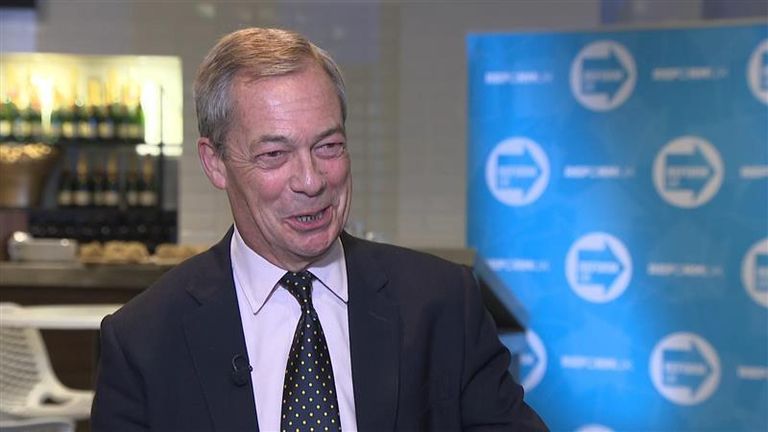
‘Musk is going to support Reform’ says Nigel Farage.
What are the current rules?
There is no upper limit on how much an individual or company can donate to a political party, as long as the money comes from a “permissible source”.
This includes a person who is on the UK electoral register, UK-registered companies and trade unions, and UK-registered “unincorporated associations”.
However there has long been concern about the true source of money that comes from companies in particular, as they can donate cash they have received from foreign or opaque sources.
According to Transparency International, almost £1 in every £10 reported by political parties and their members since 2001 has come from unknown or questionable sources.
Read More:
Businessman reveals he is behind £75,000 donation to Robert Jenrick – but tax haven questions remain
Sky News Westminster Accounts: Find out how much your MP earns
The campaign group was one of several behind a report last year which warned that laws aimed at preventing dodgy money and foreign interference entering British politics are “riddled with loopholes”.
The independent experts recommended measures including a cap on donations, reducing the amount parties can spend on campaigning, and requiring political parties by law to identify the true source of funds.
The likes of the Electoral Commission watchdog have also called for a limit on company donations so they don’t exceed its net profits generated in the UK within the preceding two years.
Cap ‘not a priority’
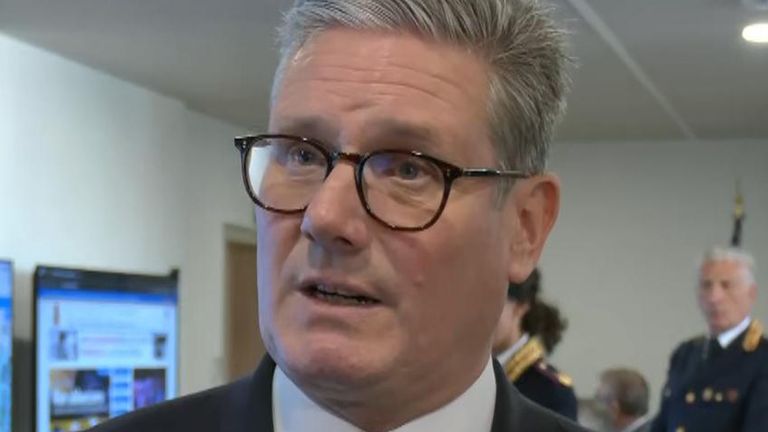
PM wants ‘transparency’ over donations
The issue is being pushed in the House of Lords, with peers saying they are able to speak more freely than MPs who may not want to ask difficult questions of their government.
Labour promised to strengthen the rules around donations in its manifesto, but it is not clear what measures are being looked at or when they could be introduced.
Speaking for the government in the Lords on Wednesday, junior minister Lord Khan of Burnley said a cap on donations is “not a current priority” but “strengthening the rules around donations is” – and proposals will be set out “in due course”.
A Ministry for Housing, Communities and Local Government spokesperson told Sky News: “It is vital we protect our democracy from malign actors who seek to interfere in UK elections through illegitimate political donations.
“That’s why the government committed in its manifesto to strengthen the rules around donations to political parties, and work is ongoing to meet this commitment.”

The UK is to rejoin the European Union’s Erasmus student exchange scheme, according to reports.
The popular programme, which allowed Britons to spend a year studying at European universities as part of their degree without paying extra fees and vice versa for their European counterparts, ended for British students after Brexit on 1 January 2021.
But ministers could announce the UK will rejoin Erasmus from January 2027 as soon as Wednesday, The Times and The Guardian have reported.
Politics latest: Labour’s flagship workers’ rights bill passes Lords after months of debate
Sir Keir Starmer promised a post-Brexit reset deal with Brussels and announced the government was working on rejoining the programme in May.
Negotiations have included work on “mutually agreed financial terms” for the UK and the EU.
The UK had pushed for a discount on membership fees, which are calculated on the basis of a country’s gross domestic product (GDP), The Times reported.
It said the EU is understood to have offered the government a 30% reduction of fees in the first year of membership.
Labour MP Darren Frith told Sky News’ Politics Hub he would “welcome” such a move.
The Guardian reported that as well as university-based study exchanges, British students will be able to participate in vocational training placements under the scheme.
Cabinet Office minister Nick Thomas-Symonds held talks with Maros Sefcovic, the European Commission’s trade lead, in Brussels last week.
A Cabinet Office spokesman said: “We are not commenting on ongoing talks.”
But the UK’s universities welcomed the apparent breakthrough.
Tim Bradshaw, chief executive of the Russell Group of leading universities, said: “We’re delighted at the UK’s association to Erasmus+.
“With an even greater scope than previous programmes, Erasmus+ opens up fantastic opportunities for students, adult learners and young people to all benefit from new experiences and learning.
“It will also renew the huge contributions that EU students and staff make to life on our university campuses.”
The Lib Dems, who have been campaigning to rejoin Erasmus, welcomed the news.
Leader Sir Ed Davey said: “This is a moment of real opportunity and a clear step towards repairing the disastrous Conservative Brexit deal.”

Sir Keir Starmer has authorised an “urgent” review into the extent of foreign interference in British politics, as he prepares to change the law to tighten donation rules.
Ministers have initiated a rapid inquiry into current financial rules on donations and election safeguards, which will report at the end of March.
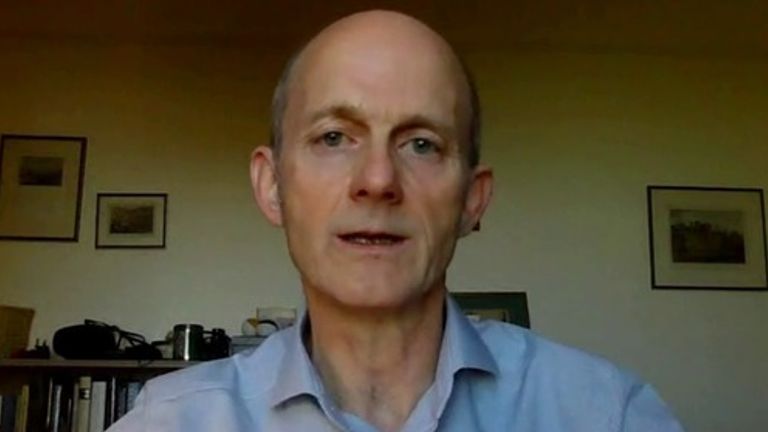
It will be led by Philip Rycroft, the former permanent secretary of the Brexit department.
Politics latest: Who could lead Labour instead of Starmer?
The inquiry is a direct response to the jailing of Nathan Gill, the former leader of Reform UK in Wales, who admitted accepting tens of thousands of pounds in cash to make pro-Russian statements to the media and European Parliament.
In this case, officers said that they believed some individuals had a direct link to Vladimir Putin.
Communities Secretary Steve Reed, who announced the inquiry to the Commons on Tuesday, wants Mr Rycroft to assess how well the rules work at the moment and promised the report will be published in full.
Mr Reed told MPs that the “conduct [of Gill] is a stain on our democracy”.
“The independent review will work to remove that stain,” he said.
The review could then lead to changes in the Elections Bill, due this spring, which could significantly change the way elections are financed.
Tuesday’s announcement is likely to ignite a firestorm of criticism.
Among the changes that could result from the Rycroft report could be a clampdown on cryptocurrency donations, which Reform UK leader Nigel Farage has said in the past would be a direct attack on his party.
It could introduce new rules for donations to thinktanks, which fall outside any regulatory regime at the moment, and could see new rules around foreign donations.
Philip Rycroft will carry out the review
Foreign donors can effectively give money if they have a trading UK subsidiary at the moment.
The government has already promised to clamp down on “shell” companies, but this could give more clarity over how this will work.
It could also look at funding of “troll farms” – vast banks of social media accounts based overseas designed to try and sway public opinion as part of state disinformation campaigns.
However, the financial affairs of and donations to Labour MPs could be in the scope of the review, and those named in the report could face fresh disciplinary consequences.
The government also singled out Christine Lee, the UK-based lawyer accused of working covertly on behalf of the Chinese Communist Party, as another case of concern.
Christine Lee is accused of working on behalf of the CCP
Nevertheless, other parties are likely to suggest this is an attempt to change the donation rules in Labour’s favour, after promising to lower the voting age to 16 and cancelling some mayoral elections because of a local government re-organisation.
The review will invite all party leaders to take part in “in-depth assessment of the current financial rules and safeguards and offer recommendations to further mitigate risks from foreign political interference”.
Mr Rycroft cannot compel politicians to give evidence, but he will have access to the security services, though the extent of their cooperation is unclear.
The conduct around the Brexit referendum has been specifically excluded in the terms of reference, and Mr Rycroft will be instructed to focus on more “recent” cases, although there is no specific start date.
The 12-week timeline for the inquiry, alongside the lack of statutory powers, is likely to make it hard for Mr Rycroft to uncover substantial new incidents of bribery or corruption and prove them to a standard necessary to put details in the public domain.
The publication date, at the end of March, comes just five weeks before local elections in which Reform UK is expected to do well, and opposition politicians are likely to question the timing.
Mr Rycroft has previously locked horns with Boris Johnson.
He argued that, at times, Mr Johnson was a PM who “only speaks for England”, his government was “not sensitive to the niceties of constitutional convention” and had “imperious disregard” for devolved policies, fuelling the breakup of the UK.
In June last year, just before the election, when Rishi Sunak was PM, he signed a letter to The Times which said: “Trust in politics, and in the people and institutions of public life, is at an all-time low.
“This is a serious problem for the health of our democracy and is indicative of the need for substantial improvement in the governance of the UK.”
Mr Rycroft has previously expressed his caution about the relationship between big tech and politics, telling Sky News two years ago: “Politicians do have to be a little bit careful in this space.
“Nobody’s elected Elon Musk, his opinions are those of a businessman, he is not a statesman.
“Clearly, they can court business people for their investment, but they shouldn’t look as though they’re kowtowing to them in terms of their regulatory concepts.
“They should listen to their views, but it should be democratically elected politicians that take those really, really important decisions, and let’s hope that’s the case in the UK.”
It comes as Reform and the Conservatives both received significantly higher donations than Labour in the first three quarters of this year.
They included the largest ever political donation from a living person: £9m to Reform UK from British-Thai businessman Christopher Harborne.
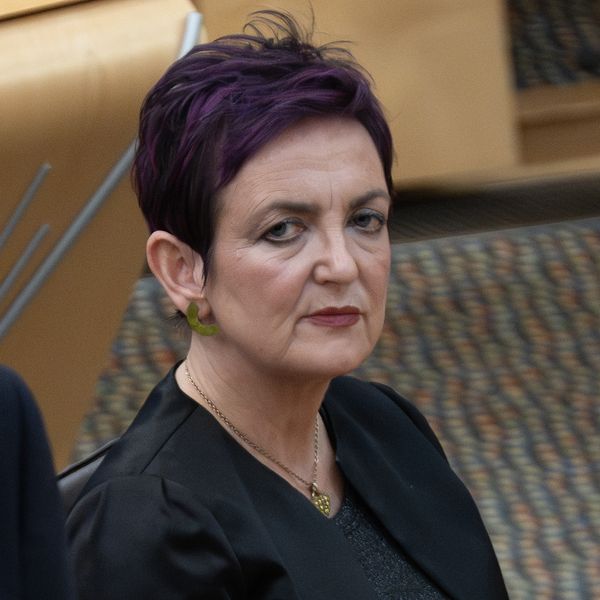
Scotland’s justice secretary has survived a vote of no confidence amid claims she misrepresented a leading expert on grooming gangs and therefore misled parliament.
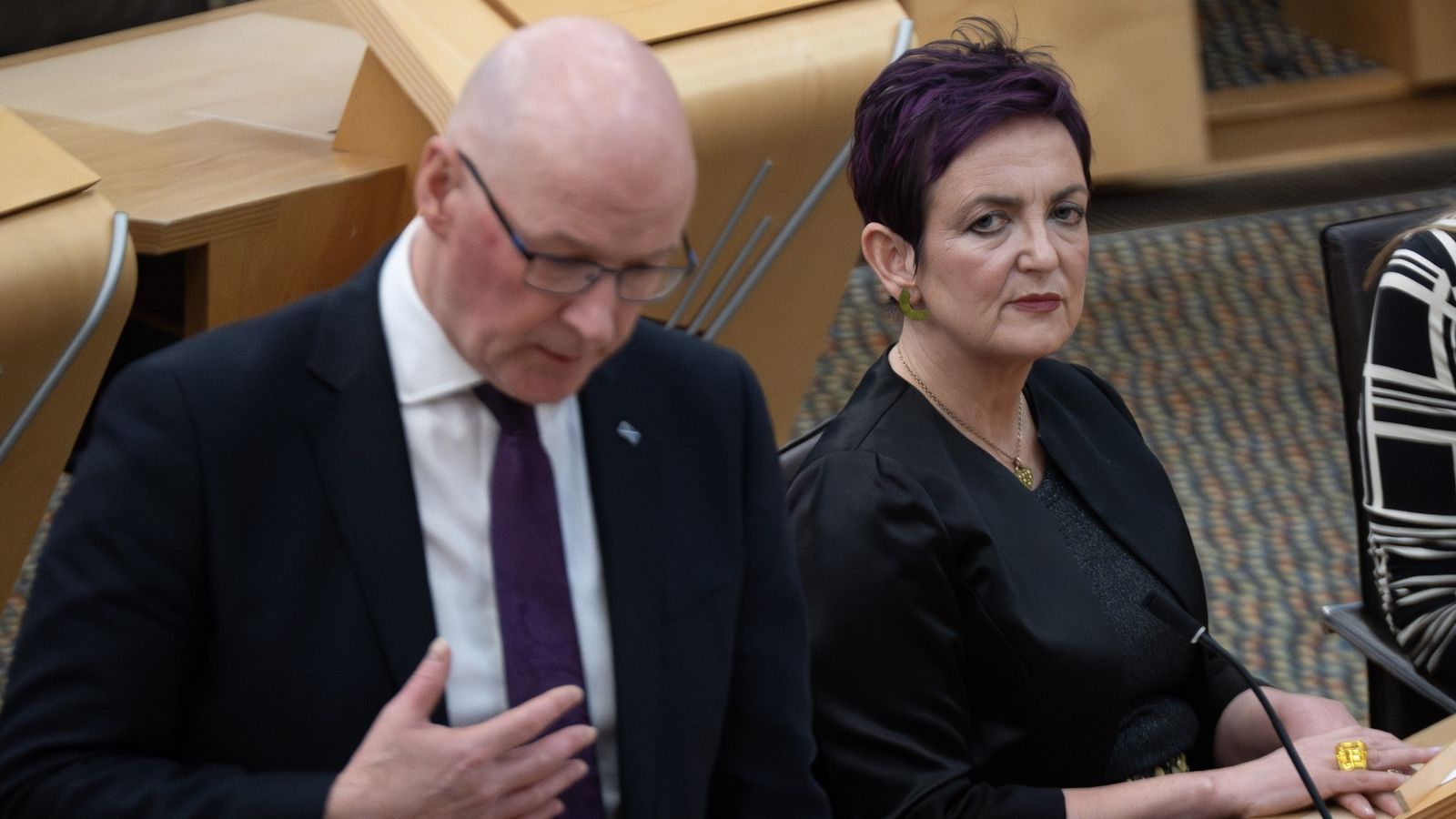
MSP Angela Constance has ignored calls to stand down and has First Minister John Swinney’s full backing in the wake of comments she made about Professor Alexis Jay.
Mr Swinney led her defence, describing her as a “sincere minister” who was “getting on with the job of making Scotland safer”.
Both Scottish Labour and the Scottish Conservatives lodged motions of no confidence, with a debate held at Holyrood on Tuesday afternoon.
Scottish Labour, the Scottish Tories and the Scottish Liberal Democrats joined forces to vote against Ms Constance, but the motion failed due to the backing of the SNP and Scottish Greens.
Justice Secretary Angela Constance at Holyrood on Tuesday. Pic: PA
MSP Russell Findlay, leader of the Scottish Conservatives, said: “Shameless SNP and Green MSPs put partisan politics before truth and integrity, to the understandable fury of grooming gang victims.
“To any reasonable person, Angela Constance’s position is untenable. She misled parliament by misrepresenting Professor Jay, tried to cover it up and then publicly lied after being caught.
“She twisted Professor Jay’s words to reject our calls for a Scottish grooming gangs inquiry and then failed to correct the record.
“It’s an open-and-shut case of a ministerial code breach for which she should lose her job.”
The row revolves around a comment made by Ms Constance as MSPs debated the Victims, Witnesses and Justice Reform (Scotland) Bill in September.
Amid a failed Scottish Conservative amendment for a public inquiry to be established into grooming gangs in Scotland, Ms Constance insisted Professor Jay agreed with her that such a probe was not needed.
However, emails made public by the Scottish government last week revealed the professor – who led the Independent Inquiry into Child Sexual Exploitation in Rotherham in 2014 – later contacted Ms Constance to say she would “appreciate” her position “being clarified”.
Professor Jay added that her comments quoted by Ms Constance had “nothing to do” with the situation in Scotland.
Read more: Scottish government orders review of grooming gangs evidence
Scottish Labour leader Anas Sarwar said he supported the motion as “victims and survivors of grooming gangs and child sexual exploitation have lost confidence in this justice secretary”.
He added: “The justice secretary misrepresented Professor Jay’s views in order to find an excuse not to have an inquiry into grooming gangs.
“Victims and survivors should be able to rely on their justice system, and their government, to tell the truth, to act with integrity and to put them first.
“On this, the justice secretary has failed.”
👉 Listen to Sky News Daily on your podcast app 👈
During First Minister’s Questions last week, Mr Swinney claimed Ms Constance “was making a general comment” on the situation as he gave his justice secretary his full backing.
He reiterated his support for Ms Constance during the debate, saying: “The cabinet secretary in the debate in September did not state that Professor Jay was speaking directly about the amendment.
“She made a general point drawing on the publicly stated views of Professor Jay.
“But I acknowledge that members of parliament and members of the public will draw different conclusions from the words we all use.”
Mr Swinney described Ms Constance as a “sincere minister who would never address parliament in a way that would in any way mislead parliament or the public”.
The first minister added: “She’s never shied away from asking tough questions about our approach to justice.
“Nor has she ever avoided tackling some of the biggest issues that we face.
“For these reasons, Angela Constance has my full confidence as justice secretary.
“She’s getting on with the job of making Scotland safer, and I urge members to enable her to continue doing that by rejecting this motion today.”
The motion was defeated by 57 votes to 67, with one abstention
-
 Sports2 years ago
Story injured on diving stop, exits Red Sox game
-
 Sports3 years ago
‘Storybook stuff’: Inside the night Bryce Harper sent the Phillies to the World Series
-
 Sports2 years ago
Game 1 of WS least-watched in recorded history
-
 Sports3 years ago
Button battles heat exhaustion in NASCAR debut
-
 Sports3 years ago
MLB Rank 2023: Ranking baseball’s top 100 players
-
Sports4 years ago
Team Europe easily wins 4th straight Laver Cup
-
 Environment3 years ago
Japan and South Korea have a lot at stake in a free and open South China Sea
-
 Environment1 year ago
Here are the best electric bikes you can buy at every price level in October 2024