Connect with us

Published

on

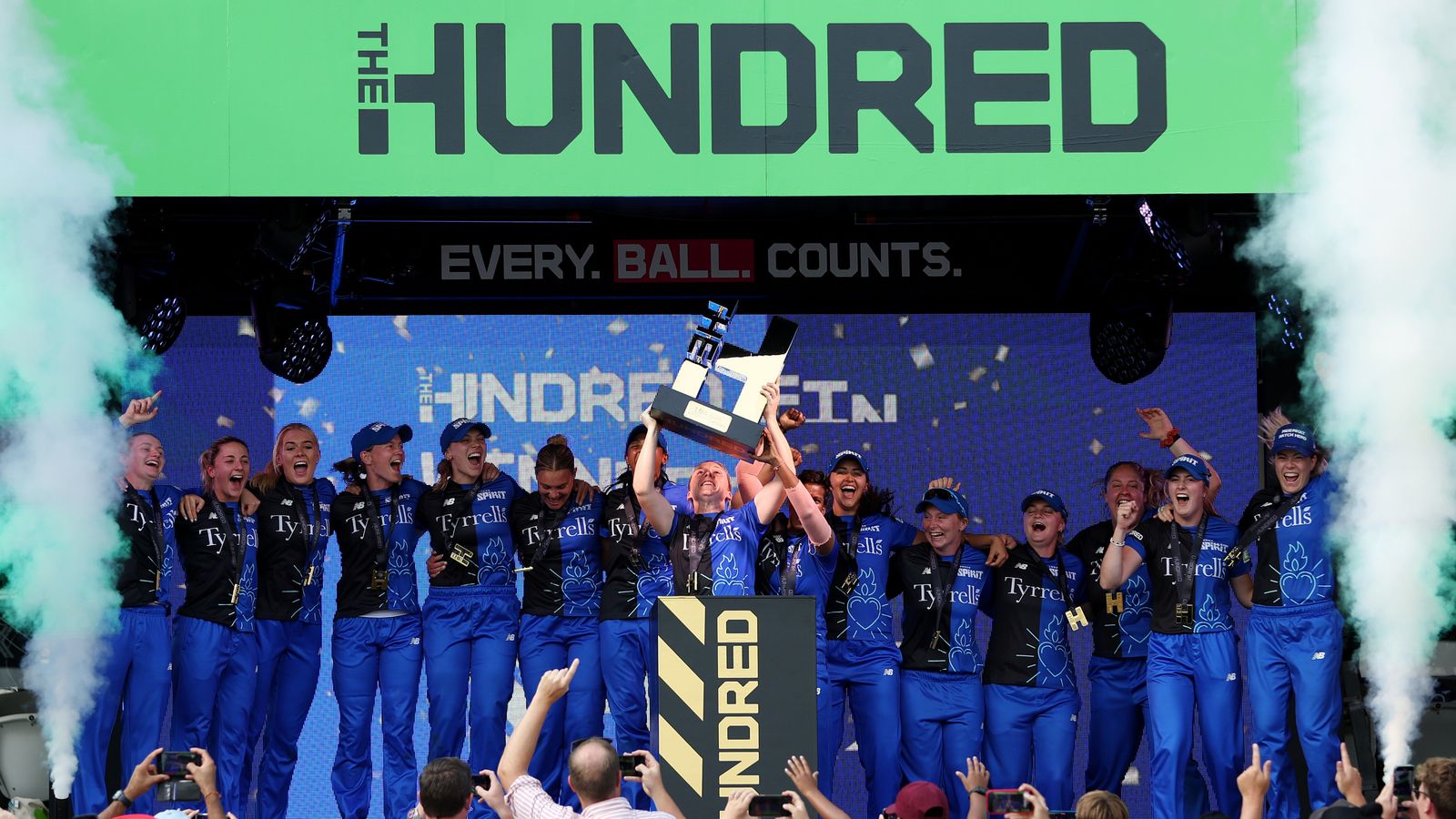
A group of technology billionaires including the bosses of Google and Microsoft have triumphed in an auction of the Lords-based London Spirit cricket team in a deal which will set a record benchmark for the sale of a sporting franchise.

Sky News can exclusively reveal that the consortium led by Nikesh Arora, the chief executive of Palo Alto Networks, and including Google’s Sundar Pichai and Microsoft’s Satya Nadella, saw off fierce competition during a live auction conducted by the England and Wales Cricket Board on Friday afternoon.

The deal dwarfs a £123m transaction struck on Thursday for the Oval Invincibles franchise by the ultra-rich Ambani family, and means the ECB will receive proceeds from London Spirit of about £145m.

That will take the total proceeds to the ECB – for distribution throughout the sport – after three of the eight franchise sales to close to £250m.

Money blog: Cheap supermarket tea beats Yorkshire

The blockbuster price underscores the intensity of the bidding for the most prestigious name in the Hundred tournament, allied to Lords’ enormous sporting heritage.

One source said the deal represented a world record for the price it attached to London Spirit as a multiple of the asset’s five-year forward profit projections.

More on Cricket

Other investors in the winning consortium are said to include Egon Durban, co-chief executive of Silver Lake, the west coast-based private equity backer of New Zealand Rugby and the RAC breakdown recovery service.

The other bidders in the London Spirit process were a vehicle controlled by Todd Boehly, a shareholder in Chelsea Football Club; members of the Manchester United-owning Glazer family; and RPSG Group, the owner of the Indian Premier League team Lucknow Super Giants.

RPSG Group and the tech billionaires are understood to have engaged in a bidding war for nearly three hours before the latter group won, according to insiders.

The ECB’s stake in Birmingham Phoenix was sold to the owners of Birmingham City Football Club, Knighthead Capital, on Thursday in a deal worth over £80m.

Stakes in Northern Superchargers and Southern Brave, among others, will be auctioned next week.

Under the ECB’s plans, it intends to sell its 49% holding in each of the eight teams with the counties left to decide whether they wish to offload any of their 51% stakes.

The price of London Spirit means the ECB’s original financial projections will be blown out of the water, with the three franchises sold to date valued in aggregate at around £500m.

Bidders in auctions with at least three participants are able to submit binding offers at 15-minute intervals, and in increments of at least £3m.

Losing bidders in each franchise may be given the opportunity to participate in the remaining processes, although the mechanics of such a scenario were unclear on Wednesday.

For franchises with only two shortlisted bidders, the auction will involve a straightforward sealed bid shootout.

The proceeds will be distributed between the hosts, non-host counties and the grassroots game.

A bigger-than-expected windfall from the process could offer a financial lifeline to a number of cash-strapped counties, with part of the proceeds likely to be used to pay down debt.

Concerns have been raised, however, that windfalls from the Hundred auction will not deliver a meaningful improvement in counties’ long-term financial sustainability.

The outcome of the Hundred auction is also likely to intensify other searching questions about the future of cricket, as the Test format of the game struggles for international commercial relevance against shorter-length competition.

The Hundred auction is being handled by bankers at Raine Group, the same firm which oversaw the sale of large stakes in both Manchester United and Chelsea in recent years.

The ECB declined to comment.

Continue Reading

Business

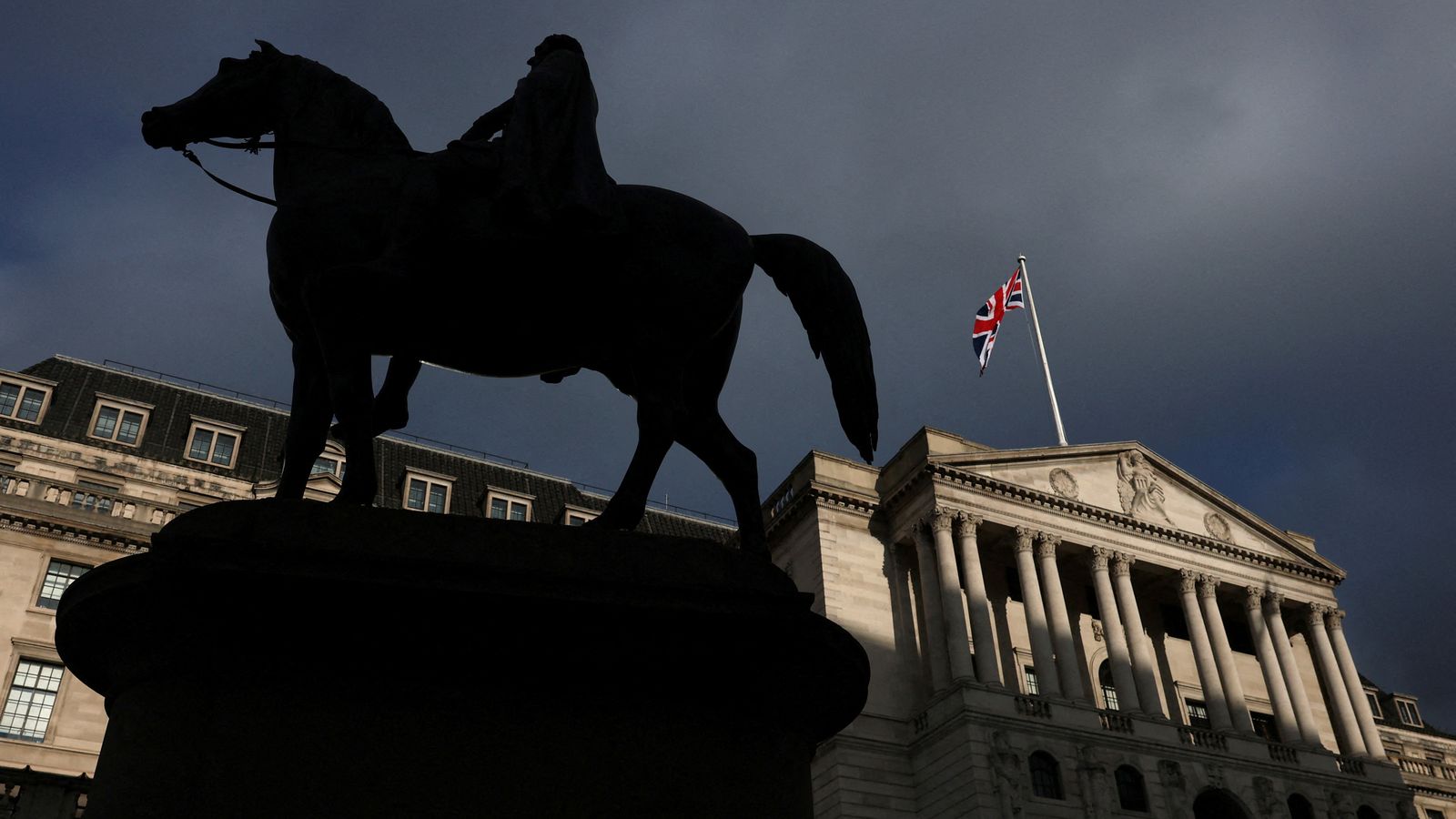
UK economy shrank by 0.1% in October, official figures show

Published

on

By

UK economy shrank by 0.1% in October, official figures show

The UK economy contracted by 0.1% in October, according to official figures.

The surprise fall in gross domestic product (GDP) – a measure of economic output – comes after a similar unexpected 0.1% drop in September and 0% growth in August.

Economists polled by the Reuters news agency had predicted that October GDP would grow by 0.1%.

The figures, from the Office for National Statistics (ONS), represent more bad news for the chancellor over the state of the UK economy.

Commentators had warned that consumer spending was likely to be restrained in the run-up to November’s budget, amid concerns about the impact of Rachel Reeves’s potential measures on households and businesses.

UK GDP has also been hit hard by disruption to car production caused by a cyber attack on Jaguar Land Rover.

The ONS said that during October, the UK’s services sector fell by 0.3%, while construction was down 0.6%. However, production grew by 1.1%.

It found that GDP on a rolling three-month basis, to October, also fell by 0.1%.

Read more from Sky News:
Appeal court delay for first Post Office Capture case

Mail owner lines up NatWest to help fund Telegraph bid
Burger King UK lands new backing

The ONS’s director of economic statistics, Liz McKeown, said: “Within production, there was continued weakness in car manufacturing, with the industry only making a slight recovery in October from the substantial fall in output seen in the previous month.

“Overall services showed no growth in the latest three months, continuing the recent trend of slowing in this sector. There were falls in wholesale and scientific research, offset by growth in rental and leasing and retail.”

Interest rate cut ‘nailed on’

Commentators also blamed rumours and leaks in the run-up to the budget for dampening demand.

Scott Gardner, from banking giant JP Morgan, said that despite expectations of a return to growth, the economy continued to “battle a period of inconsistent productivity”.

He added: “Speculation about potential budget announcements had a numbing effect on consumers and businesses in the lead up to the chancellor’s speech at the end of November.”

Suren Thiru, from the Institute of Chartered Accountants, said the data increased the likelihood of the Bank of England cutting interest rates next week.

He said: “With these downbeat figures likely to further fuel fears among rate-setters over the health of the UK economy, a December policy loosening looks nailed on, particularly given the likely deflationary impact of the budget.”

Figures ‘extremely concerning’

Barret Kupelian, chief economist at PwC, said that while some of the blame could be attributed to the Jaguar Land Rover cyber attack, “the bigger story is that speculation around the autumn budget kept households and businesses in wait-and-see mode”.

He added: “Given the timing of the budget, November’s GDP print is likely to look similarly subdued before any post-budget effects start to show up.”

Sir Mel Stride, the Tory shadow chancellor, described the figures as “extremely concerning”, claiming they were “a direct result of Labour’s economic mismanagement”.

A Treasury spokesperson said: “We are determined to defy the forecasts on growth and create good jobs, so everyone is better off, while also helping us invest in better public services.”

Continue Reading

Business

Appeal court delay for first Capture case as Post Office requests extension

Published

on

By

Appeal court delay for first Capture case as Post Office requests extension

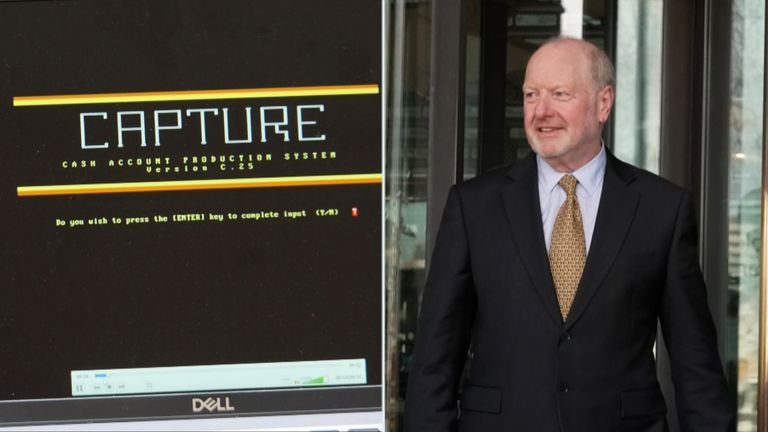
The first-ever Capture case has been delayed at the Court of Appeal as the Post Office asks for an extension to respond, Sky News has learned.

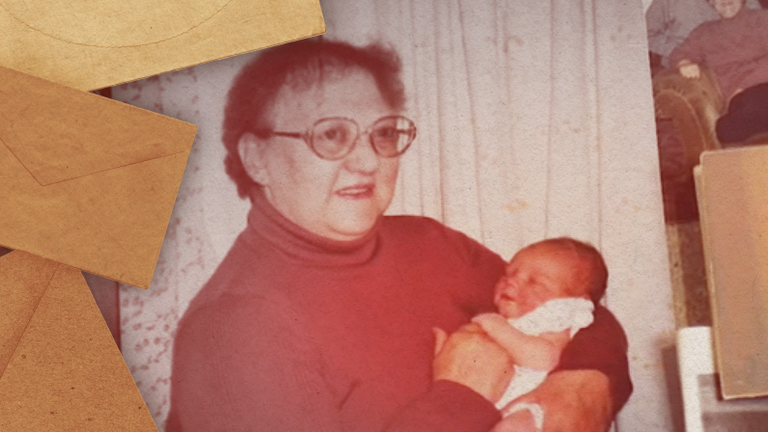
Pat Owen, a former sub postmistress who has since passed away, was convicted of stealing in 1998 based on evidence from computer software.

The system, known as Capture, was used in up to 2,500 branches in the 1990s, before the infamous Horizon system was introduced.

Hundreds of sub-postmasters were wrongfully convicted between 1999 and 2015 as part of the Horizon scandal.

Earlier this year, Sky News unearthed a 1998 report showing the Capture software was also faulty.

That report, commissioned by the solicitors acting for Mrs Owen in 1998, was served on the Post Office and may never have been seen by the jury in her case.

Please use Chrome browser for a more accessible video player

‘All we want is her name cleared’

Ms Owen was given a suspended prison sentence and fought to clear her name subsequently – but died in 2003.

More on Post Office Scandal

Her case was referred by the Criminal Cases Review Commission (CCRC) to the Court of Appeal in October.

The Post Office had until 5 December to respond to papers put forward by Mrs Owen’s defence team but they have now asked for an extension until 30 January.

Ms Owen’s daughter, Juliet Shardlow, described the family’s suffering at the lengthening wait.

“I need to emphasise the profound impact the ongoing delay is having on our family,” she said.

“The continuous uncertainty only compounds our heartache, stress, and anxiety.
Please use Chrome browser for a more accessible video player

Alan Bates: New redress scheme ‘half-baked’

“It has become the last thing I think about before I go to sleep and the first thing when I wake up.

“We have waited 27 years for justice, and this additional wait feels never-ending.”

Ms Owen’s case is the first time a conviction based on Capture has reached the Court of Appeal since the scandal was exposed.

Read more from Sky News:
Corporate manslaughter charges considered in Post Office scandal
21 ‘Capture’ cases investigated for miscarriages of justice

Lawyers have said that if Ms Owen is exonerated posthumously, it may “speed up” the handling of others.

CCRC chair Dame Vera Baird also told Sky News in the summer it could be a “touchstone case” for other victims.

The CCRC is also continuing to investigate around 30 other “pre-Horizon” convictions.

A Post Office spokesperson said: “We have sought an extension of time to fully consider and respond to the CCRC’s Statement of Reasons in Ms Owen’s case.

“We deeply regret the impact our request for further time will have on Ms Owen’s family.

“We have a duty to carefully consider the evidence presented in the Statement of Reasons submitted by the CCRC and do everything we can to fully assist the Court when it considers this conviction.”

Meanwhile, the first-ever redress scheme for victims of the Post Office Capture IT scandal was launched this autumn.

The Capture Redress Scheme will provide payments of up to £300,000, and more in “exceptional” cases, to former postmasters who suffered financial losses.
Continue Reading

Business

Daily Mail owner lines up NatWest to help fund £500m Telegraph bid

Published

on

By

Daily Mail owner lines up NatWest to help fund £500m Telegraph bid

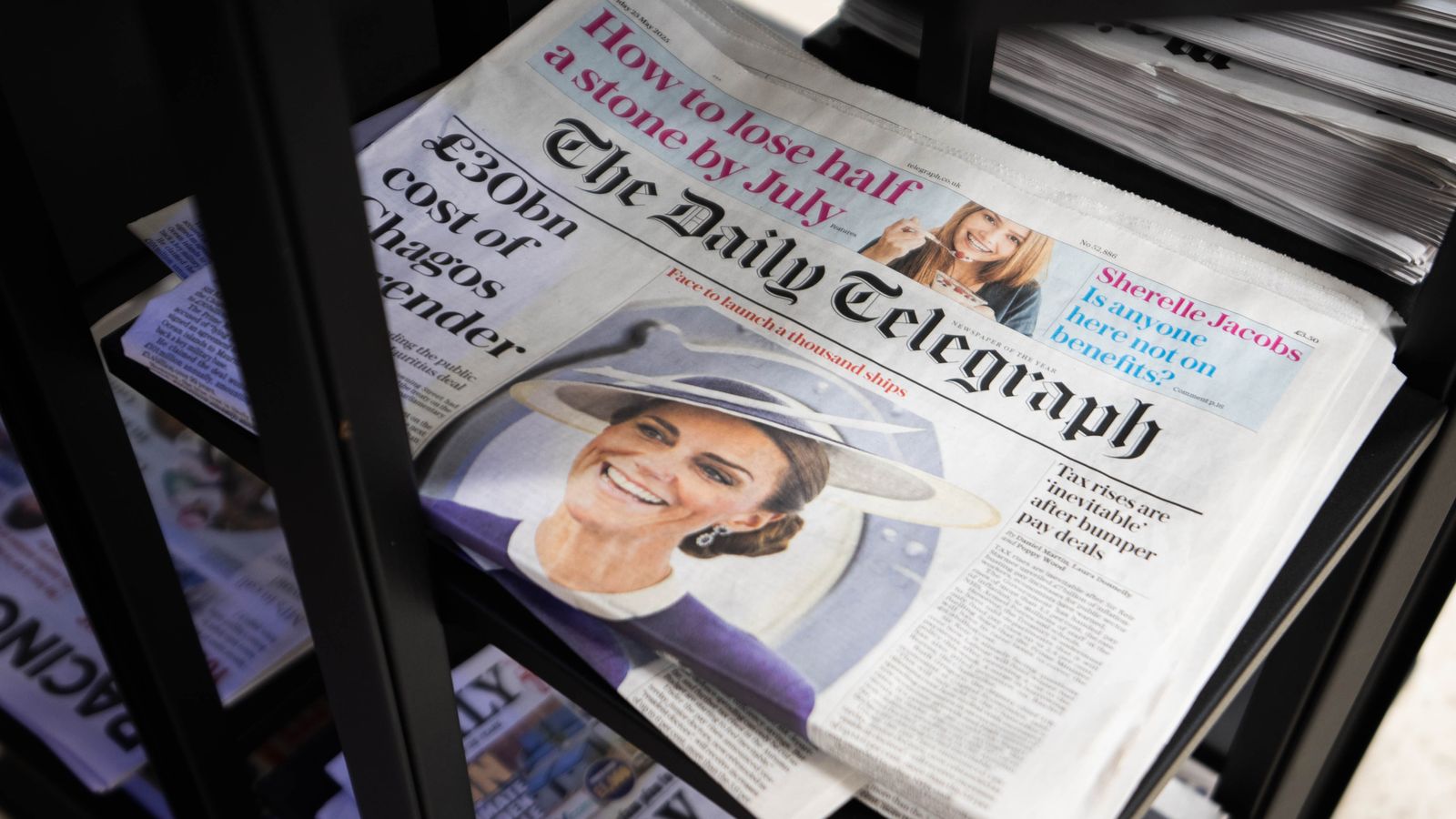
The owner of the Daily Mail is lining up one of Britain’s biggest high street lenders to help bankroll its £500m deal to buy The Daily Telegraph.

Sky News has learnt that DMGT has turned to its long-standing bank, NatWest Group, to lend a substantial chunk of the Telegraph purchase price.

City sources said on Thursday that discussions between the two were still in progress.

It was unclear how much of the consideration NatWest might finance, or how much equity DMGT intended to put up as part of the deal.

Money latest: Urgent warning over tumble dryers

Last month’s announcement that DMGT was in exclusive talks to buy Telegraph Media Group achieved a long-standing ambition of the Mail proprietor, Lord Rothermere, to own the rival right-leaning newspaper.

However, the transaction still needs to be formally submitted to the culture secretary, Lisa Nandy, who has effectively asked for details of the proposed deal by early next week.

More from Money

Lengthy inquiries by the Competition and Markets Authority and Ofcom are also expected to follow.

DMGT’s exclusivity period came within days of a consortium led by RedBird Capital Partners abandoning its own deal amid opposition from within the Telegraph newsroom.

NatWest’s position as a principal lender would, in theory, be advantageous to Lord Rothermere, who will not want to be reliant on overseas financing for the deal.

The DMGT owner had originally intended to acquire a minority stake of just under 10% in the Telegraph titles as part of the RedBird-led transaction.

A previous deal proposed by a consortium including RedBird and the Abu Dhabi state-owned investment firm IMI collapsed after the government changed the law regarding foreign state ownership of national newspapers.

“I have long admired the Daily Telegraph,” Lord Rothermere said last month.

“My family and I have an enduring love of newspapers and for the journalists who make them.

“The Daily Telegraph is Britain’s largest and best quality broadsheet newspaper, and I have grown up respecting it.

“It has a remarkable history and has played a vital role in shaping Britain’s national debate over many decades.”

If the deal is completed, it would bring the Telegraph newspapers under the same stable of ownership as titles including Metro, The i Paper and New Scientist.

DMGT said in November that it planned “to invest substantially in TMG with the aim of accelerating its international expansion”.

“It will focus particularly on the USA, where the Daily Mail is already successful, with established editorial and commercial operations.”

NatWest declined to comment.

Continue Reading

Trending