
Britain could do slimmed down trade deal with US within months, says former minister

Britain could do a slimmed down trade deal with the United States within months, the last politician to oversee negotiations with Donald Trump’s administration over a UK-US agreement has told Sky News.
Last night Sky News revealed that leading members of the Trump administration believe a trade deal with the UK could be sealed in a matter of months.
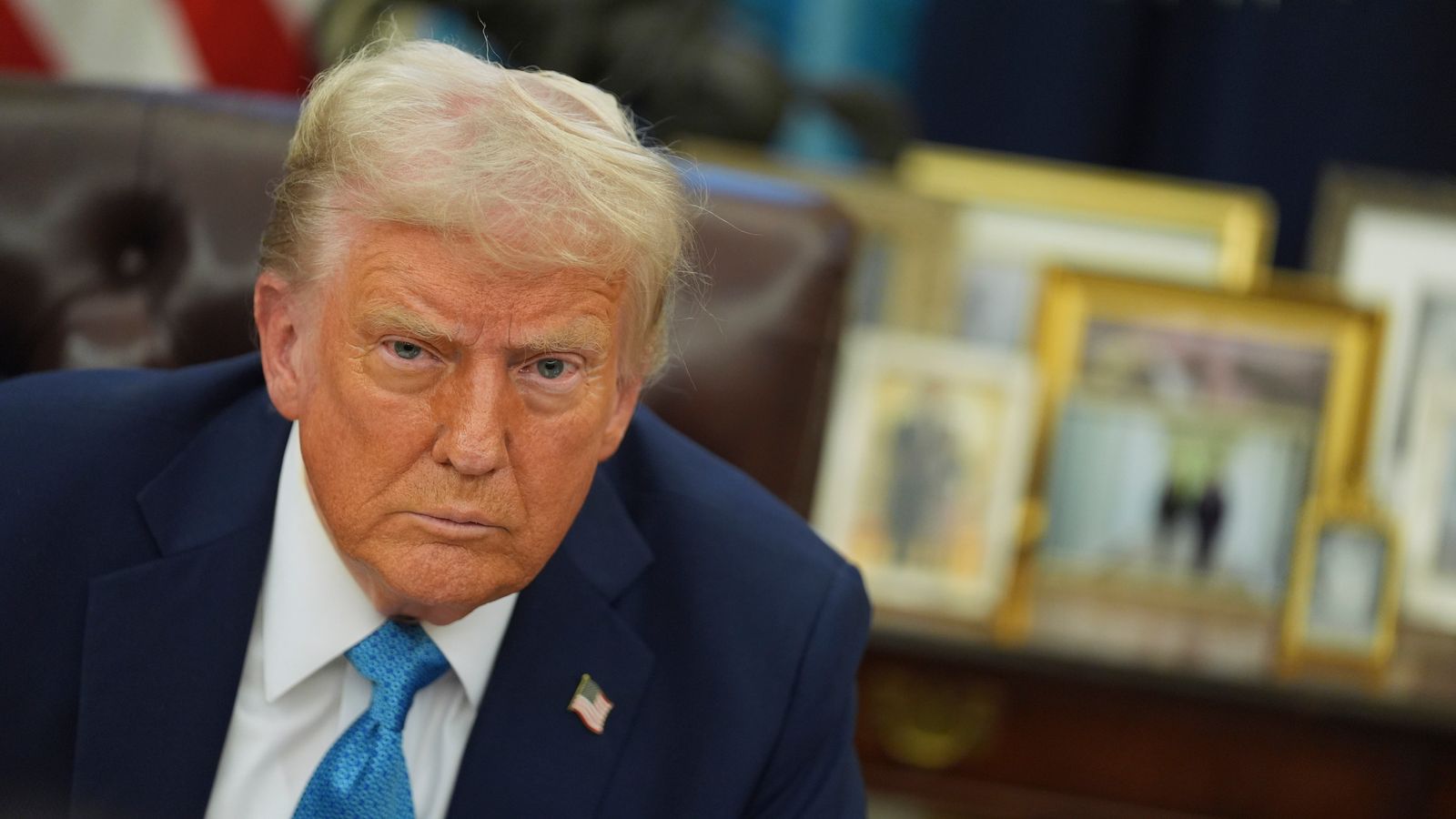
Mr Trump has singled out Keir Starmer for praise and suggested that he wanted to change UK trade policy.
Politics latest: Billions to be spent to increase state pension
Britain was negotiating a full Free Trade Agreement with Mr Trump during his first presidency, but this was junked by his successor President Biden.
The negotiations were overseen by then Tory trade secretary, Anne-Marie Trevelyan, who told Sky News that a deal could even be struck with the US before the EU-UK Trade and Cooperation Agreement is concluded.
Ms Trevelyan said about half the work on a deal had already been concluded under the Boris Johnson administration.
“I was the trade secretary just at the end of the first Trump administration, and we had already, been moving discussions, probably about halfway there. In terms of the trade negotiations.”
She said that the US can work faster than the EU on trade negotiations, and that might be concluded first.
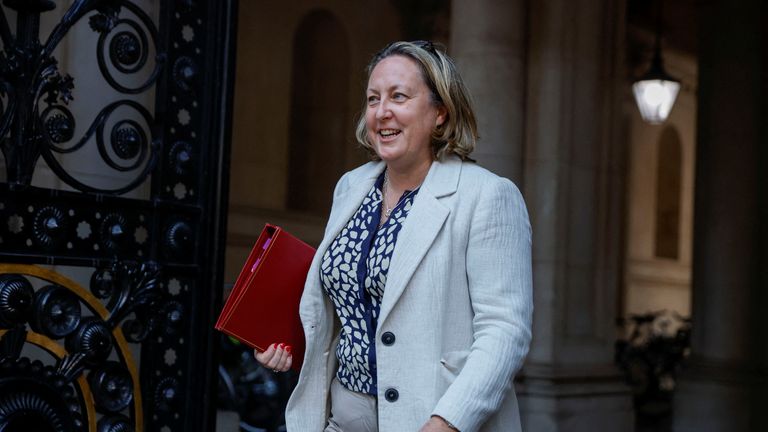
Former trade secretary Anne-Marie Trevelyan. Pic: Reuters
“I think absolutely that’s possible. I think the challenge with anything with the EU is you’re dealing with, you know, multiple countries who all have to agree. And the challenge with any trade deal, which is why TCA took a long time to negotiate to the level that we got, is that everyone’s pulling a little bit differently.”
On President Trump’s style, she said: “I think, realistically, because of the way Trump works, which is transactional but very determined, he’ll take decisions, big decisions.”
The negotiation between the UK and the US began in May 2020 when Liz Truss was trade secretary and lasted until the end of Mr Trump’s time in office in January 2021. Ms Trevelyan was trade secretary from September 2021 to September 2022.
Up to five chapters – areas of trade negotiation – had been completed but the most difficult, agriculture and trade, had not been sorted.
The United States has different food standards to the UK and EU, and is not currently able to sell into our market – which has previously been a big ask.
Trump latest: EU would respond ‘within an hour’ to Trump tariffs
However Ms Trevelyan said that omitting agriculture from the deal could get it over the line, providing there were sufficient other wins for the US.
She said that the UK and US trade deal could make a big difference.
“A UK-US trade move will be a big, punchy, broad ranging trade deal,” she said.
👉Listen to Politics At Jack And Sam’s on your podcast app👈
“I think what’s important is what are we good at? What’s the UK good at? What do we want to be able to do more? Our financial services, second only in the world to the US, are fantastic.
“(You look for) lots of things where we don’t crash into each other. Really important for success in a trade deal is where you get that complementarity.
“What is it that the US has that they want to sell to us that, you know, isn’t of concern to us? So some of the conversations with California around some of their nuts and properties like that, there’s all sorts of different pulls and pushes that you work together as a whole.”
She went on: “It’ll be everything from financial services through to whisky and everything in between. The market is enormous, important issues around metals, steel and aluminium are really important ones. So, we had got caught, when I had just come into post, actually an EU tariff last time round that President Trump was putting tariffs on people around steel aluminium.”
But Lord Kim Darroch, the UK’s ambassador to the US during Donald Trump’s first presidency, said he was sceptical about a UK-US trade deal.
Speaking to Sophy Ridge on the Politics Hub, Lord Darroch said the UK’s problems stem from the fact that food and agriculture standards are higher here than they are in the US.
He explained that there are “two big regulatory schemes” in the world, one being the EU’s and the other being America’s.
“At the moment, we are still basically aligned with the EU,” he said.
“One of the objectives of the Americans would be to pull us into their regulatory system,” he adds, and – given we do more far more trade with Europe than America – “I don’t see that being in the national interest.”
Politics
‘Shameful’ that black boys in London more likely to die than white boys, says Met Police chief
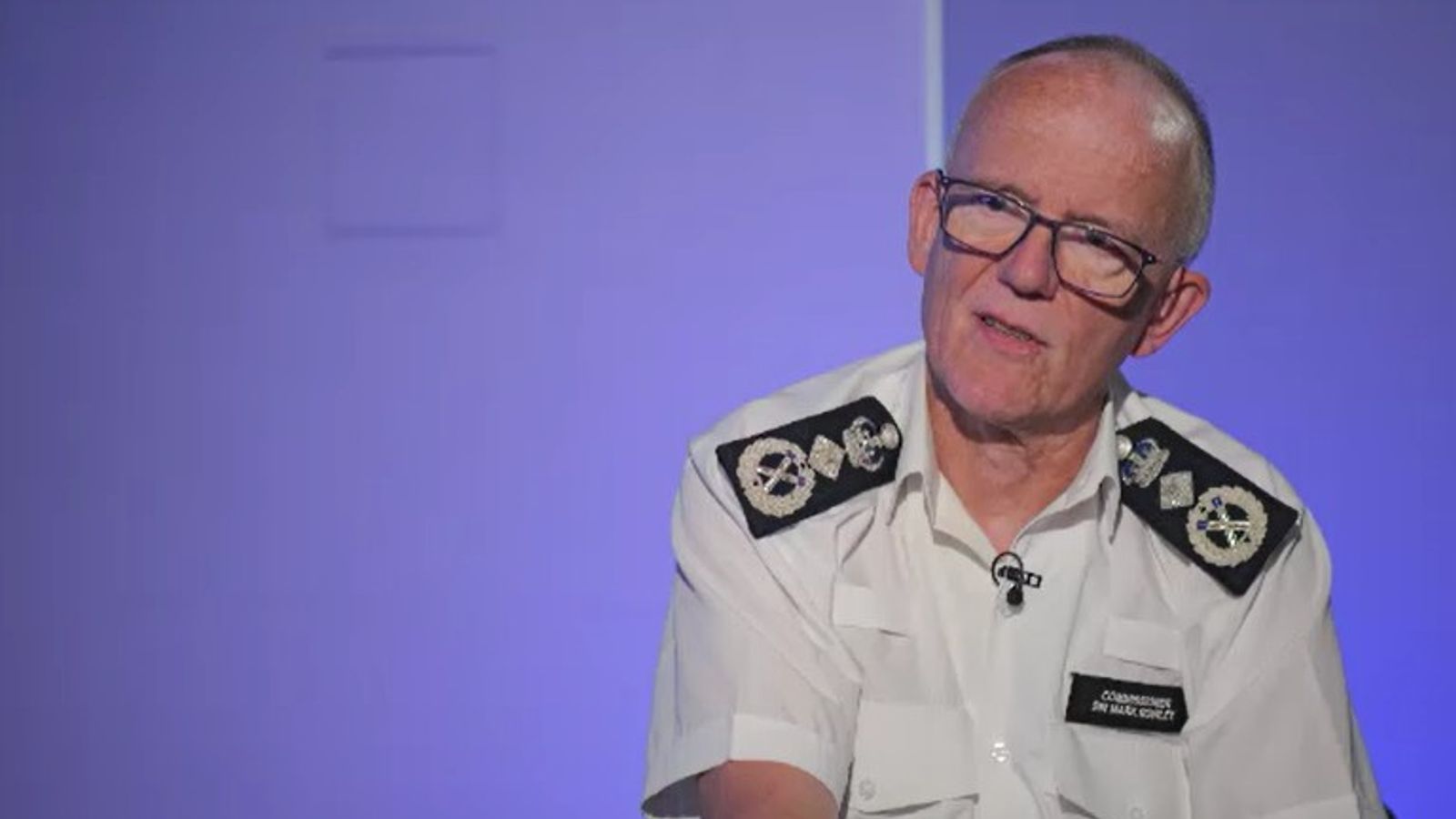
It is “shameful” that black boys growing up in London are “far more likely” to die than white boys, Metropolitan Police chief Sir Mark Rowley has told Sky News.
The commissioner told Sunday Morning with Trevor Phillips that relations with minority communities “is difficult for us”.
Sir Mark, who came out of retirement to become head of the UK’s largest police force in 2022, said: “We can’t pretend otherwise that we’ve got a history between policing and black communities where policing has got a lot wrong.
“And we get a lot more right today, but we do still make mistakes. That’s not in doubt. I’m being as relentless in that as it can be.”
He said the “vast majority” of the force are “good people”.
However, he added: “But that legacy, combined with the tragedy that some of this crime falls most heavily in black communities, that creates a real problem because the legacy creates concern.”
Sir Mark, who also leads the UK’s counter-terrorism policing, said it is “not right” that black boys growing up in London “are far more likely to be dead by the time they’re 18” than white boys.
“That’s, I think, shameful for the city,” he admitted.
The Met Police chief’s admission comes two years after an official report found the force is institutionally racist, misogynistic and homophobic.
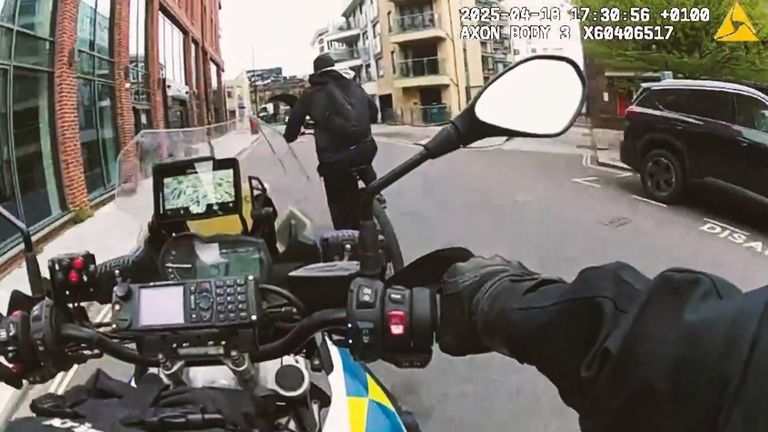
Police chase suspected phone thief
Baroness Casey was commissioned in 2021 to look into the Met Police after serving police officer Wayne Couzens abducted, raped and murdered Sarah Everard.
She pinned the primary blame for the Met’s culture on its past leadership and found that stop and search and the use of force against black people was excessive.
At the time, Sir Mark, who had been commissioner for six months when the report was published, said he would not use the labels of institutionally racist, institutionally misogynistic and institutionally homophobic, which Casey insisted the Met deserved.
However, London Mayor Sadiq Khan, who helped hire Sir Mark – and could fire him – made it clear the commissioner agreed with Baroness Casey’s verdict.
After the report was released, Sir Mark said “institutional” was political language so he was not going to use it, but he accepted “we have racists, misogynists…systematic failings, management failings, cultural failings”.
A few months after the report, Sir Mark launched a two-year £366m plan to overhaul the Met, including increased emphasis on neighbourhood policing to rebuild public trust and plans to recruit 500 more community support officers and an extra 565 people to work with teams investigating domestic violence, sexual offences and child sexual abuse and exploitation.
Watch the full interview on Sunday Morning with Trevor Phillips from 8.30am on Sunday.
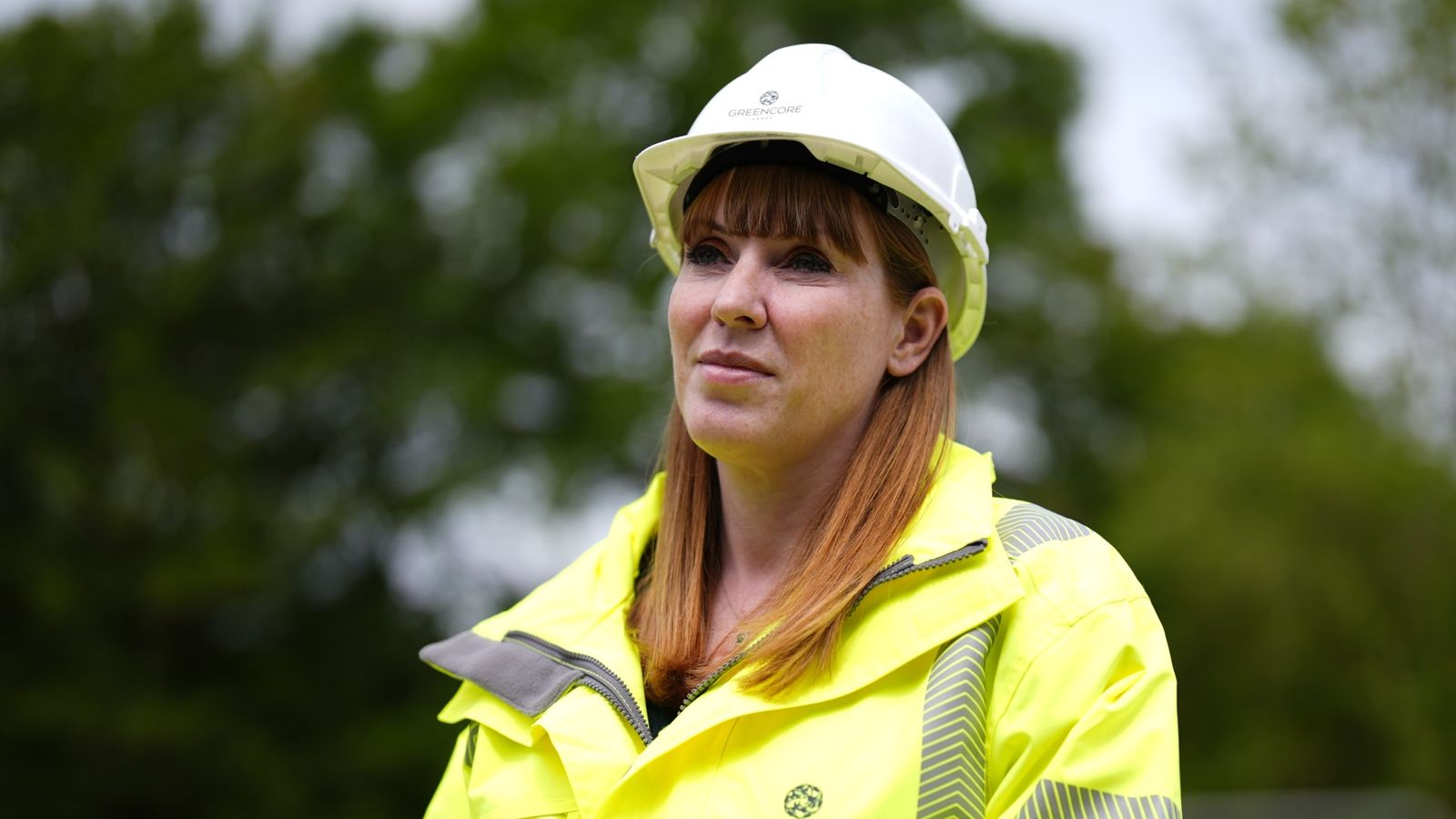
Labour’s largest union donor, Unite, has voted to suspend Deputy Prime Minister Angela Rayner over her role in the Birmingham bin strike row.
Members of the trade union, one of the UK’s largest, also “overwhelmingly” voted to “re-examine its relationship” with Labour over the issue.
They said Ms Rayner, who is also housing, communities and local government secretary, Birmingham Council’s leader, John Cotton, and other Labour councillors had been suspended for “bringing the union into disrepute”.
There was confusion over Ms Rayner’s membership of Unite, with her office having said she was no longer a member and resigned months ago and therefore could not be suspended.
But Unite said she was registered as a member. Parliament’s latest register of interests had her down as a member in May.
Politics latest: Italy and other EU countries have ‘huge doubts’ about legality of UK migrant deal
The union said an emergency motion was put to members at its policy conference in Brighton on Friday.
Unite is one of the Labour Party’s largest union donors, donating £414,610 in the first quarter of 2025 – the highest amount in that period by a union, company or individual.
The union condemned Birmingham’s Labour council and the government for “attacking the bin workers”.
Mountains of rubbish have been piling up in the city since January after workers first went on strike over changes to their pay, with all-out strike action starting in March. An agreement has still not been made.
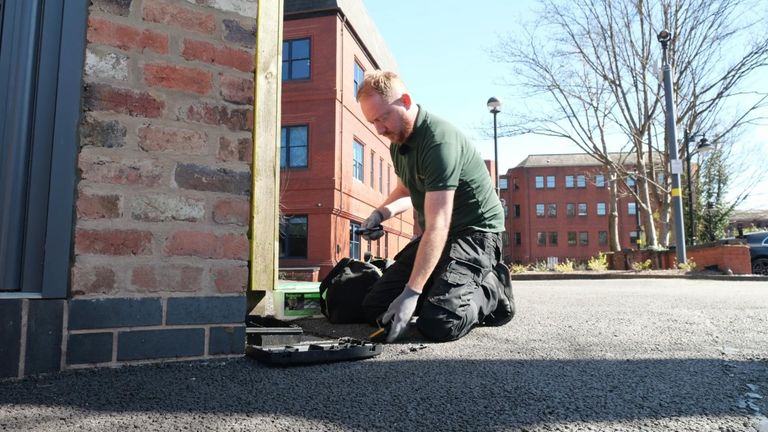
Rat catcher tackling Birmingham’s bins problem
Ms Rayner and the councillors had their membership suspended for “effectively firing and rehiring the workers, who are striking over pay cuts of up to £8,000”, the union added.
‘Missing in action’
General secretary Sharon Graham told Sky News on Saturday morning: “Angela Rayner, who has the power to solve this dispute, has been missing in action, has not been involved, is refusing to come to the table.”
She had earlier said: “Unite is crystal clear, it will call out bad employers regardless of the colour of their rosette.
“Angela Rayner has had every opportunity to intervene and resolve this dispute but has instead backed a rogue council that has peddled lies and smeared its workers fighting huge pay cuts.
“The disgraceful actions of the government and a so-called Labour council, is essentially fire and rehire and makes a joke of the Employment Relations Act promises.
“People up and down the country are asking whose side is the Labour government on and coming up with the answer not workers.”
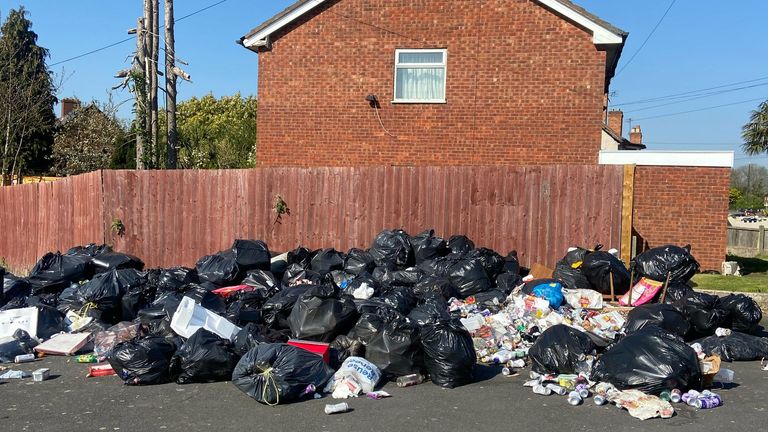
Piles of rubbish built up around Birmingham because of the strike over pay
Sir Keir Starmer’s spokesman said the government’s “priority is and always has been the residents of Birmingham”.
He said the decision by Unite workers to go on strike had “caused disruption” to the city.
“We’ve worked to clean up streets and remain in close contact with the council […] as we support its recovery,” he added.
A total of 800 Unite delegates voted on the motion.

Binance co-founder CZ has dismissed a Bloomberg report linking him to the Trump-backed USD1 stablecoin, threatening legal action over alleged defamation.
-
 Sports3 years ago
‘Storybook stuff’: Inside the night Bryce Harper sent the Phillies to the World Series
-
 Sports1 year ago
Story injured on diving stop, exits Red Sox game
-
 Sports2 years ago
Game 1 of WS least-watched in recorded history
-
 Sports2 years ago
MLB Rank 2023: Ranking baseball’s top 100 players
-
Sports4 years ago
Team Europe easily wins 4th straight Laver Cup
-
 Sports2 years ago
Button battles heat exhaustion in NASCAR debut
-
 Environment2 years ago
Japan and South Korea have a lot at stake in a free and open South China Sea
-
 Environment2 years ago
Game-changing Lectric XPedition launched as affordable electric cargo bike