

Amazon scrubs DEI mention from its annual report


A person walks by The Spheres at the Amazon.com Inc. headquarters in Seattle, Washington, on Nov. 14, 2022.
David Ryder | Getty Images News | Getty Images
Amazon has removed any references to diversity and inclusion from its most recent annual report.
The company filed its report for 2024 on Friday following the release of its fourth-quarter earnings. The prior annual report included a mention of “inclusion and diversity” in a section titled “Human Capital,” language that does not appear in the latest filing.
The previous report read, “As we strive to be Earth’s best employer, we focus on investment and innovation, inclusion and diversity, safety, and engagement to hire and develop the best talent.”
Now that section reads, “We strive to be Earth’s best employer,” and says the company relies on “numerous and evolving initiatives to implement this objective.”
The change comes after Amazon recently halted some of its diversity, equity and inclusion, or DEI, programs. Candi Castleberry, Amazon’s vice president of inclusive experiences and technology, told employees in a December memo that the company was in the process of “winding down outdated programs and materials” as part of a broader review of hundreds of initiatives.
Amazon also edited a public-facing webpage that states its policy positions to trim its messaging around DEI issues. Previously, there were separate sections dedicated to “Equity for Black people,” “Diversity, equity and inclusion” and “LGBTQ+ rights.” Those sections were all consolidated into a single paragraph, while any mention of the term “transgender” was removed.
Companies in Silicon Valley and beyond have been moving swiftly away from DEI policies since President Donald Trump returned to the White House. Google scrapped language around DEI goals in its annual report, and Meta last month announced it was retreating from internal programs designed to increase its hiring of diverse candidates.
McDonald’s, Walmart and Target have also ended or changed some programs, while other companies including Disney, GM, GE and Pepsi are removing mentions of DEI in their annual filings, NPR reported.
Some companies have steered clear of the backlash against DEI. Costco rejected a shareholder proposal to report on the risks of its DEI policies to its stock price. Apple is also resisting a similar proposal. The CEOs of Pinterest, JPMorgan Chase and Goldman Sachs have indicated they plan to stand by their DEI policies.
Amazon, the nation’s second-largest employer behind Walmart, had more than 1.5 million employees as of Dec. 31. In recent years, Amazon had pledged to double the number of Black employees in senior leadership roles and hire 30% more Black people as corporate employees in the U.S.
The changes in its approach to DEI come as the company pursues a massive investment in artificial intelligence, which CEO Andy Jassy calls a “once in a lifetime opportunity.” On its earnings call on Thursday, Amazon said it plans to boost its capital expenditures to $100 billion in 2025 with a focus on AI. That is the biggest capex commitment among the megacap tech companies.
WATCH: Amazon falls on guidance
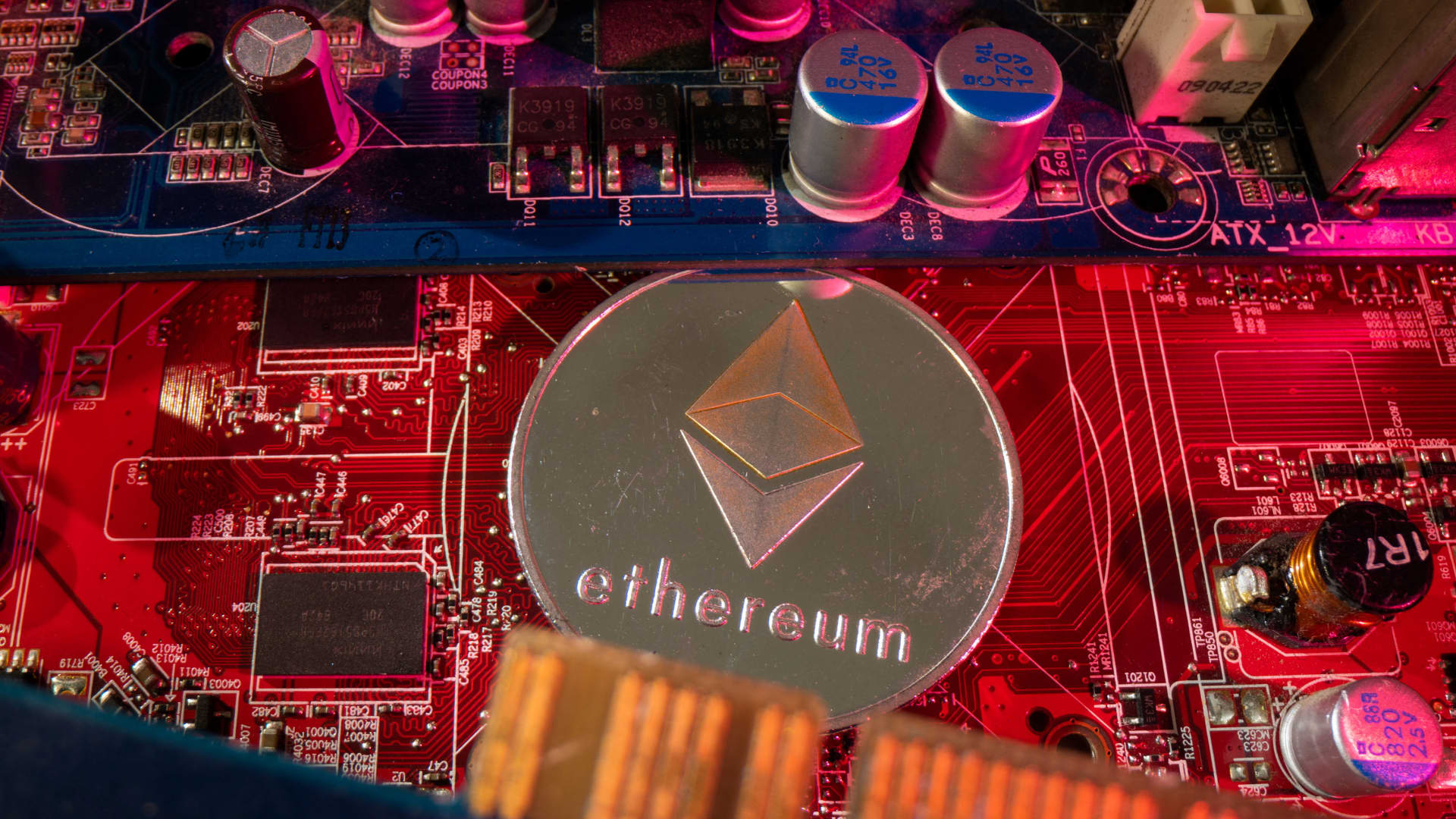

A representation of cryptocurrency Ethereum is placed on a PC motherboard in this illustration taken on June 16, 2023.
Dado Ruvic | Reuters
Stocks tied to the price of ether, better known as ETH, were higher on Wednesday, reflecting renewed enthusiasm for the crypto asset amid a surge of interest in stablecoins and tokenization.
BitMine Immersion Technologies, a bitcoin miner that announced plans this week to make ETH its primary treasury reserve asset, jumped about 20%. It’s gained more than 1,000% since the announcement. Betting platform SharpLink Gaming, which has also initiated an ETH treasury strategy, added more than 11%. Bit Digital, which last week exited bitcoin mining to focus on its ETH treasury and staking plans, jumped more than 6%.
“We’re finally at the point where real use cases are emerging, and stablecoins have been the first version of that at scale but they’re going to open the door to a much bigger story around tokenizing other assets and using digital assets in new ways,” Devin Ryan, head of financial technology research at Citizens.
On Tuesday, as bitcoin ETFs snapped a 15-day streak of inflows, ether ETFs saw $40 million in inflows led by BlackRock’s iShares Ethereum Trust. ETH ETFs came back to life in June after much concern that they were becoming zombie funds.
The price of the coin itself was last higher by 5%, according to Coin Metrics, though it’s still down 24% this year.
Ethereum has been struggling with an identity crisis fueled by uncertainty about the network’s value proposition, weaker revenue since its last big technical upgrade and increasing competition from Solana. Market volatility, driven by geopolitical uncertainty this year, has not helped.
The Ethereum network’s smart contracts capability makes it a prominent platform for the tokenization of traditional assets, which includes U.S. dollar-pegged stablecoins. Fundstrat’s Tom Lee this week called Ethereum “the backbone and architecture” of stablecoins. Both Tether (USDT) and Circle‘s USD Coin (USDC) are issued on the network.
BlackRock’s tokenized money market fund (known as BUIDL, which stands for USD Institutional Digital Liquidity Fund) also launched on Ethereum last year before expanding to other blockchain networks.
Tokenization is the process of issuing digital representations on a blockchain network of publicly traded securities, real world assets or any other form of value. Holders of tokenized assets don’t have outright ownership of the assets themselves.
The latest wave of interest in ETH-related assets follows an announcement by Robinhood this week that it will enable trading of tokenized U.S. stocks and ETFs across Europe, after a groundswell of interest in stablecoins throughout June following Circle’s IPO and the Senate passage of its proposed stablecoin bill, the GENIUS Act.
Ether, which turns 10 years old at the end of July, is sitting about 75% off its all-time high.
Technology
China’s Honor launches new challenge to Samsung with thin foldable smartphone and a big battery


-
 Sports3 years ago
‘Storybook stuff’: Inside the night Bryce Harper sent the Phillies to the World Series
-
 Sports1 year ago
Story injured on diving stop, exits Red Sox game
-
 Sports2 years ago
Game 1 of WS least-watched in recorded history
-
 Sports2 years ago
MLB Rank 2023: Ranking baseball’s top 100 players
-
Sports4 years ago
Team Europe easily wins 4th straight Laver Cup
-
 Environment2 years ago
Japan and South Korea have a lot at stake in a free and open South China Sea
-
 Sports2 years ago
Button battles heat exhaustion in NASCAR debut
-
 Environment2 years ago
Game-changing Lectric XPedition launched as affordable electric cargo bike