
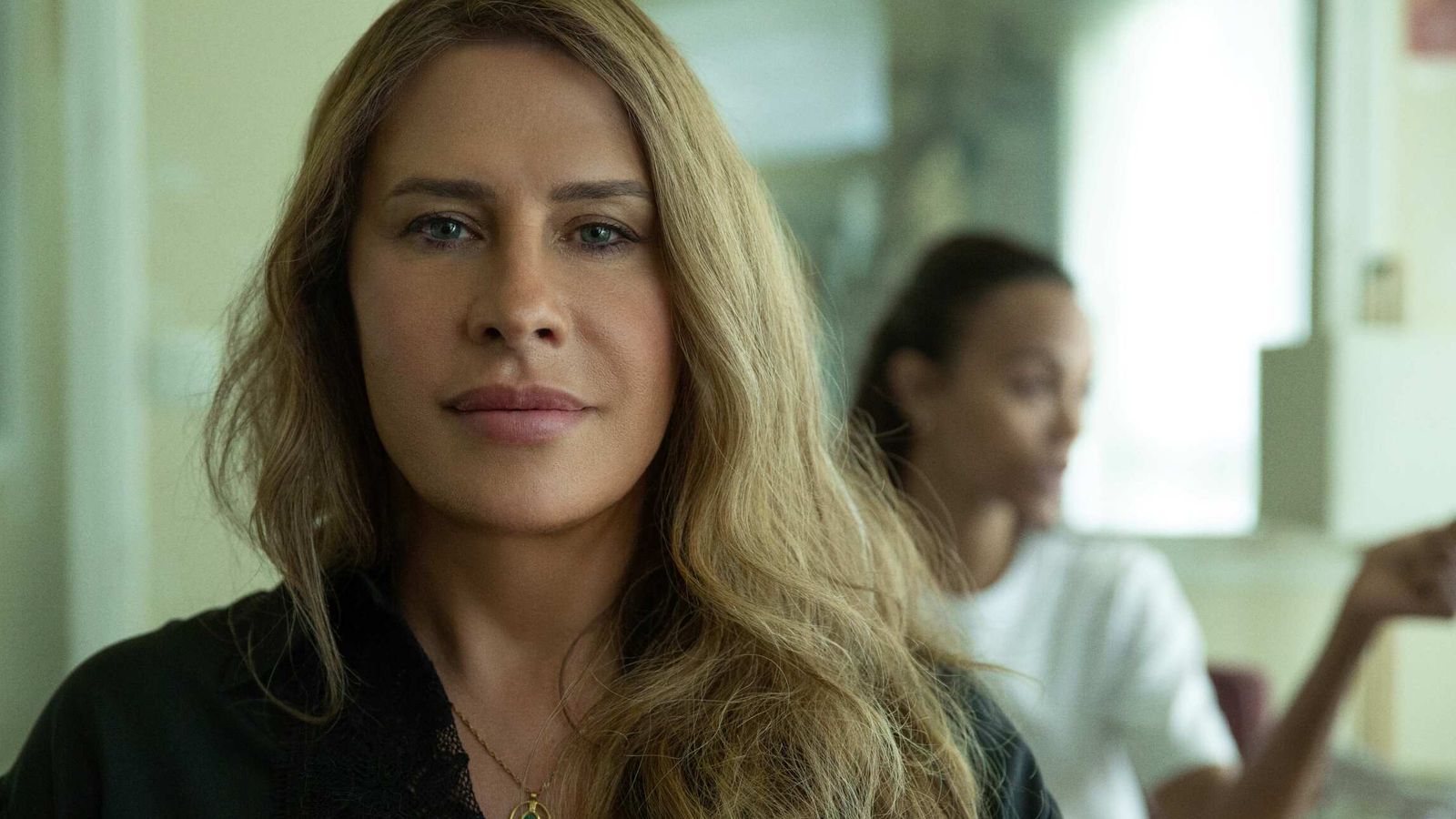
Emilia Perez was a BAFTAs and Oscars frontrunner – where did it all go wrong?


At the start of awards season, Emilia Perez looked like it could come away as one of this year’s big success stories.
First there was a slew of gongs at the Golden Globes, including best comedy or musical film, and then came the Oscar nominations – it leads the race with 13 nods, and broke the record to become the most nominated non-English language film in the history of the awards.
At the BAFTAs this weekend, it is shortlisted for 11 prizes; just pipped by papal thriller Conclave, which has 12. And star Karla Sofia Gascon has made history as a trans woman nominated for best actress at both ceremonies.
Set in Mexico but mostly filmed in France, Emilia Perez is an operatic Spanish-language musical which tells the story of a Mexican drug lord who undergoes gender affirmation surgery. In May last year, it won the Cannes Film Festival jury prize, setting it on its trajectory to 2025 awards season success.
Selena Gomez (pictured with Gascon) also stars in in the film. Pic: Page 114/ Why Not Productins/ Pathe/ France 2 Cinema/ Netflix
The film’s acknowledgement seemingly reflected the more progressive attitudes of voters in recent years – but as its profile rose, so did the scrutiny.
US LGBTQ+ advocacy and cultural change group GLAAD has described Emilia Perez as a “step backward for trans representation”, and highlighted reviews by transgender critics who “understand how inauthentic portrayals of trans people are offensive and even dangerous”.
The film has also come under fire for stereotypical depictions of Mexico and an apparent minimal inclusion of Mexican people among the main cast and crew. Of its main stars, Gascon is Spanish, US actress Zoe Saldana is of Dominican Republic and Puerto Rican descent, and Selena Gomez is American, though her father was of Mexican descent. Adriana Paz is Mexican.
In a post on X in January viewed more than 2.7m times, Mexican screenwriter Héctor Guillén shared a mock-up poster saying: “Mexico hates Emilia Pérez/ Racist Euro Centrist Mockery/ Almost 500K dead and France decides to do a musical/ No Mexicans in their cast or crew.”
While stories about “narco” crime in Latin America have long been depicted on screen, Emilia Perez has been particularly criticised for its handling of the subject. Since 2006, a bloody war between Mexican authorities and the drug cartels has raged, claiming the lives of more than 400,000 people, according to government data. More than 100,000 have gone missing.
Read more:
Mexico: Women at war
The city ravaged by a brutal and deadly drugs gang war
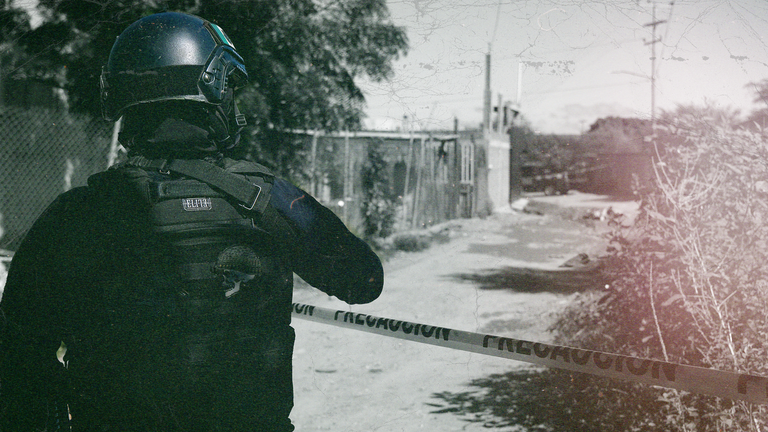
Inside Mexico’s gang war
Offensive? Or a ‘crazy marvel’?
General audiences appear to have made their thoughts clear. On film database site IMDB, Emilia Perez gets 5.5 out of 10, while its nine competitors in the running for best picture at the Oscars rate between 7.3, for The Substance, and 8.8 for I’m Still Here.
On review site Rotten Tomatoes, Emilia Perez gets a 72% from critics, but just 17% from audiences; again, the rest of its Oscars competitors range from Wicked’s 88% critics’ score to I’m Still Here’s 96%, or Nickel Boy’s 65% audience score to I’m Still Here’s 99%. The two takeways? The gap is clear whichever way you look at it; watch I’m Still Here.
That’s not to say Emilia Perez does not have its supporters. Speaking after a screening in October, Oscar-winning Mexican filmmaker Guillermo del Toro said it was “so beautiful to see a movie that is cinema“, and hailed director Jacques Audiard as “one of the most amazing filmmakers alive”.
A review in US entertainment outlet Deadline in May during Cannes last year was headlined, “Jacques Audiard’s musical is crazy, but also a marvel”, with the writer saying the “sparkle never outshines the essential seriousness of the subject”. In Variety, another US entertainment publication, the headline praised Gascon’s electrifying performance.
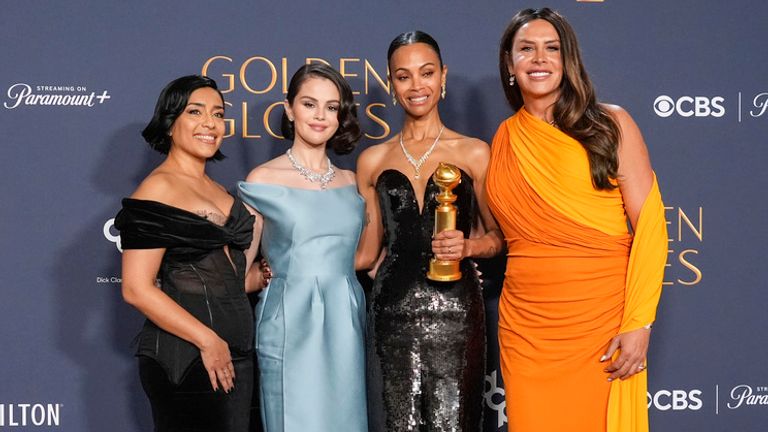
L-R: Emilia Perez stars Adriana Paz, Selena Gomez, Zoe Saldana and Karla Sofia Gascon at the Golden Globes. Pic: AP/ Chris Pizzello
Paz, who shared the Cannes best actress prize with her co-stars last year, has questioned the criticism about the film being “offensive” to Mexico, saying: “I really want to know why, because I didn’t feel that way.”
Carlos Aguilar, a film critic originally from Mexico City who writes for the Roger Ebert film website, was generally positive in his review, giving the film three out of four stars.
However, he highlights that Emilia Perez is “not a Mexican film” and notes “Mexican audiences have grown accustomed to American perspectives exploiting narco-related afflictions for narratives unconcerned with addressing its root causes”.
Questioning intentions behind these productions is valid, he says, “but to decry Audiard for partaking in the common filmmaking practice of telling stories away from what’s immediately familiar to him would seem an overly simplistic assessment”.
Karla Sofia Gascon’s resurfaced tweets
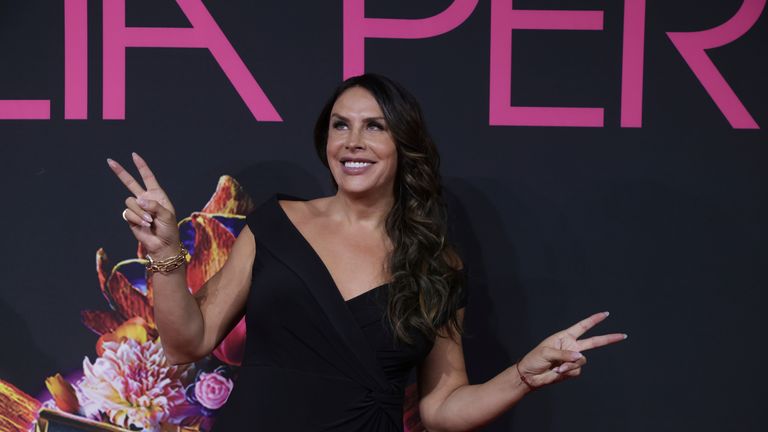
Gascon at the premiere in Mexico in January. Pic: Ismael Rosas/ EyePix/INSTARimages/ Cover Images via AP
But the criticism from some trans people and some Mexicans is not a good look for a supposedly progressive film about a trans woman in Mexico. All publicity is good publicity does not apply here.
A lot of this criticism, though, had been made before the Oscar and BAFTA nominations. Emilia Perez was still riding high at that point.
The nail in the coffin came after those nominations were announced, when offensive tweets posted by Gascon were unearthed. They were old, but not that old; the first dated back to 2016, but some were more recent.
In the since-deleted posts, Gascon took aim at Muslims’ dress, language and culture in her native Spain and suggested Islam should be banned.
And less than a month after the killing of George Floyd by a white police officer in 2020, which prompted a global reckoning about police brutality and racism, Gascon called Floyd a drug addict who “very few people ever cared” for.
Writer Sarah Hagi, who screenshotted the posts and shared them, wrote: “This is all from the star of a movie that is campaigning on its progressive values, you really gotta laugh.
Gascon, who was a regular in Mexican telenovelas before transitioning in 2018, issued an apology after the posts emerged, saying that “as someone in a marginalised community, I know this suffering all too well and I am deeply sorry to those I have caused pain”.
She added: “All my life I have fought for a better world. I believe light will always triumph over darkness.”
‘This is an opera, not a criticism of Mexico’
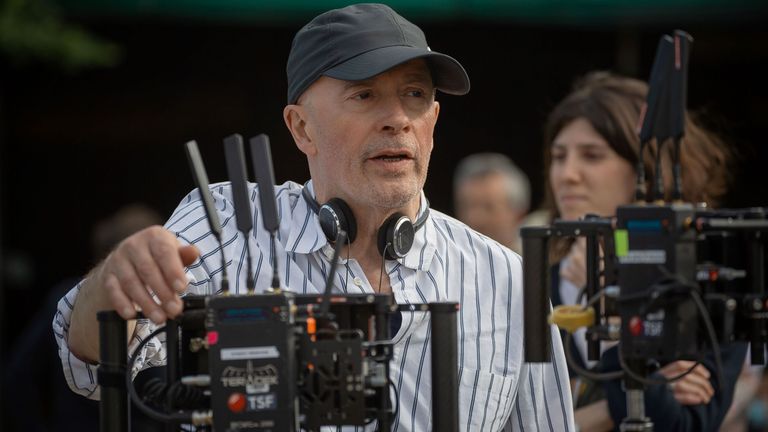
Director Jacques Audiard on set. Pic: Shanna Besson/ Page 114/ Why Not Productions/ Pathe/ France 2 Cinema/ Netflix
At the London Critics’ Circle Awards earlier this month, Gascon’s co-star Saldana called for people to be “abstract with your idea of redemption” and to keep “minds and your hearts open, always”.
But it looks like the damage has been done. While Saldana is still favourite to win best supporting actress at both the BAFTAs and the Oscars, and the film may win gongs for its music and maybe technical accolades, it seems the momentum for taking home any bigger prizes has gone.
As the backlash intensified, Audiard gave an interview to Deadline last week. He said he had not been in touch with Gascon and that he was “very sad” to see the issue “taking up all the space” around the film. What she said in her tweets was “inexcusable”, he added.
Read more:
Oscars 2025: The full list of nominees
BAFTAs 2025: The full list of nominees
The filmmaker also addressed criticism about representation of cartels and drug crime, saying: “Opera has psychological limitations. It seems I’m being attacked in the court of realism.”
Audiard said he never claimed to have made a “realistic” work or a documentary. “For example, I read a review where it said that night markets in Mexico City don’t have photocopiers. Well, in night markets in Mexico City, one also doesn’t sing and dance. You have to accept that is part of the magic here. This is an opera, not a criticism of anything about Mexico.”
Finally, asked if he had any regrets or if there was anything he would do differently, he said the one regret was that the film was not made in Mexico. “And the simple reason for that is that the film funding, the public funding for film in Mexico was not as good for us as what was available to us in France”.
Emilia Perez now heads to the BAFTAs and Oscars embroiled in controversy. But it is not the first. Remember British star Angela Riseborough’s nomination in 2023? Some, like Green Book in 2019, weathered it out to win. And Will Smith won his Oscar just moments after slapgate in 2022.
We’ll see at the BAFTAs on Sunday and at the Oscars next month, how forgiving voters will be about Emilia Perez.
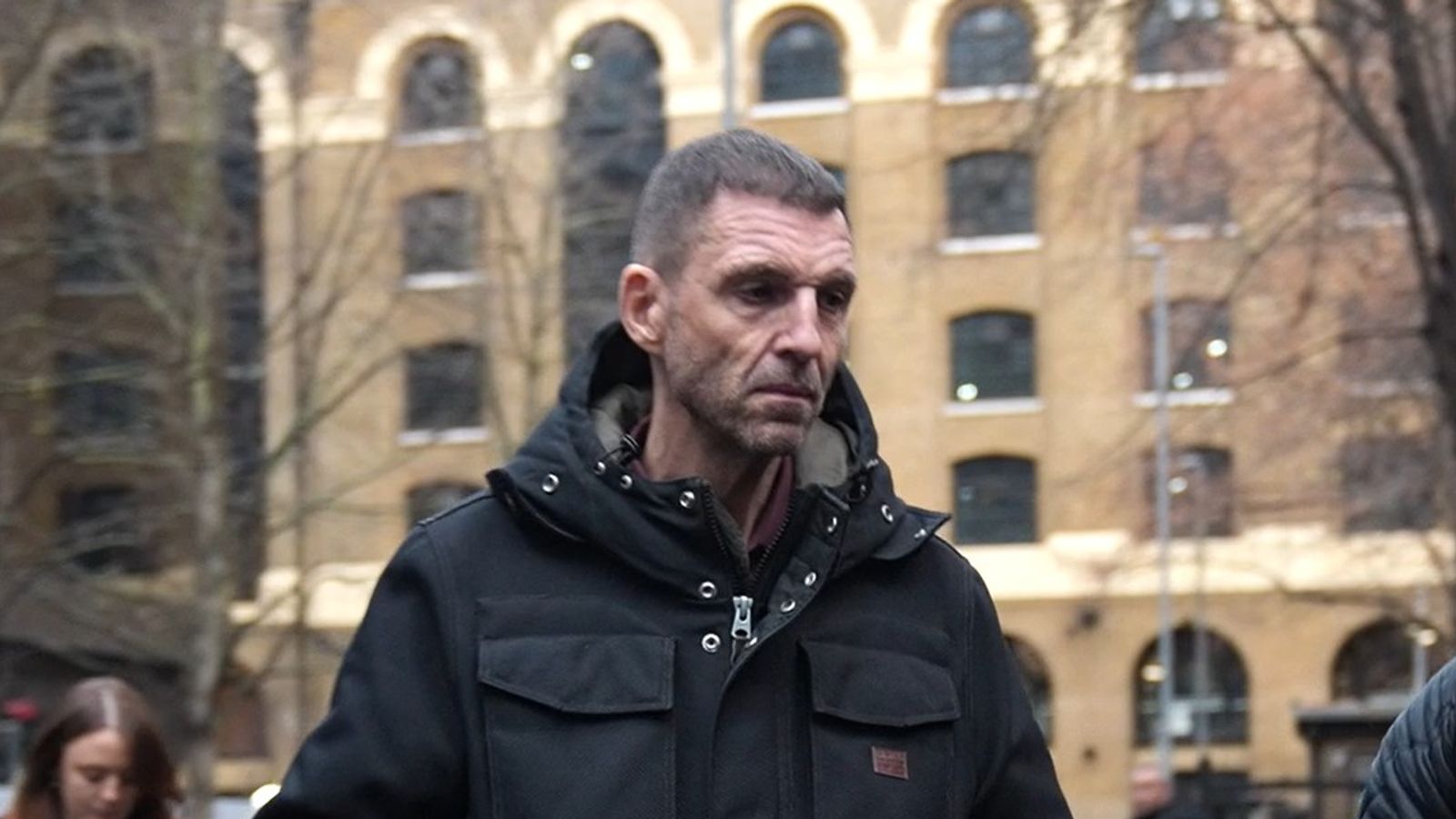
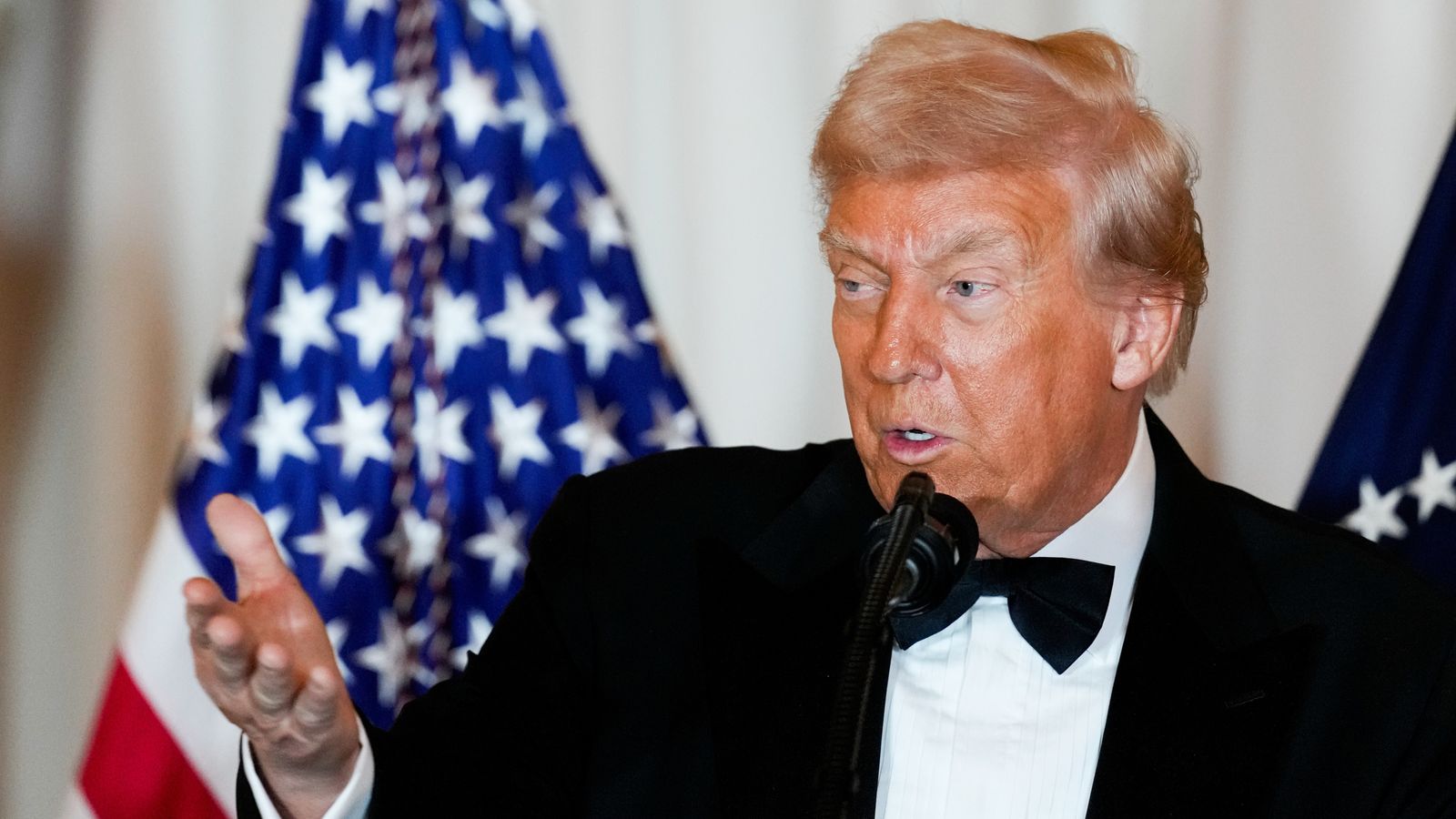

Donald Trump has said he will be “involved” in the decision on whether Netflix should be allowed to buy Warner Bros, as the $72bn (£54bn) deal attracts a media industry backlash.
The US president acknowledged in remarks to reporters there “could be a problem”, acknowledging concerns over the streaming giant’s market dominance.
Crucially, he did not say where he stood on the issue.
Money latest: The cheapest days to travel by plane
It was revealed on Friday that Netflix, already the world’s biggest streaming service by market share, had agreed to buy Warner Bros Discovery’s TV, film studios and HBO Max streaming division.
The deal aims to complete late next year after the Discovery element of the business, mainly legacy TV channels showing cartoons, news and sport, has been spun off.
But the deal has attracted cross-party criticism on competition grounds, and there is also opposition in Hollywood.
Netflix agrees $72bn takeover of Warner Bros
The Writers Guild of America said: “The world’s largest streaming company swallowing one of its biggest competitors is what antitrust laws were designed to prevent.
“The outcome would eliminate jobs, push down wages, worsen conditions for all entertainment workers, raise prices for consumers, and reduce the volume and diversity of content for all viewers.”
File pic: Reuters
Republican Senator, Roger Marshall, said in a statement: “Netflix’s attempt to buy Warner Bros would be the largest media takeover in history – and it raises serious red flags for consumers, creators, movie theaters, and local businesses alike.
“One company should not have full vertical control of the content and the distribution pipeline that delivers it. And combining two of the largest streaming platforms is a textbook horizontal Antitrust problem.
“Prices, choice, and creative freedom are at stake. Regulators need to take a hard look at this deal, and realize how harmful it would be for consumers and Western society.”
Paramount Skydance and Comcast, the parent company of Sky News, were two other bidders in the auction process that preceded the announcement.
The Reuters news agency, citing information from sources, said their bids were rejected in favour of Netflix for different reasons.
Paramount’s was seen as having funding concerns, they said, while Comcast’s was deemed not to offer so many earlier benefits.
Paramount is run by David Ellison, the son of the Oracle tech billionaire Larry Ellison, who is a close ally of Mr Trump.
The president said of the Netflix deal’s path to regulatory clearance: “I’ll be involved in that decision”.
On the likely opposition to the deal. he added: “That’s going to be for some economists to tell. But it is a big market share. There’s no question it could be a problem.”

Thousands of members of actors’ trade union Equity are being asked whether they would support industrial action over artificial intelligence protections.
The organisation has launched an indicative ballot among about 7,000 members working in film and TV.
Performers are being asked whether they are prepared to refuse to be digitally scanned on set in order to secure adequate artificial intelligence protections.
It will be the first time the performing arts and entertainment trade union has asked this whole section of its membership to vote in a ballot.
The Hollywood strikes took place in 2023. File pic: AP
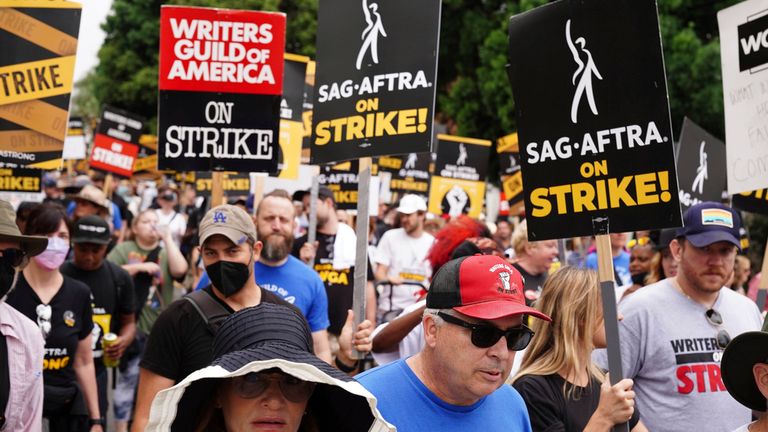
The announcement follows the Hollywood strikes in 2023, when members of Equity’s sister union in the US, SAG-AFTRA, and writers, went on strike over issues including AI.
Video game actors in the US also protested over the use of AI, ending almost a year of industrial action earlier in 2025.
Equity’s ballot opens on Thursday and runs for two weeks, and will show the level of support the union has for action short of a strike.
Another statutory ballot would have to be made before any industrial action is taken.
“While tech companies get away with stealing artists’ likeness or work, and the government and decision makers fret over whether to act, unions including Equity are at the forefront of the fight to ensure working people are protected from artificial intelligence misuse,” Equity general secretary Paul W Fleming said in a statement.
“If bosses can’t ensure someone’s likeness and work won’t be used without their consent, why should performers consent to be digitally scanned in the first place?”
Mr Fleming said the ballot would give members the opportunity to “send a clear message to the industry: that it is a basic right of performers to have autonomy over their own personhood and identity”.
The union has no choice but to recommend members support industrial action, he said.
“It’s time for the bosses to step away from the brink and offer us a package, including on AI protections, which respects our members,” added Mr Fleming.
-
 Sports2 years ago
Story injured on diving stop, exits Red Sox game
-
 Sports3 years ago
‘Storybook stuff’: Inside the night Bryce Harper sent the Phillies to the World Series
-
 Sports2 years ago
Game 1 of WS least-watched in recorded history
-
 Sports3 years ago
Button battles heat exhaustion in NASCAR debut
-
 Sports3 years ago
MLB Rank 2023: Ranking baseball’s top 100 players
-
Sports4 years ago
Team Europe easily wins 4th straight Laver Cup
-
 Environment3 years ago
Japan and South Korea have a lot at stake in a free and open South China Sea
-
 Environment1 year ago
Here are the best electric bikes you can buy at every price level in October 2024