
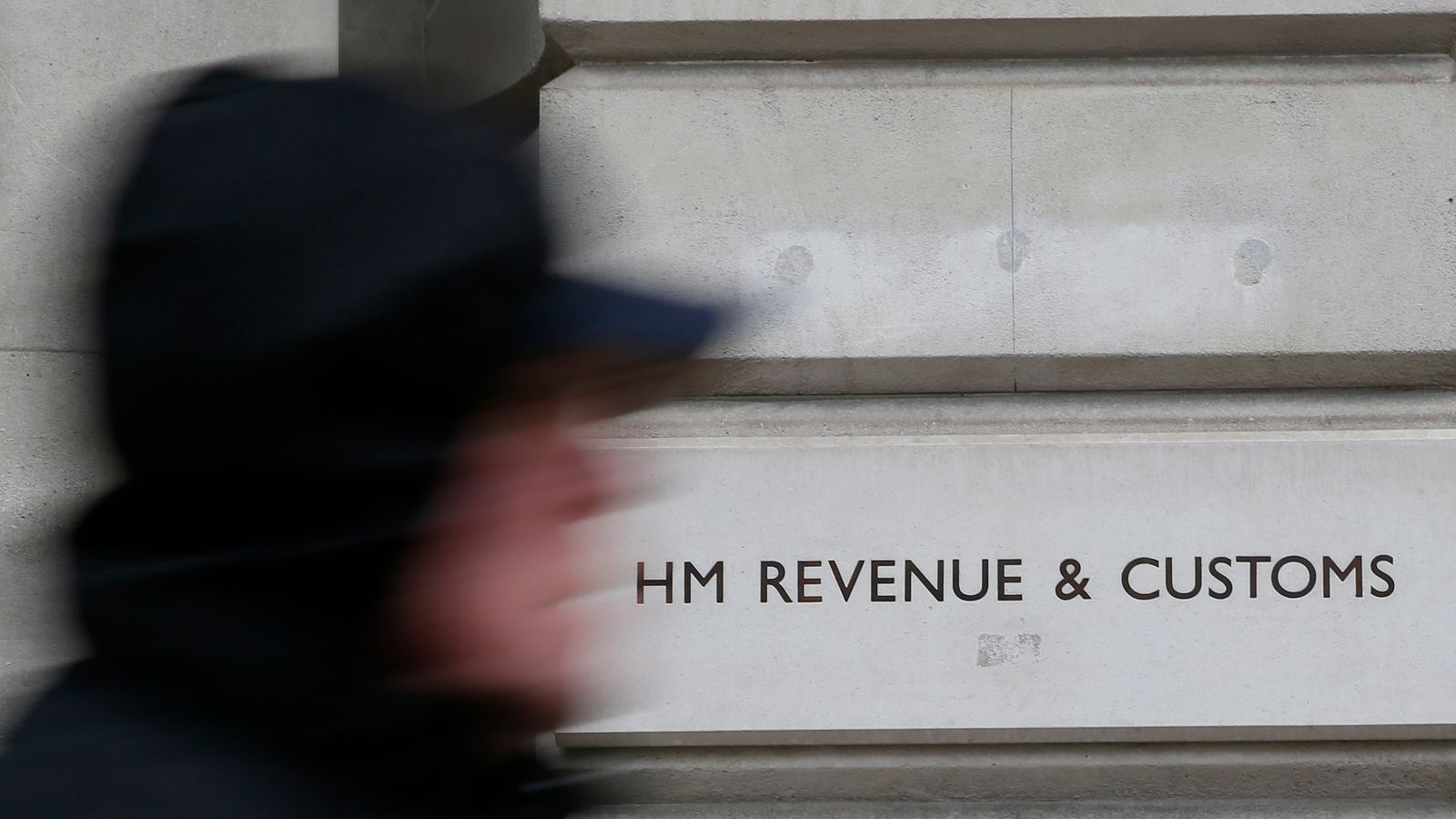
Major UK recruiters linked to tax avoidance schemes after workers hit with crippling HMRC demands

Hays, Capita, Petrofac. These are some of Britain’s best known companies and big players in the recruitment industry.
Now, a Sky News investigation has revealed how, over the course of two decades, some of Britain’s biggest recruitment companies were linked to large-scale tax avoidance when placing workers into jobs, including government roles in Whitehall.
Many of these workers, typically agency workers and contractors, were paid by third-party umbrella companies that promised to take care of taxes but were operating tax avoidance schemes.
They worked by paying workers what were technically loans, instead of a salary. This allowed them to circumvent paying income tax.
Often the umbrellas were recommended by recruiters, although there is no suggestion the recruiters knew these third parties were operating tax avoidance schemes.
It is the latest revelation in a scandal that has caused untold misery for tens of thousands of people, who signed up with umbrella companies and were enrolled in tax avoidance schemes, thinking they were above board.
Many feel let down by the recruitment agencies who provided information linking them to the umbrella companies. They were not legally responsible for collecting the tax, as they did not run the payroll.
But the government is now strengthening the law to make them accountable for the tax collected by umbrella agencies on behalf of the workers they supply.
Tax avoidance is legal but HMRC has successfully challenged tax avoidance schemes in the courts and workers have subsequently asked to pay the missing tax.
In some cases, the tax demands have been crippling. It’s a campaign that has driven people to the brink of bankruptcy, devastated families and has been linked to 10 suicides.
Manuel’s story
Manuel Bernal did not doubt his working arrangement after taking on a piping supervisor job through Atlantic Resourcing, the recruitment arm of the energy giant Petrofac. In 2006, he was placed on an EDF plant in the Shetlands.
He received a contract between Atlantic Resourcing and an umbrella company, which managed his pay.
Weeks after he started working, he says he was pushed into an arrangement with a different company, which took over the payments. Hundreds of people were working on the site and “everybody on the management side was on that scheme”, he said.
Mr Bernal was assured that everything was above board. He did not know he was in a tax avoidance scheme.
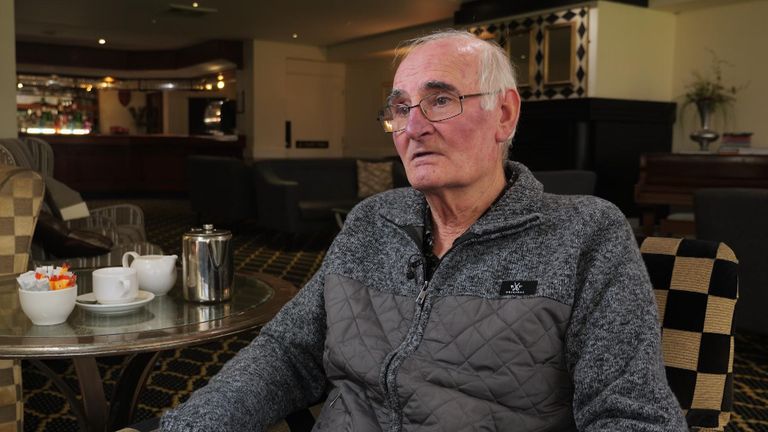
Manuel Bernal was not aware he was exposed to a tax avoidance scheme
The company was paying him a loan instead of a salary, via a trust, so avoided income tax and national insurance.
However, HMRC soon caught on and demanded he pay the missing tax for what it now deemed disguised remuneration.
“At the time, I was in two minds [whether] to pay or not to pay… At the time I couldn’t pay. I was short of money because I had cancer and I couldn’t work… I thought, ‘why should they not pay any money?'” said Mr Bernal.
Tax avoidance is the exploitation of legal loopholes to pay less tax. It is legal. It is not the same as tax evasion, which involves not paying or underpaying taxes and is illegal.
The scheme Mr Bernal was in, like other tax avoidance schemes, stretched the boundaries of the law.
Years later, HMRC successfully challenged the lawfulness of loan schemes in the courts. Workers paid the price. Irrespective of how they entered the schemes, they were deemed responsible for their tax affairs.
In a statement, Petrofac said: “Like any other company, we are not involved in, or responsible for, the administration of taxes for self-employed limited company contractors.”
The company stopped using umbrella agencies in 2016 after an internal review.
Six-figure demands
Manuel got off comparatively lightly. Having only worked at the site for a few months, his bill came in at £4,000, but others are facing six-figure demands. HMRC has pursued around 50,000 people.
Schemes like these proliferated from the early 2000s.
At the time the use of umbrella companies was becoming popular as workers were worried about falling foul of new rules – originally designed by Gordon Brown – that clamped down on contractors operating as limited companies.
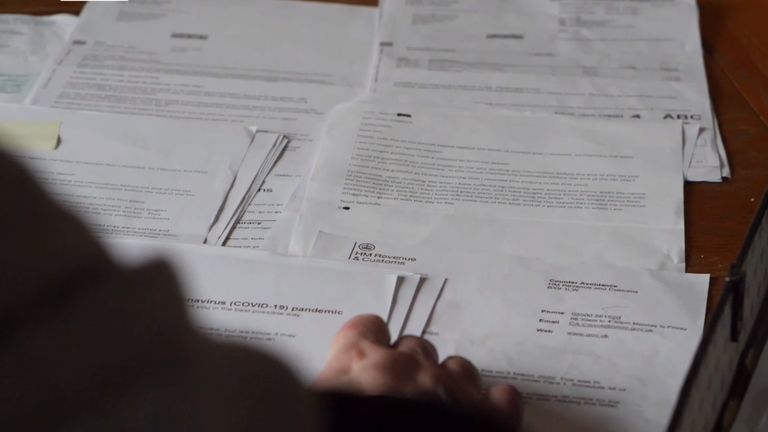
HMRC has pursued around 50,000 people for missing tax
Umbrella companies would manage the payroll so that businesses could avoid bringing workers onto their direct payroll. Others asked workers, like Manuel, to declare as self-employed, while continuing to distribute their pay.
Many umbrellas paid PAYE to the exchequer, but tax avoidance companies also entered the market.
Workers assumed their tax was being paid, but the schemes were pocketing deductions instead of passing them on to the exchequer.
The Treasury became alert to the scale of the missing tax revenue and sought to recoup it – not from the companies but from the individuals.
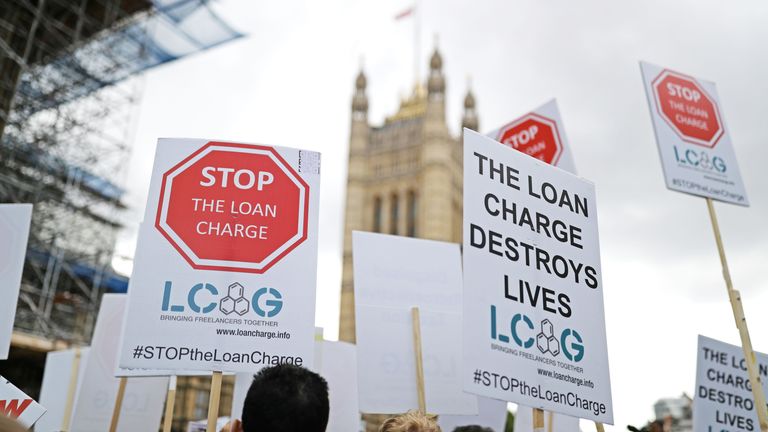
People have protested about the loan charge outside parliament. Pic: PA
These schemes were deemed disguised remuneration and, in his 2016 budget, former chancellor George Osborne brought in the loan charge.
In its original form, the loan charge calculated the tax on up to 20 years of income as if it was earned in one financial year – 2018/19. The resulting sums caused considerable financial distress.
Mr Bernal said: “(HMRC) kept sending letters when I was in hospital and my wife had to deal with it. Eventually, I sent in a doctor’s report and they stopped.”
‘I trusted them’
Loan schemes became enmeshed in the recruitment supply chain.
Many recruiters were not aware that the umbrella companies they were working with were tax avoidance schemes. However, the strength of their recommendations often gave workers confidence.
John (not his real name), an IT worker, felt he was in safe hands when he used an umbrella company that was on an approved list given to him by the recruiter Hays in 2010.

Hays is one of the best known recruitment agencies in the UK. Pic: PA
“I thought Hays is one of the biggest recruitment companies in the country,” he said. “They’re saying they are okay, so I started using them.”
Hays said it “engages only with umbrella companies that appropriately meet legal and financial obligations… We conduct thorough due diligence… we recommend (contractors) also do their due diligence”.
HMRC has previously warned recruitment agencies they face penalties if they refer people to non-compliant umbrella companies but it has not confirmed whether fines have ever been levied.
Meanwhile, new tax avoidance promoters continue to enter the market.
A recent government report concluded there could be “70 to 80 non-compliant umbrella companies involved in the operation of disguised remuneration avoidance schemes”.
Crackdown
The government is now attempting to clean up the industry. It plans to hold recruitment companies legally responsible for PAYE, rather than umbrella companies.
Sky News understands that the Treasury will today unveil a package of reforms it will consult on as part of a crackdown on tax avoidance schemes.
However, this offers little respite to those who have already fallen victim to these schemes.
While in opposition, key Labour Party figures railed against what they described as mis-selling and promised they would review the policy.
The government has now launched an independent review into the loan charge – and HMRC is pausing its activity until that review is complete – but its focus is on helping people to reach a settlement. The review will not look at the historical role of promoters and recruitment agencies.
That is a bitter pill to swallow for those affected by the loan charge, particularly as many of them were working for the government itself.
‘I sent them a suicide note’
Peter (not his real name) worked at the Department for Business, Innovation and Skills as a project manager for the regional growth fund, a role he was recruited into in 2012 by the agency Capita.
He said Capita recommended he use an umbrella arrangement, which he was told was above board.
“I’m really angry. [Capita] gave me confidence. They are the key agency for central government work… If Capita say something to you then you believe it’s correct. You have to trust what you’re told.”
Capita said: “We have strict policies in place to ensure both Capita and our suppliers comply with relevant law, policies and procedures. Given this was over 12 years ago, we do not have the details to be able to comment on this particular matter.”
Sky News has spoken to other Whitehall workers who have also been affected.

Capita says it has strict policies to ensure the company and suppliers comply with the law. Pic: PA
Read more:
Thousands targeted by tax-collecting scheme linked to suicides
HMRC accused of ‘sinister’ tactics in crackdown
After the loan charge came into force, Peter was inundated with letters from HMRC. It became overwhelming and in 2019 he tried to take his own life.
“I sent them [HMRC] a suicide note because I was just fed up with all of this,” he said. “I’ve been on anti-depressants. I live in denial. I drink alcohol sometimes quite a bit.”
HMRC said it takes the wellbeing of taxpayers seriously and believes it has made significant improvements to its support services in recent years.
The government department Peter worked for has since been fashioned into the Department for Business and Trade.
It said it was unable to comment on the previous department’s arrangements with Capita but said the government was cracking down on non-compliant umbrella companies.
Anyone feeling emotionally distressed or suicidal can call Samaritans for help on 116 123 or email jo@samaritans.org in the UK. In the US, call the Samaritans branch in your area or 1 (800) 273-TALK
UK
Family of nine-year-old Aria Thorpe pay tribute to ‘beautiful soul’ as teen appears in court charged with murder


The family of a nine-year-old girl stabbed to death have said she was a “beautiful soul” who was brave, kind-hearted and “always put a smile on people’s faces”.
Police were called to Lime Close in Weston-super-Mare, Somerset, just before 6.10pm on Monday, where Aria Thorpe had suffered a single stab wound.
The child was pronounced dead at the scene.
In a tribute released by Avon and Somerset Police on Friday, the girl’s family on her mother’s side said: “For those who didn’t have the privilege of knowing Aria, she was the most beautiful little soul – happy-go-lucky, full of light, and joy.
“She loved to sing and dance, and she took such pride in dressing up, always wanting to look just like her mummy.”
Tom Thorpe, the girl’s father, said: “It’s hard to put into words how devastating it is, our little Aria, that you’re up there with the angels looking over us.”
It comes as a 15-year-old boy charged with Aria’s murder appeared in court.
Pic: Avon and Somerset Police
Aria was a ‘precious girl’
In their statement, Aria’s family on her mother’s side said her death “has devastated us beyond words”.
“Our hearts are broken in a way we never imagined possible,” they added.
“As a family, we are holding one another close and doing everything we can to support each other through this unimaginable time.”
They said they were “truly touched by the lovely messages we have received”, before asking “that our privacy is respected, as we try to come to terms with the terrible loss of our precious girl”.

Flowers laid in memory of the young girl
‘Wacky ways and outright madness’
Mr Thorpe said: “How sad it’s going to be not hearing ‘Dad, how long left?’ on our long journeys back and forth at weekends.
He then said that Aria was “such a brave, kind-hearted and a beautiful innocent soul”, and “always put a smile on people’s faces with your wacky ways and just outright madness”.
Mr Thorpe added: “Your other little family down here in Portsmouth will forever miss you.
“We’ll miss you begging to go outside, even in the pouring rain just to have as much fun as possible in the little time we had at weekends.
“You will be greatly missed, you special little angel. A life gone far too early but I hope a life lived well. We all love you dearly. Goodnight darling.”
Teenager in court
Meanwhile, a 15-year-old boy charged with Aria’s murder appeared at Bristol Crown Court on Friday, where he was remanded.
The teenager, who cannot be named because of his age, was arrested in the Somerset village of Worle at 6.19pm on Monday.
He is next due in court on 16 March 2026. Appearing via video link from youth detention accommodation, he spoke only to confirm his name.
Judge Peter Blair KC set a provisional trial date for 15 June during the hearing.

A teenager charged with the murder of nine-year-old Aria Thorpe will stand trial in June next year.
The 15-year-old boy, who cannot be named because of his age, appeared at Bristol Crown Court on Friday.
The defendant, who appeared via video link from youth detention accommodation, spoke only to confirm his name.
During a brief hearing, Judge Peter Blair KC, the Recorder of Bristol, set a provisional trial date for 15 June 2026.
The trial is expected to last two weeks.
Avon and Somerset Police were called to Lime Close in Weston-super-Mare just before 6.10pm on Monday, where nine-year-old Aria had suffered a single stab wound.
Flowers laid in memory of the young girl
The boy was arrested in nearby Worle a short time later.
His father was among those attending in the public gallery.
The teenager is next expected to appear in court on 16 March.
-
 Sports2 years ago
Story injured on diving stop, exits Red Sox game
-
 Sports3 years ago
‘Storybook stuff’: Inside the night Bryce Harper sent the Phillies to the World Series
-
 Sports2 years ago
Game 1 of WS least-watched in recorded history
-
 Sports3 years ago
Button battles heat exhaustion in NASCAR debut
-
 Sports3 years ago
MLB Rank 2023: Ranking baseball’s top 100 players
-
Sports4 years ago
Team Europe easily wins 4th straight Laver Cup
-
 Environment3 years ago
Japan and South Korea have a lot at stake in a free and open South China Sea
-
 Environment1 year ago
Here are the best electric bikes you can buy at every price level in October 2024