
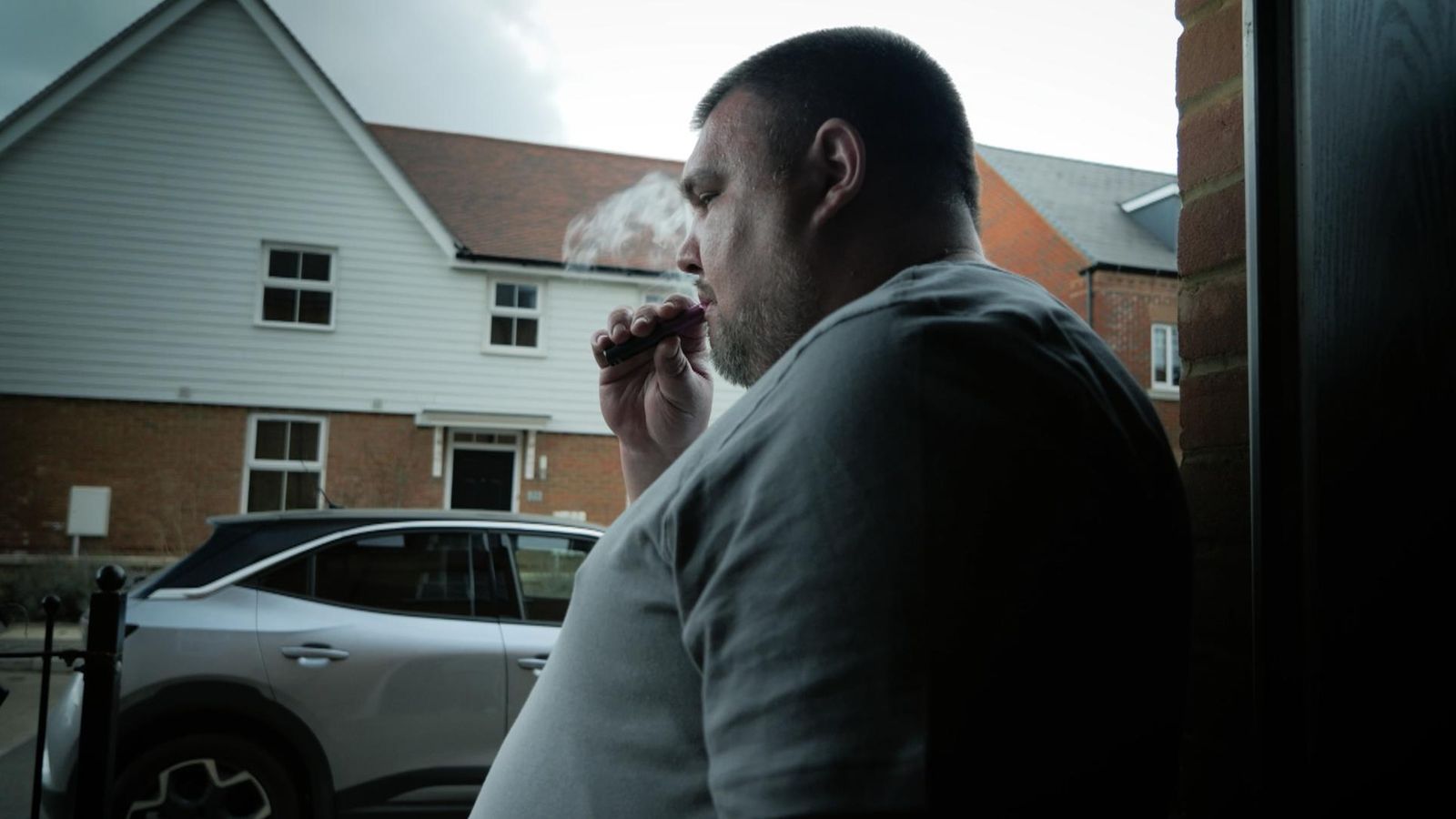
Abolished indefinite prison sentences still in place – despite prisoner numbers approaching pre-release scheme levels

This week government figures are likely to show the prison population back to where it was before the last early release scheme.
But even though hundreds of prisoners have served only 40% of their sentences, there is a cohort of the prison population who have served extended sentences, years beyond their minimum term.
IPP sentences (imprisonment for public protection) were introduced in 2005 and abolished in 2012. But the law wasn’t backdated, so the legacy of prisoners serving indefinite sentences continues.
Andy Logan, 45, from Kent, has had two IPPs
“It’s broken me as a man,” says Andy Logan. The burly 45-year-old from Kent has spent most of the last 20 years in jail on an IPP sentence, now he won’t leave home without his mother.
“I don’t go out, I’ve got no social circle,” he says. “I’m not in no family photographs, it’s like Back To The Future when he gets erased from the photos, I’m not there. I’m a ghost – I’ve been a ghost for 20 years.”
He was given IPP sentences twice, for two cashpoint robberies where he showed his victims a knife but didn’t use it. The minimum terms for each crime were two-and-a-half years and three years, but each time he spent far longer behind bars, the first time four years, then seven years. But that wasn’t the end of it.
After his release, Andy’s IPP hung over him. He could be recalled for any misdemeanour, including drinking too much alcohol, taking drugs, or missing probation appointments.
Over the next eight years he was recalled six times and would spend months behind bars waiting for a decision. His recall prison time alone has amounted to nearly four years. Twice the recalls were later deemed “unjustified”.
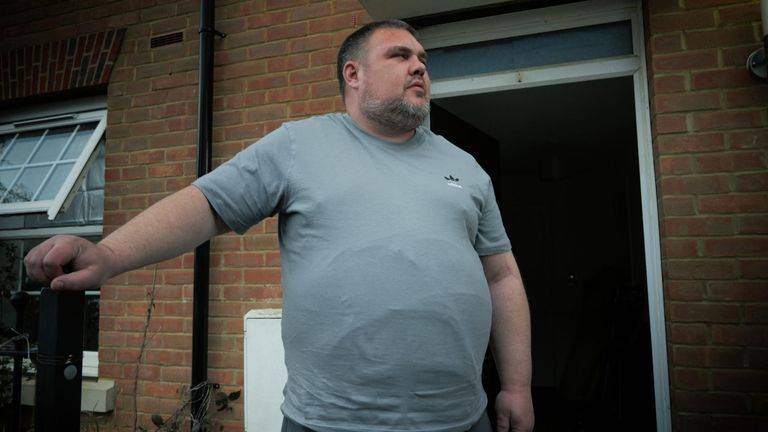
Andy is so fearful of recall, he doesn’t go out without his mother
Read more from Sky News
Five in court over woman’s fatal shooting
Gang jailed for kidnapping music producer
Ship captain appears in court
“I started my sentence with people who murdered people – and some of them got out before me,” says Andy.
“I lost all hope. I thought I’d never get out. I took drugs for four years. I exploded in weight. Self-harm started happening and I’d never self-harmed in my life.”
Andy lifts up his sleeve to reveal a red scar. “That one, I nearly did the artery on my last recall. I was just so frustrated I wanted to die.”
His lawyer Catherine Bond says he was often recalled for minor breaches.
She said: “One was in 2020 – Andy does struggle with alcohol addiction. He had started drinking more at that point.
“He kept his probation officer informed, but his probation officer recalled him anyway, and the parole board found the recall was unjustified because although there was alcohol use, that doesn’t necessarily equate to any increased risk.”
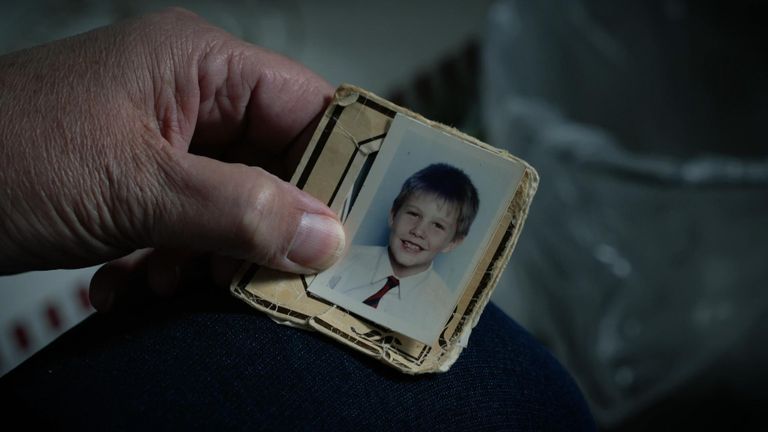
Andy’s mother holds a picture of him as a child
Each IPP recall is ‘re-traumatising’
Ms Bond says the recalls have damaged Andy’s mental health.
“Each time you go back in there you don’t know when you are going to get back out so the whole process is re-traumatising, and I think it can make it more difficult for people to resettle when they get back out so each recall can increase the risk of further recalls,” she said.
But she also has IPP clients who’ve never been released – one jailed in 2005.
“It was a robbery – threat of violence. I’m not minimising that in any way but 20 years on it’s totally disproportionate and these are people’s lives,” she said.
“Of course, they’ve done something wrong but effectively it is the misfortune of having committed an offence at a particular time… meant they are in prison for this excessive amount of time.”
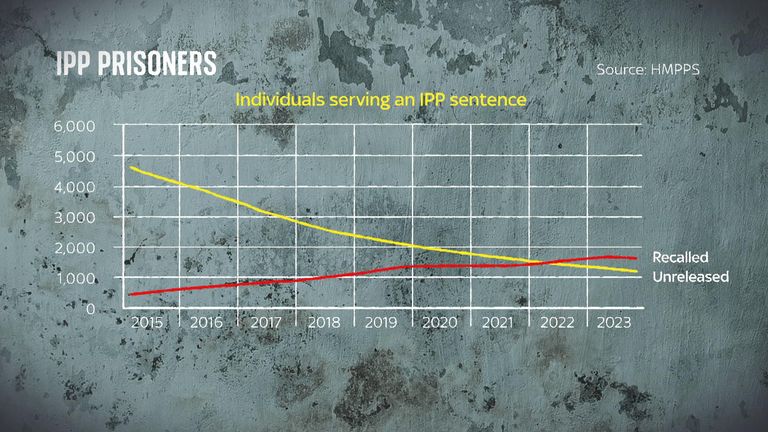
The number of unreleased prisoners on IPP has fallen from 5,000 in 2015 to 1,180 in early 2024. Around 700 of those have served 10 years longer than their minimum term.
Source: His Majesty’s Prison and Probation Service
The number recalled is rising with over 1,600 currently back in jail, mostly for licence breaches. The average time spent imprisoned on recall has risen dramatically from 11 months to around 26 months.
Andy is so fearful of recall, he doesn’t go out without his mother Betty. As Betty drives him to meet his probation officer, he says: “What if someone takes a dislike to me and says ‘who are you looking at?’ and makes an allegation against me – I’m in prison. So, I’m just terrified.”
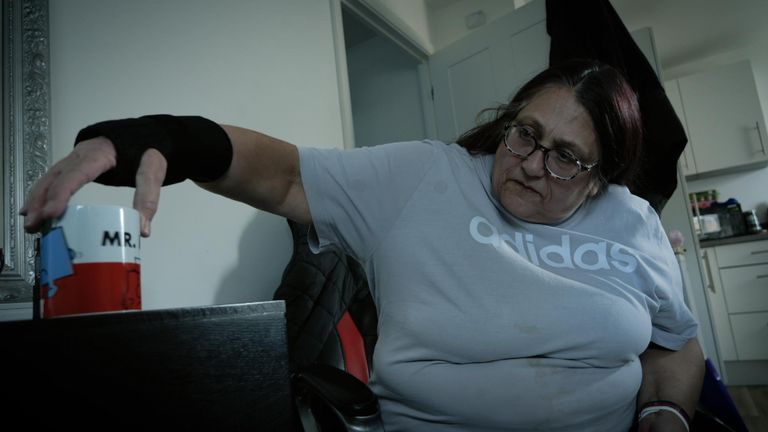
Andy’s mother Betty
But Andy hopes this could be one of his last visits to probation. Until recently, any IPP prisoner would have to wait at least 10 years after their release from prison before their licence could even be considered for removal by a parole board – but in February this year that time period was reduced to three years. For Andy that means in the next few months he could finally get off it.
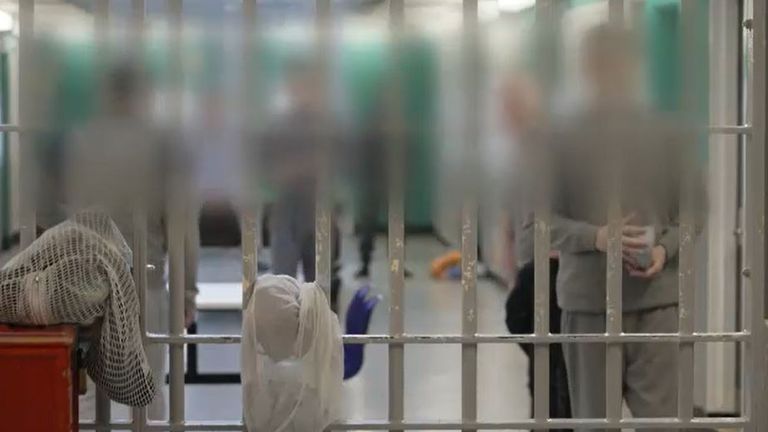
February: Prison recall population at record level
A Ministry of Justice (MoJ) spokesperson said: “It is right that IPP sentences were abolished. With public protection as the number one priority, the lord chancellor is working with organisations and campaign groups to ensure appropriate action is taken to support those still serving these sentences, such as improved access to mental health support and rehabilitation programmes.
“An independent report from His Majesty’s Inspectorate of Prisons found the majority of recall decisions were necessary to keep our streets safe. However, to avoid waiting unnecessarily for parole board hearings, eligible IPP prisoners can now be considered for release earlier after a thorough risk assessment.”
The prison population is bursting and is set to run out of space within a year according to internal forecasts from the MoJ. But some of those taking up space – probably shouldn’t still be there.
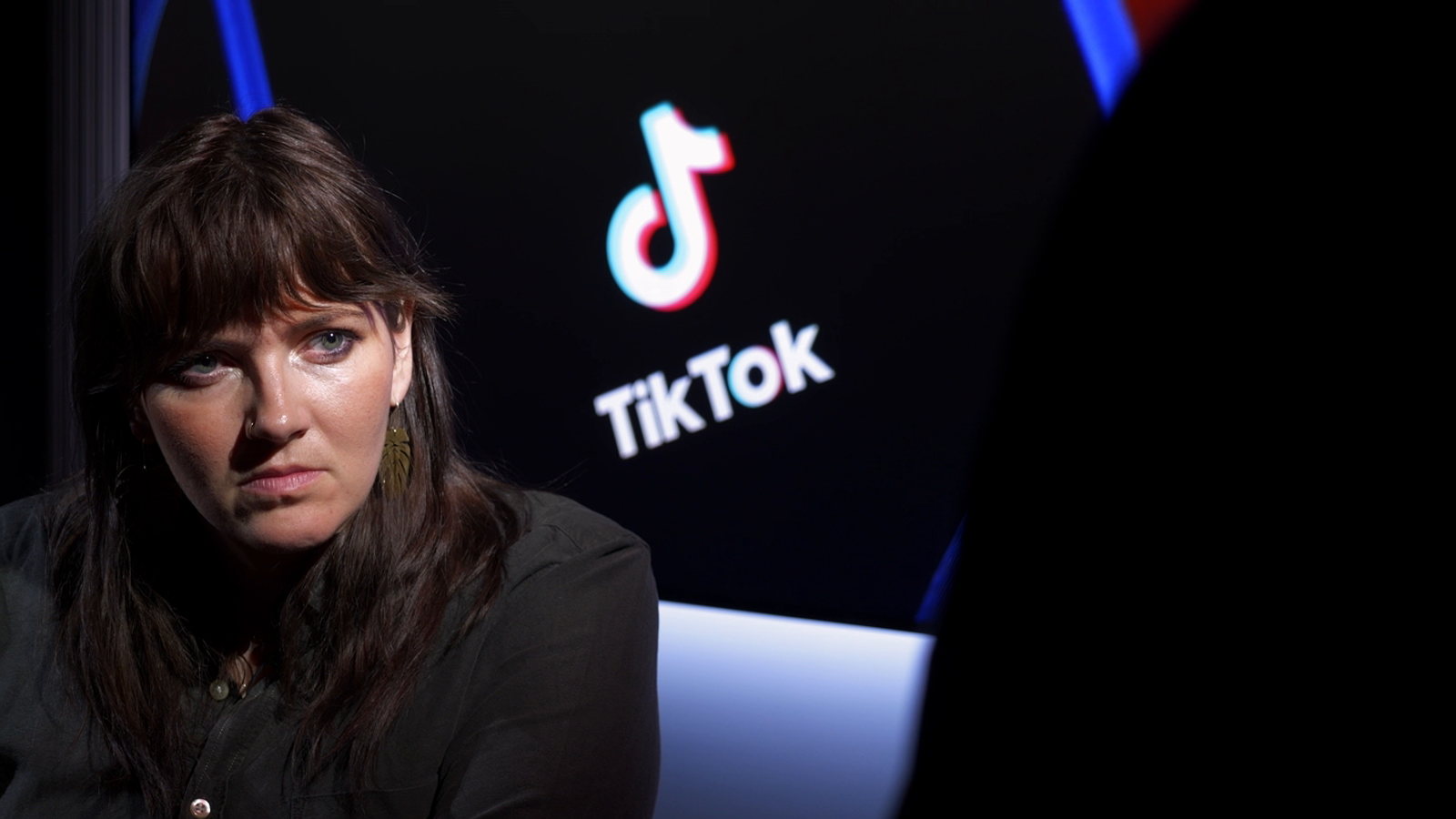
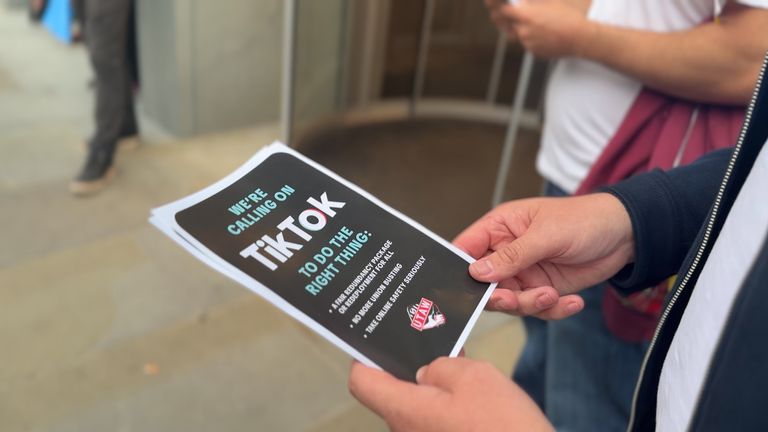
Hundreds of UK online safety workers at TikTok have already signed agreements to leave the company, whistleblowers have told Sky News, despite the firm stressing to MPs that the cuts were “still proposals only”.
More than 400 online safety workers have agreed to leave the social media company, with only five left in consultation, Sky News understands.
“[The workers have] signed a mutual termination agreement, a legally binding contract,” said John Chadfield, national officer for the Communication Workers’ Union.
“They’ve handed laptops in, they’ve handed passes in, they’ve been told not to come to the office. That’s no longer a proposal, that’s a foregone conclusion. That’s a plan that’s been executed.”
Moderators gathered to protest the redundancies
In August, TikTok announced a round of mass layoffs to its Trust and Safety teams.
“Everyone in Trust and Safety” was emailed, said Lucy, a moderator speaking on condition of anonymity for legal reasons.
After a mandatory 45-day consultation period, the teams were then sent “mutual termination agreements” to sign by 31 October.
Sky News has seen correspondence from TikTok to the employees telling them to sign by that date.
“We had to sign it before the 31st if we wanted the better deal,” said Lucy, who had worked for TikTok for years.
“If we signed it afterwards, that diminished the benefits that we get.”
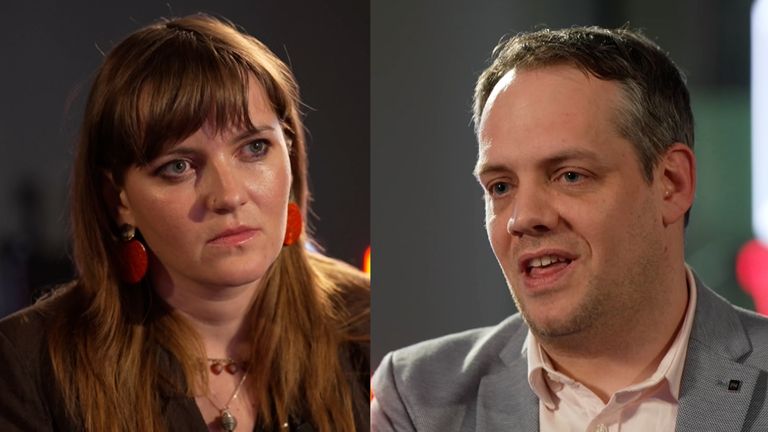
Three former moderators at TikTok have spoken to Sky News on camera
Despite hundreds of moderators signing the termination contracts by 31 October, Ali Law, TikTok’s director of public policy and government affairs for northern Europe, said to MPs in a letter on 7 November: “It is important to stress the cuts remain proposals only.”
“We continue to engage directly with potentially affected team members,” he said in a letter to Dame Chi Onwurah, chair of the science, innovation and technology committee.
After signing the termination contracts, the employees say they were asked to hand in their laptops and had access to their work systems revoked. They were put on gardening leave until 30 December.
“We really felt like we were doing something good,” said Saskia, a moderator also speaking under anonymity.
“You felt like you had a purpose, and now, you’re the first one to get let go.”
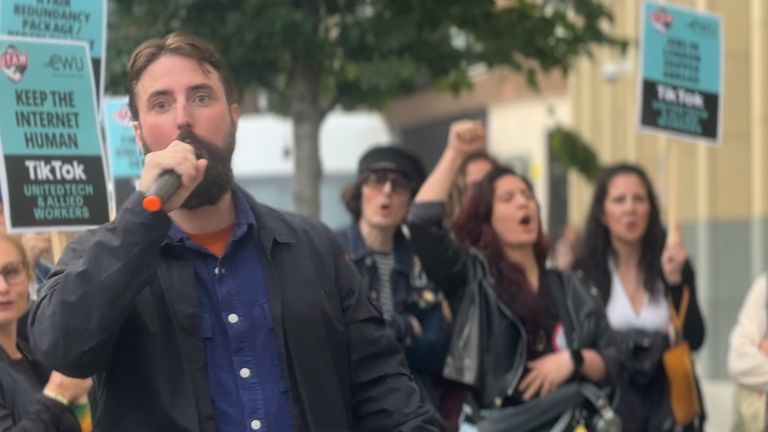
TikTok moderators and union workers protested outside the company’s London headquarters in September
A TikTok worker not affected by the job cuts confirmed to Sky News that all of the affected Trust and Safety employees “are now logged out of the system”.
“Workers and the wider public are rightly concerned about these job cuts that impact safety online,” said the TUC’s general secretary, Paul Nowak.
“But TikTok seem to be obscuring the reality of job cuts to MPs. TikTok need to come clean and clarify how many vital content moderators’ roles have gone.
“The select committee must do everything to get to the bottom of the social media giant’s claims, the wider issues of AI moderation, and ensure that other workers in the UK don’t lose their jobs to untested, unsafe and unregulated AI systems.”
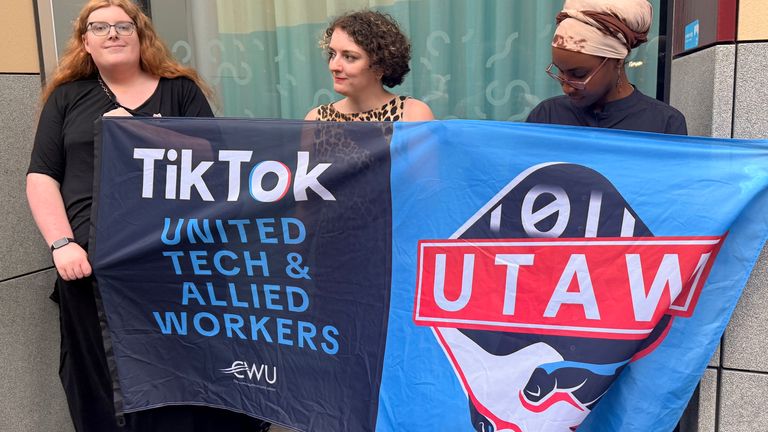
Moderators and union representatives outside TikTok’s offices
What TikTok has said about the job cuts
In an interview with Sky News on 18 November, Mr Law again called the cuts “proposals”.
When asked if the cuts were in fact a plan that had already been executed, Mr Law said there was “limited amounts” he could directly comment on.
TikTok told us: “It is entirely right that we follow UK employment law, including when consultations remained ongoing for some employees and roles were still under proposal for removal.
“We have been open and transparent about the changes that were proposed, including in detailed public letters to the committee, and it is disingenuous to suggest otherwise.”
The three whistleblowers Sky News spoke to said they were concerned TikTok users would be put at risk by the cuts.
The company said it will increase the role of AI in its moderation, while maintaining some human safety workers, but one whistleblower said she didn’t think the AI was “ready”.
“People are getting new ideas and new trends are coming. AI cannot get this,” said Anna, a former moderator.
“Even now, with the things that it’s supposed to be ready to do, I don’t think it’s ready.”
Is TikTok improving safety with AI?
Lucy also said she thought the cuts would put users at risk.
“There are a lot of nuances in the language. AI cannot understand all the nuances,” she said.
“AI cannot differentiate some ironic comment or versus a real threat or bullying or of a lot of things that have to do with user safety, mainly of children and teenagers.”
TikTok has been asked by MPs for evidence that its safety rates – which are currently some of the best in the industry – will not worsen after these cuts.
The select committee says it has not produced that evidence, although TikTok insists safety will improve.
“[In its letter to MPs] TikTok refers to evidence showing that their proposed staffing cuts and changes will improve content moderation and fact-checking – but at no point do they present any credible data on this to us,” said Dame Chi earlier this month.
“It’s alarming that they aren’t offering us transparency over this information. Without it, how can we have any confidence whether these changes will safeguard users?”
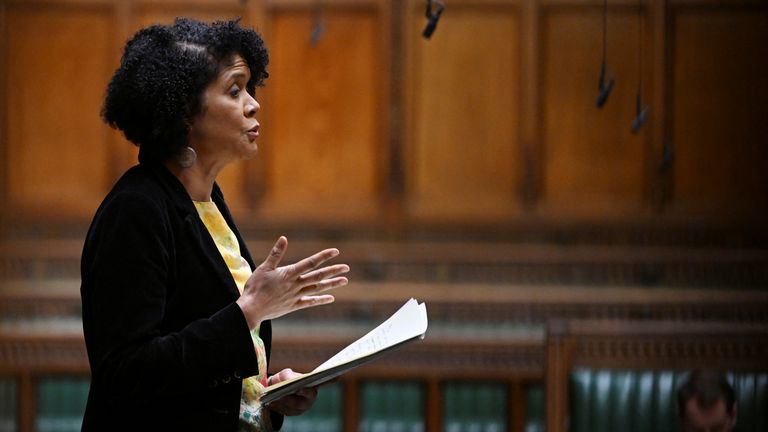
Dame Chi Onwurah speaks at the House of Commons. File pic: Reuters
TikTok’s use of AI in moderation
In an exclusive interview with Sky News earlier this month, Mr Law said the new moderation model would mean TikTok can “approach moderation with a higher level of speed and consistency”.
He said: “Because, when you’re doing this from a human moderation perspective, there are trade-offs.
“If you want something to be as accurate as possible, you need to give the human moderator as much time as possible to make the right decision, and so you’re trading off speed and accuracy in a way that might prove harmful to people in terms of being able to see that content.
“You don’t have that with the deployment of AI.”
As well as increasing the role of AI in moderation, TikTok is reportedly offshoring jobs to agencies in other countries.
Sky News has spoken to multiple workers who confirmed they’d seen their jobs being advertised in other countries through third-party agencies, and has independently seen moderator job adverts in places like Lisbon.
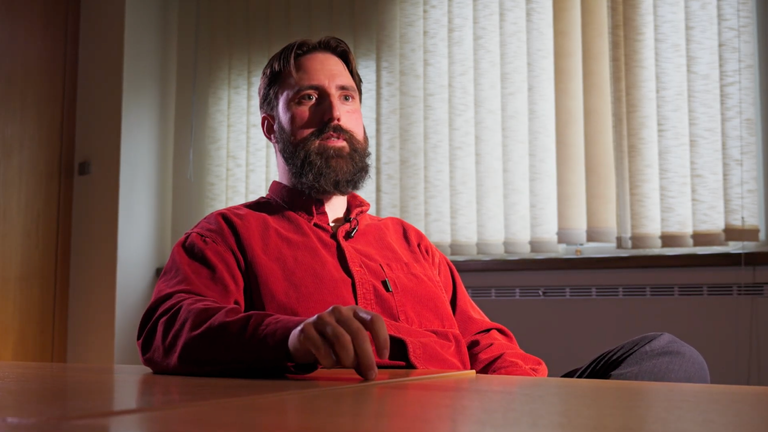
John Chadfield, national officer for technology at the Communication Workers Union
“AI is a fantastic fig leaf. It’s a fig leaf for greed,” said Mr Chadfield. “In TikTok’s case, there’s a fundamental wish to not be an employer of a significant amount of staff.
“As the platform has grown, as it has grown to hundreds of millions of users, they have realised that the overhead to maintain a professional trust and safety division means hundreds of thousands of staff employed by TikTok.
“But they don’t want that. They see themselves as, you know, ‘We want specialists in the roles employed directly by TikTok and we’ll offshore and outsource the rest’.”
Mr Law told Sky News that TikTok is always focused “on outcomes”.
He said: “Our focus is on making sure the platform is as safe as possible.
“And we will make deployments of the most advanced technology in order to achieve that, working with the many thousands of trust and safety professionals that we will have at TikTok around the world on an ongoing basis.”
Asked specifically about the safety concerns raised by the whistleblowers, TikTok said: “As we have laid out in detail, this reorganisation of our global operating model for Trust and Safety will ensure we maximize effectiveness and speed in our moderation processes.
“We will continue to use a combination of technology and human teams to keep our users safe, and today over 85% of the content removed for violating our rules is identified and taken down by automated technologies.”
*All moderator names have been changed for legal reasons.
UK
Four mayoral elections to be postponed – as Labour accused of ‘scandalous attempt to subvert democracy’
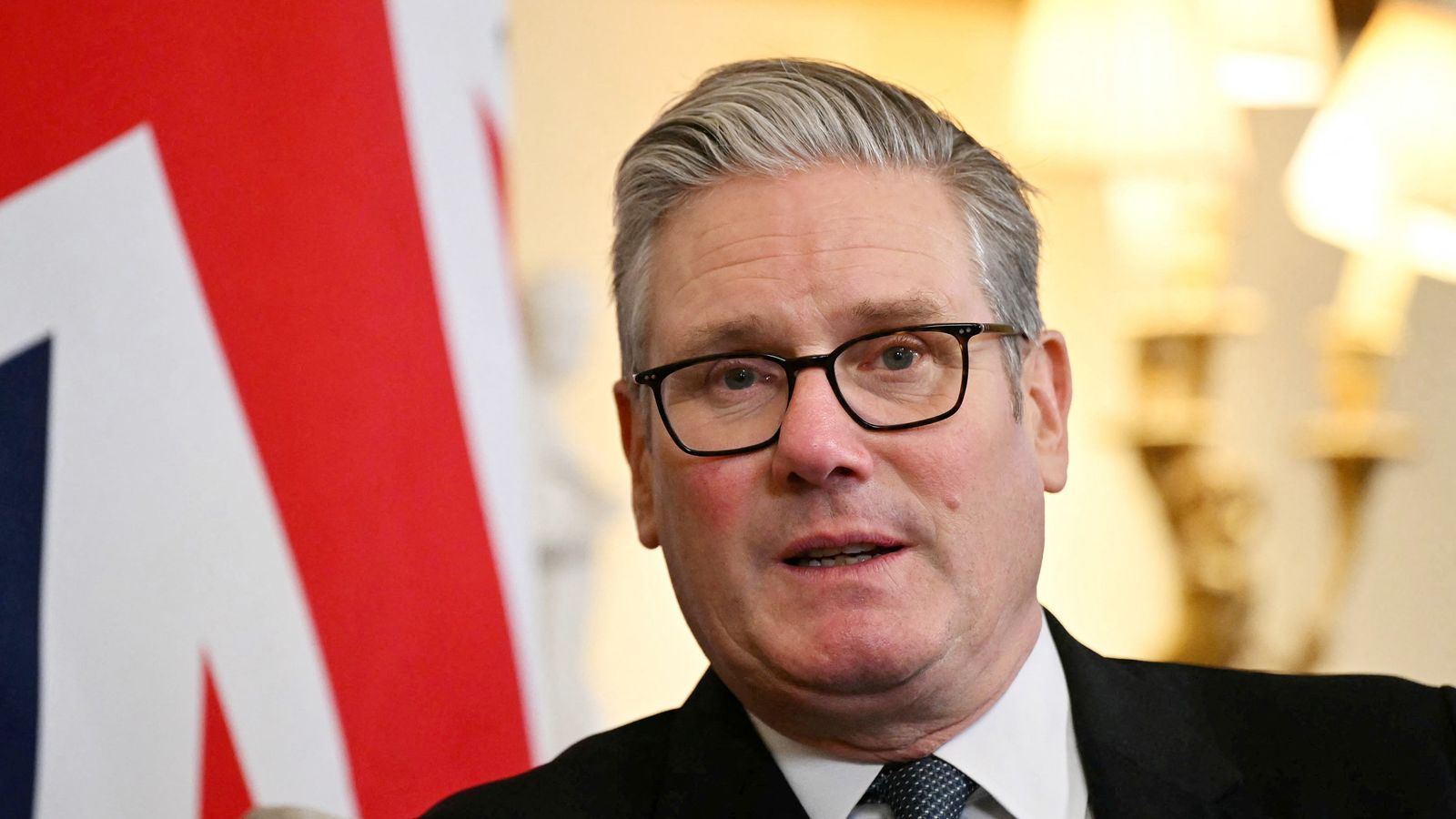
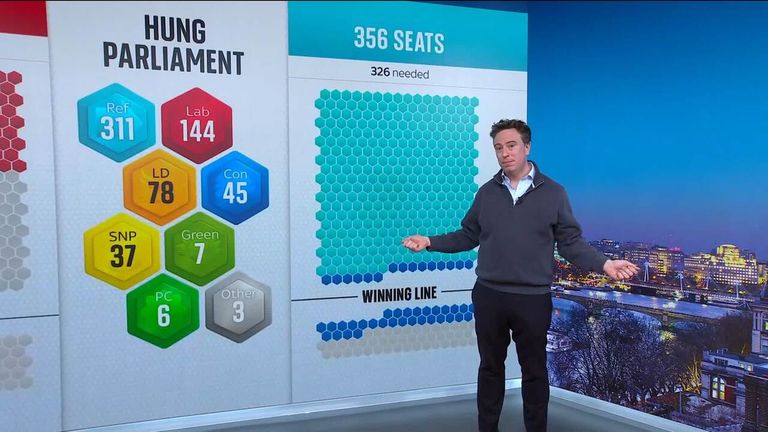
Four mayoral elections due to take place in May 2026 are set to be postponed by two years, Sky News understands.
Elections for the new mayoralties of Essex, Hampshire and the Solent, Sussex and Brighton, and Norfolk and Suffolk will be pushed back until 2028.
The decision, first revealed by The Sun, is due to be announced by ministers on Thursday.
This is the second time elections are being delayed in these areas. Local elections due in May 2025 were delayed by then communities secretary Angela Rayner for a year in order to convert them into combined authorities led by mayors.
However, it is understood that these councils need more time to complete their reorganisation.
Will Tories and Reform unite?
The news has sparked accusations Labour are delaying the elections for political purposes.
Reform UK’s head of policy Zia Yusuf said: “This is a blatant attempt to stop big Reform wins next May.
“It’s an act of a desperate government who are clinging onto power by any means necessary.
“Labour has proven time and time again that they’re not beyond denying democracy to millions of people in order to maintain their cosy status quo.”
Pic: PA
The Tories’ shadow housing secretary James Cleverly said it was a “scandalous attempt to subvert democracy by a Labour government whose credibility and popularity are already in tatters”.
“The Conservatives firmly oppose this decision to delay the mayoral elections, especially when candidates have been selected and campaigning is well under way,” he added.
“Democracy is being denied yet again after the council elections cancelled by Labour this year.
“There is no credible justification for this move. The Labour government must reverse it immediately.”
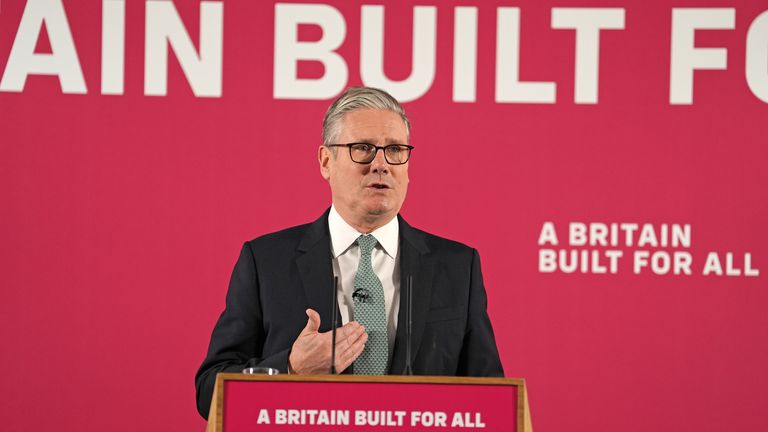
Starmer denies misleading voters
The reorganisation is part of Labour’s manifesto commitment to widen devolution, which it argues will improve local economies.
The government wants to abolish the two-tier system of county and district councils and merge them together to create larger unitary authorities. It also wants more areas to have regional mayors, like Greater Manchester’s Andy Burnham.
Read more:
Tory-Reform pact talks ‘not happening at any level’
Reeves hit by Labour rebellion
Reform UK enjoyed success in the local elections in May, winning more than 600 seats and taking control of 10 councils stretching from Kent to County Durham. The party also toppled a 14,000-strong Labour majority in a parliamentary by-election.
The Liberal Democrats’ local government spokesperson Zoe Franklin called the postponed elections “a disgrace”.
“Democracy delayed is democracy denied,” she added. “We are fighting to end this blatant stitch up between Labour and the Conservatives over local elections.”
-
 Sports2 years ago
Story injured on diving stop, exits Red Sox game
-
 Sports3 years ago
‘Storybook stuff’: Inside the night Bryce Harper sent the Phillies to the World Series
-
 Sports2 years ago
Game 1 of WS least-watched in recorded history
-
 Sports3 years ago
Button battles heat exhaustion in NASCAR debut
-
 Sports3 years ago
MLB Rank 2023: Ranking baseball’s top 100 players
-
Sports4 years ago
Team Europe easily wins 4th straight Laver Cup
-
 Environment3 years ago
Japan and South Korea have a lot at stake in a free and open South China Sea
-
 Environment1 year ago
Here are the best electric bikes you can buy at every price level in October 2024