
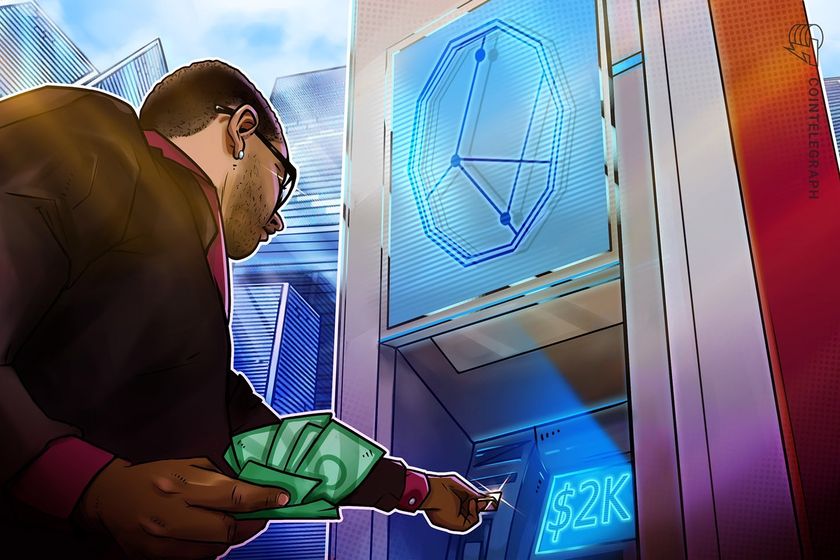
North Dakota Senate passes crypto ATM bill limiting daily transactions to $2K

The North Dakota Senate has passed a bill that regulates crypto ATMs while re-adding a provision capping daily transactions at $2,000 per user that was originally dropped by the state’s House.
The state’s Senate passed House Bill 1447 in a 45-to-1 vote on March 18. The bill was introduced to the state’s legislative assembly on Jan. 15 and aims to protect residents from scams by introducing a slate of new guidelines for crypto ATMs and their operators.
The latest version of the bill passed by the Senate requires crypto ATM and kiosk operators to be licensed in the state as money transmitters, limits customer withdrawals across their network of ATMs to $2,000 per day, and issues fraud warning notices.
Initially, the bill limited crypto ATM customer transactions to $1,000 a day, but a House committee last month loosened the limits, with a $2,000 a day limit for the first five transactions within 30 days.
Now, the Senate has capped the transaction limits at $2,000. The bill will need to be sent back to the House to vote on the changes before North Dakota Governor Kelly Armstrong can either veto or sign the bill into law.
The bill would also require operators to use blockchain analytics to monitor for suspicious activity, such as fraud, and report it to the authorities, and to provide quarterly reports on kiosk locations, names and transaction data.

The latest version of House Bill 1447 requires local crypto ATM operators to be licensed in the state as money transmitters, among other requirements. Source: North Dakota Legislative Assembly
During a North Dakota House Industry, Business and Labor committee hearing on Jan. 22, the bill’s primary sponsor, House Representative Steve Swiontek, said that crypto ATMs currently lack protection measures, which has “allowed criminals to exploit them for theft.”
Nebraska Governor Jim Pillen had signed similar legislation into law on March 13, the Controllable Electronic Record Fraud Prevention Act, which is designed to help combat fraud.
Meanwhile, US Senator Dick Durbin of Illinois, who formerly chaired the Senate Judiciary Committee, proposed similar federal legislation on Feb. 25.
Durbin cited a story from a constituent who fell prey to a scammer claiming the authorities had issued a warrant for their arrest but could pay a fine through a $15,000 deposit at a crypto ATM to avoid jail as motivation for introducing the new law.
Related: ‘Victim-blaming’ Americans can deter crypto scams reporting — Regulator
Last September, the Federal Trade Commission reported fraud losses at Bitcoin (BTC) ATMs had increased nearly tenfold from 2020 to 2023 and topped $65 million in the first half of 2024, with consumers aged 60 and older three times more likely to fall victim.
Coin ATM Radar data shows that the US still has the most Bitcoin ATMs, with 29,822 machines representing 78% of the global market.

The United States is the world leader in the number of Bitcoin and crypto ATMs. Source: Coin ATM Radar
Canada ranks second, at 9.2% of the market and 3,486 crypto ATMs, while Australia is third with 1,613 crypto ATMs, representing 4.3% of the market.
Magazine: How crypto laws are changing across the world in 2025
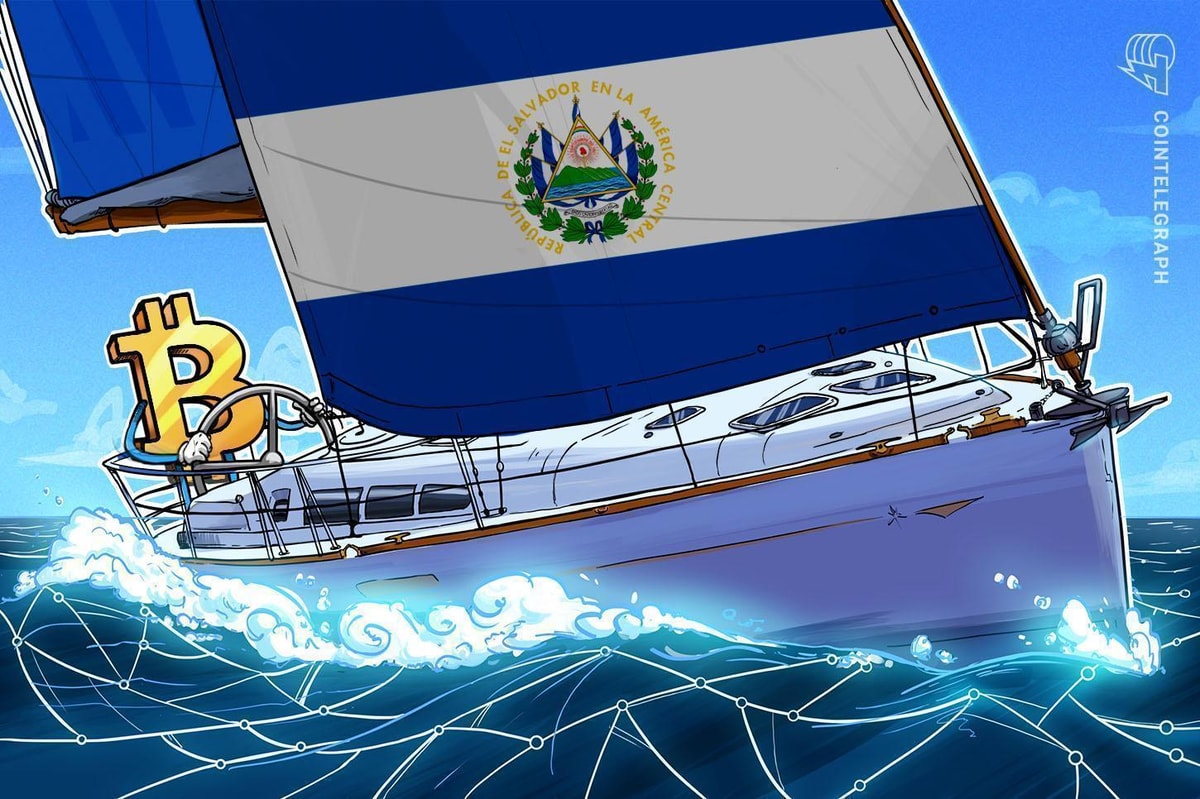

The International Monetary Fund’s mission chief for El Salvador issued a statement confirming that government authorities were proceeding with negotiations for the sale of the country’s Chivo Bitcoin wallet.
In a Monday statement, the IMF said El Salvador’s government was continuing to discuss its Bitcoin (BTC) project with the fund’s officials, and “negotiations for the sale of the government e-wallet Chivo are well advanced.” The announcement signaled that the government may be preparing to sell some or all of its crypto holdings in the Chivo wallet.
The statement followed a May deal with El Salvador in which the IMF would pay $120 million as part of a 2024 loan agreement for $1.4 billion. As part of the deal, the government would stop acquiring Bitcoin.
It’s unclear whether El Salvador is abiding by the terms of the deal. Though the IMF reported in July that the country’s government had not purchased any BTC since December 2024, El Salvador’s Bitcoin Office continues to announce crypto buys, including 1,090 Bitcoin worth about $100 million in November.
Related: CFTC changes guard as Selig takes reins, Pham departs
According to the terms of the IMF-El Salvador deal made public, the government would make public sector engagement of BTC-related economic activity “confined,” the private sector’s acceptance of Bitcoin would be voluntary, and it would wind down involvement in the Chivo wallet. Cointelegraph reached out to the IMF for comment but had not received a response at the time of publication.
El Salvador recognized Bitcoin as legal tender in 2021 and began acquiring the cryptocurrency as part of a strategy largely pushed by President Nayib Bukele. According to data provided by the country’s Bitcoin Office, the government held 7,509 Bitcoin as of Monday, worth about $659 million at the time of publication.
‘It’s not stopping,’ says Bukele on Bitcoin buys
Despite the reported deal between the IMF and El Salvador, Bukele said in March that the government would continue its Bitcoin investment strategy, purchasing at least one BTC daily. It’s unclear how the president’s statement could affect the IMF agreement.
Magazine: When privacy and AML laws conflict: Crypto projects’ impossible choice

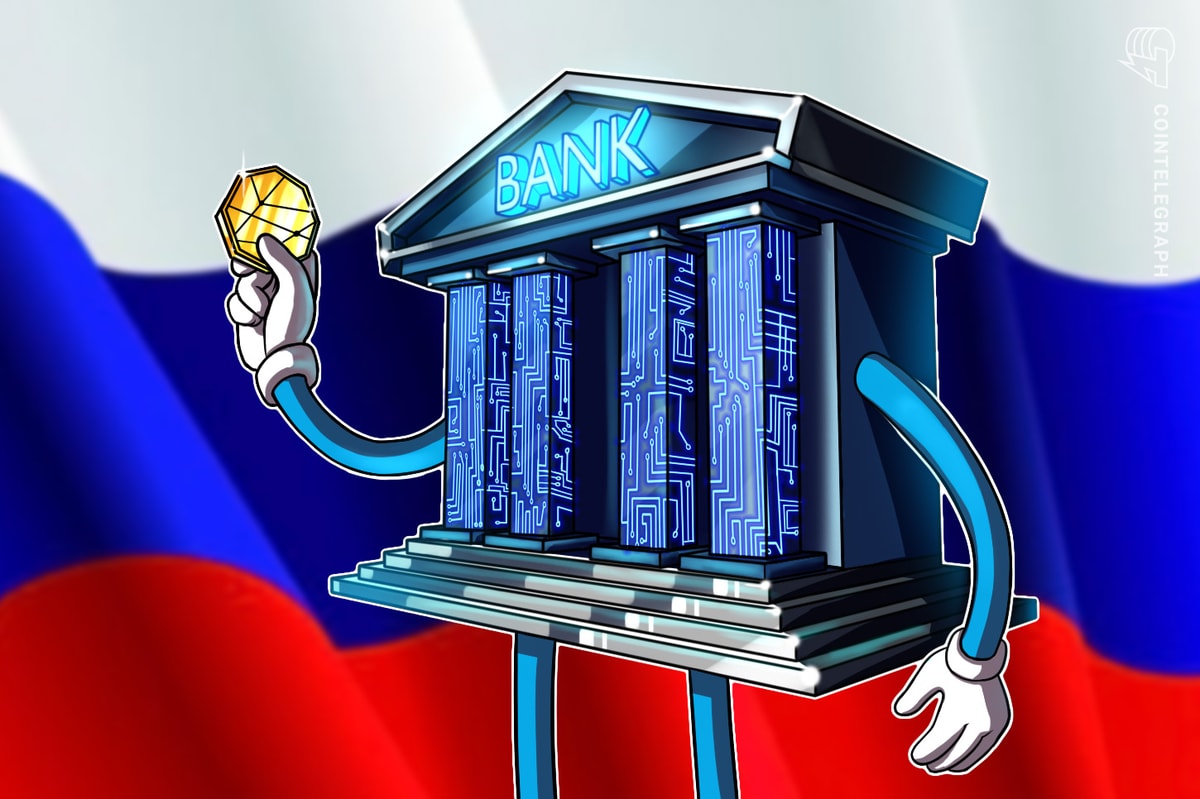

The Bank of Russia put forward a policy proposal that would allow non-qualified investors to buy certain cryptocurrencies.
According to a Tuesday announcement, the central bank’s proposal would allow both qualified and non-qualified investors to buy most crypto, but with limitations.
Non-qualified investors would be limited to a yet-to-be-defined set of liquid crypto after passing a knowledge test, capped at 300,000 rubles ($3,834) a year. Qualified investors would gain broad market access excluding privacy coins, also subject to a knowledge test.
Russian residents will also be able to acquire crypto on foreign platforms, pay with foreign accounts, and transfer the resulting assets through Russian intermediaries. In such cases, they will be required to notify the tax service of those transactions.
Related: Belarus blocks Bybit, Bitget, OKX as Russia clamps down on crypto gray area
An anticipated change, broader than expected
The report follows a recent statement from the central bank’s first deputy governor, Vladimir Chistyukhin, who recently said that Russia was considering easing crypto rules.
He hinted at the potential removal of the requirement to meet the “super-qualified investor” criteria for buying and selling crypto with actual delivery.
The “super-qualified investor” category was introduced in late April, when Russia’s finance ministry and central bank launched a crypto exchange. This classification is defined by wealth and income thresholds of over 100 million rubles ($1.3 million) or an annual income of at least 50 million rubles.
Related: Here’s why Russia ranks highest in Europe for crypto adoption: Chainalysis
Open to, but not endorsing
The central bank said that it “continues to consider cryptocurrencies a high-risk instrument.”
The announcement also reiterates that — while stablecoins and cryptocurrencies are recognized as monetary assets that can be bought and sold — they cannot be used for domestic payments.
This follows the State Duma — Russia’s legislative body — passing a law in June 2020 that bans the use of cryptocurrencies as a payment method.
Under the proposal, crypto transactions will be available through exchanges, brokers and trustees operating through their existing licenses. Specialized depositories and exchanges that work with cryptocurrencies will be subject to separate requirements.
-
 Sports2 years ago
Story injured on diving stop, exits Red Sox game
-
 Sports3 years ago
‘Storybook stuff’: Inside the night Bryce Harper sent the Phillies to the World Series
-
 Sports2 years ago
Game 1 of WS least-watched in recorded history
-
 Sports3 years ago
Button battles heat exhaustion in NASCAR debut
-
 Sports3 years ago
MLB Rank 2023: Ranking baseball’s top 100 players
-
Sports4 years ago
Team Europe easily wins 4th straight Laver Cup
-
 Environment3 years ago
Japan and South Korea have a lot at stake in a free and open South China Sea
-
 Environment1 year ago
Here are the best electric bikes you can buy at every price level in October 2024