
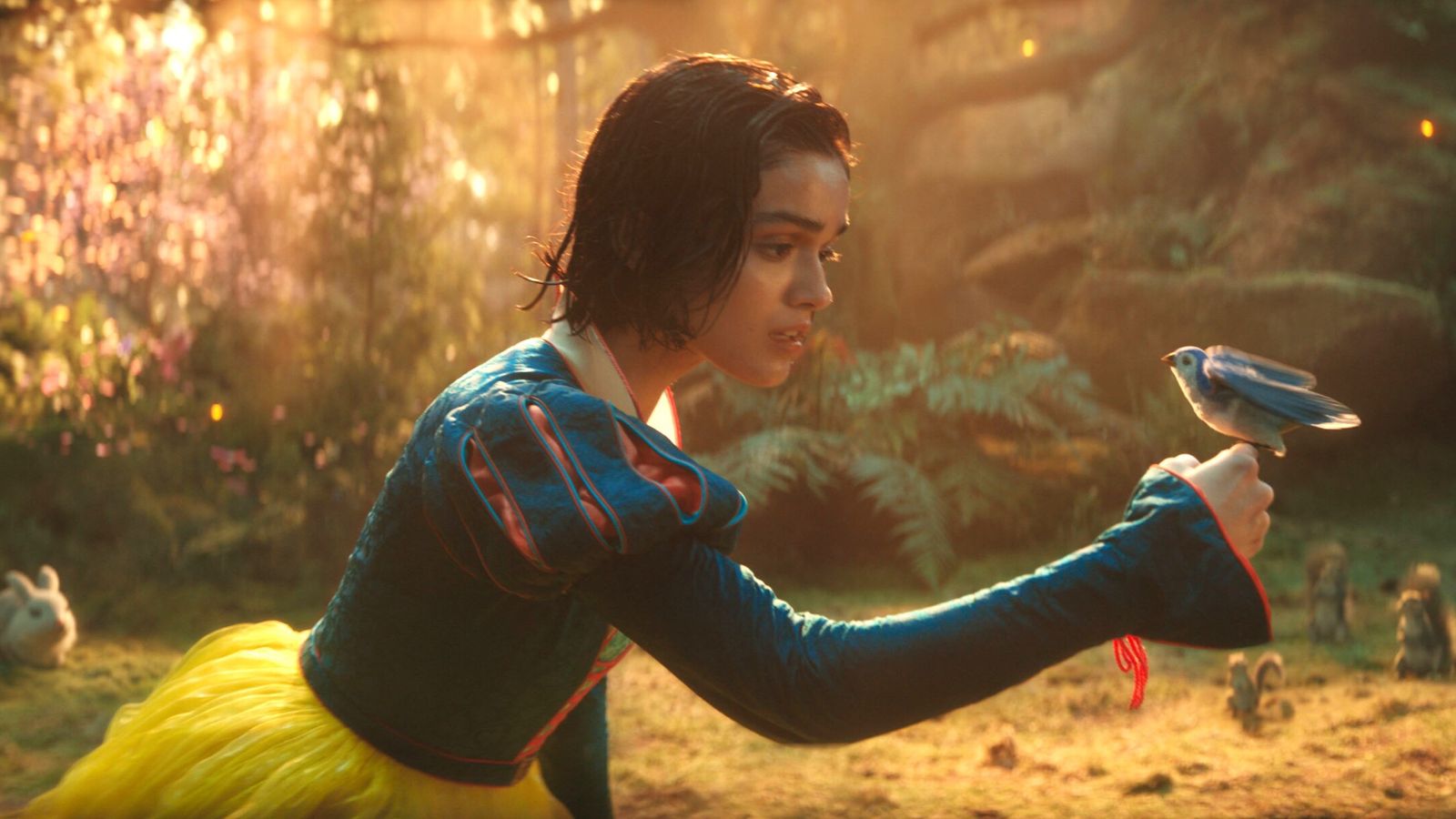
Snow White: Little people feel ‘erased’ by Disney’s use of CGI instead of real actors

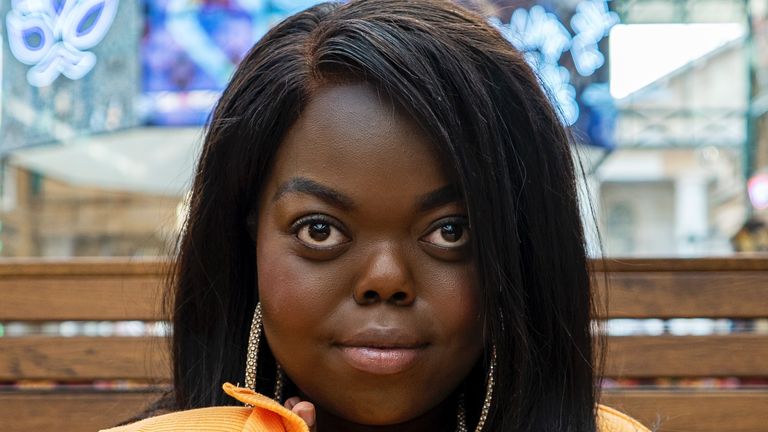
Disney’s use of CGI to create the seven miners at the heart of the live-action remake of Snow White And The Seven Dwarves has left little people feeling “disregarded” and “erased,” according to a disability activist.
Comedian, model and content creator Fats Timbo, who has spoken about being bullied as a child, told Sky News she believes Disney has missed a golden opportunity to educate children in what is likely to be their first encounter with someone with dwarfism.
Fats Timbo is a comedian, model, author and content creator
Timbo, who has dedicated her activism to raising the profile of people of short stature, has achondroplasia, a genetic condition that inhibits growth and affects around one in 27,500 people.
Award-winning actor Peter Dinklage, who has the same condition, previously criticised the film, telling the WTF With Marc Maron podcast: “It makes no sense to me. You’re progressive in one way, but then you’re still making that f***ing backward story about seven dwarves living in a cave together?”
Following the remarks, Disney said it consulted with members of the dwarfism community to “avoid reinforcing stereotypes from the original animated film”.
It was the 1937 classic that established Disney’s name as an industry leader. But the remake has been beset by controversy.
Early on it was labelled “woke” due to its casting of Latina actress Rachel Zegler, who is of Colombian-Polish descent, in the lead role.
Zegler also faced backlash after suggesting the early version of the film had content that was unsuitable for the 21st century – namely the fact the prince “literally stalks” Snow White.
There was then speculation as to whether Zegler and Israeli actress Gal Gadot, who plays the evil queen, got on as they have previously expressed very different views over the Gaza war.
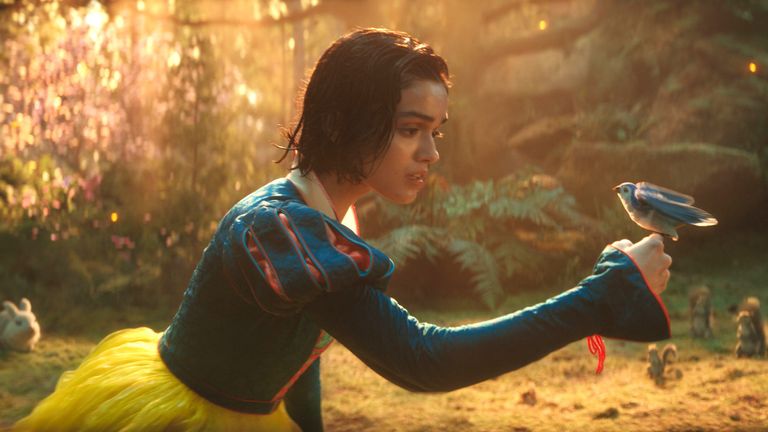
Pic: Disney
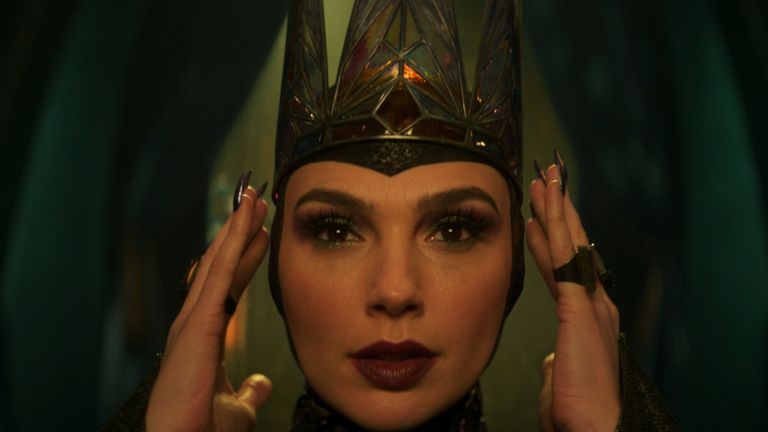
Gal Gadot as the evil queen. Pic: Disney
Not dwarves but ‘animated magical creatures’
Now the erasing of the dwarves – first from the title, then from the film, at least in human form – is proving highly divisive.
Disney used computer-generated images (CGI) to create what they called “animated magical creatures” rather than using little people in the roles.
Timbo tells Sky News: “Our representation is already small as it is – no pun intended. It’s already limited. To erase that and use CGI, like we’re mythical creatures or people that could be made on computers, it’s disregarding us in general.”
She goes on: “Let’s say kids have never seen somebody that has my condition and they’ve seen a CGI version of me. It’s going to be a bit baffling to children. It could have been a real educational piece to have actors that have the condition and give them the role they deserve.”
Timbo says lack of visibility for small people has real-world consequences.
“I used to get made fun of all the time. [Kids would be] saying ‘You’re one of the dwarves from Snow White,’ that kind of thing. I think now when somebody sees a little person, they’re not going to believe it’s real. They’re going to see that CGI version on Snow White instead of seeing a real little person that has real character with real depth.”
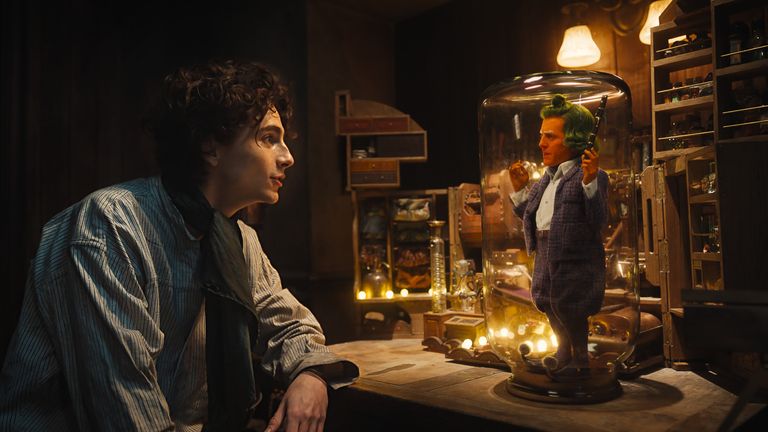
Timothee Chalamet and Hugh Grant in Wonka. Pic: Warner Bros Pictures
‘Snow White And The Little People’
Timbo says other children’s films were also used to taunt her, including Charlie And The Chocolate Factory: “The Oompa Loompas – I got called that all the time.”
In the Snow White remake, Martin Klebba voices CGI Grumpy, while George Appleby has a physical character, playing one of a band of seven robbers – both actors are little people.
But the decision not to use people of small stature to play all seven dwarves on-screen has left many scratching their heads.
And it’s not the first time small people have been edited out of movies.
Charlie And The Chocolate Factory’s 2023 re-make, Wonka, used special effects to shrink down Hugh Grant to play an Oompa Loompa, while 2012 film Snow White And The Huntsman replaced its dwarves with able-bodied actors Ian McShane, Ray Winstone and Nick Frost.
Not a fan of the term dwarfism, Timbo says she thinks Disney would also have done well to tackle the title differently, too: “If they had put a different spin on it where it was Snow White And The Little People, that would have sounded great.”
She says that in an attempt to avoid controversy, Disney chose “the safe option” of simply cutting the physical roles completely, and letting CGI fill the void.
It’s a decision Timbo calls “upsetting,” due to the fact it “reaffirms the negative stereotypes of little people not being actual people”.
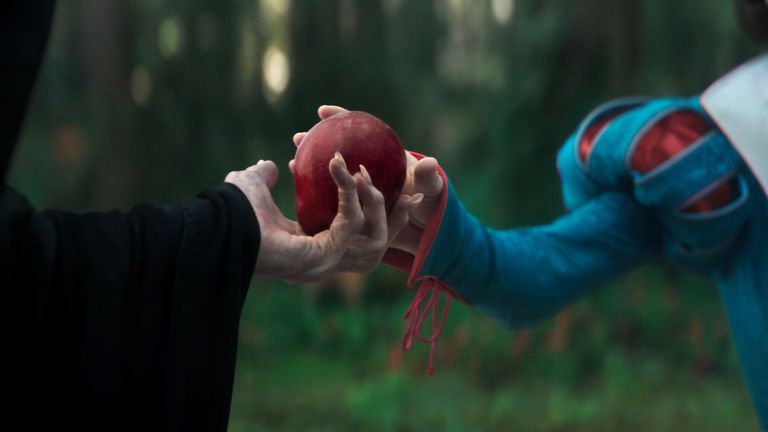
Pic: Disney
Disney’s poisoned apple
Timbo’s 2023 book Main Character Energy, about living fearlessly in the face of adversity, seems like it could be a good read for the bosses of Disney right now, as they face growing criticism over the decision.
With a muted release (no Leicester Square premiere, and a limited LA debut) it’s been a less-than-fairytale opening for a movie which had been intended to rival the success of 2017 remake Beauty And The Beast. Many might say it has turned into something of a poisoned apple.
Proving controversial and polarising, the response couldn’t be more removed from Disney’s brand proposition if it tried. Early reviews are so far mixed.
Timbo says she will give the movie a shot: “I want to see if it lives up to the hype or the bad press.”
Box office figures and audience ratings will soon deliver a verdict, and Timbo remains generous despite reservations: “I want it to surprise me, I want to enjoy it… I hope it does do well. But obviously, I think Disney could have done things a bit differently.”
Sky News has contacted Disney for comment.
Snow White is in cinemas now.
Thousands of members of actors’ trade union Equity are being asked whether they would support industrial action over artificial intelligence protections.
The organisation has launched an indicative ballot among about 7,000 members working in film and TV.
Performers are being asked whether they are prepared to refuse to be digitally scanned on set in order to secure adequate artificial intelligence protections.
It will be the first time the performing arts and entertainment trade union has asked this whole section of its membership to vote in a ballot.
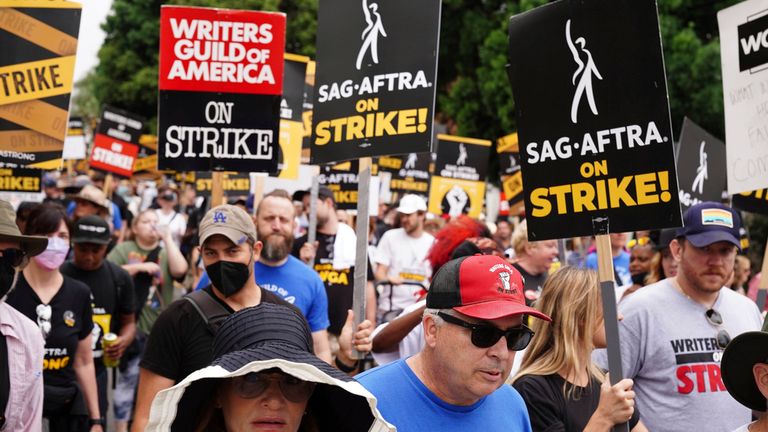
The Hollywood strikes took place in 2023. File pic: AP
The announcement follows the Hollywood strikes in 2023, when members of Equity’s sister union in the US, SAG-AFTRA, and writers, went on strike over issues including AI.
Video game actors in the US also protested over the use of AI, ending almost a year of industrial action earlier in 2025.
Equity’s ballot opens on Thursday and runs for two weeks, and will show the level of support the union has for action short of a strike.
Another statutory ballot would have to be made before any industrial action is taken.
“While tech companies get away with stealing artists’ likeness or work, and the government and decision makers fret over whether to act, unions including Equity are at the forefront of the fight to ensure working people are protected from artificial intelligence misuse,” Equity general secretary Paul W Fleming said in a statement.
“If bosses can’t ensure someone’s likeness and work won’t be used without their consent, why should performers consent to be digitally scanned in the first place?”
Mr Fleming said the ballot would give members the opportunity to “send a clear message to the industry: that it is a basic right of performers to have autonomy over their own personhood and identity”.
The union has no choice but to recommend members support industrial action, he said.
“It’s time for the bosses to step away from the brink and offer us a package, including on AI protections, which respects our members,” added Mr Fleming.
The hotly anticipated Spotify Wrapped is revealing our top tracks, artists and albums for 2025.
But how does the streaming service calculate personalised summaries of users’ listening habits and rank the UK’s hottest artists?
Here’s a look at how your data is used.
The platform describes the annual statistics as “a chance to look back on your year in sound”.
It says data is captured between January and mid-November on every account, although it mostly excludes anything streamed in private mode. (Don’t worry, your passion for the Spice Girls can be kept secret.)
Wrapped presents personalised listening statistics, which Spotify calls the “real story of your year of listening”, alongside global figures for comparison.
The streaming service says Minutes Listened reflects the actual time spent listening to audio on the platform.
Once a user streams at least 30 tracks, Spotify generates a list of Your Top Songs. Similarly, Your Top Artists ranks artists based on total minutes listening to a particular performer.
Other metrics identify the top genres users have played, as well as podcasts and audiobooks ranked by total minutes listened. And if you’ve listened to at least 70% of tracks on a record, you’ll see top albums too.
Spotify also creates Your Listening Age, a guesstimate of your age based on the era of the music “you feel most connected to”.
The streaming service says the statistic is calculated using a five-year span of music which users engaged with more than other listeners of a similar age.
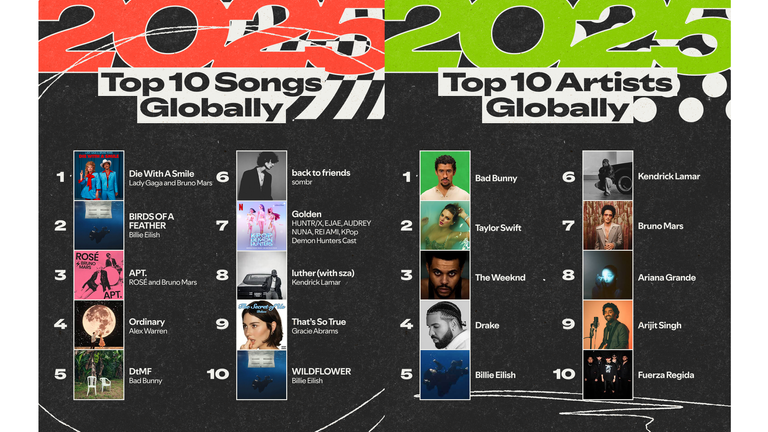
Spotify has been summing up 2025’s most listened to tracks. Pic: Spotify
Swift vs Bunny
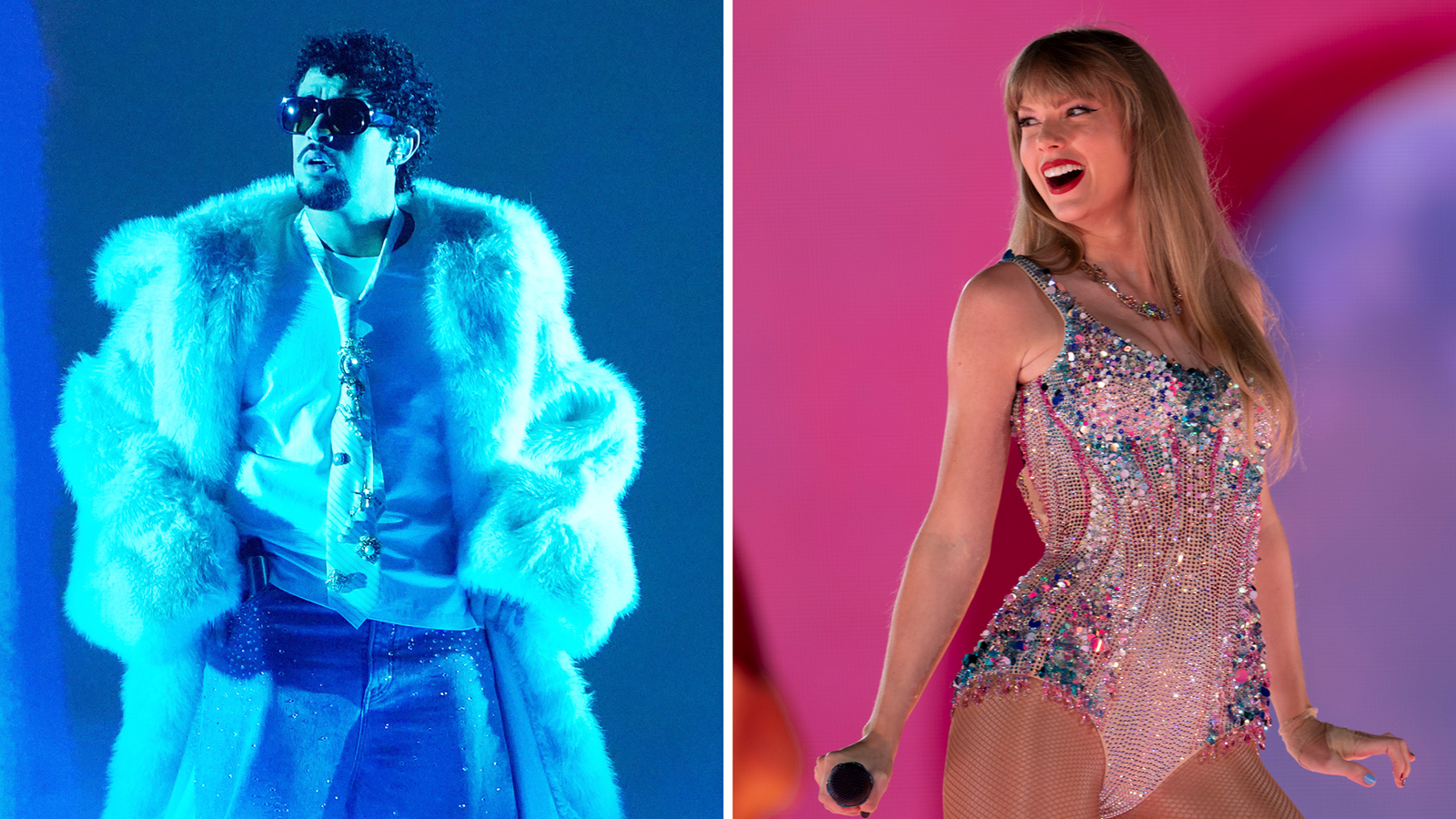
Pop superstar Taylor Swift has been named the UK’s most-streamed artist on Spotify for the third year in a row.
But she dropped out of the top spot in the global rankings, coming second to Puerto Rican superstar Bad Bunny, who secured more than 19.8 billion streams. Third were The Weeknd, followed by Drake and Billie Eilish.
Bad Bunny’s LP Debi Tirar Mas Fotos was the most listened-to album worldwide.
Read more from Sky News:
Sabrina Carpenter fury at video
Drake’s lawsuit dismissed
Spotify hikes UK prices
Spotify revealed Drake was the UK’s second most-listened to artist, followed by Sabrina Carpenter in third, The Weeknd in fourth and Billie Eilish in fifth.
Despite being the most listened-to artist, Swift failed to break into the UK’s top five most listened-to songs and albums of the year.
Alex Warren’s Ordinary was the most-streamed song, and Short ‘N’ Sweet, released by Carpenter last year, the top album.
-
 Sports2 years ago
Story injured on diving stop, exits Red Sox game
-
 Sports3 years ago
‘Storybook stuff’: Inside the night Bryce Harper sent the Phillies to the World Series
-
 Sports2 years ago
Game 1 of WS least-watched in recorded history
-
 Sports3 years ago
Button battles heat exhaustion in NASCAR debut
-
 Sports3 years ago
MLB Rank 2023: Ranking baseball’s top 100 players
-
Sports4 years ago
Team Europe easily wins 4th straight Laver Cup
-
 Environment3 years ago
Japan and South Korea have a lot at stake in a free and open South China Sea
-
 Environment1 year ago
Here are the best electric bikes you can buy at every price level in October 2024