

Save a massive $7,032 on Anker SOLIX F3800 bundles, EVOLV e-scooters $400 off, Worx lawn care roundup from $69, more

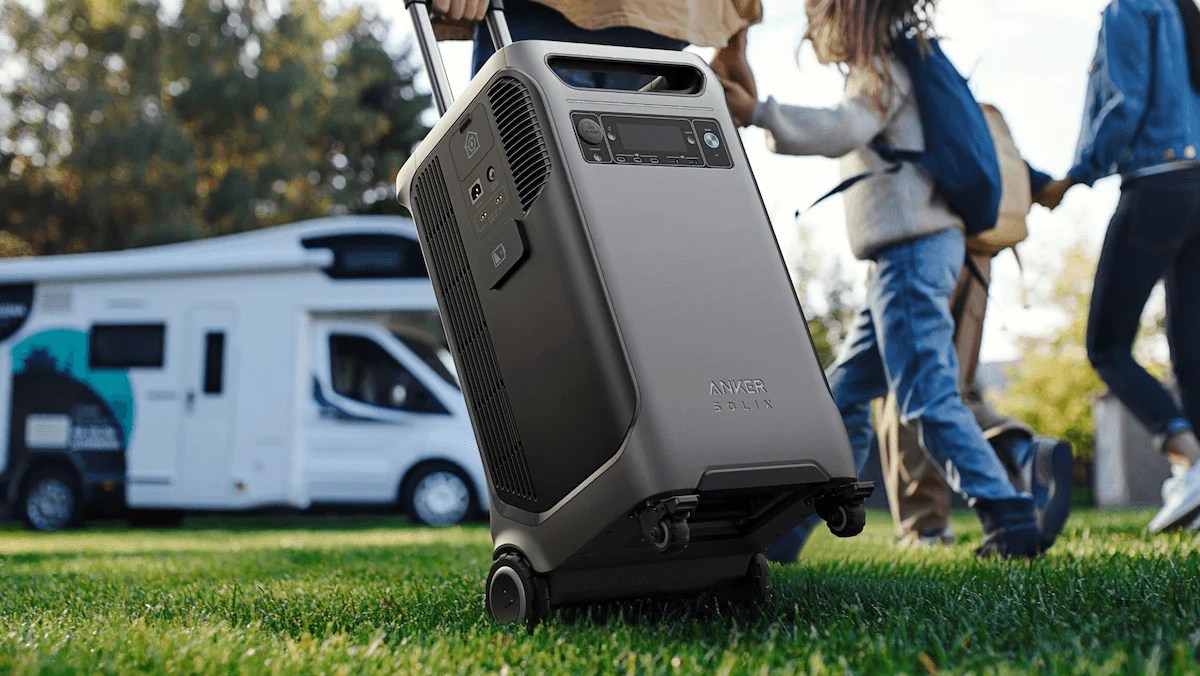
Leading the pack of Green Deals today is the massive savings we’re seeing coming from Anker’s final SOLIX Spring Sale flash offers running through March 31 on its F3800 Portable Power Station bundles, with up to $7,032 off four options and some free gear too – all starting from $2,799. Right behind it is EVOLV’s Spring Sale discounts on four of its high-quality electric scooters, like the popular TERRA, with deals starting from $1,129. Lastly, we have Worx’s WG509 12A Trivac 3-in-1 Electric Leaf Blower/Mulcher/Vacuum that has fallen to $70, among other lawn care equipment from the brand. Plus, all the other hangover Green Deals are in the links at the bottom of the page, like yesterday’s first-ever discount on ECOVACS’ new RTK robot mower, Anker’s PowerCore Reserve at $90, and more.
Head below for other New Green Deals we’ve found today and, of course, Electrek’s best EV buying and leasing deals. Also, check out the new Electrek Tesla Shop for the best deals on Tesla accessories.
Anker’s final SOLIX spring flash sale offers giant deals on F3800 power station bundles at up to $7,032 off
As part of its ongoing Spring Sale through March 31, Anker has launched the last of its SOLIX Spring Sale flash offers running through the rest of the month and taking up to 44% off in initial savings on a selection of F3800 bundles, as well as any additional savings you can score on packages that are over $3,000. Things are starting with the SOLIX F3800 Portable Power Station coming along with two 200W solar panels at $2,799 shipped. This bundle would normally cost you $4,997 at full price, which we don’t usually see featured in sales as much as we do the counterpart bundle with a single 400W panel. Today’s deal is coming in lower than we’ve tracked before thanks to the $2,198 markdown, which gives you a versatile and modular backup solution at the best price we can find. If you’d prefer the latest F3800 Plus model, be sure to check out the massive savings from its launch that have been extended alongside these deals.
Anker’s SOLIX F3800 is one of the best options for folks who want more versatility and expandability, as it starts with a 3,840Wh LiFePO4 capacity that can rise as high as 26.9kWh with future investments into its compatible expansion batteries (or scoring them in a bundle below). It puts out a normal 6,000W of output power that can surge up to 9,000W for large-scale appliances and home backup needs. There are 15+ output port options to connect to, which include dedicated ports for your RV, EV, and your home’s circuit breaker – though the latter will require either the Home Backup Kit for sectional support or the Home Power Panel for whole-home coverage and roof panel connections. You can recharge its own battery through an AC wall outlet, or connect up to its maximum 2,400W of solar input, which can refill the battery to 80% in 1.5 hours with ideal conditions.
If you’re trying to figure out which would be best for you – Anker’s SOLIX F3800 or the new SOLIX F3800 Plus, there are only a few differences to really keep in mind. First, the F3800 Plus has an increased solar input of 3,200W, as well as an increased capacity that it can take in from a generator. From there, it mainly depends on whether you’re an RV trekker or not – as the standard F3800 offers both L14-30R and 14-50R port options, while the F3800 Plus provides L14-30R and TT-30R ports, better for RV backup needs. Be sure to check out the full rundown of capabilities for the newly released F3800 Plus and its massive savings in our original coverage here.
Anker’s final SOLIX Spring Sale F3800 flash offers:
- F3800 (7,680Wh) with expansion battery and home backup kit: $4,084 (Reg. $7,097)
- Bonus 5% savings automatically applied in cart
- Comes with free protective cover
- F3800 (11,520Wh) with two expansion batteries: $4,928 (Reg. $8,997)
- Bonus 7% savings automatically applied in cart
- Comes with free protective cover
- Two F3800s (15kWh) with two batteries, home power kit, and four 410W panels: $9,299 (Reg. $16,331)
- Bonus 7% savings automatically applied in cart
These flash sale offers will be running for the rest of the month alongside Anker’s overall SOLIX Spring Sale deals, and be sure to also check out the extended F3800 Plus savings, as well as the recently added EverFrost 2 Electric Cooler savings, which will both last through the end of the main sale.

EVOLV takes up to $400 in spring savings off four of its electric scooters starting from $1,129
EVOLV has a Spring Sale savings event going on right now, which is taking up to $400 off a selection of its higher-end e-scooters, starting with the TERRA Electric Scooter that starts at the lowest rate of $1,129 shipped, after using the promo code SPRING-SALE at checkout. Coming off its usual $1,229 price tag, we don’t see too many discounts across the lineup and when we do, it’s often in small amounts, with this model usually only seeing this same $100 markdown – including for Black Friday, which has only been beaten once over the last year when it hit a new $1,079 low in September. You’re looking at the second-lowest price we have tracked while these savings last.
The popular TERRA e-scooter sports dual 600W motors alongside a 15.6Ah battery, giving it the capabilities to reach 31 MPH top speeds and carry you anywhere for up to 34 miles on a single five to seven hours of charging. There are two driving modes here – the dual mode, activating both motors to produce up to 2,200W of peak power for maximum speed and tackling inclines, as well as the eco mode, which only utilizes one motor to limit things at 15 MPH, providing longer-lasting rides. Among its stock features, you’ll find front and rear shock suspension, dual drum brakes, dual LED headlights and dual LED taillights, as well as in-deck lights too – plus, the folding frame that conserves storage space when its not in use.
EVOLV’s other Spring e-scooter deals:

Clear yard debris by blowing, collecting, and/or mulching with Worx’s 12A Trivac at $70
As part of its Big Spring Sale, Amazon is offering the Worx WG509 12A Trivac 3-in-1 Electric Leaf Blower/Mulcher/Vacuum for $70.48 shipped. It’s coming down off its usual $100 price tag here today, with the last year mainly seeing prices drop between $75 and $95 on average, though we did see it go as low as $65 during Black Friday. While we have seen the price drop as far as $60 in the past, this deal gives you one of the best recent rates we’ve tracked at $30 off the going rate, landing it down among the lowest we have seen.
The Worx Trivac was designed with the phrase “work smarter, not harder” in mind, offering up a 3-in-1 functionality to either blow, collect, and/or mulch the debris in your yard. The standard blower settings max out at 210 MPH worth of airflow, while the included bag provides the means for collection, which is controlled via a simple flip of a switch. It boasts a two-stage metal impeller and shredder blades to complete mulching tasks, which Worx assures “takes 18 bags worth of leaves and chops it down into one.” It weighs in at only 10 pounds for easier use despite varying sizes and strengths, and sports an angled collection nozzle so you can even reach under patio furniture, your deck, and more. This is a corded model, by the way, so you just have to keep it plugged in for prolonged use rather than wait for any batteries to recharge.
Other notable Worx Big Spring Sale lawn care deals:
Best New Year EV deals!
- GoTrax Everest Electric Dirt Bike (new low): $3,979 (Reg. $6,000)
- Aventon Ramblas Electric Mountain Bike: $2,599 (Reg. $2,899)
- Lectric ONE Long-Range e-bike with $467 bundle: $2,399 (Reg. $2,507)
- Lectric XPedition 2.0 35Ah Cargo e-bike w/ $654 bundle: $1,999 (Reg. $2,741)
- Lectric XPedition 2.0 26Ah Cargo e-bike w/ $762 bundle: $1,799 (Reg. $2,561)
- Rad Power RadRunner 3 Plus Utility e-bike (new low): $1,699 (Reg. $2,199)
- Aventon Aventure 2 All-Terrain e-bike: $1,699 (Reg. $1,999)
- Tenways CGO800S Step-Thru Commuter e-bike with $315 in free gear: $1,699 (Reg. $1,999)
- Aventon Pace 500.3 Step-Over e-bike with free extra battery: $1,599 (Reg. $1,799)
- Aventon Pace 500.3 Step-Through e-bike with free extra battery: $1,599 (Reg. $1,799)
- Heybike ALPHA All-Terrain e-bike (new model): $1,599 (Reg. $1,699)
- Aventon Abound Cargo e-bike: $1,599 (Reg. $1,999)
- Lectric XPeak 2.0 Long-Range Off-Road e-bike with $336 bundle: $1,579 (Reg. $2,261)
- Aventon Level 2 Commuter e-bike: $1,499 (Reg. $1,899)
- Tenways CGO600 Pro belt-drive e-bike with $118 bundle: $1,499 (Reg. $1,899)
- Tenways CGO600 Pro chain-drive e-bike with $118 bundle: $1,499 (Reg. $1,899)
- Rad Power RadWagon 4 Cargo e-bike: $1,499 (Reg. $1,799)
- Aventon Sinch 2 Folding e-bike: $1,399 (Reg. $1,699)
- Velotric 2024 Nomad 1 Plus All-Terrain e-bike with $134 bundle: $1,399 (Reg. $1,799)
- Lectric XPeak 2.0 Standard Off-Road e-bike with $316 bundle: $1,399 (Reg. $1,715)
- Lectric XPedition 2.0 13Ah Cargo e-bike with $326 bundle: $1,399 (Reg. $1,813)
- Rad Power RadRover 6 Plus Step-Thru e-bike with extra battery: $1,399 (Reg. $1,599)
- Rad Power RadRunner Plus Utility e-bike (new low): $1,299 (Reg. $1,799)
- Rad Power RadExpand 5 Folding e-bike with extra battery: $1,299 (Reg. $1,599)
- Velotric T1 ST Plus Lightweight e-bike with $120 bundle: $1,299 (Reg. $1,549)
- Velotric Discover 1 Plus Step-Thru Commuter e-bike with $120 bundle: $1,199 (Reg. $1,599)
- Lectric XP 3.0 Long-Range e-bikes with $643 March Madness cargo bundle: $1,139 (Reg. $1,782)
- Heybike Hauler Cargo e-bike with large rear basket (new low): $1,199 (Reg. $1,499)
- Lectric XPeak 1.0 Off-Road e-bike with $227 bundle (new low): $1,099 (Reg. $1,626)
- Lectric XPedition 1.0 Single-Battery Cargo e-bike with $336 bundle (new low): $1,099 (Reg. $1,735)
- Rad Power RadRunner 2 Utility e-bike (new low): $999 (Reg. $1,499)
- Aventon Soltera.2 Urban Commuter e-bike: $999 (Reg. $1,199)
- Lectric XP 3.0 Standard e-bikes with $518 March Madness cargo bundle: $999 (Reg. $1,518)
- Segway Ninebot MAX G3 eKickScooter (preorder): $900 (Reg. $1,400)

Best new Green Deals landing this week
The savings this week are also continuing to a collection of other markdowns. To the same tune as the offers above, these all help you take a more energy-conscious approach to your routine. Winter means you can lock in even better off-season price cuts on electric tools for the lawn while saving on EVs and tons of other gear.
FTC: We use income earning auto affiliate links. More.



I recently attended Strutt’s Demo Day to check out the company’s new EV1 mobility device, and even if you’ve never paid attention to electric wheelchairs before, you’ll still probably find this interesting.
The EV1 isn’t really a wheelchair in the traditional sense. It’s closer to an autonomous robot that just happens to take the form of a chair. Imagine a self-driving car fused with a humanoid robot, shrunk down to indoor-outdoor mobility scale. That’s the EV1. And after having spent some seat time in it, I can tell you that this technology is going to change lives.
This isn’t my normal scene – you’re much more likely to see me testing out wild new e-bikes or powerful electric motorcycles. But I was intrigued by the idea of a new type of electric mobility device that had the potential to change not just the way people get around, but the way they live. And I’m glad I followed that hunch and visited Strutt’s Demo Day.
If you want to experience the demos and live testing yourself, or rather vicariously through me, then check out my video below. It’s a fascinating experience.
Then keep reading for my complete thoughts.
At its core, the EV1 is a mobility device that can drive itself and think for itself. But the level of tech onboard goes far beyond basic autonomy. It uses a full suite of sensors – lidar, vision cameras, ultrasonic sensors, and more – to constantly map its environment.
As the engineers explained to us, it’s actually a much trickier problem to solve than a self-driving car like Waymo, since self-driving cars generally stick to the simplified world of car lanes. But a mobility device needs to be able to autonomously navigate everything from a packed shopping mall to a grassy park path to the livingroom – all without accidentally driving itself down the stairs or over the family dog. That means the EV1 gets an array of overlapping sensors that would make a Tesla jealous.
And despite all that tech, the entire machine breaks down into five major pieces without tools, without unplugging wires, and without any fuss. In about 30 seconds, it’s ready to be lifted into the trunk of a car. Or for those with a vehicle large enough, it can just drive itself up the ramp and park itself in a vehicle all by itself.
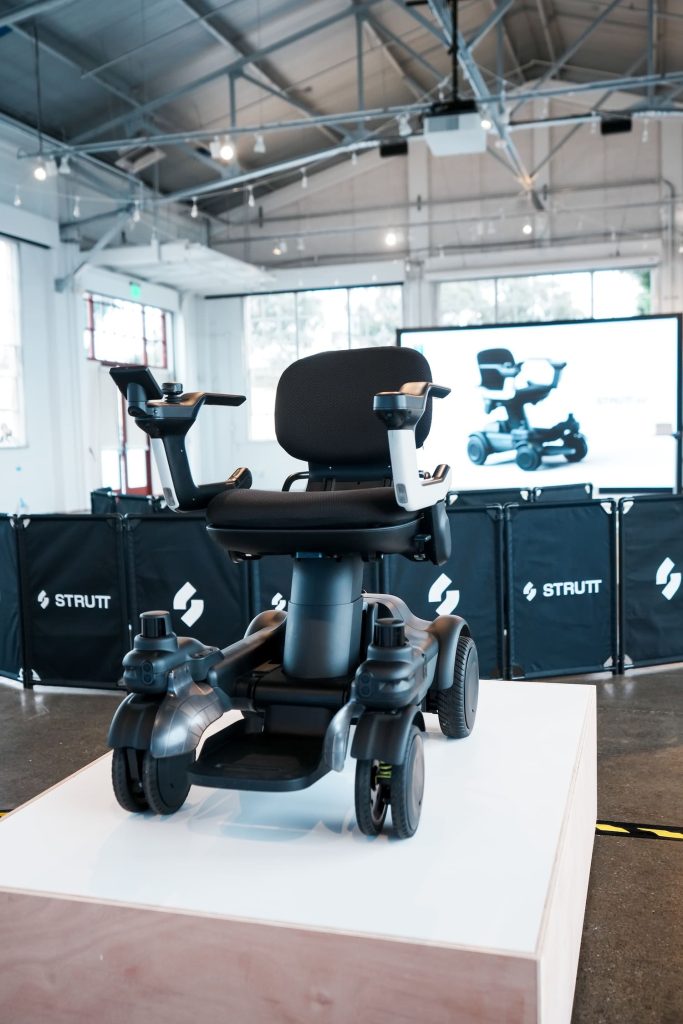

It also includes built-in AI navigation. You can literally tell it where you want to go, like asking it to take you into the kitchen to grab a drink, and it will plan the route and drive you to your fridge. That may sound like a demo-party gimmick until you consider how transformative it could be for people who currently have to navigate narrow, cluttered, or inaccessible spaces by carefully inching forward with both hands on a joystick. Hands-free indoor navigation could be a game changer.
You can even tap a location on the live-view map shown on the display and the EV1 will just start taking you there, completely hands-free. Or you can summon it from another room, for example if you’re sleeping in bed and need the chair to come pick you up in the bedroom. This is autonomous driving on another level.
There’s also a mode called Co-Pilot, which lets the user take control to navigate themselves, but will constantly monitor for obstacles and make corrections if the user is about to hit something. For example, you can drive right through a narrow doorway without worrying about precision steering, since it won’t let you graze the edges of the door frame (and if you’ve ever seen the doorframes in the home of a wheelchair user, you’ll know what a game changer that would be).
Strutt demonstrated this mode by having a user blindfolded while driving through a curved hallway. He was simply pressing forward on the controls, but the EV1 smoothly followed a curved path on its own instead of letting him run into the wall when it began to curve. I tried it myself, and it’s uncanny how natural it feels.
But the EV1 isn’t limited to indoor environments. Strutt built in several clever innovations that make it surprisingly capable off pavement. There’s real suspension. The front wheels are actually dual wheels, helping them roll over gaps and rails such as those found in city trolley systems. Those same front wheels aren’t passive casters; they each have their own motors, giving the EV1 proper power steering instead of relying on tank-turning from the rear wheels. It drives like something purpose-built rather than hacked together. And that allows it to handle terrain and inclines not possible from other devices, such as off-camber turns that would send others sliding sideways down an incline.

During the demo, I asked if I could take the EV1 outside the fancy exhibition hall to see how it handled the real world. As I approached the door, trying to figure out how to open it while driving through at the same time, one of the Strutt staff told me, “Just ram it.”
I hesitated, worried I’d scratch up their expensive prototype, but he assured me it would be fine. Turns out, it was very fine. Then I remembered the clip in the presentation they shared of the EV1 towing a Tesla with a tow strap, so I guess the power was never really going to be an issue.
Speed-wise, Strutt had the units limited to 12 km/h (7.5 mph), but even at that speed they feel legitimately fast. Fast enough, in fact, that I switched into manual mode to really get a feel for it.
With a bunch of YouTubers flying around in fancy electric mobility devices, you can imagine that a drag race pretty quickly materialized. I won’t tell you who won, you’ll have to watch the video above to see. But let’s just say that my putting it in manual override mode to remove all the safety features temporarily might have been a dirty trick that gave me an advantage.

All the while, though, I found myself ping-ponging emotionally. On one hand, I’m having a blast riding a futuristic robot-chair hybrid. On the other hand, I’m constantly reminded that for many people, devices like this aren’t toys – they’re essential tools that allow them to navigate a world that wasn’t built for them. Many of the very people who helped Strutt beta test the device during development were there at the presentation, EV1), it was also a stark reminder that while I’m goofing off racing these things, this is technology meant to help people that need it in order to navigate a world not designed for them.
But maybe those two feelings don’t have to be in conflict. Why shouldn’t a device that empowers people also be enjoyable to use? Why can’t a life-changing device like this bring more than just mobility? Why can’t it actually be… fun? I’ve never looked at a mobility chair and thought it looked like a blast to use. This one genuinely is!

But the last bit here that will be critical, and something we just don’t yet know yet, is what it will cost. Considering traditional powered wheelchairs already run a few thousand dollars for relatively clunky designs, this level of advanced robotics likely won’t come cheap.
Strutt says pricing will be revealed early next year, and has just launched an early reservation program offering 35% off the first 200 units (more info in their Facebook group here). Hopefully the final price ends up within reach for the people who most need it. And like many early-stage technologies, costs will likely come down over time as production scales.
For now, though, the EV1 represents something new in mobility: a device that’s powerful, capable, intuitive, and – unexpectedly – pretty darn fun.


FTC: We use income earning auto affiliate links. More.
Environment
Putin says Russia is willing to supply ‘uninterrupted’ fuel to India, as U.S. pressures New Delhi to cut back


Russian President Vladimir Putin is welcomed by Indian Prime Minister Narendra Modi upon arrival at the Palam Air Base in New Delhi, India December 4, 2025.
Grigory Sysoev | Via Reuters
Russian President Vladimir Putin has underlined Moscow’s willingness to provide “uninterrupted shipments of fuel” to India, as the U.S. pressures New Delhi to give up importing their oil.
Putin made the offer during a joint address with Indian Prime Minister Narendra Modi on Friday, part of his first visit to the country since Russia’s full-scale invasion of Ukraine in 2022, which triggered widespread sanctions.
The sanctions forced Russia to seek new customers for its exports. India has become the second biggest buyer of Russian crude oil, after China, with a report Finland-based Centre for Research on Energy and Clean Air showing India bought 38% of Russian crude exports in October.
In October, President Donald Trump sanctioned two of Russia’s largest oil companies, Rosneft and Lukoil. This followed a tariff of 25% on India for buying Russian oil in August. But India has to walk a tightrope because it has close ties to the U.S. while also relying on Russia for fuel and access to military hardware.
Putin questioned U.S. pressure on India in an interview to an Indian television channel on Thursday.
The United States still buys nuclear fuel from Russia for its own nuclear power plants, Putin said in the interview, adding: “If the U.S. has the right to buy our fuel, why shouldn’t India have the same privilege?”
While Trump has acknowledged that India has cut back its Russian oil imports, experts told CNBC that this may be a temporary trend.
Apart from crude oil, Russia’s Rosatom is also delivering reactors and reportedly fuel for India’s Kudankulam nuclear power plant in Tamil Nadu, which has a combined capacity of 6000MW.
India and Russia have an energy partnership, the Russian president said, adding that Moscow had been is reliable supplier of “oil, gas, coal and everything that is required for the development of India’s energy”.
Last month, India announced a “historic deal” with Washington, in which Indian state-owned oil companies signed a one-year deal to import around 2.2 million tonnes per annum of liquefied petroleum gas from the U.S.

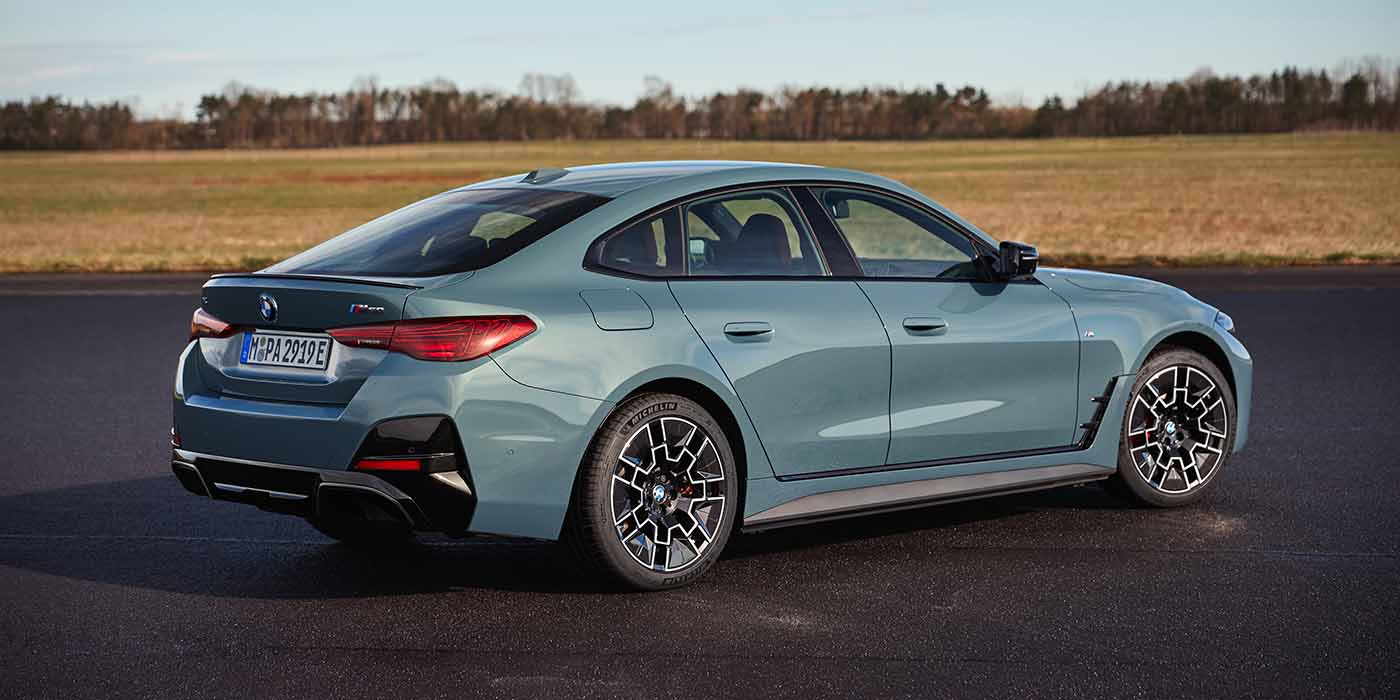
Yes, Virginia, there are still great EV lease deals to be had in December. Hyundai continues to offer EV leases for under $200 a month, and the BMW i4 can be leased for the same price it was when the federal tax credit was still in effect. With 2025 models disappearing fast, this might be your last shot to snag a year-end lease deal on an EV. Check out the standouts below.

2025 Hyundai IONIQ 6 lease from $189/month
The 2025 Hyundai IONIQ 6 remains a fantastic deal: the IONIQ 6 SE Standard Range can be leased from $189 per month for 24 months with a $3,999 due at signing (12,000 miles per year). Its effective cost is just $356, and this month’s IONIQ 6 SE lease includes $13,000 in lease cash that you can’t get elsewhere. The offer is good until January 2.
Our friends at CarsDirect report that the SEL trim is actually a better deal at $239 with $3,999 at signing, with an effective cost of $406. Even though its MSRP is over $7,700 higher than the SE, it’s just $50 more a month to lease. The SE Standard Range has a range of 240 miles, whereas other styles have a range of up to 342.
As usual, offers vary according to location, and this is a regional offer based in California.
Click here to find a local dealer that may have the Hyundai IONIQ 6 in stock. –trusted affiliate link

2025 Hyundai IONIQ 5 lease from $189/month
Believe it or not, the 2025 Hyundai IONIQ 5 SE Standard Range RWD, which starts at $44,200, can still be leased through January 2 for $189 a month for 36 months (10,000 miles per year) with $3,999 due at signing. That works out to an effective monthly cost of about $300.
The IONIQ 5 SE RWD Standard Range offers an EPA-estimated 245 miles of range, and this particular offer is available in the Los Angeles and greater California metro areas (I’ve seen it at dealers in Carlsbad and Santa Monica, for example). And if you’re tempted by an upgrade, the SEL RWD trim is just $50 more per month under the same terms.
Click here to find a local dealer that may have the Hyundai IONIQ 5 in stock. –trusted affiliate link
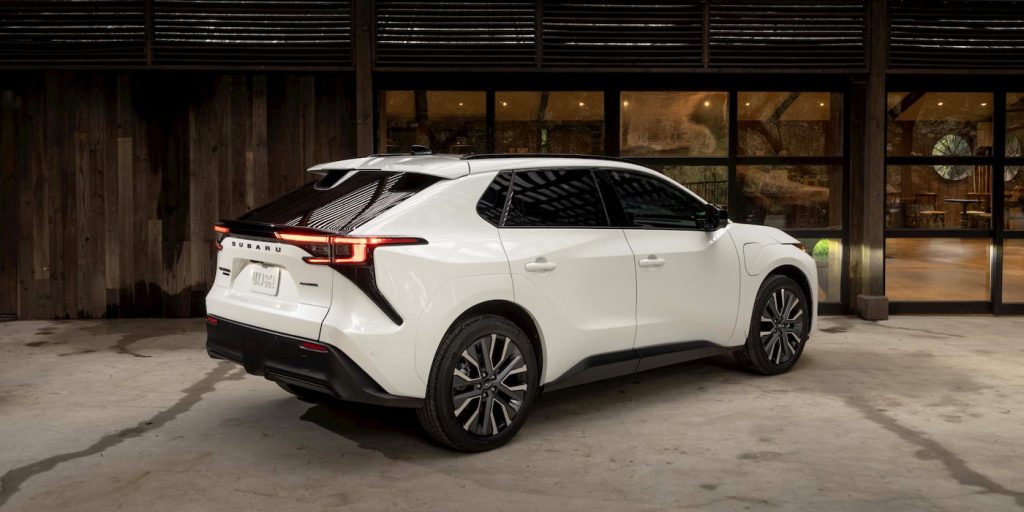
2026 Subaru Solterra 5 lease from $299/month
In several regions, the 2026 Subaru Solterra Premium can be leased for $299 per month for 36 months, with a down payment of $2,799 due at signing, resulting in an effective monthly cost of $377. That makes it $95 per month cheaper to lease than a 2026 Toyota bZ, which is $472. (These figures are for California.)
A $500 loyalty discount is available to returning lessees. It doesn’t require a trade-in and can be transferred to household members. If you factor in the loyalty discount, the Solterra’s effective cost drops to $363. The offer ends January 2.
Subaru’s advertised lease prices are based on 10,000 miles a year, but that’s changeable. However, a larger mileage allowance will lower the EV’s residual value, making it more expensive.
Click here to find a local dealer that may have the Subaru Solterra in stock. –trusted affiliate link
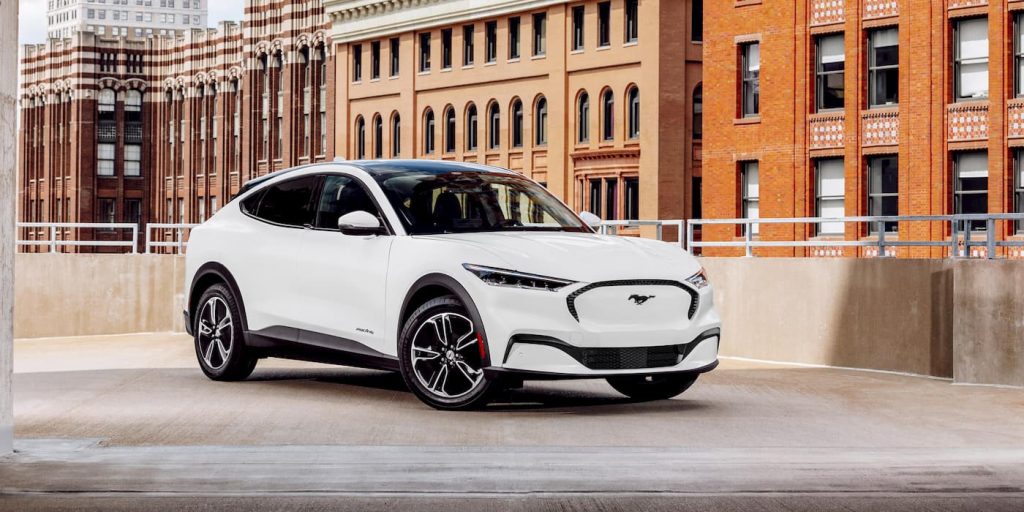
2025 Ford Mustang Mach-E from $219/month
The 2025 Ford Mustang Mach-E can still be leased for $219 per month for 24 months with a $4,499 due at signing (10,500 miles per year) until January 5. In this configuration, the Mach-E has a range of up to 300 miles.
This is a regional offer for California, but the great deal isn’t limited to just that state. The example includes a total of $8,750 in lease cash; however, the catch is that if you opt for the lease cash, you have to decline the free home charger with installation or Ford’s $2,000 public charging credit.
Click here to find a local dealer that may have the Ford Mustang Mach-E in stock. –trusted affiliate link
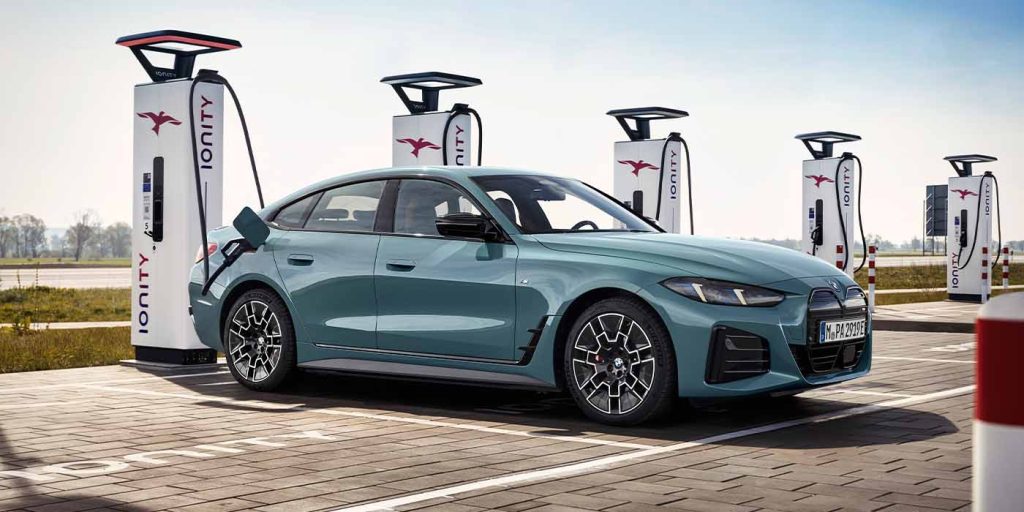
2025 BMW i4 from $399/month
Remarkably, the 2025 BMW i4 is still leasing for the same price as it was when the federal tax credit was still in effect. In many regions, the eDrive40 can be leased for $399 for 36 months with $4,999 due at signing (10,000 miles per year). Its effective cost is just $538 per month, which is impressive when you consider that the i4’s retail price is over $60,000.
The offer, available until January 2, includes a $7,500 lease credit, and a $1,000 loyalty discount is also available for returning lessees. With the loyalty bonus, the i4’s effective monthly cost could be as low as $510.
In this configuration, the i4 has an EPA-estimated range of 318 miles. As before, BMW’s lease includes two years or 1,000 kWh of free charging with Electrify America.
Click here to find a local dealer that may have the BMW i4 in stock. –trusted affiliate link

The 30% federal solar tax credit is ending this year. If you’ve ever considered going solar, now’s the time to act. To make sure you find a trusted, reliable solar installer near you that offers competitive pricing, check out EnergySage, a free service that makes it easy for you to go solar. It has hundreds of pre-vetted solar installers competing for your business, ensuring you get high-quality solutions and save 20-30% compared to going it alone. Plus, it’s free to use, and you won’t get sales calls until you select an installer and share your phone number with them.
Your personalized solar quotes are easy to compare online and you’ll get access to unbiased Energy Advisors to help you every step of the way. Get started here.
FTC: We use income earning auto affiliate links. More.
-
 Sports2 years ago
Story injured on diving stop, exits Red Sox game
-
 Sports3 years ago
‘Storybook stuff’: Inside the night Bryce Harper sent the Phillies to the World Series
-
 Sports2 years ago
Game 1 of WS least-watched in recorded history
-
 Sports3 years ago
Button battles heat exhaustion in NASCAR debut
-
 Sports3 years ago
MLB Rank 2023: Ranking baseball’s top 100 players
-
Sports4 years ago
Team Europe easily wins 4th straight Laver Cup
-
 Environment3 years ago
Japan and South Korea have a lot at stake in a free and open South China Sea
-
 Environment1 year ago
Here are the best electric bikes you can buy at every price level in October 2024