

‘They have to come up with another model’: For many the BBC licence fee increase is a bad joke

For those who’re on modest means, the cost of the licence fee going up by £5 on 1 April of all days is a bit of a bad joke.
Certainly, for residents at St Crispin Retirement Village, it’s hard to see the funny side.
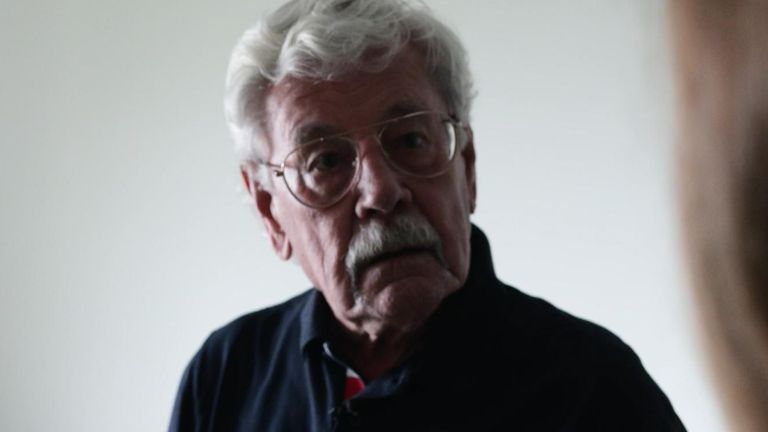
Among them is 83-year-old Stan Fritton who, since last November, has been embroiled in a battle over how much he and his neighbours should be paying for the BBC.
Their accommodation coming under one roof, they previously paid £7.50 each, qualifying for an accommodation for residential care (ARC) licence.
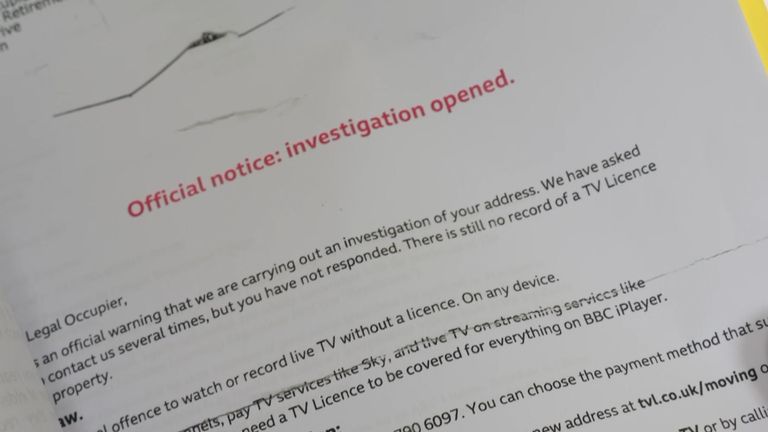
They then turned a former storage room into one of two spaces for visitors to stay the night and were told by post they’d contravened the TV Licensing Act.
Letters demanding residents pay full price started turning up addressed to almost 100 of the residents.
Stan Fritton, 83
As Mr Fritton puts it they were “being sent to 95-year-old widows [who are] seeing something that says investigation with a big stamp and what have you… it’s frightened them to death.”
He says demands for payments have even been sent to those with dementia.
“They’re not listening and they’re choosing not to listen,” he says of interactions with TV Licensing.
While Mr Fritton says the retirement village’s managers have now shut the room and will be reapplying to get the licence back, he is adamant they haven’t broken any rules but can’t get an officer to come out to see that the room isn’t a dwelling.
Resignedly his main frustration is that: “They’re choosing to antagonise residents here needlessly.”
In a statement, a spokesperson for TV Licensing said they “continue to liaise with the managers of St Crispin’s… and hope to have this matter resolved as soon as possible.”
Price rises to £174.50
How the BBC collects its money is an issue that extends way beyond one retirement village.
Under the current BBC charter, prices will now rise for the next two years based on inflation. It was £169.50, from today it is now £174.50.
Of course, maybe that’s OK if we’re getting more of what the BBC does best but the corporation’s income is down £1bn a year in real terms compared to its funding in 2010.
Wolf Hall director Peter Kosminsky recently gave a written statement to parliament on how the second series of his acclaimed drama was very nearly canned because the financing in public service broadcasting is “insufficient to make high-end TV drama”.
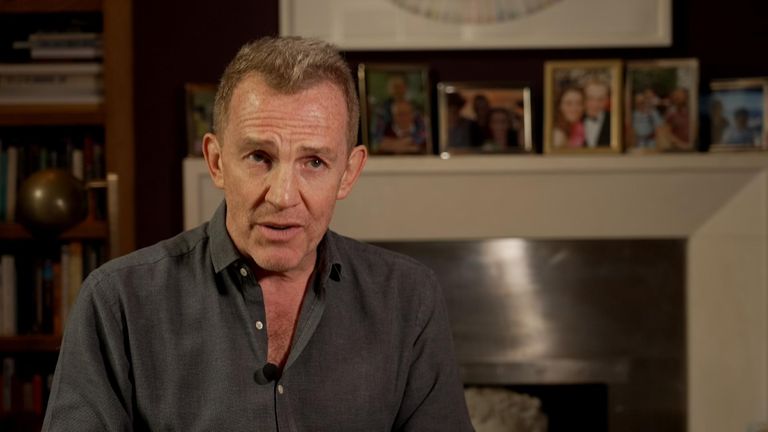
The producer of Mr Bates Vs The Post Office, Patrick Spence
‘I think we are in real trouble’
But it’s even a tough time for those public sector broadcasters who rely on advertising – the producer of Mr Bates vs The Post Office, Patrick Spence, telling Sky News he wouldn’t even pitch the drama now in the current commissioning climate.
“I do want to say I think we need to pay the sub postmasters first before we then turn our attention to television – let’s get our priorities right – but yeah I think we are in real trouble – there is a form of British television story telling that is going down if it is not supported.”
While some reports have claimed the government is looking to find a way to put a levy on streaming services, the Department for Culture has previously said they “do not comment on speculation” – not ruling it out.

Former BBC News controller and government communications director, Sir Craig Oliver
‘Lots of people are saying it’s a very dated system’
As a former BBC News controller and government communications director, Sir Craig Oliver has seen licence fee negotiations from both sides.
He says: “I think everybody has come to the conclusion, including privately the BBC, that they have to come up with another model.
“I think that there will probably be some element of the licence fee still existing, but it may be that there are subscription models on top of that.
“The problem with all of that, of course, is that the devil is in the detail… how do you make sure that people aren’t hacking in? Lots of people are saying it’s a very dated system.”
This year the BBC says it’s launching its “biggest ever public engagement exercise so audiences can help… shape [the corporation]”.
A BBC spokesperson said: “The public cares about the BBC… We want to continue to reform and evolve and look forward to engaging with government on the next Charter and securing the long-term future of the BBC.”
But with seemingly little or no consensus over how that future might be funded, the only certain thing for now is that it’ll mean households being switched on to licence fee prices going up this year, next year and the one after that.
Entertainment
Reginald D Hunter: Summons against comic by Campaign Against Antisemitism quashed for seeking to have him ‘cancelled’
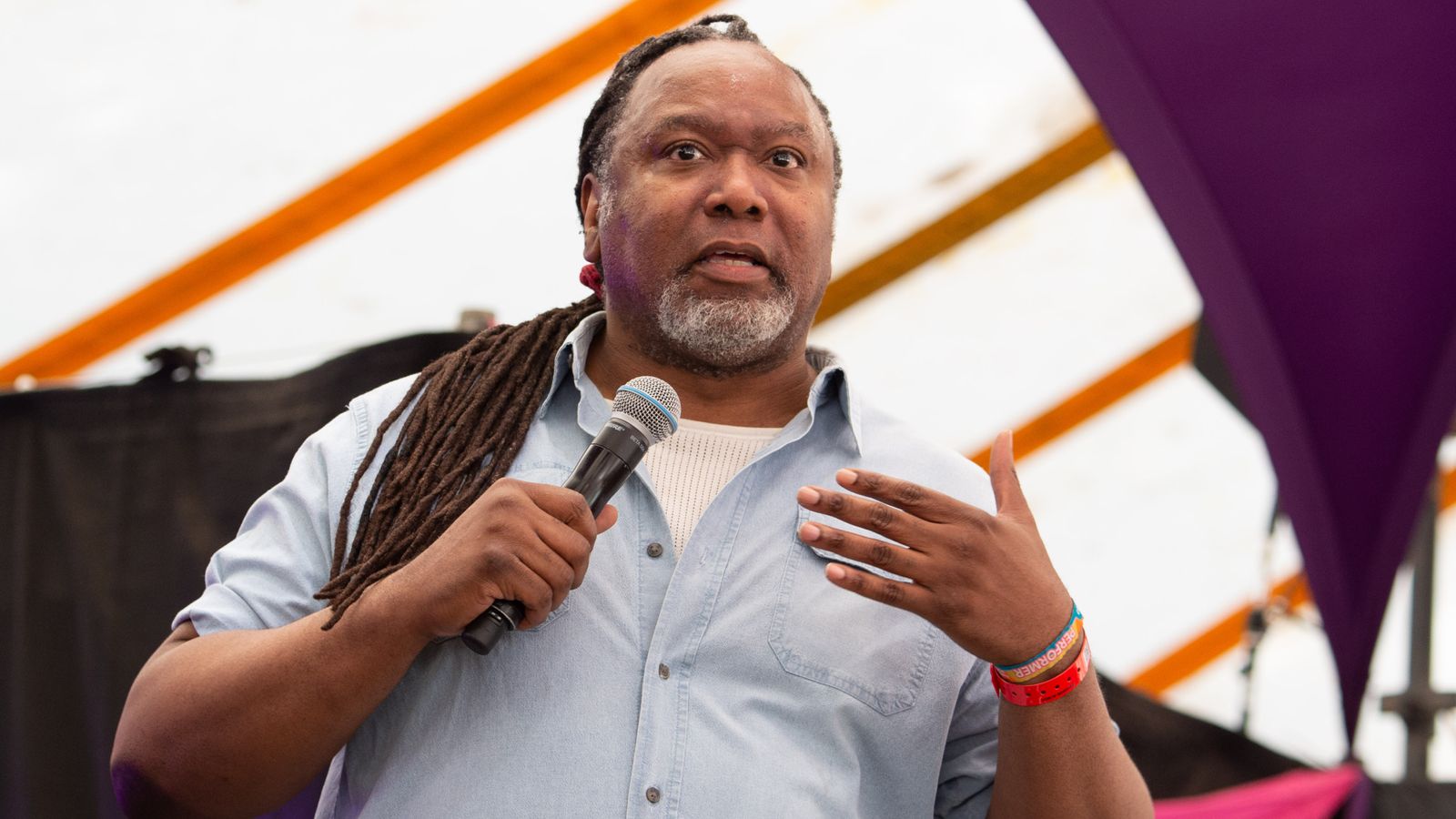
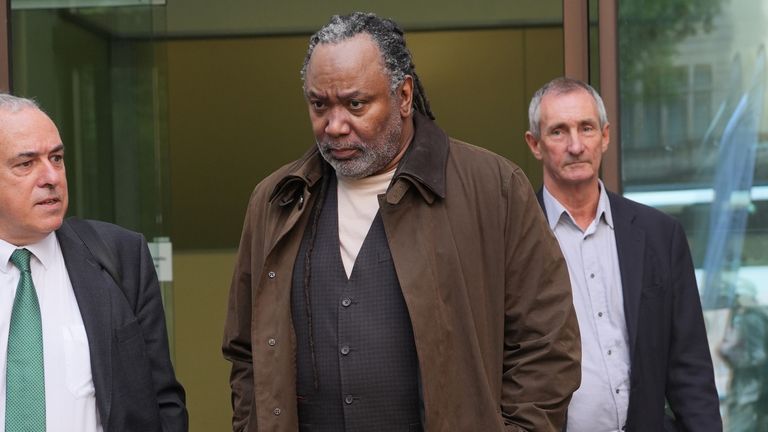
A judge has quashed a summons against comedian Reginald D Hunter, brought privately by Campaign Against Antisemitism, ruling it “abusive” and intended to get the comedian “cancelled”.
The 56-year-old US comic had been accused of three counts of sending an offensive communication on three different occasions – 24 August, 10 September and 11 September last year – to Heidi Bachram on X.
The summons was quashed at Westminster Magistrates’ Court on Tuesday by District Judge Michael Snow following an application by the defence.
Judge Snow ruled that the Campaign Against Antisemitism (CAA) charity’s motive in seeking to prosecute Hunter was “to have him cancelled” and that the prosecution was “abusive”.
Bought as a private prosecution, rather than by the state, the judge said the charity was seeking to use the criminal justice system “for improper reasons”.
The CAA describes itself as a volunteer-led charity, “dedicated to exposing and countering antisemitism through education and zero-tolerance enforcement of the law”.
In his ruling, Judge Snow said: “The CAA have demonstrated by the misleading and partial way in which it summarised its application and its wilful, repeated, failure to meet its disclosure obligations, that its true and sole motive in seeking to prosecute Reginald Hunter is to have him cancelled.
“I have no doubt that the prosecution is abusive.
“My view of the conduct of the CAA is consistent with them as an organisation which is not ‘playing it straight’ but is seeking to use the criminal justice system, in this case for improper reasons.”
Hunter at Westminster Magistrates’ Court earlier this year.Pic: PA
‘Inadequate’ summary and failure to flag compliance probe
Judge Snow said the summary of Ms Bachram’s tweeting in the application case summary was “wholly inadequate”.
He added: “It did not reveal the extent of her tweets directed against Reginald Hunter in the period immediately preceding the complaints (her tweets were sent between 15 August and 11 September 2024).
“The summary misled me into believing that his comments were addressed to her involvement with the Jewish faith as opposed to his response to attempts that were being made to have him ‘cancelled’.”
The judge said the CAA had failed to inform him of a compliance investigation by the Charity Commission into the CAA in November 2024.
CAA accused of ‘weaponising’ the court
Hunter’s lawyer Rebecca Chalkley KC told the hearing on Tuesday that “very little was disclosed” to the judge and the “lack of candour” meant the summons should be quashed.
Ms Chalkley said: “It calls into question the whole juridical process as judges before issuing summonses need to have everything in front of them.”
The lawyer told the judge: “You were led to believe in papers in front of you that the CAA was no more than a charity, that it had no history – as since demonstrated as a vexatious litigant – no complaints, no criticism in Parliament, no investigations by the Charity Commission.”
The lawyer added: “The CAA are weaponising and using the courts for their own political agenda and not just in this case.”
The CAA’s prosecutor Donal Lawler told the hearing that the charity had complied with its duty of candour.
Hunter regularly tours the UK and has appeared on comedy panel shows Never Mind The Buzzcocks, Have I Got News For You and 8 Out Of 10 Cats.
A crowdfunding campaign he launched to help him cover his legal fees raised over £58,000 in less than six months.
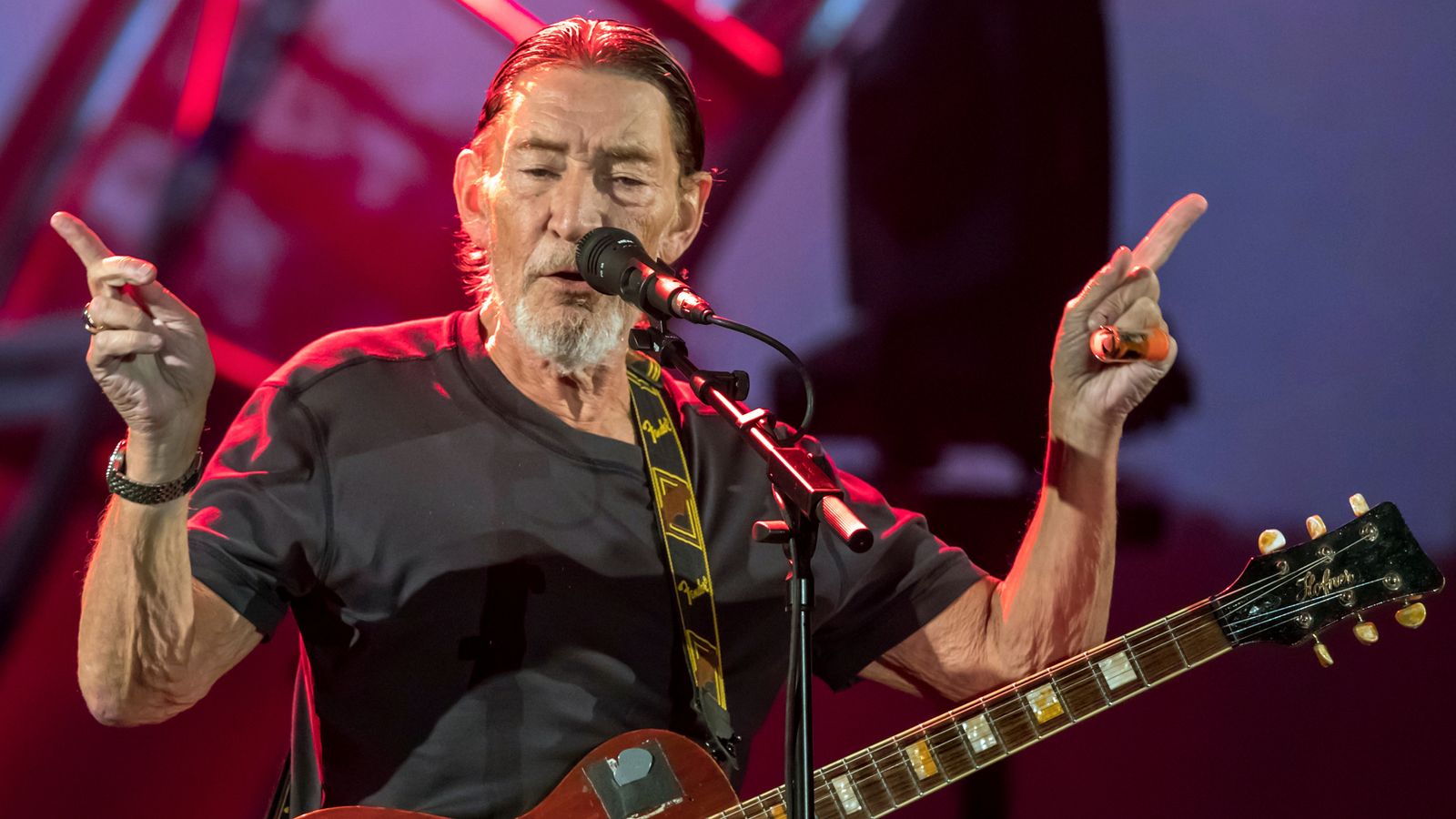
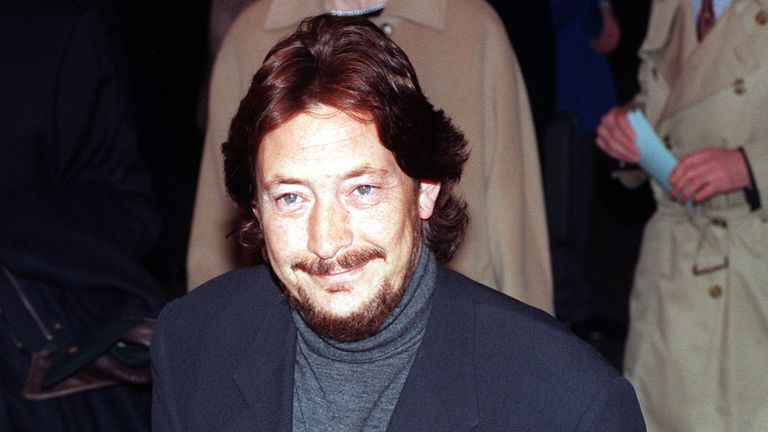
Chris Rea, known for hits including Driving Home For Christmas and The Road To Hell, has died after a short illness, according to a family spokesperson.
A statement on behalf of his wife and two children stated: “It is with immense sadness that we announce the death of our beloved Chris.
“He passed away peacefully in hospital earlier today following a short illness, surrounded by his family.”
Chris Rea arrives at the Odeon Leicester Square for the opening of the London Film Festival in 1996. Pic: PA
The Middlesbrough-born musician was diagnosed with pancreatic cancer and had his pancreas removed in 2001, and in 2016 he suffered a stroke.
Follow our blog for the latest reactions to Chris Rea’s death
Rea found fame in the late seventies and eighties with hits such as Fool (If You Think It’s Over), Let’s Dance and The Road To Hell.
Known for his gravelly voice and latterly for his slide guitar playing, he was nominated for a slew of top awards, including Brit Awards, at the height of his success and sold millions of records.
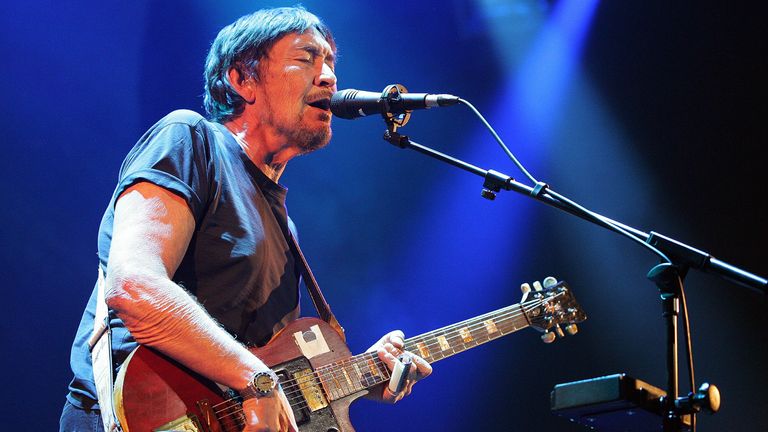
File pic: Glenn Ashley/ZUMA Press Wire/Shutterstock
Rea’s debut album, titled Whatever Happened To Benny Santini?, a reference to the stage name his record label wanted him to adopt, was released in 1978.
His track Fool (If You Think It’s Over), from the album, went on to be nominated for a Grammy.
He did not find such success again for a few years, but by the time his eighth album On The Beach was released, he was a star in the UK and around Europe, with sporadic hits in the US.
When Road To Hell was released in 1989, he became one of the biggest solo stars in the UK. Two of his studio albums – The Road To Hell (1989) and Auberge (1991) – went to number one in the country.
Read more from Sky News:
Trump’s new Greenland envoy intends to make territory “a part of the US”
Puppy farming and trail hunting to be banned
His famous song Driving Home For Christmas, first released in 1986, features in this year’s M&S Food Christmas advert – which sees comedian Dawn French sing along to the single in her car.
Speaking about the song during the 2020 Mortimer And Whitehouse Gone Fishing Christmas special, he told comedian Bob Mortimer: “I was on the dole when I wrote that.
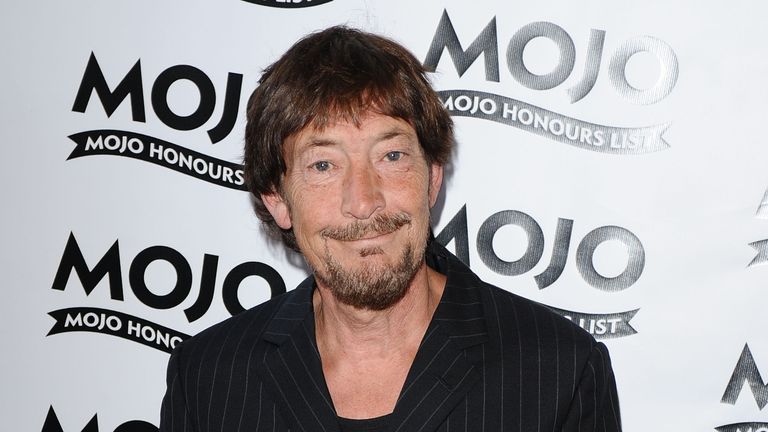
Chris Rea arrives at the Mojo Awards in 2009. Pic: PA
“My manager had just left me. I’d just been banned from driving, right. My now wife, Joan, she had to drive down to London, picked me up in the Mini, and take me home, and that’s when I wrote it.”
The singer returned to his blues roots after a string of health problems.
“I wasn’t frightened of dying,” he once said in an interview.
“It did look like the end, but what got me through was the thought of leaving a record that my two teenage daughters could say, ‘That’s what Papa did – not the pop stuff, but the blues music. That’s what he was about’.”
Chris Rea arrives at the Odeon Leicester Square for the opening of the London Film Festival in 1996. Pic: PA
Entertainment
Stars and fans including Liam Gallagher, Paul Weller and David Beckham gather for Gary ‘Mani’ Mounfield’s funeral

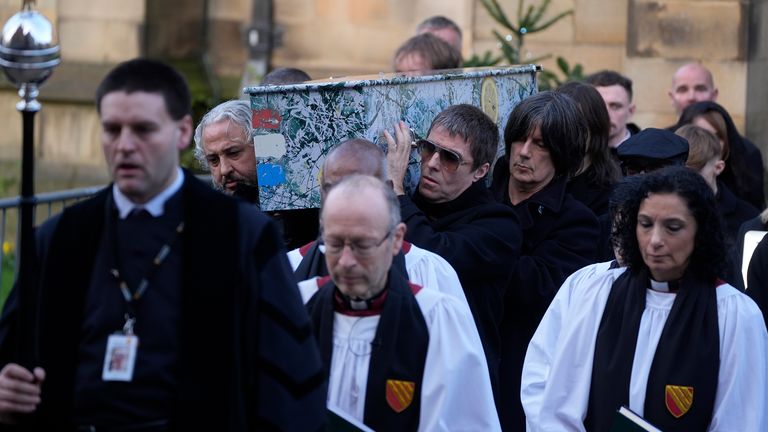
Stars including Liam Gallagher, David Beckham and Paul Weller have gathered to pay tribute to The Stone Roses star Gary “Mani” Mounfield.
The Stone Roses and Primal Scream bassist died last month at the age of 63.
The coffin is carried from the ceremony by Alan Wren (L), Liam Gallagher (R) and John Squire (2nd R). Pic: PA
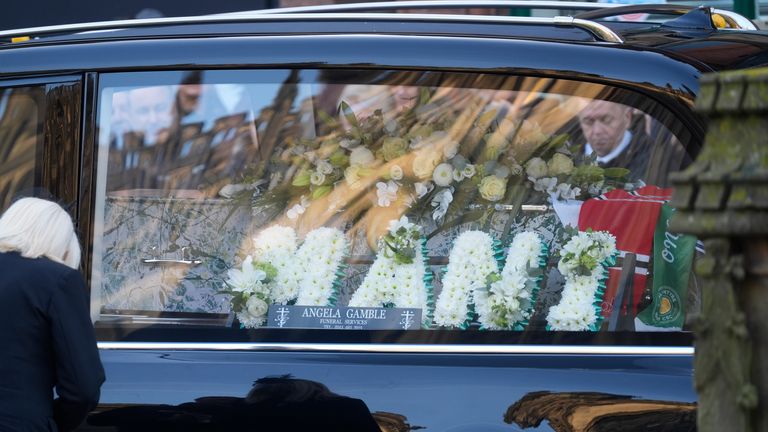
Pic: PA
His death came two years after that of his wife, Imelda Mounfield, who was diagnosed with stage 4 bowel cancer in November 2020. The couple welcomed twin boys in 2012.
He had been due to travel the UK later this year for an in-conversation tour sharing memories of his rock experiences.
Liveblog: Famous faces say final goodbye to Stone Roses bass player
The funeral, which was held at Manchester Cathedral, drew hundreds of fans, including a guard of scooter riders with black bands and a photo of Mani on their bikes.
Arriving at the service, The Stone Roses frontman Ian Brown said Mani was “a brother to me”, calling him a “beautiful human being”.
Some of the biggest names of British 1990s music were at the ceremony, including Oasis star Liam Gallagher, singer-songwriter Paul Weller, Primal Scream frontman Bobbie Gillespie and Bez, from the Happy Mondays.
Tim Burgess, lead singer of The Charlatans, Elbow frontman Guy Garvey, Ian McCulloch of Echo & The Bunnymen, Mike Joyce, drummer from The Smiths, Inspiral Carpets keyboardist Clint Boon, and former Joy Division and New Order bassist Peter Hook also came to pay tribute.
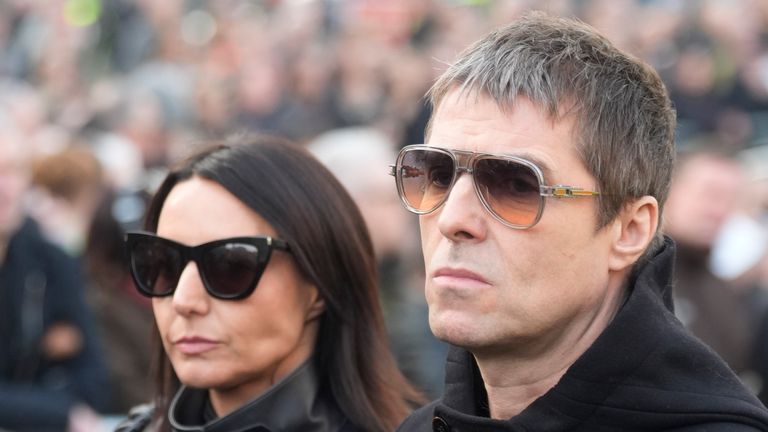
Liam Gallagher. Pic: PA
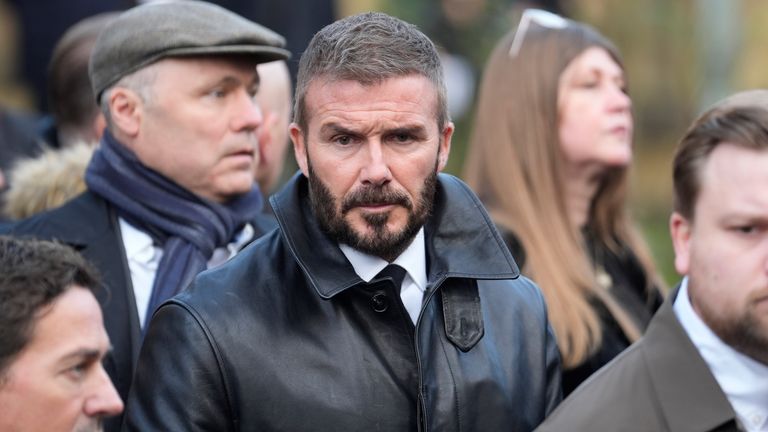
David Beckham. Pic: PA
Former Manchester United players David Beckham and Gary Neville were also among hundreds of mourners arriving for the service.
Manchester mayor Andy Burnham and Coronation Street star Sally Lindsay were also in attendance.
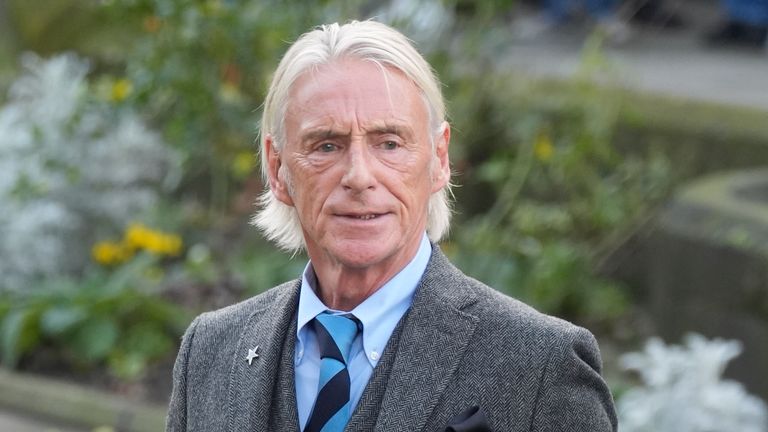
Paul Weller. Pic: PA
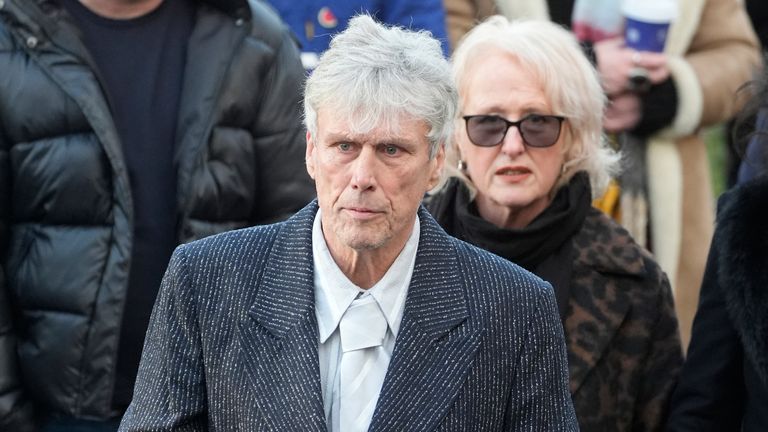
Bez from the Happy Mondays. Pic: PA
Hundreds more fans gathered outside the cathedral and applauded as the cortege arrived, and as I Wanna Be Adored – one of The Stone Roses’ biggest hits – blared from the speakers.
The coffin, which was decorated with artwork from the cover of The Stone Roses – the band’s self-titled debut album – had travelled around eight miles from Heaton Moor in Stockport to the cathedral.
Gallagher, along with The Stone Roses drummer Alan Wren – also known as Reni – and bandmate John Squire carried the coffin from the ceremony after the service.
Mani was part of the Stone Roses’ classic line-up alongside Brown, Squire and Wren.
Pausing briefly as he went into church, Brown said he was there to celebrate “what a beautiful human being that he was”.
Asked what his bandmate meant to him, the singer said: “Everything. He’s a brother to me.”
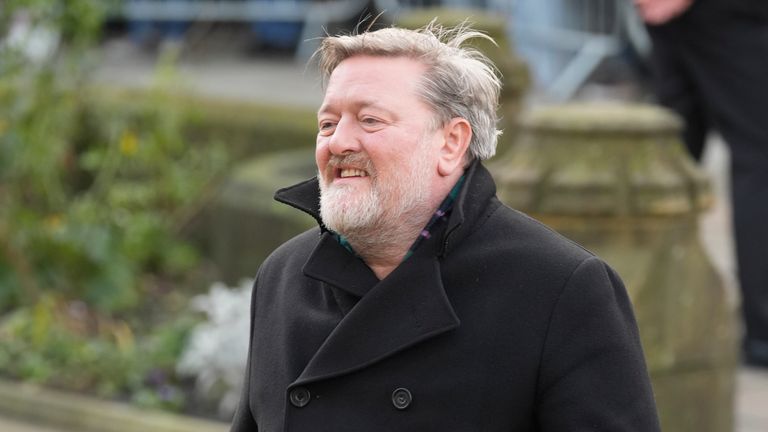
Guy Garvey, from Elbow, arriving for the funeral service of former The Stone Roses and Primal Scream bass player Gary Mounfield, who was known as Mani
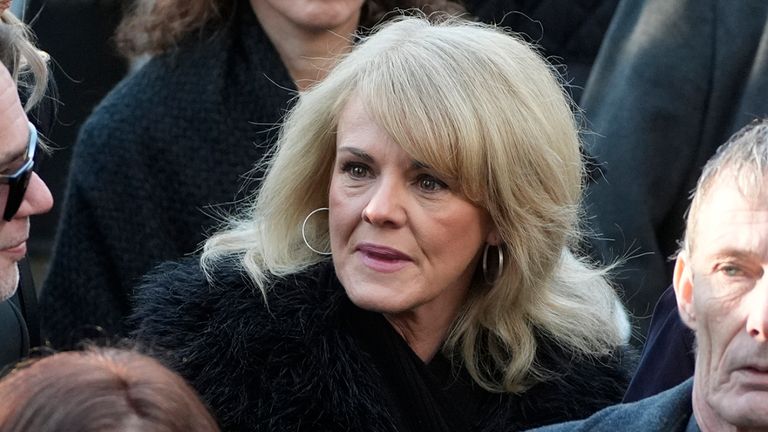
Actress Sally Lindsay. Pic: PA
Forming in 1983, Mani was part of The Stone Roses until they split in 1996, playing on both the eponymous debut album, released in 1989, and their 1995 follow-up, Second Coming.
The “Madchester” band was known for blending indie with acid house, psychedelia and pop.
Mani went on to play with Scottish band Primal Scream for 15 years, leaving in 2011 to rejoin the reuniting Roses.
-
 Sports2 years ago
Story injured on diving stop, exits Red Sox game
-
 Sports3 years ago
‘Storybook stuff’: Inside the night Bryce Harper sent the Phillies to the World Series
-
 Sports2 years ago
Game 1 of WS least-watched in recorded history
-
 Sports3 years ago
Button battles heat exhaustion in NASCAR debut
-
 Sports3 years ago
MLB Rank 2023: Ranking baseball’s top 100 players
-
Sports4 years ago
Team Europe easily wins 4th straight Laver Cup
-
 Environment3 years ago
Japan and South Korea have a lot at stake in a free and open South China Sea
-
 Environment1 year ago
Here are the best electric bikes you can buy at every price level in October 2024