

SafeMoon boss cites DOJ’s nixed crypto unit in latest bid to toss suit

Braden John Karony, the CEO of crypto firm SafeMoon, has cited the US Department of Justice’s directive to no longer pursue some crypto charges in an effort to get the case against him and his firm dismissed.
In an April 9 letter to New York federal court judge Eric Komitee, Karony’s attorney, Nicholas Smith, said the court should consider an April 7 memo from US Deputy Attorney General Todd Blanche that disbanded the DOJ’s crypto unit.
“The Department of Justice is not a digital assets regulator,” Blanche said in the memo, which added the DOJ “will no longer pursue litigation or enforcement actions that have the effect of superimposing regulatory frameworks on digital assets.”
Blanche also directed prosecutors not to charge violations of securities and commodities laws when the case would require the DOJ to determine if a digital asset is a security or commodity when charges such as wire fraud are available.

An excerpt of the letter Karony sent to Judge Komitee. Source: PACER
In the footnote of the letter, Karony’s counsel wrote an exemption to the DOJ’s new directive would be if the parties have an interest in defending that a crypto asset is a security, but added that “Karony does not have such an interest.”
The Justice Department and the Securities and Exchange Commission filed simultaneous charges of securities violations, wire fraud, and money laundering against Karony and other SafeMoon executives in November 2023.
The government alleged Karony, SafeMoon creator Kyle Nagy and chief technology officer Thomas Smith withdrew assets worth $200 million from the project and misappropriated investor funds.
Another attempt to nix the case
The letter is Karony’s latest attempt to get the case thrown out. In February, he asked that his trial, scheduled to begin on March 31, be delayed as he argued President Donald Trump’s proposed crypto policies could potentially affect the case.
Related: OKX pleads guilty, pays $505M to settle DOJ charges
Later in February, Smith changed his plea to guilty and said he took part in the alleged $200 million crypto fraud scheme. Nagy is at large and is believed to be in Russia.
SafeMoon filed for bankruptcy in December 2023, a month after it was hit with twin cases from the SEC and DOJ. It was also hacked in March 2023, with the hacker agreeing to return 80% of the funds.
Magazine: 3 reasons Ethereum could turn a corner: Kain Warwick, X Hall of Flame


Major US cryptocurrency exchange Coinbase is expanding payment options in Poland by integrating with one of the country’s most widely used mobile payment systems.
Coinbase has partnered with European payment processor PPro to enable payments via Blik, a popular Polish mobile payment network with nearly 20 million users.
The announcement was made by Coinbase executive and NFT Paris co-founder Côme Prost, who joined the exchange in February 2024 to lead its French operations.
“Improving local payment rails is a key focus for us,” Prost said in a LinkedIn post on Wednesday, highlighting the importance of simple, fast and familiar payment options in driving crypto adoption.
Coinbase holds MiCA licence as Poland struggles to pass crypto bill
Coinbase’s local expansion comes as Poland struggles to pass cryptocurrency legislation amid political divisions. Last week, the Polish government reintroduced an identical version of a strict crypto bill that had been vetoed by President Karol Nawrocki just weeks earlier.
Coinbase holds a license under the European Union’s Markets in Crypto-Assets Regulation (MiCA), which it secured in June.
“It has been a pleasure working with the team at Coinbase to launch Blik on their platform to enable Polish customers to access Crypto,” PPro executive Tom Benson wrote in a LinkedIn post on Wednesday.
He added that he was confident the partnership with Coinbase would deepen in 2026 as the company adds more local payment methods and expands collaboration across additional areas.
Poland’s crypto adoption booming despite lagging local regulation
Crypto adoption in Poland has surged despite slow-moving local legislation, with the country emerging as one of the leaders in Chainalysis’ 2025 European Crypto Adoption report.
Poland is the only EU member state without a functioning national legal framework to enforce the MiCA regulation, even though the framework applies even without formal implementation.

Following the president’s veto of the government’s bill, Poland is indeed the only EU member state without any step toward implementation,” Juan Ignacio Ibañez, a member of the Technical Committee of the MiCA Crypto Alliance, told Cointelegraph recently.
Related: Coinbase adds stock trading, prediction markets in ‘everything app’ push
“Not every country has a single implementation law,” he added, pointing to Germany and France, which have specific laws, while other member states, such as Spain and Luxembourg, rely on amendments to existing financial legislation.
Ibañez noted, however, that a lag in implementation does not mean all countries are equally advanced, nor does it imply that Poland is more hostile to crypto. Hungary, for example, has implemented MiCA with additional regulations that are “more unfriendly to crypto asset service providers than Poland,” he added.
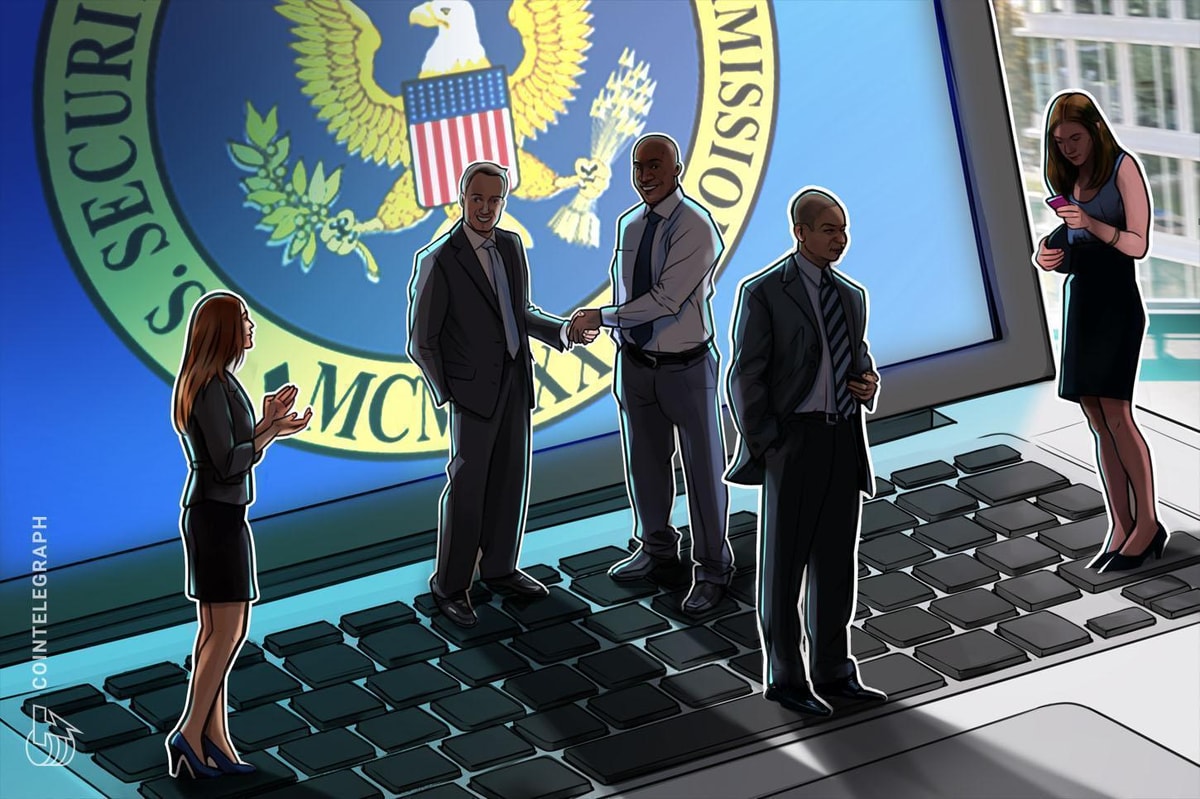

The US Securities and Exchange Commission’s Trading and Markets Division on Wednesday laid out how broker-dealers can custody tokenized stocks and bonds under existing customer protection rules, signaling that blockchain-based crypto asset securities will be slotted into traditional securities safeguards rather than treated as a new category.
The division said it would not object to broker-dealers deeming themselves in possession of crypto asset securities under existing customer protection rules, as long as they meet a set of operational, security and governance conditions. This applies only to crypto securities, including tokenized stocks or bonds.
While the statement is not a rule, it provides clarity on how US regulators expect tokenized securities to fit within traditional market safeguards.
The guidance suggests that tokenized securities are not treated as a new asset class with unique rules. Instead, they are being placed into existing broker-dealer frameworks, even if they settle within blockchain networks.
TradFi on a blockchain: Tokenized securities’ custody rules
At the core of the statement is Rule 15c3-3, the regulator’s consumer protection rule. This requires broker-dealers to maintain control or physical possession of fully paid customer securities.
The division said that crypto asset securities recorded in blockchains may satisfy the “physical possession” requirements under certain circumstances. This means broker-dealers must retain exclusive control over the private keys used to access and transfer the assets.
Despite being on a blockchain, customers and third parties, including affiliates, should not have the ability to move the security without the authorization of the broker.
The statement draws a clear boundary between tokenized securities and crypto-native self-custody models. It prioritizes customer protection over crypto’s permissionless ethos.
Broker-dealers are expected to prepare for scenarios like 51% attacks, hard forks, airdrops and other disruptions. They must also maintain plans that account for seizure, freezing or transfer restrictions under lawful orders.
The guidance reinforces that, regardless of the technologies used to issue or settle tokenized stocks or bonds, they are expected to behave like securities first.
Trading tokenized securities inside regulated market rails
In a separate statement issued the same day, SEC Commissioner Hester Peirce highlighted the trading-side challenges that remain for crypto asset securities.
Peirce raised questions focusing on national securities exchanges and alternative trading systems that facilitate trading crypto asset securities, including pairs where one asset is a security and the other is not.
The questions reflect growing pressure to settle blockchain-based assets with market-structure rules originally designed for traditional equities.
Peirce’s request raises whether existing frameworks and related disclosures and reporting requirements impose costs that outweigh their benefits when applied to crypto trading platforms.
Related: US Fed pulls guidance blocking its banks from engaging with crypto
Platforms jumping into tokenized equities
The statements come as crypto platforms and trading institutions have increasingly begun to tokenize securities.
On Nov. 30, Nasdaq’s head of digital assets strategy, Matt Savarese, said the exchange plans to move fast on tokenized stocks. He said the exchange plans to work with the SEC as quickly as possible to make the feature available in the trading platform.
On Tuesday, Securitize, which focuses on tokenizing securities, announced that it plans to launch compliant, onchain trading for tokenized stocks. The company said that it will be presented in a swap-style interface familiar to decentralized finance (DeFi) users.
On Thursday, crypto exchange Coinbase launched a stock trading feature as part of its push to become an “everything exchange.”
Magazine: Koreans ‘pump’ alts after Upbit hack, China BTC mining surge: Asia Express


Teachers will be trained to spot early signs of misogyny in boys and steer them away from it as part of the government’s long-awaited strategy to tackle violence against women and girls (VAWG).
Sir Keir Starmer warned “too often toxic ideas are taking hold early and going unchallenged”, with more than 40% of young men said to hold a positive view of misogynistic influencer Andrew Tate.
He has been challenged about his ideology in the past and called the concerns “garbage”.
Sir Keir’s government will formally unveil a £20m package of measures today, with £16m coming from the taxpayer and £4m from philanthropists and partners.
Teachers will also get specialist training on how to talk to pupils about issues like consent and the dangers of sharing intimate images – and all secondary school pupils in England will be taught about healthy relationships.
Such lessons will be mandatory by the end of this parliament in 2029, with schools to be chosen for a pilot scheme in 2026, which experts will be brought in to deliver.
And an online helpline will be set up for teenagers with concerns about their own behaviour in relationships.
The measures are part of the government’s strategy to halve VAWG in a decade, and the prime minister said it’s a “responsibility we owe to the next generation”.
“Every parent should be able to trust that their daughter is safe at school, online and in her relationships,” he said.
“This government is stepping in sooner – backing teachers, calling out misogyny, and intervening when warning signs appear – to stop harm before it starts.”
The PM says ‘toxic’ attitudes are going unchallenged in schools. Pic: Reuters
Department for Education-commissioned research found 70% of secondary school teachers surveyed said their school had actively dealt with sexual violence and/or harassment between children.
VAWG minister Jess Phillips told Sky News political editor Beth Rigby she had spoken to her own children about what’s normal sexual behaviour and what isn’t because she knows “what they might be exposed to”.
She said if the government does nothing to intervene, VAWG could double rather than be halved.
Jess Phillips: I’ve talked to my kids about strangulation

Beth Rigby speaks to Jess Phillips about the plans
Read more:
Teams deployed to tackle violence ’emergency’
Domestic abuse survivors to get NHS help
The government has already announced several other measures to tackle VAWG this week, including introducing specialist rape and sexual offences investigators to every police force, better support for survivors in the NHS, and a £19m funding boost for councils to provide safe housing for domestic abuse survivors.
Investment ‘falls short’
But Dame Nicole Jacobs, the domestic abuse commissioner for England and Wales, said the commitments “do not go far enough” and schools are overburdened already.
“Today’s strategy rightly recognises the scale of this challenge and the need to address the misogynistic attitudes that underpin it, but the level of investment to achieve this falls seriously short,” she said.
Claire Waxman, the incoming victims commissioner, added: “Victim services are not an optional extra to this strategy – they must be the backbone of it.
“Without clear, sustainable investment and cross-government leadership, I am concerned we run the risk of the strategy amounting to less than the sum of its parts; a wish list of tactical measures rather than a bold, unifying strategic framework.”
-
 Sports2 years ago
Story injured on diving stop, exits Red Sox game
-
 Sports3 years ago
‘Storybook stuff’: Inside the night Bryce Harper sent the Phillies to the World Series
-
 Sports2 years ago
Game 1 of WS least-watched in recorded history
-
 Sports3 years ago
Button battles heat exhaustion in NASCAR debut
-
 Sports3 years ago
MLB Rank 2023: Ranking baseball’s top 100 players
-
Sports4 years ago
Team Europe easily wins 4th straight Laver Cup
-
 Environment3 years ago
Japan and South Korea have a lot at stake in a free and open South China Sea
-
 Environment1 year ago
Here are the best electric bikes you can buy at every price level in October 2024