

Save $300 on new Anker eufy E15 & E18 robot mowers, NIU KQi 200F e-scooter at $699 in pre-sale, EGO pressure washer, more


We’re closing out this week’s Green Deals with two new arrivals onto the market, leading with the $300 discounts on Anker’s new, advanced eufy E15 and E18 Robot Lawn Mowers that require no boundary wires or RTK stations and are starting from $1,300. Right behind is NIU’s pre-sale offer on its latest KQi 200F Electric Scooter for $699 and also coming with some free gear ahead of its future shipping date. We also spotted the popular EGO Power+ 56V 3,200 PSI Cordless Pressure Washer alongside two 6.0Ah batteries hitting a new $699 low, as well as Amazon undercutting Anker’s Easter Sale pricing on the SOLIX C200 60,000mAh Power Station to $110, along with its 90,000mAh counterparts. Plus, all the other hangover Green Deals are in the links at the bottom of the page, like yesterday’s Rad Power Earth Day e-bike Sale kickoff, the exclusive refurbished Anker SOLIX F3800 power station deal, and more.
Head below for other New Green Deals we’ve found today and, of course, Electrek’s best EV buying and leasing deals. Also, check out the new Electrek Tesla Shop for the best deals on Tesla accessories.
Take $300 off Anker’s new eufy E15 and E18 robot lawn mowers that require no wires or RTK station from $1,300
Anker’s official sub-brand, eufy is now offering the best savings yet on its new E15 Robot Lawn Mower for $1,299.99 shipped, as well as its counterpart E18 Robot Lawn Mower at $1,699.99 shipped, after using the promo code RTLM200 for either at checkout. These models just recently hit the market a few days ago for $1,600 and $2,000, respectively, with some places like Amazon currently offering $200 off the price, but you can score an additional $100 here direct from the brand by replacing the on-page coupon with the code. This knocks a total of $300 off the going rate, giving you one of the most advanced autonomous mowing solutions at the best current prices we can find.
These advanced eufy robot lawn mowers require no boundary wires or RTK station to stay on track, instead utilizing pure vision FSD tech with high-precision cameras and advanced AI to guide itself around your yard, with the E15 model covering up to 0.2 acres on a charge and the E18 model bumping that up to 0.3 acres. The brand promises a quick “5-minute setup” right out of the box, all done through its companion app, where you’ll also have a wide array of smart controls to monitor its progress, adjust settings, and manage multi-zone areas with the 3D maps that it creates as it works.
The 3D perception system on eufy’s robot lawn mowers detect and avoid collisions with everyday obstacles that it may come across, even in complex garden environments, while the smart coverage detection “guarantees no area is left uncut.” Those with pets or regular wildlife running around can also rest assured, as its systems will ensure their safety while in operation. You’ll be able to set its cutting height between 25mm to 75mm, with it operating at a quieter 56dB level and able to handle up to 40% inclines without concern. Beyond the controls you’ll have through your smartphone, the robot can also detect rainfall and/or when the sun sets, activating its automatic station return function. On top of that, there’s even the security system that activates an alarm when removed from its set work area while providing you with GPS tracking to hunt it down.

Commute around town for up to 34 miles on NIU’s latest KQi 200F electric scooter at $699 with free gear while in pre-sale
NIU is currently taking up to 41% off a collection of its e-scooters led by a pre-sale deal on its latest KQi 200F Electric Scooter for $699 shipped with some additional free gear. This new model is slated to begin shipping on April 25 carrying a $799 price tag, but you can score the first cash savings here today while this deal lasts. Not only are you getting $100 shaved off the tag, but you’ll also be getting a free phone holder and Halo drawstring bag (valued at $52) on top of that. Head below to learn more about what this new commuting solution offers while also checking out the other models benefitting from price cuts.
A solid choice for commuters who want the option to go further than their usual cruising grounds, the NIU KQi 200F electric scooter has been given a 350W motor that peaks to 700W in order to tackle up to 20% inclines at speeds up to 20 MPH, as well as a 365Wh battery that provides you with up to 33.6 miles of travel on a full charge. There are four riding modes to choose from – e-save, sport, custom, and pedestrian – plus, the scooter comes with an IPX5 rating to protect against splashes, light rain, and even low-pressure water from any direction.
There are some solid features added in too that only further heighten the riding experience, especially the dual braking system that has a 75mm integrated drum brake in the front and a regenerative brake in the rear to recycle kinetic energy upon slowing or braking to extend travel times. There’s also the brand’s BMS system with 14 types of protection, front suspension, 10-inch tubeless pneumatic tires, wider handlebars that can fold while also offering turn signal functionality, a Halo headlight, an integrated taillight with brake lighting, a 265-pound rider payload, swappable griptape, a mechanical bell, and a LED display. What’s more, there are some app-supported smart controls, including customizable performance settings, charging limitations, and the option to lock your scooter for added security, among others.
NIU’s full lineup of KQi e-scooter deals:

Connect a hose or siphon with EGO’s 56V 3,200 PSI cordless pressure washer kit (two 6.0Ah batteries) at new $699 low
Amazon is now offering the EGO Power+ 56V 3,200 PSI Cordless Pressure Washer with two 6.0Ah batteries at $699 shipped. Back during July we saw this model fall from its original $899 MSRP to its new $800 rate, where it stayed put except for a short-lived $50 discount in mid-December and a drop to $700 during Amazon’s previous Big Spring Sale last month. The deal that’s coming in today takes things $1 under our previous mention, giving you $101 in savings at a new all-time low price. If you already have a stockpile of EGO batteries, you can score the pressure washer alone for $499 instead.
Sporting EGO’s peak power tech that utilizes two batteries at once for longer performance, this cordless electric pressure washer will run for up to 60 minutes with the two included 6.0Ah models here, which can easily be swapped out for any of the brand’s other ARC batteries. It delivers some powerful pressure at up to 3,200 PSI with a flow rate ranging from 1.2 to 2.0 GPM and three operating modes: Eco, High, and Turbo.
Its versatile design sports three connection points – one for your garden hose to attach, one for the wand, and then a third that can be utilized by an included siphon hose that you can drop into any fresh water source if you’re not around any spigots. You’ll also be getting five varying nozzles, a 25-foot high-pressure hose, a foam cannon, and a filter – plus, there’s an integrated display on the wand so you can keep track of battery levels as you work.
We recently spotted EGO’s advanced 56V 22-inch Select Cut Self-Propelled Cordless Lawn Mower coming with a 10.0Ah and 5.0Ah battery at a new $1,000 low, which saves you $998 from purchasing the combination separately.
Amazon undercuts Anker’s Easter Sale on the SOLIX C200 60,000mAh power station at $110
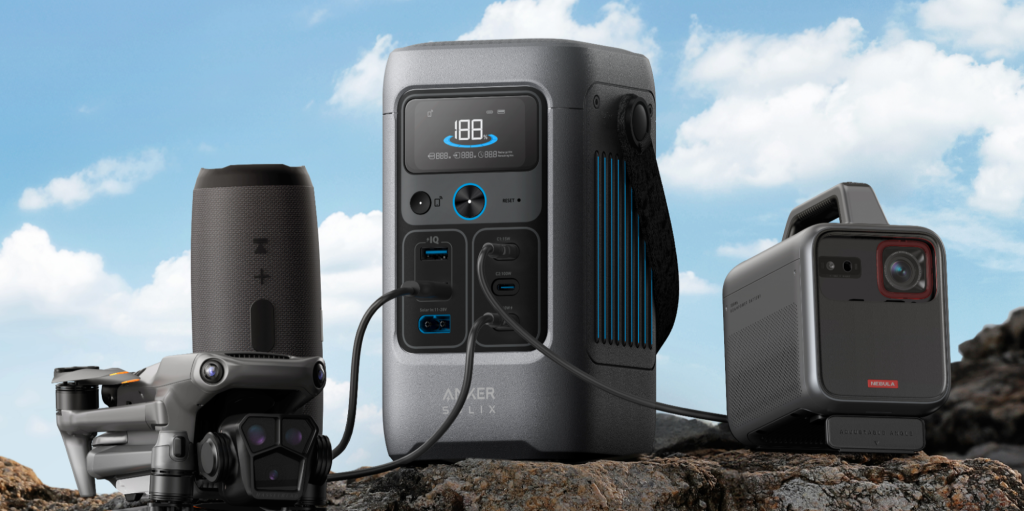
By way of its official Amazon storefront, Anker is undercutting its own Easter Sale pricing on the SOLIX C200 60,000mAh Power Station at $109.99 shipped. Normally going for $170 at full price since it released back at the tail-end of August, we’ve mainly been seeing it fall to either $110 or the $100 low at Amazon since Black Friday, with the brand’s ongoing direct Easter Sale currently offering it at $10 higher. With the deal here, you’re getting a solid $60 slashed from the going rate, giving you the second-lowest price we have tracked. Be sure to head below to check out more on this model, as well as the deals on the larger 90,000mAh counterparts.
Anker’s newer SOLIX C200 DC power station comes in a more compact form factor built upon the success of the C300 DC and AC models, with a 60,000mAh/192Wh LiFePO4 capacity. The unit provides up to 300W of power output to connected devices through its five ports – two USB-As, one 140W USB-C, one 15W USB-C, and a car port – which covers your personal devices while out and on the go. The power station’s battery can be recharged by three different means, with either the 100W maximum solar input or the car port providing you with an 80% battery in 1.6 hours and its 140W USB-C port reaching the same amount a little faster at 1.3 hours.
Of course, if you want to go bigger you can currently find the SOLIX C300 DC and SOLIX C300 AC power stations down at $170 and $219, respectively, with the former matching Anker’s direct sale while the latter comes in $1 under that sale’s pricing. They both provide 90,000mAh LiFePO4 capacities to cover device charging needs, with up to 300W outputs and some port differences and variations of built-in lighting while your out camping in the wilds. The DC model sports seven ports (two 140W USB-Cs, one 100W USB-C, one 15W USB-C, two 12W USB-As, and one 120W car port) while the AC model has eight ports (three 300W ACs, two 140W USB-Cs, one 15W USB-A, one 12W USB-A, and one 120W car port).
Be sure to check out the full, massive lineup of deals from Anker’s SOLIX Easter Sale that is running through April 20, with up to 54% off in initial discounts and some free gear going along with select model purchases. We also just secured an exclusive $680 in savings on the brand’s refurbished SOLIX F3800 power station at $1,999 while it lasts.
Best New Year EV deals!
- GoTrax Everest Electric Dirt Bike (new low): $3,979 (Reg. $6,000)
- Aventon Ramblas Electric Mountain Bike: $2,599 (Reg. $2,899)
- Lectric ONE Long-Range e-bike with $220 bundle: $2,399 (Reg. $2,507)
- Lectric XPedition 2.0 35Ah Cargo e-bike w/ up to $654 bundle: $1,999 (Reg. $2,741)
- Tenways AGO X All-Terrain e-bike with $307 bundle: $1,899 (Reg. $2,499)
- Lectric XPedition 2.0 26Ah Cargo e-bike w/ $505 bundle: $1,699 (Reg. $2,204)
- Rad Power RadRunner 3 Plus Utility e-bike (new low): $1,699 (Reg. $2,199)
- Aventon Aventure 2 All-Terrain e-bike: $1,699 (Reg. $1,999)
- Tenways CGO800S Step-Thru Commuter e-bike with $315 in free gear: $1,699 (Reg. $1,999)
- Aventon Pace 500.3 Step-Over e-bike with free extra battery: $1,599 (Reg. $1,799)
- Aventon Pace 500.3 Step-Through e-bike with free extra battery: $1,599 (Reg. $1,799)
- Heybike ALPHA All-Terrain e-bike (new low): $1,499 (Reg. $1,699)
- Aventon Abound Cargo e-bike: $1,599 (Reg. $1,999)
- Lectric XPeak 2.0 Long-Range Off-Road e-bike with $316 bundle: $1,599 (Reg. $1,915)
- Aventon Level 2 Commuter e-bike: $1,499 (Reg. $1,899)
- Tenways CGO600 Pro belt-drive e-bike with $118 bundle: $1,499 (Reg. $1,899)
- Tenways CGO600 Pro chain-drive e-bike with $118 bundle: $1,499 (Reg. $1,899)
- Rad Power RadWagon 4 Cargo e-bike with free caboose: $1,499 (Reg. $1,799)
- Lectric XP Trike with $420 bundle: $1,499 (Reg. $1,918)
- Rad Power RadRover 6 Plus Step-Thru Fat Tire e-bike with extra battery: $1,399 (Reg. $1,599)
- Aventon Sinch 2 Folding e-bike: $1,399 (Reg. $1,699)
- Velotric 2024 Nomad 1 Plus All-Terrain e-bike with $134 bundle: $1,399 (Reg. $1,799)
- Lectric XPeak 2.0 Standard Off-Road e-bike with $227 bundle: $1,399 (Reg. $1,626)
- Lectric XPedition 2.0 13Ah Cargo e-bike with $296 bundle: $1,399 (Reg. $1,725)
- Rad Power RadExpand 5 Folding e-bike (new low): $1,299 (Reg. $1,599)
- Rad Power RadRunner Plus Utility e-bike (new low): $1,299 (Reg. $1,799)
- Velotric T1 ST Plus Lightweight e-bike with $120 bundle: $1,299 (Reg. $1,549)
- Velotric Discover 1 Plus Step-Thru Commuter e-bike with $120 bundle: $1,199 (Reg. $1,599)
- Lectric XP 3.0 Long-Range e-bikes with up to $455 bundle: $1,199 (Reg. $1,706)
- Lectric XP Lite 2.0 JW Black LR e-bike with $365 bundle: $1,099 (Reg. $1,464)
- Segway Ninebot MAX G3 eKickScooter: $1,000 (Reg. $1,400)
- Rad Power RadRunner 2 Utility e-bike (new low): $999 (Reg. $1,499)
- Aventon Soltera.2 Urban Commuter e-bike: $999 (Reg. $1,199)
- Lectric XP 3.0 Standard e-bikes: $999 (Reg. $1,507)
- Lectric XP Lite 2.0 Long-Range e-bikes with up to $316 bundles: $999 (Reg. $1,315)
- NIU BQi-C3 Pro e-bike: $999 (Reg. $2,200)
- Segway Ninebot F3 eKickScooter (preorder through April 14): $600 (Reg. $850)

Best new Green Deals landing this week
The savings this week are also continuing to a collection of other markdowns. To the same tune as the offers above, these all help you take a more energy-conscious approach to your routine. Winter means you can lock in even better off-season price cuts on electric tools for the lawn while saving on EVs and tons of other gear.
- Rad Power Earth Day Sale gears up its RadRover 6 Plus e-bike with an extra battery for 90+ miles of travel at $1,399, more
- Score an exclusive $680 in savings on a refurbished and expandable Anker SOLIX F3800 power station at $1,999
- Massive Anker SOLIX Easter Sale offers F3800 Plus from $3,199 and tons more at up to 54% off
- Lectric changes up April sale with larger XP Lite 2.0 long-range e-bike bundles starting from $999, more
- Jackery’s early Easter sale offers Explorer 3000 Pro solar generator with a 500W panel at new $1,947 low, more at 50% off
- Tenways drops the AGO X all-terrain e-bike to new $1,899 low (Reg. $2,499) in spring savings, more from $1,499
- Heybike early Easter flash sale drops latest ALPHA all-terrain e-bike with 60-mile range to new $1,499 low, more
- Hiboy’s Spring Sale returns latest S2 SE Electric Scooter to $300 low (Reg. $550), more from $400
- Automate your lawn care with Worx’s Landroid 1/4 and 1/2-acre robot lawn mowers from $600 (Save up to $149)
- AeroGarden relaunches and drops its Harvest 2.0 indoor hydroponic system to a new $35 low (Reg. $70), more from $28
- Electrified Weekly – Segway Ninebot F3 eKickScooter $250 off, Lectric e-bike bundles $654 off, EcoFlow Easter + Mega sales, more
FTC: We use income earning auto affiliate links. More.
![Maximizing fleet efficiency and ROI with telematics integration [update]](https://i0.wp.com/electrek.co/wp-content/uploads/sites/3/2023/11/Daimler-North-America-semi-electric-trucks.jpg?resize=1200,628&quality=82&strip=all&ssl=1)

Even without clean fleet tax credits and cash-on-the-hood incentives, fleet managers are working hard to maximize their ROI on vehicle assets and reduce their total cost of ownership – and they’re increasingly turning to data‑driven telematics solutions to help.
Telematics use data gathered from sensors embedded in a vehicle to monitor its operations. When collected and interpreted correctly, that data can be used to improve fleet safety, boost operational efficiency, and enable predictive maintenance that reduces (if not eliminates) unexpected downtime. Those are real benefits, with some analysts showing up to 30% savings in repair costs even before you factor in the fuel savings from EVs that, according to MAN CEO Alexander Vlaskamp, will cover the added cost of a BEV in less than three years.
As you can imagine, that’s a big business – and the global market for vehicle telematic platforms is projected to reach an impressive $127 billion in the next decade, and the rush is on to get OEMs like Ford (through Ford Pro) and Volvo (who has a deal with Geotab) to integrate digital solutions into their vehicles.
We originally covered these topics back in February, ahead of the ACT Expo. You can read that original article, below, and let us know what you think of the OEMs’ telematics’

Last month, Geotab signed a deal with Volvo Group to integrate the manufacturer’s vehicle data API into Geotab’s telematics platform. It’s the latest in a recent onslaught of such deals between telematics providers and OEMs that begs the question: what’s in it for the OEMs?
Almost all modern cars and trucks are “connected” in some way. Ford, for example, began fitting the FordPass Connect modem on all its vehicles in the 2020 model year, and the vehicle (and driver) data gathered powers the Ford Pro fleet management platform and enables offerings like the company’s E-Switch Assist, which enables Ford fleet managers to identify which of its ICE-powered F-150 and Transit assets are ready to make the switch to EV.
“Smart tools informed by data like E-Switch Assist are opening up many new conversations with our commercial customers large and small about EV readiness; we’re already using E-Switch Assist regularly in consultations to help organizations determine if electric trucks and vans are right for them,” says Nate McDonald, EV strategy and cross vehicle brand manager at Ford Pro. “The importance of these tools and technologies goes beyond selling a customer a new vehicle—it changes mindsets about whether electric vehicles will work for their business while potentially saving them time and money.”
So, it makes sense for manufacturers to build that connectivity into their vehicles and makes even more sense to use that data connection to populate a fleet management dashboard that makes it painless for fleet managers to monitor their assets within a trusted ecosystem. Think Android vs. iPhone, and the pain that would go into switching from one to the other after a decade or so of constant interaction – because that’s how the OEMs are looking at it.
Why, then, would an OEM open up that data stream to a third party like Geotab?
The answer, presumably, is that that data sharing is a two-way street: the manufacturer’s are opening up their APIs to Geotab, and Geotab is sharing at least some of the data from other manufacturers with their industry partners.
And Geotab has a lot of partners:
- In 2019, Geotab began working with Ford to integrate Ford’s telematics data into its fleet management platform
- In 2020, Geotab began integrating with GM and its OnStar telematics in North American markets
- In 2022, Geotab began partnering with Stellantis’ Free2move car sharing brand, providing full telematics integration into the MyGeotab platform in North America
- In April of 2024, Geotab partnered with Mobilisights to integrate data from Stellantis’ European brands, including Opel, Fiat, Alfa Romeo, Citroën, and Peugeot
- In September of 2024, Geotab announced a new partnership with VW Group Info Services aimed at improving the company’s data integration across its brands
- A deal with Rivian, VW’s partner in a $5 billion joint software venture, followed soon after
All of those players are convinced that the data coming from their vehicles can produce enough value to seriously impact fleet ROI.
Fleet managers seem convinced, too. In a recent McKinsey survey, nearly 57% of EV buyers said they were willing to switch brands in order to get better connectivity features. And, if you’ve ever worked in “a Ford shop” or “a Chevy shop” you already know what a huge that deal that number might be to an OEM.
McKinsey connectivity survey

In that point of view, working with a trusted, universal platform like Geotab who doesn’t have a dog in the vehicle sales fight makes sense. If the Ford Transit the fleet buyer is looking at plays well with their fleet auditing software and systems and the Nissan NV doesn’t – well, it doesn’t really matter if Nissan’s fleetail guy is giving you a better deal at that point. It’s just too painful to operate a second dashboard for one subset of assets.
The man-hours saved with a universal and brand agnostic fleet management platform may not be the easiest to trace all the way to the bottom line, but they’re there.
Additionally, the Geotab dashboard can be configured to collect and even analyze data that’s specifically relevant to EVs. Information like charging history, and regenerative braking efficiency, and overall battery health – data that, over thousands of vehicles, can give fleet managers real insight into how long the new electric vehicles they’re considering will last compared to the gas and diesel vehicles they have experience with.
Geotab research shows that EV batteries could last 20 years or more if they degrade at an average rate of 1.8% per year, as we have observed.
According to our data, the simple answer is that the vast majority of batteries will outlast the usable life of the vehicle and will never need to be replaced. If an average EV battery degrades at 1.8% per year, it will still have over 80% state of health after 12 years, generally beyond the usual life of a fleet vehicle.
Telematics integrations can also help optimize a fleet’s charging schedules, both by scheduling EV charging for lower priced, off-peak hours and by identifying the most dependable high-speed charging stations along regular routes to minimize down time for both vehicles and drivers.
Finally, these data-driven platforms can provide fleet managers tools for tracking and reporting things like carbon emissions and overall energy consumption, which can streamline ESG reporting processes and make it easier for the worker bees to get regulators, administrators, and managers the sort of charts, tables, and graphs they love.
Something like that, anyway.
You can check out my Quick Charge with Nate McDonald, EV strategy and cross vehicle brand manager at Ford Pro, who explores how Ford’s in-house telematics can help fleet managers decarbonize, and head over to Geotab to find out more about their brand agnostic fleet management dashboard, below. Enjoy!
EV or gas – which is right for you?
SOURCES: Fleet Europe, Ford Pro, Geotab, McKinsey; add’l links in article.

If you’re considering going solar, it’s always a good idea to get quotes from a few installers. To make sure you find a trusted, reliable solar installer near you that offers competitive pricing, check out EnergySage, a free service that makes it easy for you to go solar. It has hundreds of pre-vetted solar installers competing for your business, ensuring you get high-quality solutions and save 20-30% compared to going it alone. Plus, it’s free to use, and you won’t get sales calls until you select an installer and share your phone number with them.
Your personalized solar quotes are easy to compare online and you’ll get access to unbiased Energy Advisors to help you every step of the way. Get started here.


FTC: We use income earning auto affiliate links. More.


Geely-backed performance EV brand Polestar has had some troubling times in recent months, but its future is looking a whole lot better after the company secured a $600 million loan facility to help it keep on keepin’ on.
Despite vehicle sales picking up in 2025 on the strengths of the Polestar EV brand’s Swedish sensibilities, cutting-edge Chinese EV tech, and Volvo-aided safety specs, the company’s financial picture has been anything but rosy, with the threat of having its stock delisted from the NASDAQ looming large at several points.
In a vote of broader confidence and better times ahead, Volvo’s parent company Geely Sweden Holdings AB is backing the brand with more than half a billion dollars of fresh funding to extend its operational runway:
Polestar, as borrower, entered into a credit agreement with a wholly owned subsidiary, as lender, of Geely Sweden Holdings AB in relation to a subordinated term loan facility of up to USD 600 million, of which the last USD 300 million would require lender consent based on Polestar’s future liquidity needs. The term loan facility is available to Polestar for general corporate purposes.
The new funds are just the most recent part of a big week for Polestar – one that saw the Polestar 4 recently begin deliveries to its first North American customers, and recent upgrades to the Polestar 3 have made that car a viable V2G/V2x offering in Europe, as well. With that in mind, it’s no wonder that Geely wants to see how this all plays out.
The company has four models in its current line-up on sale in 28 countries, along with additional planned models that include the Polestar 7 SUV (set to be introduced in 2028) and the Polestar 6 coupe/roadster.
Electrek’s Take
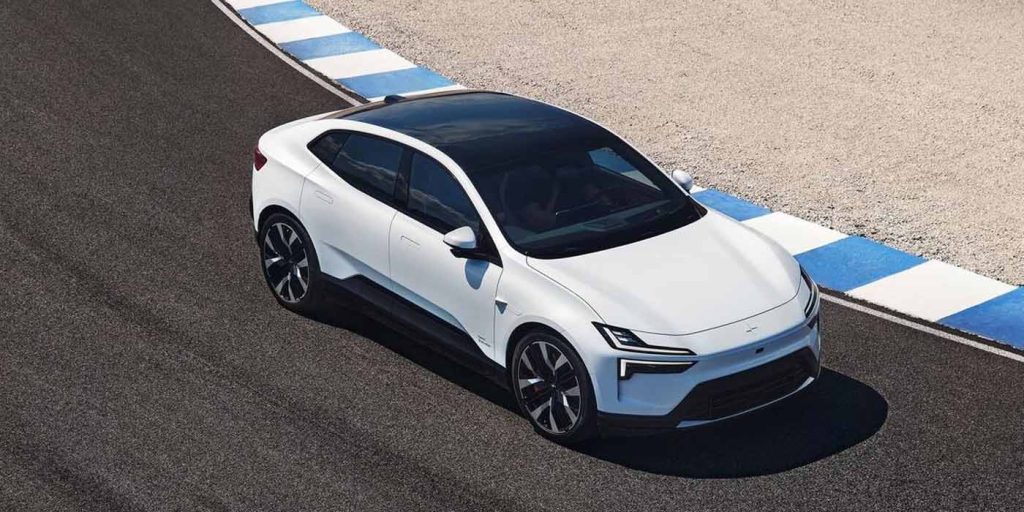
Product-wise, at least, it’s hard to argue that Polestar’s future appears to be anything but bright. The new Polestar 3 crossover is a viable competitor to the industry-leading Tesla Model Y, and the upcoming Polestar 4 and 5 models seem like winners, too. To drive that point home, Polestar is promoting up to $18,000 in incentives to lure in Tesla buyers.
You can find out more about Polestar’s killer EV deals on the full range of Polestar models, from the 2 to the 4, below, then let us know what you think of the three-pointed star’s latest discount dash in the comments section at the bottom of the page.
SOURCE: Polestar.
If you’re considering going solar, it’s always a good idea to get quotes from a few installers. To make sure you find a trusted, reliable solar installer near you that offers competitive pricing, check out EnergySage, a free service that makes it easy for you to go solar. It has hundreds of pre-vetted solar installers competing for your business, ensuring you get high-quality solutions and save 20-30% compared to going it alone. Plus, it’s free to use, and you won’t get sales calls until you select an installer and share your phone number with them.
Your personalized solar quotes are easy to compare online and you’ll get access to unbiased Energy Advisors to help you every step of the way. Get started here.
FTC: We use income earning auto affiliate links. More.

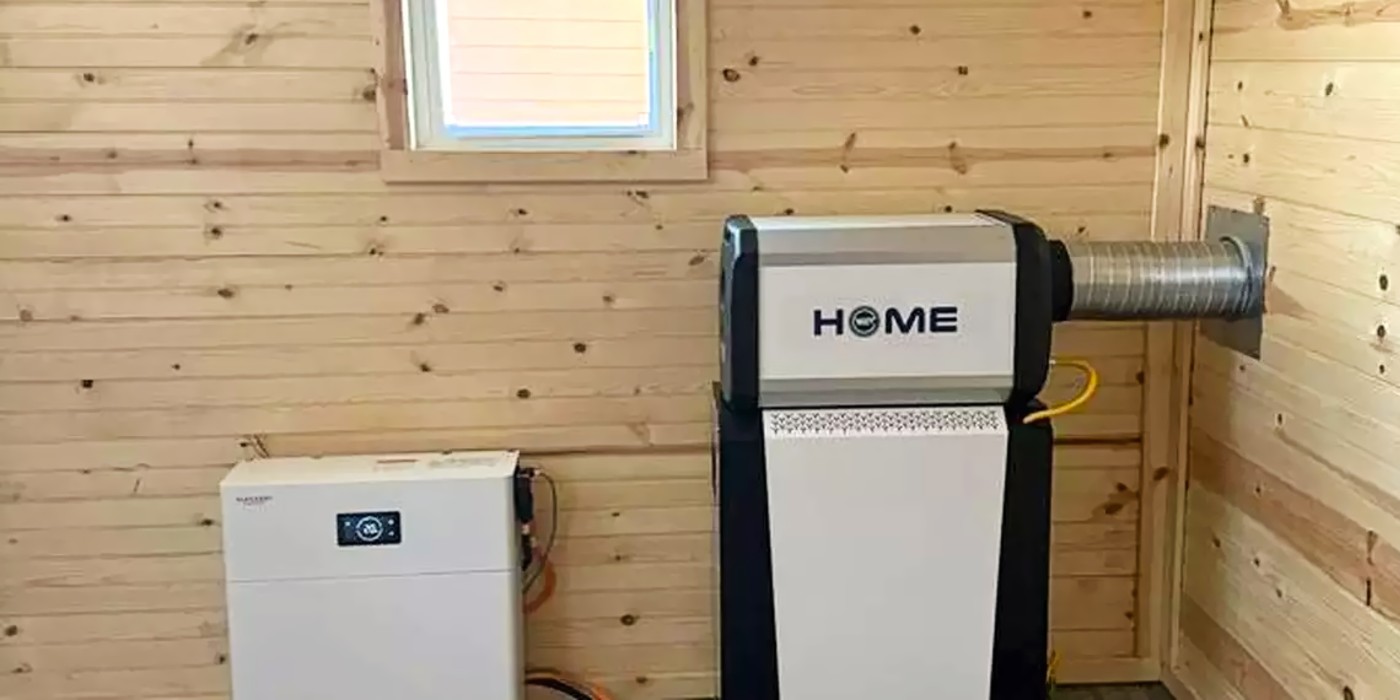
Whether it’s to keep the lights on after a natural disaster or just to avoid peak energy rates, more people than ever are adding battery energy storage to their home solar systems — but li-ion batteries aren’t the only option. The new WATT Fuel Cell uses the natural gas connection your home already has to generate power when you need it.
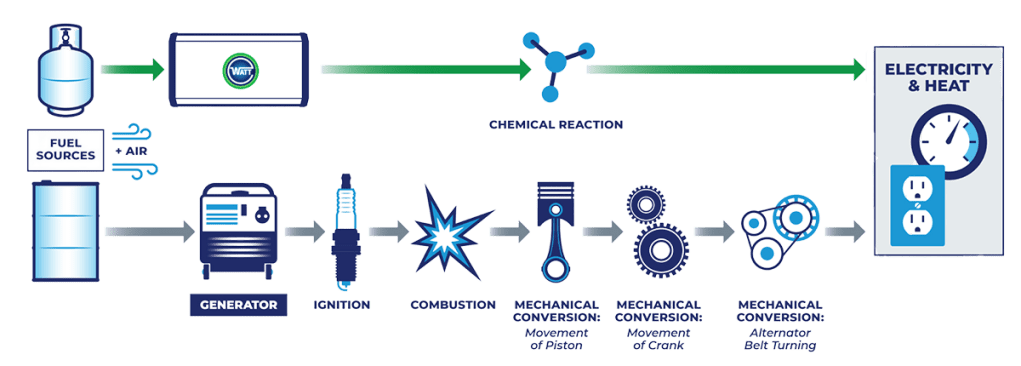
Technically a solid oxide fuel cell, the WATT unit turns the natural gas in your home into electricity without combustion, relying instead on a chemical reaction between the natural gas and oxygen in the air to create an electric current in a way that’s conceptually similar to a hydrogen fuel cell, but that makes use of a more readily available (and far cheaper) fuel source to generate power while producing far fewer harmful emissions than a conventional generator.
How it works
The company’s latest offering, the WATT HOME system, recently achieved certification at a 2 kW power rating, marking an important step on the company’s commercialization roadmap as it races to meet market demands for a natural-gas-powered backup solution to guarantee uptime in outage-prone regions.
This week, the company marked another major milestone by installing the of its first 2 kW WATT HOME solid oxide fuel cells (SOFC) at the Edward M. Smith National Career and Life Skills Development Center, Hope Gas’ new state-of-the-art training facility in Clarksburg, West Virginia – but the news doesn’t end there.
The company plans to take advantage of the new 30% ITC benefit (a federal tax credit that lets homeowners deduct 30% of the cost of qualifying clean energy systems, which now includes natural gas) under the One Big Beautiful Bill Act to help drive sales, with installations beginning in Hope Gas’ utility territory in Q1 of 2026.
“The WATT HOME system’s new 2 kW certification … validates the performance capabilities we’ve engineered for years and strengthens our competitive position as we move into multi-year deployment with Hope Gas,” says Caine Finnerty, WATT’s CEO and Founder. “With the ITC benefit, we anticipate accelerated adoption and substantial value for customers, utilities, and investors.”
The gas fuel cell can send power directly to the home’s panel, keeping the lights on directly, or perform the same function as a solar panel, sending power to a battery where it can be stored for later use.
Keep in mind, though – this isn’t a zero emissions option the way a solar + battery solution is. This is very much a fossil fuel-powered solution that gives off carbon and nitrous emissions, and the only reasons we’re talking about it are:
- the tech is kind of cool
- I didn’t know these existed
- it is objectively cleaner than a conventional ICE generator
That said, while solar is still the better solution in an ideal world, a WATT HOME fuel cell might be a better option in situations where rooftop space is limited (or nonexistent), such as condos or vertically-designed townhomes. In those scenarios, solar panels are unlikely to generate a meaningful amount of electricity, but a fuel cell that can tap into the buildings’ existing natural gas lines to provide reliable backup power if the grid fails.
That makes the fuel cell an attractive option for residents in multi-unit buildings, older historic neighborhoods with strict aesthetic rules, or any building where adding solar panels aren’t feasible, but a low-emission, low-noise backup solution is still needed.
The better question, then, isn’t is it better than solar – it’s is it better than solar for you? If you’re in West Virginia, you might be able to find out in just a few weeks. In the meantime, watch WATT’s own explainer video, below, then let us know what you think of the idea of a natural gas fuel cell in the comments.
Powering your home with a fuel cell
SOURCE | IMAGES: WATT, via PRNewswire.
If you’re considering going solar, it’s always a good idea to get quotes from a few installers. To make sure you find a trusted, reliable solar installer near you that offers competitive pricing, check out EnergySage, a free service that makes it easy for you to go solar. It has hundreds of pre-vetted solar installers competing for your business, ensuring you get high-quality solutions and save 20-30% compared to going it alone. Plus, it’s free to use, and you won’t get sales calls until you select an installer and share your phone number with them.
Your personalized solar quotes are easy to compare online and you’ll get access to unbiased Energy Advisors to help you every step of the way. Get started here.
FTC: We use income earning auto affiliate links. More.
-
 Sports2 years ago
Story injured on diving stop, exits Red Sox game
-
 Sports3 years ago
‘Storybook stuff’: Inside the night Bryce Harper sent the Phillies to the World Series
-
 Sports2 years ago
Game 1 of WS least-watched in recorded history
-
 Sports3 years ago
Button battles heat exhaustion in NASCAR debut
-
 Sports3 years ago
MLB Rank 2023: Ranking baseball’s top 100 players
-
Sports4 years ago
Team Europe easily wins 4th straight Laver Cup
-
 Environment3 years ago
Japan and South Korea have a lot at stake in a free and open South China Sea
-
 Environment1 year ago
Here are the best electric bikes you can buy at every price level in October 2024