

Lectric XP Trike with $420 in free gear at $1,499, EcoFlow takes 60% off three flash units, Worx deals of the day, more

We’re kicking off this week’s Green Deals with a bunch of savings that will only last through the rest of the day, starting with the final hours of Lectric’s April Showers Sale with up to $654 in e-bike bundle savings, like on the XP Trike for $1,499 that comes with one of the largest bundles we’ve seen at $420 in free gear. In the same vein, it’s the final day of EcoFlow’s Easter Sale and Mega Sale, with shared flash offers at up to 60% off on three different units, including a DELTA Max 2000 Portable Power Station, a DELTA Pro bundle, and a pair of expansion batteries – with everything starting from $849. Lastly, we have a one-day-only sale from Best Buy on the Worx 40V 17-inch Cordless Intellicut Lawn Mower at $266, as well as an additional 4.0Ah battery discount too. Plus, all the other hangover Green Deals from last week are in the links at the bottom of the page, rounded together within our Electrified Weekly coverage.
Head below for other New Green Deals we’ve found today and, of course, Electrek’s best EV buying and leasing deals. Also, check out the new Electrek Tesla Shop for the best deals on Tesla accessories.
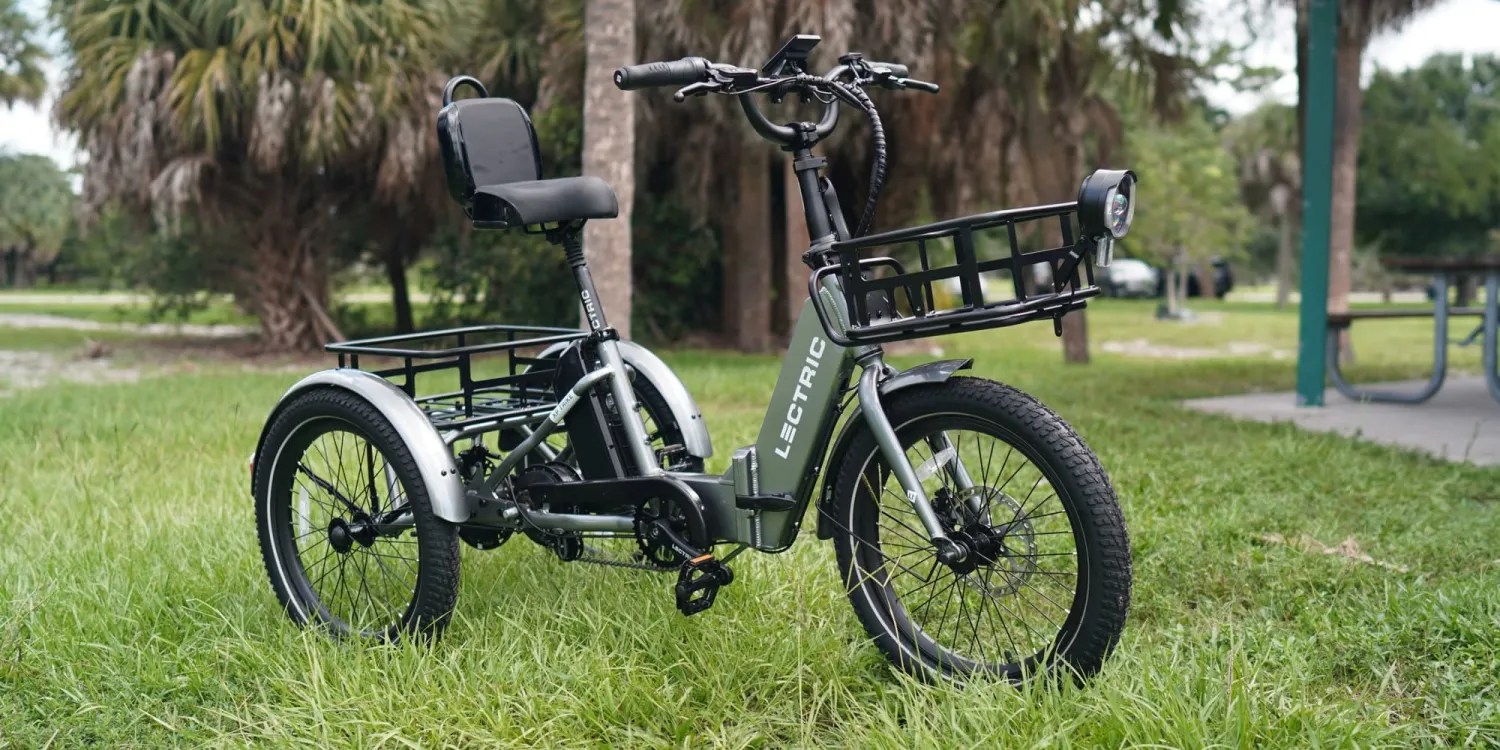
Leisurely enjoy errands and joyrides on Lectric’s XP Trike with $420 bundle at $1,499 ($1,919 value)
It’s the final day of Lectric’s April Showers Sale with up to $654 being taken off e-bike bundles, which the brand has provided a countdown clock for through the rest of the day. We wanted to shine a spotlight on the bundle for the Lectric’s XP Trike that is coming with $420 in free gear at $1,499 shipped. You’d normally have to shell out $1,919 to get this package at full price, which sits among some of the largest bundles we have been seeing over the last year. With the additional gear, you’ll be upgrading your riding experience with steel-encased front and rear cargo baskets, a wide saddle with a backrest, a suspension seat post, an Elite 850 lux headlight, and a bell.
Lectric’s XP Trike is an ideal model for folks who enjoy taking leisurely rides around town, especially older riders – plus, with the bonus add-on gear you’ll get more versatility for cargo-hauling needs. The folding frame houses a 500W planetary geared brushless motor that peaks upwards to 1,092Wh alongside a removable 48V 13Ah battery, providing you with 14 MPH top speeds for up to 50 miles when its five pedal assistance levels are activated. Inexperienced riders will also get some added support in its default mode, which limits the acceleration and speed until you get more comfortable with its system.
And for the price, Lectric’s XP Trike comes with a solid array of stock features too, like the hydraulic brakes and additional parking brake for guaranteed stopping power, as well as others including integrated rear lights (with brake lighting), slimmer tires for easier turning, an ergonomic twist throttle for electric cruising (which will shorten its mileage), and a backlit LCD display. On top of everything, the build comes with an IP65 water-and-dust-resistant protection rating.
Be sure to check out the full lineup of Lectric’s April Showers Sale offers, which are seeing up to $654 taken off the other e-bike bundles through the rest of the day.
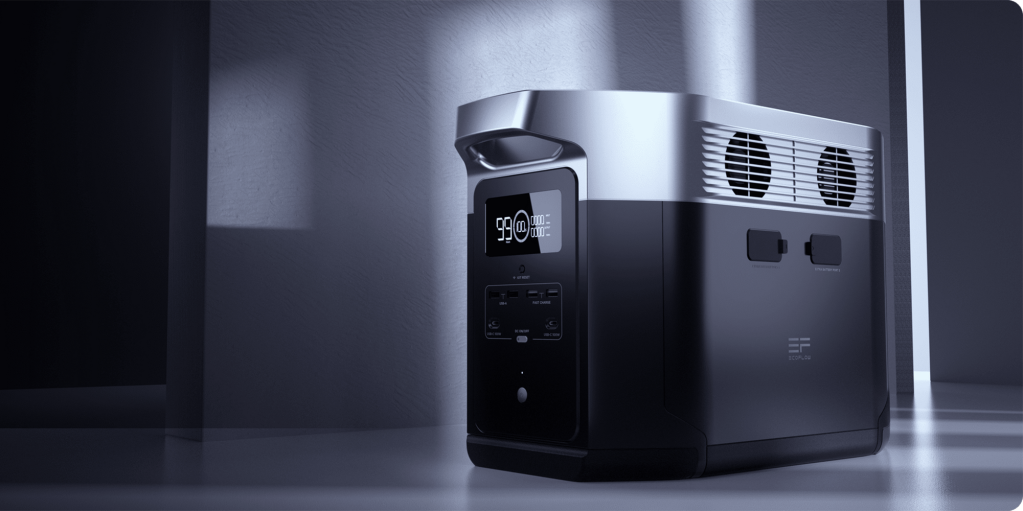
You can save up to 60% on EcoFlow’s DELTA Max or DELTA Pro power station setups for today only starting from $849
As part of its soon-to-end Easter Sale and alternate Mega Sale, EcoFlow is closing out these sales tonight with its final flash offers on three different backup power deals, starting with the DELTA Max 2000 Portable Power Station for $849 shipped. We usually see discounts hitting this model’s bundles over the standalone unit, which is being brought down from its $2,099 price tag here for the rest of the day (and sale). We saw it fall lower back during Black Friday sales to $799 and then $759 during Cyber Monday, with today’s deal still coming in as a significant $1,250 in savings, beating out our previous mention during the brand’s Spring Sale by $50 to land down at the third-lowest price we have tracked. You won’t currently find it available at Amazon, with this being the best price we can find right now.
While it may not be the newer second-generation model with shorter charge times and LiFePO4 cells, you’ll still be getting a reliable backup power solution in EcoFlow’s DELTA Max 2000, which offers an equally expandable 2,016Wh to 6,048Wh capacity when you add on expansion batteries. Through its 15 port options it dishes out up to 2,400W of power that can surge up to 3,400W for larger appliance needs too. The battery can be recharged to 80% in just 65 minutes through a standard wall outlet, with alternate options for combination fast-charging, including AC and solar, AC and a generator, or solar and a generator. Of course, you can also solely connect up to its maximum 800W solar input that can refill the battery in 2.5 hours, as well as be used for the previously mentioned combo charging.
The second of these offers bundles the DELTA Pro Portable Power Station with a free protective bag at $1,899 shipped, down from $3,699. While you can find it matching in price at Amazon, you won’t be getting the additional bag there. This is a larger model offering a more expansive setup, this unit comes with a 3,600Wh LiFePO4 capacity that you can invest in further to raise as high as 25kWh. It sports 14 output ports but provides power at up to 3,600W normally while able to surge to 7,200W when needed. Plugging it into a wall outlet gives you back a full battery in 1.8 hours, with its max 1,600W solar input taking a little longer at 2.8 hours.
The final of these offers provides you with two DELTA Pro Smart Extra Batteries for $2,899 shipped over the usual $5,598 rate you’d pay at full price. By adding these to a DELTA Pro power station, you’ll increase its capacity by an additional 7,200Wh, so grabbing them with the above discount would score you a 10,800Wh setup for trips, parties, emergencies, and more.
It’s the final day of EcoFlow’s sales, so be sure to browse through both its Easter Sale and Mega Sale offers while they’re still around and at up to 65% off – plus, the bonus savings, free gear, and rewards.

Affordably cover lawn duties with this Worx 40V 17-inch cordless mower that adapts to grass at $266 (Today only)
As part of its Deals of the Day, Best Buy has two Worx discounts that will affordably get you geared up for spring mowing duties, led by the brand’s 40V 17-inch Cordless Electric Lawn Mower that comes with two 4.0Ah batteries for $265.99 shipped, and matches in price over at Amazon too. Coming down off its $330 perch, most of the recent discounts we’ve seen on this older model have been taking things down to $280, with some falls as low as $247 in the last year. You’re looking at $64 off the going rate here today though, which provides you with a tried-and-true means to handle mowing jobs around your home. Head below to learn more about it and the additional one-day-only offer.
New-time homeowners will find a budget-friendly solution to their mowing needs with this 40V Worx mower that comes powered by the two included 20V 4.0Ah batteries to tackle up to 1/8 acres of land on a single charge. It weighs in at only 35 pounds, making it easy to manage and sports the brand’s Intellicut tech that can either ramp up or dial back the motor’s power depending on the thickness of grass that it moves through. It offers six cutting height levels to choose from, ranging from 1.5 inches to 4 inches while also providing 2-in-1 functionality for either rear bagging (complete with an indicator for a full bag) or mulching. You also won’t have to wrestle with any pull strings thanks to the push-button start nor the fumes or noise you’d get from gas-guzzling models.
Now, with the above bundle, the two batteries will take two hours to charge at the same time with the included dual-port charger, or just 1 hour apiece. Of course, with these all being within Worx’s PowerShare family, batteries can be interchanged, which makes Best Buy’s additional deal for a 20V 4.0Ah battery at $74.99 shipped, quite a solid means to extend the mower’s runtime with more batteries that you can keep switching in and out with one another.
Best New Year EV deals!
- GoTrax Everest Electric Dirt Bike (new low): $3,979 (Reg. $6,000)
- Aventon Ramblas Electric Mountain Bike: $2,599 (Reg. $2,899)
- Lectric ONE Long-Range e-bike with $220 bundle: $2,399 (Reg. $2,507)
- Lectric XPedition 2.0 35Ah Cargo e-bike w/ up to $654 bundle: $1,999 (Reg. $2,741)
- Tenways AGO X All-Terrain e-bike with $307 bundle: $1,899 (Reg. $2,499)
- Lectric XPedition 2.0 26Ah Cargo e-bike w/ $505 bundle: $1,699 (Reg. $2,204)
- Rad Power RadRunner 3 Plus Utility e-bike (new low): $1,699 (Reg. $2,199)
- Aventon Aventure 2 All-Terrain e-bike: $1,699 (Reg. $1,999)
- Tenways CGO800S Step-Thru Commuter e-bike with $315 in free gear: $1,699 (Reg. $1,999)
- Aventon Pace 500.3 Step-Over e-bike with free extra battery: $1,599 (Reg. $1,799)
- Aventon Pace 500.3 Step-Through e-bike with free extra battery: $1,599 (Reg. $1,799)
- Heybike ALPHA All-Terrain e-bike (new low): $1,499 (Reg. $1,699)
- Aventon Abound Cargo e-bike: $1,599 (Reg. $1,999)
- Lectric XPeak 2.0 Long-Range Off-Road e-bike with $316 bundle: $1,599 (Reg. $1,915)
- Aventon Level 2 Commuter e-bike: $1,499 (Reg. $1,899)
- Tenways CGO600 Pro belt-drive e-bike with $118 bundle: $1,499 (Reg. $1,899)
- Tenways CGO600 Pro chain-drive e-bike with $118 bundle: $1,499 (Reg. $1,899)
- Rad Power RadWagon 4 Cargo e-bike with free caboose: $1,499 (Reg. $1,799)
- Lectric XP Trike with $420 bundle: $1,499 (Reg. $1,918)
- Rad Power RadRover 6 Plus Step-Thru Fat Tire e-bike with extra battery: $1,399 (Reg. $1,599)
- Aventon Sinch 2 Folding e-bike: $1,399 (Reg. $1,699)
- Velotric 2024 Nomad 1 Plus All-Terrain e-bike with $134 bundle: $1,399 (Reg. $1,799)
- Lectric XPeak 2.0 Standard Off-Road e-bike with $227 bundle: $1,399 (Reg. $1,626)
- Lectric XPedition 2.0 13Ah Cargo e-bike with $296 bundle: $1,399 (Reg. $1,725)
- Rad Power RadExpand 5 Folding e-bike (new low): $1,299 (Reg. $1,599)
- Rad Power RadRunner Plus Utility e-bike (new low): $1,299 (Reg. $1,799)
- Velotric T1 ST Plus Lightweight e-bike with $120 bundle: $1,299 (Reg. $1,549)
- Velotric Discover 1 Plus Step-Thru Commuter e-bike with $120 bundle: $1,199 (Reg. $1,599)
- Lectric XP 3.0 Long-Range e-bikes with up to $455 bundle: $1,199 (Reg. $1,706)
- Lectric XP Lite 2.0 JW Black LR e-bike with $365 bundle: $1,099 (Reg. $1,464)
- Segway Ninebot MAX G3 eKickScooter: $1,000 (Reg. $1,400)
- Rad Power RadRunner 2 Utility e-bike (new low): $999 (Reg. $1,499)
- Aventon Soltera.2 Urban Commuter e-bike: $999 (Reg. $1,199)
- Lectric XP 3.0 Standard e-bikes: $999 (Reg. $1,507)
- Lectric XP Lite 2.0 Long-Range e-bikes with up to $316 bundles: $999 (Reg. $1,315)
- NIU BQi-C3 Pro e-bike: $999 (Reg. $2,200)
- Segway Ninebot F3 eKickScooter (preorder through April 14): $600 (Reg. $850)
Best new Green Deals landing this week
The savings this week are also continuing to a collection of other markdowns. To the same tune as the offers above, these all help you take a more energy-conscious approach to your routine. Winter means you can lock in even better off-season price cuts on electric tools for the lawn while saving on EVs and tons of other gear.
FTC: We use income earning auto affiliate links. More.

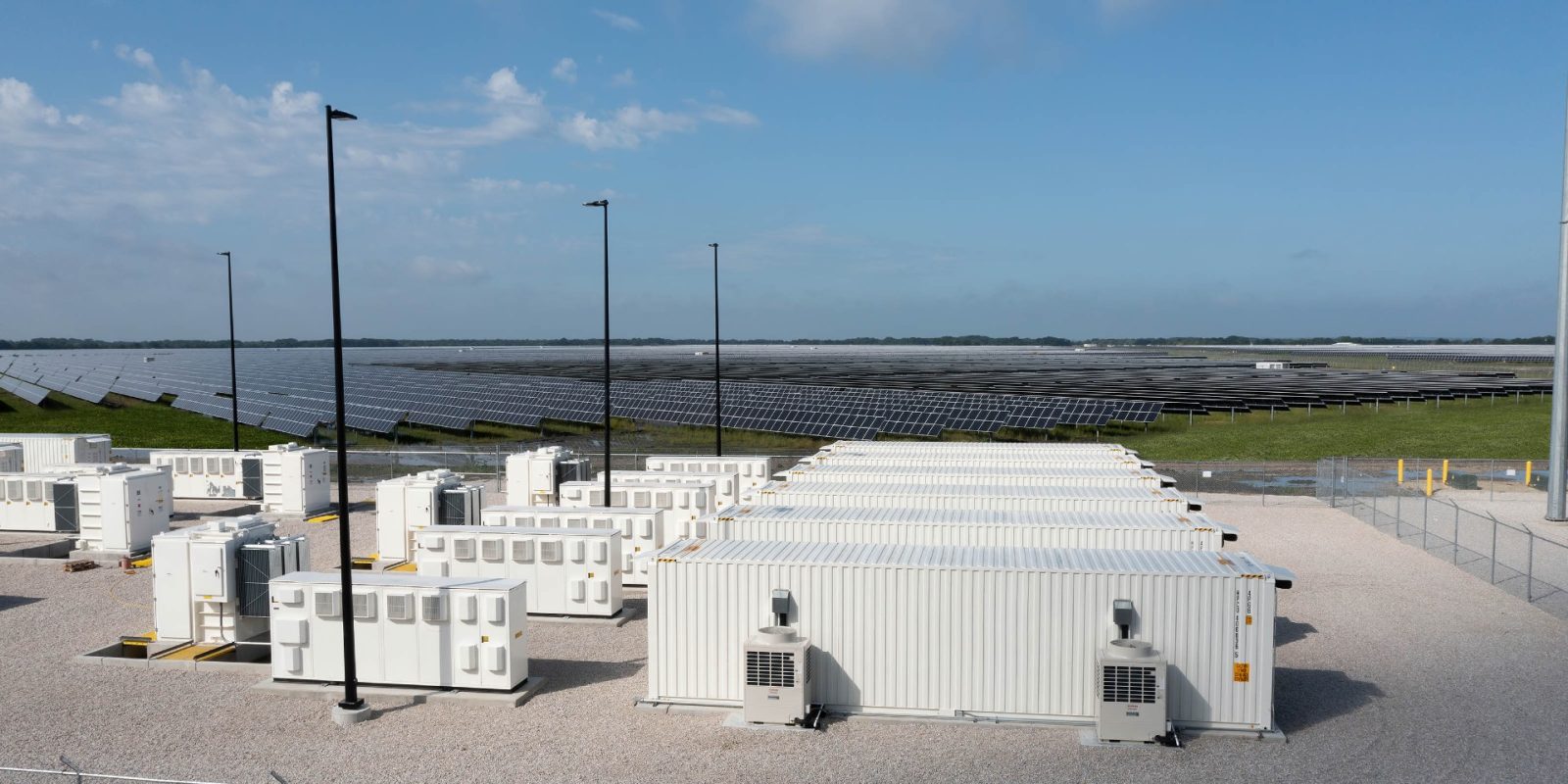
Turning cheap daytime solar into electricity you can actually use at night just got a lot cheaper. A new analysis from energy think tank Ember shows that utility-scale battery storage costs have fallen to $65 per megawatt-hour (MWh) as of October 2025 in markets outside China and the US. At that level, pairing solar with batteries to deliver power when it’s needed is now economically viable.
Battery storage costs have fallen dramatically over the past two years, and the decline continues. Following a steep decline in 2024, Ember’s analysis indicates that prices continued to fall sharply again in 2025.
The findings are based on real-world data from recent battery and solar-plus-storage auctions in Italy, Saudi Arabia, and India, as well as interviews with active developers across global markets.
According to Ember, the cost of a whole, grid-connected utility-scale battery storage system for long-duration projects (four hours or more) is now about $125 per kilowatt-hour (kWh) as of October 2025. That figure applies to projects outside China and the US. Core battery equipment delivered from China costs around $75/kWh, while installation and grid connection typically add another $50/kWh.
Those lower upfront costs have pushed down the levelized cost of storage (LCOS) to just $65/MWh. Ember’s calculation reflects real-world assumptions around financing costs, system lifetime, efficiency, and battery degradation.
Cheaper hardware isn’t the only reason storage costs are falling. Longer battery lifetimes, higher efficiencies, and lower financing costs, helped by clearer revenue models such as auctions, have all contributed to the sharp drop in LCOS. Ember has published a live calculator alongside the report, allowing users to estimate LCOS using their own assumptions.
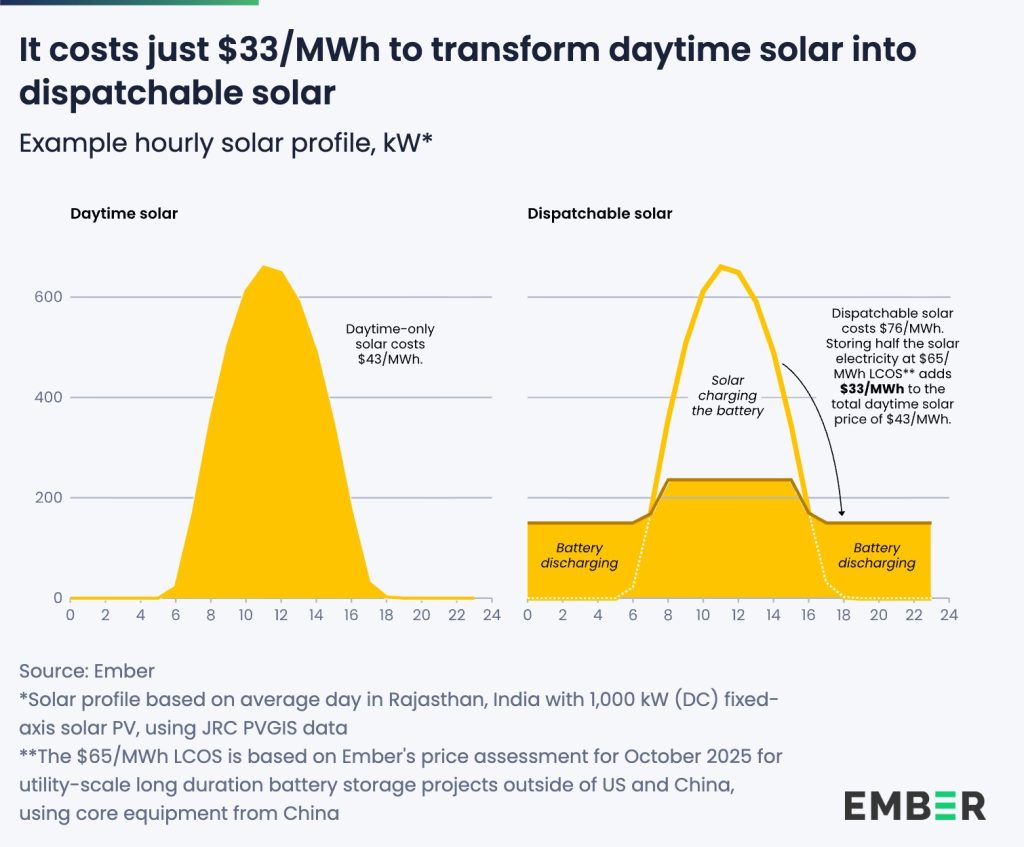
Why this matters comes down to how solar is actually used. Most solar power is generated during the day, so only a portion needs to be stored to make it dispatchable. Ember estimates that if half of daytime solar generation is shifted to nighttime, the $65/MWh storage cost adds about $33/MWh to the cost of solar electricity.
With the global average price of solar at $43/MWh in 2024, adding storage would bring the total cost to about $76/MWh, delivering power in a way that better matches real demand.
As Ember global electricity analyst Kostantsa Rangelova put it, after a 40% drop in battery equipment costs in 2024, the industry is now on track for another major fall in 2025. The economics of battery storage, she said, are “unrecognizable,” and the industry is still adjusting to this new reality.
“Solar is no longer just cheap daytime electricity; now it’s anytime dispatchable electricity. This is a game-changer for countries with fast-growing demand and strong solar resources,” Rangelova added.
Together, solar and battery storage are increasingly emerging as a scalable, secure, and affordable foundation for future power systems.
Read more: EIA: Solar + storage soar as fossil fuels stall through September 2025

If you’re looking to replace your old HVAC equipment, it’s always a good idea to get quotes from a few installers. To make sure you’re finding a trusted, reliable HVAC installer near you that offers competitive pricing on heat pumps, check out EnergySage. EnergySage is a free service that makes it easy for you to get a heat pump. They have pre-vetted heat pump installers competing for your business, ensuring you get high quality solutions. Plus, it’s free to use!
Your personalized heat pump quotes are easy to compare online and you’ll get access to unbiased Energy Advisors to help you every step of the way. Get started here. – *ad


FTC: We use income earning auto affiliate links. More.

In the Electrek Podcast, we discuss the most popular news in the world of sustainable transport and energy. In this week’s episode, we discuss a very telling Tesla Optimus fail, Rivian’s AI/Autonomy day, Mercedes GLB EV, and more.
The show is live every Friday at 4 p.m. ET on Electrek’s YouTube channel.
As a reminder, we’ll have an accompanying post, like this one, on the site with an embedded link to the live stream. Head to the YouTube channel to get your questions and comments in.
After the show ends at around 5 p.m. ET, the video will be archived on YouTube and the audio on all your favorite podcast apps:
We now have a Patreon if you want to help us avoid more ads and invest more in our content. We have some awesome gifts for our Patreons and more coming.
Here are a few of the articles that we will discuss during the podcast:
Here’s the live stream for today’s episode starting at 4:00 p.m. ET (or the video after 5 p.m. ET:
FTC: We use income earning auto affiliate links. More.

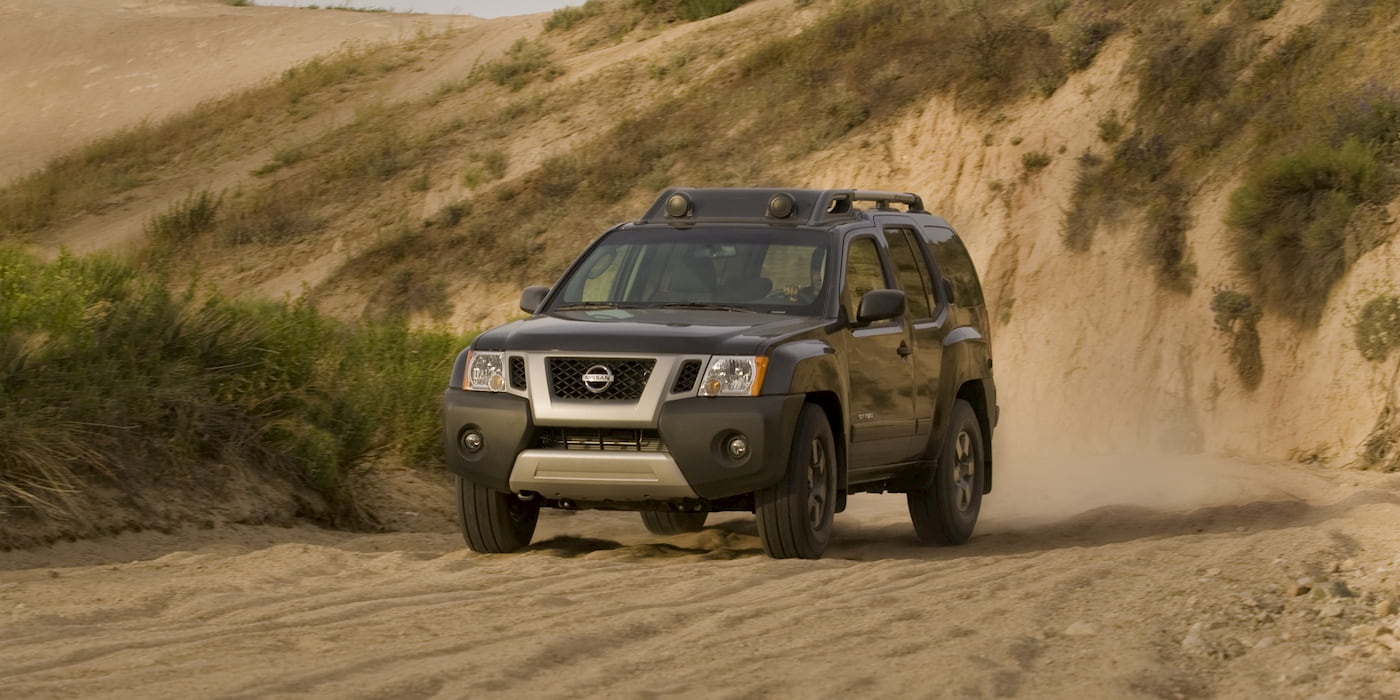
Nissan is reviving the Xterra, the rugged SUV that once attracted a cult-like following, but this time it will be “electrified.”
The Nissan Xterra will be electrified, but by how much?
Earlier this year, Nissan offered a sneak peek of its upcoming lineup in a shadowy image previewing several new vehicles.
Alongside the new 2026 LEAF, a plug-in hybrid Rogue, updated Pathfinder, and Sentra, Nissan teased a new electric “adventure-focused SUV,” which we later learned will be badged the Xterra.
The rugged electric SUV appeared to have a more upright, boxy stance than the original model. The previous Xterra attracted a cult-like following as a cheaper off-road alternative to the Toyota 4Runner, Ford Bronco, and Jeep Wrangler.
However, Nissan discontinued it after the 2015 model year as buyers opted for more efficient options like the Honda CR-V and Toyota RAV4.
The new Xterra, but this time “it will have to have electrification,” according to Nissan Americas chief planning officer, Ponz Pandikuthira.

Pandikuthira told MotorTrend that the next-gen Xterra “cannot be ICE only,” but just how electrified it will be remains up in the air. “Is that an EREV? Is that a parallel hybrid system? Is that a plug-in system? That’s not defined yet. That’s all being actively studied right now,” he explained.
Nissan plans to launch a series of new extended-range hybrid (EREV) vehicles based on its e-Power system. The e-Power system uses a gas-powered engine connected to a generator.
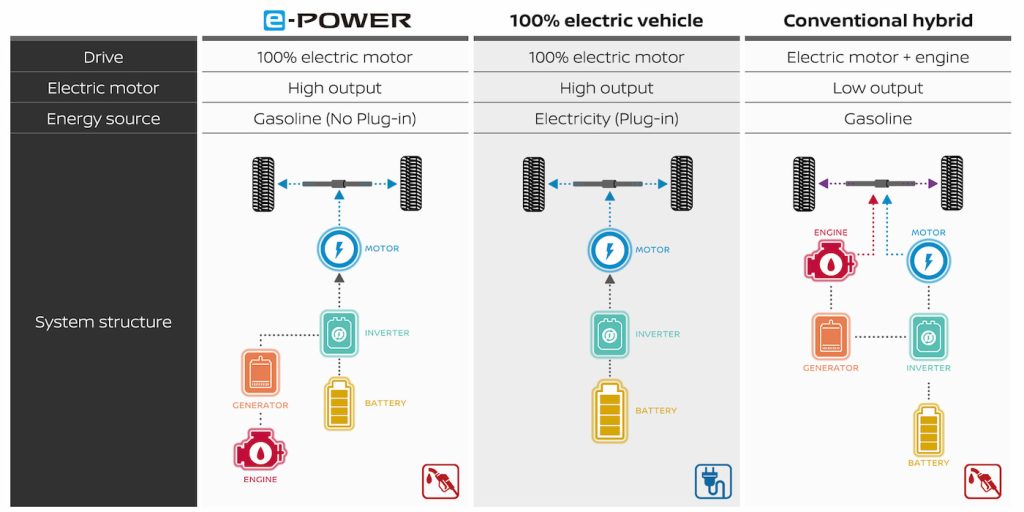
The generator feeds energy to the inverter, which charges the battery and electric motor. Since the ICE only charges the battery and does not drive the wheels, it benefits from the instant torque and smooth drive of an EV.
However, it’s still powered by a gas engine at the end of the day. The 2027 Nissan Rogue will be the first e-Power vehicle in the US.
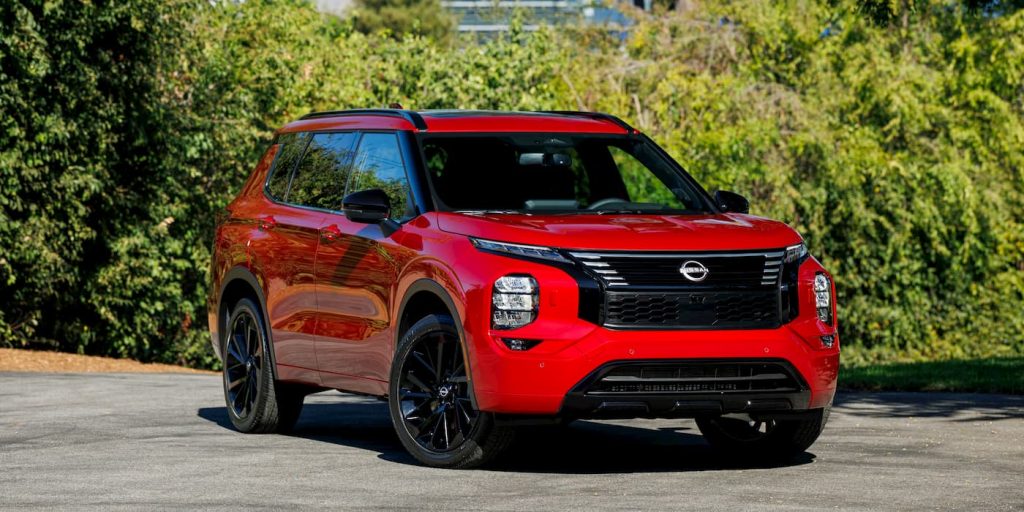
The Xterra could also arrive as a plug-in hybrid (PHEV) similar to the 2026 Nissan Rogue. The 2026 Rogue will be Nissan’s first PHEV for the US and is expected to be a key part of its comeback plans.
It will go on sale in early 2026 with an EPA-estimated 36 miles of electric driving range. Combined with the gas engine, the hybrid powertrain provides up to 420 miles of EPA-estimated driving range.
The electrified Xterra will share a body-on-frame platform with the Pathfinder and Frontier, with a V-6 engine, all-wheel drive (AWD), and space for bigger batteries.

According to Pandikuthira, the V-6 will give it an edge over the competition, while the hybrid powertrain will improve efficiency.
The “electrified” Xterra will be built at Nissan’s Canton, Mississippi, plant, starting in 2028. The following year, a luxury Infiniti electric SUV, based on the Vision QXe concept, will join it.
Electrek’s Take
While Nissan is launching new PHEVs, hybrids, and EREVs, it has already pulled one electric SUV, the Ariya, from its US lineup.
For now, the only fully electric vehicle Nissan offers in the US is the 2026 LEAF. Although it was once viewed as a leader in the shift to EVs with the initial LEAF launching in 2010, Nissan has quickly fallen behind and is now scrambling to catch up.
Nissan hopes to plug the gap with a series of gas-power hybrids over the next few years until new all-electric vehicles begin rolling out in 2028.
Even with less efficient hybrid tech, Nissan is still late to the game and will need to keep pace with Toyota, Honda, Ford, Stellantis, and others betting on hybrids in the US.
FTC: We use income earning auto affiliate links. More.
-
 Sports2 years ago
Story injured on diving stop, exits Red Sox game
-
 Sports3 years ago
‘Storybook stuff’: Inside the night Bryce Harper sent the Phillies to the World Series
-
 Sports2 years ago
Game 1 of WS least-watched in recorded history
-
 Sports3 years ago
Button battles heat exhaustion in NASCAR debut
-
 Sports3 years ago
MLB Rank 2023: Ranking baseball’s top 100 players
-
Sports4 years ago
Team Europe easily wins 4th straight Laver Cup
-
 Environment3 years ago
Japan and South Korea have a lot at stake in a free and open South China Sea
-
 Environment1 year ago
Here are the best electric bikes you can buy at every price level in October 2024