

Ethena Labs exits German market following agreement with BaFin

Synthetic stablecoin developer Ethena Labs is winding down its German operations less than a month after regulators identified “deficiencies” in its dollar-pegged USDe (USDE) stablecoin, signaling heightened scrutiny around crypto assets in Europe’s largest economy.
Ethena Labs reached an agreement with Germany’s Federal Financial Supervisory Authority, also known as BaFin, to cease all operations of its local subsidiary, Ethena GmbH, according to an April 15 announcement.

Source: Ethena Labs
As such, Ethena Labs “will no longer be pursuing MiCAR authorization in Germany,” the company said, referring to the Markets in Crypto-Assets Regulation.
The company reiterated that Ethena’s German subsidiary has not conducted any mint or redeem activity for USDe since March 21, the day BaFin halted the stablecoin’s activities. As Cointelegraph reported at the time, the German regulator identified compliance failures and potential securities law violations tied to USDe.
“All whitelisted mint and redeem users previously interacting with Ethena GmbH have at their request been onboarded with Ethena (BVI) Limited instead and have no ongoing relationship with Ethena GmbH whatsoever,” the company said.
Unlike popular stablecoins USDt (USDT) and USDC (USDC), Ethena’s USDe maintains its dollar peg through an automated delta-hedging strategy that includes a combination of spot holdings, onchain custody and liquidity buffers.
USDe is the fourth-largest stablecoin with a total circulating value of $4.9 billion, according to CoinMarketCap.

The $233-billion stablecoin market is dominated by USDT and USDC. Source: CoinMarketCap
Related: Northern Marianas vetoes bill for Tinian to launch its own USD stablecoin
MiCA tightens the noose around stablecoin usage
MiCA is a comprehensive framework for cryptocurrency usage across the European Union, enforcing strict compliance standards and consumer protections.
To meet the new requirements, stablecoin issuers must have adequate reserves backing their tokens, ensure reserve assets are segregated from users’ assets and fulfill regular reporting obligations.
As of February, 10 stablecoin issuers have been approved under MiCA, including Circle, Crypto.com, Societe Generale and Membrane Finance.
Patrick Hansen, Circle’s senior director of EU strategy and policy, told Cointelegraph that a total of 10 euro-pegged stablecoins and five US dollar-pegged stablecoins have been approved so far.
However, notably absent from the list is USDt issuer Tether, which has decided not to pursue MiCA registration at this time.
Magazine: Bitcoin eyes $100K by June, Shaq to settle NFT lawsuit, and more: Hodler’s Digest, April 6-12

The US Commodity Futures Trading Commission has given approval for spot cryptocurrency products to trade on federally regulated futures exchanges.
In a Thursday notice, Acting CFTC Chair Caroline Pham said the move was in response to policy directives from US President Donald Trump. She added that the approval followed recommendations by the President’s Working Group on Digital Asset Markets, engagement with the US Securities and Exchange Commission and consultations from the CFTC’s “Crypto Sprint” initiative.
“[F]or the first time ever, spot crypto can trade on CFTC-registered exchanges that have been the gold standard for nearly a hundred years, with the customer protections and market integrity that Americans deserve,” said Pham.

Pham, who became acting CFTC chair in January amid Trump’s taking office, is expected to step down once the US Senate confirms a replacement. The nomination of Michael Selig, an SEC official whom Trump nominated to chair the CFTC, is expected to head to the Senate floor for a vote soon after moving out of committee.
Related: Acting CFTC chair seeks CEOs for ‘innovation council,’ citing crypto policy
One of the derivatives exchanges poised to be among the first to begin enacting trading is Bitnomial, which scheduled its launch for next week. The exchange is authorized to operate under the CFTC as a Designated Contract Market, which Coinbase also obtained in 2020.
Awaiting market structure, new leadership at CFTC
In addition to Selig’s nomination under consideration in the Senate, the CFTC has four empty commissioner seats on its leadership. As of Thursday, Trump had not announced any potential replacements for the regulator.
Also expected soon is for US senators to advance a digital asset market structure bill, legislation expected to lay out clear regulatory roles for the CFTC and SEC over cryptocurrencies. Discussion drafts of possible frameworks would give the CFTC more authority to regulate digital assets.
Magazine: When privacy and AML laws conflict: Crypto projects’ impossible choice
Politics
Soaring demand for mental health, ADHD and autism services to be reviewed after ‘overdiagnosis’ claim


A review into the rising demand for mental health, ADHD and autism services has been launched by the health secretary.
The independent review will look at rates of diagnosis, and the support offered to people.
Health Secretary Wes Streeting said the issue needs to be looked at through a “strictly clinical lens” after he claimed in March that there had been an “overdiagnosis” of mental health conditions, with “too many people being written off”.
Politics latest: Reform receives largest ever UK donation from living person
Mental health conditions are being more commonly reported among the working-age population, figures analysed by the Institute for Fiscal Studies found.
More than half of the increase in 16 to 64-year-olds claiming disability benefits since the pandemic is due to more claims relating to mental health or behavioural conditions.
A total of 1.3 million people claim disability benefits – 44% of all claimants – primarily for mental health or behavioural conditions, the analysis shows.
The review will be led by leading clinical psychologist Professor Peter Fonagy, the national clinical adviser on children and young people’s mental health, who will work with academics, doctors, epidemiological experts, charities and parents.
He will look at what is driving the rising demand for services, and inequalities in accessing support.
Govt orders review into ADHD rise
The Department of Health said 13 times more people were waiting for an autism assessment in September 2025 compared with April 2019.
There is £688m in extra funding going towards hiring 8,500 more mental health workers so the NHS can expand on talking therapies and increase the number of mental health emergency departments.
Mr Streeting said: “I know from personal experience how devastating it can be for people who face poor mental health, have ADHD or autism, and can’t get a diagnosis or the right support.
“I also know, from speaking to clinicians, how the diagnosis of these conditions is sharply rising.
“We must look at this through a strictly clinical lens to get an evidence-based understanding of what we know, what we don’t know, and what these patterns tell us about our mental health system, autism and ADHD services.
“That’s the only way we can ensure everyone gets timely access to accurate diagnosis and effective support.”
Read more:
Tory-Reform pact talks ‘not happening’, says Tice
Reeves hit by rural Labour MP rebellion

ADHD is changing the world of work
Prof Fonagy said: “This review will only be worthwhile if it is built on solid ground. We will examine the evidence with care to understand, in a grounded way, what is driving rising demand.
“My aim is to test assumptions rigorously, and listen closely to those most affected, so that our recommendations are both honest and genuinely useful.”
The findings will be published next summer.
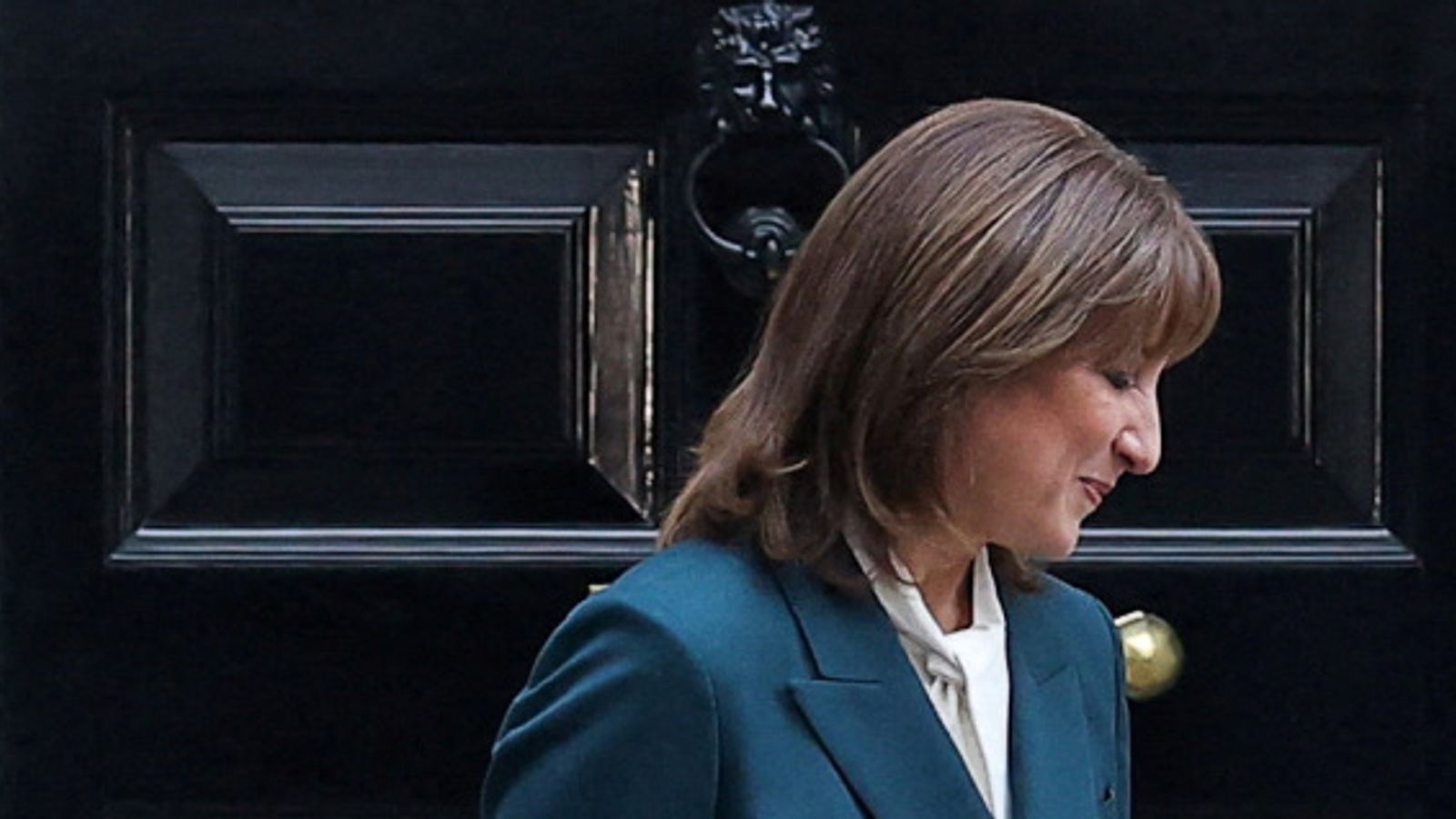

Chancellor Rachel Reeves has suffered another budget blow with a rebellion by rural Labour MPs over inheritance tax on farmers.
Speaking during the final day of the Commons debate on the budget, Labour backbenchers demanded a U-turn on the controversial proposals.
Plans to introduce a 20% tax on farm estates worth more than £1m from April have drawn protesters to London in their tens of thousands, with many fearing huge tax bills that would force small farms to sell up for good.
Farmers have staged numerous protests against the tax in Westminster. Pic: PA
MPs voted on the so-called “family farms tax” just after 8pm on Tuesday, with dozens of Labour MPs appearing to have abstained, and one backbencher – borders MP Markus Campbell-Savours – voting against, alongside Conservative members.
In the vote, the fifth out of seven at the end of the budget debate, Labour’s vote slumped from 371 in the first vote on tax changes, down by 44 votes to 327.
‘Time to stand up for farmers’
The mini-mutiny followed a plea to Labour MPs from the National Farmers Union to abstain.
“To Labour MPs: We ask you to abstain on Budget Resolution 50,” the NFU urged.
“With your help, we can show the government there is still time to get it right on the family farm tax. A policy with such cruel human costs demands change. Now is the time to stand up for the farmers you represent.”
After the vote, NFU president Tom Bradshaw said: “The MPs who have shown their support are the rural representatives of the Labour Party. They represent the working people of the countryside and have spoken up on behalf of their constituents.
“It is vital that the chancellor and prime minister listen to the clear message they have delivered this evening. The next step in the fight against the family farm tax is removing the impact of this unjust and unfair policy on the most vulnerable members of our community.”

Farmers defy police ban in budget day protest in Westminster.
The government comfortably won the vote by 327-182, a majority of 145. But the mini-mutiny served notice to the chancellor and Sir Keir Starmer that newly elected Labour MPs from the shires are prepared to rebel.
Speaking in the debate earlier, Mr Campbell-Savours said: “There remain deep concerns about the proposed changes to agricultural property relief (APR).
“Changes which leave many, not least elderly farmers, yet to make arrangements to transfer assets, devastated at the impact on their family farms.”
Samantha Niblett, Labour MP for South Derbyshire abstained after telling MPs: “I do plead with the government to look again at APR inheritance tax.
“Most farmers are not wealthy land barons, they live hand to mouth on tiny, sometimes non-existent profit margins. Many were explicitly advised not to hand over their farm to children, (but) now face enormous, unexpected tax bills.
“We must acknowledge a difficult truth: we have lost the trust of our farmers, and they deserve our utmost respect, our honesty and our unwavering support.”

UK ‘criminally’ unprepared to feed itself in crisis, says farmers’ union.
Labour MPs from rural constituencies who did not vote included Tonia Antoniazzi (Gower), Julia Buckley (Shrewsbury), Jonathan Davies (Mid Derbyshire), Maya Ellis (Ribble Valley), and Anna Gelderd (South East Cornwall), Ben Goldsborough (South Norfolk), Alison Hume (Scarborough and Whitby), Terry Jermy (South West Norfolk), Jayne Kirkham (Truro and Falmouth), Noah Law (St Austell and Newquay), Perran Moon, (Camborne and Redruth), Samantha Niblett (South Derbyshire), Jenny Riddell-Carpenter (Suffolk Coastal), Henry Tufnell (Mid and South Pembrokeshire), John Whitby (Derbyshire Dales), Steve Witherden (Montgomeryshire and Glyndwr) and Amanda Hack, (North West Leicestershire).
-
 Sports2 years ago
Story injured on diving stop, exits Red Sox game
-
 Sports3 years ago
‘Storybook stuff’: Inside the night Bryce Harper sent the Phillies to the World Series
-
 Sports2 years ago
Game 1 of WS least-watched in recorded history
-
 Sports3 years ago
Button battles heat exhaustion in NASCAR debut
-
 Sports3 years ago
MLB Rank 2023: Ranking baseball’s top 100 players
-
Sports4 years ago
Team Europe easily wins 4th straight Laver Cup
-
 Environment3 years ago
Japan and South Korea have a lot at stake in a free and open South China Sea
-
 Environment1 year ago
Here are the best electric bikes you can buy at every price level in October 2024