

Free breakfast clubs set to open at hundreds of schools in England – but teachers voice fears over funding


Free breakfast clubs will launch at 750 schools across England next week, but teachers have warned government funding will fall short of the cost.
From Tuesday, thousands of parents can access 30 minutes of free morning childcare as part of a trial beginning at the start of the new term and running to July, ahead of an expected national rollout.
Ministers expect the scheme to save parents of primary-aged children £450 per year in childcare costs.
School leaders, however, are warning the pilot may lead to budget shortfalls.
“The initial feedback we are hearing from many school leaders participating in the pilot is that the funding just isn’t sufficient,” said Paul Whiteman, general secretary of NAHT, the headteachers’ union.
“At a time when school budgets are already stretched, most can ill-afford to subsidise this shortfall.”
Mr Whiteman added: “It’s absolutely crucial that this is addressed before the scheme is rolled out nationally.
“We have been encouraged to receive assurance from the Department for Education that funding will be looked at carefully when this trial is being assessed.”
Read more from Sky News:
Upskirted teacher on misogynistic attitudes in classroom
Why families are facing agonising waits to bury their loved ones
The trial is backed by £7m of government funding and more than £30m is promised for breakfast clubs in 2025-26.
The government has previously insisted there will be enough funding to deliver the programme.
The 750 “early adopter” schools are spread across the country and include mainstream schools and alternative provision schools, which educate children with specific needs.
March: Chancellor denies free school meals cuts
Academies, free schools and local authority schools are all taking part.
Education Secretary Bridget Phillipson said free breakfast clubs were “at the heart” of the Labour government’s “Plan for Change, making working parents’ lives easier and more affordable, while breaking down barriers to opportunity for every child”.
To see which schools are part of the trial in your area, you can visit the Department for Education’s website here.


Crypto exchange OKX said volume in its licensed and regulated markets increased 53-fold in 2025, driven by its expansion into the United States and the European Economic Area.
Citing internal data, the exchange said daily active wallets doubled over the past year, with an average of about 190,000 new wallets created each day, while decentralized exchange volume on its platform rose 262% globally and centralized trading increased 16% over the same period.
The company attributed its market growth to an operating model focused on licensed access to regulated markets. OKX expanded across the European Economic Area in January after receiving a license under the EU’s Markets in Crypto-Assets framework, or MiCA.
In the United States, the exchange noted that its April market entry coincided with several positive regulatory developments, including the passage of the GENIUS Act and steps by the Office of the Comptroller of the Currency to charter crypto-native trust banks.
Data from CoinMarketCap place OKX fourth globally among cryptocurrency exchanges, using rankings that weigh factors such as platform traffic, liquidity, reported trading volume and confidence in volume authenticity.
In December, OKX was among several cryptocurrency exchanges blocked in Belarus after the Ministry of Information restricted access to their global websites, citing violations related to “inappropriate advertising” under the country’s Law on Mass Media.
Related: OKX adds decentralized trading for US users as DEX volumes hit record high
Top exchanges secure licensing in Europe
The MiCA legislation created a single licensing regime for crypto service providers across the bloc and became fully applicable to exchanges in December 2024. Since then, several major platforms have moved to secure approvals that allow them to passport services across the European Economic Area.
In 2025, Bybit received authorization from Austria’s Financial Market Authority and established Vienna as its European headquarters, while Coinbase obtained a MiCA license a month later from Luxembourg and designated the country as its regional base.
Kraken followed with approval from the Central Bank of Ireland, building on earlier MiFID and electronic money licenses, and Gemini secured authorization from Malta’s Financial Services Authority in August, according to regulatory records.
In the US, the passage of the GENIUS Act in July established a federal framework governing stablecoin issuance and use. Since then, the stablecoin market has grown to more than $310 billion, with US dollar–backed tokens Tether’s USDt (USDT) and Circle’s USDC (USDC) together accounting for about 85% of total supply, according to data from DefiLlama.

Magazine: Sei wallets in Xiaomi, Bhutan’s gold on Solana: Asia Express


Wyoming Representative Harriet Hageman intensified chatter about a 2026 Senate run by posting a video days after Senator Cynthia Lummis announced she will not seek reelection.
The five-second clip shows the congresswoman alongside a single-word caption: “Soon.” It breaks a months‑long lull on her account and bolsters speculation that she is eyeing Lummis’ open seat.
Wyoming’s Senate seat has been a reliable voice in advancing regulatory clarity for the crypto industry, from market structure bills and stablecoin regulation to banking access. Whoever replaces Lummis will help decide whether crypto keeps a dedicated champion in the Senate.
A crypto ally steps down
Lummis is expected to retire at the end of her term, removing one of the digital‑asset industry’s most outspoken allies from the Senate just as lawmakers edge toward potential votes on landmark market‑structure legislation.
Lummis has built a national profile as a reliable pro‑crypto voice, embracing Bitcoin early and co‑sponsoring legislative efforts widely viewed to advance the blockchain industry, including the Responsible Financial Innovation Act and the ongoing US Clarity Act.
Her pending exit leaves the industry without a guaranteed champion in a chamber that has become increasingly central to decisions on trading‑platform oversight, stablecoin rules and banking access for crypto firms.
Related: Crypto community ‘very sorry’ over Senator Lummis’ reelection decision
Hageman’s record and crypto’s hopes
As Wyoming’s at‑large House member, she has so far focused on broader conservative themes like parental rights in education, opposition to federal overreach and backing pro‑fossil fuel energy policies, while aligning herself with President Donald Trump. A Senate campaign would test how much she is willing to lean into Lummis’ crypto legacy alongside those priorities.
Wyoming’s crypto community is already nudging her in that direction. Caitlin Long, founder of Custodia Bank and a key architect of the state’s blockchain‑friendly laws, praised Hageman as “salt of the earth.” Long was reacting to news of Hageman’s expected entry in the race.

Related: Crypto among sectors ‘debanked’ by 9 major banks: US regulator
Long’s backing effectively introduces Hageman to crypto audiences as the preferred successor, even though the House member has not yet made digital assets a signature focus.
Wyoming’s 2026 Senate race is now poised to double as a test of whether the state wants to preserve its identity as home to the Senate’s most visible crypto advocate, or fold digital asset policy into a broader Trump‑era Republican agenda.
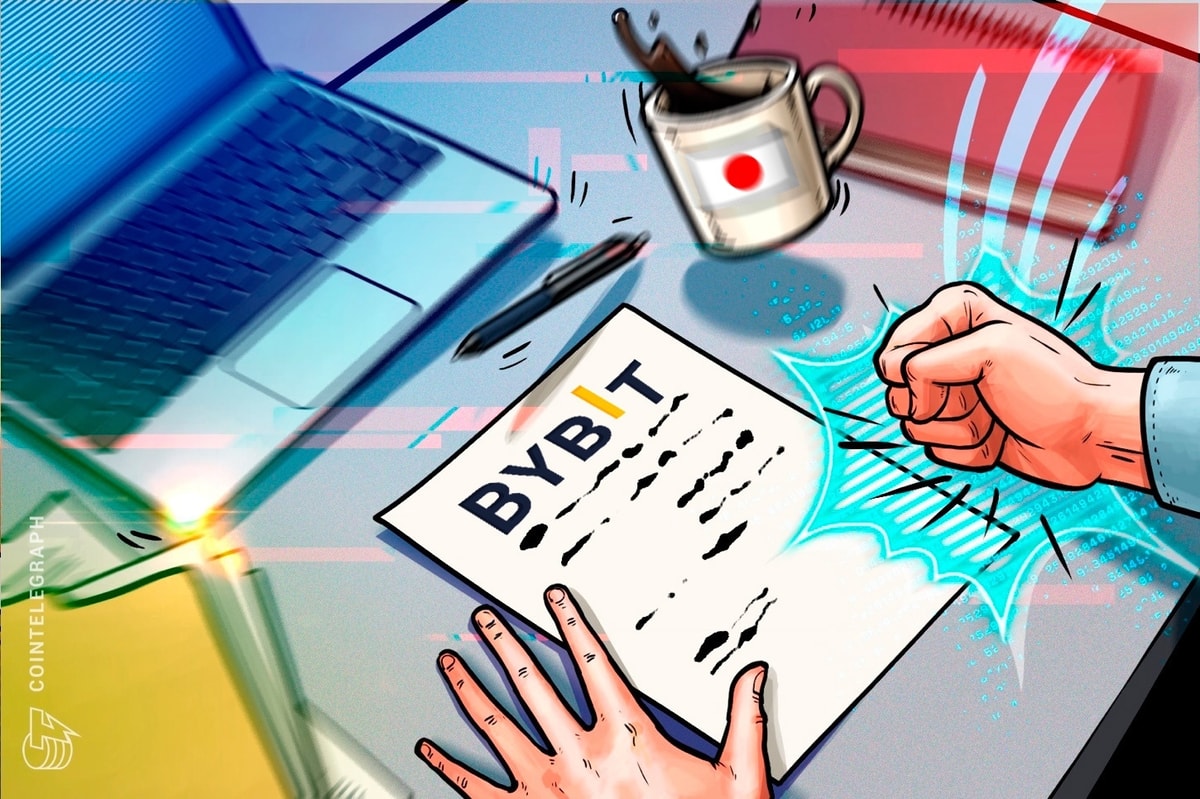

Bybit will begin phasing out services for residents of Japan from 2026, introducing gradual account restrictions as it moves to comply with the country’s regulatory requirements, the cryptocurrency exchange said on Monday.
The exchange said users classified as Japanese residents will be subject to the restrictions on a rolling basis, while those incorrectly flagged have been asked to complete additional identity checks. Bybit is not registered with Japan’s Financial Services Agency, which requires crypto exchanges serving Japanese users to hold local approval.
“If you’re a resident of Japan, please note that starting from 2026 your account will be subject to gradual restrictions. You’ll receive additional updates on the remediation process in subsequent communications,” the exchange said in an announcement on Monday.
Bybit often ranks as the world’s second-largest crypto exchange by daily trading volume. At the time of writing, it processed about $4.3 billion in trades in 24 hours, according to CoinGecko data.
Related: Japan plans tough new rules for crypto exchanges: What liability reserves actually mean
Bybit halts new user registrations
The announcement follows earlier steps taken by Bybit to limit its exposure to Japan. In October, the exchange said it would pause new user registrations in Japan, citing ongoing discussions with the country’s Financial Services Agency (FSA).
In February, the FSA asked Apple and Google to suspend downloads of five unregistered cryptocurrency exchanges, including Bybit, MEXC Global, LBank Exchange, KuCoin and Bitget.
Japan maintains one of the world’s strictest crypto oversight regimes. In July, Maksym Sakharov, co-founder and CEO of decentralized onchain bank WeFi, told Cointelegraph that Japan’s regulatory bottleneck is pushing innovation out of the country.
Bybit did not respond to Cointelegraph’s request for comment by press time.
Related: Japan’s new crypto tax could wake ‘sleeping giant’ of retail investors
Bybit reenters the UK
Meanwhile, Bybit is reentering the UK market after a two-year pause with a new platform offering spot trading and a peer-to-peer service, operating under a promotions arrangement approved by Archax rather than its own UK registration.
Last month, Bybit also secured a Virtual Asset Platform Operator License from the Securities and Commodities Authority of the United Arab Emirates, eight months after receiving an in-principle approval from the local regulator.
Magazine: 2026 is the year of pragmatic privacy in crypto — Canton, Zcash and more
-
 Sports2 years ago
Story injured on diving stop, exits Red Sox game
-
 Sports3 years ago
‘Storybook stuff’: Inside the night Bryce Harper sent the Phillies to the World Series
-
 Sports2 years ago
Game 1 of WS least-watched in recorded history
-
 Sports3 years ago
Button battles heat exhaustion in NASCAR debut
-
 Sports3 years ago
MLB Rank 2023: Ranking baseball’s top 100 players
-
Sports4 years ago
Team Europe easily wins 4th straight Laver Cup
-
 Environment3 years ago
Japan and South Korea have a lot at stake in a free and open South China Sea
-
 Environment1 year ago
Here are the best electric bikes you can buy at every price level in October 2024