

Israeli military fires deputy commander as it releases findings of investigation into deadly attack on aid workers


The Israeli military has said its investigation into the killing of aid workers in Gaza has found there were “several professional failures, breaches of orders, and a failure to fully report the incident”.
A commanding officer will be reprimanded and a deputy commander will be dismissed following the military investigation, the Israel Defence Forces (IDF) said.
Fifteen aid workers were shot dead by Israeli troops who opened fire on a convoy of vehicles, including ambulances, on 23 March.
They were then buried in a shallow grave where their bodies were found a week later by officials from the United Nations and the Palestinian Red Crescent.
The probe’s findings come after a Sky News investigation earlier this week revealed how the deadly attack unfolded, contradicting Israel’s official account of the killings.
At first, Israel claimed the medics’ vehicles did not have emergency signals on when troops fired their shots, but later backtracked.
Mobile phone footage which was recovered from one of the medics contradicted Israel’s initial account.
In a statement on Sunday, an IDF spokesperson said: “The Commanding Officer of the 14th Brigade will receive a reprimand, which will be recorded in his personal file, for his overall responsibility for the incident, including the procedure of combat and management of the scene afterward.
“The deputy commander of the Golani Reconnaissance Battalion will be dismissed from his position due to his responsibilities as the field commander in this incident and for providing an incomplete and inaccurate report during the debrief.”
Footage was released of the attack on 23 March
‘Poor night visibility’
The investigation found that the deputy commander did not initially recognise the vehicles as ambulances “due to poor night visibility”, according to the spokesperson.
“Only later, after approaching the vehicles and scanning them, was it discovered that these were indeed rescue teams,” they added.
Probe looked at ‘three shooting incidents’
The IDF said that about an hour before the attack on the convoy, Israeli troops fired at what they “identified as a Hamas vehicle” and the forces “remained on high alert for further potential threats”.
In the convoy incident, the IDF said the soldiers “opened fire on suspects emerging from a fire truck and ambulances very close to the area in which the troops were operating, after perceiving an immediate and tangible threat”.
“Supporting surveillance” had reported five vehicles approaching rapidly and stopping near the troops, with passengers quickly disembarking, according to the IDF.
It said the deputy battalion commander “assessed the vehicles as employed by Hamas forces, who arrived to assist the first vehicle’s passengers”, adding that: “Under this impression and sense of threat, he ordered to open fire.”
According to the IDF, six of the 15 killed were “identified in a retrospective examination as Hamas terrorists”.
But the Sky News investigation found no evidence to support this claim.
The IDF also said there was a third incident about 15 minutes later where “the troops fired at a Palestinian UN vehicle due to operational errors in breach of regulations”.
“The troops’ commander initially reported the event, and additional details emerged later in the examination.”
Bodies were buried in mass grave
Eight Red Crescent personnel, six civil defence workers and a UN staff member were killed in the shooting on the convoy by troops carrying out operations in Tel al Sultan, a district of the southern Gaza city of Rafah.
Troops then bulldozed over the bodies along with their mangled vehicles, burying them in a mass grave.
‘Decision to crush vehicles was wrong’
The IDF statement said that at dawn it was decided to “gather and cover the bodies to prevent further harm and clear the vehicles from the route in preparation for civilian evacuation”.
The body removal and vehicle crushing were carried out by field commanders, according to the military.
Removing the bodies was reasonable under the circumstances, but the decision to crush the vehicles was wrong, the investigation concluded, and “in general there was no attempt to conceal the event”.
The probe also found that “the [gun]fire in the first two incidents resulted from an operational misunderstanding by the troops, who believed they faced a tangible threat from enemy forces. The third incident involved a breach of orders during a combat setting”.
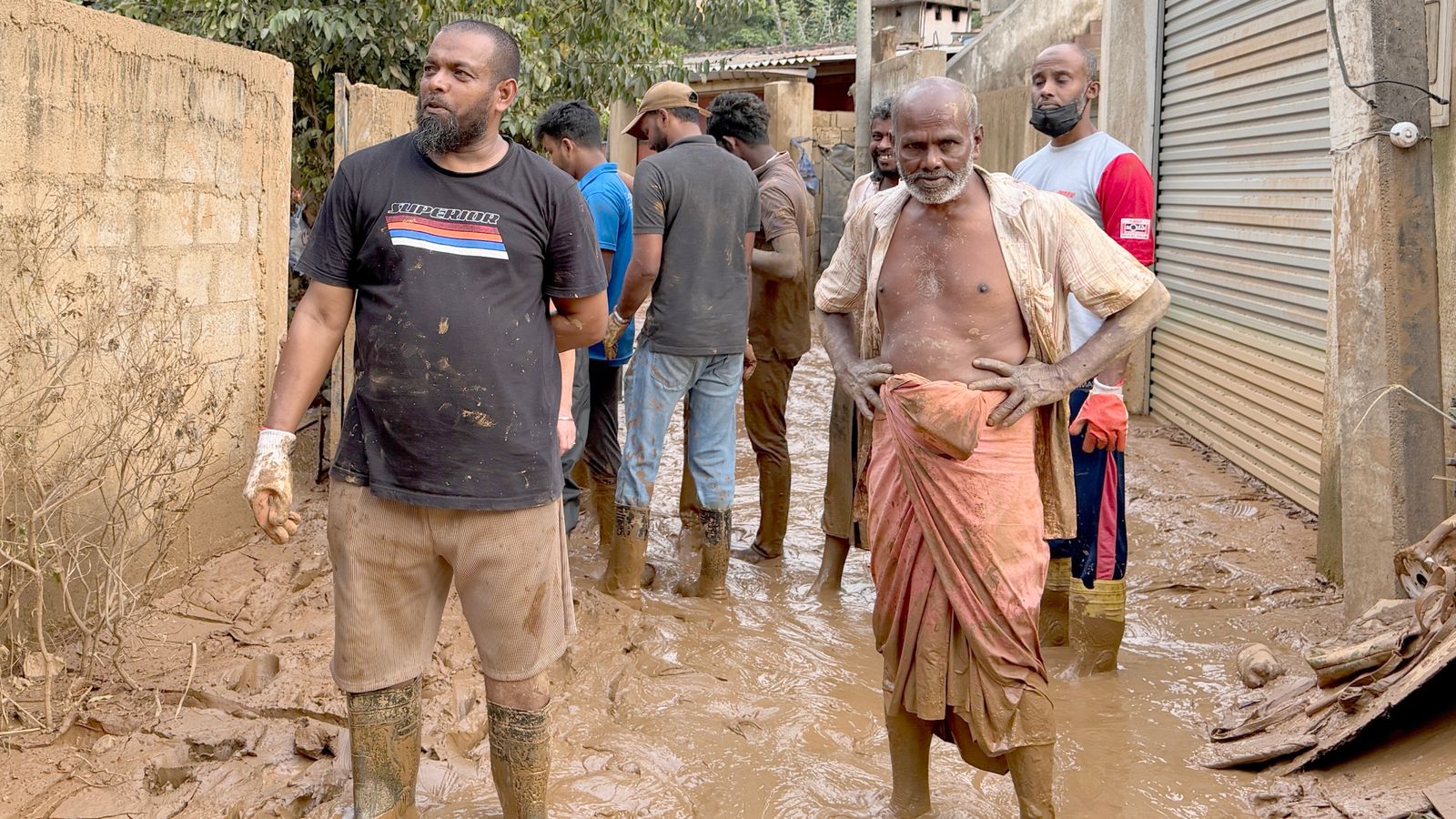
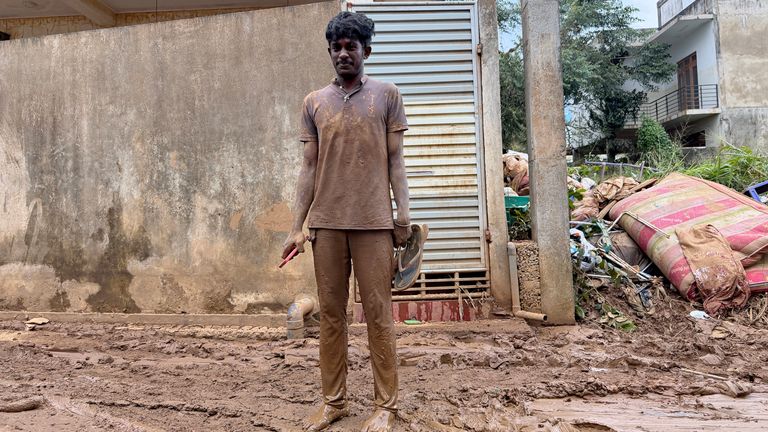
This community in Sri Lanka’s Kandy District is a mass of mud and loss.
The narrow, filthy streets in Gampola are filled with broken furniture, sodden toys and soiled mattresses. A torrent of floodwater ripped through this neighbourhood and many people had no time to escape.
Trying to reach their now destroyed homes is like wading through treacle – the mud knee-deep.
Many locals say they were not warned about the threat Cyclone Ditwah posed here before it struck last Friday, and weren’t told to evacuate. They say they’ve received very little help since.
Resourceful neighbours were left to try to help rescue survivors. But some had to carry the bodies of the dead, too. Mohamed Fairoos was one of them.
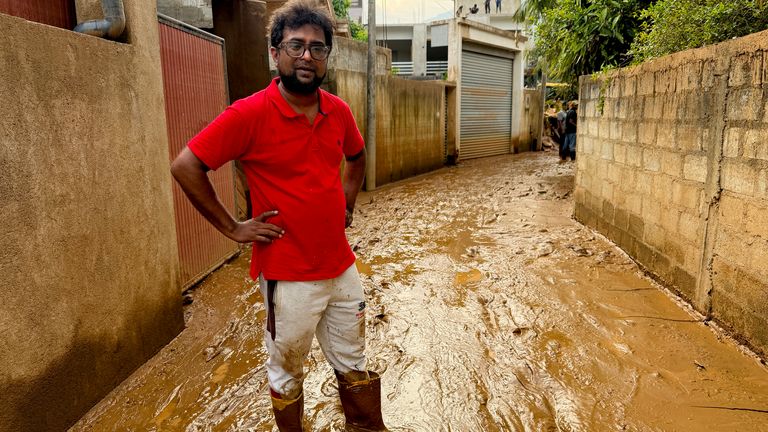
Fairoos Mohamed
“We took five bodies from here,” he says, gesturing to a house full of debris, where mattresses hang drying over the balcony.
“We took nine bodies in total and handed them over to the hospital.” He appears both shocked and exasperated at the lack of support this community received.
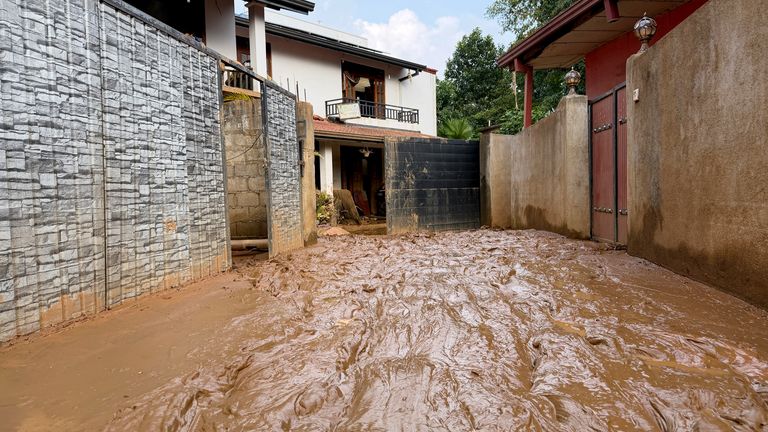
The house where Fairoos pulled the bodies from
“When I took the bodies, the police, the navy, no one sent for us.” He tells me he even posted a video online appealing for boats, hoping it might help.
I ask him if he thinks the government has done enough. “No,” he says forcefully. “No one called for us. No one helped us. No one gave us any boats.”
Read more: Families count the cost of devastating floods
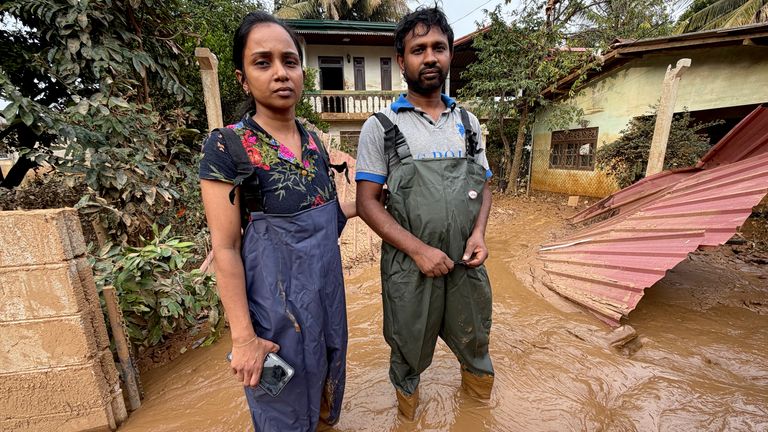
Kumudu Wijekon and her husband Kumar Premachandra
‘Five people were killed here’
Just a few doors down, a group of volunteers have come to clear another home filled with floodwater. “Five people were killed here,” one of them tells me.
Five of them came from one family: a mother, father, their two daughters and son. Kumudu Wijekon tells me she was friends with them and they’d fled here to a friend’s house, hoping to escape the threat.
“There was heavy rain, but they didn’t think there would be flooding. They left their own home to save themselves from landslides. If they had stayed, they would have survived.”

Chamilaka Dilrukshi
‘We don’t have a single rupee’
A short drive away, Chamilaka Dilrukshi is sobbing inside the photography studio she shares with her husband Ananda. They have two children aged four and 11.
Chamilaka is clutching a bag of rice – she says it’s been donated by a friend and it’s all they have to eat.
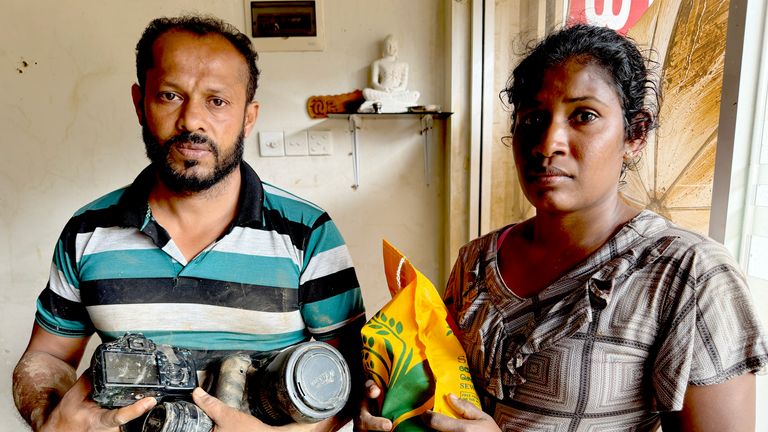
Ananda Wijebandara and his wife Chamilaka Dilrukshi
Everything in the shop is wrecked – expensive cameras and lighting equipment covered in thick layers of mud, and outside, rows of broken frames and ripped pictures.
They think they’ve lost nearly £2,500 and their home is severely damaged. She weeps as she tells us: “We don’t have a single rupee to start our business again. We spent all of our savings on trying to build our house.”
Like Mohamed, she believed they should have been warned. “We didn’t know anything. If we did, we would have taken our cameras and our computers out. We just didn’t know it was coming.”
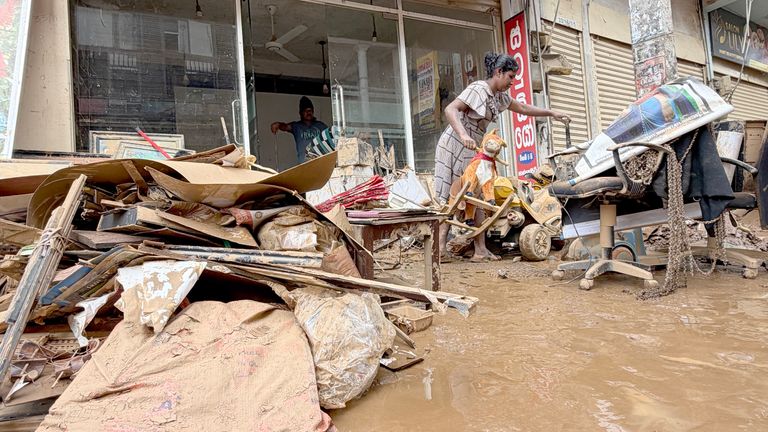
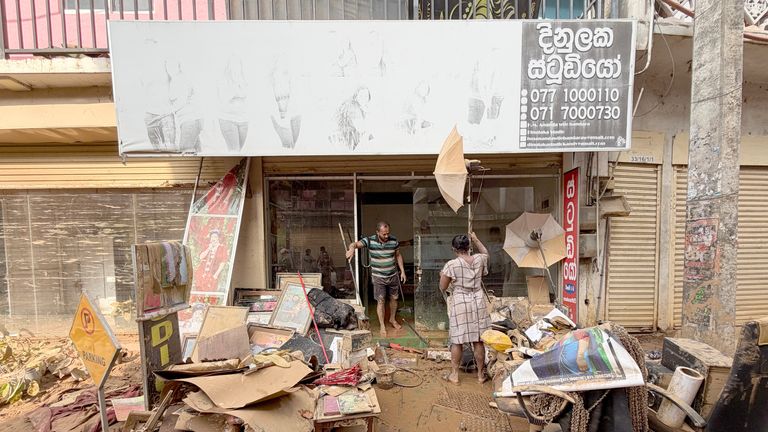
The studio was caked in mud
Anger at government’s perceived failings
Sri Lankan president Anura Kumara Dissanayake has declared a state of emergency to deal with the aftermath of the cyclone, and international aid has arrived.
But many people are angry at the government’s perceived failings. It’s been criticised for not taking the warnings from meteorologists seriously two weeks before the cyclone made landfall, as well as for not communicating enough messages in the Tamil language.
It is going to take places like Gampola a long time to rebuild, repair and restore trust. And in a country still recovering from an economic collapse, nothing is guaranteed.

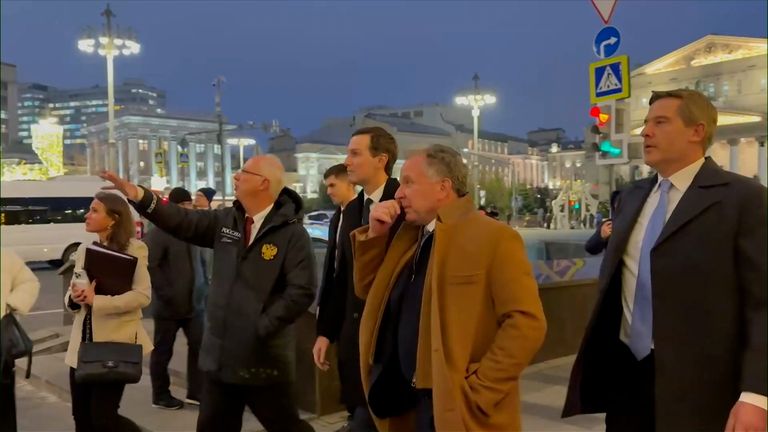
The Americans were given the full VIP treatment on their visit to Moscow.
There was a motorcade from the airport, lunch at a Michelin-starred restaurant, and even a stroll around Red Square.
It felt like Steve Witkoff and Jared Kushner were on more of a tourist trail than the path to peace.
Trump’s envoys walk around Moscow
They finally got down to business in the Kremlin more than six hours after arriving in Russia. And by that point, it was already clear that the one thing they had come to Moscow for wasn’t on offer: Russia’s agreement to their latest peace plan.
According to Vladimir Putin, it’s all Europe’s fault. While his guests were having lunch, he was busy accusing Ukraine’s allies of blocking the peace process by imposing demands that are unacceptable to Russia.
The Europeans, of course, would say it’s the other way round.
But where there was hostility to Europe, only hospitality to the Americans – part of Russia’s strategy to distance the US from its NATO allies, and bring them back to Moscow’s side.
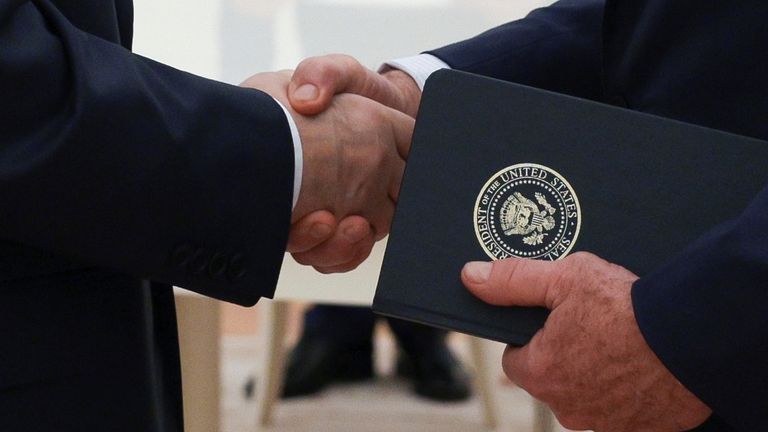
Vladimir Putin and Steve Witkoff shaking hands in August. AP file pic
Putin thinks he’s winning…
Russia wants to return to the 28-point plan that caved in to its demands. And it believes it has the right to because of what’s happening on the battlefield.
It’s no coincidence that on the eve of the US delegation’s visit to Moscow, Russia announced the apparent capture of Pokrovsk, a key strategic target in the Donetsk region.
It was a message designed to assert Russian dominance, and by extension, reinforce its demands rather than dilute them.
Read more:
Michael Clarke answers your Ukraine war questions
‘Thousands’ of Westerners applying to live in Russia

‘Everyone must be on this side of peace’
…and believes US-Russian interests are aligned
The other reason I think Vladimir Putin doesn’t feel the need to compromise is because he believes Moscow and Washington want the same thing: closer US-Russia relations, which can only come after the war is over.
It’s easy to see why. Time and again in this process, the US has defaulted to a position that favours Moscow. The way these negotiations are being conducted is merely the latest example.
With Kyiv, the Americans force the Ukrainians to come to them – first in Geneva, then Florida.
As for Moscow, it’s the other way around. Witkoff is happy to make the long overnight journey, and then endure the long wait ahead of any audience with Putin.
It all gives the impression that when it comes to Russia, the US prefers to placate rather than pressure.
According to the Kremlin, both Russia and the US have agreed not to disclose the details of yesterday’s talks in Moscow.
I doubt Volodymyr Zelenskyy is filled with hope.


FIFA has backed away from using dynamic pricing for all 2026 World Cup tickets amid concerns about the cost of attending the tournament in North America.
The organisers insisted they always planned to ring-fence tickets at set prices to follow your own team.
But the announcement comes just days ahead of Friday’s tournament draw in Washington DC, which Donald Trump plans to attend.
Fans will have to wait until Saturday to know exactly where and when their teams will be playing in next summer’s tournament.
Scotland will be one of the teams in the tournament, held in North America and Mexico
Variable pricing – fluctuating based on demand – has never been used at a World Cup before, raising concerns about affordability.
England and Scotland fans have been sharing images in recent days of ticket website images highlighting cost worries.
But world football’s governing body said in a statement to Sky News: “FIFA can confirm ringfenced allocations are being set aside for specific fan categories, as has been the case at previous FIFA World Cups. These allocations will be set at a fixed price for the duration of the next ticket sales phase.
“The ringfenced allocations include tickets reserved for supporters of the Participating Member Associations (PMAs), who will be allocated 8% of the tickets for each match in which they take part, including all conditional knockout stage matches.”
FIFA says the cheapest tickets are from $60 (£45) in the group stage. But the most expensive tickets for the final are $6,730 (£5,094).
There will also be a sales window after the draw from 11 December to 13 January when ticket applications will be based on a fixed price for those buying in the random selection draw.
It is the biggest World Cup with 104 matches after the event was expanded from 32 to 48 teams. There are also three host nations for the first time – with Canada and Mexico the junior partners.

The tournament mascots as seen in Mexico in October. Pic: Reuters
Read more from Sky News:
Pope urges Trump not to oust Venezuelan president by force
Government delays Chinese ‘super embassy’ decision
FIFA defended using fluctuating pricing.
“The pricing model adopted for FIFA World Cup 26 reflects the existing market practice for major entertainment and sporting events within our hosts on a daily basis, soccer included,” FIFA’s statement continued.
“This is also a reflection of the treatment of the secondary market for tickets, which has a distinct legal treatment than in many other parts of the world. We are focused on ensuring fair access to our game for existing but also prospective fans.”
The statement addressed the concerns being raised about fans being priced out of attending.
FIFA said: “Stadium category maps do not reflect the number of tickets available in a given category but rather present default seating locations.
“FIFA resale fees are aligned with North American industry trends across various sports and entertainment sectors.”
Ireland, Northern Ireland and Wales could also still qualify.
-
 Sports2 years ago
Story injured on diving stop, exits Red Sox game
-
 Sports3 years ago
‘Storybook stuff’: Inside the night Bryce Harper sent the Phillies to the World Series
-
 Sports2 years ago
Game 1 of WS least-watched in recorded history
-
 Sports3 years ago
Button battles heat exhaustion in NASCAR debut
-
 Sports3 years ago
MLB Rank 2023: Ranking baseball’s top 100 players
-
Sports4 years ago
Team Europe easily wins 4th straight Laver Cup
-
 Environment3 years ago
Japan and South Korea have a lot at stake in a free and open South China Sea
-
 Environment1 year ago
Here are the best electric bikes you can buy at every price level in October 2024