

Binance tightens South African compliance rules for crypto transfers

Binance is set to implement new compliance measures for South African users, requiring sender and receiver information for all crypto deposits and withdrawals.
In an announcement on April 23, the largest exchange in terms of daily trading volume of cryptocurrencies said the move comes in response to local regulatory demands.
Starting April 30, Binance users in South Africa will be prompted to provide additional information when transferring crypto.
For deposits, users must disclose the sender’s full name, country of residence, and, if applicable, the name of the originating crypto exchange. Similarly, withdrawals will require beneficiary details before processing.

The update will only impact crypto deposits and withdrawals, leaving trading and other platform features unaffected.
Related: US judge transfers Binance lawsuit to Florida, citing first-to-file rule
Missing transfer details may reverse transactions
Binance warned that failure to provide the required information may result in delayed transactions or, in some cases, a return of funds to the sender.
In preparation for the rollout, users will need to re-login to their accounts starting April 24.
The change comes as South Africa moves to boost oversight of the rapidly moving crypto sector.
On April 2, Bloomberg reported that South Africa’s Revenue Service (SARS) is urging individuals, crypto exchanges and intermediaries involved in crypto transactions to register with the authority, warning that failure to do so is now illegal.
In March, the Financial Sector Conduct Authority (FSCA) of South Africa issued a public warning against two unlicensed crypto firms, Afriinvest and Mutualwealth, accusing them of soliciting investments while promising unrealistic returns of up to 10,000 rand ($542) per day.
Related: Binance, KuCoin, MEXC report service issues due to AWS network interruption
South Africa pushes to become key crypto hub
Emerging economies across Africa, particularly South Africa, are positioning themselves as potential digital asset hubs amid growing regulatory clarity, Ben Caselin, chief marketing officer (CMO) of Johannesburg-based crypto exchange VALR, told Cointelegraph in September 2024.
Caselin said that South Africa’s strong legal framework and ease of business make it a key entry point for crypto expansion across the continent.
The South African crypto market is projected to generate $278 million in revenue in 2025, with expectations to grow at a compound annual growth rate (CAGR) of 7.86% and reach $332.9 million by 2028, according to Statista.

Regulatory momentum is increasing, with the FSCA approving 59 crypto platform licenses in March 2024, while over 260 applications remain under review.
Cointelegraph contacted Binance for comments but did not receive a response by publication.
Magazine: Former Love Island star’s tips on how to go viral in crypto: Van00sa, X Hall of Flame

US Representative Stephen Lynch pressed Federal Reserve Vice Chair Michelle Bowman on Tuesday over her past remarks encouraging banks to “engage fully” with digital assets, questioning the Fed’s role in advancing crypto frameworks while showing confusion over the definition of stablecoins.
In a Tuesday oversight hearing, Lynch asked Bowman, the Fed vice chair for supervision, about remarks she had made at the Santander International Banking Conference in November. According to the congressman, Bowman said she supported banks “[engaging] fully” with respect to digital assets.
However, according to Bowman’s comments at the conference, she referred to “digital assets” rather than specifically cryptocurrencies. The questioning turned into Lynch asking Bowman about distinctions between digital assets and stablecoins.
The Fed official said that the central bank had been authorized by Congress — specifically, the GENIUS Act, a bill aimed at regulating payment stablecoins — to explore a framework for digital assets.
“The GENIUS Act requires us to promulgate regulations to allow these types of activities,” said Bowman.

While the price of many cryptocurrencies can be volatile, stablecoins, like those pegged to the US dollar, are generally “stable,” as the name suggests. Though there have been instances where some coins have depegged from their respective currencies, such as the crash of Terra’s algorithmic stablecoin in 2022, the overwhelming majority of stablecoins rarely fluctuate past 1% of their peg.
Related: Atkins says SEC has ‘enough authority’ to drive crypto rules forward in 2026
Bowman said in August that staff at the Fed should be permitted to hold small “amounts of crypto or other types of digital assets” to gain an understanding of the technology.
FDIC acting chair says stablecoin framework is coming soon
Also testifying at the Tuesday hearing was Travis Hill, acting chair of the Federal Deposit Insurance Corporation. The government agency is one of many responsible for implementing the GENIUS Act, which US President Donald Trump signed into law in July.
According to Hill, the FDIC will propose a stablecoin framework “later this month,” which will include requirements for supervising issuers.
Magazine: When privacy and AML laws conflict: Crypto projects’ impossible choice
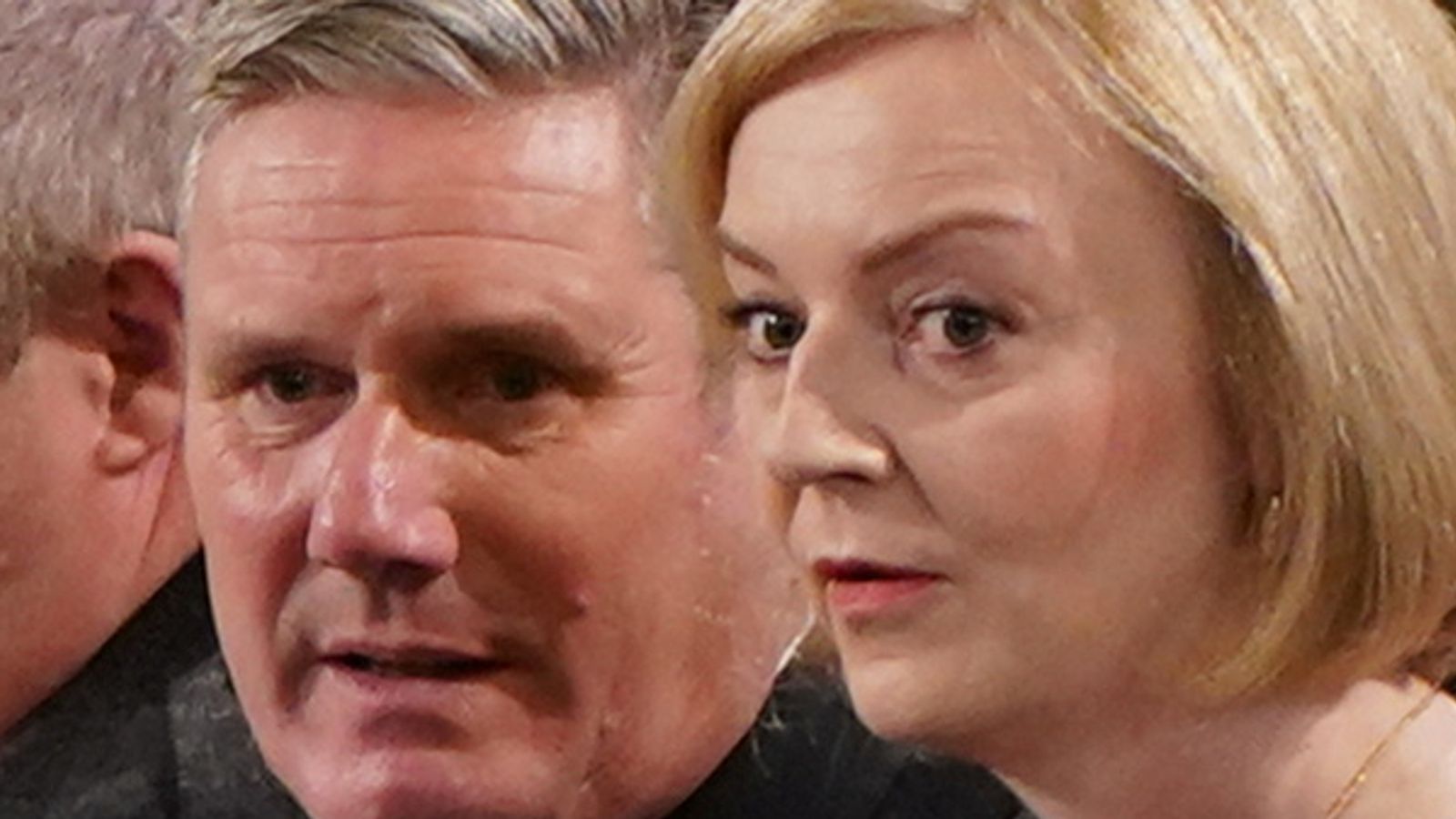
Over a third of people think Rachel Reeves exaggerated economic bad news in the run-up to the budget – twice as many as thought the chancellor was being honest, a new Sky News poll has found.
Some 37% told a YouGov-Sky News poll that Ms Reeves made out things were worse than they really are. This is much higher than the 18% who said she was broadly honest, and the 13% who said things were better than she presented.
This comes in an in-depth look at the public reaction to the budget by YouGov, which suggests widespread disenchantment in the performance of the chancellor.
Just 8% think the budget will leave the country as a whole better off, while 2% think it will leave them and their family better off.
Some 52% think the country will be worse off because of the budget, and 50% think they and their family will be worse off.
This suggests the prime minister and chancellor will struggle to sell last week’s set-piece as one that helps with the cost of living.
Some 20% think the budget worried too much about help for older people and didn’t have enough for younger people, while 23% think the reverse.
The poll found 57% think the chancellor broke Labour’s election promises, while 13% think she did not and 30% are not sure. Some 54% said the budget was unfair, including 16% of Labour voters.
And it arguably gets worse…
This comes as the latest Sky News-Times-YouGov poll showed Labour and the Tories are now neck and neck among voters.
The two parties are tied on 19% each, behind Reform UK on 26%. The Greens are on 16%, while the Liberal Democrats are on 14%.
This is broadly consistent with last week, suggesting the budget has not had a dramatic impact on people’s views.
However, the verdict on Labour’s economic competence has declined further post-budget.
Asked who they would trust with the economy, Labour are now on 10% – lower than Liz Truss, who oversaw the 2022 mini-budget, and also lower than Jeremy Corbyn in the 2019 election.
The Tories come top of the list of parties trusted on the economy on 17%, with Reform UK second on 13%, Greens on 8% and Lib Dems on 5%. Nearly half, 47%, don’t know or say none of them.
Only 57% of current Labour voters say the party would do the best job at managing the economy, falling to 25% among those who voted Labour in the 2024 election.
Some 63% of voters think Ms Reeves is doing a bad job, including 20% of current Labour voters, while just 11% of all voters think she is doing a good job.
A higher proportion – 69% – think Sir Keir Starmer is doing a bad job.

Paul Atkins, chair of the US Securities and Exchange Commission, said that the agency can continue advancing digital asset regulation without legislation from Congress, signaling his expectations for the industry in 2026.
In a CNBC interview released on Tuesday, Atkins said the SEC was providing “technical assistance” as Congress considered legislation for digital asset regulation, likely referring to the market structure bill working its way through the US Senate. Atkins said that although the agency’s operations were impacted by the longest US government shutdown in the country’s history, he continued to make progress on “rules that are focused on helping [the crypto] sector.”
“We have enough authority to drive forward,” said Atkins. “I’m looking forward to having an innovation exemption that we’ve been talking about now. We’ll be able to get that out in a month or so.”

Atkins, whom the US Senate confirmed to chair the SEC in April after his nomination by US President Donald Trump, has taken steps to reduce the number of enforcement actions against crypto companies, including by issuing no-action letters for decentralized physical infrastructure networks.
His actions align with many of the policy directives from the White House under Trump, who has issued several executive orders touching on crypto and blockchain.
Related: Republicans urge action on market structure bill over debanking claims
The SEC chair rang the opening bell at the NYSE on Tuesday, outlining his plans for the agency “on the cusp of America’s 250th anniversary.”
US regulators are still awaiting progress on a market structure bill
Lawmakers on the US Senate Agriculture Committee and the Senate Banking Committee are taking steps to move forward with a digital asset market structure bill, which will outline the regulatory authority of agencies, including the SEC and Commodity Futures Trading Commission, over cryptocurrencies.
Senate Banking Chair Tim Scott said that the committee planned to have the bill ready for markup in December.
Magazine: When privacy and AML laws conflict: Crypto projects’ impossible choice
-
 Sports2 years ago
Story injured on diving stop, exits Red Sox game
-
 Sports3 years ago
‘Storybook stuff’: Inside the night Bryce Harper sent the Phillies to the World Series
-
 Sports2 years ago
Game 1 of WS least-watched in recorded history
-
 Sports3 years ago
Button battles heat exhaustion in NASCAR debut
-
 Sports3 years ago
MLB Rank 2023: Ranking baseball’s top 100 players
-
Sports4 years ago
Team Europe easily wins 4th straight Laver Cup
-
 Environment3 years ago
Japan and South Korea have a lot at stake in a free and open South China Sea
-
 Environment1 year ago
Here are the best electric bikes you can buy at every price level in October 2024