
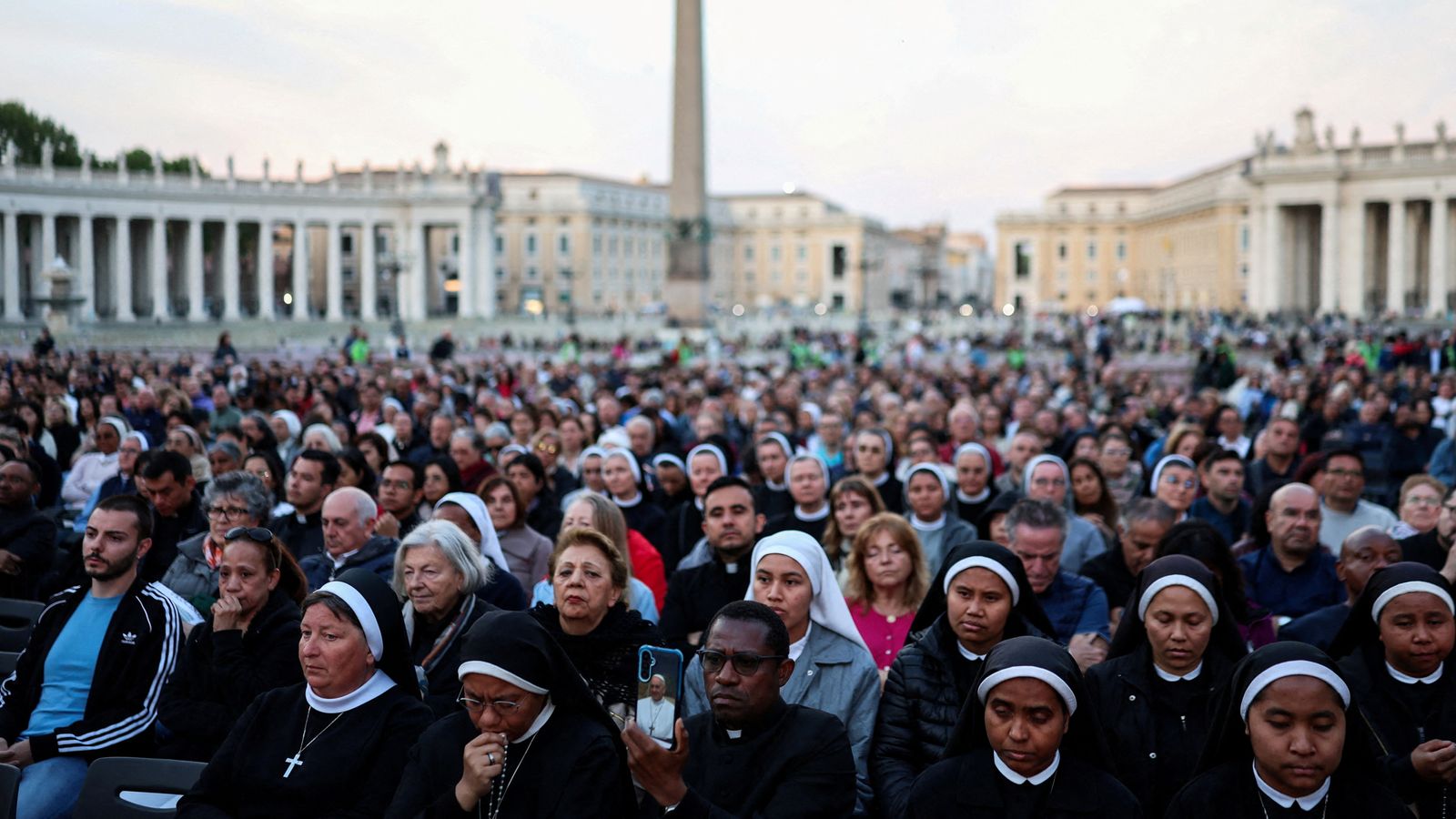
Tens of thousands of the faithful to pay their respects to the Pope as he lies in state

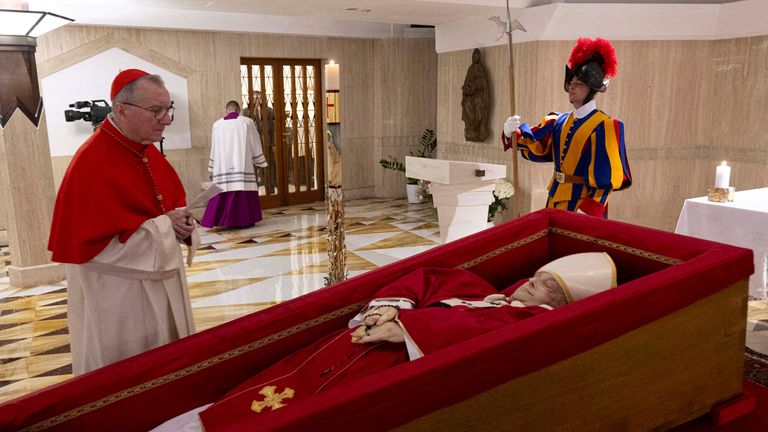
Mourners will be able to view the body of Pope Francis lying in state in St Peter’s Basilica from Wednesday, ahead of his funeral this weekend.
Tens of thousands of people are expected to travel to the Vatican over the next three days to pay their respects to the pontiff, who died on Easter Monday at the age of 88.
After his funeral on Saturday morning (9am UK time) there will be a nine-day period of mourning, known as the “novendiali”, after which the secretive meeting – called the conclave – will begin to elect a new pope.
Pope Francis: Follow the latest
The conclave to choose his successor must start between 5 and 10 May.
The first images of his body were released on Tuesday, showing him in red vestments and his bishop’s mitre in a wooden casket.
The Vatican’s secretary of state, Cardinal Pietro Parolin, standing over the body of Pope Francis. Pic: Reuters
The Vatican secretary of state was shown praying over him in the chapel of the Domus Santa Marta hotel where he lived and died.
Previous popes were entombed in three coffins: the first made of wood, another of lead and a third, again made of wood. But in 2024, Francis changed the rules and said that only one coffin, a wooden one lined in zinc, should be used.
In a break from tradition, he will be buried in the basilica of Santa Maria Maggiore (St Mary Major), according to his wishes.
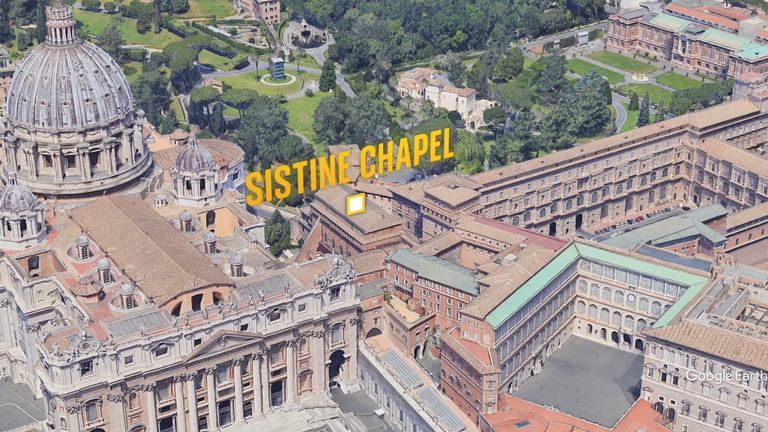
3D map shows pope’s funeral route
Following the pope’s death, from a stroke and heart failure, world leaders have praised his moral leadership and compassion.
On Tuesday, Sir Keir Starmer described him as “a quite remarkable man, and the work and commitment that he put into fairness over so many years, and globally, I think will be a real lasting legacy”.
Sir Keir will join a growing list of dignitaries who will attend the funeral on Saturday, including Prince William, French President Emmanuel Macron, Ireland’s prime minister Micheal Martin, Spain’s King Felipe and Queen Letizia, and Donald Trump.
Read more from Sky News:
St Peter’s Square full of smiles
How accurate is Conclave?
What next after the Pope?
Huge numbers have attended the funerals of Pope Francis’s predecessors.
In 2023, around 50,000 people attended the funeral of Benedict XVI, according to the Washington Post. In 2005, around 300,000 went to the funeral of John Paul II.
Once the conclave begins, cardinals vote in secret sessions in the Sistine Chapel.
After voting sessions, the ballots are burned in a special stove. Black smoke indicates that no pope has been elected, while white smoke indicates that the cardinals have chosen the next head of the Catholic Church.
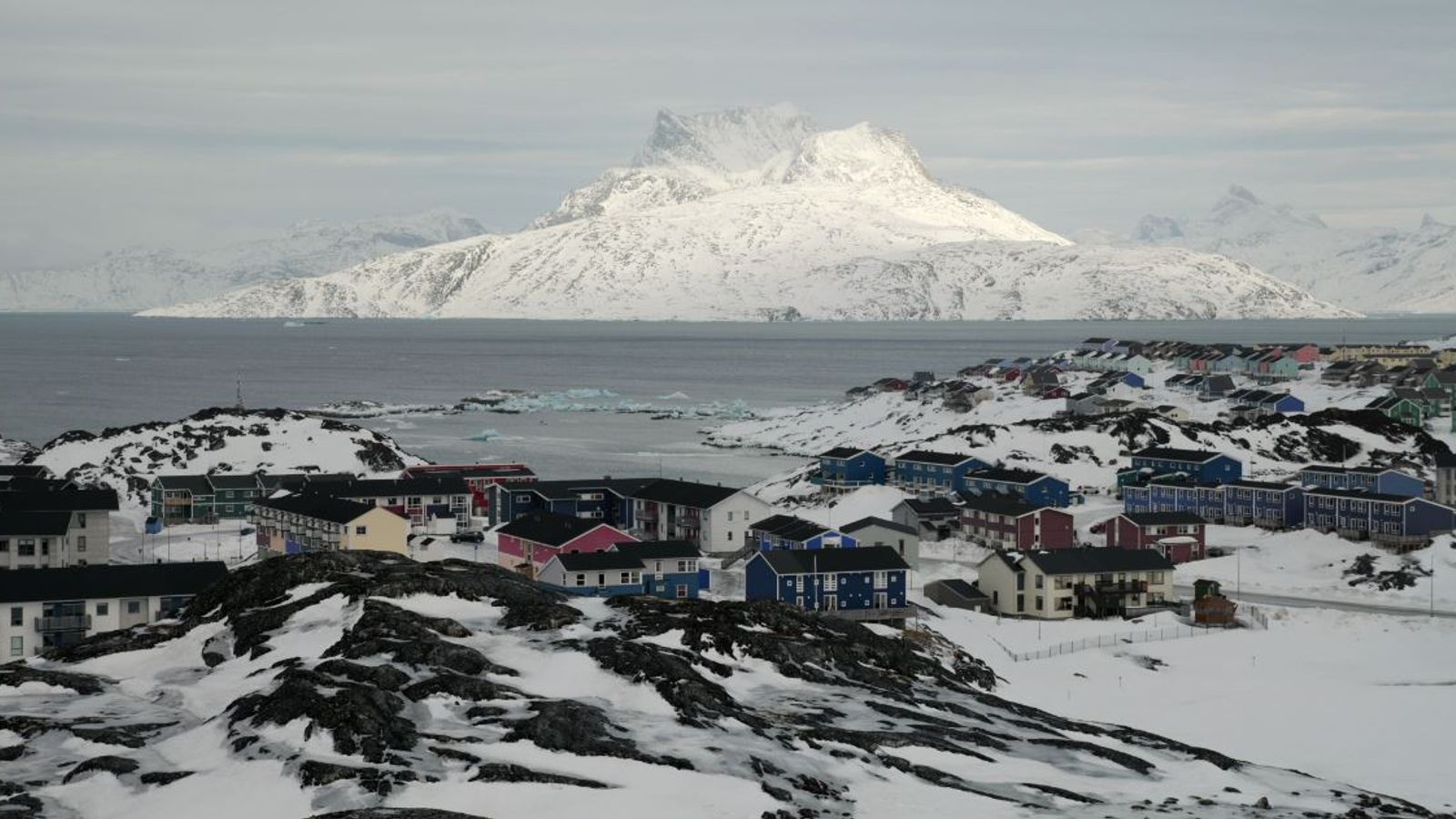
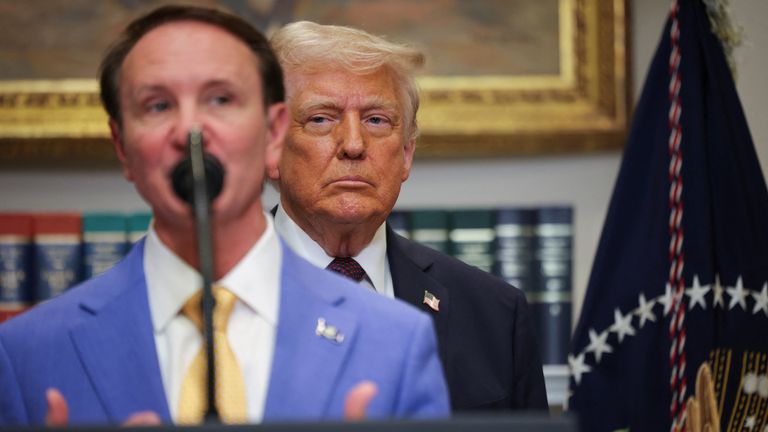
Donald Trump has said the US “has to have” Greenland, claiming it needs the territory for national security.
It comes after the US president appointed Louisiana’s governor Jeff Landry as special envoy to Greenland, saying he would “lead the charge” in advocating the semi-autonomous part of Denmark to become part of the United States.
“Jeff understands how essential Greenland is to our national security,” Mr Trump said.
Donald Trump has appointed Jeff Landry as special envoy to Greenland. Pic: Reuters
“We need Greenland for national security, not for minerals… If you take a look at Greenland, you look up and down the coast, you have Russian and Chinese ships all over the place.
“We need it for national security. We have to have it… Greenland is a big deal.”
Why does Trump want Greenland?
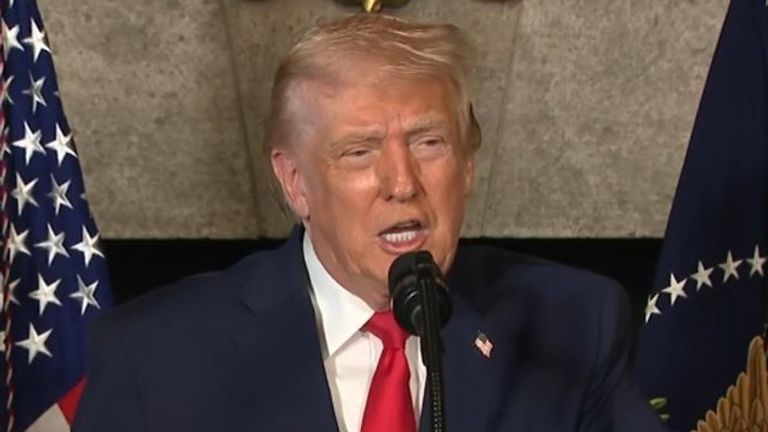
Trump said Greenland is a ‘big deal’. Pic: Reuters
Danish Prime Minister Mette Frederiksen and Greenland’s Prime Minister Jens-Frederik Nielsen said in a joint statement that Greenland belongs to Greenlanders, stressing the US will not take it over.
“You cannot annex another country. Not even with an argument about international security,” they said.
The country has already summoned the US ambassador in protest, with its foreign minister saying the move shows the US is still interested in the vast Danish territory.
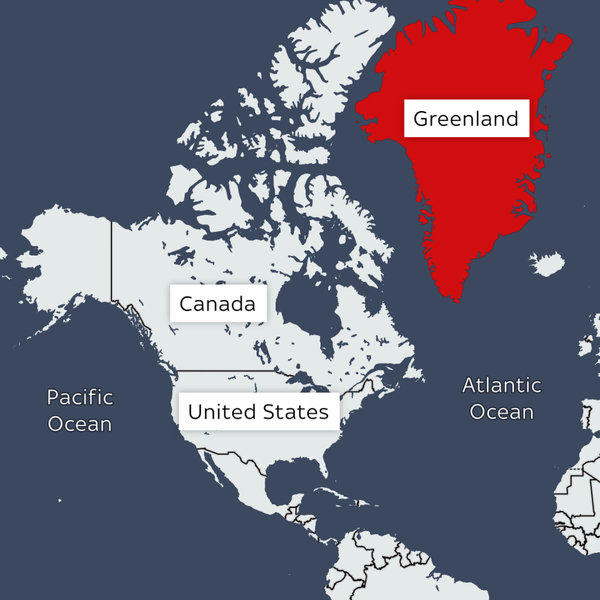
Mr Trump has repeatedly called for the US to take over the mineral rich and strategically located Arctic island, since winning his second term, and has not ruled out using military force to achieve it.
Denmark’s foreign minister Lars Løkke Rasmussen said everyone – including the US – must show respect for Denmark’s territorial integrity.

NATO allies Denmark, Norway, Sweden, Germany and France took part in military drills in Greenland, where the US has a military base, in September. Pic: Reuters
How did we get here?
In March, US Vice President JD Vance visited a remote American military base in Greenland and accused Denmark – a NATO ally of the US – of underinvesting there.
The issue then gradually drifted out of the headlines but, in August, Danish officials again summoned the US ambassador – following a report that at least three people with connections to Mr Trump had carried out covert influence operations in Greenland.
The territory’s strategic position between Europe and North America makes it a key site for the US ballistic missile defence system, while its mineral wealth has heightened US interest in reducing reliance on Chinese exports.
Earlier this month, the Danish Defence Intelligence Service said in an annual report that the US was using its economic power to “assert its will” and threaten military force against friend and foe alike.
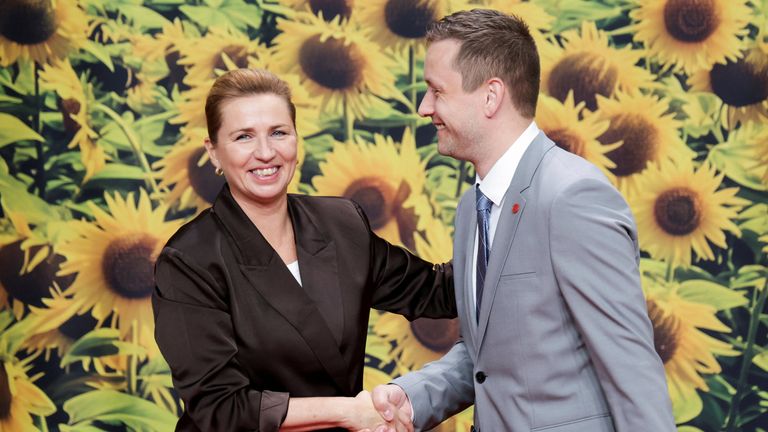
Denmark’s Prime Minister Mette Frederiksen (left) greets Greenland’s Prime Minister, Jens-Frederik Nielsen.
Read more:
Head of US Greenland base sacked after criticising JD Vance
Denmark’s PM says ‘you can’t spy against an ally’
The report also highlighted the rising strategic importance of the Arctic to great power countries as “conflict between Russia and the West intensifies.
It went on to say that the growing security and strategic focus on the Arctic by the US would “further accelerate these developments”.
Russian President Vladimir Putin has said Russia is worried about NATO’s activities in the Arctic and will respond by strengthening its military capability in the polar region.
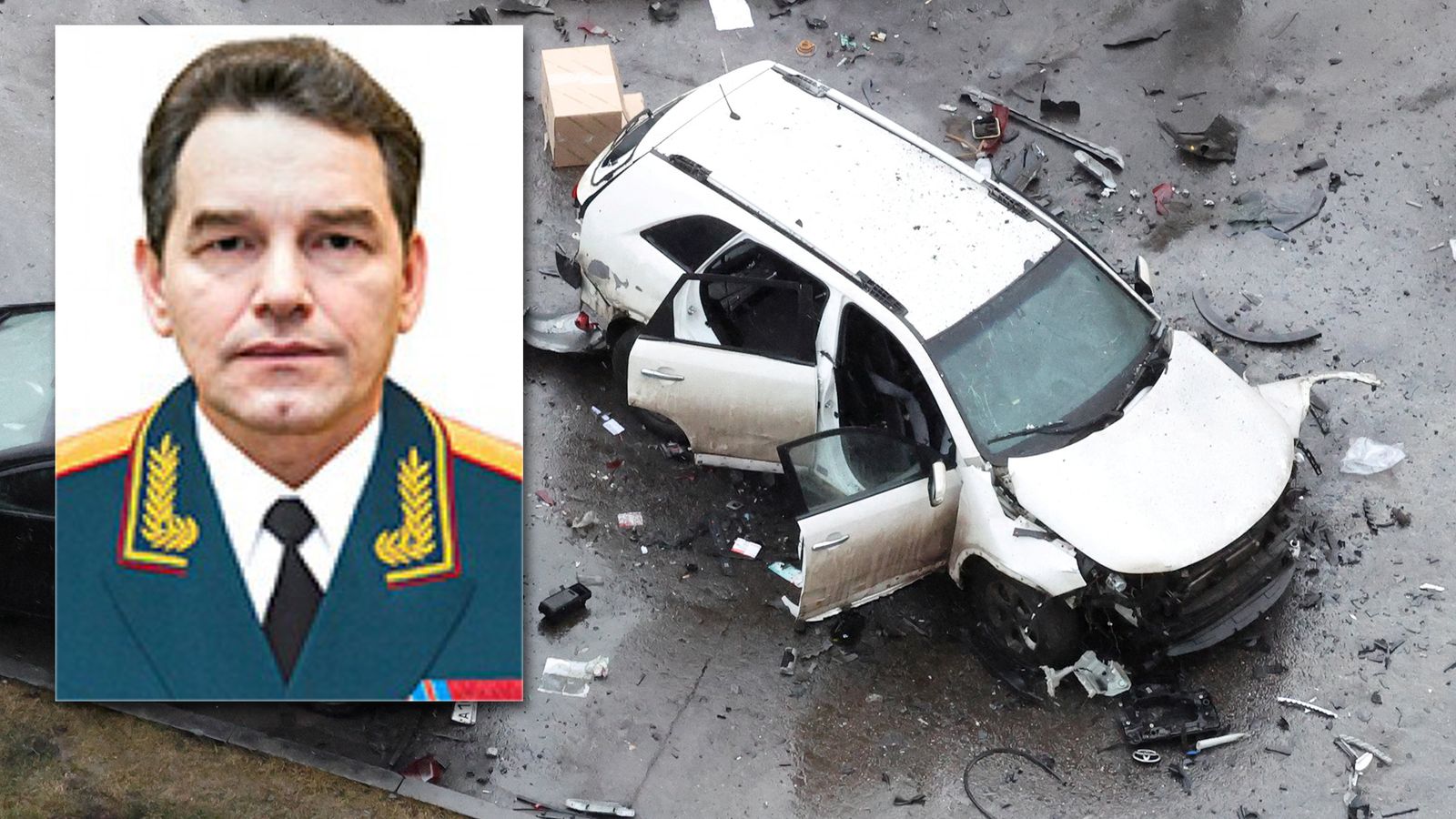

A Russian general being blown up on his own doorstep isn’t a good look for Moscow, and it seems it’s becoming increasingly common.
The latest high-profile figure to be assassinated since Russia‘s invasion of Ukraine is Lieutenant General Fanil Sarvarov.
He was killed by a car bomb that detonated outside a residential complex, little more than 10 miles from the Kremlin.
Ukraine war latest: Kremlin denies Putin plans to invade European countries
He was a senior figure. Head of the operational training directorate of the general staff, Sarvarov prepared forces for future deployment, having previously served in Chechnya and Syria.
There was no immediate claim of responsibility but Moscow believes Kyiv may have been behind it. No wonder – they’ve carried out similar attacks many times before.
This time last year, Ukraine took credit for the assassination of Lieutenant General Igor Kirillov, who Kyiv alleged had ordered chemical weapons to be used against its troops on the battlefield.
He was killed by a bomb hidden in a scooter outside his apartment block, which Vladimir Putin referred to as a “major blunder” by the security services.
Sarvarov was the least senior commander to be killed on Russia soil. Pic: Reuters
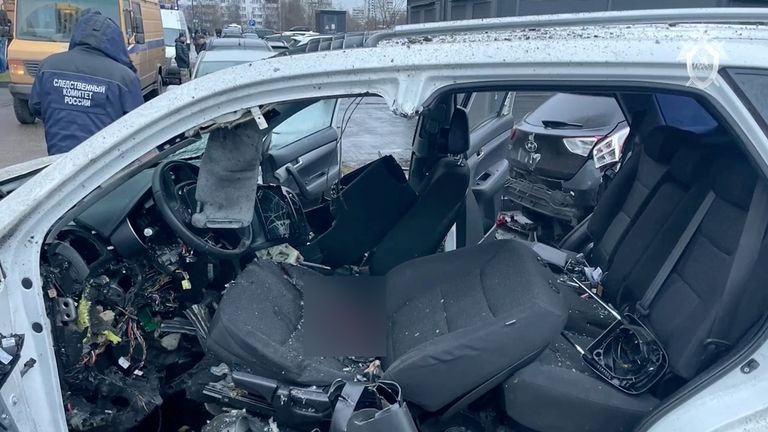
Pics: Reuters
But the attacks didn’t stop there.
In April, Lieutenant General Yaroslav Moskalik was killed after a car exploded in a town just outside Moscow. And two months ago another car bomb in Siberia killed a Russian commander accused of committing war crimes.
It’s unclear why Sarvarov was targeted – perhaps simply because his rank and apparent vulnerability.
The timing appears significant. It follows the latest peace talks between US and Russian officials in Miami over the weekend, where Kremlin envoy Kirill Dmitriev met with Steve Witkoff and Jared Kushner.
In the past, Ukraine has used these kinds of attacks to embarrass Moscow and to bring the war closer to home for Russians.
This time could be Kyiv’s way of undermining Moscow’s narrative in the negotiations.
Read more from Sky News:
Bondi suspect trained with father before attack, police say
Trump’s Greenland envoy intends to make territory ‘a part of US’
The Kremlin has been trying to persuade the White House that a Russian victory is inevitable, and that it’s futile to support Ukraine, in the hope of securing a more preferential settlement.
Ukraine has been trying to convince the Trump administration of the opposite – that it’s still full of fight – and taking out Russian generals in their own backyard is one way of doing that.
It shows Washington that the Kremlin is clearly not in total control.
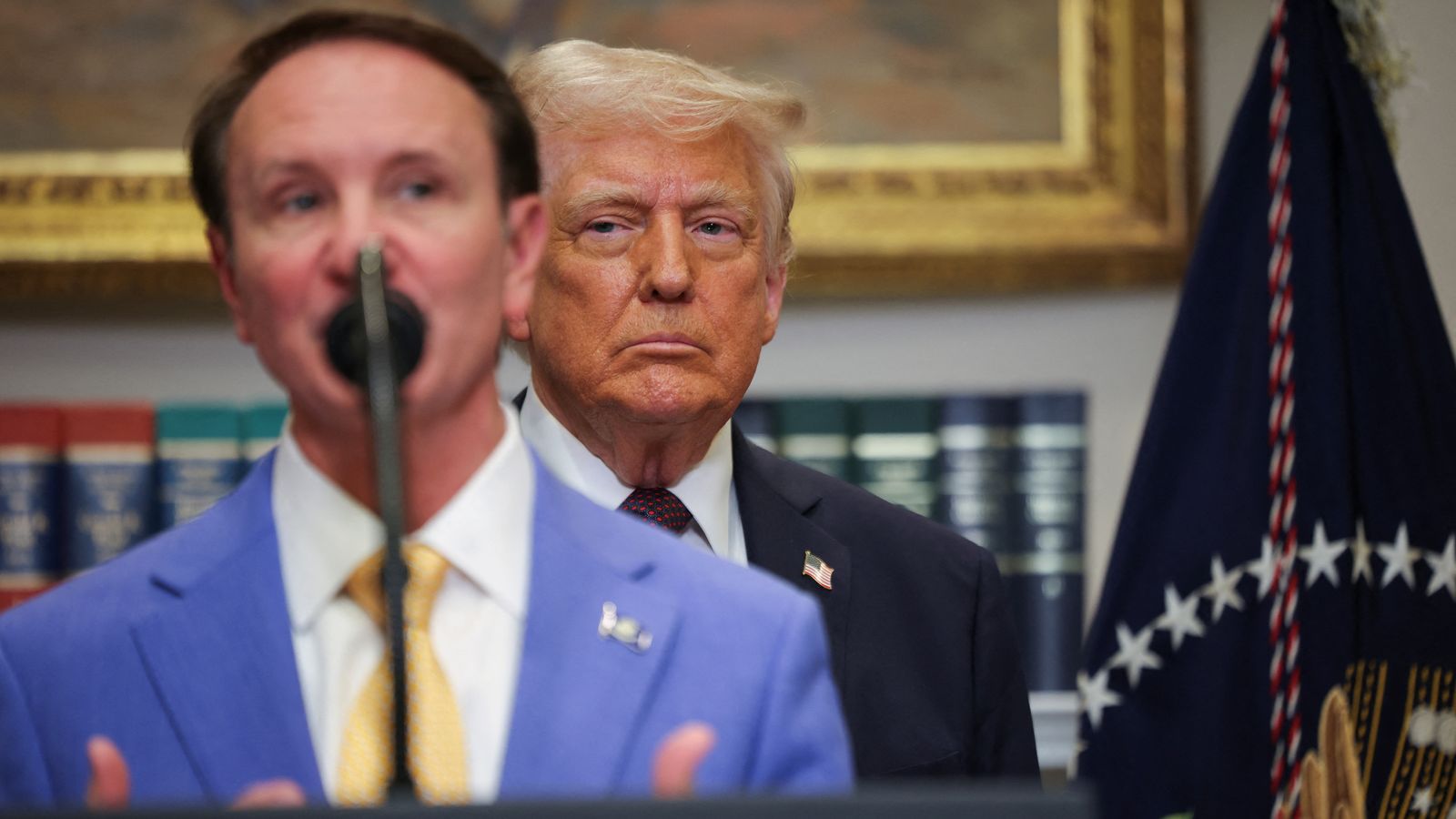
A new row over the future of Greenland has erupted between Denmark and the US after Donald Trump appointed a special envoy to the territory.
The US President announced that he had appointed Louisiana’s governor Jeff Landry to the position on Sunday, saying “Jeff understands how essential Greenland is to our National Security”.
Mr Landry then wrote on X: “It’s an honor to serve you in this volunteer position to make Greenland a part of the US.”
But Greenland is currently a semi-autonomous part of Denmark, which is unhappy about Trump’s latest move. The country has summoned the US ambassador in protest, with its foreign minister saying the move shows the US is still interested in the vast Danish territory.
Trump has repeatedly called for the US to take over over the mineral rich and strategically located Arctic island, since winning his second term, and has not ruled out using military force to achieve it.
Denmark’s foreign minister Lars Løkke Rasmussen said Landry’s comments were “completely unacceptable” and that everyone – including the US – must show respect for Denmark’s territorial integrity.
NATO allies Denmark, Norway, Sweden, Germany and France took part in military drills in Greenland, where the US has a military base, in September. Pic: Reuters
Greenland back in the headlines
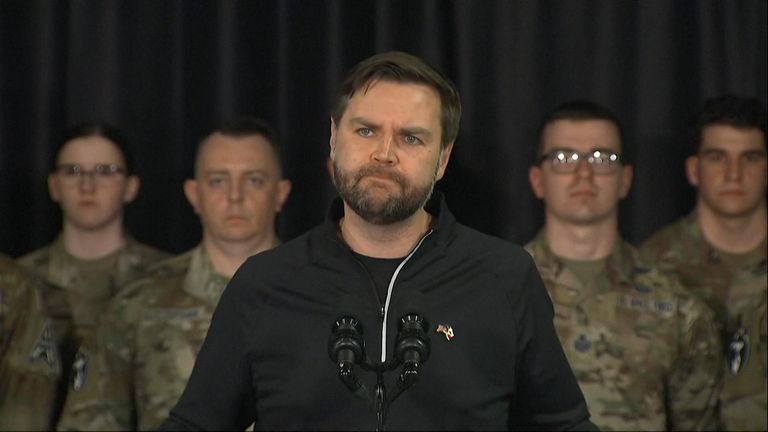
In March, US Vice President JD Vance visited a remote American military base in Greenland and accused Denmark – a NATO ally of the US – of underinvesting there.
The issue then gradually drifted out of the headlines but, in August, Danish officials again summoned the US ambassador – following a report that at least three people with connections to Trump had carried out covert influence operations in Greenland.
On Sunday, Trump said: “Jeff [Louisiana’s governor] understands how essential Greenland is to our national security and will strongly advance our country’s interests for the safety, security, and survival of our allies, and indeed, the world.”
Earlier this month, the Danish Defence Intelligence Service said in an annual report that the US was using its economic power to “assert its will” and threaten military force against friend and foe alike.
Denmark’s Prime Minister Mette Frederiksen (left) greets Greenland’s Prime Minister, Jens-Frederik Nielsen.
Read more:
Head of US Greenland base sacked after criticising JD Vance
Denmark’s PM says “you can’t spy against an ally”
The report also highlighted the rising strategic importance of the Arctic to great power countries as “conflict between Russia and the West intensifies.
It went on to say that the growing security and strategic focus on the Arctic by the US would “further accelerate these developments”.
Russian President Vladimir Putin has said Russia is worried about NATO’s activities in the Arctic and will respond by strengthening its military capability in the polar region.
-
 Sports2 years ago
Story injured on diving stop, exits Red Sox game
-
 Sports3 years ago
‘Storybook stuff’: Inside the night Bryce Harper sent the Phillies to the World Series
-
 Sports2 years ago
Game 1 of WS least-watched in recorded history
-
 Sports3 years ago
Button battles heat exhaustion in NASCAR debut
-
 Sports3 years ago
MLB Rank 2023: Ranking baseball’s top 100 players
-
Sports4 years ago
Team Europe easily wins 4th straight Laver Cup
-
 Environment3 years ago
Japan and South Korea have a lot at stake in a free and open South China Sea
-
 Environment1 year ago
Here are the best electric bikes you can buy at every price level in October 2024