
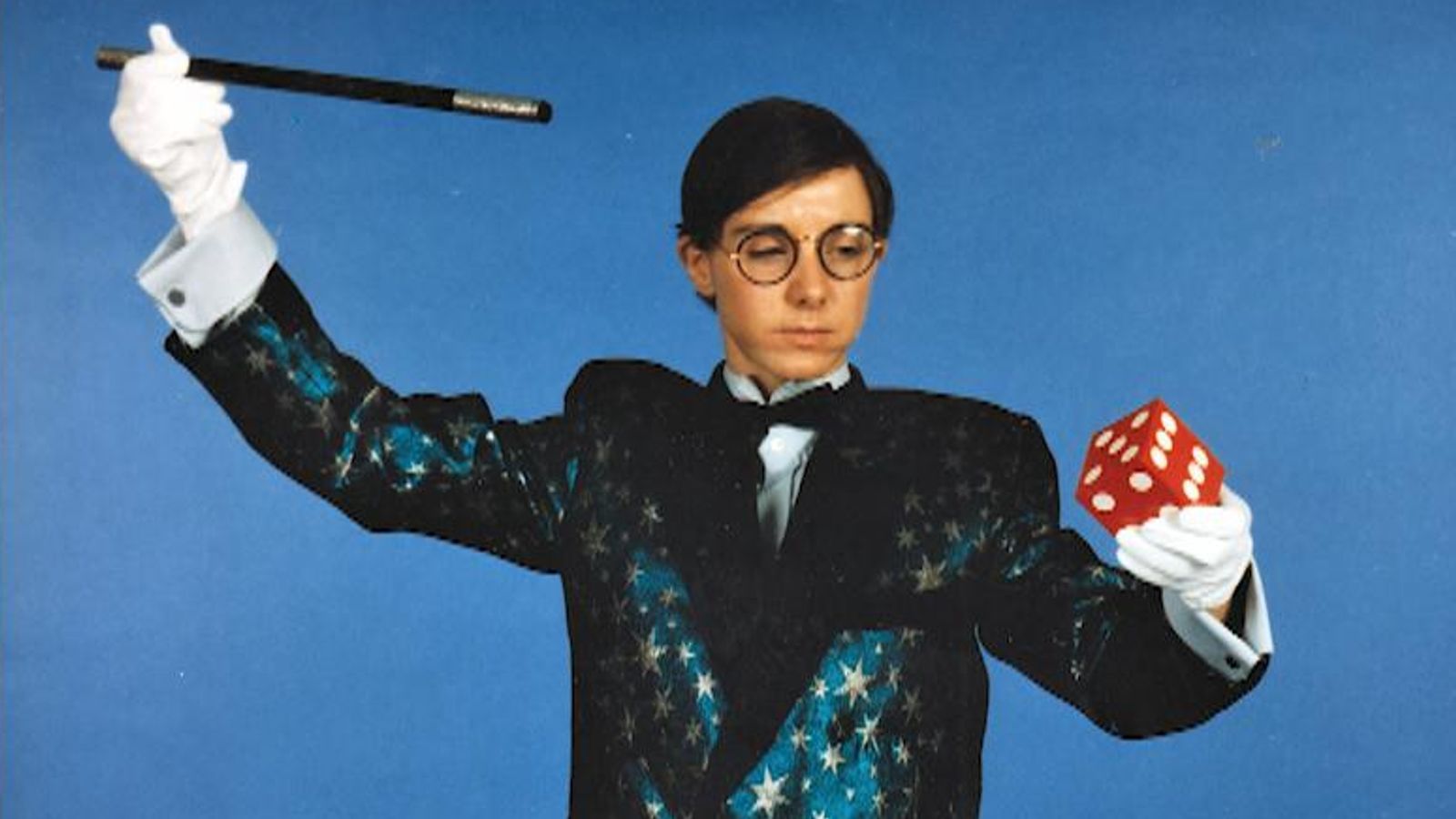
The Magic Circle’s first female member fooled them into believing she was a man – how did she do it?

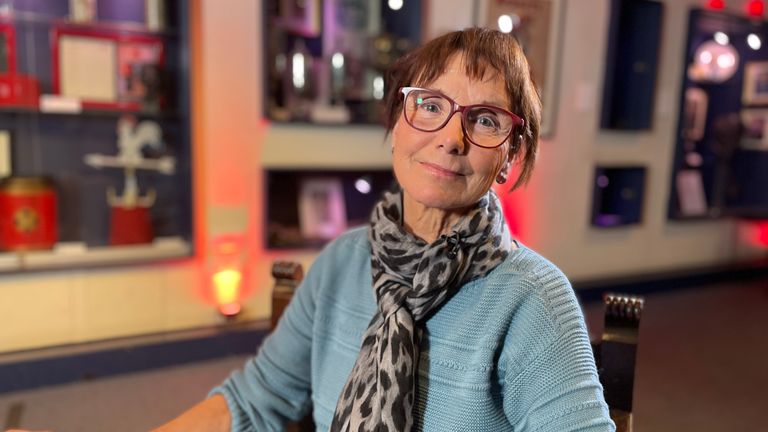
How did one woman fool the most famous magic society on the planet?
Back in 1991, Sophie Lloyd pulled off the ultimate illusion, tricking the Magic Circle into thinking she was a man.
But over 30 years after being unceremoniously kicked out, the Circle has tracked down the former actress to apologise and reinstate her membership.
She told Sky News how returning feels like the society has “made good on something that was wrong”.
Sophie Lloyd, who tricked the Magic Circle into believing she was a man
How did she infiltrate that exclusive group that nowadays counts the likes of David Copperfield and Dynamo as members?
In March of that year, she took her entry exam posing as a teenage boy, creating an alter-ego called Raymond Lloyd.
“I’d played a boy before,” she explained, but “it took months of preparation” to secretly infiltrate the Circle’s ranks half a year before it would officially vote to let women in.
“Really, going back 30 years, men’s clubs were like, you know, just something you accepted.”
The men-only rule had been in place since the Circle was formed in 1905. The thinking behind it being that women just couldn’t keep secrets.
Aware of the frustration of female magicians at the time, Lloyd felt she was up for the challenge of proving women could be as good at magic as the men.
The idea was, in fact, born out of a double act, thought up by a successful magician called Jenny Winstanley who’d wanted to join herself but wasn’t allowed.
She recognised the hoax would probably only work with a much younger woman posing as a teenage boy, and met Lloyd through an acting class.
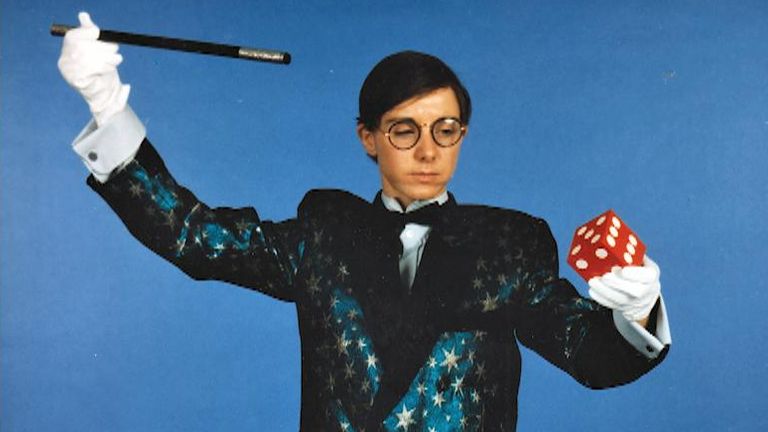
Sophie Lloyd as teenage magician Raymond Lloyd. Pic: Sophie Lloyd
Lloyd said: “We had to have a wig made… the main thing was my face, I had plumpers made on a brace to bring his jawline down.”
To hide her feminine hands, she did the magic in gloves, which she says “was so hard to do, especially sleight of hand.”
The biggest test came when she was invited for a drink with her examiner, where she had to fake having laryngitis.
“After the exam, which was 20 minutes, he invited Jenny and I – she played my manager – and I sat there for one hour and three quarters and had to say ‘sorry, I’ve got a bad voice’.”
Raymond Lloyd passed the test, and his membership certificate was sent through to Sophie.
Then, in October of the same year, when whispers started circulating that the society was going to open its membership to both sexes, she and Jenny decided to reveal all. It didn’t go down well.
Read more:
Jelly Roll seeks pardon from criminal past
Harvey Weinstein retrial begins in New York
Rather than praise her performance, members were incandescent about the deception and, somewhat ironically, Raymond Lloyd was kicked out just before women members were let in.
Lloyd said: “We got a letter… Jenny was hurt… she was snubbed by people she actually knew, that was hurtful. However, things have really changed now…”
Three decades later the Magic Circle put out a nationwide appeal stating they wanted to apologise and Lloyd was recently tracked down in Spain.
While Jenny Winstanley died 20 years ago in a car crash, as well as Sophie receiving her certificate on Thursday, her mentor’s contribution to magic is being recognised at the special show that’s being held in both their honour at the Magic Circle.
Lloyd says: “Jenny was a wonderful, passionate person. She would have loved to be here. It’s for her really.”

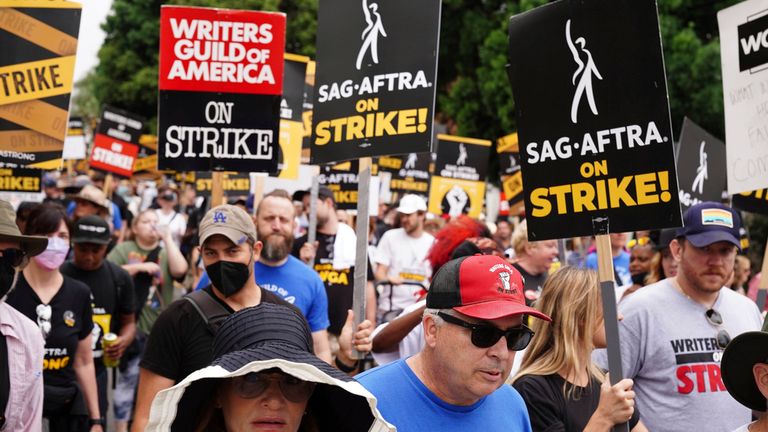
Thousands of members of actors’ trade union Equity are being asked whether they would support industrial action over artificial intelligence protections.
The organisation has launched an indicative ballot among about 7,000 members working in film and TV.
Performers are being asked whether they are prepared to refuse to be digitally scanned on set in order to secure adequate artificial intelligence protections.
It will be the first time the performing arts and entertainment trade union has asked this whole section of its membership to vote in a ballot.
The Hollywood strikes took place in 2023. File pic: AP
The announcement follows the Hollywood strikes in 2023, when members of Equity’s sister union in the US, SAG-AFTRA, and writers, went on strike over issues including AI.
Video game actors in the US also protested over the use of AI, ending almost a year of industrial action earlier in 2025.
Equity’s ballot opens on Thursday and runs for two weeks, and will show the level of support the union has for action short of a strike.
Another statutory ballot would have to be made before any industrial action is taken.
“While tech companies get away with stealing artists’ likeness or work, and the government and decision makers fret over whether to act, unions including Equity are at the forefront of the fight to ensure working people are protected from artificial intelligence misuse,” Equity general secretary Paul W Fleming said in a statement.
“If bosses can’t ensure someone’s likeness and work won’t be used without their consent, why should performers consent to be digitally scanned in the first place?”
Mr Fleming said the ballot would give members the opportunity to “send a clear message to the industry: that it is a basic right of performers to have autonomy over their own personhood and identity”.
The union has no choice but to recommend members support industrial action, he said.
“It’s time for the bosses to step away from the brink and offer us a package, including on AI protections, which respects our members,” added Mr Fleming.

The hotly anticipated Spotify Wrapped is revealing our top tracks, artists and albums for 2025.
But how does the streaming service calculate personalised summaries of users’ listening habits and rank the UK’s hottest artists?
Here’s a look at how your data is used.
The platform describes the annual statistics as “a chance to look back on your year in sound”.
It says data is captured between January and mid-November on every account, although it mostly excludes anything streamed in private mode. (Don’t worry, your passion for the Spice Girls can be kept secret.)
Wrapped presents personalised listening statistics, which Spotify calls the “real story of your year of listening”, alongside global figures for comparison.
The streaming service says Minutes Listened reflects the actual time spent listening to audio on the platform.
Once a user streams at least 30 tracks, Spotify generates a list of Your Top Songs. Similarly, Your Top Artists ranks artists based on total minutes listening to a particular performer.
Other metrics identify the top genres users have played, as well as podcasts and audiobooks ranked by total minutes listened. And if you’ve listened to at least 70% of tracks on a record, you’ll see top albums too.
Spotify also creates Your Listening Age, a guesstimate of your age based on the era of the music “you feel most connected to”.
The streaming service says the statistic is calculated using a five-year span of music which users engaged with more than other listeners of a similar age.
Spotify has been summing up 2025’s most listened to tracks. Pic: Spotify
Swift vs Bunny
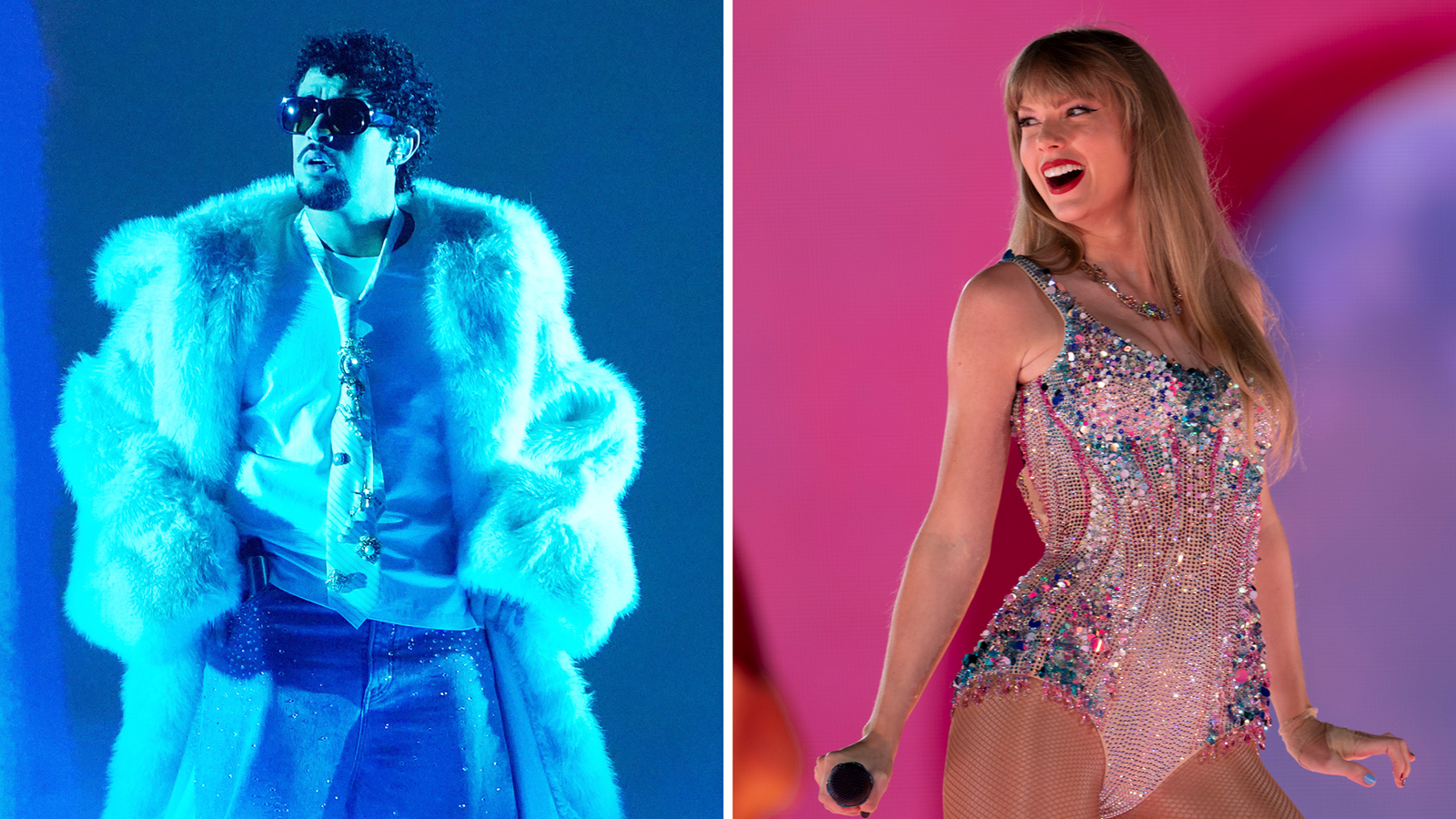
Pop superstar Taylor Swift has been named the UK’s most-streamed artist on Spotify for the third year in a row.
But she dropped out of the top spot in the global rankings, coming second to Puerto Rican superstar Bad Bunny, who secured more than 19.8 billion streams. Third were The Weeknd, followed by Drake and Billie Eilish.
Bad Bunny’s LP Debi Tirar Mas Fotos was the most listened-to album worldwide.
Read more from Sky News:
Sabrina Carpenter fury at video
Drake’s lawsuit dismissed
Spotify hikes UK prices
Spotify revealed Drake was the UK’s second most-listened to artist, followed by Sabrina Carpenter in third, The Weeknd in fourth and Billie Eilish in fifth.
Despite being the most listened-to artist, Swift failed to break into the UK’s top five most listened-to songs and albums of the year.
Alex Warren’s Ordinary was the most-streamed song, and Short ‘N’ Sweet, released by Carpenter last year, the top album.

-
 Sports2 years ago
Story injured on diving stop, exits Red Sox game
-
 Sports3 years ago
‘Storybook stuff’: Inside the night Bryce Harper sent the Phillies to the World Series
-
 Sports2 years ago
Game 1 of WS least-watched in recorded history
-
 Sports3 years ago
Button battles heat exhaustion in NASCAR debut
-
 Sports3 years ago
MLB Rank 2023: Ranking baseball’s top 100 players
-
Sports4 years ago
Team Europe easily wins 4th straight Laver Cup
-
 Environment3 years ago
Japan and South Korea have a lot at stake in a free and open South China Sea
-
 Environment1 year ago
Here are the best electric bikes you can buy at every price level in October 2024