
![ACT Expo 2025 – one step forward, two steps back for clean trucking [part 1]](https://i0.wp.com/electrek.co/wp-content/uploads/sites/3/2025/05/ACT_2025.png?resize=1200,628&quality=82&strip=all&ssl=1)
ACT Expo 2025 – one step forward, two steps back for clean trucking [part 1]

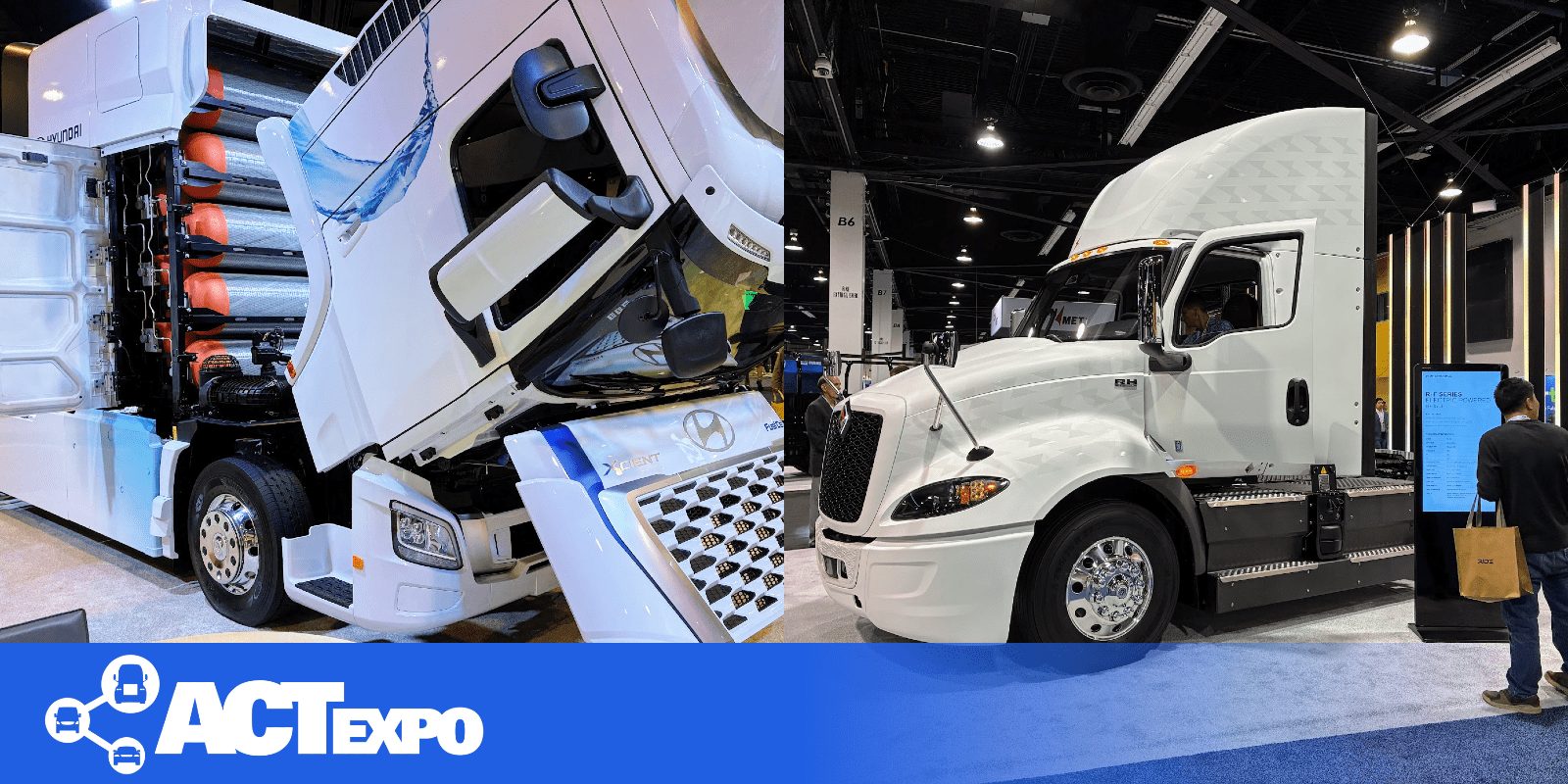
ACT Expo is North America’s premier clean truck and transport trade show – and for 2025 it was bigger than ever, with more exhibitors and more, more capable battery electric vehicles than ever. The downsides? NACFE have scored with their “messy middle” messaging, and the return of “clean diesel” talking points.
The re-election of Donald Trump to the Presidency of the United States has thrown the steady pace of electric fleet adoption – along with just about every thing else – into a state of confusion and disarray. Into that chaos, NACFE (the North American Council for Freight Efficiency) has thrown a positively progress-shattering bromide that may as well have been designed to distract attention from the proliferation of practical medium- and heavy-duty EVs, the rapid expansion of a comprehensive DC fast charging network, and the rapidly decreasing delta between the up-front costs of conventional diesel and battery electric offerings.
I’m talking about the phrase, “the messy middle,” which posits that, while we can all agree that electric vehicles and battery technology are the future, “we’re not quite there, yet.” The result is a series of observations that, while very timely in 2019, seem to disingenuously portray EVs as new technology today, while claiming that there are unanswered questions regarding battery costs and component longevity.
Never mind that next year will mark the (checks notes) twenty-ninth year of Toyota Prius production, and the thirtieth anniversary of the production launch of GM’s EV1, or that Volvo is on its third generation of battery electric semi, or that dozens of EV fleets have logged hundreds of millions of all-electric miles on their vehicles – never mind, in other words, that BEVs are in production now, ready now, in customer hands now, delivering on the promise of reduced TCO now … an EV may not be suitable for some fleets – and NACFE’s “messy middle” messaging is going to give a lot of fleets an excuse to buy one more round diesel-engined semi trucks to fill up with more diesel from Shell their favorite truck stops.
All that said, it’s catchy. Outside of NACFE’s booth or Shell’s panels I’ve heard the phrase “messy middle” repeated sincerely at least a dozen times over the last three days, and I have to admit that the alliterative lure of that particular little ear worm that, regardless of the sincerity of NACFE’s intent, is going to set the pace of EV adoption back at least the length of one Presidential term (give or take 100 days).
Moving on …
There was plenty of good stuff
Despite my ranting and raving against the whole “messy middle” messaging, there was an incredible amount of awesome, zero-emission, battery-powered goodness at this year’s ACT Expo. Too much, in fact, to jam into a single article (unless y’all like 5,000 word articles).
As such, I won’t even try.
Instead, I’ll use this post to give you a sneak peek at some of the stories I’ll be posting in the coming days, bringing you fully up to speed with all the latest and greatest new EVs, EREVs, and HFCEVs that commercial fleet buyers can place an order for today, and start putting the messy middle (and their backwards-looking competitors) behind them. So, check out the short list, below, then watch this space to see the links go live.
ACT 2025 News
- Zenobe arrives in North America
- Honda wants to sell you a fuel cell
- Hyundai opens up about its hydrogen semi
- ABB has figured out this whole charging deal
- Windrose gets real, and Wen Han signs my truck
- Volvo has the best deal going for commercial EVs
- New Mack electric trucks are coming, and one is already here
- The new autonomous terminal tractor from Kalmar is a next-level EV
Original content from Electrek; special thanks to ACT Expo.

If you’re considering going solar, it’s always a good idea to get quotes from a few installers. To make sure you find a trusted, reliable solar installer near you that offers competitive pricing, check out EnergySage, a free service that makes it easy for you to go solar. It has hundreds of pre-vetted solar installers competing for your business, ensuring you get high-quality solutions and save 20-30% compared to going it alone. Plus, it’s free to use, and you won’t get sales calls until you select an installer and share your phone number with them.
Your personalized solar quotes are easy to compare online and you’ll get access to unbiased Energy Advisors to help you every step of the way. Get started here.
FTC: We use income earning auto affiliate links. More.

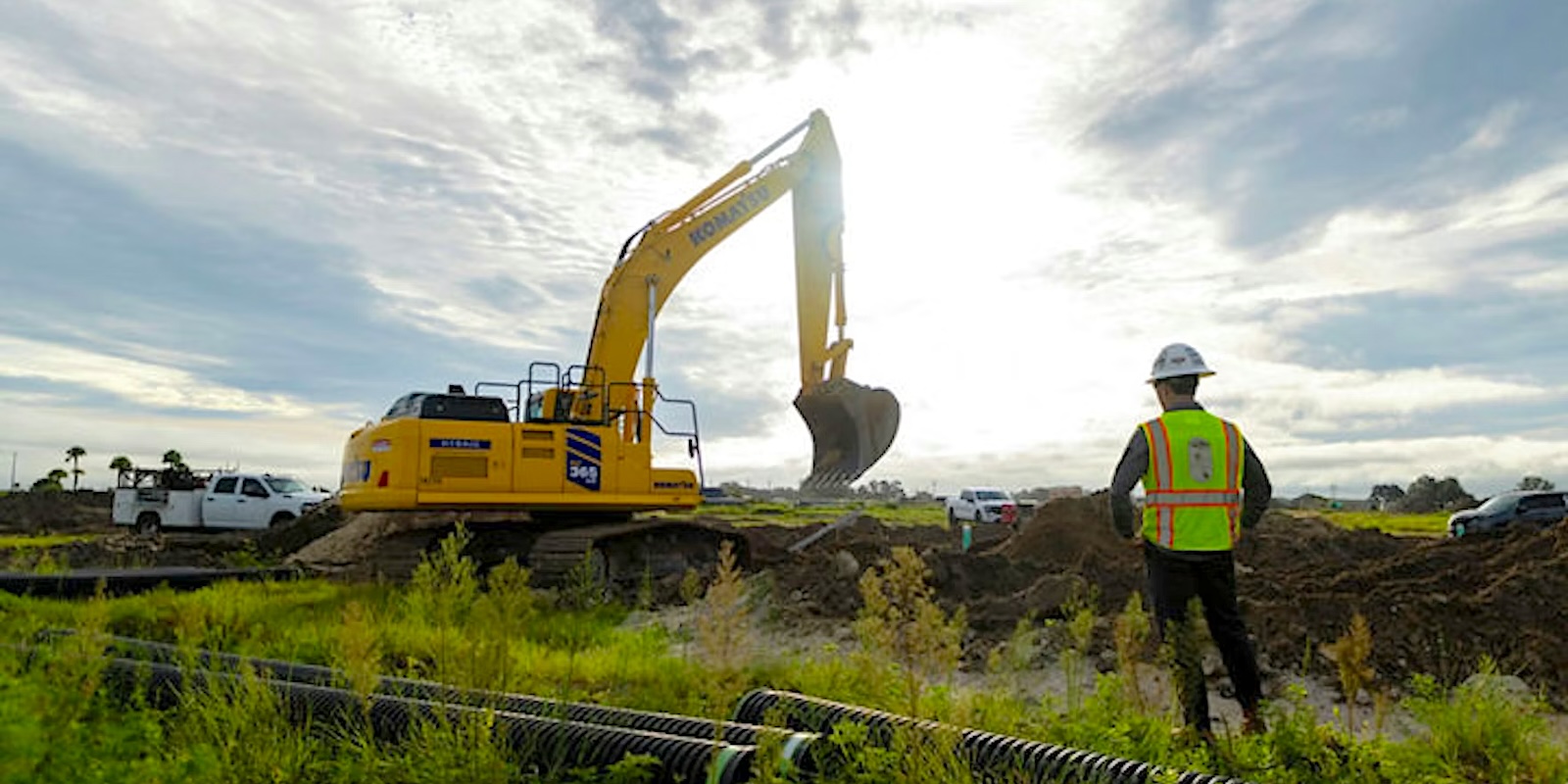
Thanks to a clever, fully electric swing system and “boom up” power assist features, the big PC365-11 hybrid excavator from Komatsu promises better performance and serious fuel savings compared to conventional diesel machines.
Komatsu says its PC365-11 hybrid excavator uses a “boom-up” power assist feature that captures and stores kinetic energy during different operation cycles, then taps into that power to provide an extra energy boost when needed. The result is 15% more productivity and a 20% improvement in fuel efficiency when compared to non-hybrid excavators in ~40 ton class.
“The PC365LC-11 was engineered for excellence in multifunction applications by leveraging its innovative electric powertrain system to boost job site productivity while reducing fuel consumption,” says Matthew Moen, Komatsu’s product manager. “To highlight these performance enhancements, we’re emphasizing the concept of ‘multifunction plus’ as the defining feature of this machine.”
How it works
Komatsu’s hybrid system replaces the conventional hydraulic swing function with a fully electric swing motor that draws power from an ultracapacitor (as opposed to a battery) energy storage unit. As excavator slows or stops swinging, something like a regenerative braking system captures the kinetic energy that would normally be lost as heat and stores it in the capacitor. Once there, the stored energy can be quickly released to power the swing motor or assist the engine, delivering up to an extra 70 hp when needed to support heavy lifting or digging cycles.
And, thanks to Komatsu’s proprietary software, all of this energy capture and reuse happens automagically during normal work, without the need for external charging. The fuel savings happen because removing the hydraulic load from the ICE engine allows it to run at an ultra-low idle, while the productivity comes from the greater power and overall speed of the electric operations vs. conventional hydraulics.
Electrek’s Take
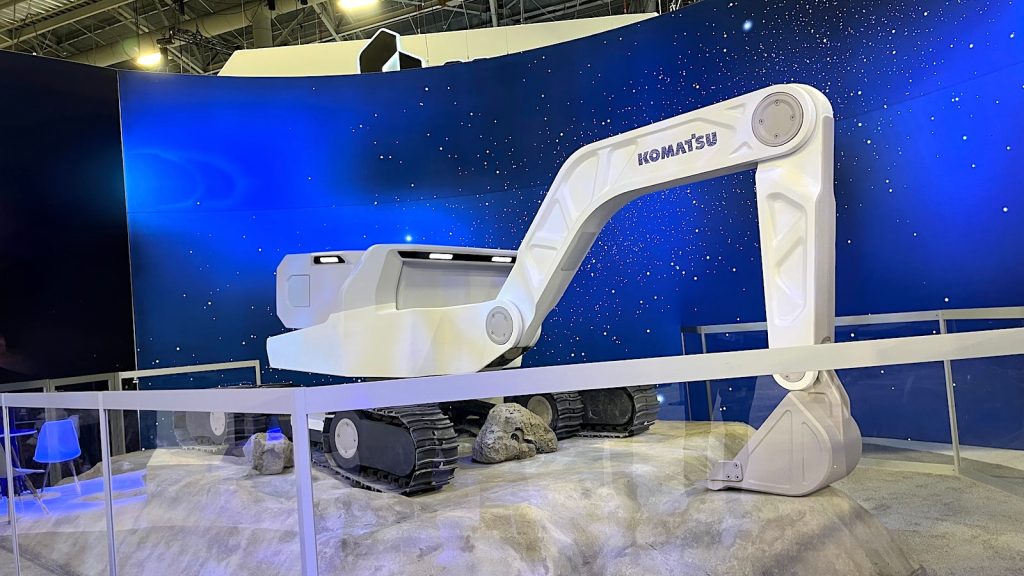
Trust me when I tell you that Komatsu didn’t wake up one day and decide to build a capacitor-based hybrid crane. One of their customers had the idea and came to them, promising orders. That’s what Komatsu does – from undersea remote control dozers to lunar mining rigs (above), if you bring Komatsu an order, they will absolutely find a way to fill it.
As for PC365-11 hybrid excavator, it’s packed with clever tech, overall – offering significant fuel, emissions, and TCO reductions without dramatically changing the operational logistics of an existing fleet’s operations. That’s all the sales pitch it needs.
SOURCE: Komatsu, via Equipment World.
If you’re considering going solar, it’s always a good idea to get quotes from a few installers. To make sure you find a trusted, reliable solar installer near you that offers competitive pricing, check out EnergySage, a free service that makes it easy for you to go solar. It has hundreds of pre-vetted solar installers competing for your business, ensuring you get high-quality solutions and save 20-30% compared to going it alone. Plus, it’s free to use, and you won’t get sales calls until you select an installer and share your phone number with them.
Your personalized solar quotes are easy to compare online and you’ll get access to unbiased Energy Advisors to help you every step of the way. Get started here.


FTC: We use income earning auto affiliate links. More.

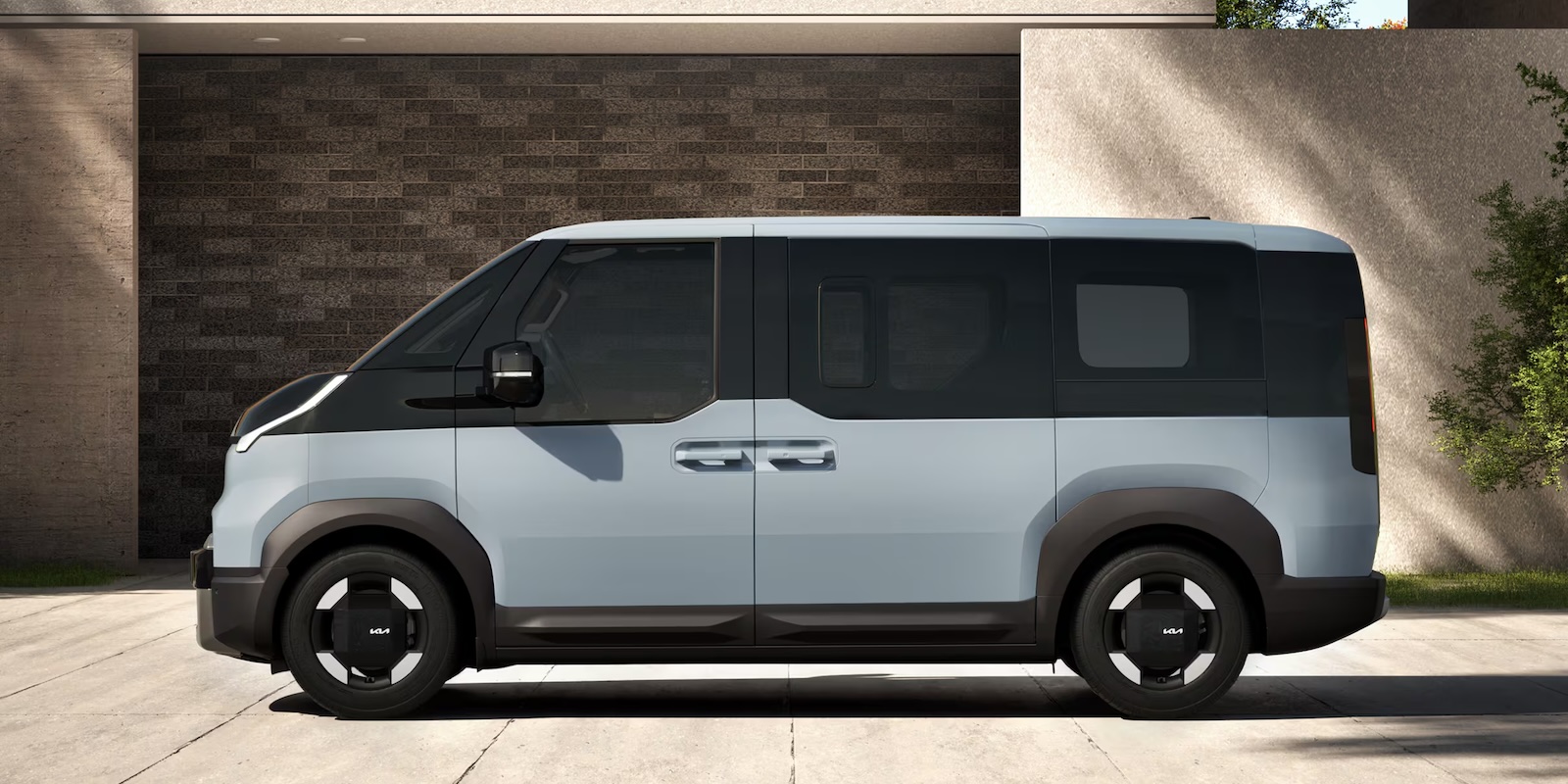
For serious fleet buyers, safety isn’t a “nice-to-have,” it’s an absolute must – and Kia’s new PV5 electric van meets that need with a positively stellar, five-star safety rating on the tough European NCAP safety test.
The new “do-it-all” Kia PV5 showed strong performance across a number of key safety categories, including Occupant Protection, Safety Assist/Crash Avoidance, and Post-Crash Safety. The PV5’s robust suite of standard ADAS technologies that includes AEB, Lane Support System, and Speed Assistance System also helped the new electric work van to deliver top marks in the NCAP’s “real world” test scenarios.
“The PV5 opens a new chapter in practical, electrified mobility, offering generous space and modular versatility for everyday use,” explains Sangdae Kim, Executive Vice President and Head of the (relatively) new PBV Business Division at Kia. “Achieving the top Euro NCAP five-star rating is clear validation of its safety performance and will serve as strong momentum as Kia expands its PBV lineup across Europe.”
The Euro NCAP tests highlighted the strong performance of a number of the PV5’s ADAS features, specifically calling out the following:
- Demonstrated strong responsiveness in vehicle-to-vehicle scenarios
- Provides additional protection for pedestrians behind the vehicle
- Avoided collisions in most pedestrian and cyclist test cases
The Kia PV5 slots into familiar territory for US buyers, landing roughly in the same size class as the Ford Transit Connect or Ram ProMaster City, with ~180 cubic feet of interior cargo space available, which is plenty to make it attractive for last-mile delivery and trade work in tight urban markets.
Globally, the PV5 is offered with a number of battery options, including a smaller 43.3 kWh Lithium-Iron-Phosphate (LFP) pack, as well as larger Nickel-Cobalt-Manganese (NCM) packs at 51.5 kWh and 71.2 kWh. The longest-range versions are good for about 250 miles of estimated range – more than enough for Kia to make a case for it as a practical, city-focused alternative to much larger (and pricier) electric vans.
Larger vans, by the way, that may not have that 5 star Euro NCAP rating.
Kia PV5
SOURCE | IMAGES: Kia; photo by Scooter Doll.
If you’re considering going solar, it’s always a good idea to get quotes from a few installers. To make sure you find a trusted, reliable solar installer near you that offers competitive pricing, check out EnergySage, a free service that makes it easy for you to go solar. It has hundreds of pre-vetted solar installers competing for your business, ensuring you get high-quality solutions and save 20-30% compared to going it alone. Plus, it’s free to use, and you won’t get sales calls until you select an installer and share your phone number with them.
Your personalized solar quotes are easy to compare online and you’ll get access to unbiased Energy Advisors to help you every step of the way. Get started here.
FTC: We use income earning auto affiliate links. More.
Environment
Waymo pauses robotaxi service in San Francisco after blackout chaos — Musk says Tesla car service unaffected

-
 Sports2 years ago
Story injured on diving stop, exits Red Sox game
-
 Sports3 years ago
‘Storybook stuff’: Inside the night Bryce Harper sent the Phillies to the World Series
-
 Sports2 years ago
Game 1 of WS least-watched in recorded history
-
 Sports3 years ago
Button battles heat exhaustion in NASCAR debut
-
 Sports3 years ago
MLB Rank 2023: Ranking baseball’s top 100 players
-
Sports4 years ago
Team Europe easily wins 4th straight Laver Cup
-
 Environment3 years ago
Japan and South Korea have a lot at stake in a free and open South China Sea
-
 Environment1 year ago
Here are the best electric bikes you can buy at every price level in October 2024