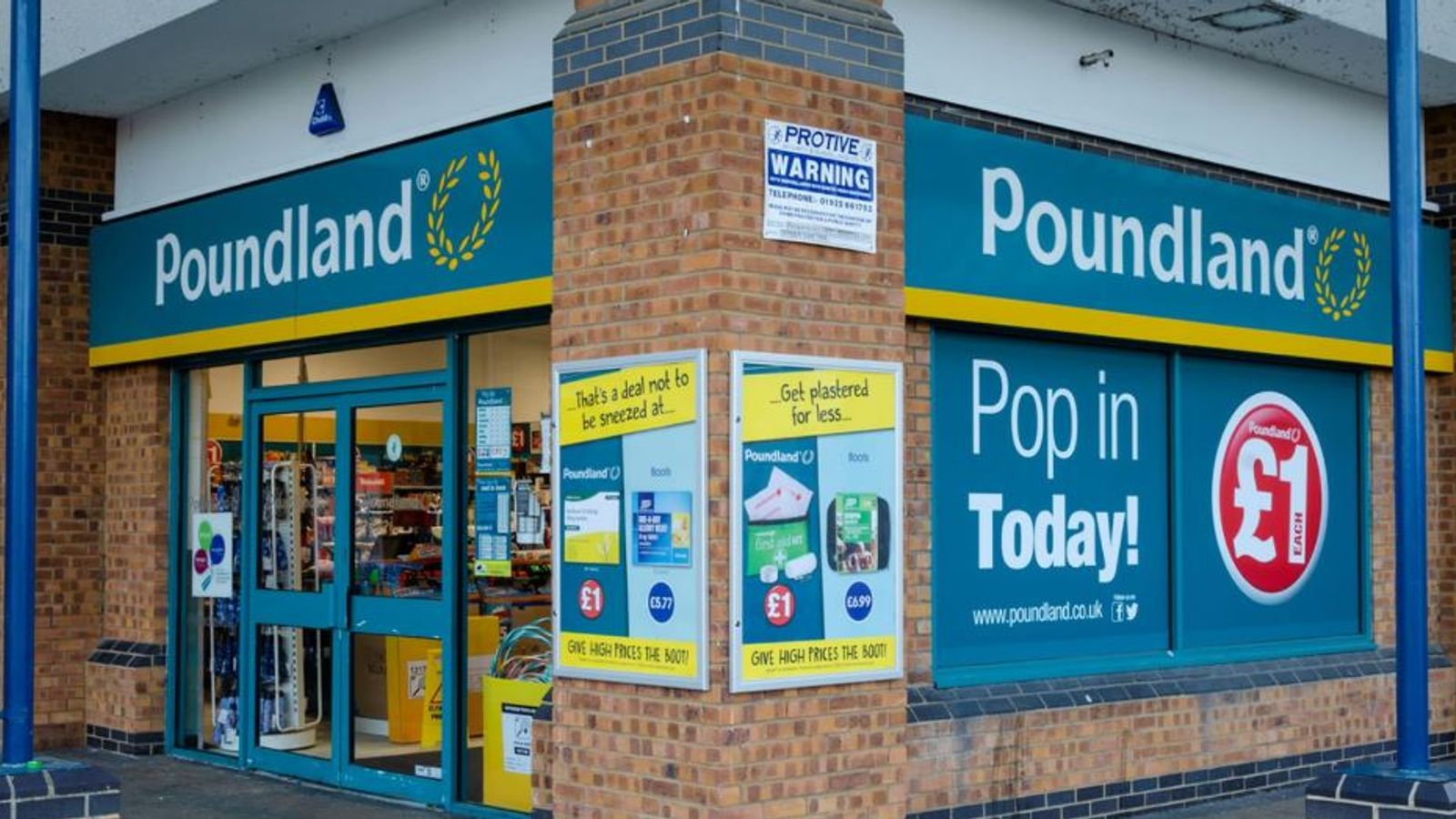
The little-known investor cutting a swathe through the British high street has made it onto a shortlist of bidders vying to buy Poundland, the struggling discounter.
Sky News has learnt that Modella is among a handful of bidders notified in recent days that they have made it through to a second stage of the auction of Poundland.
Its progress in the sale process raises the prospect of Modella taking ownership of its fourth major British retailer in less than nine months.
The investment firm already owns Hobbycraft and The Original Factory Shop, where it has in recent weeks launched company voluntary arrangements – court-sanctioned restructuring deals which allow it to close loss-making stores and slash rent payments.
That deal has yet to close, and Sky News reported at the weekend that Modella will effectively be prohibited from launching a CVA there for at least a year under the terms of its deal with WH Smith.
Among the other suitors for Poundland are Endless, the turnaround investor, and Hilco Capital, the new owner of Lakeland.
Poundland has been put up for sale by Pepco Group, its Warsaw-listed owner, amid mounting losses and a struggle to turn the company around.
Pepco confirmed in March that it planned to explore a sale of the business, with Teneo hired to advise on an auction.
Last year, Poundland, which employs about 18,000 people, recorded roughly €2bn of sales.
Earlier this year, Pepco, which also trades as Pepco and Dealz in Europe, said Poundland had seen a like-for-like sales slump of 7.3% during the Christmas trading period.
In an accompanying trading statement, Pepco said that Poundland had suffered “a more difficult sales environment and consumer backdrop in the UK, alongside margin pressure and an increasingly higher operating cost environment”.
Recent tax hikes announced by Rachel Reeves, the chancellor, in last autumn’s Budget have also increased the financial pressure on high street retailers.
Modella declined to comment on its interest in Poundland.
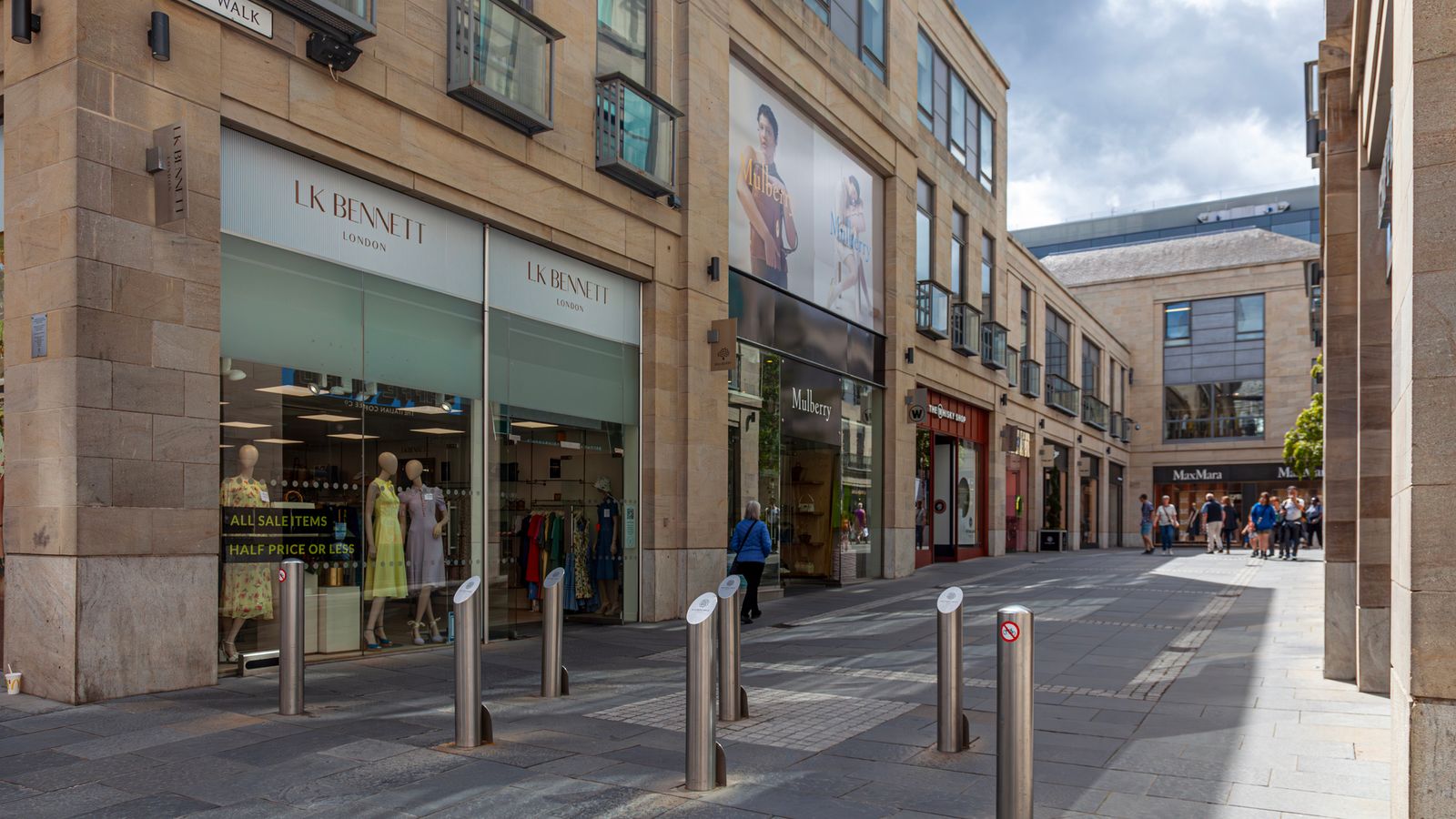
The owner of the fashion brand LK Bennett is this weekend racing to find a saviour amid concerns that it could be heading for collapse for the second time in six years.
Sky News has learnt that the clothing chain, which was founded by Linda Bennett in 1990, is working with advisers at Alvarez & Marsal (A&M) on an accelerated sale process.
Industry sources said on Saturday that A&M had begun sounding out potential buyers and investors in the last few days.
At one stage, LK Bennett was among the most recognisable brands on the high street, expanding to 200 branded outlets in the UK and overseas markets including China, Russia and the US.
In its home market it now trades from just nine standalone stores, with a further 13 listed as concessions on its website.
It was unclear whether a sale of the loss-making brand was likely or whether LK Bennett’s existing backers might be prepared to inject more funding into the business.
Contingency plans for an insolvency are frequently drawn up by advisers drafted in to run accelerated sale processes.
More from Money
The brand is owned by Byland UK, a company established in 2019 for the purpose of rescuing LK Bennett from a previous brush with insolvency.
Byland UK was formed by Rebecca Feng, who ran LK Bennett’s Chinese franchises.
At the time of that deal, Ms Feng said: “Under our plan, the business will continue to operate out of the UK, looking to maintain the long-standing and undoubted heritage of the brand.
“This will be achieved through a combination of working with quality British design, and the business’s existing supply chain.”
Accounts for LK Bennett Fashion for the period ended January 27, 2024 show the company made a post-tax loss of £3.5m on turnover of £42.1m.
The figures showed a steep loss in sales from £48.8m in 2023.
According to the accounts, LK Bennett paid a dividend of £229,000 “at the start of the year when performance was doing well”.
“Given the decline in revenue, the directors do not recommend the payment of any further dividends.”
Ms Bennett founded the eponymous chain by opening a store in Wimbledon, southwest London, in 1990, and promised to “bring a bit of Bond Street to the high street”.
Her eye for design earned her the nickname ‘queen of the kitten heel’ and saw her products worn by the Princess of Wales and Theresa May, the former prime minister.
In 2008, Ms Bennett sold the business for an estimated £100m to a consortium led by the private equity firm Phoenix Equity Partners.
She retained a stake, and then bought back the remaining equity in 2017.
The company’s administration in 2019 resulted in the closure of 15 stores.
It was unclear how many people are now employed by LK Bennett.
LK Bennett has been contacted for comment, while A&M declined to comment.
Black Friday sales do not appear to have provided much cheer for retailers amid continued consumer caution, according to official figures.
The Office for National Statistics (ONS) reported a 0.1% decline in sales volumes during November, compared to the previous month, when the data is adjusted for seasonal effects due to the pre-Christmas shopping bonanza falling in December last year.
Economists polled by the Reuters news agency had expected growth of 0.4%. The dip was worse when the effects of fuel sales were excluded.
Rolling three-month data showed positive sales volumes were only propped up by strength in September.
ONS senior statistician Hannah Finselbach said: “Retail continued to grow in the three months to November, helped by a strong performance from clothing and tech shops.
“This year November’s Black Friday discounts did not boost sales as much as in some recent years, meaning that once we adjust for usual seasonality, our headline figures fell a little on the month.
More on Uk Economy
Related Topics:
“Meanwhile, our separate household survey showed that although some people said they were planning to do more shopping… this Black Friday than last, almost twice as many said they were planning to do less.”
How to shop without getting ripped off
The data was released against a backdrop of widespread consumer and business caution in the run-up to the budget on 26 November – held just two days before Black Friday – although promotional activity was already well underway before Rachel Reeves’s speech.
That period was dominated by on-off signals over income tax hikes and black holes in the public finances, but the budget itself largely backdated many of the most painful measures towards the end of the parliament.
While the ONS data does little to boost retailers’ expectations for the Christmas season, there was a crumb of comfort to take from a closely-watched survey released just beforehand.
GfK’s consumer confidence index nudged up to its joint-highest level this year – though it remained deep in negative territory.
Why isn’t Britain working?
The biggest upwards contribution came from a willingness to make major purchases, despite perceptions for personal finances weighing amid continuing cost-of-living pressures in the economy.
Neil Bellamy, GfK’s consumer insights director, said: “Consumers resemble a family on a festive winter hike, crossing a boggy field – plodding along stoically, getting stuck in the mud and hoping that easier conditions are not far off.”
We have had better economic news since the survey was completed.
Has the Bank of England really vanquished inflation?
It promises a boost to spending power as borrowing costs come down further, with wage growth still rising above that pace for price growth.
It is now hoped that the end of the budget circus will spark some life into the economy following two consecutive monthly contractions for output and a surge in the unemployment rate.
Much of the increase has been attributed to the retail and hospitality sectors reacting to sharp rises in employment costs under the Labour government.
Consumer spending accounts for around 60% of the UK economy.
Richard Carter, head of fixed interest research at Quilter Cheviot, said of the outlook: “Markets do not believe growth is coming to the UK anytime soon.
“Indeed, the UK is likely to slip into recession if the latest GDP figures are anything to go by, and there is little sign of positive momentum being generated.”
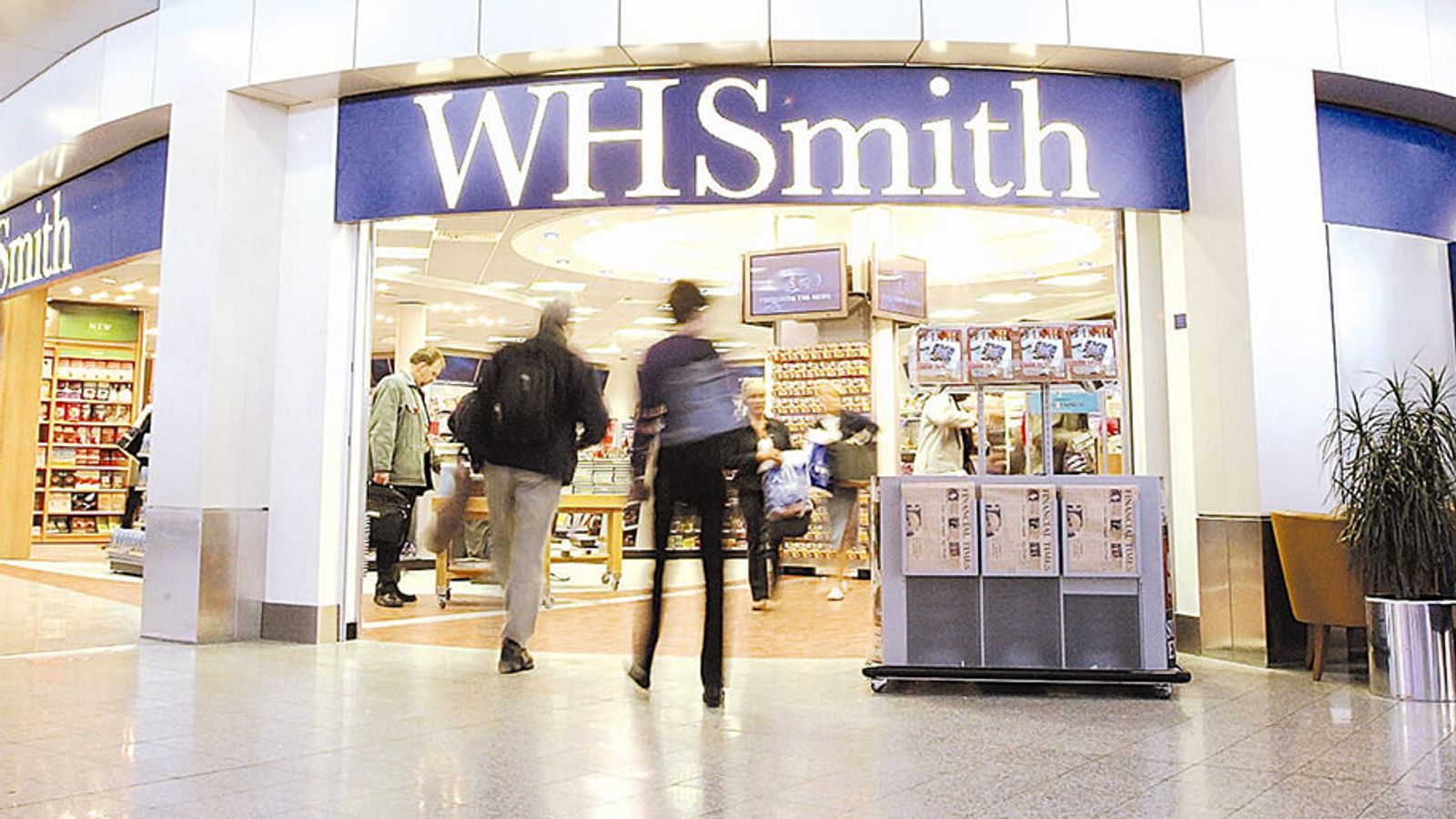
WH Smith is being investigated by the City watchdog after the company revealed accounting failures in its US operations.
The Financial Conduct Authority (FCA) said: “The investigation concerns potential breaches of UK Listing Principles and Rules and Disclosure and Transparency Rules in relation to the matters announced by WH Smith PLC on 19 November 2025.”
On that day WH Smith revealed that Carl Cowling, its chief executive of six years who had presided over the sale of the company’s UK high street business earlier in the year, had resigned after an independent review into an overstatement of earnings.
Experts from Deloitte found WH Smith’s North America division – its key area for growth – had been recognising supplier income incorrectly.
Profit forecasts were revised sharply lower as a result – its second such move during a year that has seen shares tumble by more than 40%.
The company said on Friday that it expected profitability next year to be static on 2025 financial year levels – reported at £108m – as it reviews some of its North American businesses in the wake of the accounting problems.
More from Money
Its annual results were delayed twice as it got to grips with the issues.
WH Smith plans to recover overpaid bonuses from its former senior executives following previous profit restatements.
The company’s North American review includes its InMotion business, which sells electronic and digital accessories primarily in airports.
Interim boss Andrew Harrison told investors: “The Board and I are acutely aware that we have much to do to rebuild confidence in WH Smith and deliver stronger returns as we move forward.
The stock was a further 6% down at the market open but that decline later petered out.