
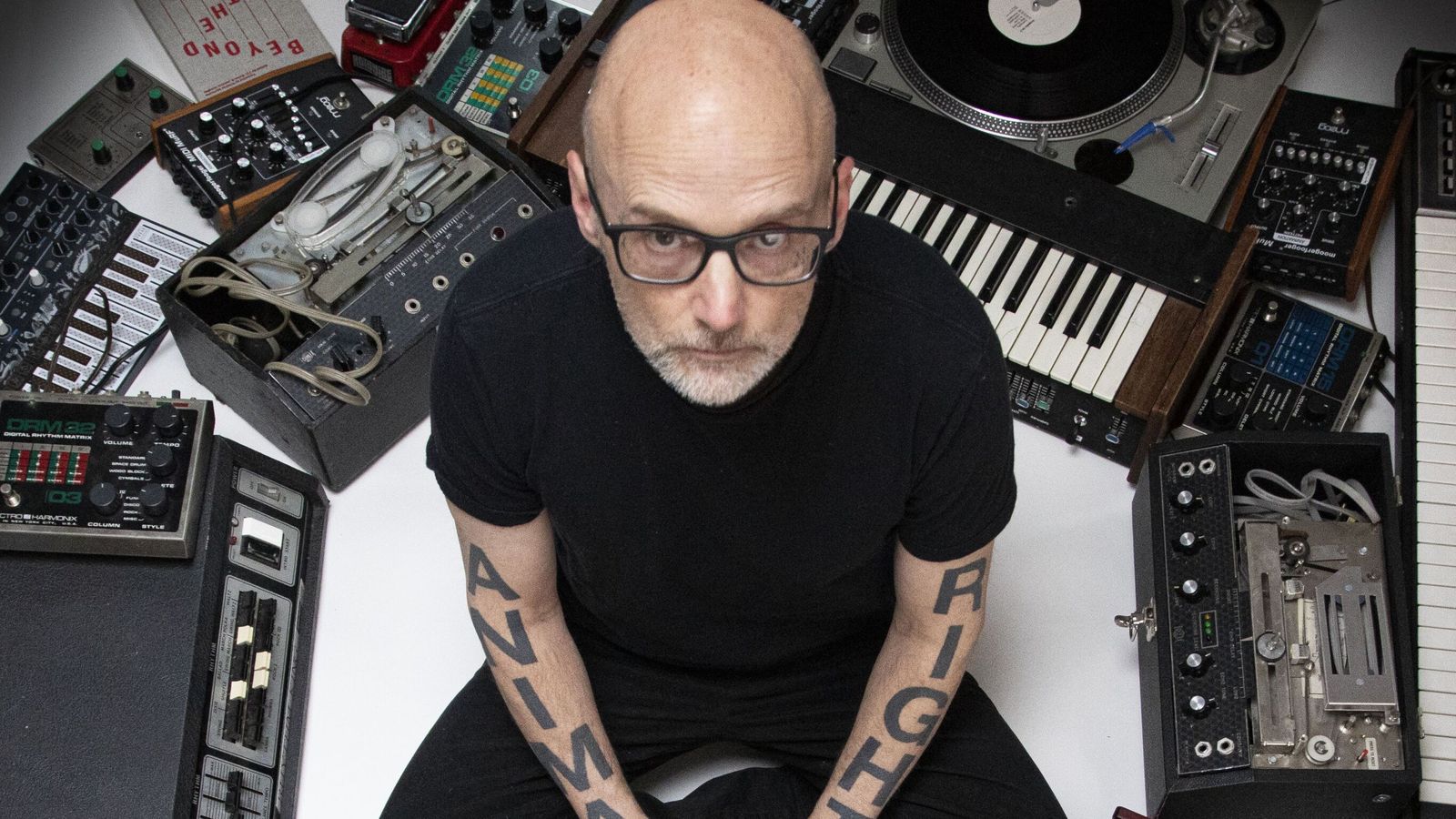
Dance artist Moby on the destructive force of fame – and why he’s content being that ‘weird old guy’

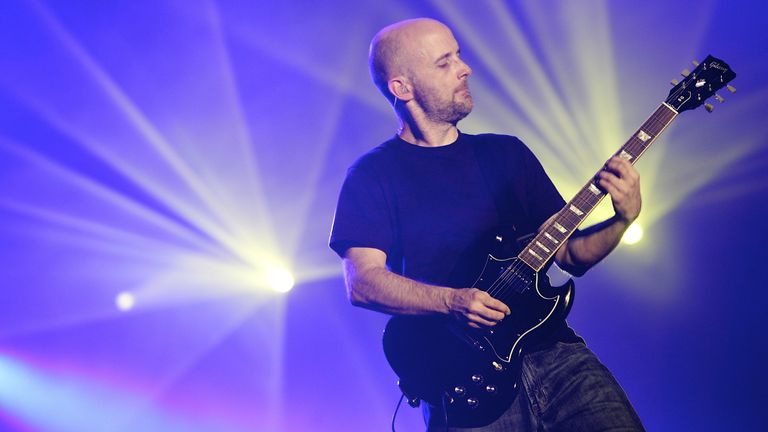
He is the man behind the biggest-selling electronica record of all time, but the success of Moby’s album Play came with some unwanted side effects.
His fifth record, the album charted at 33 upon its release in the UK in May 1999, and fell out of the Top 40 after just a week. But despite the lacklustre initial response, Play started to pick up steam, slowly climbing the chart until it reached number one in April 2000.
It stayed there for five weeks and remained in the Top 40 until March 2001, re-entering the Top 100 several times over the next few years.
While Moby had experienced success with Go, the breakthrough 1991 single from his self-titled debut album, Play was next level. Even if you don’t know the album, you’ll know at least some of the songs – Porcelain, Why Does My Heart Feel So Bad?, Honey, and Natural Blues. The record was ubiquitous and fame hard to escape.
Pic: Adam Warzawa/EPA/Shutterstock
“I think fame and fortune are, probably, empirically two of the most destructive forces on the planet,” he says, speaking from his home in Los Angeles. “I mean, if fame and fortune fixed things, Kurt Cobain and Amy Winehouse would still be making records.
“I guess it’s a very easy system to buy into, especially in a place like… in New York, in Los Angeles, in these big cities that are driven by ostentation and consumption and the need for external validation. It’s hard to resist those temptations. But then… you look at the consequences of that.
“I’d rather try and live a rational life and not necessarily let other people’s concerns dictate what my concerns should be.”
Now sober and with a few years between him and those heady days of peak fame, in recent years Moby has been doing something few established stars in his position would do – giving his compositions away for free.
“I have a house, I have a car, I have some hoodies, I have food in the fridge, I don’t really need anything more,” he insists. “To live and work in a way where I’m not driven by money, why not use that as an opportunity?”
Selfless selfishness or selfish selflessness
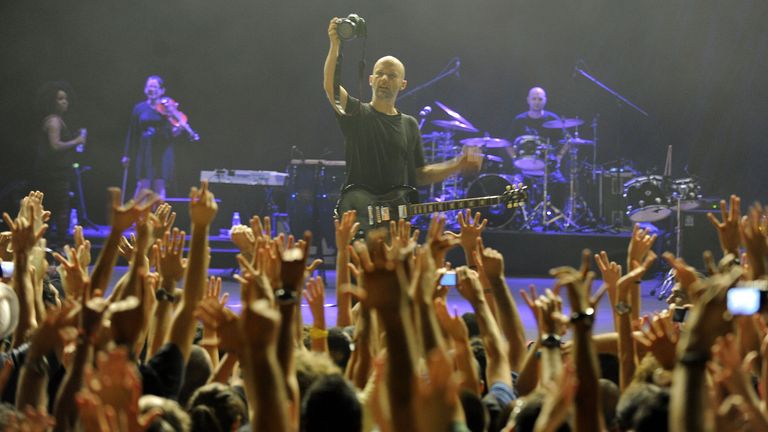
Pic: Wael Hamzeh/EPA/Shutterstock
Over a decade ago, the musician came up with the quietly radical idea of making a free music licensing platform, MobyGratis. The idea was simple and rather exciting, he admits – to allow anyone unrestricted access to hundreds of his compositions to use them however they wish. From film scores to remixes, whatever.
“It’s either selfless selfishness or selfish selflessness, meaning I’m giving these things away but the benefit to me is I get to see what people do with it,” he says.
“There are a lot of things about the current digital media climate that are terrifying and baffling and confusing, but one of the things I love is the egalitarian nature of it.”
The idea of giving his music away for free runs somewhat contrary to the AI copyright battle many artists are currently speaking out over, with the likes of Ed Sheeran and Damon Albarn calling for greater protections in law to prevent artificial intelligence software from scraping their work to learn from it.
Remix culture and creative processes
“I completely appreciate and respect the concerns that other people have,” says Moby. “I think they’re incredibly valid… but for me personally, I don’t know. Maybe it’s naive and stupid of me, but I kind of just ignore it.
“I put this music out there and you sort of hope for the best, which probably is completely dim-witted of me. Part of remix culture is seeing how people reinterpret your work; sometimes it’s mediocre, sometimes it is bad, but sometimes it is so inspired, and I can actually learn a lot from other creative processes.”
Read more:
Giles Martin likens AI plans to giving burglars free rein
David Attenborough’s Ocean is ‘biggest message’ he’s ever told
The dance artist also takes issue with how the act of giving and compassion more generally has come to be seen, and references Elon Musk‘s comments on Joe Rogan’s podcast in April, when the billionaire said: “We’ve got civilizational suicidal empathy going on.”
Moby says that while “we live in this world of fear, selfishness, desperation and viciousness”, he supports “anything that is a rejection of the manosphere… anything that rejects Elon and the idea that empathy is a weakness and reminds people that life can be simple and decent.”
He jokes: “I’m definitely becoming like the weird old guy that you’ll see in the mountains, sort of like not making eye contact and mumbling about chemtrails or something.”
This is a man who is aware his approach to fame, fortune and giving stuff away is somewhat out-of-keeping with the times we’re living in – but the thing is, Moby doesn’t seem to care.
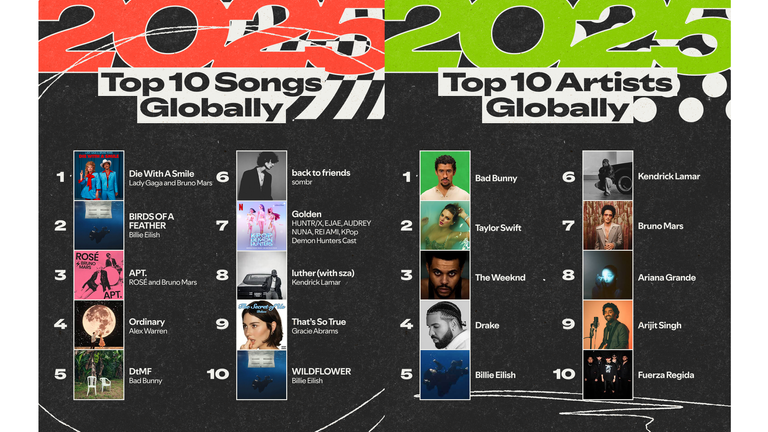
The hotly anticipated Spotify Wrapped is revealing our top tracks, artists and albums for 2025.
But how does the streaming service calculate personalised summaries of users’ listening habits and rank the UK’s hottest artists?
Here’s a look at how your data is used.
The platform describes the annual statistics as “a chance to look back on your year in sound”.
It says data is captured between January and mid-November on every account, although it mostly excludes anything streamed in private mode. (Don’t worry, your passion for the Spice Girls can be kept secret.)
Wrapped presents personalised listening statistics, which Spotify calls the “real story of your year of listening”, alongside global figures for comparison.
The streaming service says Minutes Listened reflects the actual time spent listening to audio on the platform.
Once a user streams at least 30 tracks, Spotify generates a list of Your Top Songs. Similarly, Your Top Artists ranks artists based on total minutes listening to a particular performer.
Other metrics identify the top genres users have played, as well as podcasts and audiobooks ranked by total minutes listened. And if you’ve listened to at least 70% of tracks on a record, you’ll see top albums too.
Spotify also creates Your Listening Age, a guesstimate of your age based on the era of the music “you feel most connected to”.
The streaming service says the statistic is calculated using a five-year span of music which users engaged with more than other listeners of a similar age.
Spotify has been summing up 2025’s most listened to tracks. Pic: Spotify
Swift vs Bunny
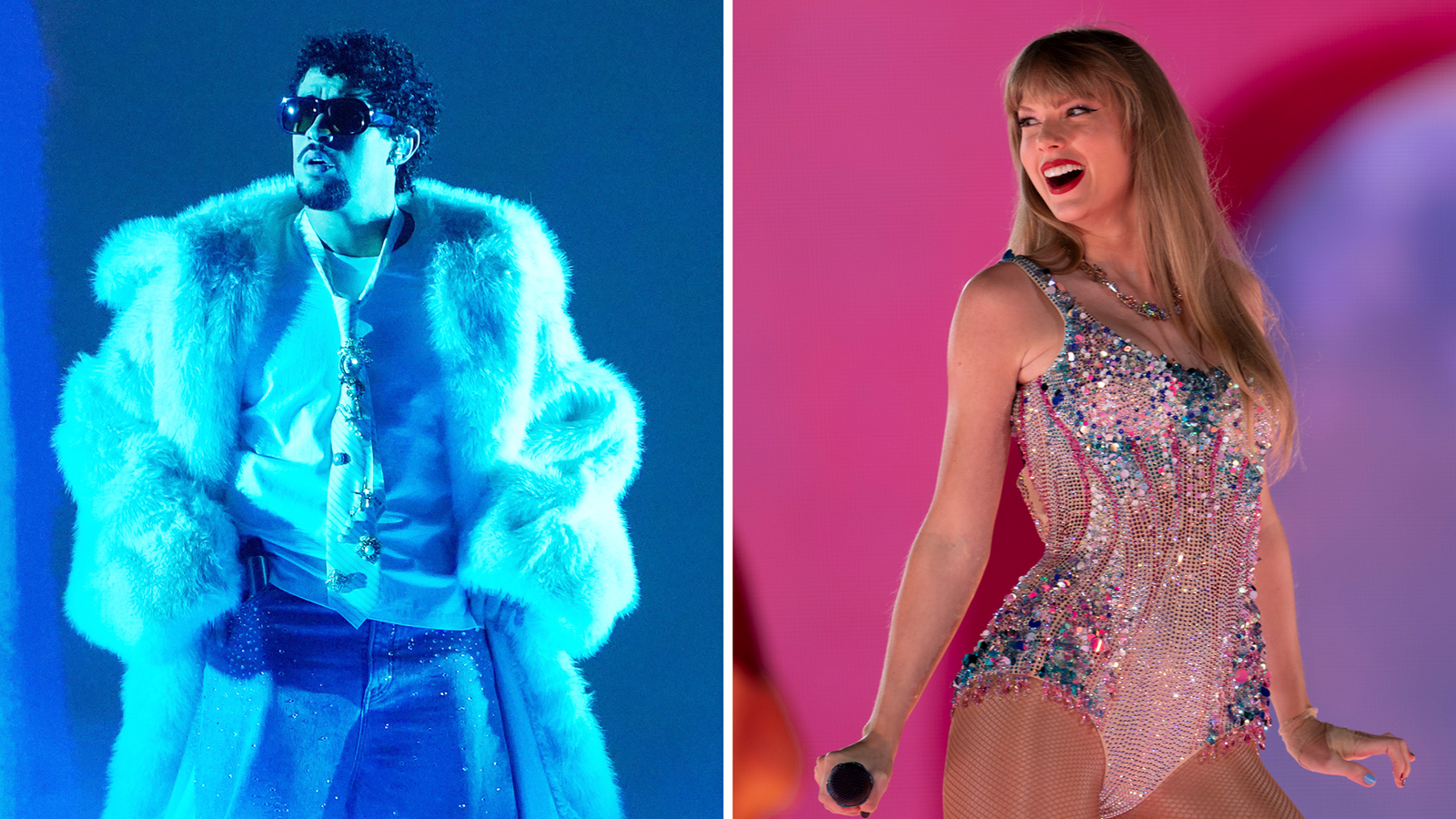
Pop superstar Taylor Swift has been named the UK’s most-streamed artist on Spotify for the third year in a row.
But she dropped out of the top spot in the global rankings, coming second to Puerto Rican superstar Bad Bunny, who secured more than 19.8 billion streams. Third was The Weeknd, followed by Drake and Billie Eilish.
Bad Bunny’s LP Debi Tirar Mas Fotos was the most listened-to album worldwide.
Read more from Sky News:
Sabrina Carpenter fury at video
Drake’s lawsuit dismissed
Spotify hikes UK prices
Spotify revealed Drake was the UK’s second most-listened to artist, followed by Sabrina Carpenter in third, The Weeknd in fourth, and Billie Eilish in fifth.
Despite being the most listened-to artist, Swift failed to break into the UK’s top five most listened-to songs and albums of the year.
Alex Warren’s Ordinary was the most-streamed song, and Short ‘N’ Sweet, released by Carpenter last year, the top album.
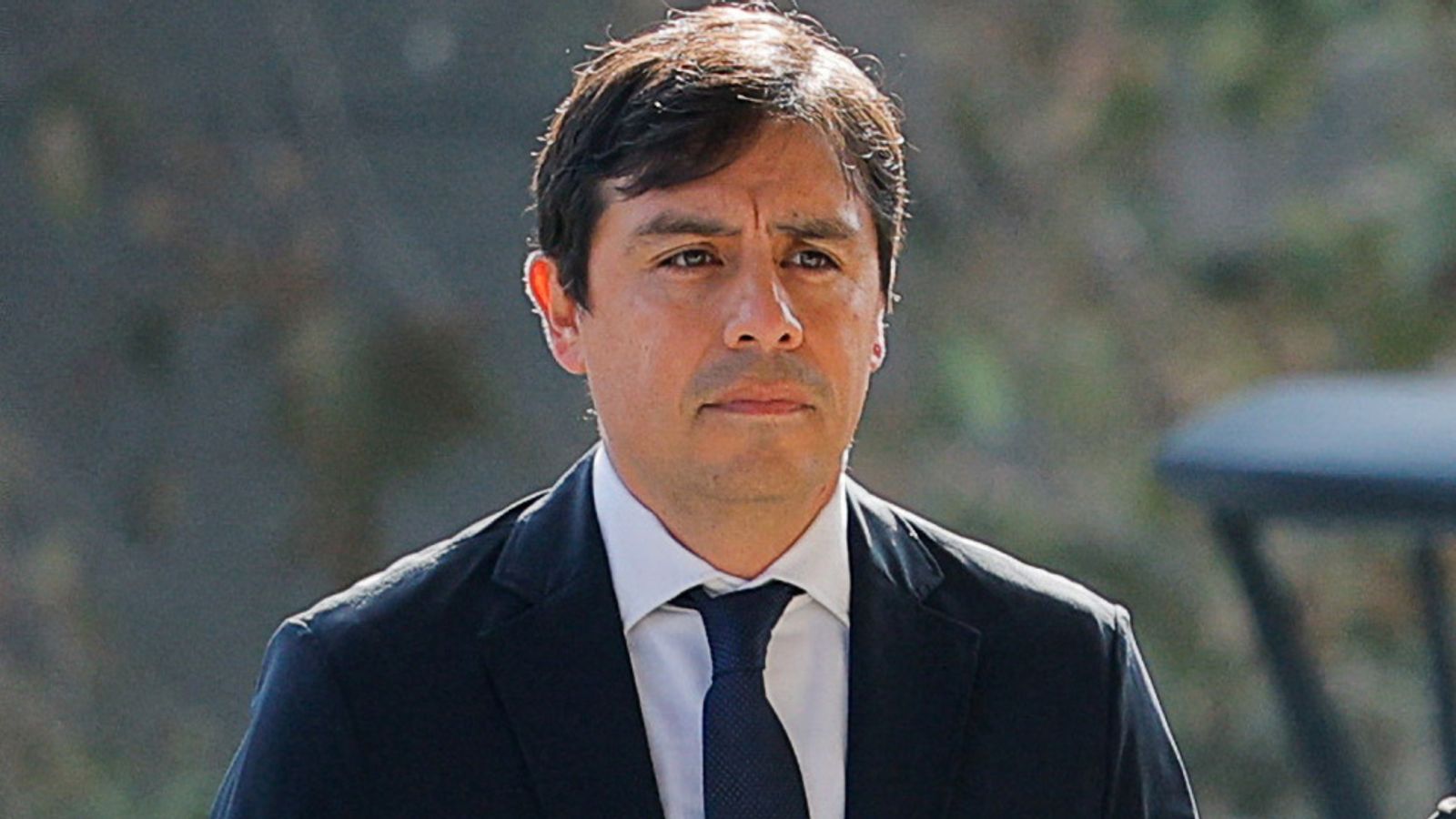
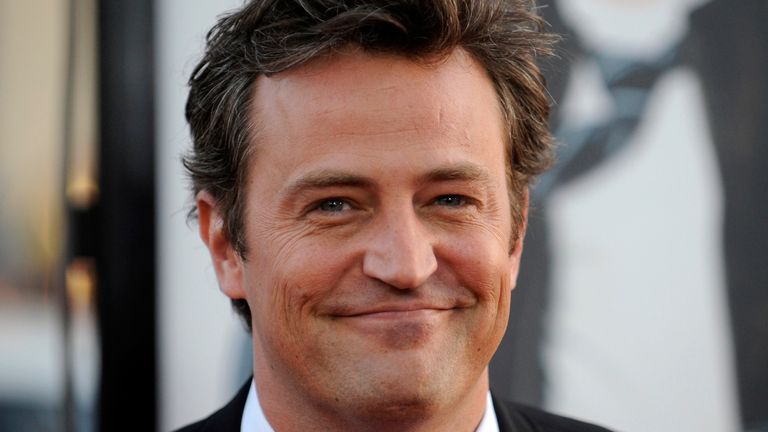
A doctor who pleaded guilty to illegally supplying ketamine to Matthew Perry in the weeks before the star’s death has been jailed for two-and-a-half years.
Salvador Plasencia, who operated an urgent-care clinic outside Los Angeles, is the first of five people to be sentenced in connection with the death of the Friends actor. Perry was found drowned in the hot tub at his home after taking ketamine in October 2023.
“You and others helped Mr Perry on the road to such an ending by continuing to feed his ketamine addiction,” Judge Sherilyn Peace Garnett told Plasencia as she handed down the sentence. “You exploited Mr Perry’s addiction for your own profit.”
Matthew Perry died in 2023. Pic: Reuters
During the hearing, Plasencia broke into tears as he spoke about the day he would have to tell his now two-year-old son “about the time I didn’t protect another mother’s son”. Apologising directly to Perry’s family, he said: “I should have protected him.”
The doctor’s mother cried loudly in the courtroom as he was led out in handcuffs.
Ahead of the sentencing, Perry’s mother Suzanne Perry and stepfather Keith Morrison described those involved in supplying ketamine to the star illegally as “jackals”, and said they believed Plasencia to be “among the most culpable of all“.
The actor had been taking ketamine legally as a treatment for depression, but started seeking more of the drug and taking it unsupervised in the weeks before his death, acquiring it illegally from different sources.
Plasencia, 44, did not supply the dose that killed the actor, but had been distributing the surgical anesthetic to him in the weeks beforehand.
He initially denied the charges against him but changed his plea earlier this year, admitting four counts of distribution. He could have faced up to 40 years in prison had he been convicted at trial.
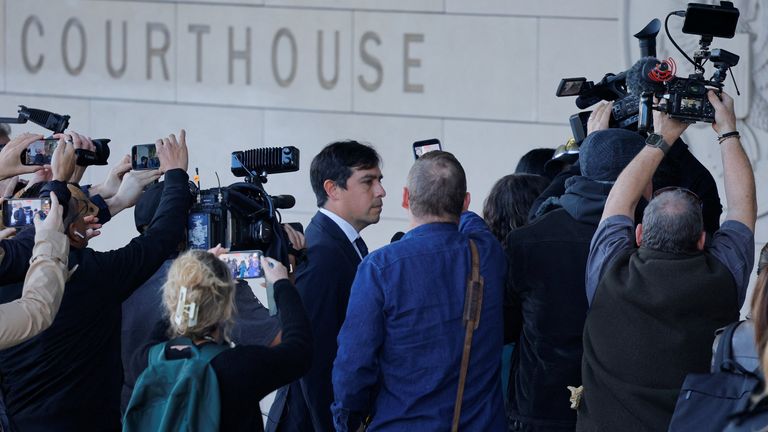
Plasencia was surrounded by photographers as he made his way into court. Pic: Reuters/ Mike Blake
Doctor ‘fed on vulnerability’
Court documents showed details of a text message Plasencia sent to another doctor, who is also due to be sentenced, saying: “I wonder how much this moron will pay.”
“Rather than do what was best for Mr Perry – someone who had struggled with addiction for most of his life – [Plasencia] sought to exploit Perry’s medical vulnerability for profit,” the prosecution said in its sentencing memo.
Known as “Dr P”, Plasencia was introduced to Perry by one of his own patients on 30 September 2023, prosecutors said. This patient said the actor was a “high profile person” who was willing to pay “cash and lots of thousands” for ketamine treatment, and the doctor was “motivated by the promise of a payday”.
Plasencia’s lawyers admitted his behaviour was “reckless” and said it was “the biggest mistake” of his life.
“Remorse cannot begin to capture the pain, regret and shame that Mr Plasencia feels for the tragedy that unfolded and that he failed to prevent,” they said.
Star’s family share emotional statements
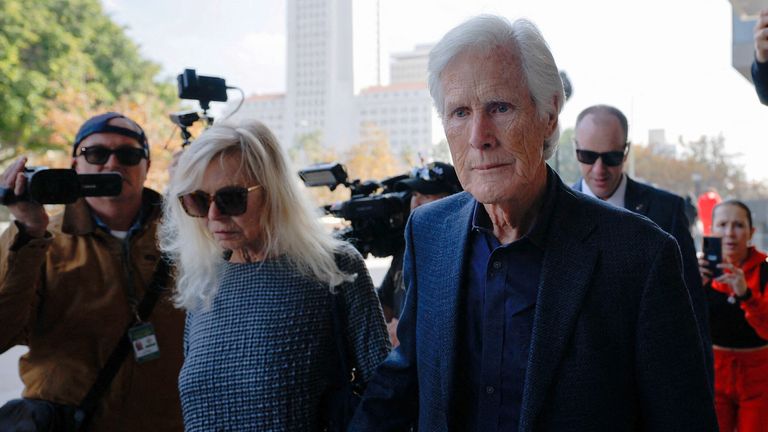
Suzanne Perry and Keith Morrison were in court for the hearing. Pic: Reuters/ Mike Blake
During the hearing, Perry’s mother Suzanne addressed the court to talk about everything he had overcome in his life.
“I used to think he couldn’t die,” she said, supported by her husband.
“You called him a ‘moron’,” she said to Plasencia. “There is nothing moronic about that man.”
In victim impact statements submitted to court, she and her husband said Plasencia’s actions were not the result of “one very bad decision” or done “in the heat of passion”, and nor was he a “bad to the bone” drug dealer.
They added: “No one alive and in touch with the world at all could have been unaware of Matthew’s struggles. But this doctor conspired to break his most important vows, repeatedly, sneaked through the night to meet his victim in secret. For what, a few thousand dollars? So he could feed on the vulnerability of our son.”
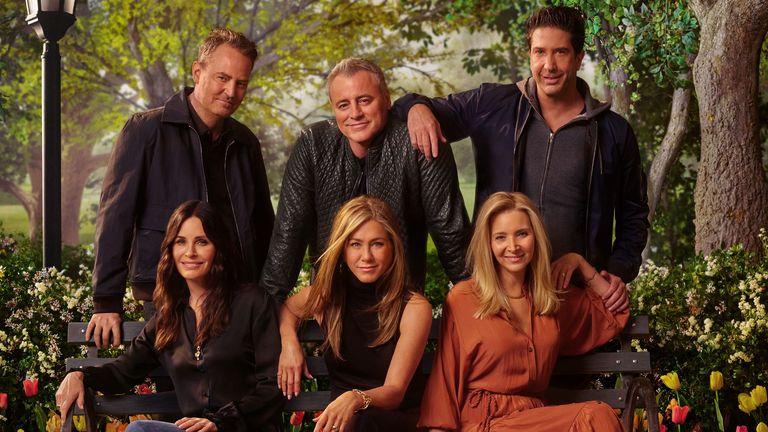
Perry appeared in Friends: The Reunion alongside his former co-stars in 2021. Pic: Sky/ Warner Media/ HBO
“The world mourns my brother,” Perry’s half-sister Madeleine Morrison said. “He was everyone’s favourite friend.”
Perry’s father John and stepmother Debbie had called for a lengthy sentence, and said Plasencia’s actions had “devastated” their family.
“How long did you possibly see supplying Matthew countless doses without his death to eventually follow?” they asked. “Did you care? Did you think?”
Read more:
The drug network exposed by Perry’s death
Obituary: The one who made everyone laugh
Matthew Perry: A life in pictures
As well as the prison sentence, Judge Sherilyn Peace Garnett handed down two years of probation to Plasencia.
The other four people charged in connection with Perry’s death have also accepted plea deals and are due to be sentenced over the next few months.
They are: dealer Jasveen Sangha, also known as “the Ketamine Queen”, Perry’s assistant Kenneth Iwamasa, another doctor, Mark Chavez, and Erik Fleming, an associate of the actor.
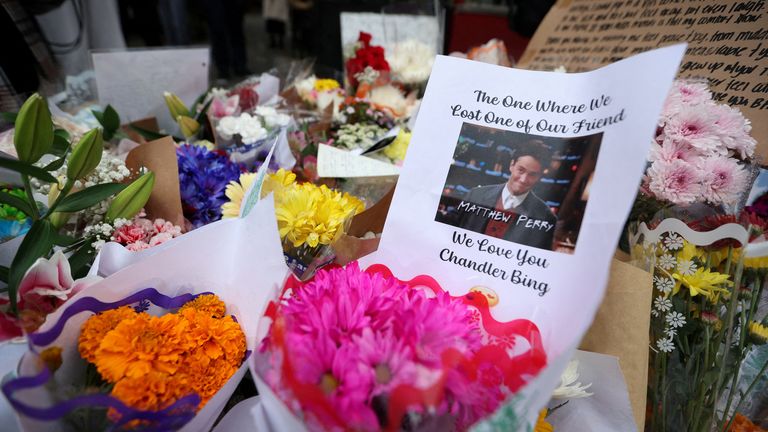
Tributes were left in LA and New York following the actor’s death. Pic: Reuters
Perry had struggled with addiction for years, dating back to his time on Friends, when he became one of the biggest stars of his generation playing Chandler Bing.
He starred alongside Jennifer Aniston, Courteney Cox, Lisa Kudrow, Matt LeBlanc and David Schwimmer for 10 seasons, from 1994 to 2004, and appeared in the reunion show in 2021.
Entertainment
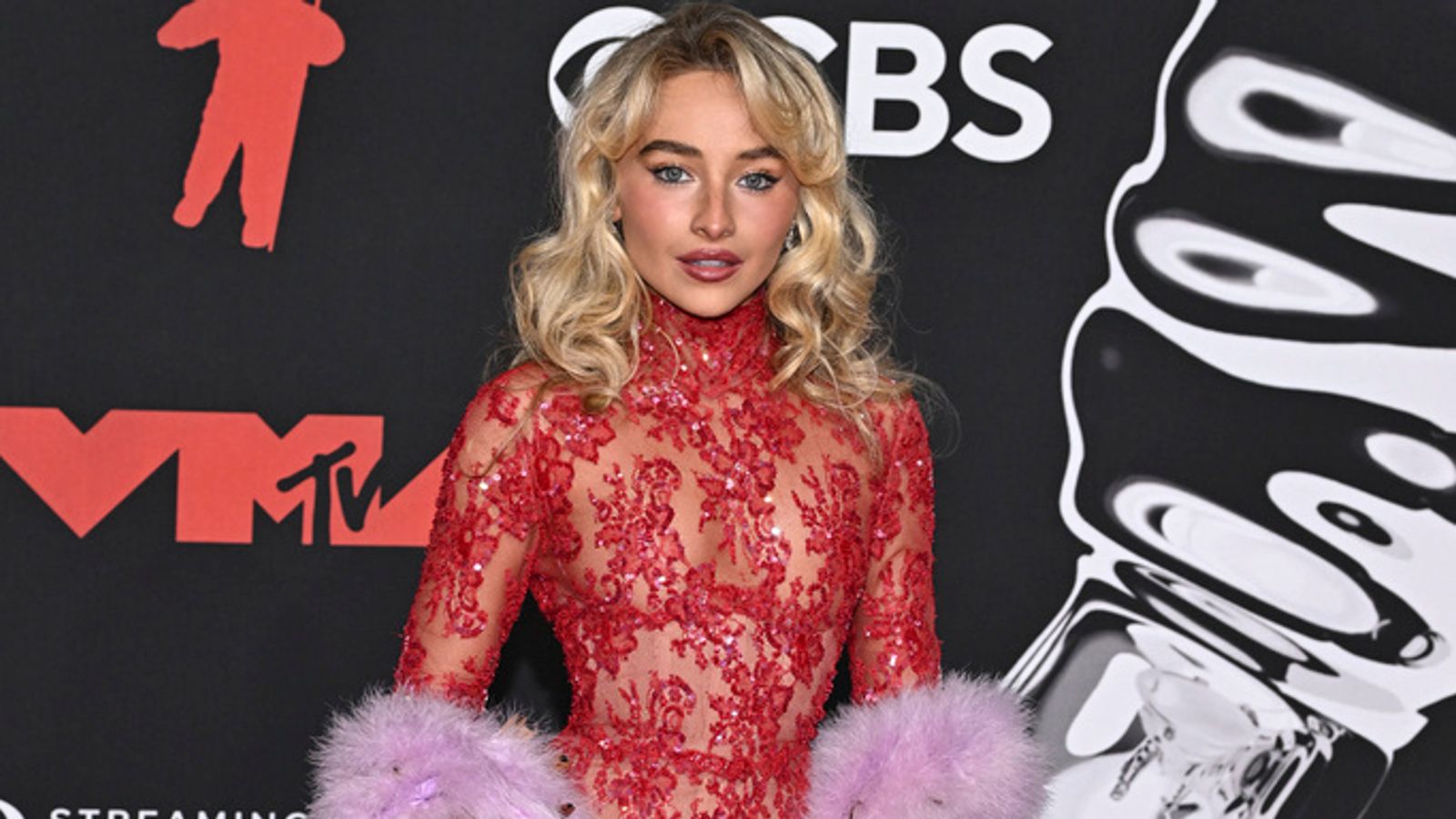
Sabrina Carpenter hits out at ‘evil and disgusting’ White House video featuring her song
-
 Sports2 years ago
Story injured on diving stop, exits Red Sox game
-
 Sports3 years ago
‘Storybook stuff’: Inside the night Bryce Harper sent the Phillies to the World Series
-
 Sports2 years ago
Game 1 of WS least-watched in recorded history
-
 Sports3 years ago
Button battles heat exhaustion in NASCAR debut
-
 Sports3 years ago
MLB Rank 2023: Ranking baseball’s top 100 players
-
Sports4 years ago
Team Europe easily wins 4th straight Laver Cup
-
 Environment3 years ago
Japan and South Korea have a lot at stake in a free and open South China Sea
-
 Environment1 year ago
Here are the best electric bikes you can buy at every price level in October 2024