
Who attended Trump’s controversial memecoin dinner?

The top 220 holders of US President Donald Trump’s memecoin met yesterday at the president’s golf course in Virginia for an exclusive dinner and purported meet-and-greet.
Attendees spent a grand total of $148 million for an “ultra-exclusive VIP reception with the president,” which crypto industry advocates and critics alike saw as a potential opportunity to discuss crypto policy with the president.
The crowd contained a number of foreign crypto executives and influencers who otherwise would not have access to the US president, raising questions around corruption and foreign influence.
Concerns were further augmented when White House Press Secretary Karoline Leavitt declined to release a list of attendees, stating that the event was a private affair outside of Trump’s presidential duties.
However, some attendees spoke to the press or took to social media to talk about the dinner. Here are just a few:
Justin Sun
Tron founder Justin Sun was the largest TRUMP tokenholder at the gala, which was reportedly enough to earn him a special watch, presented in a special ceremony.

Sun’s presence at the event was particularly controversial. Last year, he faced a lawsuit brought by the US Securities and Exchange Commission over the alleged “orchestration of the unregistered offer and sale, manipulative trading, and unlawful touting of crypto asset securities.”
The SEC asked for a reprieve in late February, just over a month since Trump’s inauguration and the subsequent 180 in federal agencies’ approach toward regulating crypto.
Outside the crypto dinner, Sun posted on May 21 that he would be spending a week in Washington, DC to have “meaningful conversations that will help shape the next chapter of blockchain’s future” in the United States.
Kain Warwick
Kain Warwick, founder of crypto exchange operator iFinex, told The New York Times on May 12 that he was attending the event after stocking up on enough TRUMP to break the top 25 investors on the leaderboard.
Warwick said he wanted to have a shot at meeting the president, or someone on his team, to talk crypto — specifically decentralized finance (DeFi), which is getting less attention in the current crop of crypto bills circulating the US Congress.
“If you assume Trump and 10 people within the Trump team are there, now you’ve got a one in 15 shot of having a conversation with one of them,” he said.
Vincent Liu
Vincent Liu, chief investment officer of crypto trading, VC and market-making firm Kronos Research, attended the event, posting pictures of the menu and Trump’s brief speech.

Liu wrote, “Simply by holding the Trump token, individuals have an unprecedented opportunity to meet the President of the United States.”
He had previously told Cointelegraph, “The decision to acquire the [TRUMP] token was not political. It was based on identifying early momentum, cultural relevance and potential market catalysts.”
Related: US lawmaker introduces anti-corruption bill ahead of Trump’s dinner
His firm stated that “alpha” — i.e., exclusive or difficult-to-obtain information that could move markets — was “on the menu.”
Lamar Odom
Also in attendance was two-time National Basketball Association champion Lamar Odom. While many other crypto entrepreneurs in the audience were focused on policy, Odom used news of his attendance to plug his own memecoin, ODOM.

Odom launched his memecoin less than a week before the dinner on May 14. The anti-addiction-themed memecoin (Odom had a public battle with substance addiction) is issued on the Solana blockchain.
The coin itself had a 20% “Trump Dinner Program” staking scheme, where TRUMP holders could stake their coins with Odom’s project, ostensibly to enable him to attend the dinner event, and receive ODOM airdrops in return. Odom himself will hold 5% of all ODOM.
Sangrok Oh
CEO of Seoul- and Tokyo-based cryptocurrency management firm Hyperithm, Sangrok Oh was the 13th-largest TRUMP holder with a wallet containing over $3 million worth of the token, according to the Straits Times.
Oh told The New York Times that he had arrived with a batch of red “Make Crypto Great Again” hats to give away at the dinner and expected to speak directly with the president. “It’s kind of a fund-raiser […] And he’ll always be good to his sponsors.”
Oh has been critical of the slow regulatory progress for crypto in the countries where his company operates.
Anonymous attendees
In addition to crypto execs and sports stars, the event also noted a few anonymous or pseudonymous crypto traders and entrepreneurs in attendance.
Among them was “Ice,” co-founder of the Singaporean crypto company MemeCore. Their company’s chief business development officer, Cherry Hsu, told Sherwood News that Trump’s rise “represents the power of memes to influence culture, perception, and movements — principles that align with MemeCore’s vision of a decentralized, community-driven future.”
“Ogle,” a cybersecurity adviser to Trump’s own World Liberty Financial crypto enterprise, as well as the pseudonymous co-founder of blockchain ecosystem Glue, also attended. Ogle said they were going out of curiosity, more than anything, and did not endorse Trump personally. “I’m hoping it’ll be fun — and hoping they’ll serve McDonald’s.”
Another anonymous attendee was “Cryptoo Bear,” a crypto trader and occasional news reporter who posts primarily in Japanese. Cryptoo Bear made no political statements about the event, mainly posting about the swag and the food. They did say they were promised a photo op with the president, but it didn’t pan out.

Dinner “guests” across the picket line
Outside the country club, US senators and former staffers attended the event as part of a protest.
Bloomberg reported that protestors shouted “Shame!” and “I hope you choke on your dinner!” at attendees. Critics of the event widely consider it to be a glaring example of corruption in Washington and within the Trump administration.
Senator Jeff Merkley, a Democrat from Oregon, joined the protest. “The spirit of the Constitution was that no one elected would be selling influence to anyone,” he said, “because it’s to be government by and for the people.”
Ken Papaj, a former Treasury Department official, said, “Every time there’s a transaction, he gets a transaction fee? Just unconscionable what he’s doing.”
The dinner comes at a pivotal time for the crypto industry in the US, where the industry is pushing hard for Congress to pass friendly regulations. Trump’s ties may complicate matters, however, as lawmakers have introduced anti-corruption bills targeting crypto and politicians.
Senate Democrats are also taking aim at the stablecoin-focused GENIUS Act, introducing a slew of amendments addressing Trump’s crypto businesses.
Magazine: AI cures blindness, ‘good’ propaganda bots, OpenAI doomsday bunker: AI Eye

Internet service providers (ISPs) in the Philippines began blocking major crypto trading platforms as regulators moved to enforce local licensing rules on crypto service providers.
Users reported that as of Tuesday, access to global cryptocurrency exchanges Coinbase and Gemini was unavailable in the Philippines. Cointelegraph independently confirmed that both platforms were inaccessible across multiple local ISPs.
A report by the Manila Bulletin said the ISP blocks followed an order from the National Telecommunications Commission, which directed providers to restrict access to 50 online trading platforms flagged by the Bangko Sentral ng Pilipinas (BSP), the central bank, as operating without authorization.
The central bank did not publish a full list of the platforms hit by the order. However, the change signals an ongoing shift by local regulators from informal tolerance to enforcement, making local licensing the deciding factor for crypto market access in the Philippines.
Coinbase, Gemini join Binance in Philippines access block
While the Philippines has only recently blocked Coinbase and Gemini, the country has made enforcement moves against unlicensed crypto exchanges in the past.
In December 2023, the country started a 90-day countdown, giving Binance time to comply with local regulations before enforcing a ban on the crypto trading platform.
The Philippines Securities and Exchange Commission (SEC) said the period was meant to allow Filipinos to remove their funds from the exchange.
On March 25, 2024, the NTC ordered local ISPs to block Binance. Nearly a month later, the SEC ordered Apple and Google to block the exchange’s application from their stores.
After the ban was enforced, the Philippines SEC said it could not endorse ways for Filipinos to retrieve their funds.
More recently, the SEC identified 10 exchanges, including OKX, Bybit and KuCoin, operating without licenses.
Related: Grab deepens stablecoin push with StraitsX Web3 wallet and settlements
Regulated players roll out crypto products
While the country cracks down on unregulated platforms, compliant companies have been rolling out crypto-related infrastructure in the country.
On Nov. 19, regulated crypto exchange PDAX partnered with payroll provider Toku to let remote workers receive their salaries in stablecoins. This allows workers to convert earnings to pesos without wire fees or delays.
On Dec. 8, digital bank GoTyme rolled out crypto services in the Philippines following a partnership with US fintech firm Alpaca. With the rollout, 11 crypto assets can be bought and stored through the platform’s banking application.
Magazine: Sei wallets in Xiaomi, Bhutan’s gold on Solana: Asia Express
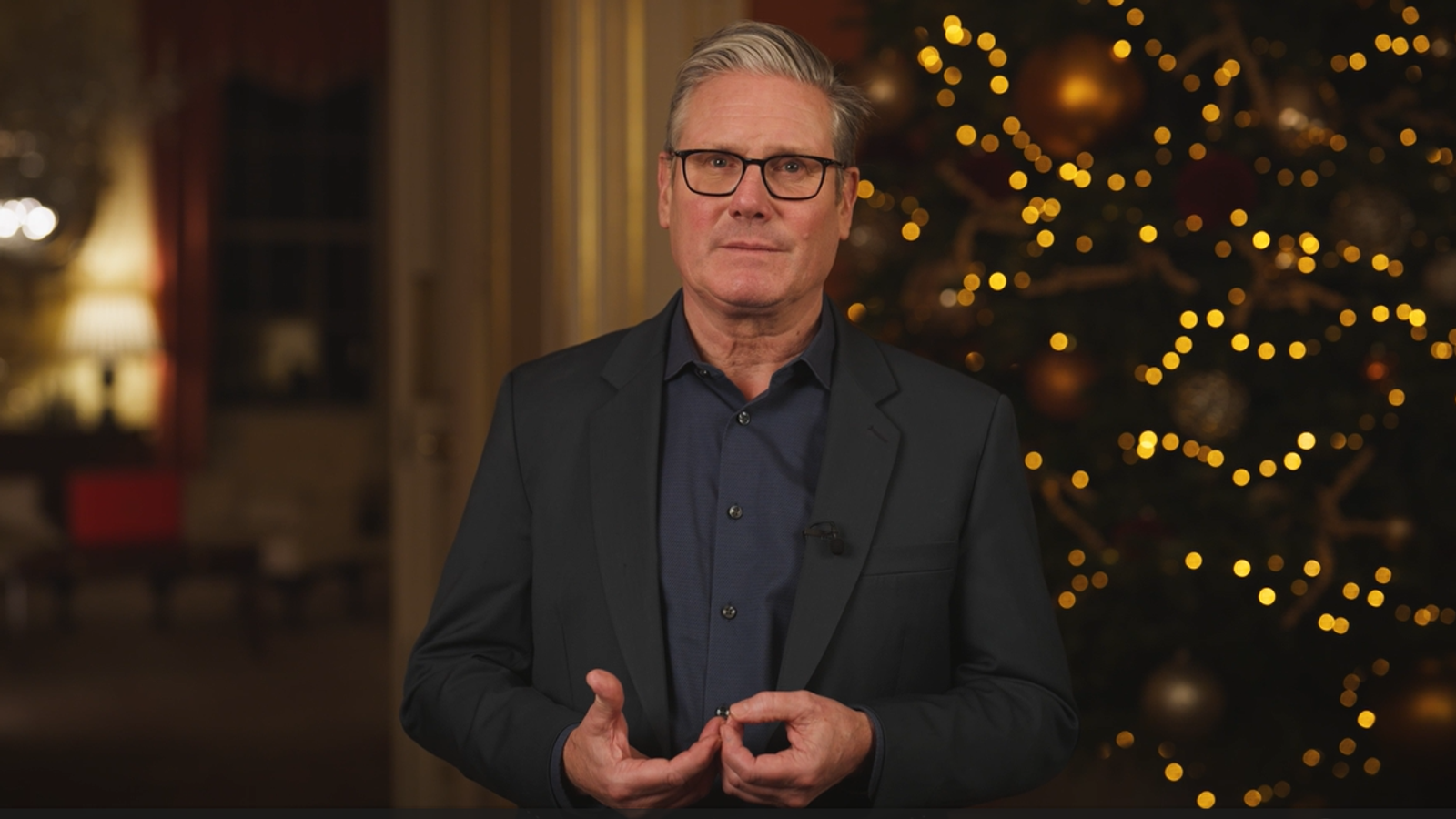
The prime minister has acknowledged Britons’ cost-of-living struggles in his Christmas message – and vowed that helping with the issue is his “priority”.
Sir Keir Starmer also urged members of the public to “each do our bit” and “reach out” to friends, relatives and neighbours during the festive period.
His message comes at the end of a difficult year for his government, with economic growth stuttering and Chancellor Rachel Reeves facing criticism over tax rises in the budget.
In a message recorded inside 10 Downing Street, Sir Keir said: “I know many across Britain are still struggling with the cost of living. Helping with that is my priority.
“But at this time of the year, which celebrates love and abundance, loss or hardship can feel even more acute.
“So call around to a neighbour. Check in on a friend or a relative who you haven’t heard from for a while. Reach out. It can make a huge difference.
“That is what Christmas is about.”
Sir Keir Starmer delivers his Christmas message from inside Downing Street. Pic: Downing Street
The prime minister thanked NHS workers along with members of the military and the emergency services who will be on duty on Christmas Day.
“Just as so many put their feet up, some truly special people will be pulling on their uniforms and heading out to work,” he said.
“Our NHS staff emergency services and the brave men and women of our armed forces, all playing their part, doing their bit to care for the nation and to keep us safe.
“Many volunteers will be out there as well. Serving food. Reaching out to help those lonely or in need.
“So on behalf of the whole country, I want to say a big thank you.
“As a nation, we should raise a glass to you this Christmas. But more than that, we should each do our bit as well.”
Read more from Sky News:
How does your Christmas compare to rest of UK? Take our quiz
The famous faces we said goodbye to this year
Conservative leader Kemi Badenoch used her Christmas message to talk about “Christian values” and thanked “everyone who has supported me during my first year as leader of the opposition”.
“It’s been the biggest challenge of my life,” she said. “But it’s also been a wonderful year. I can’t wait to get back to work next year to create a better United Kingdom.”
Liberal Democrat leader Sir Ed Davey spoke about the Christmas tree in London’s Trafalgar Square – an annual gift from Norway to thank the UK for its support during the Second World War – in his message.
While saying the tree may “look a little underwhelming” on first glance, the Liberal Democrat leader said it was a reminder of “friendship and loyalty”.
He added: “It makes me think about people standing together in tough times – whether against the Nazis in the 1940s, or right now in Ukraine.
“And yeah, it might not be perfect, but this tree in Trafalgar Square makes me think about families and friends looking out for one another right here at home.
“I can’t think of a better symbol of the Christmas spirit of generosity, love and hope. Of light in the darkness.”
-
 Sports2 years ago
Story injured on diving stop, exits Red Sox game
-
 Sports3 years ago
‘Storybook stuff’: Inside the night Bryce Harper sent the Phillies to the World Series
-
 Sports2 years ago
Game 1 of WS least-watched in recorded history
-
 Sports3 years ago
Button battles heat exhaustion in NASCAR debut
-
 Sports3 years ago
MLB Rank 2023: Ranking baseball’s top 100 players
-
Sports4 years ago
Team Europe easily wins 4th straight Laver Cup
-
 Environment3 years ago
Japan and South Korea have a lot at stake in a free and open South China Sea
-
 Environment1 year ago
Here are the best electric bikes you can buy at every price level in October 2024