

Why Tether refuses to comply with MiCA

Is Tether MiCA compliant?
The EU’s new Markets in Crypto-Assets regulation, better known as MiCA, is the first major attempt by a global economic power to create clear, region-wide rules for the crypto space, and stablecoins are a big focus.
MiCA mandates best practices. If a stablecoin is going to be traded in the EU, its issuer has to follow some stringent rules:
1. You need a license
To issue a stablecoin in Europe, you must become a fully authorized electronic money institution (EMI). That’s the same kind of license traditional fintechs need to offer e-wallets or prepaid cards. It’s not cheap and it’s not quick.
2. Most of your reserves have to sit in European banks
This is one of the most controversial parts of MiCA. If you issue a “significant” stablecoin — and Tether’s USDT certainly qualifies — at least 60% of your reserves must be held in EU-based banks. The logic is to keep the financial system safe.
3. Full transparency is non-negotiable
MiCA requires detailed, regular disclosures. Issuers have to publish a white paper and provide updates on their reserves, audits and operational changes. This level of reporting is new territory for some stablecoins, especially those that have historically avoided public scrutiny.
4. Non-compliant coins are getting delisted
If a token doesn’t comply, it won’t be tradable on regulated EU platforms. Binance, for example, has delisted USDT trading pairs for users in the European Economic Area (EEA). Other exchanges are following suit.
The European Securities and Markets Authority (ESMA) clarified that people in Europe can still hold or transfer USDT, but it can’t be offered to the public or listed on official venues.
In other words, you might still have USDT in your wallet, but good luck trying to swap it on a regulated platform.
Key reasons why Tether rejects MiCA regulations
Tether is unique in that it has explained why it wants nothing to do with MiCA regulations. The company’s leadership, especially CEO Paolo Ardoino, has been pretty vocal about what they see as serious flaws in the regulation, from financial risks to privacy concerns to the bigger picture of who stablecoins are really for.
1. The banking rule could backfire
One of MiCA’s most talked-about rules says that “significant” stablecoins — like Tether’s USDt (USDT) — must keep at least 60% of their reserves in European banks. The idea is to make stablecoins safer and more transparent. But Ardoino sees it differently.

He’s warned that this could create new problems, forcing stablecoin issuers to rely so heavily on traditional banks could make the whole system more fragile.
After all, if there’s a wave of redemptions and those banks don’t have enough liquidity to keep up, we’d witness a struggling bank and a stablecoin crisis simultaneously.
Instead, Tether prefers to keep most of its reserves in US Treasurys, assets it says are liquid, low-risk and much easier to redeem quickly if needed.
2. They don’t trust the digital euro
Tether also has a broader issue with the direction Europe is heading, especially regarding a digital euro. Ardoino has openly criticized it, raising alarms about privacy.
He has argued that a centrally controlled digital currency could be used to track how people spend their money, and even control or restrict transactions if someone falls out of favor with the system.
Privacy advocates have echoed similar concerns. While the European Central Bank insists that privacy is a top priority (with features like offline payments), Tether isn’t convinced. In their eyes, putting that much financial power in the hands of one institution is asking for trouble.
3. Tether’s users aren’t in Brussels. They’re in Brazil, Turkey and Nigeria
At the heart of it, Tether sees itself as a lifeline for people in countries dealing with inflation, unstable banking systems and limited access to dollars.
These are places like Turkey, Argentina and Nigeria, where USDT is often more useful than the local currency.
MiCA, with all its licensing hoops and reserve mandates, would require Tether to shift focus and invest heavily in meeting EU-specific standards. That’s something the company says it’s not willing to do, not at the expense of the markets it sees as most in need of financial tools like USDT.
Did you know? Turkey ranks among the top countries for cryptocurrency adoption, with 16% of its population engaged in crypto activities. This high adoption rate is largely driven by the devaluation of the Turkish lira and economic instability, prompting citizens to seek alternatives like stablecoins to preserve their purchasing power.
What happens when Tether doesn’t comply with MiCA
Tether’s decision to skip MiCA didn’t exactly fly under the radar. It’s already having real consequences, especially for exchanges and users in Europe.
Exchanges are dropping USDT
Big names like Binance and Kraken didn’t wait around. To stay on the right side of EU regulators, they’ve already delisted USDT trading pairs for users in the European Economic Area. Binance had removed them by the end of March 2025. Kraken followed close behind, removing not just USDT but also other non-compliant stablecoins like EURT and PayPal’s PYUSD.
Users are left with fewer options
If you’re in Europe and holding USDT, you’re not totally out of luck; you can still withdraw or swap it on certain platforms. But you won’t be trading it on major exchanges anymore. That’s already pushing users toward alternatives like USDC and EURC, which are fully MiCA-compliant and widely supported.
Even major crypto payment processors are pulling support, leaving users with fewer options for spending their crypto directly.
A hit to liquidity? Probably.
Pulling USDT from European exchanges could make the markets a bit shakier. Less liquidity, wider spreads and more volatility during big price moves are all on the table. Some traders will adjust quickly. Others? Not so much.
Did you know? Tether (USDT) is the most traded cryptocurrency globally, surpassing even Bitcoin in daily volume. In 2024, it facilitated over $20.6 trillion in transactions and boasts a user base exceeding 400 million worldwide.
Tether vs MiCA regulation
Tether may be out of sync with the EU, but it’s far from retreating. If anything, the company is doubling down elsewhere, looking for friendlier ground and broader horizons.
Firstly, Tether’s picked El Salvador as its new base, a country that has fully embraced crypto. After getting a digital asset service provider license, the company is setting up a real headquarters there. Ardoino and other top execs are making the move too.
Moreover, after banking over $5 billion in profits in early 2024, Tether is putting its capital to work:
- AI: Through its venture arm, Tether Evo, the company has picked up stakes in firms like Northern Data Group and Blackrock Neurotech. Tether has also launched Tether AI, an open-source, decentralized AI platform designed to operate on any device without centralized servers or API keys. The goal is to use AI to boost operations and maybe build some new tools along the way.
- Infrastructure and AgTech: Tether invested in Adecoagro, a company focused on sustainable farming and renewable energy. It’s a surprising move, but it fits Tether’s bigger strategy of backing real-world, resilient systems.
- Media and beyond: There are also signs Tether wants a footprint in content and communications, signaling it’s thinking far beyond crypto alone.
Tether’s MiCA exit highlights crypto’s global regulatory chaos
Tether walking away from MiCA is a snapshot of a much bigger issue in crypto: How hard it is to build a business in a world where every jurisdiction plays by its own rulebook.
The classic game of regulatory arbitrage
This isn’t Tether’s first rodeo when it comes to navigating regulations. Like many crypto companies, they’ve mastered the art of regulatory arbitrage, finding the friendliest jurisdiction and setting up shop there.
Europe brings in strict rules? Fine, Tether sets up in El Salvador, where crypto is welcomed with open arms.
However, it does raise questions. If big players can simply move jurisdictions to dodge regulations, how effective are those rules in the first place? And does that leave retail users protected or just further confused?
A crypto world that’s all over the map
The bigger issue is that the global regulatory landscape is incredibly fragmented. Europe wants full compliance, transparency and reserve mandates. The US is still sending mixed signals. Asia is split; Hong Kong is pro-crypto, while China stays cold.
Hong Kong has also passed the Stablecoin Bill to license fiat-backed issuers and boost its Web3 ambitions. Meanwhile, Latin America is embracing crypto as a tool for financial access.
For companies, it’s a mess. You can’t build for one global market; you must constantly adapt, restructure or pull out entirely. For users, it creates massive gaps in access. A coin available in one country might be inaccessible in another just because of local policy.
As a final thought: Tether’s resistance to MiCA seems to be more than just a protest against red tape.
It’s making a bet that crypto’s future will be shaped outside Brussels, not inside it.


Representatives of the Bitcoin Policy Institute (BPI), a nonprofit Bitcoin advocacy organization, warned that US lawmakers have not included a de minimis tax exemption for Bitcoin transactions below a certain threshold.
“De Minimis tax legislation may be limited to only stablecoins, leaving everyday Bitcoin transactions without an exemption,” Conner Brown, BPI’s head of strategy, said on X, adding that the decision to exclude Bitcoin (BTC) is a “severe mistake.”
In July, Wyoming Senator Cynthia Lummis introduced a bill proposing a de minimis tax exemption for crypto transactions of $300 or less, with a $5,000 annual limit on tax-free transactions and sales.
The bill proposal also included tax exemptions for digital assets used for charitable donations and tax deferment for crypto earned through mining proof-of-work (PoW) protocols or staking to secure blockchain networks.
Allowing a tax exemption for small Bitcoin transactions would increase its use as a medium of exchange rather than just as a store of value asset, allowing a new financial system built on a Bitcoin standard, BTC advocates say.
The discussion around de minimis tax exemptions has also raised questions about whether such relief should apply to stablecoins, which are designed to maintain a stable value.
“Why would you even need a De Minimis tax exemption for stablecoins,” Marty Bent, founder of media company Truth for The Commoner (TFTC), wrote on X. “They don’t change in value. This is nonsensical.”
Cointelegraph reached out to BPI about the proposed legislation, but had not received a response at time of publication.
Related: Japan’s new crypto tax could wake ‘sleeping giant’ of retail investors
Bitcoin is gaining value, but it isn’t being used as peer-to-peer electronic cash
The Bitcoin white paper, authored by its pseudonymous creator Satoshi Nakamoto in 2019, describes Bitcoin as a “peer-to-peer electronic cash system.”
However, relatively high transaction fees, average block times of about 10 minutes, and capital gains taxes on Bitcoin stifle BTC’s use as a payment method for goods and services.
Many Bitcoin investors choose to hold BTC for the long term, sometimes borrowing fiat currency against their BTC holdings to pay expenses and fund everyday purchases.

The Bitcoin Lightning Network is a second-layer protocol designed for BTC payments, which works by locking a specific amount of BTC in a payment channel between two or more people.
Users connected through a payment channel can conduct multiple transactions offchain, with only the final net balance recorded on the Bitcoin ledger for settlement once the channel is closed.
This makes Bitcoin transactions faster and cheaper, as the users in the payment channel do not have to wait for new blocks to be mined or pay a network fee for each transaction between parties in the channel.
Magazine: The one thing these 6 global crypto hubs all have in common…


A US court is once again being asked to weigh in on maximal extractable value practices after a judge allowed new evidence to be added to a class-action lawsuit tied to a memecoin platform.
The judge granted a motion to amend and refile to include new evidence a class-action lawsuit against memecoin launch platform Pump.fun, the maximal extractable value (MEV) infrastructure company Jito Labs, the Solana Foundation, which is the nonprofit organization behind the Solana ecosystem, and others.
The motion said over 5,000 pieces of evidence in the form of internal chat logs were submitted by a “confidential informant” in September that were previously unavailable. The filing said:
“Plaintiffs assert that the logs contain contemporaneous discussions among Pump.fun, Solana Labs, Jito Labs, and others concerning the alleged scheme, and that they materially clarify the enterprise’s management, coordination, and communications.”
The lawsuit, originally filed in July, alleges that the Pump.fun platform deliberately misled retail investors by marketing memecoin launches as “fair,” but engaged in a scheme with Solana validators to front-run retail participants through maximal extractable value (MEV).
Maximal extractable value is a technique that involves reordering transactions within a block to maximize profit for MEV arbitrageurs and validators.
The plaintiffs allege that Pump.fun used MEV techniques to give insiders preferential access to new tokens at a low value, which were then pumped and dumped onto retail participants, who were used as exit liquidity by insiders.
Cointelegraph reached out to Burwick Law, the legal firm representing the plaintiffs, as well as Pump.fun, Jito Labs and the Solana Foundation, but did not receive any responses by the time of publication.

The lawsuit could set a precedent for MEV cases in the United States, as the ethics of the practice continue to be debated within the crypto industry and legal bodies struggle to define proper regulations about the highly technical subject.
Related: Pump.fun co-founder denies $436M cash out, claims it was ‘treasury management’
The MEV bot trial leaves questions unanswered
Anton and James Peraire-Bueno, the brothers accused of using a MEV trading bot to make millions of dollars in profit, went to trial in November in the US.
Prosecutors argued that the brothers tricked victims out of their funds, but defense attorneys said that they were executing a legitimate trading strategy and did not do anything illegal.
The jury struggled to reach a verdict in the case, and several jurors requested additional information to clarify the complexities surrounding the technical specifics of blockchain technology.
The case ended in a mistrial after the jury was deadlocked and failed to reach a verdict, highlighting the complexity of adjudicating legal disputes surrounding the application of nascent financial technology.
Magazine: Meet the onchain crypto detectives fighting crime better than the cops
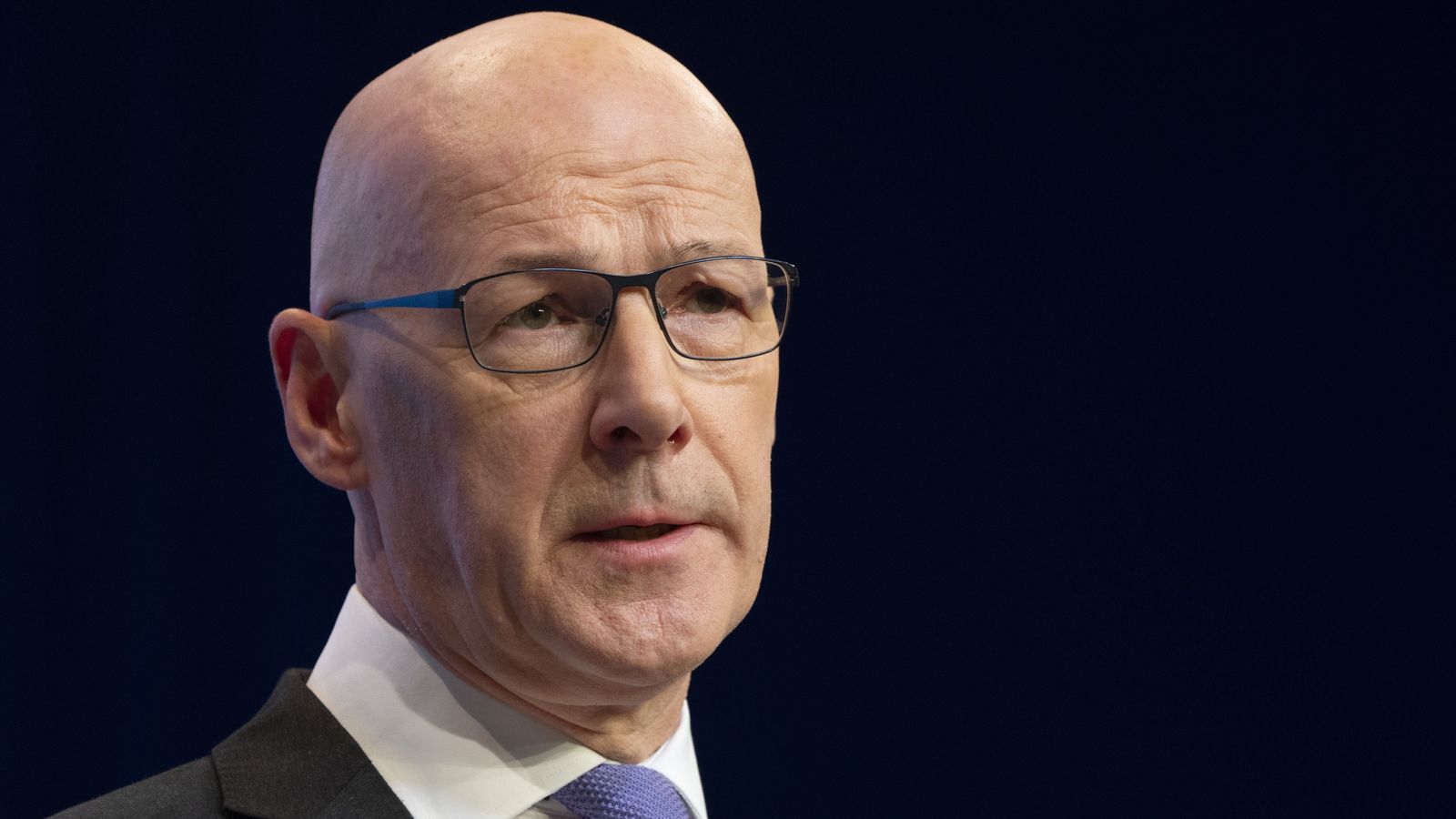

Reports a female MSP had a secret recording device planted in her office by a member of her own staff are “completely and utterly unacceptable”, SNP leader John Swinney has said.
Scottish parliament officials are investigating the alleged bugging incident by a man, which is said to have taken place in 2023 at Holyrood.
The Scotsman newspaper reported the staffer is still involved with the SNP and moved on to work with a male MP after the issue came to light.
Sky News has yet to independently verify the details, but one senior party source with knowledge of events has said it is “100% true”.
The source alleges “the SNP did nothing; indeed he simply got moved and continued to be promoted by very senior members of executive”.
It is suggested the female MSP, who has not been publicly named, is liked, rated and respected by her colleagues.
The Scottish parliament building in Edinburgh. Pic: PA
First Minister Mr Swinney was stopped by reporters in Edinburgh on Thursday where he said he was “not familiar with all of the details… but that type of conduct is completely and utterly unacceptable”.
“Individuals are entitled to operate in an open and transparent environment that shouldn’t be subjected to that kind of behaviour,” he concluded.
Read more from Sky News:
Millions could see council elections delayed again
Bank of England rate cut to 3.75% following fall in inflation
MPs and MSPs employ staff directly, rather than the political party.
Sky sources confirmed the victims of the incident had to get counselling in the aftermath before suggesting the SNP “definitely has a woman problem”.
The source claims it is “not a one-off incident”, adding: “Women are habitually treated differently.”
An SNP spokesperson said: “The SNP has no involvement in the employment processes of parliamentarians. That is a confidential matter between elected members, employees, and Scottish parliament authorities.
“The reports outline a very traumatic situation for those involved and nobody should ever have to experience fear or harassment for doing their job.”
Scottish Labour deputy leader Jackie Baillie said: “These jaw-dropping revelations pose serious questions for the SNP top brass.
“It appears a grave breach of privacy and potentially criminal behaviour has been swept under the carpet by the SNP.
“Once again it looks like the SNP chose to close ranks and protect their own, rather than dealing with serious misconduct head-on.”
A spokesperson for the Scottish parliament said: “Each MSP is an employer in their own right and is responsible for managing staff welfare issues and employment disputes.
“Complaints about staff conduct are investigated by an independent adviser, and it is for the member to act on their findings accordingly.
“As a matter of standard practice, we do not comment upon or confirm any individual cases.”
-
 Sports2 years ago
Story injured on diving stop, exits Red Sox game
-
 Sports3 years ago
‘Storybook stuff’: Inside the night Bryce Harper sent the Phillies to the World Series
-
 Sports2 years ago
Game 1 of WS least-watched in recorded history
-
 Sports3 years ago
Button battles heat exhaustion in NASCAR debut
-
 Sports3 years ago
MLB Rank 2023: Ranking baseball’s top 100 players
-
Sports4 years ago
Team Europe easily wins 4th straight Laver Cup
-
 Environment3 years ago
Japan and South Korea have a lot at stake in a free and open South China Sea
-
 Environment1 year ago
Here are the best electric bikes you can buy at every price level in October 2024