

A prototype Porsche Cayenne EV just beat every gas SUV ever in a hillclimb

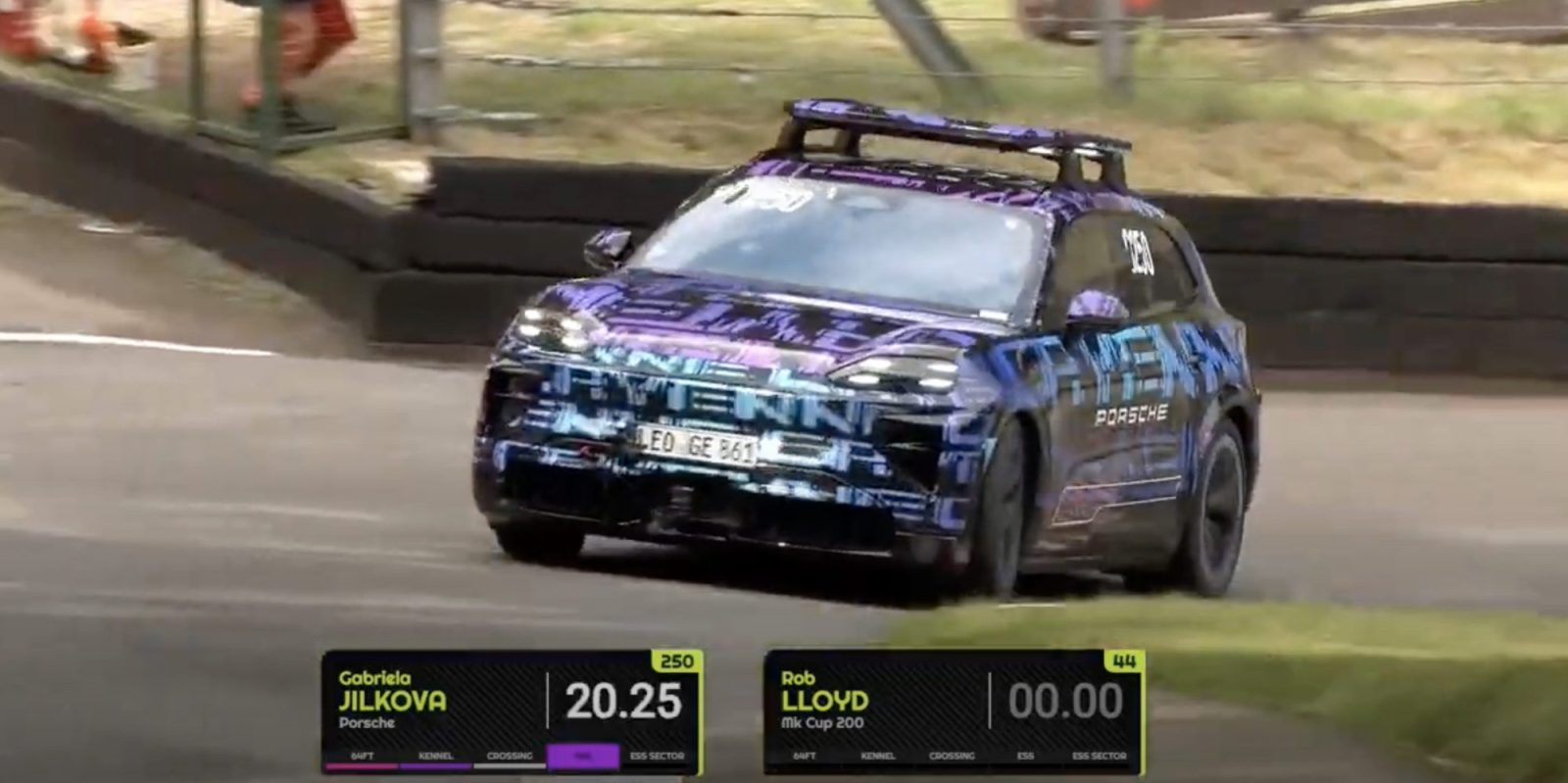
Porsche is preparing to release its Cayenne EV in the next year or so, but that didn’t stop it from taking the car out in secret to a hillclimb meet, where it utterly destroyed the previous course record previously held by a 12-cylinder Bentley Bentayga.
Hillclimbing is a specialized sort of racing where cars start at the bottom of a hill and then race to the top of it. And it’s a type of racing where electric cars do quite well because of their high amounts of instant torque and fast low-end acceleration.
We’ve covered some other hillclimbs before, such as the famous Pike’s Peak hillclimb, where EVs shattered records last year, and where Ford is running an unrecognizably modified Mach-E this year in just a couple weeks. EVs do well here due to the race’s high altitude, which leads to inefficient combustion from gas-powered cars due to low oxygen in the air, which EVs don’t have to worry about.
And hillclimbing is popular in the UK, where courses are much shorter than the brutal 12.42-mile “race to the clouds” at Pike’s Peak. Most UK courses are more like a mile long, give or take.
One of the most famous in the UK is Goodwood hill climb where an electric “fan car” holds the overall course record and where Ford competed (and won) with its ridiculous 1,400hp electric van.
Another course, part of the British Hill Climb Championship, is Shelsley Walsh, where this last weekend’s news happened. The race was first contested in 1905, with a length of 1,000 yards (910m, .57mi).
So, it’s just a sprint, and it’s a sprint that a Cayenne EV just absolutely destroyed every other car in its class on – even though the car isn’t out yet. It’s expected to get a full unveil later this year, but that didn’t stop Porsche from flexing its muscles ahead of release.
Porsche took a prototype version of its upcoming EV out to Shelsley Walsh, where it was looking to beat a record previously set by the Bentley Bentayga W12, an absolutely bonkers ultra-luxe SUV with a massive 12 cylinder, 6 liter twin-turbo engine capable of producing 600hp.
But that gigantic engine proved to be no challenge for the Cayenne, which crushed the antiquated dino-burner’s record by several seconds.
On such a short lap, records are often set by tenths or hundreds of a second, but the Cayenne EV beat the Bentayga’s 35.53 second record by more than four whole seconds, setting a new time of 31.28. Watch it below (the Cayenne EV’s part starts at 2:36:30, if the deep-link doesnt work):
(*Porsche told us those engine sounds are from another vehicle near the microphone, not from the Cayenne EV itself)
In the video, the Cayenne is extremely well behaved up the course, exhibiting very little body roll for such a large vehicle. This is owing to the low center of gravity characteristic of many EVs, due to the weight of the car being in the battery at the bottom of the vehicle, and to Porsche’s active suspension.
And on such a short run, the instant acceleration of the Porsche gave it a lasting advantage over the hulking Bentayga W12, allowing it to crush the previous record.
The Cayenne EV was driven by Gabriela Jilkova, Porsche’s development driver for its Formula E team. It even beat the production electric car record which was previously held by another Porsche, the Taycan Turbo. That record was 31.43 seconds, so the Cayenne was just able to pip it.
It isn’t, however, the fastest electric vehicle up the hill – that’s currently a 30.46, set in 2018 by Mitch Evans in a Jaguar Formula E car (from an earlier generation – surely the new Gen 3 EVO cars would be even quicker).
As of now, we still have no final numbers on what sort of specs the Porsche Cayenne will have, as the vehicle is still in prototype form and hasn’t gone through homologation. So, Porsche is still figuring it out like the rest of us, but from these results, it looks like they’ve got something good on their hands.
Electrek’s Take
Now this is just one race, and not a particularly famously-contested one. There are surely cars that haven’t run this hill that would beat the Cayenne up it. But 4 seconds is a huge record on such a short course, and is certainly a shot across the bow, such that we can’t wait to see where else Porsche takes this thing and what other gas SUVs it might be able to embarrass.
When I reviewed the 576-hp Macan EV Turbo, I found it to be absurdly, unnecessarily quick.
It also handled very well for a large vehicle (and it is indeed large – almost twice the weight of my own EV, a Tesla Roadster). An SUV is still not a sportscar, but I had no particular misgivings when driving it… except perhaps that maybe it was too powerful, and that I preferred the 4S since I just never knew when I would need the amount of power the Turbo could put down.
So I’m not surprised that its bigger sibling, the Cayenne EV, would also perform extremely well here. Porsche knows how to make a car and how to make it perform well, and somehow they’ve even brought that magic to a vehicle as big as the Cayenne EV.
So, I’m looking forward to a time that I get to bring the Cayenne EV to a Porsche meetup, just like I did with the Macan, and have another dad tell his child “you wanna see the fastest car here? it’s that one.” And it’ll have the records to prove it.
Charge your electric vehicle at home using rooftop solar panels. Find a reliable and competitively priced solar installer near you on EnergySage, for free. They have pre-vetted installers competing for your business, ensuring high-quality solutions and 20-30% savings. It’s free, with no sales calls until you choose an installer. Compare personalized solar quotes online and receive guidance from unbiased Energy Advisers. Get started here. – ad*
FTC: We use income earning auto affiliate links. More.

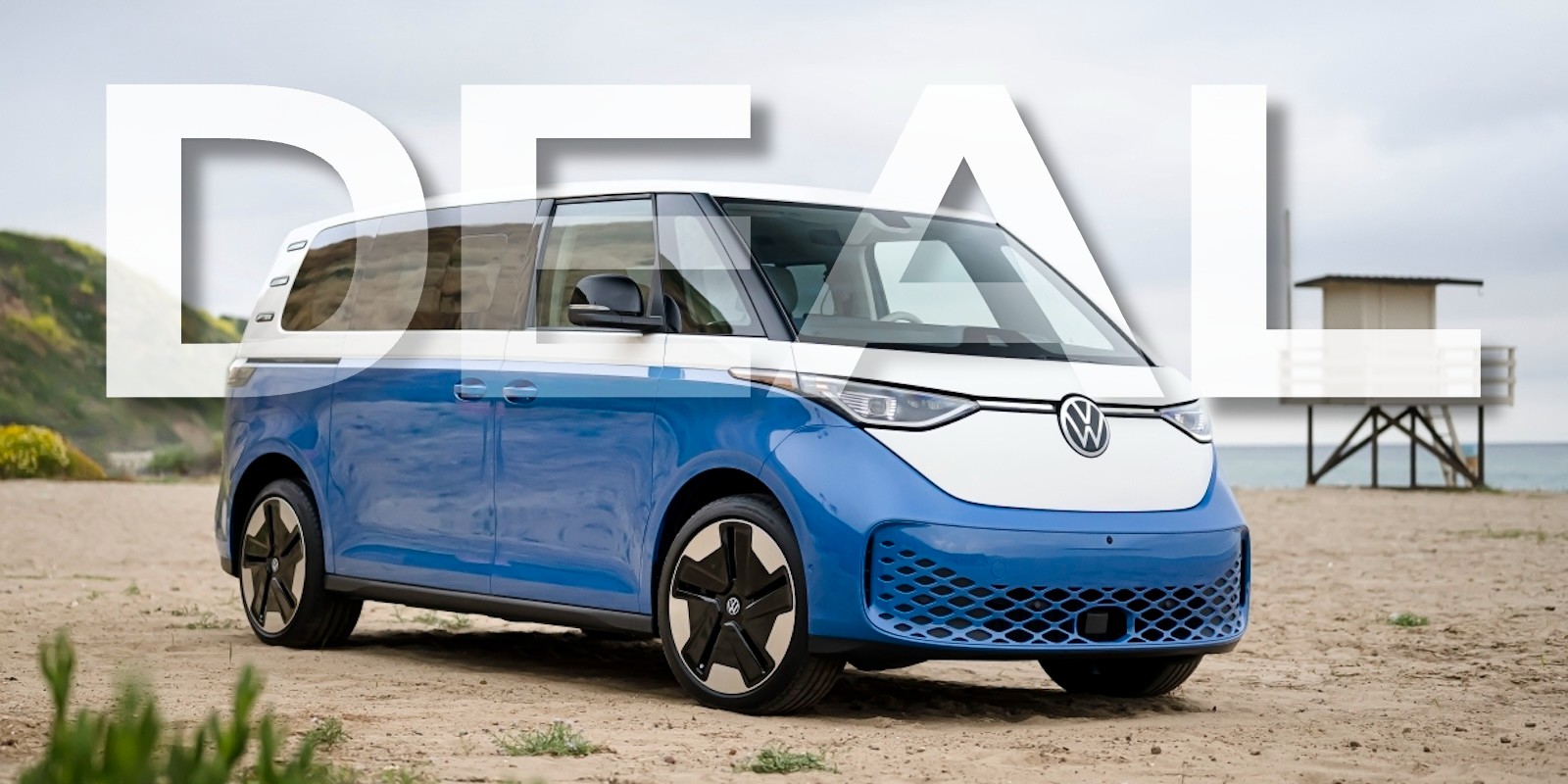
VW’s retro-tastic minivan hasn’t been the sales success the company might have wanted, and a lot of that has to do with the van’s sky high price tag. Now, VW is asking: will a $10,000 discount be enough to create some buzz for the ID.Buzz?
Volkswagen is offering $7,500 in Retail Customer Bonus cash this month – up from the $2,500 the company offered its Black Friday customers – that, along with an additional $2,500 unadvertised dealer cash incentive that CarsDirect is reporting absolutely, definitely exists, adds up to a stout $10,000 total discount on the all-electric VW ID.Buzz … and that’s before you start haggling with your dealer over the MSRP.
It’s a lot

As much as I like the the Volkswagen ID.Buzz, its starting MSRP around $61,545 (incl. destination) puts it at nearly twice what you’d probably expect a minivan to cost if the last time you shopped for one was at a Dodge store. Still, that hefty price tag is some $20,000 higher than the baseline Toyota Sienna hybrid or Honda Odyssey.
That 50% higher price is a lot to swallow even if you do buy into the nostalgia. Still, the ID.Buzz is capable enough, and with ~230 miles of range and 282 hp on offer from its battery/electric motor combo – plus Supercharger access – it’s at least able to keep up with the minivan competition.
So, while that $10,000 discount isn’t going to turn the ID.Buzz into the second coming of the affordable, family-hauling Caravan, it does bring VW’s electric people-mover a little closer to earth. In fact, with a $50K price tag, it’s right in line with the average transaction price of a new vehicles. So, if nothing else, that reduced price could finally gives electric minivan buyers something to buzz about (I tried so hard to work that in, you guys).
If you’ve been shopping for a family-hauler and dig the retro vibe over something like the (excellent) Kia EV9, click through the link below and set up a test drive at your local VW dealer.
SOURCE: CarsDirect; images via VW.

If you’re considering going solar, it’s always a good idea to get quotes from a few installers. To make sure you find a trusted, reliable solar installer near you that offers competitive pricing, check out EnergySage, a free service that makes it easy for you to go solar. It has hundreds of pre-vetted solar installers competing for your business, ensuring you get high-quality solutions and save 20-30% compared to going it alone. Plus, it’s free to use, and you won’t get sales calls until you select an installer and share your phone number with them.
Your personalized solar quotes are easy to compare online and you’ll get access to unbiased Energy Advisors to help you every step of the way. Get started here.


FTC: We use income earning auto affiliate links. More.

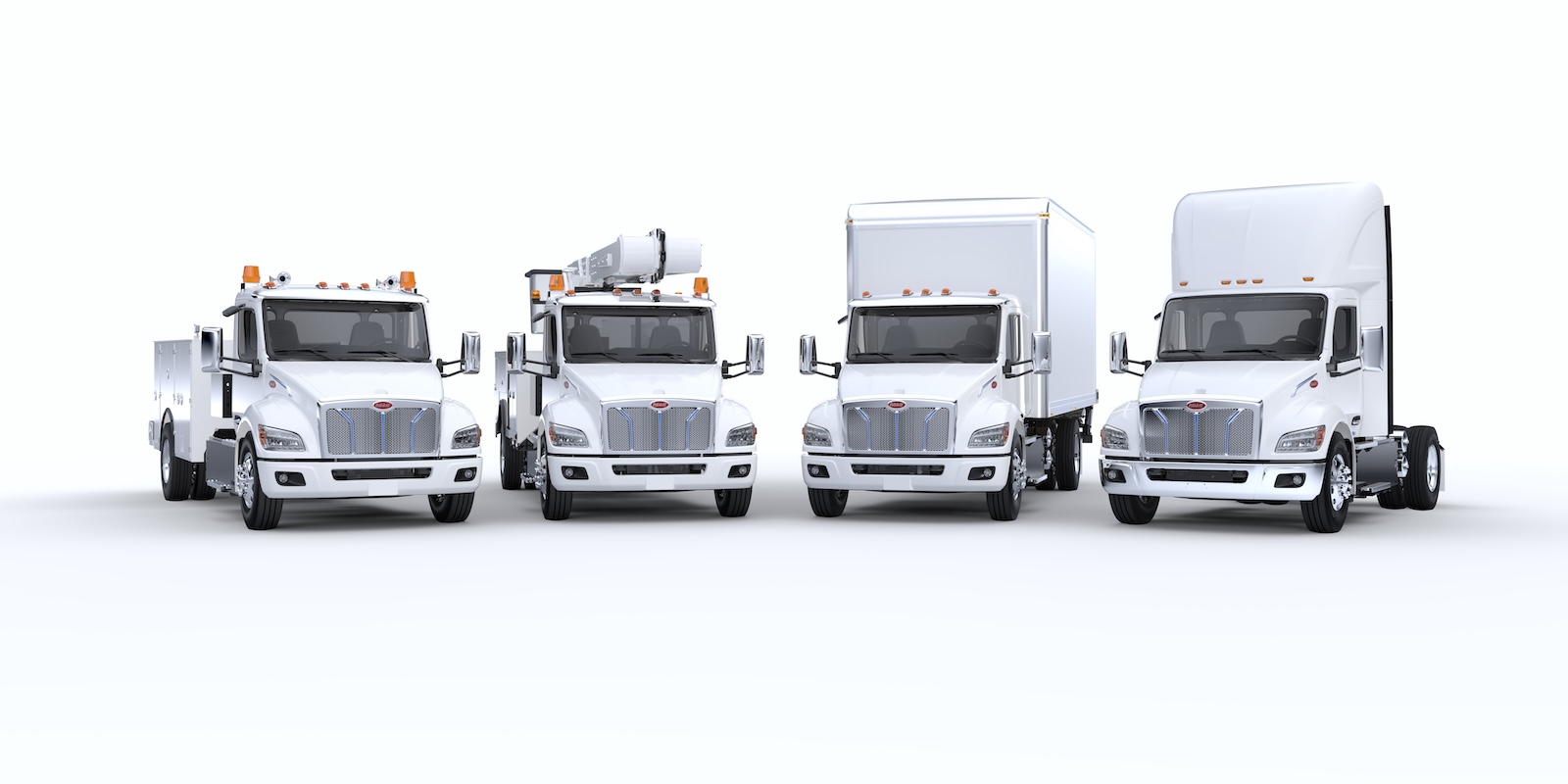
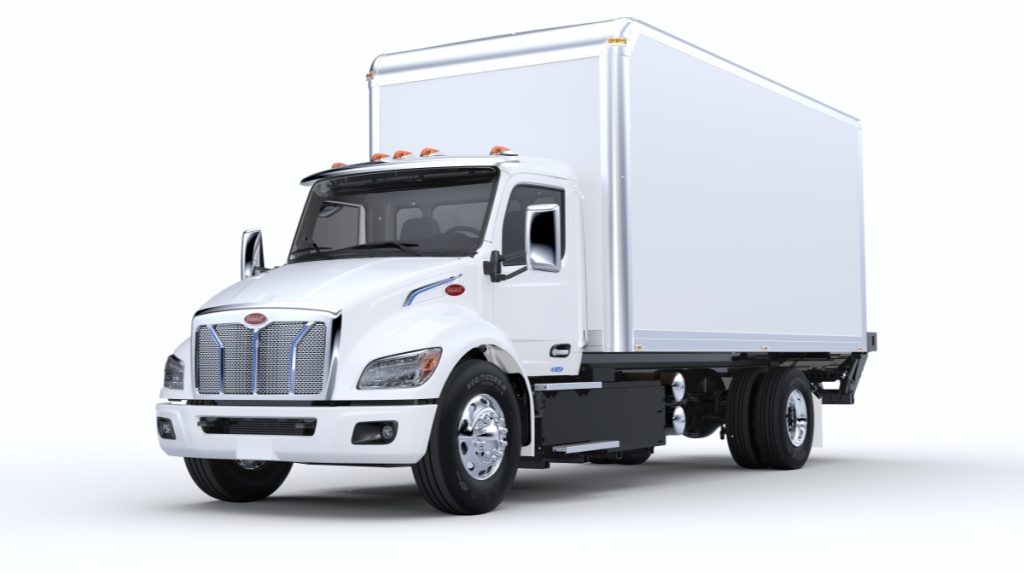
Peterbilt has jumped into the MD truck ring with the launch three new medium-duty electric trucks that deliver zero-emissions power, ultra-fast 350 kW charging, and proven, versatile platforms for delivery, utility service, and vocational upfitting.
The new Peterbilt 536EV, 537EV, and 548EV medium-duty trucks slot into the same versatile medium-duty segments the company’s fleets already know, but swap diesel power for latest PACCAR ePowertrain, with up to 605 hp and 1,850 lb-ft of torque available at 0 rpm. That big motor draws power from a variety of LFP battery packs and be fitted with ePTO options rated for either 25 kW (two-battery option) or 150 kW (three-battery option), making them suitable for that can be sized for daily delivery routes, urban utility work, and municipal fleets looking to cut both emissions and maintenance costs.
What’s more, the new Peterbilt’s flexible architecture allows for integration with existing PACCAR suspension bits to make 4×2 and 6×4 configurations, and any wheelbase of 163 inches or longer, and up to 82,000 lbs. gross combined weight ratings possible.
“[The new trucks are] optimized for the demands of the medium duty segment, the next generation of Peterbilt electric vehicles deliver excellent efficiency, rapid charging and versatile configurations elevating customer productivity across a wide range of applications,” said Erik Johnson, Peterbilt assistant general manager, Sales & Marketing.
In addition to all those goodies, the PACCAR EV tech continues to be top-notch, with the previously-mentioned 350 kW charging, regenerative braking, and industry-leading ergonomics.
Peterbilt’s new MDEVs ship with a blue accented crown and grille for a distinctive exterior look, as well as EV-exclusive panels on the side of the hood. The interior design features laser-etched trim panels on the EV-exclusive Magneto Gray interior, just in case the driver in the quiet, smooth, and stink-free cabin forgets they’re in an electric truck.
Electrek’s Take
Ignore the headlines. The death of the commercial EV market simply hasn’t happened, and won’t happen any time soon.
If you believe the engineers and analysts at MAN Trucks and Orange EV (and, you should), an EV like this can pay for itself in reduced fuel and maintenance costs even without incentives, then you should already know what I’m about to say: the future of trucking is 100% electric.
SOURCE | IMAGES: PACCAR.
If you’re considering going solar, it’s always a good idea to get quotes from a few installers. To make sure you find a trusted, reliable solar installer near you that offers competitive pricing, check out EnergySage, a free service that makes it easy for you to go solar. It has hundreds of pre-vetted solar installers competing for your business, ensuring you get high-quality solutions and save 20-30% compared to going it alone. Plus, it’s free to use, and you won’t get sales calls until you select an installer and share your phone number with them.
Your personalized solar quotes are easy to compare online and you’ll get access to unbiased Energy Advisors to help you every step of the way. Get started here.
FTC: We use income earning auto affiliate links. More.

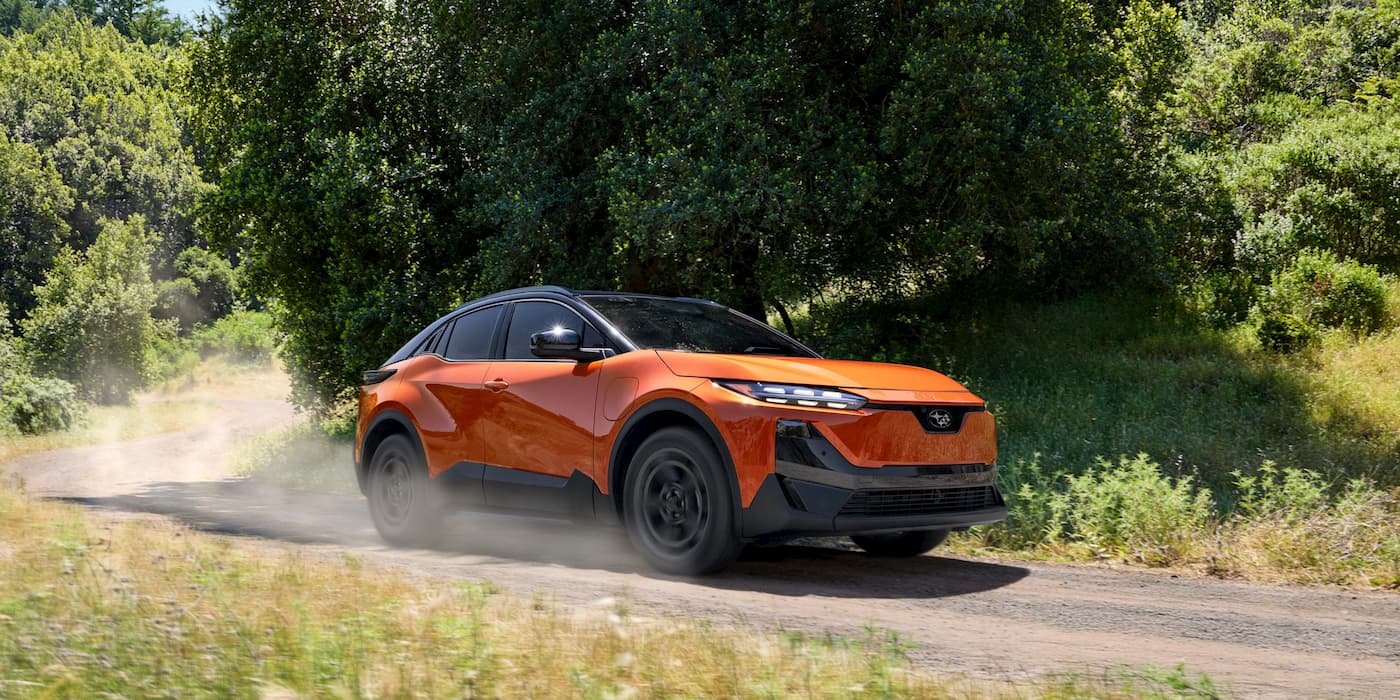
Subaru’s smaller, more affordable Uncharted EV will be among the few electric vehicles with a starting price of under $35,000.
2026 Subaru Uncharted EV prices and range by trim
The 2026 Subaru Uncharted EV will join the Nissan LEAF, Toyota bZ, Hyundai IONIQ 5, and Chevy Equinox as one of the few new EVs on sale in the US for under $35,000.
It will be the most affordable electric vehicle in Subaru’s lineup, sitting below the Solterra and Trailseeker SUVs, starting at just $34,995.
The Uncharted will be available in three trims: Premium FWD, Sport, and GT. Subaru said the entry-level Uncharted Premium FWD variant will be “offered in limited numbers.” It draws power from a single 221 hp electric motor and 74.4 kWh battery pack, providing over 300 miles of range.
All trims use the same 74.7 kWh battery pack, but the Sport and GT models feature Subaru’s Symmetrical AWD, which slightly reduces driving range.
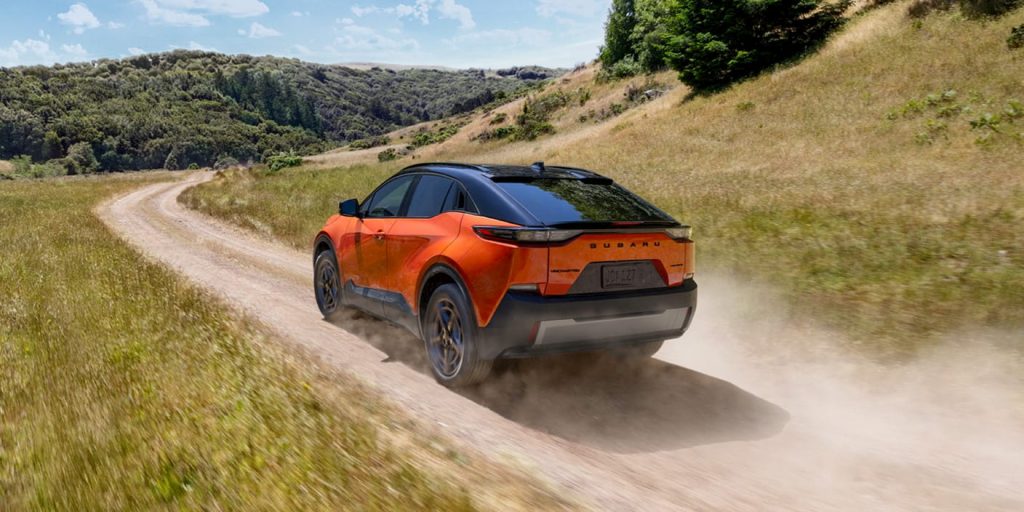
The Sport and GT variants deliver 285 miles and 270 miles of range, respectively. The AWD system packs a combined 338 hp, which Subaru boasted “is more than the Hyundai Kona EV and Kia Niro EV.”
Like the new 2026 Trailseeker and Solterra, the Uncharted EV has a battery preconditioning system that boosts charging performance in cold weather. With charging speeds of up to 150 kW, the electric SUV can recharge from 10% to 80% in around 28 minutes.
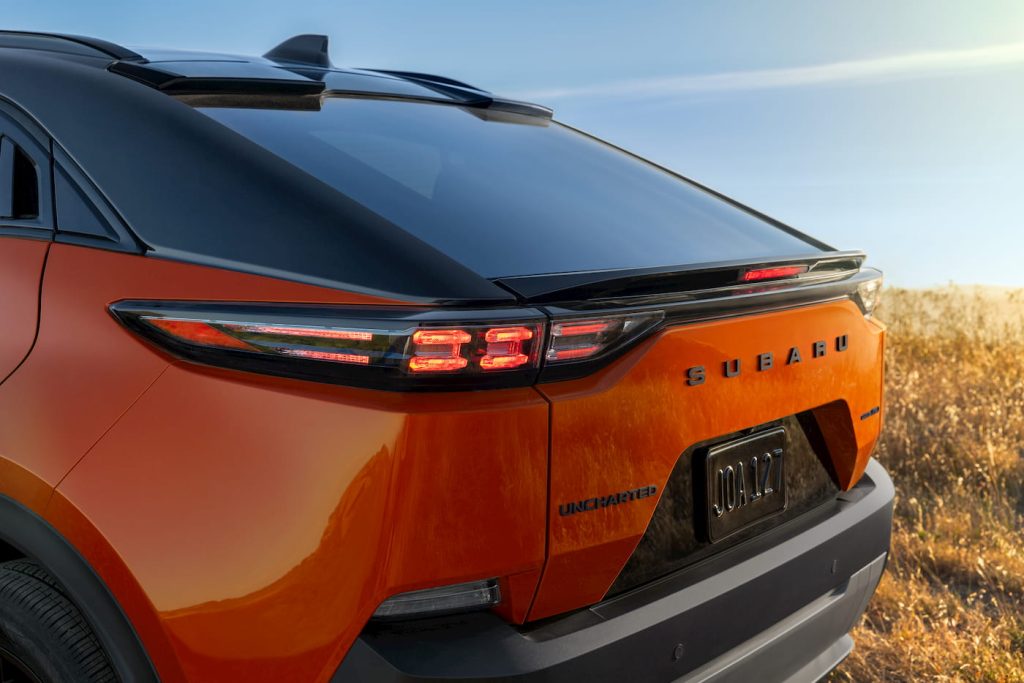
All 2026 Subaru Uncharted EV models will feature a built-in NACS port, enabling access to over 25,000 Tesla Superchargers across the US.
Although the Uncharted is nearly 7″ shorter than the Solterra, it still offers more than 25 cubic feet of cargo space behind the second row.
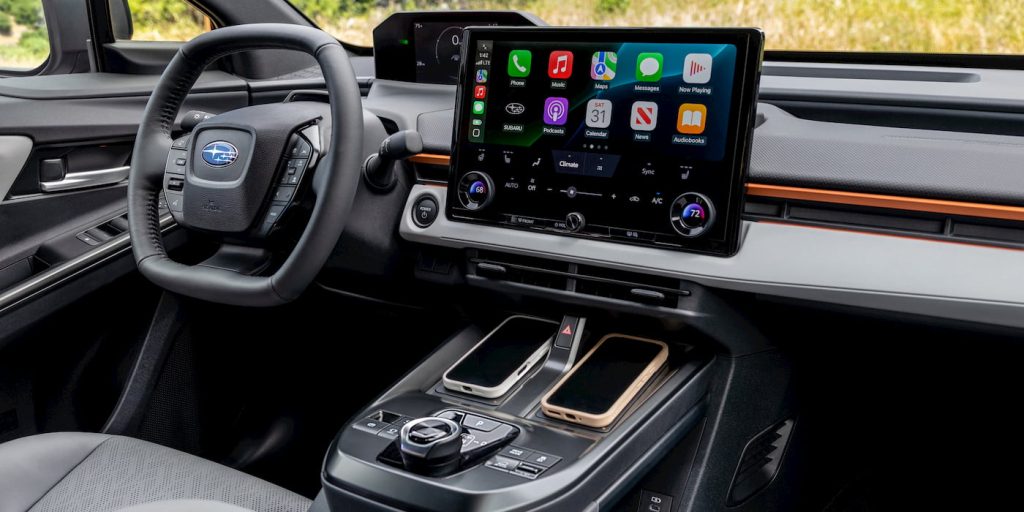
The interior features the brand’s updated design with a 14″ Subaru Multimedia System that includes wireless Apple CarPlay and Android Auto.
Starting at $34,995, the entry-level Premium FWD trim includes EyeSight driver-assist features such as Pre-Collision Braking, Front Cross Traffic Alert, Blind Spot Monitors, Lane Departure Alert, Emergency Stop Assist, Advanced Adaptive Cruise Control, and a distraction mitigation system.
| 2026 Subaru Uncharted EV trim | Starting Price* |
| Uncharted Premium FWD | $34,995 |
| Uncharted Sport | $39,795 |
| Uncharted GT | $43,795 |
Eco and Snow drive modes are standard, plus an All-Weather Package is included with heated front seats, heated power exterior mirrors, and windshield wiper de-icer.
Upgrading to the Sport and GT variants, starting at $39,795 and $43,795, respectively, adds an uprated powertrain and Subaru Symmetrical All-Wheel Drive.
The 2026 Subaru Uncharted EV is expected to begin arriving at dealerships across the US in early 2026. It will join the new 2026 Trailseeker and Solterra as the lowest-priced EV in Subaru’s lineup.
With the new Uncharted and Trailseeker SUVs coming soon, Subaru is offering closeout prices on 2026 Solterra models with 0% APR financing on all trims and leases as low as $299 a month. If you’re looking to test drive one for yourself, you can use our link to find Subaru Solterra models in your area.
FTC: We use income earning auto affiliate links. More.
-
 Sports2 years ago
Story injured on diving stop, exits Red Sox game
-
 Sports3 years ago
‘Storybook stuff’: Inside the night Bryce Harper sent the Phillies to the World Series
-
 Sports2 years ago
Game 1 of WS least-watched in recorded history
-
 Sports3 years ago
Button battles heat exhaustion in NASCAR debut
-
 Sports3 years ago
MLB Rank 2023: Ranking baseball’s top 100 players
-
Sports4 years ago
Team Europe easily wins 4th straight Laver Cup
-
 Environment3 years ago
Japan and South Korea have a lot at stake in a free and open South China Sea
-
 Environment1 year ago
Here are the best electric bikes you can buy at every price level in October 2024