

Flawed data used repeatedly to dismiss claims about ‘Asian grooming gangs’, Baroness Casey finds

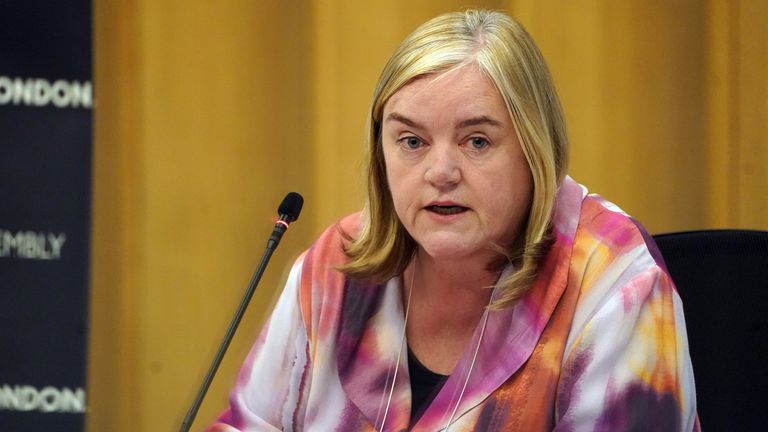
Flawed data has been used repeatedly to dismiss claims about “Asian grooming gangs”, Baroness Louise Casey has said in a new report, as she called for a new national inquiry.
The government has accepted her recommendations to introduce compulsory collection of ethnicity and nationality data for all suspects in grooming cases, and for a review of police records to launch new criminal investigations into historic child sexual exploitation cases.
Politics latest: Yvette Cooper reveals details of grooming gangs report
Baroness Louise Casey carried out the review. Pic: PA
The crossbench peer has produced an audit of sexual abuse carried out by grooming gangs in England and Wales, after she was asked by the prime minister to review new and existing data, including the ethnicity and demographics of these gangs.
In her report, she has warned authorities that children need to be seen “as children” and called for a tightening of the laws around the age of consent so that any penetrative sexual activity with a child under 16 is classified as rape. This is “to reduce uncertainty which adults can exploit to avoid or reduce the punishments that should be imposed for their crimes”, she added.
Baroness Casey said: “Despite the age of consent being 16, we have found too many examples of child sexual exploitation criminal cases being dropped or downgraded from rape to lesser charges where a 13 to 15-year-old had been ‘in love with’ or ‘had consented to’ sex with the perpetrator.”

Grooming gangs victim speaks out
The peer has called for a nationwide probe into the exploitation of children by gangs of men.
She has not recommended another over-arching inquiry of the kind conducted by Professor Alexis Jay, and suggests the national probe should be time-limited.
The national inquiry will direct local investigations and hold institutions to account for past failures.
Home Secretary Yvette Cooper said the inquiry’s “purpose is to challenge what the audit describes as continued denial, resistance and legal wrangling among local agencies”.
On the issue of ethnicity, Baroness Casey said police data was not sufficient to draw conclusions as it had been “shied away from”, and is still not recorded for two-thirds of perpetrators.
‘Flawed data’
However, having examined local data in three police force areas, she found “disproportionate numbers of men from Asian ethnic backgrounds amongst suspects for group-based child sexual exploitation, as well as in the significant number of perpetrators of Asian ethnicity identified in local reviews and high-profile child sexual exploitation prosecutions across the country, to at least warrant further examination”.
She added: “Despite reviews, reports and inquiries raising questions about men from Asian or Pakistani backgrounds grooming and sexually exploiting young white girls, the system has consistently failed to fully acknowledge this or collect accurate data so it can be examined effectively.
“Instead, flawed data is used repeatedly to dismiss claims about ‘Asian grooming gangs’ as sensationalised, biased or untrue.
“This does a disservice to victims and indeed all law-abiding people in Asian communities and plays into the hands of those who want to exploit it to sow division.”
Read more:
Officials tried to cover up grooming scandal, says Cummings
Why many victims welcome national inquiry into grooming gangs
Grooming gangs scandal timeline

From January: Grooming gangs: What happened?
The baroness hit out at the failure of policing data and intelligence for having multiple systems which do not communicate with each other.
She also criticised “an ambivalent attitude to adolescent girls both in society and in the culture of many organisations”, too often judging them as adults.
‘Deep-rooted failure’
Responding to Baroness Casey’s review, Ms Yvette Cooper told the House of Commons: “The findings of her audit are damning.
“At its heart, she identifies a deep-rooted failure to treat children as children. A continued failure to protect children and teenage girls from rape, from exploitation, and serious violence.
She added: “Baroness Casey found ‘blindness, ignorance, prejudice, defensiveness and even good but misdirected intentions’ all played a part in this collective failure.”
Ms Cooper said she will take immediate action on all 12 recommendations from the report, adding: “We cannot afford more wasted years repeating the same mistakes or shouting at each other across this House rather than delivering real change.”
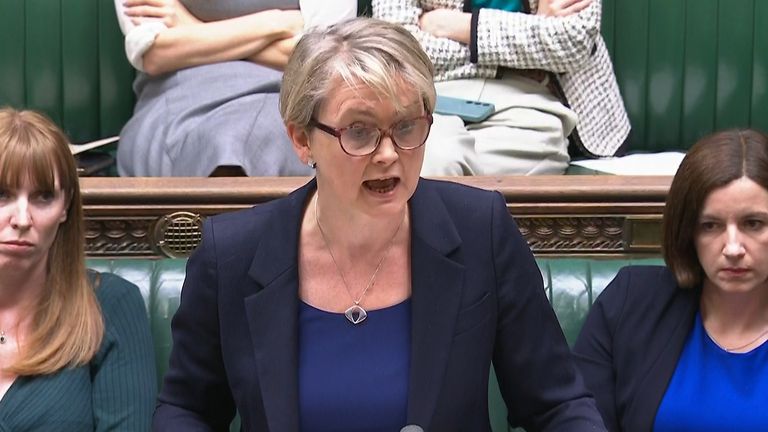
Home Secretary Yvette Cooper responded to the report. Pic: PA
Conservative leader Kemi Badenoch said: “After months of pressure, the prime minister has finally accepted our calls for a full statutory national inquiry into the grooming gangs.
“We must remember that this is not a victory for politicians, especially the ones like the home secretary, who had to be dragged to this position, or the prime minister. This is a victory for the survivors who have been calling for this for years.”
Ms Badenoch added: “The prime minister’s handling of this scandal is an extraordinary failure of leadership. His judgement has once again been found wanting.
“Since he became prime minister, he and the home secretary dismissed calls for an inquiry because they did not want to cause a stir.
“They accused those of us demanding justice for the victims of this scandal as, and I quote, ‘jumping on a far right bandwagon’, a claim the prime minister’s official spokesman restated this weekend – shameful.”
The government has promised new laws to protect children and support victims so they “stop being blamed for the crimes committed against them”.
It is also launching new police operations and a new national inquiry to direct local investigations and hold institutions to account for past failures.
There will also be new ethnicity data and research “so we face up to the facts on exploitation and abuse,” the home secretary said.
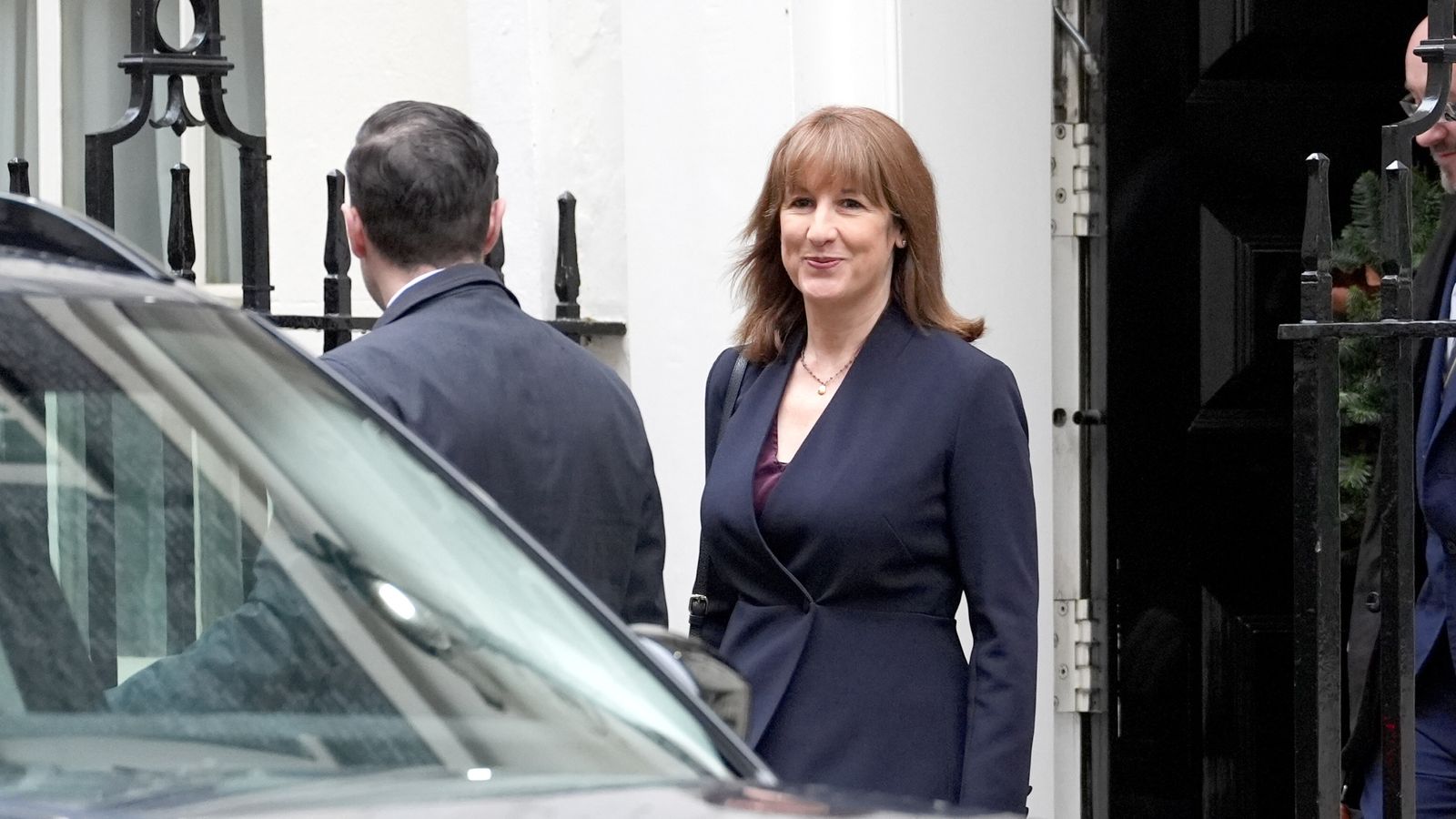
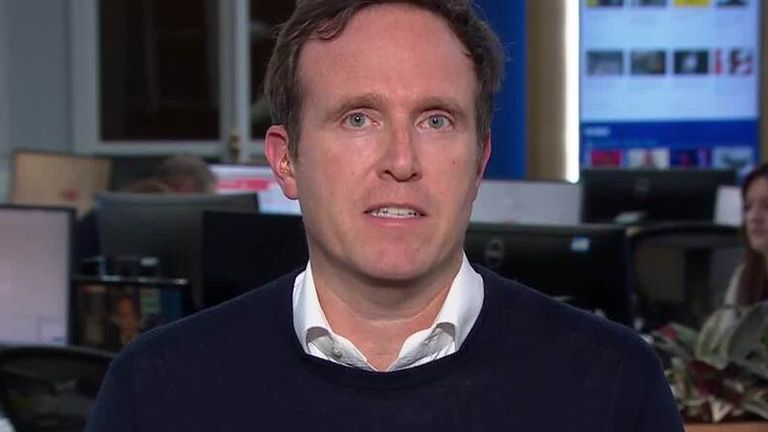
The Chancellor Rachel Reeves has acknowledged there were “too many leaks” in the run-up to last month’s budget.
The flow of budget content to news organisations was “very damaging”, Ms Reeves told MPs on the Treasury select committee on Wednesday.
“Leaks are unacceptable. The budget had too much speculation. There were too many leaks, and much of those leaks and speculation were inaccurate, very damaging”, she said.
Money blog: Nine-year-old set up Christmas tree business to pay for university
The cost of UK government borrowing briefly spiked after news reports that income taxes would not rise as first expected and Labour would not break its manifesto pledge.
An inquiry into the leaks from the Treasury to members of the media is to take place. But James Bowler, the Treasury’s top official, who was also giving evidence to MPs, would not say the results of it would be published.
Committee chair Dame Meg Hillier asked if the group of MPs could see the full inquiry.
“I’d have to engage with the people in the inquiry about the views on that”, replied Mr Bowler, permanent secretary to the Treasury.
OBR leak ‘a mistake of such gravity’
The entire contents of the budget ended up being released 40 minutes early via independent forecasters, the Office for Budget Responsibility (OBR).
A report into this error found the OBR had uploaded documents containing their calculations of budget numbers to a link on the watchdog’s website it had mistakenly believed was inaccessible to the public.
Tax rises ruled out
The chancellor ruled out future revenue-raising measures, including applying capital gains tax to primary residences and changing the state pension triple.
Committee member and former chair Dame Harriet Baldwin had noted that the chancellor’s previous statement to the MPs when she said she would not overhaul council tax and look at road pricing, turned out to be inaccurate.
During the budget, an electric vehicle charge per mile was introduced, as was an additional council tax for those with properties worth £2m or more.

Strategy, the largest Bitcoin treasury company, submitted feedback to index company MSCI on Wednesday about the proposed policy change that would exclude digital asset treasury companies holding 50% or more in crypto on their balance sheets from stock market index inclusion.
Digital asset treasury companies are operating companies that can actively adjust their businesses, according to the letter, which cited Strategy’s Bitcoin-backed credit instruments as an example.
The proposed policy change would bias the MSCI against crypto as an asset class, instead of the index company acting as a neutral arbiter, the letter said.

The MSCI does not exclude other types of businesses that invest in a single asset class, including real estate investment trusts (REITs), oil companies and media portfolios, according to Strategy. The letter said:
“Many financial institutions primarily hold certain types of assets and then package and sell derivatives backed by those assets, like residential mortgage-backed securities.”
The letter also said implementing the change “undermines” US President Donald Trump’s goal of making the United States the global leader in crypto. However, critics argue that including crypto treasury companies in global indexes poses several risks.
Related: Strive calls on MSCI to rethink its ‘unworkable’ Bitcoin blacklist
Crypto treasury companies can create systemic risks and spillover effects
Crypto treasury companies exhibit characteristics of investment funds, rather than operating companies that produce goods and services, according to MSCI.
MSCI noted that companies capitalized on cryptocurrencies lack clear and uniform valuation methods, making proper accounting a challenging task and potentially skewing index values.
Strategy held 660,624 BTC on its balance sheet at the time of this writing. The stock has lost over 50% of its value over the last year, according to Yahoo Finance.
Bitcoin (BTC) is also 15% below its value at the beginning of 2025, when it was trading over $109,000, meaning that the underlying asset has outperformed the equity wrapper.
The high volatility of cryptocurrencies may heighten the volatility of the indexes tracking these companies or create correlation risks, where the index performance would mirror crypto market performance, according to a paper from the Federal Reserve.

The “common use” of leverage by crypto traders amplifies volatility and lends to crypto’s fragility as an asset class, the Federal Reserve wrote.
MSCI’s proposed policy change, set to take effect in January, could also prompt treasury companies to divest their crypto holdings to meet the new eligibility criteria for index inclusion, creating additional selling pressure for digital asset markets.
Magazine: The one thing these 6 global crypto hubs all have in common…
The American Federation of Teachers (AFT), a union championing educators in the United States, has voiced its opposition to crypto market structure legislation moving through the Senate, claiming it “threatens the stability of their retirement security.”
In a Monday letter to Republican and Democratic leaders on the US Senate Banking Committee provided by CNBC, the AFT said it opposed passage of the Responsible Financial Innovation Act, the bill that senators said “built on” the House of Representatives’ proposed solution to market structure, the CLARITY Act. According to the teachers’ union, the bill presents “profound risks” to economic stability and retirement plans.
“This bill fails to provide a regulatory structure for crypto assets and stablecoin that is equivalent to that for other pension holdings,” said the letter. “Most pensions do not carry crypto assets because of their risk. This legislation pretends that crypto assets are stable and mainstream, and they are not.”

The CLARITY Act, a July draft of the market structure bill proposed by the Senate Banking Committee, and a November draft from the Senate Agriculture Committee did not explicitly mention allowing digital assets to be used in pensions or retirement funds. The AFT claimed that if the bill were to be passed, “Pensions and 401(k) plans will end up having unsafe assets even if they were invested in traditional securities.”
The American Federation of Labor and Congress of Industrial Organizations raised similar concerns over the market structure bill posing risks to “retirement funds and to the overall financial stability of the US economy” in an October letter to the banking committee. The group claimed that the legislation would “increase workers’ exposure by greenlighting retirement plans like 401(k)s and pensions to hold this risky asset.”
Related: Japan plans major shift as crypto moves from payments to securities law
The AFT represents 1.8 million members working in education, healthcare and public services. According to the National Association of State Retirement Administrators, aggregate public pension assets, including teachers, totaled more than $6.5 trillion as of the second quarter of 2025, while the Investment Company Institute reported in September that total retirement assets in the US were about $45.8 trillion.
Trump is addressing crypto in retirement funds through executive orders
Separate from the Senate’s efforts to pass market structure, US President Donald Trump has attempted to change policy to allow cryptocurrencies to be included in 401(k) retirement plans. In August, Trump signed an executive order directing the Labor Department to reevaluate restrictions around alternative assets in defined-contribution plans, including digital assets.
Asset management companies have already been making moves signaling openness to adding digital assets to individual retirement arrangements (IRAs) and 401(k)s.
In October, Morgan Stanley reportedly began allowing its advisers to suggest crypto funds as part of its clients’ retirement portfolios. State-managed retirement funds, such as those in Michigan and Wisconsin, also have exposure to crypto through digital asset-linked exchange-traded funds.
It’s unclear when the Senate will vote on a market structure bill in the full chamber. Wyoming Senator Cynthia Lummis, one of the bill’s most outspoken proponents, said on Tuesday that she anticipated the banking committee releasing an updated draft this week, with a possible markup hearing before Congress broke for the holidays.
Magazine: When privacy and AML laws conflict: Crypto projects’ impossible choice
-
 Sports2 years ago
Story injured on diving stop, exits Red Sox game
-
 Sports3 years ago
‘Storybook stuff’: Inside the night Bryce Harper sent the Phillies to the World Series
-
 Sports2 years ago
Game 1 of WS least-watched in recorded history
-
 Sports3 years ago
Button battles heat exhaustion in NASCAR debut
-
 Sports3 years ago
MLB Rank 2023: Ranking baseball’s top 100 players
-
Sports4 years ago
Team Europe easily wins 4th straight Laver Cup
-
 Environment3 years ago
Japan and South Korea have a lot at stake in a free and open South China Sea
-
 Environment1 year ago
Here are the best electric bikes you can buy at every price level in October 2024