Connect with us

Published

on

Hundreds more high street jobs are being put at risk as part of a sweeping overhaul of the family-owned fashion retailer River Island.

Sky News has learnt that the clothing chain, which trades from about 230 stores, is proposing to close 33 shops in a restructuring plan which will be put to creditors in August.

The fate of a further 70 stores is dependent upon agreements being reached with landlords to slash rent payments.

Money latest: Why Aldi ‘could be forced to rethink’ business model

Confirmation of the plans comes less than a month after Sky News revealed that the company, which was founded in 1948 by Bernard Lewis, was working with PricewaterhouseCoopers (PwC) on a restructuring plan.

In a statement issued on Friday, Ben Lewis, River Island’s chief executive, said: “River Island is a much-loved retailer, with a decades-long history on the British high street.

“However, the well-documented migration of shoppers from the high street to online has left the business with a large portfolio of stores that is no longer aligned to our customers’ needs.

More from Money

“The sharp rise in the cost of doing business over the last few years has only added to the financial burden.

“We have a clear strategy to transform the business to ensure its long-term viability.

“Recent improvements in our fashion offer and in-store shopping experience are already showing very positive results, but it is only with a restructuring plan that we will be able to see this strategy through and secure River Island’s future as a profitable retail business.

“We regret any job losses as a result of store closures, and we will try to keep these to a minimum.”

The company declined to comment on how many jobs would be put at risk by the initial 33 shop closures, or on the scale of the rent cuts being sought during talks with landlords.

In total, it is understood to employ about 5,500 people.

Sources said that new funding will be injected into River Island if the restructuring plan is approved in August.

Previously named Lewis and Chelsea Girl, the business, it adopting its current brand during the 1980s.

Accounts for River Island Clothing Co for the 52 weeks ended 30 December 2023 show the company made a £33.2m pre-tax loss.

Turnover during the year fell by more than 19% to £578.1m.

A restructuring plan is a court-supervised process which enables companies facing financial difficulties to compromise creditors such as landlords in order to avoid insolvency proceedings.

An identical process is being used to close scores of Poundland shops and slash rents at hundreds more.

In its latest accounts at Companies House, River Island Holdings Limited warned of a multitude of financial and operational risks to its business.

“The market for retailing of fashion clothing is fast changing with customer preferences for more diverse, convenient and speedier shopping journeys and with increasing competition especially in the digital space,” it said.

Read more from Sky News:
Sir Alan Bates backs Post Office Capture victims
‘Inflation and customer cutbacks’ blamed for dive in retail sales
Govt considers industrial energy cost aid

“The key business risks for the group are the pressures of a highly competitive and changing retail environment combined with increased economic uncertainty.

“A number of geopolitical events have resulted in continuing supply chain disruption as well as energy, labour and food price increases, driving inflation and interest rates higher and resulting in weaker disposable income and lower consumer confidence.”

Retailers have complained bitterly about the impact of tax changes announced by Rachel Reeves, the chancellor, in last autumn’s Budget.

Since then, a cluster of well-known chains, including Lakeland and The Original Factory Shop, have been forced to seek new owners.

Continue Reading

Business

Daily Mail owner lines up NatWest to help fund £500m Telegraph bid

Published

on

By

Daily Mail owner lines up NatWest to help fund £500m Telegraph bid

The owner of the Daily Mail is lining up one of Britain’s biggest high street lenders to help bankroll its £500m deal to buy The Daily Telegraph.

Sky News has learnt that DMGT has turned to its long-standing bank, NatWest Group, to lend a substantial chunk of the Telegraph purchase price.

City sources said on Thursday that discussions between the two were still in progress.

It was unclear how much of the consideration NatWest might finance, or how much equity DMGT intended to put up as part of the deal.

Money latest: Urgent warning over tumble dryers

Last month’s announcement that DMGT was in exclusive talks to buy Telegraph Media Group achieved a long-standing ambition of the Mail proprietor, Lord Rothermere, to own the rival right-leaning newspaper.

However, the transaction still needs to be formally submitted to the culture secretary, Lisa Nandy, who has effectively asked for details of the proposed deal by early next week.

More from Money

Lengthy inquiries by the Competition and Markets Authority and Ofcom are also expected to follow.

DMGT’s exclusivity period came within days of a consortium led by RedBird Capital Partners abandoning its own deal amid opposition from within the Telegraph newsroom.

NatWest’s position as a principal lender would, in theory, be advantageous to Lord Rothermere, who will not want to be reliant on overseas financing for the deal.

The DMGT owner had originally intended to acquire a minority stake of just under 10% in the Telegraph titles as part of the RedBird-led transaction.

A previous deal proposed by a consortium including RedBird and the Abu Dhabi state-owned investment firm IMI collapsed after the government changed the law regarding foreign state ownership of national newspapers.

“I have long admired the Daily Telegraph,” Lord Rothermere said last month.

“My family and I have an enduring love of newspapers and for the journalists who make them.

“The Daily Telegraph is Britain’s largest and best quality broadsheet newspaper, and I have grown up respecting it.

“It has a remarkable history and has played a vital role in shaping Britain’s national debate over many decades.”

If the deal is completed, it would bring the Telegraph newspapers under the same stable of ownership as titles including Metro, The i Paper and New Scientist.

DMGT said in November that it planned “to invest substantially in TMG with the aim of accelerating its international expansion”.

“It will focus particularly on the USA, where the Daily Mail is already successful, with established editorial and commercial operations.”

NatWest declined to comment.

Continue Reading

Business

OpenAI bags Disney characters for Sora short video app

Published

on

By

OpenAI bags Disney characters for Sora short video app

OpenAI has signed its first major licensing deal to bring well-known characters to life on its Sora video generation tool.

The company said the agreement with Walt Disney was part of a push to ensure the rights of creators in the generative artificial intelligence (AI) space amid growing concerns over copyright, fakes and misinformation.

It forms part of a $1bn Disney investment in OpenAI, that will see the entertainment firm roll out ChatGPT to its staff and grow its AI capabilities.

Money latest: Urgent warning over tumble dryers

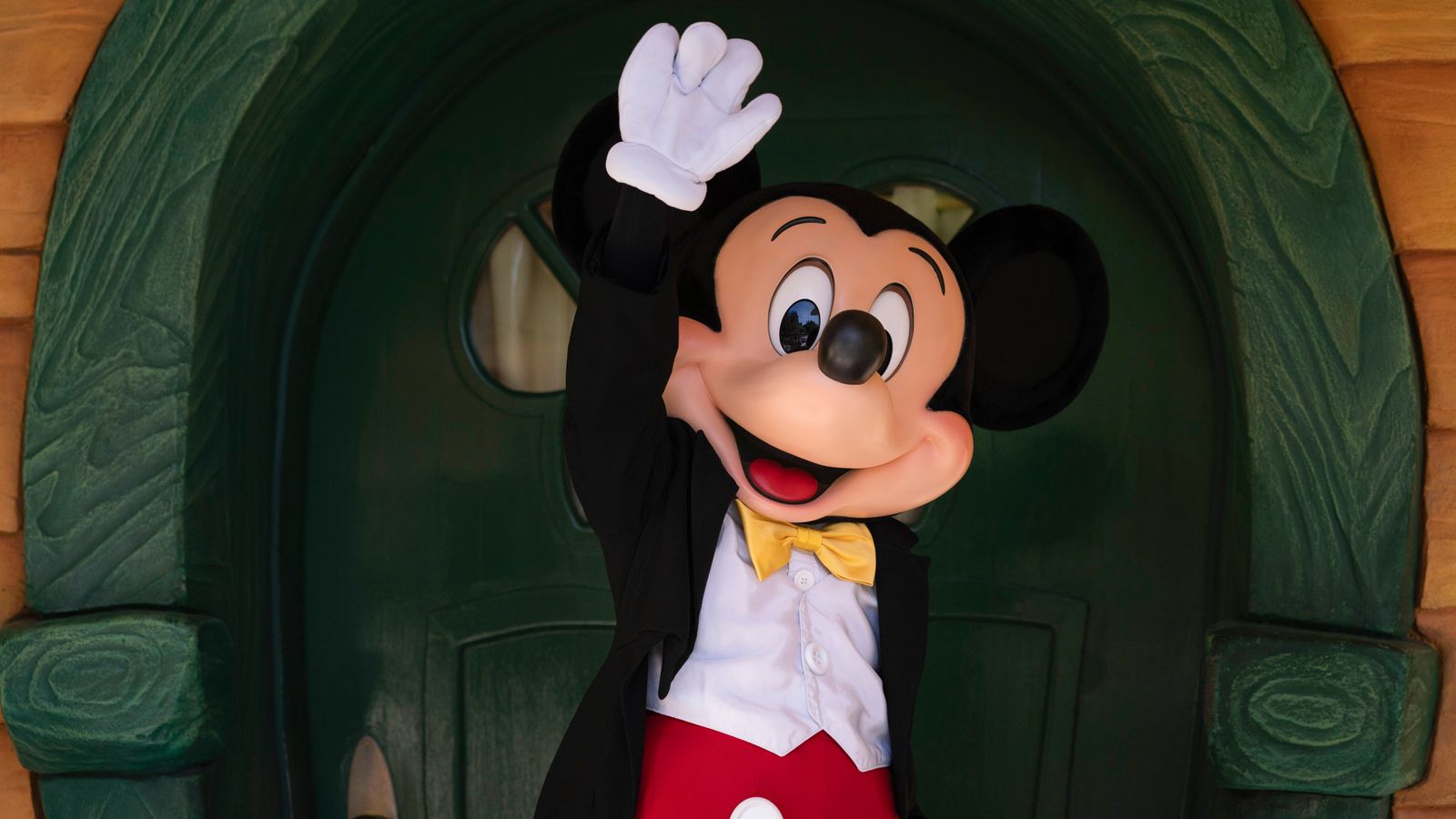
The initial three-year licensing deal will allow Sora users to generate and share videos based on more than 200 Disney, Marvel, Pixar and Star Wars characters.

These include Mickey Mouse, Cinderella and Luke Skywalker.

Sora allows people to quickly create realistic clips based merely on text prompts.

More on Artificial Intelligence

Please use Chrome browser for a more accessible video player

Why authors may be right to fear AI

Disney and OpenAI said they were committed to responsible use of AI amid the backlash from critics who have pointed to widespread misuse of generative AI in the social media space – a practice known as AI slop.

Some have depicted fake messages from celebrities and even used the dead.

OpenAI CEO Sam Altman said: “This agreement shows how AI companies and creative leaders can work together responsibly to promote innovation that benefits society, respect the importance of creativity, and help works reach vast new audiences.

His counterpart at Disney, Bob Iger, added that the partnership would “extend the reach of our storytelling through generative AI, while respecting and protecting creators and their works”.

As part of the deal, some user-generated Sora videos will be made available on the Disney+ streaming service.

Dan Coatsworth, head of markets at AJ Bell, said of the tie-up: “It’s a win-win situation for Disney and OpenAI. Disney gets to deploy its beloved brands in the world of AI while keeping control of the intellectual property.

“Fans can use Disney characters to make videos and take social media content to another level. That could drive significant traffic to OpenAI’s Sora social media platform, turning a relatively unknown entity into a household name in a flash.

“As part owner of the business, Disney will be able to use the equity stake in OpenAI to ensure its characters are used in a controlled environment.

“It’s a significant step forward for the concept of fan fiction”, he concluded.
Continue Reading

Business

Burger King UK lands new backing from buyout firm Bridgepoint

Published

on

By

Burger King UK lands new backing from buyout firm Bridgepoint

The private equity backer of Burger King UK has injected millions of pounds of new funding as part of a deal which paves the way for their partnership to be extended into the 2040s.

Sky News understands that Bridgepoint has invested a further £15m into the fast food giant in recent days, with a further sum – thought to be up to £20m – to be deployed over the next 18 months.

The new funding has been committed as Burger King UK’s Master Franchise Agreement with a subsidiary of Restaurant Brands International has been extended to 2044 in a deal which is said to align the interests of its various financial stakeholders more closely.

Burger King’s British operations comprise roughly 575 outlets, and employ approximately 12,000 people.

In results released this week, Burger King UK said it had delivered a “solid performance…amid sector headwinds” in 2024.

Revenue increased by 7% to £408.3m, with underlying earnings before interest, tax, depreciation and amortisation up 12% to £26m.

The company also said it had completed a refinancing process, with the maturity of its bank facilities pushed out to March 2028.

More from Money

Under the leadership of Alasdair Murdoch, its long-serving chief executive, Burger King plans to open roughly 30 new sites next year.

It comes at a challenging time for the UK hospitality sector, with casual dining chains TGI Fridays and Leon both filing to appoint administrators in the last few days.

Industry bosses say that last month’s Budget has piled fresh cost pressures on them.

Bridgepoint declined to comment on the injection of new capital into Burger King UK.

Continue Reading

Trending