

More Britons than ever struggling to make ends meet, report warns

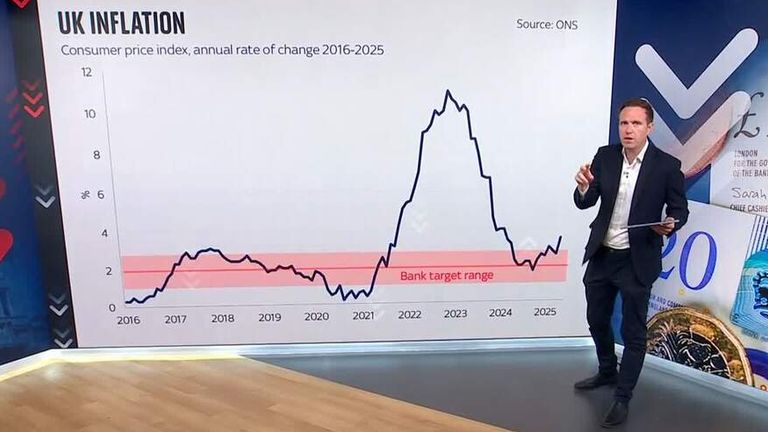
More people than ever are struggling to live on their current income – while just a third say they are living comfortably, according to new research.
Rising prices and sluggish pay increases have put many people’s finances under strain in recent years.
A record 26% now say making ends meet is difficult. Before the pandemic, it was 16%.
UK inflation slows to 3.4%
Two-thirds also say their incomes haven’t kept up with inflation, according to the British Social Attitudes report.
That’s only marginally better than the 70% recorded during the height of the cost of living crisis in 2023.
Frozen tax thresholds also appear to be hitting home, with 61% saying taxes on low earners are too high, while 44% believe middle income earners also pay too much.
Those figures are up nine points and 13 points respectively since 2016.
However, when it comes to the highest earners, 44% believe their taxes are too low.
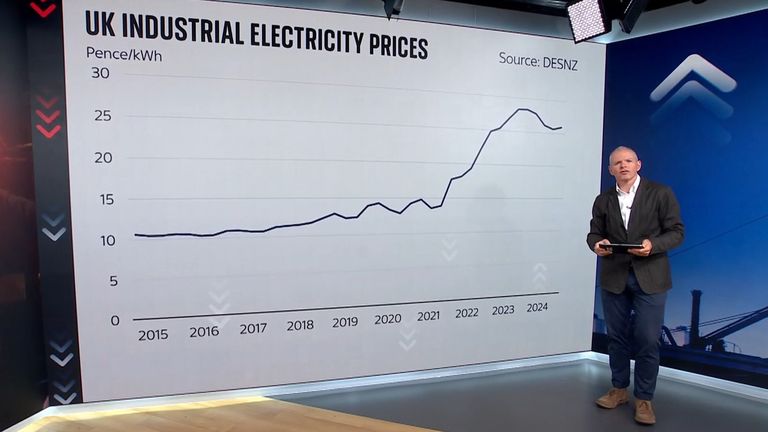
Britain’s energy price problem
The report also asked people about the welfare system – a timely insight with Labour MPs currently rebelling over plans to save £5bn from the budget.
It found support for more spending on disability benefits is at a record low of 45%, down from 67% in 2017 – but only 11% think spending should be reduced.
About 29% of those polled think it’s “too easy” for people to get disability benefits – but the same percentage also feel it’s “too difficult”.
Meanwhile, long waiting times appear to have played a part in the finding that a record 59% are now dissatisfied with the NHS. In 2019, it was just 25%.
Only 21% said they were satisfied with the health service.

Reeves pledges NHS funding
The report is based on a representative, random sample of more than 4,000 people in the UK and was produced by the National Centre for Social Research.
It’s the longest-running measure of public opinion in Britain, having started in 1983.
Professor Sir John Curtice, senior research fellow, said: “The public are well aware of Britain’s problems – not least those of a failing health service and an economy in which many are struggling to make ends meet.
“Yet rather than turning their back on the state, for the most part, the public are still inclined to look to government to provide solutions.”
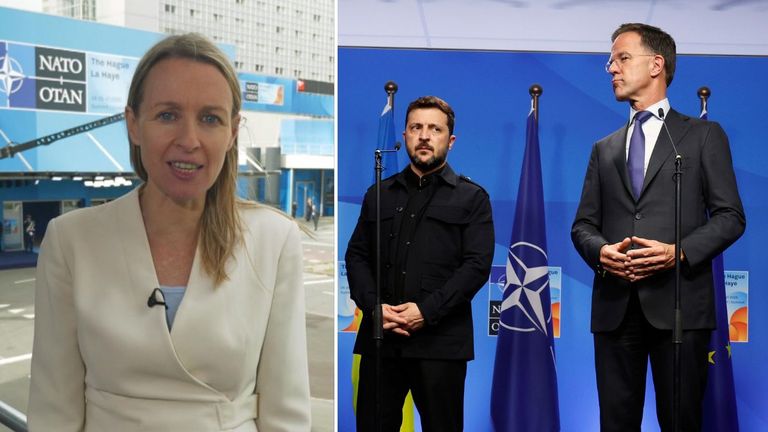
What is NATO’s 5% defence spending goal?
Defence was also a key theme of the report – and researchers found about 40% of Britons support spending more money on weapons and troops.
A fifth (20%) said they would like to see a reduction.
It comes as the government revealed it was buying at least 12 stealth jets that can carry nuclear weapons, and as NATO countries, including the UK, promise to increase defence spending.
The National Security Strategy also said the UK must prepare for the potential of a “wartime scenario” in the “UK homeland” for the first time in many years.
Read more from Sky News:
Briton charged after ‘mock wedding’ with nine-year-old
Guests descend on Venice for Jeff Bezos wedding
Almost everyone surveyed (90%) considered Russia a serious threat to world peace, followed by Iran (78%), North Korea (77%), Israel (73%), and China (69%).
The percentage supporting more defence spending remains relatively unchanged since 2016, before Russia invaded Ukraine.
However, the share supporting an increase is significantly higher now than that in 2006 (28%) and in the 1990s (17%).
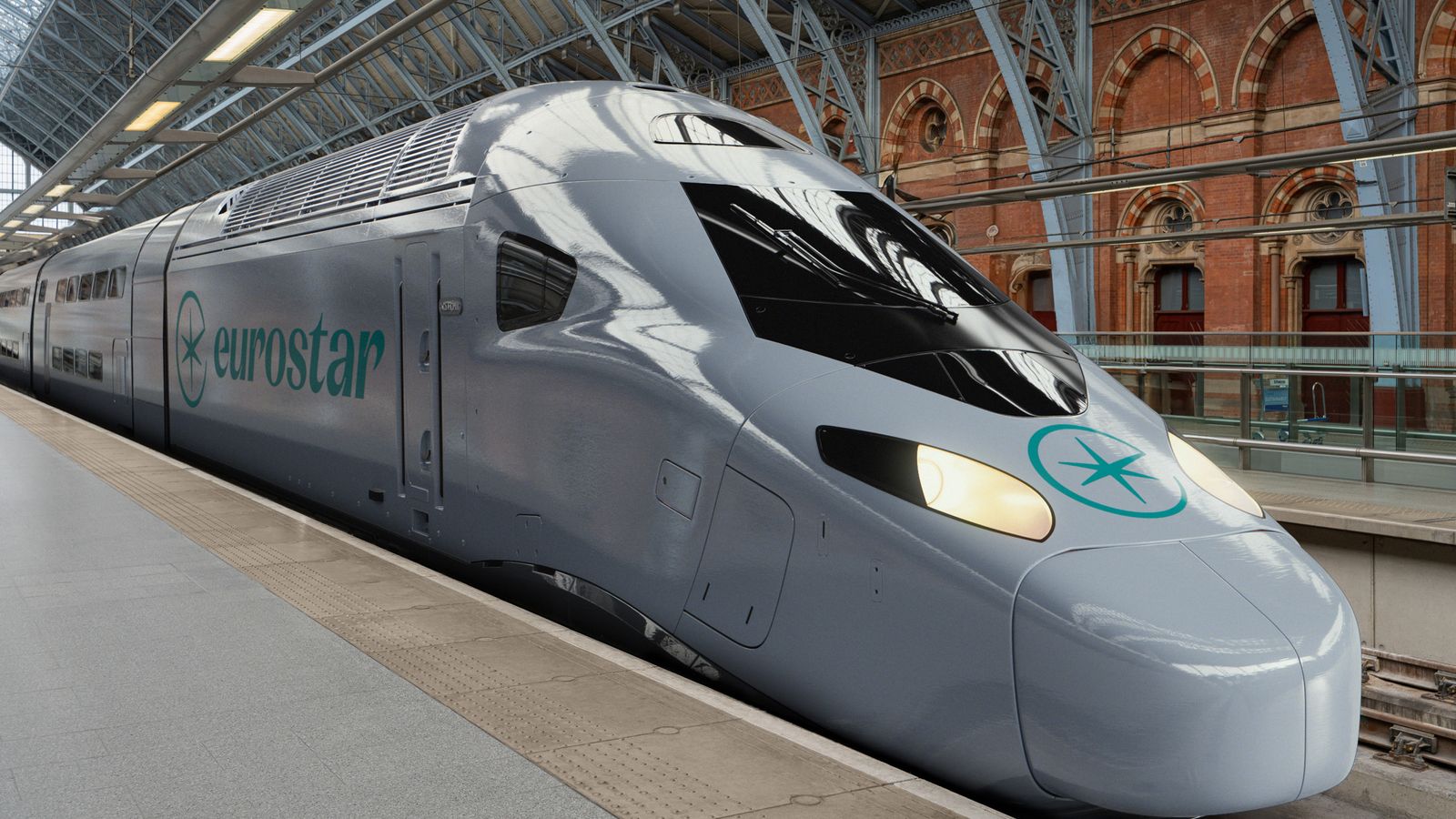

The UK has come a “step closer” to having direct, high-speed rail connections to Germany, the Department for Transport has said.
A partnership between international train operator Eurostar and German national rail company Deutsche Bahn (DB) has “set the foundation” for a fast rail connection between Britain and Europe’s largest economy, the businesses announced on Thursday.
It means the companies are exploring options to offer direct services between London and Cologne and Frankfurt.
Money blog: Major airport increasing drop-off charge
Such direct services would mean reaching Cologne in four hours, and Frankfurt in less than five from the capital city.
At present, rail passengers have to change trains in Brussels to reach those cities. It takes at least five-and-a-half hours to reach Frankfurt, and four-and-a-quarter hours to arrive in Cologne.
Cologne Central Station could soon be served by trains from the UK. Pic: AP
The proposed services would use existing lines and infrastructure. Passengers would board a double-decker Eurostar in London, and be spared a change of trains on the continent.
The ambition to create such links had already been announced, as had a plan to allow direct rail travel from London to Geneva, but the partnership between DB and Eurostar had not.
Will it definitely happen?
Details and technicalities are yet to be worked out, with the German train company highlighting that any services are contingent upon “the necessary technical, operational, and legal prerequisites being met”.
“Implementation by individual railway companies is considered extremely difficult,” DB said.
“Joint partnerships are therefore crucial.”
What about Berlin?
Nothing was announced for a direct service to Berlin on Thursday, despite Transport Secretary Heidi Alexander singling out the benefits and prospect of journeys from London to the German capital in July.
“The Brandenburg Gate, the Berlin Wall and Checkpoint Charlie – in just a matter of years, rail passengers in the UK could be able to visit these iconic sights direct from the comfort of a train, thanks to a direct connection linking London and Berlin,” she said at the time.
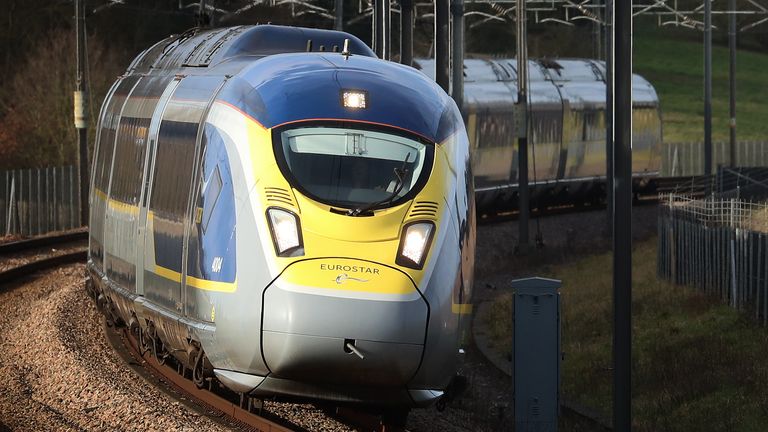
A high-speed Eurostar train heading towards France. File pic: PA
Shorter journeys, like those to Frankfurt and Cologne, are seen as more commercially viable than the current 10-hour train journey time to Berlin.
Market studies conducted by Eurostar found travellers are comfortable with international rail journeys of up to six hours.
“Our research indicates that many would choose rail over air for trips within this timeframe,” Eurostar told Sky News. “This, combined with strong business and leisure demand on this route, is why we have prioritised London to Frankfurt.”
Read more from Sky News:
Petrofac administrators eye North Sea sale by Christmas
Submarine hunting pact signed by UK amid Russian threat
The Department for Transport said the focus on the two German cities was a commercial decision by Eurostar and DB, and the UK-Germany rail taskforce, established over the summer, could pave the way for further route announcements.
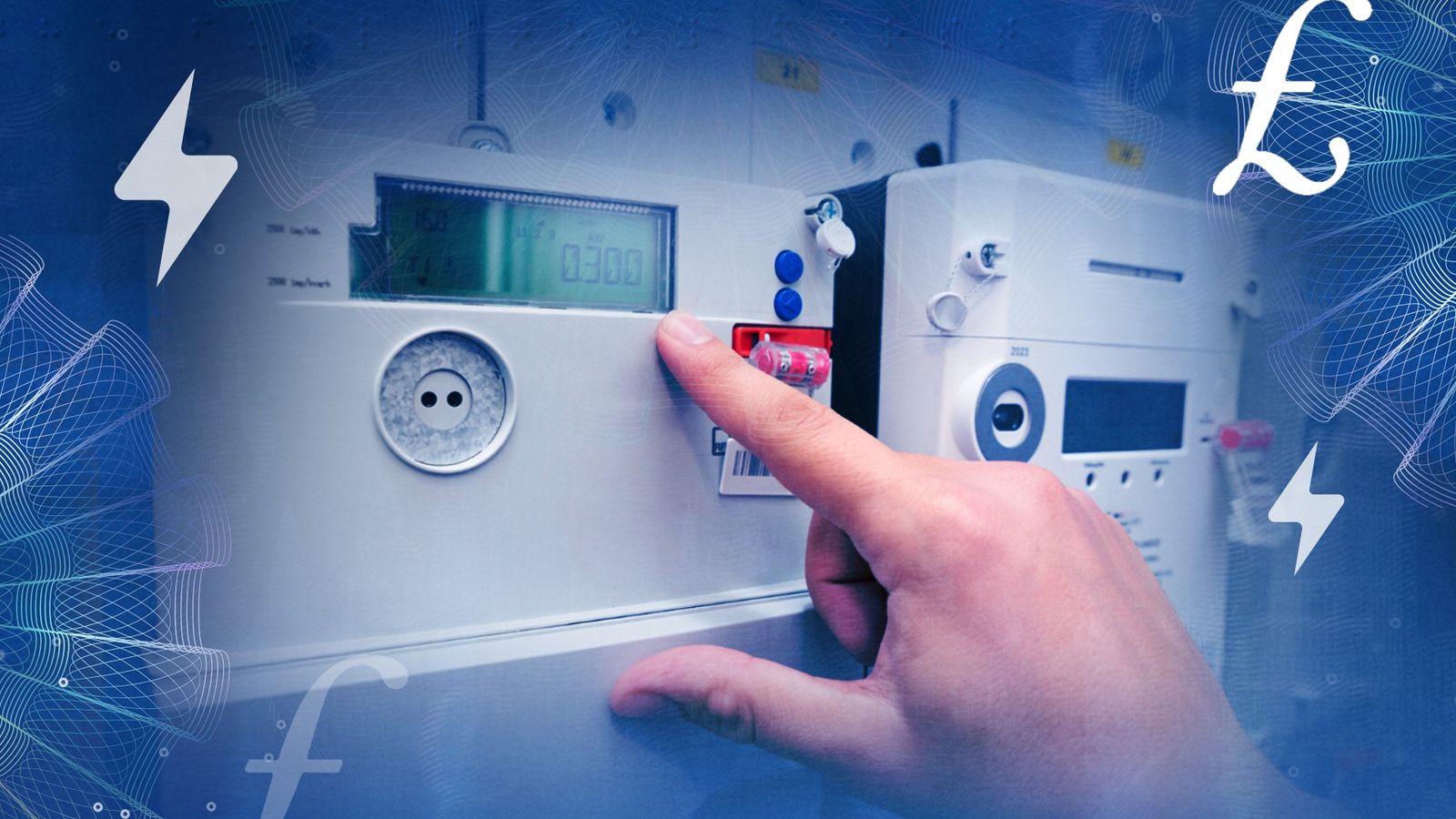

The energy regulator has confirmed plans for a massive upgrade to the UK’s energy grids, adding £108 to customer bills by 2031.
Ofgem said on Thursday that the £28bn investment over the next five years would bolster resilience in the transition to a renewable energy future and that much of the bill would be offset by increased efficiency.
It pointed to estimated savings for households of around £80 because of the planned investment in gas and power infrastructure, leaving a net additional contribution of £28.
Money latest: Is property still a good investment?
Ofgem said the £28bn sum formed part of an estimated £90bn to be invested in the energy networks by 2031, with “adaptive” funding arrangements helping to shield customers from volatility in the market.
Most of the funding announced on Thursday will go towards maintaining gas networks, which will remain a key source of energy as green power capacity is built up further.
“Investing now to maintain world-class resilience and expand grid capacity is the most cost-effective way to harness clean power, support economic growth and protect the country from gas price shocks like the one seen in 2022”, Ofgem said.
What’s driving energy prices higher?
Then, Russia’s invasion of Ukraine and Europe’s refusal to buy Russian gas in response, meant that energy bills hit unprecedented levels and gave birth to the wider cost-of-living crisis as higher energy costs were passed on across the economy.
Read more: Paying up front for energy future should lead to tangible savings
Ofgem made its announcement as costs of government energy policy and other upgrades make the biggest upwards contributions to household bills. However, the budget moved to take away some costs from April next year.
Ofgem boss Jonathan Brearley said: “The funding announced today will keep Britain’s energy network among the safest, most secure and resilient in the world. The investment will support the transition to new forms of energy and support new industrial customers to help drive economic growth and insulate us from volatile gas prices.
“But this is not investment at any price. Every pound must deliver value for consumers. Ofgem will hold network companies accountable for delivering on time and on budget, and we make no apologies for the efficiency challenge we’re setting as the industry scales up investment.
“We’ve built strong consumer protections into these contracts, meaning funds will only be released when needed and clawed back if not used. Households and businesses must get value for money, and we will ensure they do.”
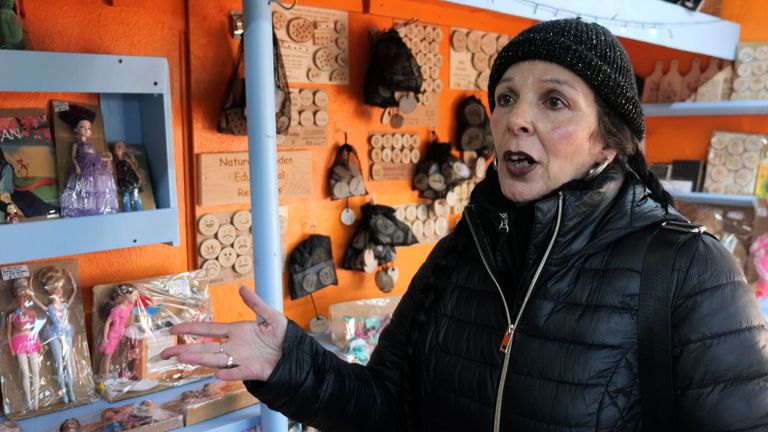
‘It’s either keep warm or eat’
A Department for Energy Security and Net Zero spokesperson said: “This government is taking action to bring down energy bills for families, with the budget taking an average £150 of costs off bills in April, and expanding our £150 Warm Home Discount to over six million families.
“Upgrading our gas and electricity networks after years of underinvestment is essential to keep the lights on and ensure energy security for our country. Without these plans, which were first set out under the previous government, costs would spiral and our security would be compromised.
“The only way to bring down bills for good and get off the fossil fuel rollercoaster is with this government’s mission to deliver clean homegrown that we control.”


The UK government is being urged to take even stronger action to tackle the ongoing crisis of families unable to afford baby formula milk.
The prime minister backed limited reforms to the market to help parents save money but will not yet support more radical changes.
Sir Keir Starmer confirmed support for better public health messaging to inform parents that cheaper brands are nutritionally equivalent when compared with the most expensive.
A ban on spending store loyalty points on baby formula will also be lifted.
They were among recommendations made by the Competition and Markets Authority which investigated the baby formula industry and described the price rises in recent years as unjustifiable.
A newborn. File Pic: iStock
In the House of Commons the prime minister said: “For too long parents have been pushed into spending more on infant formula.
“They were told they’re paying for better quality and left hundreds of pounds out of pocket.
“I can announce today that we’re changing that. We will take action to give parents and carers the confidence to access infant formula at more affordable prices, with clearer guidance for retailers on helping new parents use loyalty points and vouchers together.”
It comes two-and-a-half years after a Sky News investigation revealed the extreme measures families were taking to feed their babies.

Rising cost of baby formula has hidden dangers
Read more:
Affordability of formula milk a ‘constant’ pressure
Genetics testing start-up offers to ‘genetically optimise’ would-be parents’ babies
Parents described how they had resorted to stealing to feed their infants, some were watering down formula milk or substituting it for condensed milk.
The British Pregnancy Advisory Service described the situation in 2023 as a “national scandal”.
Campaigners told Sky News the UK government needed to go further to address the crisis.
Co-founder of Feed UK Erin Williams told Sky News: “It is progress, they promised to look at this enormous nationwide problem and they have.
“At the moment women are still not routinely getting important information before giving birth – this should be given proactively to everybody and that will be a big win.
“The prime minister though needs to be tougher on the baby formula companies.
“Their marketing claims, their unjustified pricing – it’s stacked against families who just need to feed their babies safely.”
The UK government stopped short of accepting all of the recommendations made by the CMA.
More radical ideas such as a price cap on baby formula are not being considered.
Charities have also told Sky News the situations some families find themselves in have not eased.
Founder of the Hartlepool Baby Bank, Emilie De Bruijn, told Sky News the demand they see from desperate families is “constant and unmanageable”.
She said: “Parents are really feeling the pinch right now, and demands on baby banks are rising and it can feel quite relentless.
“We are pleased to see the extension of the National Breastfeeding Helpline alongside measures such as allowing parents to use points and vouchers.
“It is important that parents are supported to feed their children in whatever way they want and we hope that steps will continue to be taken to reduce the cost of formula and increase understanding that all brands are nutritionally the same.”
-
 Sports2 years ago
Story injured on diving stop, exits Red Sox game
-
 Sports3 years ago
‘Storybook stuff’: Inside the night Bryce Harper sent the Phillies to the World Series
-
 Sports2 years ago
Game 1 of WS least-watched in recorded history
-
 Sports3 years ago
Button battles heat exhaustion in NASCAR debut
-
 Sports3 years ago
MLB Rank 2023: Ranking baseball’s top 100 players
-
Sports4 years ago
Team Europe easily wins 4th straight Laver Cup
-
 Environment3 years ago
Japan and South Korea have a lot at stake in a free and open South China Sea
-
 Environment1 year ago
Here are the best electric bikes you can buy at every price level in October 2024