
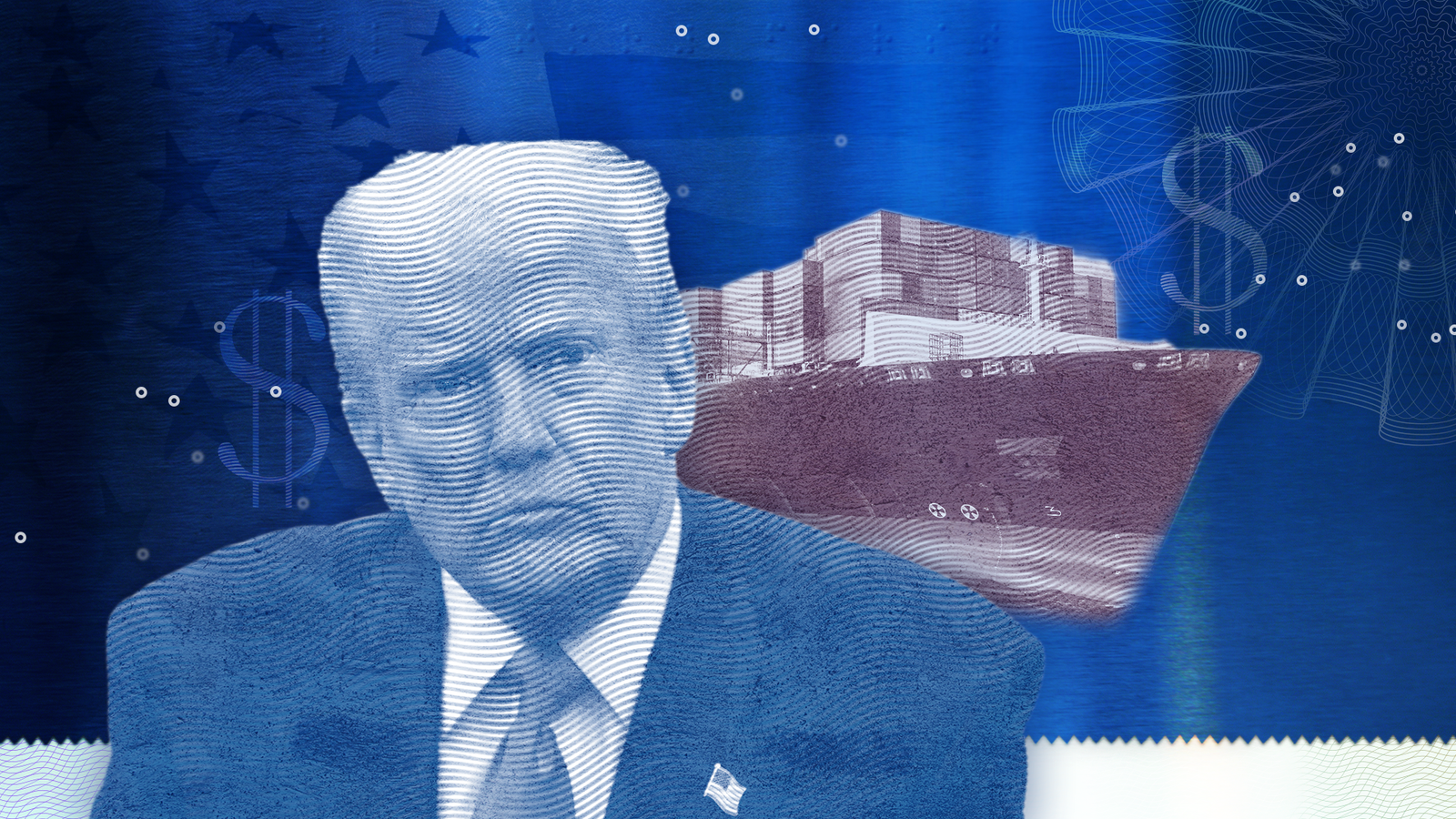
US trade war: The state of play as Trump signs order imposing new tariffs – but there are more delays

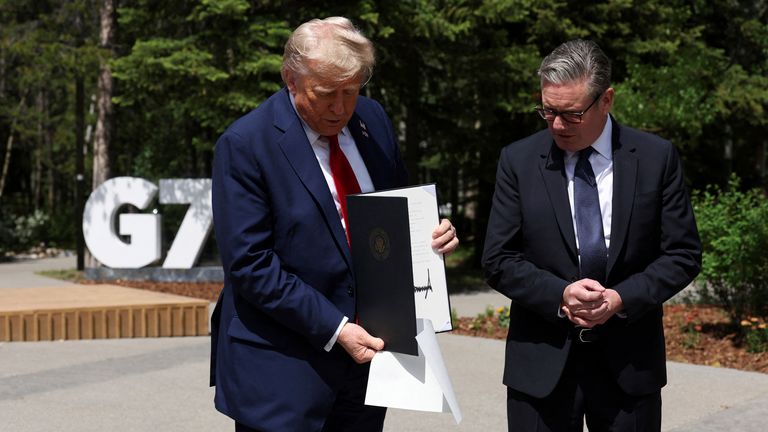
Donald Trump’s trade war has been difficult to keep up with, to put it mildly.
For all the threats and bluster of the US election campaign last year to the on-off implementation of trade tariffs – and more threats – since he returned to the White House in January, the president‘s protectionist agenda has been haphazard.
Trading partners, export-focused firms, customs agents and even his own trade team have had a lot on their plates as deadlines were imposed – and then retracted – and the tariff numbers tinkered.
Money latest: Why your internet feels slower
While the UK was the first country to secure a truce of sorts, described as a “deal”, the vast majority of nations have failed to secure any agreement.
Deal or no deal, no country is on better trading terms with the United States than it was when Trump 2.0 began.
Here, we examine what nations and blocs are on the hook for, and the potential consequences, as Mr Trump’s suspended “reciprocal” tariffs prepare to take effect. That will now not happen until 7 August.
What does the UK-US trade deal involve?
Why was 1 August such an important date?
To understand the present day, we must first wind the clock back to early April.
Then, Mr Trump proudly showed off a board in the White House Rose Garden containing a list of countries and the tariffs they would immediately face in retaliation for the rates they impose on US-made goods. He called it “liberation day”.
The tariff numbers were big and financial markets took fright.
Just days later, the president announced a 90-day pause in those rates for all countries except China, to allow for negotiations.
The initial deadline of 9 July was then extended again to 1 August. Late on 31 July, Mr Trump signed the executive order but said that the tariff rates would not kick in for seven additional days to allow for the orders to be fully communicated.
Since April, only eight countries or trading blocs have agreed “deals” to limit the reciprocal tariffs and – in some cases – sectoral tariffs already in place.
Who has agreed a deal over the past 120 days?
The UK, Japan, Indonesia, the European Union and South Korea are among the eight to be facing lower rates than had been threatened back in April.
China has not really done a deal but it is no longer facing punitive tariffs above 100%.
Its decision to retaliate against US levies prompted a truce level to be agreed between the pair, pending further talks.
There’s a backlash against the EU over its deal, with many national leaders accusing the European Commission of giving in too easily. A broad 15% rate is to apply, down from the threatened 30%, while the bloc has also committed to US investment and to pay for US-produced natural gas.
Millions of EU jobs were in firing line
Where does the UK stand?
We’ve already mentioned that the UK was the first to avert the worst of what was threatened.
While a 10% baseline tariff covers the vast majority of the goods we send to the US, aerospace products are exempt.
Our steel sector has not been subjected to Trump’s 50% tariffs and has been facing down a 25% rate. The government announced on Thursday that it would not apply under the terms of a quota system.
UK car exports were on a 25% rate until the end of June when the deal agreed in May took that down to 10% under a similar quota arrangement that exempts the first 100,000 cars from a levy.
Who has not done a deal?
Canada is among the big names facing a 35% baseline tariff rate. That is up from 25% and covers all goods not subject to a US-Mexico-Canada trade agreement that involves rules of origin.
America is its biggest export market and it has long been in Trump’s sights.
Mexico, another country deeply ingrained in the US supply chain, is facing a 30% rate but has been given an extra 90 days to secure a deal.
Brazil is facing a 50% rate. For India, it’s 25%.
What are the consequences?
This is where it all gets a bit woolly – for good reasons.
The trade war is unprecedented in scale, given the global nature of modern business.
It takes time for official statistics to catch up, especially when tariff rates chop and change so much.
Any duties on exports to the United States are a threat to company sales and economic growth alike – in both the US and the rest of the world. Many carmakers, for example, have refused to offer guidance on their outlooks for revenue and profits.
Apple warned on Thursday night that US tariffs would add $1.1bn of costs in the three months to September alone.
Barriers to business are never good but the International Monetary Fund earlier this week raised its forecast for global economic growth this year from 2.8% to 3%.
Some of that increase can be explained by the deals involving major economies, including Japan, the EU and UK.
US growth figures have been skewed by the rush to beat import tariffs.
Read more:
Trump signs executive order for reciprocal tariffs
Aston Martin outlines plan to ease US tariff hit
The big risk ahead?
It’s a self-inflicted wound.
The elephant in the room is inflation. Countries imposing duties on their imports force the recipient of those goods to foot the additional bill. Do the buyers swallow it or pass it on?
The latest US data contained strong evidence that tariff charges were now making their way down the country’s supply chains, threatening to squeeze American consumers in the months ahead.
It’s why the US central bank has been refusing demands from Mr Trump to cut interest rates. You don’t slow the pace of price rises by making borrowing costs cheaper.
A prolonged period of higher inflation would not go down well with US businesses or voters. It’s why financial markets have followed a recent trend known as TACO, helping stock markets remain at record levels.
The belief is that Trump always chickens out. He may have to back down if inflation takes off.


A millionaires’ playground, Poole in Dorset boasts some of the most expensive properties in the UK, and has been called Britain’s Palm Beach.
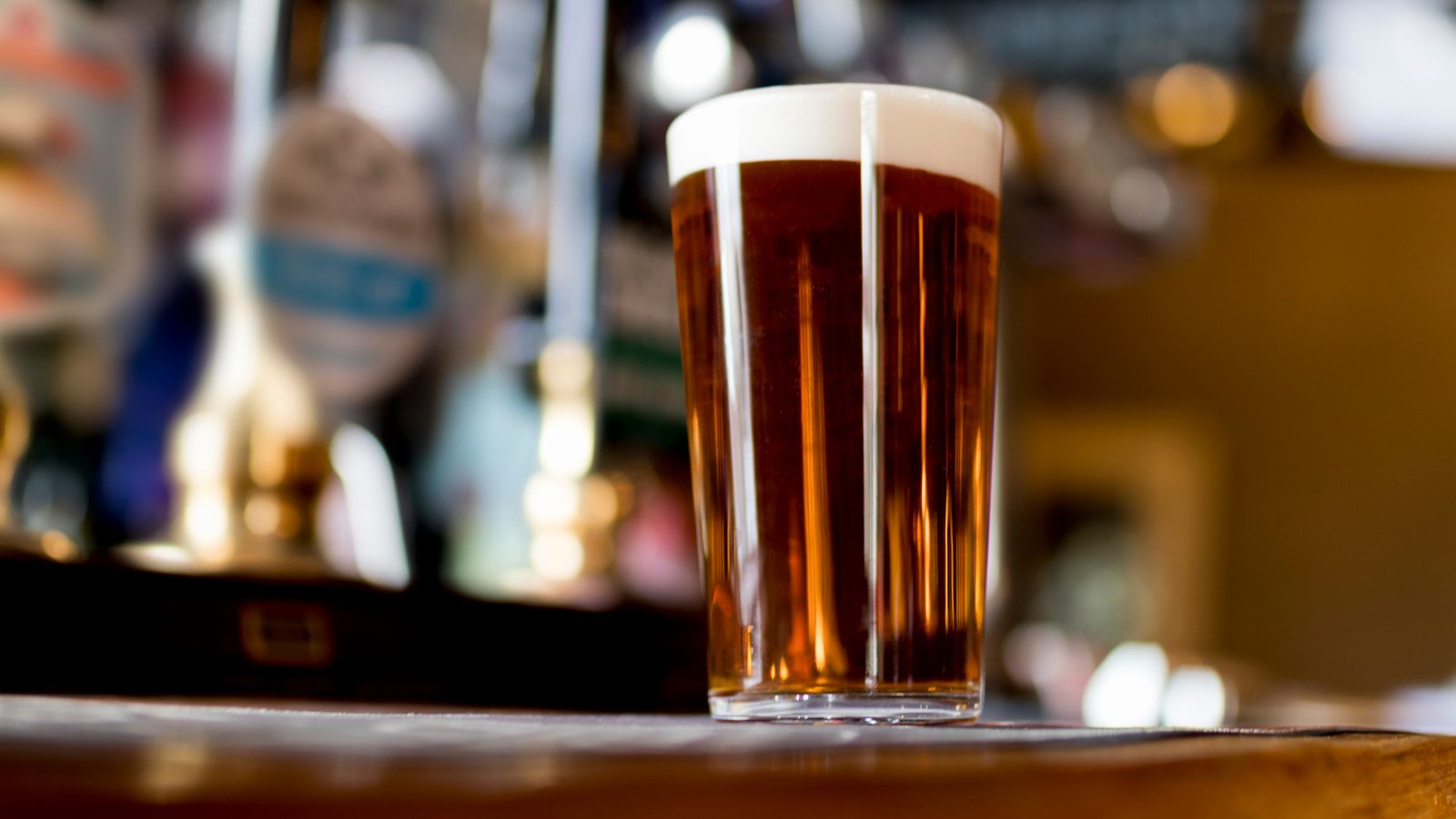
Away from the yachts and the mansions of Sandbanks, however, Poole is also a beer drinkers’ paradise, with 58 pubs in the parliamentary constituency alone.
But now many of Dorset’s pub landlords have joined a bitter backlash against rises in business rates of up to £30,000 in Rachel Reeves’s November budget.
Across the UK, it is claimed up to 1,000 publicans have even banned Labour MPs from their pubs, after the chancellor axed a 40% rates discount, introduced during COVID, from next April.
The row over the rises, brewing since the budget, came to a head in a clash between Kemi Badenoch and Sir Keir Starmer in the final Prime Minister’s Questions of 2025.
“He gave his word that he would help pubs,” said the Tory leader.
“Yet they face a 15% rise in business rates because of his budget. Will he be honest and admit that his taxes are forcing pubs to close?”
The PM replied that the temporary relief introduced during COVID – a scheme the Conservatives put in place and Labour supported, he said – had come to an end.
“But it was always a temporary scheme coming to an end,” he said.
“We have now put in place a £4bn transitional relief.”
Mark and Michael Ambrose, father and son co-landlords of The Barking Cat, said the increases are a ‘pub destroyer’
But in the Barking Cat Ale House in Poole, facing an increase in business rates of nearly £9,000 a year, the father and son co-landlords fear the rises could mean last orders for many pubs.
“We’re sort of in the average area at 157%, but we’ve got a lot of local pubs that are increasing by 600%, and another one by 800%,” Ambrose senior, Mark, told Sky News.
“It’s a pub destroyer. Pubs can’t survive these kinds of increases. It’s not viable. Most pubs are just about scraping by anyway. If you add these massive increases your profit margins are wiped out.
“We struggle as it is. You can’t have that kind of increase and expect businesses to succeed.
“Fortunately, the customers understand. But they still don’t want to have to spend an extra 30 or 50 pence a pint.”
Son Michael added: “It’s all back to front. It’s really these bigger pub companies and supermarkets that need to be facing increased taxes. We can’t handle them. They can.”
Michelle Smith, landlady of the Poole Arms, the oldest pub on the town’s quay, dating back to 1635, said: “Our rates per value is due to go up £9,000 in April, so it’s quite a deal.”

Michelle Smith, landlady of The Poole Arms, said all her prices are going up
“And we had a rates increase just gone as well,” she added. “So our rates had already increased over £1,000 a month last April. So another hit is quite considerable really.
“Prices definitely have to go up with all the different price increases that we’ve got throughout: business rates, wage increases, the beer goes up from the breweries. Everything is going up.”
Backing the publicans, Neil Duncan-Jordan, who became Poole’s first ever Labour MP last year, has written to the chancellor demanding a rethink. He said he is prepared to vote against the tax rise in the Commons.
“They’ve got to listen,” he told Sky News.
“They’ve got to listen to the high street, to publicans, people who run social clubs and listen to problems that they’re facing and the impact that these changes have made.”
Mr Duncan-Jordan said he was prepared to support an amendment to the Finance Bill, which turns the budget into law and had its second reading in the Commons last week.
Despite being suspended for four months for rebelling against welfare cuts earlier this year, he said: “I was discussing this with some MPs just this morning and I’ll be happy to support those. Sometimes you just have to say what you think is right.”
As chancellor, Ms Reeves has regularly raised a glass to pubs and promised to protect them from rising costs.
But Sir Keir has faced the wrath of a publican before, when he was thrown out of a pub in Bath during COVID by an anti-lockdown landlord.
This time, without a U-turn by the chancellor on the business rates increases, pub landlords fear the government has them over a barrel.
-
 Sports2 years ago
Story injured on diving stop, exits Red Sox game
-
 Sports3 years ago
‘Storybook stuff’: Inside the night Bryce Harper sent the Phillies to the World Series
-
 Sports2 years ago
Game 1 of WS least-watched in recorded history
-
 Sports3 years ago
Button battles heat exhaustion in NASCAR debut
-
 Sports3 years ago
MLB Rank 2023: Ranking baseball’s top 100 players
-
Sports4 years ago
Team Europe easily wins 4th straight Laver Cup
-
 Environment3 years ago
Japan and South Korea have a lot at stake in a free and open South China Sea
-
 Environment1 year ago
Here are the best electric bikes you can buy at every price level in October 2024