
Connect with us

Published

on

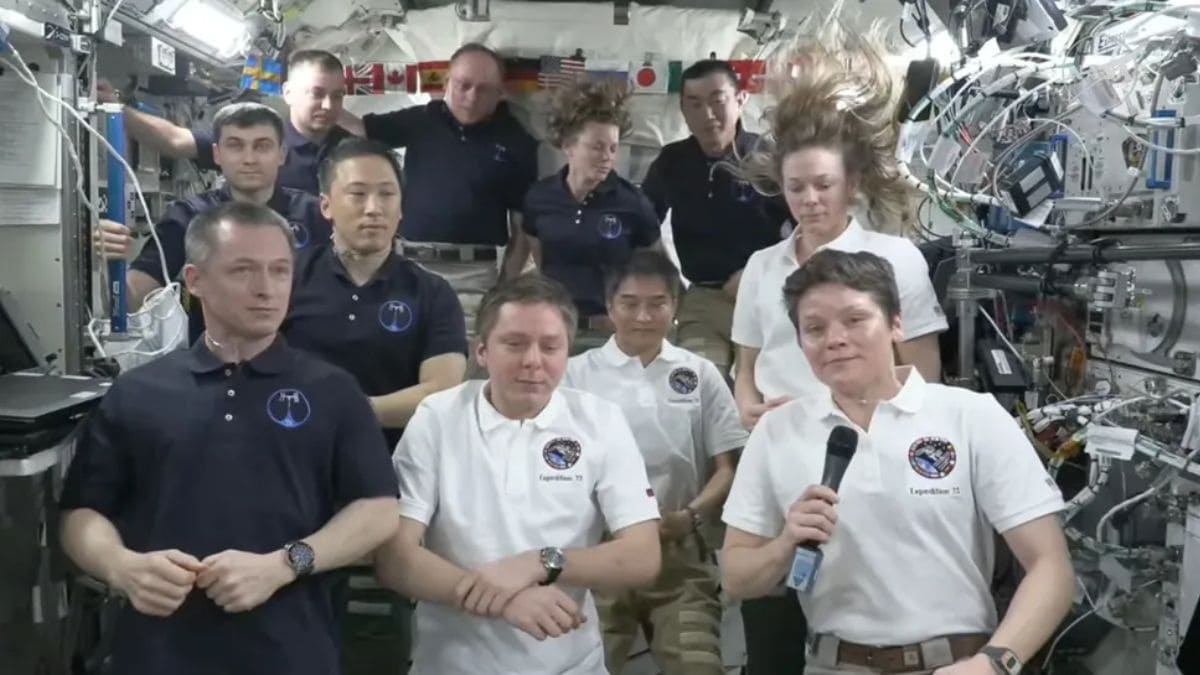
SpaceX’s Crew-10 mission coming to an end; 4 astronauts to return from International Space Station on Aug. 7, 2025 Almost five months into the mission, the crew — NASA’s Anne McClain (commander) and Nichole Ayers, JAXA’s Takuya Onishi, and Roscosmos’s Kirill Peskov — were flying over Mongolia when a workload scenario was suddenly imposed including an emergency descent. They are scheduled to board their Crew Dragon capsule, Endurance, on Thursday Aug. 7 and undock at 12:05 p.m. EST for their return home. The journey back is expected to take approximately 24 hours, with touchdown off the California coast coming Friday morning.

Undocking and Return Schedule

According to NASA, the SpaceX Crew Dragon capsule Endurance is set to undock from the ISS’s Harmony module at 12:05 p.m. EDT on Aug. 7, 2025. NASA will broadcast the departure live, beginning with hatch closure in the morning. After undocking, the capsule will re-enter Earth’s atmosphere on a mostly autonomous flight. It should splash down in the Pacific Ocean off California by about 11:58 a.m. EDT Friday.

The full trip home takes roughly 24 hours overall. NASA notes the schedule could shift if bad weather affects the landing zone. If all goes according to plan, a news conference will follow at 1:30 p.m. EDT on Friday.

Crew and Mission Summary

The Crew Dragon Endurance launched atop a Falcon 9 rocket on March 14, 2025 during SpaceX’s Crew-10 mission. Crew members at the ISS, the four-member team docked on March 16. The photo was taken in Kazakhstan, with US astronauts Anne McClain (crew commander) and Nichole Ayers (pilot); Japan’s Takuya Onishi; Russia’s Kirill Peskov.

They also spent almost five months working together on science experiments and station maintenance. The crew conducted a variety of experiments from cellular biology to new camera technologies during their mission. They had a small goodbye ceremony on the ISS on Aug. 5 They have been replaced by the Crew-11 team who came in on Aug. 2 to start a new tour of duty.

Continue Reading

Science

James Webb Space Telescope Could Help Reveal Dark Matter in a Way Scientists Did Not Anticipate

Published

on

By

New research suggests the James Webb Space Telescope could help scientists understand dark matter by studying oddly shaped early galaxies. These elongated galaxies may form due to dark matter’s gravitational behaviour, offering indirect clues about whether ultralight or warm dark matter particles shaped the early universe.

Continue Reading

Science

Interstellar Comet 3I/ATLAS Nears Earth on Dec. 19, Offering Rare Insights Into Cosmic Visitors

Published

on

By

Interstellar comet 3I/ATLAS will make its closest approach to Earth on Dec. 19. Observing the comet provides scientists a rare opportunity to study dust and gases from its icy nucleus and learn more about material forming around other stars, expanding understanding of interstellar objects while posing no threat to our planet.

Continue Reading

Science

Europe’s Ariane 6 Rocket Lifts Off With First Galileo Satellites, Boosting Europe’s Navigation Network

Published

on

By

Europe’s Ariane 6 rocket has launched its first Galileo navigation satellites, joining the 26-satellite constellation. The mission strengthens Europe’s GPS capabilities and reduces reliance on foreign rockets.

Continue Reading

Trending





