

Ride1Up’s new VORSA modular e-bike gets first savings for Labor Day, Segway i series robot mowers from $799, Lectric, EcoFlow, more

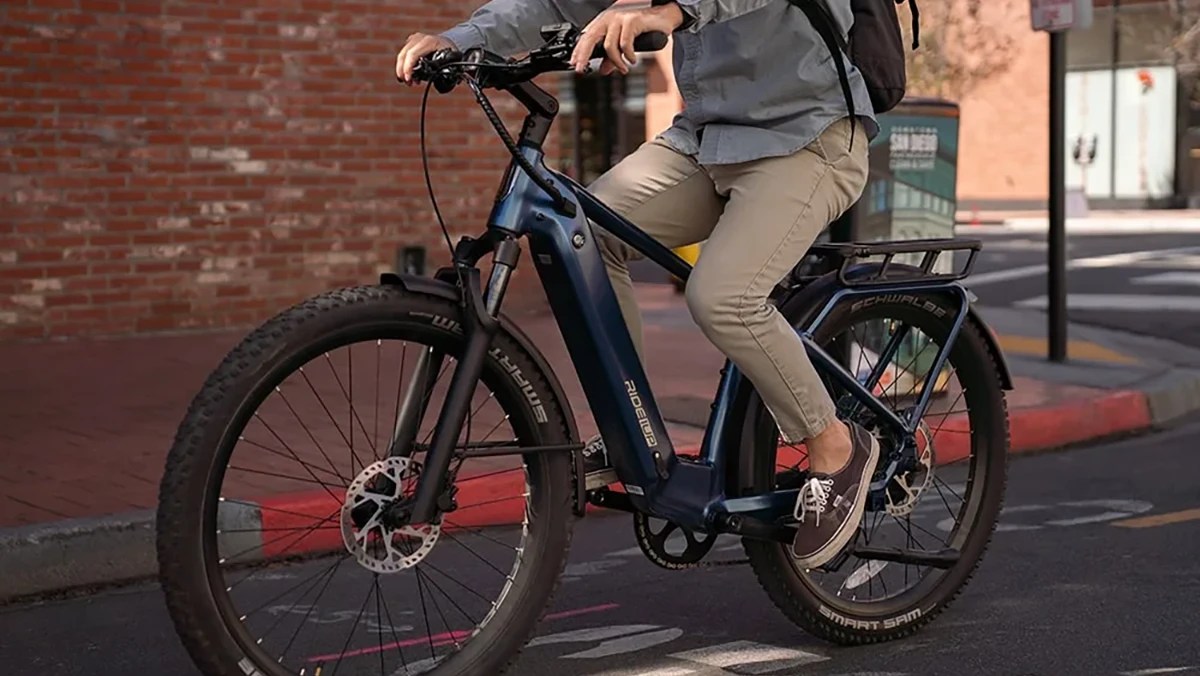
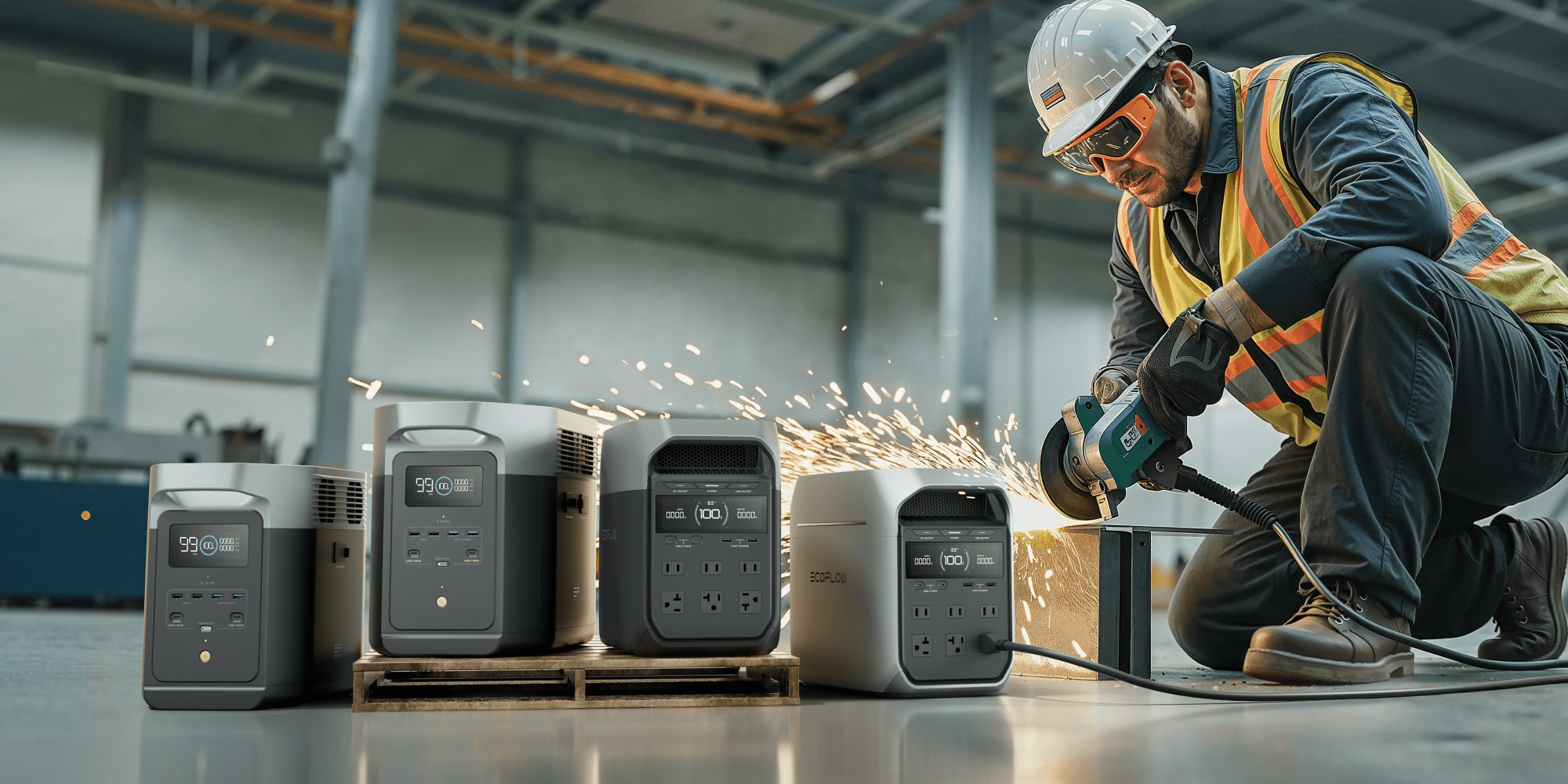
Headlining today’s Green Deals is Ride1Up’s Labor Day Sale that is giving folks the first chance at cash savings on the new VORSA Modular Multi-Use e-bike at $1,595, among other models. Next, we have Segway’s Navimow i105 and i110 Robot Lawn Mowers at their second-best prices starting from $799, as well as the largest bundle package to date on Lectric’s XP4 750 Long-Range Folding Utility e-bike at $1,299. From there, we have EcoFlow’s newest charging solutions, Samsung’s AI-supported 2-in-1 ventless washer/dryer deals, a one-day-only Greenworks sale, and more waiting for you below. Plus, all the hangover savings are at the bottom of the page, like yesterday’s EcoFlow Labor Day Sale + its 48-hour flash offers ending tonight, and more.
Head below for other New Green Deals we’ve found today and, of course, Electrek’s best EV buying and leasing deals. Also, check out the new Electrek Tesla Shop for the best deals on Tesla accessories.
Review: The ST3 Pro e-scooter brings serious suspension alongside smart controls and more as Navee’s latest flagship
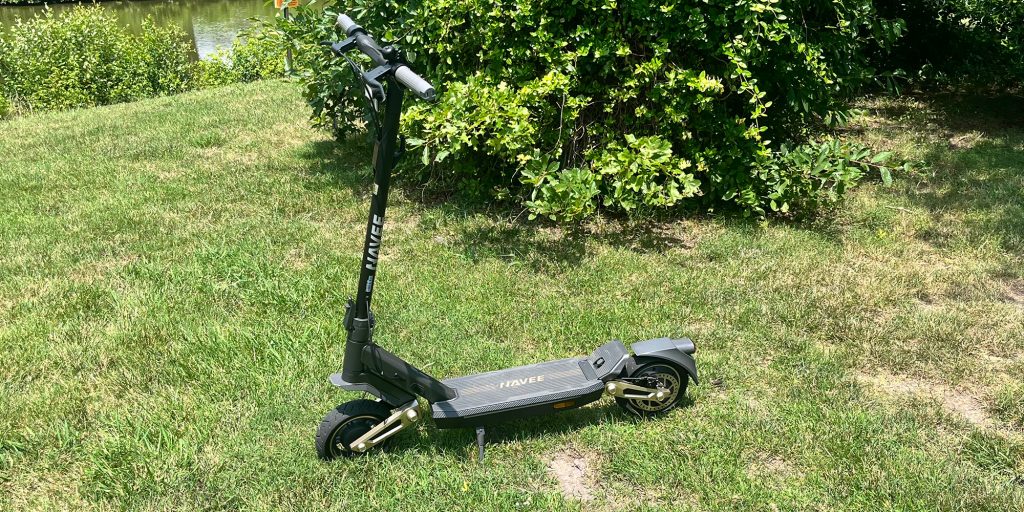
As a long-time rider of Segway electric scooters, my expectations are quite high for new brands looking to climb their way up to the standard that the household-name has set in stone at this point. Only within the last few months did Navee come onto my radar, with the brand offering me the chance to test out its latest flagship model, the ST3 Pro Electric Scooter, which has been quite the surprise, to say the least. At first, it seemed like it was full of gimmicks that were destined to fail, but after riding around for several weeks now, I can happily say that Segway may just have found a new challenger. Head below to get my hands-on impressions of this high-end e-scooter that still retains accessible pricing for the stunning list of features.
To get our full hands-on impression of this new flagship e-scooter, be sure to check out our review here.
Ride1Up’s Labor Day Sale offers first savings on new VORSA modular multi-use e-bike with Apple Find My and more at $1,595
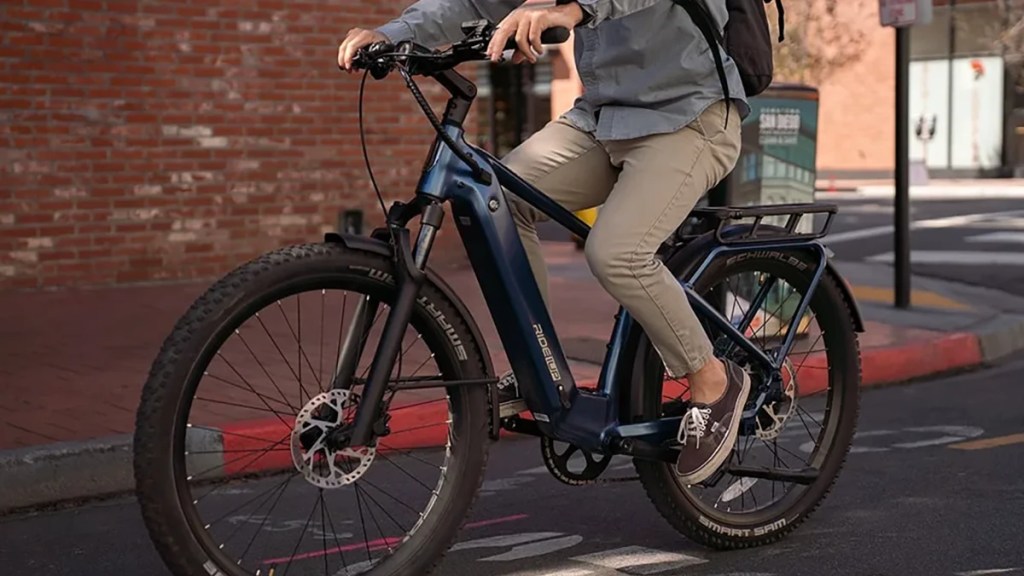
Ride1Up has launched its Labor Day Sale running through the holiday with up to $500 being taken off the tags of various e-bike models. Among the offers we’re seeing, there’s a notable first-time discount hitting Ride1Up’s latest release, the VORSA Modular Multi-Use e-bike at $1,595 shipped. This new versatility-inspired model hit the scene back in April carrying a $1,695 price tag, with this sale being the very first chance at cash savings that we have tracked. It may not be much, but $100 off the tag is still nice, and if you buy two together, that savings increases to $300 off your cart total. Head below to learn more about this model and the others seeing discounts during this holiday event.
Bringing along a more customizable riding experience, as well as some smart features, Ride1Up’s VORSA e-bike sports a modular design, primarily with the removable rear cargo rack that can support packages and passengers up to 150 pounds, as well as a multi-point adjustable stem and removable fenders. It sports a 750W AKM hub motor with 95nm of torque, which is the brand’s strongest hill-climbing motor, alongside a lockable/removable 15Ah Reention Flamingo battery. You’ll be able to reach 20 MPH speeds normally, with an off-road mode unlocking its top 28 MPH speed, while the battery provides you with up to 60 miles of pedal-assisted travel. What’s more, it has a dual-sensor system that lets you switch between a torque sensor and a cadence sensor as you ride.
The Ride1Up VORSA e-bike comes with Apple Find My integrations so you’ll always be able to track it down in case of misplacing it or theft, with a bunch of solid features like the Star Union hydraulic disc brakes that have an electric motor cut off, a 25A water-resistant resin potted 12 Mosfet MIVICE controller, Schwalbe Sam Smart or Continental Ruban 2.6 Touring Tires (varying by frame style), fenders to go over each, a Shimano Acera 8-speed derailleur, a stem-integrated front light, a brake-activated integrated rear light, a smart color display, and more.
If you want to check out the other e-bikes seeing deals during Ride1Up’s Labor Day Sale alongside the new VORSA e-bike, be sure to check out our original coverage here.
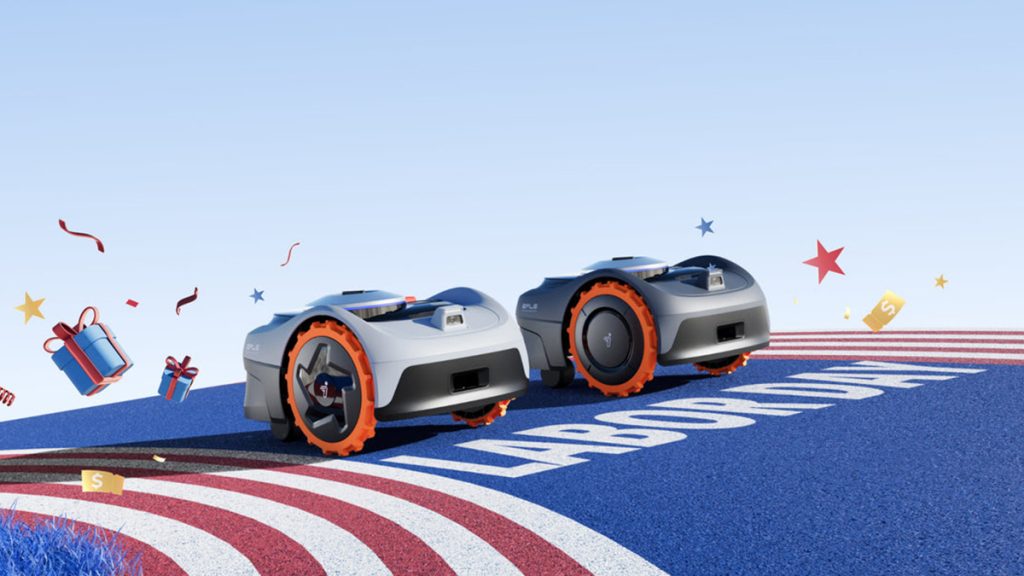
Get the second-best prices on Segway’s Navimow i series robot mowers for Labor Day starting from $799
Segway Navimow has launched a Labor Day Sale through September 1 with 20% discounts on its i series robot mowers, with the i105 Robot Lawn Mower dropping to $799 shipped, which is matching at Amazon, while the upgraded i110 Robot Lawn Mower sits a little higher $1,099 shipped and also matches at Amazon. Over 2025 we’ve been seeing regular opportunities to score either of these models at discounted rates from their $999 and $1,299 full price tags, with discounts normally dropping the costs between $849 and $799 for the i105 model and $1099 for the i110 model, though there was a 4-day window to grab them at their $749 and $999 lows during last month’s Prime Day event. You’re looking at another shot at the second-best prices we have tracked this year, saving you $200 while bringing some automated intelligence to your lawn care routine.
If you want to learn more about these robot lawn mower’s capabilities, be sure to check out our original coverage of this sale here.
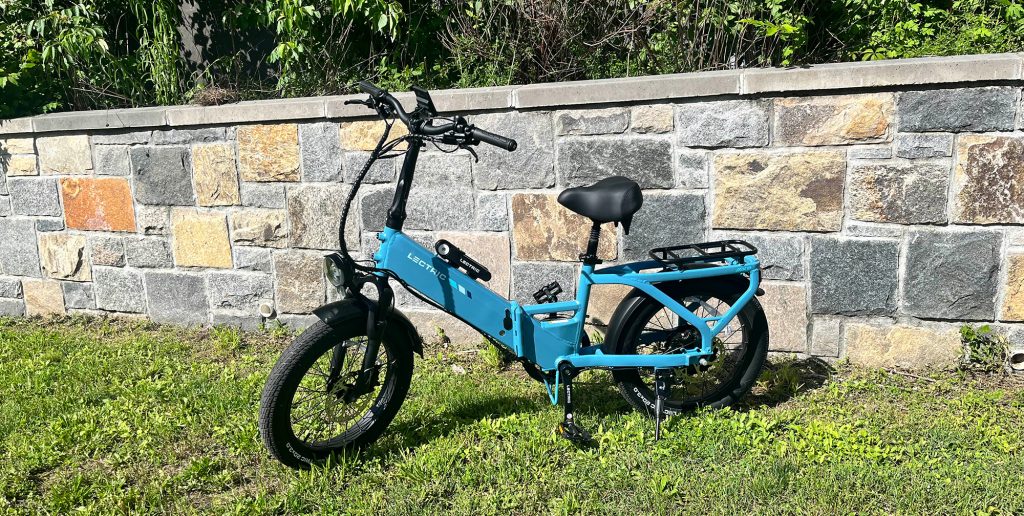
Lectric’s new XP4 750 folding utility e-bikes get biggest bundle of $404 in free gear at $1,299 in Labor Day Sale
Looking back in on Lectric’s ongoing Labor Day Sale, we wanted to shine a spotlight on the largest bundle package yet on the new XP4 750 Long-Range Folding Utility e-bike that comes with $404 in free gear at $1,299 shipped, while the standard XP4 Folding Utility e-bike is keeping its ongoing $79 bundle at $999 shipped. You’d normally have to pay $1,703 and $1,078 for these bundles without the savings, which is the biggest value offer we’ve seen so far since these models hit the market back in May. While they’ve mostly kept to their starting $356 and $79 bundle sizes, we did see the long-range variation getting a higher $371 package during the brand’s Prime Day sale, which is getting beaten out here through the upcoming holiday. The included bundle contains the brand’s new LevelUp rack, a suspension seat post, an Elite headlight, an accordion-style bike lock, a phone mount, and a water-resistant pannier bag.
If you want to learn more about this new e-bike, be sure to check out our original coverage of this spotlight deal here, or check out our hands-on review here.

Save up to 47% on EcoFlow’s new RAPID series of 10,000mAh to 27,650mAh power banks starting from $86
As part of its ongoing Labor Day Sale running through August 31, EcoFlow has launched its new RAPID and RAPID Pro series of power banks with up to 47% savings and coming with varying sizes of free charger blocks. Things start with the smallest of these units, the RAPID Pro 67W 10,000mAh Power Bank at $85.50 shipped, after using the promo code 25EFDCAFF at checkout for an extra 5% off your order, bringing it down from its otherwise undiscounted $90 MSRP. While the only savings on this unit come from the bonus savings, the other larger variants are seeing proper discounts that go lower with the same code, with the RAPID Pro 230W 20,000mAh Power Bank at $132.99 shipped, down from $180, the the RAPID 170W 25,000mAh Power Bank at $94.99 shipped, down from $190, and the RAPID Pro 300W 27,650mAh Power Bank at $170.99 shipped, down from $220 – just be sure to use that promo code on any model for the maximum savings.
If you want to learn more about these new charging solutions, be sure to check out our original coverage of these deals here.
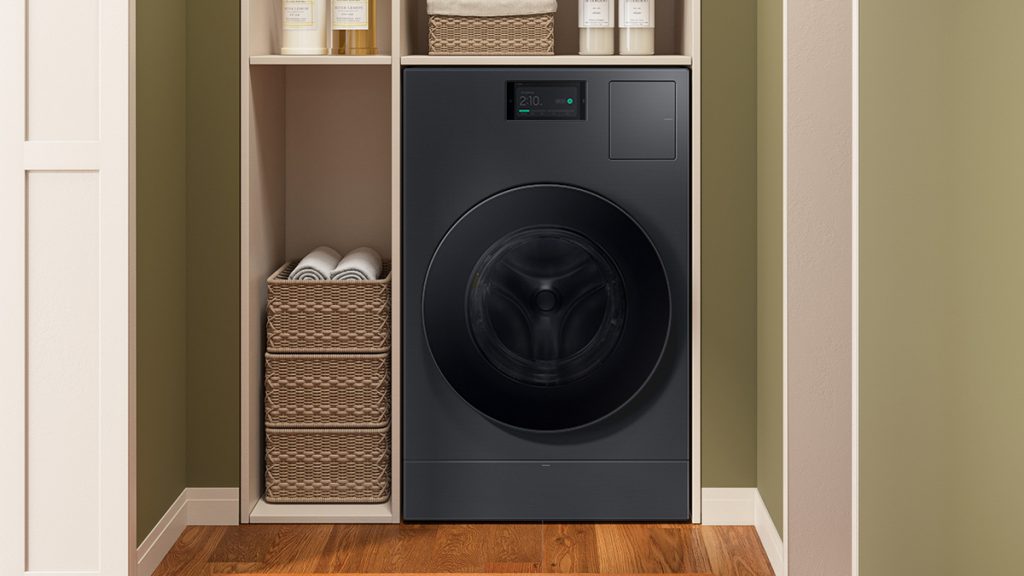
Save up to $1,300 on Samsung’s Bespoke ventless AI washer/dryer Combo starting from $1,700 for Labor Day
As part of its ongoing Labor Day appliance sale, Samsung is offering its Bespoke AI Laundry Combo Electric Ventless Heat Pump Washer/Dryer at $1,999 shipped, while over at Best Buy things start at $1,799.99 shipped, after using the promo code Save10 at checkout, or Plus and Total members can get it for less at $1,699.99 shipped, with no open-box options this time around from either site. This eco-friendly model normally goes for as much as $3,299 without any discounts, which we’ve mostly seen taken down between $2,199 and $1,999 this year, though in the past it’s gone as low as $1,899 direct from the brand and $1,700 from Best Buy (which we haven’t seen since Christmas sales).
If you want to learn more about this eco-friendly appliance, be sure to check out our original coverage of this deal here.
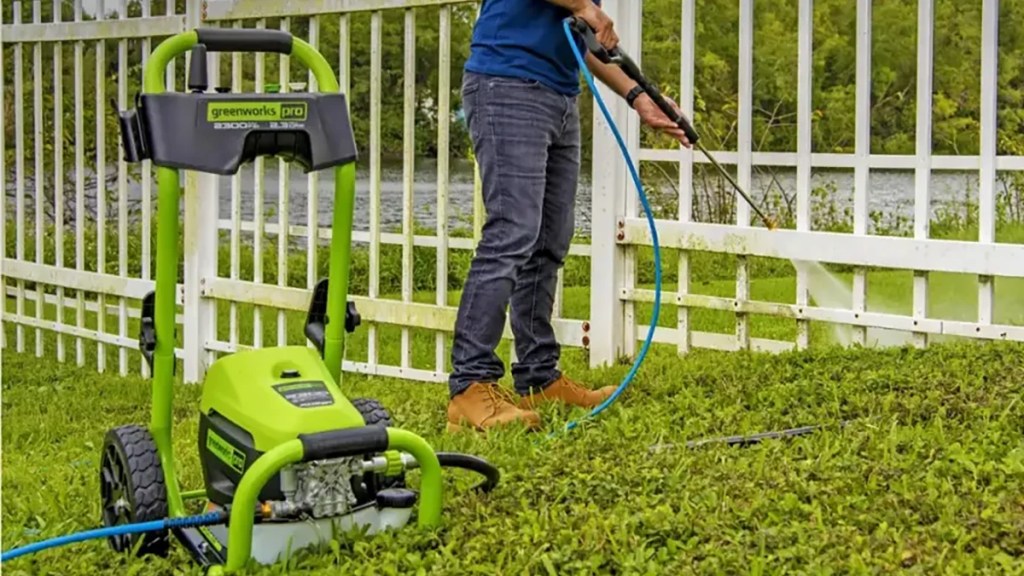
Get up to 2,300 PSI cleaning power with this pro-grade Greenworks electric pressure washer at $190 (Today only)
As part of its Deals of the Day, Best Buy is offering the Greenworks Pro 2,300 PSI Electric Pressure Washer at $189.99 shipped, which beats out the brand’s direct website pricing by $140. While it carries a $330 MSRP direct from Greenworks, this pro-grade model would normally cost you $320 at Best Buy outside of sales, with it currently unavailable at Amazon, but you can find a similar 2,300 PSI model at $288, which mainly sports a different frame and motor design. For the rest of the day you can score this legacy cleaner with a 41% markdown that cuts $130 off the going rate for the best price we can find.
If you want to learn more about this electric pressure washer, be sure to check out our original coverage of this one-day-only deal here.
Best Summer EV deals!
- Velotric Nomad 2X e-bike (camo) with DELTA 3 Plus station: $3,048 (Reg. $3,298)
- Velotric Nomad 2X e-bike (sage or fig) with DELTA 3 Plus station: $2,948 (Reg. $3,298)
- Aventon Ramblas Electric Mountain Bike: $2,599 (Reg. $2,899)
- Ride1Up Prodigy v2 Brose Mid-Drive Gates Belt CVT e-bike: $2,595 (Reg. $2,795)
- Ride1Up Revv 1 DRT Off-Road Moped-Style e-bike: $2,395 (Reg. $2,595)
- Ride1Up Revv 1 Full Suspension Moped-Style e-bike: $2,395 (Reg. $2,595)
- Segway Xafari Red e-bike: $2,000 (Reg. $2,400)
- Velotric Nomad 2 All-Terrain e-bike with $120 bundle (new): $1,999 (No price cut)
- Rad Power Radster Road Commuter e-bike: $1,999 (Reg. $2,199)
- Rad Power Radster Trail Off-Road e-bike: $1,999 (Reg. $2,199)
- Lectric XPedition 2.0 35Ah Cargo e-bike w/ up to $654 bundle: $1,999 (Reg. $2,653)
- Ride1Up Prodigy v2 Brose Mid-Drive 9-Speed e-bike: $1,995 (Reg. $2,495)
- Tenways AGO X All-Terrain e-bike with $307 bundle: $1,899 (Reg. $2,499)
- Velotric Fold 1 Plus e-bike (gray or white) with DELTA 2 station: $1,898 (Reg. $2,198)
- Velotric Fold 1 Plus e-bike (mango or blue) with DELTA 2 station: $1,828 (Reg. $2,198)
- Aventon Abound SR Smart Cargo e-bike (new, first discount): $1,799 (Reg. $1,899)
- Velotric Breeze 1 Cruiser e-bike with $150 bundle (new, first discount): $1,699 (Reg. $1,799)
- Aventon Pace 4 Smart Cruiser e-bike (new, second-ever discount): $1,699 (Reg. $1,799)
- Rad Power RadExpand 5 Plus Folding e-bike (lowest price): $1,699 (Reg. $1,899)
- Lectric XPedition 2.0 26Ah Cargo e-bike w/ $505 bundle: $1,699 (Reg. $2,204)
- Lectric XPeak 2.0 Long-Range Off-Road e-bike with $434 bundle: $1,699 (Reg. $2,133)
- Aventon Aventure 2 All-Terrain e-bike: $1,699 (Reg. $1,999)
- Aventon Abound Cargo e-bike: $1,599 (Reg. $1,999)
- Heybike Limited Miami Sunset Ranger 3.0 Pro Folding e-bike (new): $1,599 (Reg. $1,699)
- Ride1Up VORSA Modular Multi-Use e-bike (first discount): $1,595 (Reg. $1,695)
- Rad Power RadRunner Cargo Utility e-bike with $109 bundle: $1,499 (No pirce cut)
- Lectric XPeak 2.0 Standard Off-Road e-bike with $227 bundle: $1,499 (Reg. $1,726)
- Lectric XP Trike2 with $242 preorder bundle: $1,499 (Reg. $1,741)
- Rad Power RadWagon 4 Cargo e-bike: $1,499 (Reg. $1,799)
- Tenways CGO600 Pro e-bikes with $118 bundle: $1,499 (Reg. $1,899)
- Velotric Nomad 1 Plus All-Terrain e-bike: $1,499 (Reg. $1,899)
- Aventon Sinch 2 Folding e-bike (lowest price): $1,399 (Reg. $1,699)
- Lectric XPedition 2.0 13Ah Cargo e-bike with $326 bundle: $1,399 (Reg. $1,725)
- Aventon Level 2 Commuter e-bike (2025 low): $1,399 (Reg. $1,899)
- Heybike Ranger 3.0 Pro Folding Fat-Tire e-bike (new): $1,399 (Reg. $1,499)
- Ride1Up Roadster V3 Lightweight Premium e-bike: $1,395 (Reg. $1,495)
- Velotric T1 ST Plus Lightweight e-bike: $1,399 (Reg. $1,649)
- Rad Power RadRover 6 Plus Step-Thru Fat Tire e-bike: $1,299 (Reg. $1,599)
- Lectric XPress 750 Commuter e-bikes with $336 bundle: $1,299 (Reg. $1,665)
- Lectric XP4 750 LR Folding Utility e-bikes with $404 bundle: $1,299 (Reg. $1,703)
- Heybike Mars 3.0 Folding Fat-Tire e-bike (new): $1,199 (Reg. $1,299)
- Heybike Mars 2.0 Folding Fat-Tire e-bike with extra battery: $1,199 (Reg. $1,848)
- Lectric XP Lite 2.0 JW Black LR e-bike with $316 bundle: $1,099 (Reg. $1,415)
- Ride1Up Portola Folding e-bike with BOGO accessory promo: $995 (Reg. $1,095)
- Lectric XP4 Standard Folding Utility e-bikes with $79 bundle: $999 (Reg. $1,078)
- Lectric XP Lite 2.0 Long-Range e-bikes with up to $316 bundles: $999 (Reg. $1,315)
- Heybike Hauler Single-Battery Cargo e-bike: $999 (Reg. $1,499)
- Rad Power RadExpand 5 Folding e-bike: $999 (Reg. $1,599)
- Segway ZT3 Pro All-Terrain Electric KickScooter (code ZT3AUG100OFF): $900 (Reg. $1,300)
- Segway F3 Electric KickScooter: $750 (Reg. $1,000)
- Navee ST3 Pro Electric Scooter (code SCHOOL15): $727 (Reg. $1,014)
- ENGWE Engine Pro Folding e-bike (use code 9TO5ENGWE50): $750 (Reg. $1,500)
- Navee GT3 Max Smart Electric Scooter (code SCHOOL15): $561 (Reg. $750)

Best new Green Deals landing this week
The savings this week are also continuing to a collection of other markdowns. To the same tune as the offers above, these all help you take a more energy-conscious approach to your routine. Winter means you can lock in even better off-season price cuts on electric tools for the lawn while saving on EVs and tons of other gear.
- EcoFlow’s 48-hour Labor Day flash sale drops expanded DELTA 3 Plus bundle to new $1,049 low (Reg. $1,398), more from $489
- EcoFlow’s Labor Day Sale takes up to 62% off power stations with free gifts, bonus savings, and more starting from $90
- Velotric Labor Day Sale drops lightweight T1 ST urban commuter e-bike to $1,299 with free gear (Reg. $1,649), more from $899
- Buying Jackery’s Explorer 2000 v2 and 300 power stations separately saves you more than a bundle offer at $1,068 (Save $690)
- Electrified Weekly – Labor Day Sales from Lectric, Rad, Anker, Jackery + exclusive $2,900 Mango Power E station savings, more
FTC: We use income earning auto affiliate links. More.

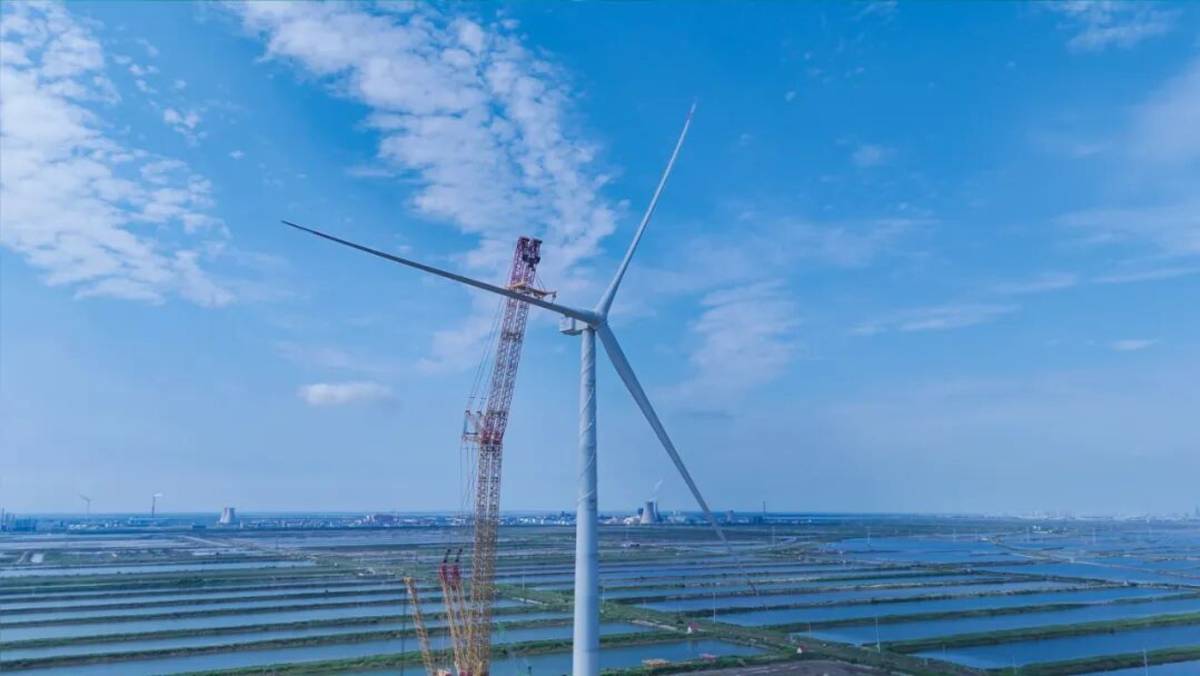
China’s Dongfang Electric has installed a 26-megawatt offshore wind turbine, snatching the title of world’s most powerful from Siemens Gamesa’s 21.5 turbine in Denmark.

The Chinese state-owned manufacturer announced today that it has installed the world’s most powerful wind turbine prototype at a testing and certification base. This turbine, the world’s largest for capacity and size, boasts a blade wheel diameter of more than 310 meters (1,107 feet) and a hub height of 185 meters (607 feet). Dongfang shipped the turbine’s nacelle earlier this month – the world’s heaviest – along with three blades.
This offshore wind turbine is designed for areas with wind speeds of 8 meters per second and above. With average winds of 10 meters per second, just one of these giants can generate 100 GWh of power annually, which is enough to power 55,000 homes. That’s enough to cut standard coal consumption by 30,000 tons and reduce CO2 emissions by 80,000 tons. Dongfang says it’s wind resistant up to 17 (200 km/h) on the extended Beaufort scale.
In May, Dongfang said it had completed static load testing on the turbine’s blades, and the turbine is now undergoing fatigue testing, which could take up to a year before the turbine is fully certified.
Read more: Trump just killed all offshore wind zones as US power needs surge

The 30% federal solar tax credit is ending this year. If you’ve ever considered going solar, now’s the time to act. To make sure you find a trusted, reliable solar installer near you that offers competitive pricing, check out EnergySage, a free service that makes it easy for you to go solar. It has hundreds of pre-vetted solar installers competing for your business, ensuring you get high-quality solutions and save 20-30% compared to going it alone. Plus, it’s free to use, and you won’t get sales calls until you select an installer and share your phone number with them.
Your personalized solar quotes are easy to compare online and you’ll get access to unbiased Energy Advisors to help you every step of the way. Get started here.
FTC: We use income earning auto affiliate links. More.


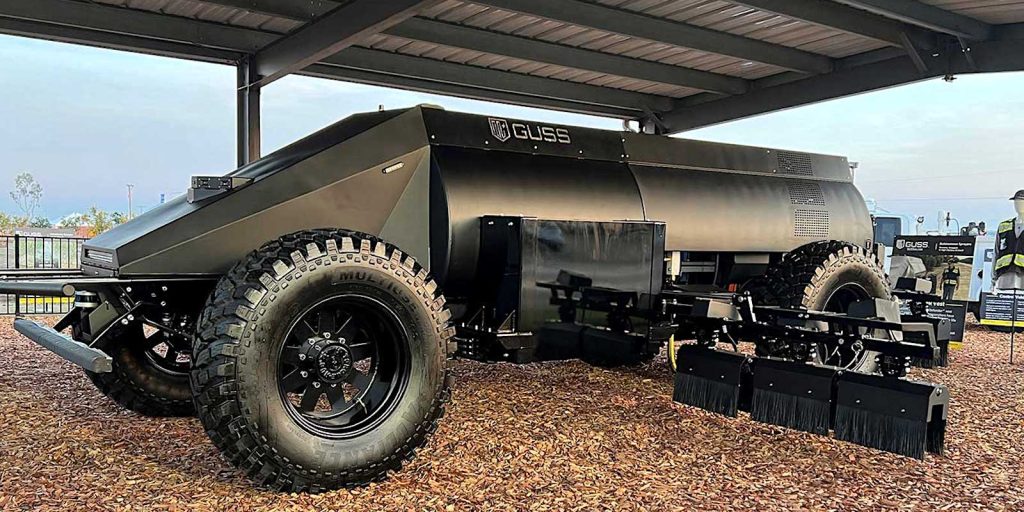
The autonomous ag equipment experts behind the GUSS robotic sprayers have been developing their AI tech as part of a JV with John Deere for years — and now, that marriage is official. John Deere has acquired 100% of GUSS, and has big plans to pick up that tech and run with it like a … well, you know.
The latest battery-powered GUSS autonomous sprayer made its debut at the 2024 World Ag Expo show in Tulare, California, last summer, where executives from Deere called it, “the world’s first and only fully electric autonomous herbicide orchard sprayer.”
Since then, interest in automated ag equipment has only grown — fueled not just by rising demand for affordable food and produce, but by a national labor shortage made worse by the Trump Administration’s tough anti-immigration policies as well. It’s specifically those challenges around labor availability, input costs, and crop protection that GUSS and John Deere have been spending millions to address.
“Fully integrating GUSS into the John Deere portfolio is a continuation of our dedication to serving high-value crop customers with advanced, scalable technologies to help them do more with less,” explains Julien Le Vely, director, Production Systems, High Value & Small Acre Crops, at John Deere. “GUSS brings a proven solution to a fast-growing segment of agriculture, and its team has a deep understanding of customer needs in orchards and vineyards. We’re excited to have them fully part of the John Deere team.”
About GUSS

The GUSS electric sprayer is powered by a Kreisel Battery Pack 63 (KBP63), which has a nominal energy capacity of 63 kWh, enabling the machine to operate for 10-12 continuous hours between overnight (L2) charges.
The GUSS electric sprayers feature the Smart Apply weed detection system that measures chlorophyll in the various plants it encounters, identifying weeds embedded among the crops, and only sprays where weeds are detected. The company claims its weed detecting tech significantly reduces the amount of chemicals being sprayed onto farmers’ crops, resulting in “up to 90% savings” in sprayed material.
John Deere’s deep pockets will support GUSS as it continues to expand its global reach, and help the group to accelerate Smart Apply’s innovation and integration with other John Deere precision agriculture technologies.
“Joining John Deere enables us to tap into their unmatched innovative capabilities in precision agriculture technologies to bring our solutions to more growers around the world,” says Gary Thompson, GUSS’ COO. “Our team is passionate about helping high-value crop growers increase their efficiency and productivity in their operations, and together with John Deere, we will have the ability to have an even greater impact.”
GUSS-brand autonomous sprayers will be sold and serviced exclusively through John Deere dealers, and the GUSS business will retain its name, branding, employees, and independent manufacturing facility in Kingsburg, California.
More than 250 GUSS machines have been deployed globally, having sprayed more than 2.6 million acres over 500,000 autonomous hours of operation.
Electrek’s Take
Population growth, while slowing, is still very much a thing – and fewer and fewer people seem to be willing to do the work of growing the food that more and more people need to eat and live. This autonomous tech multiplies the efforts of the farmers that do show up for work every day, and the fact that it’s more sustainable from both a fuel perspective and a toxic chemical perspective makes GUSS a winner.
SOURCE I IMAGES: John Deere.

If you’re considering going solar, it’s always a good idea to get quotes from a few installers. To make sure you find a trusted, reliable solar installer near you that offers competitive pricing, check out EnergySage, a free service that makes it easy for you to go solar. It has hundreds of pre-vetted solar installers competing for your business, ensuring you get high-quality solutions and save 20-30% compared to going it alone. Plus, it’s free to use, and you won’t get sales calls until you select an installer and share your phone number with them.
Your personalized solar quotes are easy to compare online and you’ll get access to unbiased Energy Advisors to help you every step of the way. Get started here.
FTC: We use income earning auto affiliate links. More.

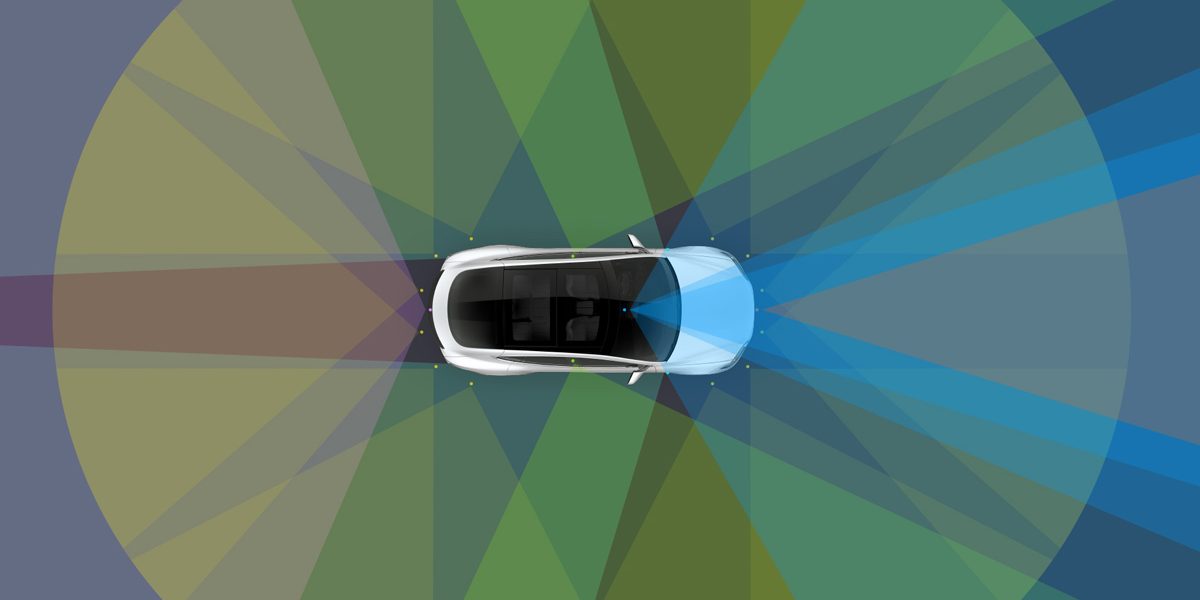
Lawyers for Tesla filed a motion asking a court to throw out a recent $243 million verdict against the company related to a fatal crash in Florida in 2019. The case is the first instance of Tesla being ruled against by a court in an Autopilot liability case – previous cases had ended up settled out of court.
To catch up, the case in question is the $243 million Autopilot wrongful death case which concluded early this month. It was the first actual trial verdict against the company in an Autopilot wrongful death case – not counting previous out-of-court settlements.
The case centered around a 2019 crash of a Model S in Florida, where the driver dropped his phone and while he was picking it up, the Model S drove through a stop sign at a T-intersection, crashing into a parked Chevy Tahoe which then struck two pedestrians, killing one and seriously injuring the other.
Tesla was also caught withholding data in the case, which is not a good look.
In the end, for the purposes of compensatory damages, the driver was found 67% responsible and Tesla was found 33% responsible. But Tesla was also slapped with $200 million in punitive damages. The plaintiffs reached a settlement with the driver separately.
Tesla said at the time that it planned to appeal the case, and its first move in that respect happened today, with lawyers for Tesla filing a 71-page motion laying out the problems they had with the trial.
In it, Tesla requests either that the previous verdict be thrown out, that the amount of damages be reduced or eliminated, or that the case go to a new trial, based on what Tesla contends were numerous errors of law during the trial.
The table of contents of Tesla’s filing lays out the company’s rough arguments for why it’s requesting the verdict to be thrown out, with Tesla seeming to throw several arguments at the wall to see what sticks:
- I. Tesla Is Entitled to Judgment as a Matter of Law (or at Least a New Trial) on Liability.
- A. The Verdict Is Unsupported by Reliable Expert Evidence.
- B. Plaintiffs’ Design-Defect Theories Fail as a Matter of Law.
- 1. Tesla’s 2019 Model S Was Not Defective.
- 2. McGee Was the Sole Cause of Plaintiffs’ Injuries.
- C. The Failure-to-Warn Claim Fails as a Matter of Law.
- 1. Tesla Had No Duty to Warn.
- 2. Tesla Provided Extensive Warnings.
- 3. The Asserted Failure to Warn Didn’t Cause the Crash.
- D. Tesla Is Entitled to a New Trial If the Record Cannot Sustain the Verdict as to Any Theory on Which the Jury Was Instructed.
- II. Highly Prejudicial Evidentiary Errors Warrant a New Trial on All Issues.
- A. The Improper Admission of Data-Related Evidence Prejudiced Tesla.
- B. The Improper Admission of Elon Musk’s Statements Prejudiced Tesla.
- C. The Improper Admission of Dissimilar Accidents Prejudiced Tesla.
- III. This Court Should Grant Tesla Judgment as a Matter of Law on Punitive Damages or at Least Significantly Reduce Punitive Damages.
- A. Florida Law Prohibits the Imposition of Any Punitive Damages in This Case.
- B. Florida Law Caps Punitive Damages at Three Times the Compensatory Damages Actually Awarded Against Tesla.
- C. The Due Process Clause Limits Punitive Damages Here to No More Than the Net Award of Compensatory Damages.
- 1. Tesla’s Conduct Was Not Reprehensible.
- 2. A Substantial Disparity Exists Between the $200 Million Award of Punitive Damages and the $42.3 Million Award of Compensatory Damages.
- 3. Comparable Civil Penalties Do Not Justify the Punitive-Damages Award.
- IV. This Court Should Reduce the Grossly Excessive Award of Compensatory Damages to No More Than $69 Million.
In short, Tesla blames the driver (who was found 67% liable) fully for the crash, says that the Model S and its Autopilot system were state-of-the-art and not defective because “no car in the world at the time” could have avoided the accident, that it provided proper warnings even though it didn’t need to, that evidence was improperly admitted to prejudice the jury against Tesla, and that the punitive damages are excessive.
After looking through the document, Tesla’s main contention seems to be with the admission of various evidence that it says prejudiced the jury against Tesla.
Indeed, the only exhibit attached to the filing is a transcript of a podcast episode where one of plaintiffs’ experts talks about evidence that Tesla withheld data, which Tesla says should have been inadmissible and prejudiced the jury against it.
The plaintiffs repeatedly asserted that Tesla had deliberately withheld or tried to delete data, which required them to bring in third party experts to discover and examine the data.
Tesla says that the only reason these arguments were brought into court was to make the jury feel like there was a coverup, even though Tesla claims that there was no coverup. By repeatedly mentioning this, Tesla says the jury had a more negative view of the company than was fair.
It also says that Tesla CEO Elon Musk’s statements about Autopilot shouldn’t have been admissible, and that they prejudiced the jury against Tesla. Tesla says that the statements by Musk shown at the trial were irrelevant to plaintiffs’ case, exceeded the limits the court had set on which statements would be admissible, and that the admission of these statements “would disincentivize companies from making visionary projections about anticipated technological breakthroughs.”
You can read through the full filing here.
Update: After this story was published, plaintiffs’ attorneys reached out with their own statement
“This motion is the latest example of Tesla and Musk’s complete disregard for the human cost of their defective technology. The jury heard all the facts and came to the right conclusion that this was a case of shared responsibility, but that does not discount the integral role Autopilot and the company’s misrepresentations of its capabilities played in the crash that killed Naibel and permanently injured Dillon. We are confident the court will uphold this verdict, which serves not as an indictment of the autonomous vehicle industry, but of Tesla’s reckless and unsafe development and deployment of its Autopilot system.”
–Brett Schreiber of Singleton Schreiber, lead trial counsel for plaintiffs Dillon Angulo & Naibel Benavides.
Electrek’s Take
Reading through the filing is persuasive at first, but remember that this is only one side of the story – and Tesla is well-known for never budging an inch in legal or reputational matters. (Update: for a quick reaction from “the other side,” see the statement by plaintiffs’ attorneys directly above).
Thinking a little deeper, the filing does rely on a similar “puffery” argument which Tesla has used before. The idea here is that Musk’s statements should be ignored because he, as the CEO of the company, has an incentive (and well-known tendency) to overstate the capabilities of its vehicles.
Lawyers did not use that exact word here, but they do claim that Musk’s statements are “forward-looking” and “visionary.”
But, for a guy who talks so much that he wasted $44 billion on a $12 billion social media site (twice) so that he could force his words in front of every user every day, denying that his words have an effect is a strange legal argument.
Indeed, Tesla has a history of not doing paid advertisements in traditional media, and has relied on Musk, and specifically Musk’s twitter account, to be the company’s impromptu communications platform. Musk even closed the company’s PR department, instead taking on the full burden of that himself.
So to argue that Musk’s statements shouldn’t be admissible, or that they didn’t set the tone for the organization, is more than a little silly.
While Tesla and Musk did state many times that Autopilot was not full self-driving (although, neither was the feature they marketed under the name, ahem, “Full Self-Driving”), the balance of Musk’s statements describing Tesla’s features definitely could have led a driver to think that the vehicles were more capable than any other vehicle on the road.
This is why it’s strange that Tesla also argues that “no other car” could have stopped in the situation of the crash. If your company is constantly claiming that you have the best, safest, most autonomy-enabled vehicle in the world (including in this filing, where it is referred to as “state of the art”), then who cares whether other cars could have done it or not? We’re talking about your car, not anything else.
Further, Tesla said that admitting these statements will put a chilling effect on every corporation’s ability to project anticipated breakthroughs in tech. To this I say, frankly: good. Enough with the nonsense, lets focus on reality, and lets stop excusing lies as corporate puffery, across all industries.
But this is an example of Tesla trying to have it both ways, to pretend that Musk’s statements are just puffery but also that they are important to breakthroughs and that silencing Musk would harm the company. Yes, it probably would harm Tesla’s outreach – because Musk’s statements are roughly the only source of Tesla’s advertising, which is why they ought to be heard to establish what the public thinks about the capabilities of Teslas.
And while Tesla says that cases like these would “chill” development of safety features if manufacturers are punished for bringing them to market, the punishment here isn’t for bringing the feature to market, it’s for overselling the feature in a way that set public expectations too high. Other features have not received this sort of scrutiny because other features don’t get pumped up daily with ridiculous overstatements by the company’s sole source of advertising.
On the other points, I’m not a lawyer. I’m not up to date on the specific limits to punitive damages in Florida. But on the surface, it seems fair to me that if a company was found to withhold data in an important case, after declining a settlement, that some level of significant punishment is fair.
After all, withholding data in a single non-fatal crash that wasn’t even their fault is what led Cruise to shut down operations everywhere. That may have been an overreaction and would certainly be an overreaction in this case with Tesla, given the driver’s responsibility for the crash. But in this case, the damage done to people (a death) was greater, and the damages Tesla is being told to pay ($243 million) will not lead to a shutdown of the entire company. Especially considering this is the same company that just managed to find tens of billions of dollars to give to a bad CEO.
The 30% federal solar tax credit is ending this year. If you’ve ever considered going solar, now’s the time to act. To make sure you find a trusted, reliable solar installer near you that offers competitive pricing, check out EnergySage, a free service that makes it easy for you to go solar. It has hundreds of pre-vetted solar installers competing for your business, ensuring you get high-quality solutions and save 20-30% compared to going it alone. Plus, it’s free to use, and you won’t get sales calls until you select an installer and share your phone number with them.
Your personalized solar quotes are easy to compare online and you’ll get access to unbiased Energy Advisors to help you every step of the way. Get started here.
FTC: We use income earning auto affiliate links. More.
-
 Sports3 years ago
‘Storybook stuff’: Inside the night Bryce Harper sent the Phillies to the World Series
-
 Sports1 year ago
Story injured on diving stop, exits Red Sox game
-
 Sports2 years ago
Game 1 of WS least-watched in recorded history
-
 Sports2 years ago
MLB Rank 2023: Ranking baseball’s top 100 players
-
Sports4 years ago
Team Europe easily wins 4th straight Laver Cup
-
 Sports2 years ago
Button battles heat exhaustion in NASCAR debut
-
 Environment2 years ago
Japan and South Korea have a lot at stake in a free and open South China Sea
-
 Environment11 months ago
Here are the best electric bikes you can buy at every price level in October 2024