
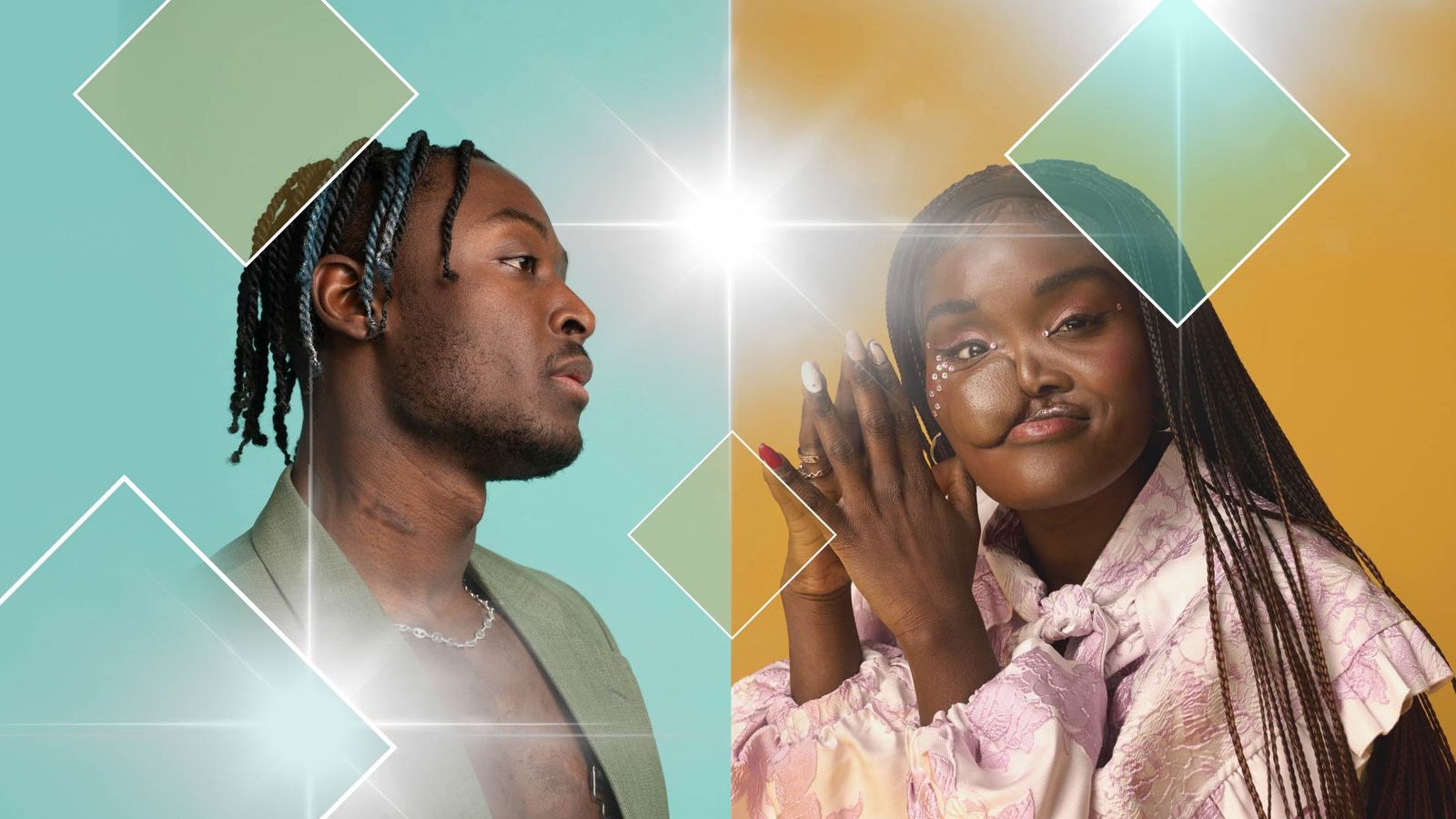
What if Romeo had a scar? Or Juliet a facial difference? The actors challenging screen conventions

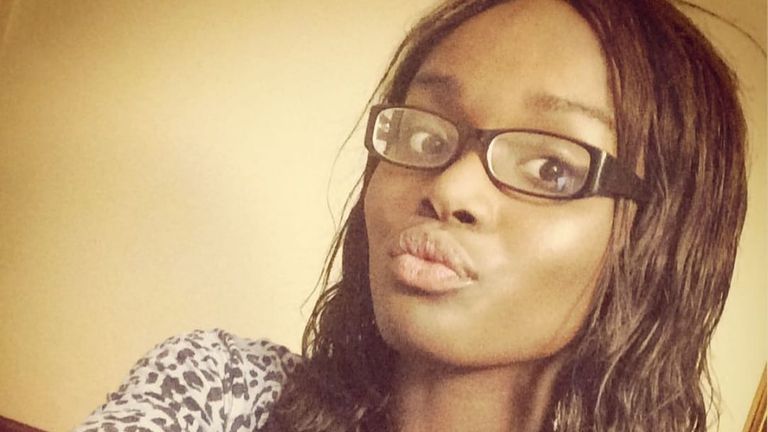
Crystal was 18 when bone cancer changed her face. On top of chemotherapy and operations, she had to deal with other painful realities too.
She told Sky News: “Pre-cancer, and everything that happened I wasn’t aware how people who had facial differences were villainised or victimised.
Crystal before her diagnosis
“Experiencing that, seeing the trauma, I’ve been so affected by people staring at me in the street, and hate comments about my appearance.”
She believes part of the problem is the screen portrayal of visibly different characters: “There’s a narrative in Hollywood, especially that’s been going on for years, that people are not addressing and seeing that these are real people.”
Refusing to let her differences keep her from pursuing her dreams, Crystal studied acting at LAMDA, one of the UK’s top drama schools.
Now a professional actress, she knows her appearance will always be judged.
“[My visible difference] is on my face. I can’t really hide anything. Every time I talk or enter a room, it’s not like anyone’s fault, I just know that people have that first perception or viewpoint of me.”
With aspirations to one day appear in a Marvel movie, she hopes her drive to perform will help others in the future.
“I didn’t have anyone who looked like me as a role model… It would have just been so much better if I’d had that one person to look up to, to be inspired by.”
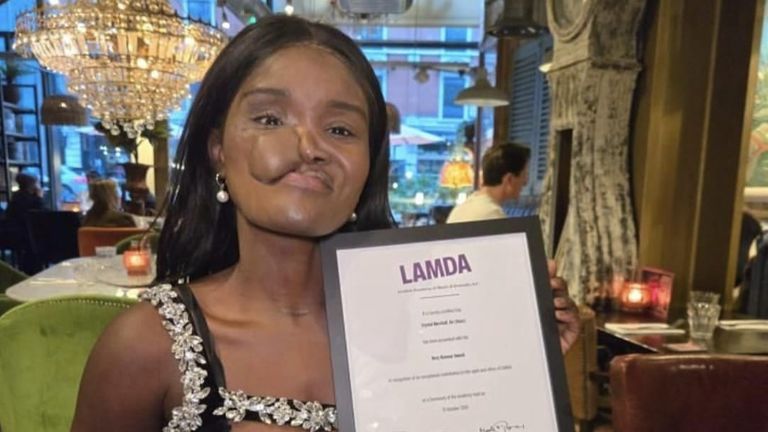
Crystal graduated from LAMDA in 2024
Lack of representation is not the only problem. When visible difference does make it onto the screen, misrepresentations and negative overtones often reinforce stigma.
Nearly one in five people in the UK self-identifying as having a visible difference, such as a mark, scar or condition, according to charity Changing Faces.
New research they conducted into the way disfigurement is portrayed on screen found that people with visible differences were over twice as likely to be shown as a victim or a villain than as a love interest.
Film and television have used scars, burns and birthmarks as a shorthand for villainy across the genres for years. From Bond to Batman and Star Wars, to more family-friendly productions such as The Lion King.
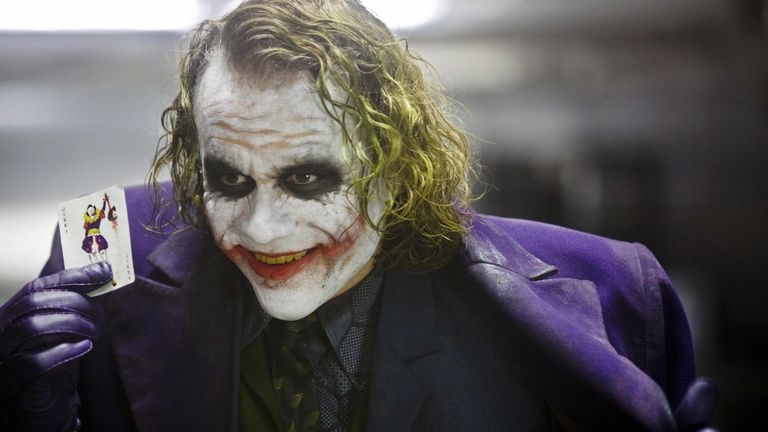
Heath Ledger as the infamous Joker. Pic: Rex Features
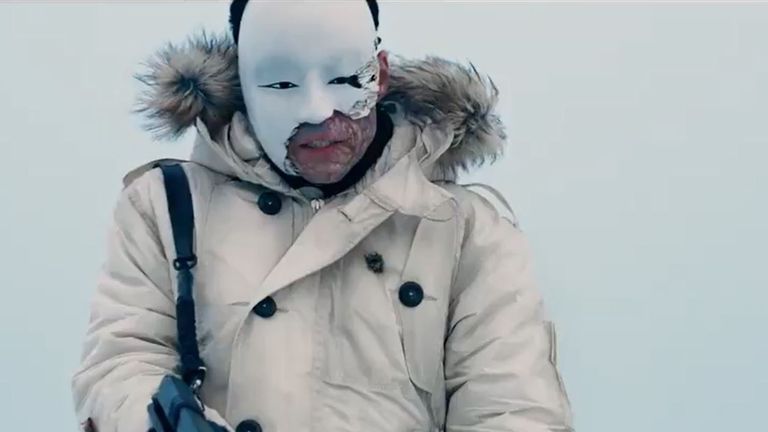
Rami Malek as Safin in No Time To Die, complete with scars. Pic: Universal
And while visibly different characters aren’t common on screen, a woman with a physical difference in film or TV is even rarer.
Author and entertainment journalist Kristen Lopez says it’s because women’s value on screen is so tied up with their sexuality.
The author of Popcorn Disabilities: The Highs and Lows of Disabled Representation in the Movies has even come up with a term to describe the industry’s attempt to keep their leading ladies “sexy and beautiful”.
“You often see what I call ‘pretty disabilities’. It’s a disability that is not going to affect the physical perfection of the actress. And it will also allow for an A-list, usually non-disabled actress, to continue to play the character.”
Lopez says for that reason, films are more comfortable with portraying blind or visually impaired women, deaf women, or non-verbal women, because their disability “doesn’t mar the face”.
Speaking from her own experience of growing up with brittle bone disease, she says: “I worry about the next generation of disabled girls – what are they seeing? Do they feel represented?
“How do you navigate adolescence if you don’t see anybody that looks like you doing the things that every other young person is doing?”
Romeo Olukotun was just one year old when an accident left him with second and third-degree burns on his torso, chest and neck.
With his accident not spoken about at home, he admits, “I just kind of had to deal with that on my own”.
He did find some flashes of inspiration, including from singer Seal.
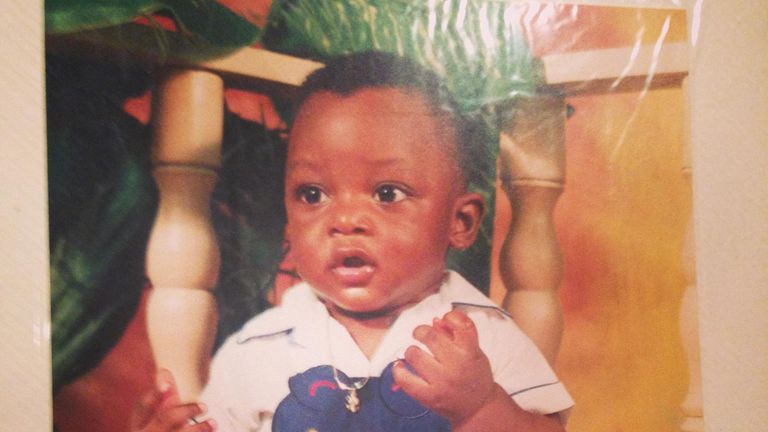
Romeo was just one when an accident left him with burns on his chest, neck and stomach
“I loved how even though he had a visible difference and scarring on his face, he wasn’t looked down because of that. He was seen for his talent.”
With his confidence taking a hit due to his scars while at secondary school and university, he rebuilt his self-esteem as an adult through cheerleading.
Later spotted at a music video shoot he’d gone along to with a friend, he’s now an actor and model. But his visible differences have, at times, affected his casting.
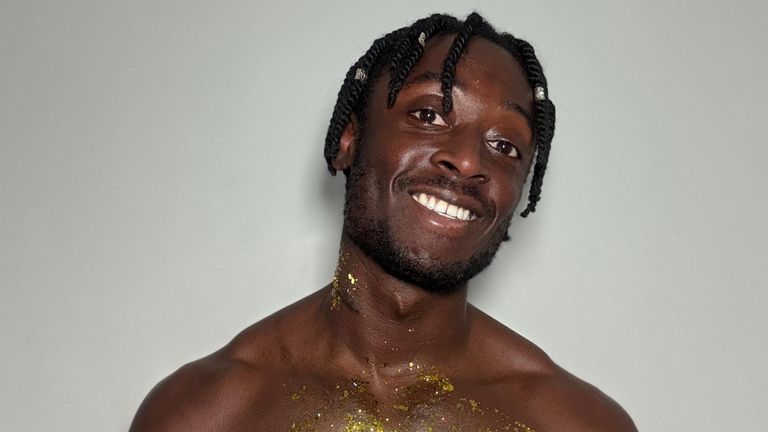
Pic: Changing Faces
Romeo told Sky News: “Because my scar on my neck looks like I’ve been stabbed, I would often be asked to ‘Try this [performance] like a thug or someone who’s on the streets’. And I didn’t like being labelled as that. I’m someone who is much more than my scars.”
He’s now a man on a mission: “I want to be someone who shows other people with a visible difference that they can be anything. They can play the romantic lead, they can play a villain if they want to. They can be a hero, not just be labelled as someone sinister and evil, Machiavellian.”
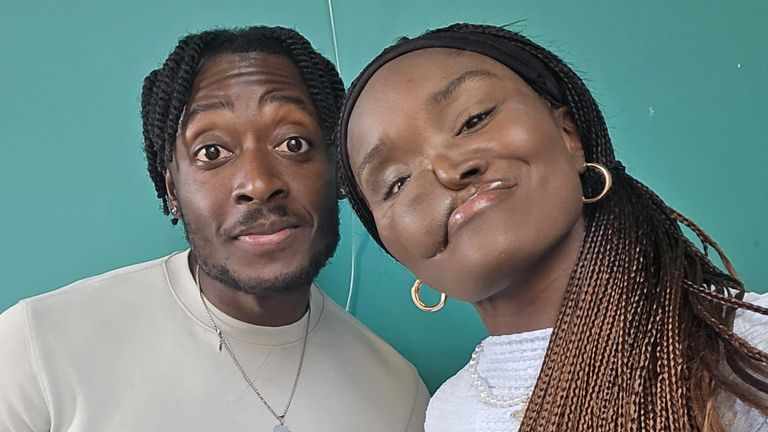
Pic: Changing Faces
While the film and TV industries might be slow to change, LAMDA vice principal Dr Philippa Strandberg-Long is hopeful for the future.
“We have to make our students aware of the industry that they are going into and not, I guess, create a utopia where they’re not aware of the industry they’re going into. However, we can change it from how we educate our students that come out.
“Things won’t change overnight, but it will change over time. So, we have to put in the work at the grassroots, which is here.”
Changing Faces is the UK’s leading charity for anyone with a visible difference. They have a confidential support and information line for anyone dealing with the impact of visible difference.
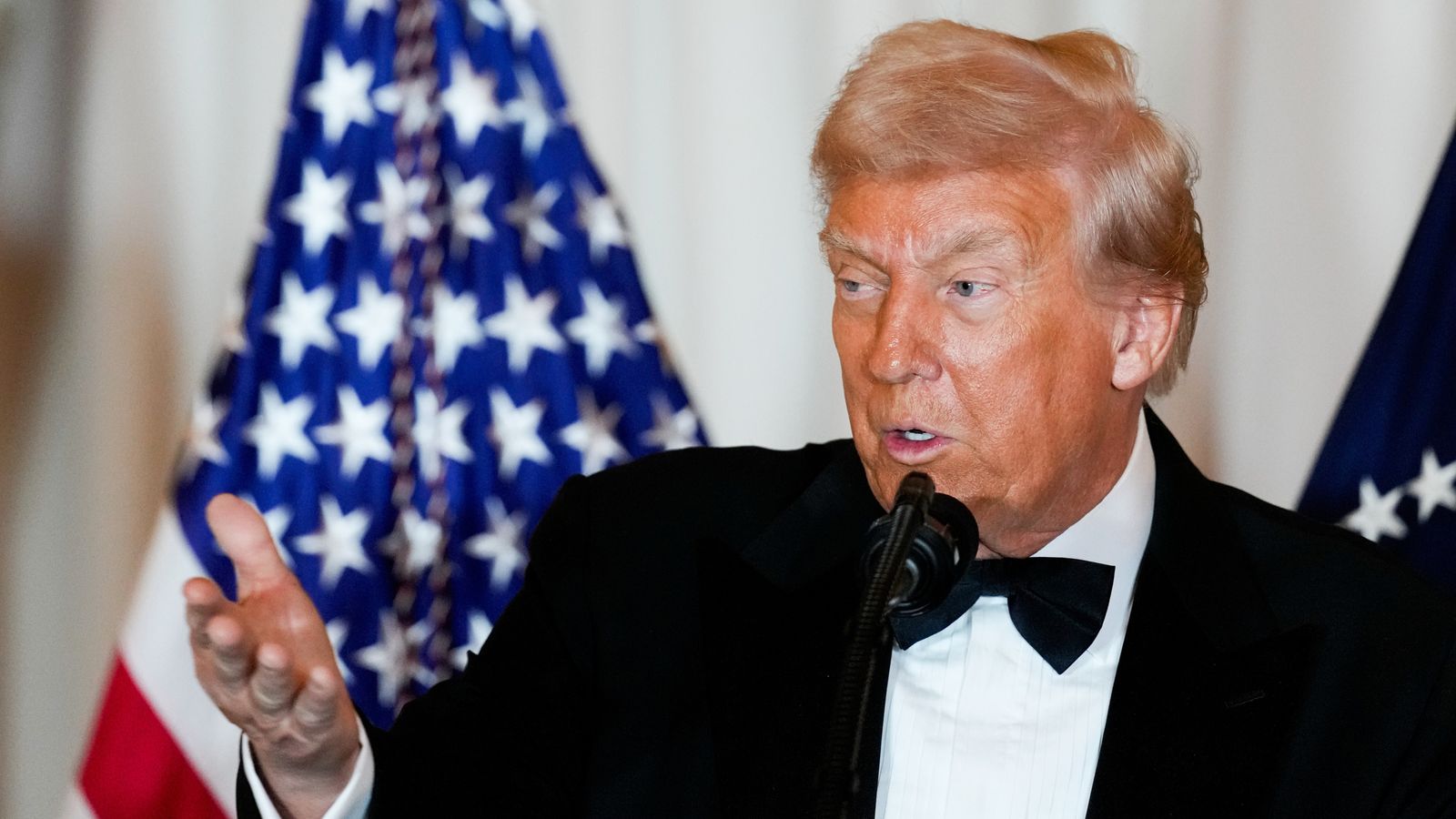

Donald Trump has said he will be “involved” in the decision on whether Netflix should be allowed to buy Warner Bros, as the $72bn (£54bn) deal attracts a media industry backlash.
The US president acknowledged in remarks to reporters there “could be a problem”, acknowledging concerns over the streaming giant’s market dominance.
Crucially, he did not say where he stood on the issue.
Money latest: The cheapest days to travel by plane
It was revealed on Friday that Netflix, already the world’s biggest streaming service by market share, had agreed to buy Warner Bros Discovery’s TV, film studios and HBO Max streaming division.
The deal aims to complete late next year after the Discovery element of the business, mainly legacy TV channels showing cartoons, news and sport, has been spun off.
But the deal has attracted cross-party criticism on competition grounds, and there is also opposition in Hollywood.
Netflix agrees $72bn takeover of Warner Bros
The Writers Guild of America said: “The world’s largest streaming company swallowing one of its biggest competitors is what antitrust laws were designed to prevent.
“The outcome would eliminate jobs, push down wages, worsen conditions for all entertainment workers, raise prices for consumers, and reduce the volume and diversity of content for all viewers.”
File pic: Reuters
Republican Senator, Roger Marshall, said in a statement: “Netflix’s attempt to buy Warner Bros would be the largest media takeover in history – and it raises serious red flags for consumers, creators, movie theaters, and local businesses alike.
“One company should not have full vertical control of the content and the distribution pipeline that delivers it. And combining two of the largest streaming platforms is a textbook horizontal Antitrust problem.
“Prices, choice, and creative freedom are at stake. Regulators need to take a hard look at this deal, and realize how harmful it would be for consumers and Western society.”
Paramount Skydance and Comcast, the parent company of Sky News, were two other bidders in the auction process that preceded the announcement.
The Reuters news agency, citing information from sources, said their bids were rejected in favour of Netflix for different reasons.
Paramount’s was seen as having funding concerns, they said, while Comcast’s was deemed not to offer so many earlier benefits.
Paramount is run by David Ellison, the son of the Oracle tech billionaire Larry Ellison, who is a close ally of Mr Trump.
The president said of the Netflix deal’s path to regulatory clearance: “I’ll be involved in that decision”.
On the likely opposition to the deal. he added: “That’s going to be for some economists to tell. But it is a big market share. There’s no question it could be a problem.”
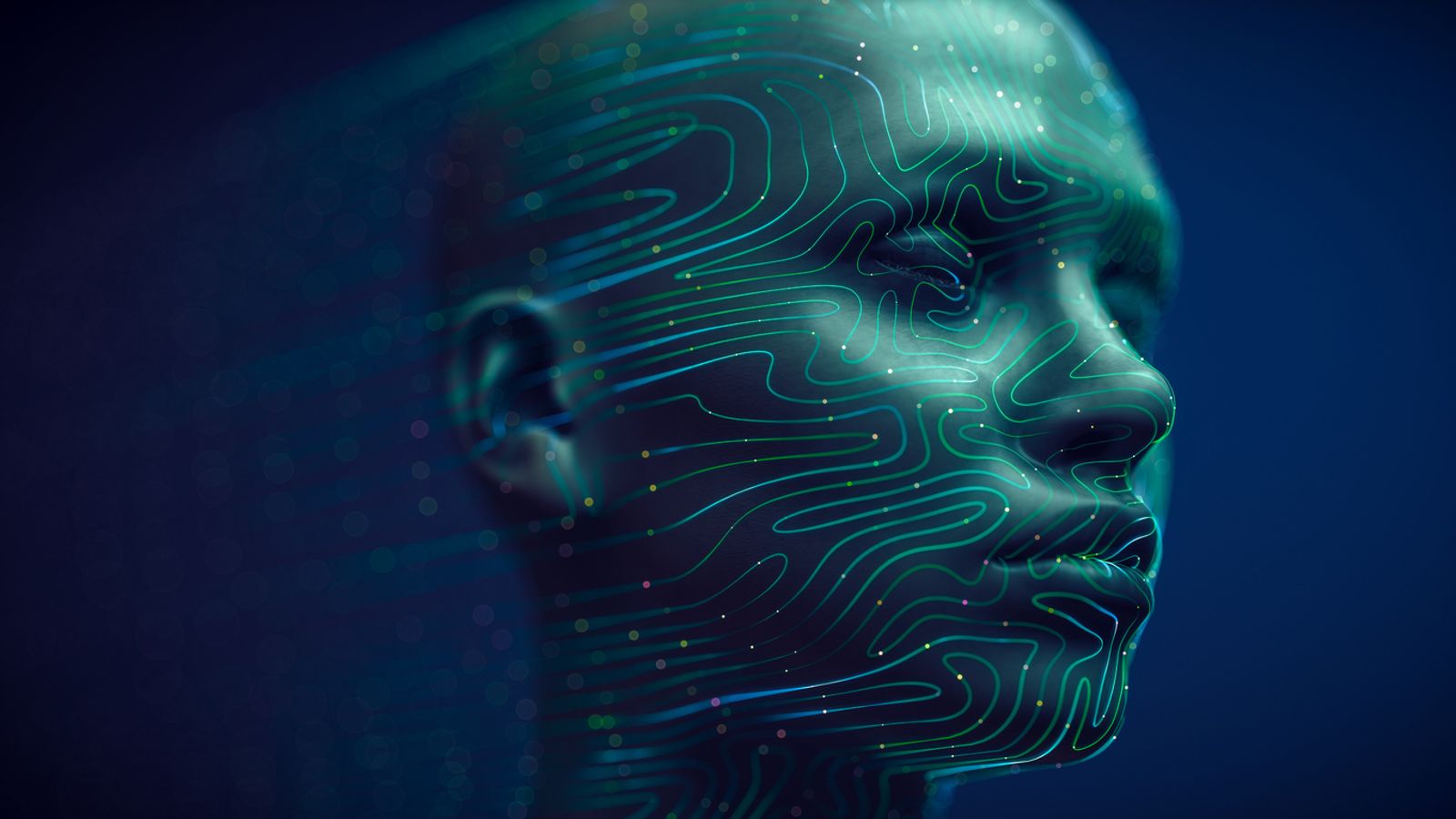
Thousands of members of actors’ trade union Equity are being asked whether they would support industrial action over artificial intelligence protections.
The organisation has launched an indicative ballot among about 7,000 members working in film and TV.
Performers are being asked whether they are prepared to refuse to be digitally scanned on set in order to secure adequate artificial intelligence protections.
It will be the first time the performing arts and entertainment trade union has asked this whole section of its membership to vote in a ballot.
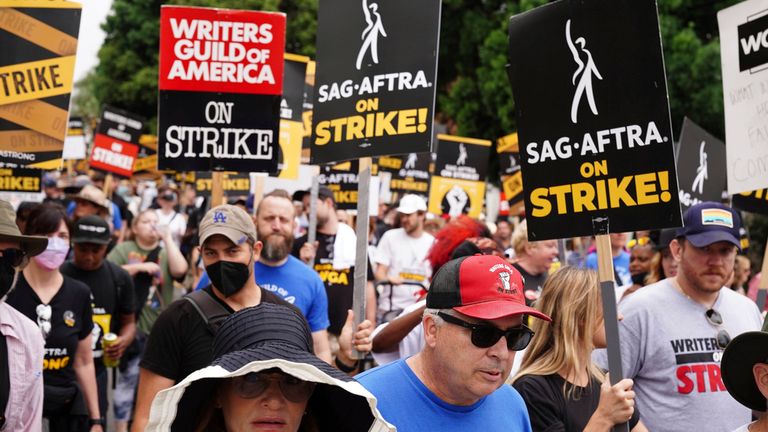
The Hollywood strikes took place in 2023. File pic: AP
The announcement follows the Hollywood strikes in 2023, when members of Equity’s sister union in the US, SAG-AFTRA, and writers, went on strike over issues including AI.
Video game actors in the US also protested over the use of AI, ending almost a year of industrial action earlier in 2025.
Equity’s ballot opens on Thursday and runs for two weeks, and will show the level of support the union has for action short of a strike.
Another statutory ballot would have to be made before any industrial action is taken.
“While tech companies get away with stealing artists’ likeness or work, and the government and decision makers fret over whether to act, unions including Equity are at the forefront of the fight to ensure working people are protected from artificial intelligence misuse,” Equity general secretary Paul W Fleming said in a statement.
“If bosses can’t ensure someone’s likeness and work won’t be used without their consent, why should performers consent to be digitally scanned in the first place?”
Mr Fleming said the ballot would give members the opportunity to “send a clear message to the industry: that it is a basic right of performers to have autonomy over their own personhood and identity”.
The union has no choice but to recommend members support industrial action, he said.
“It’s time for the bosses to step away from the brink and offer us a package, including on AI protections, which respects our members,” added Mr Fleming.
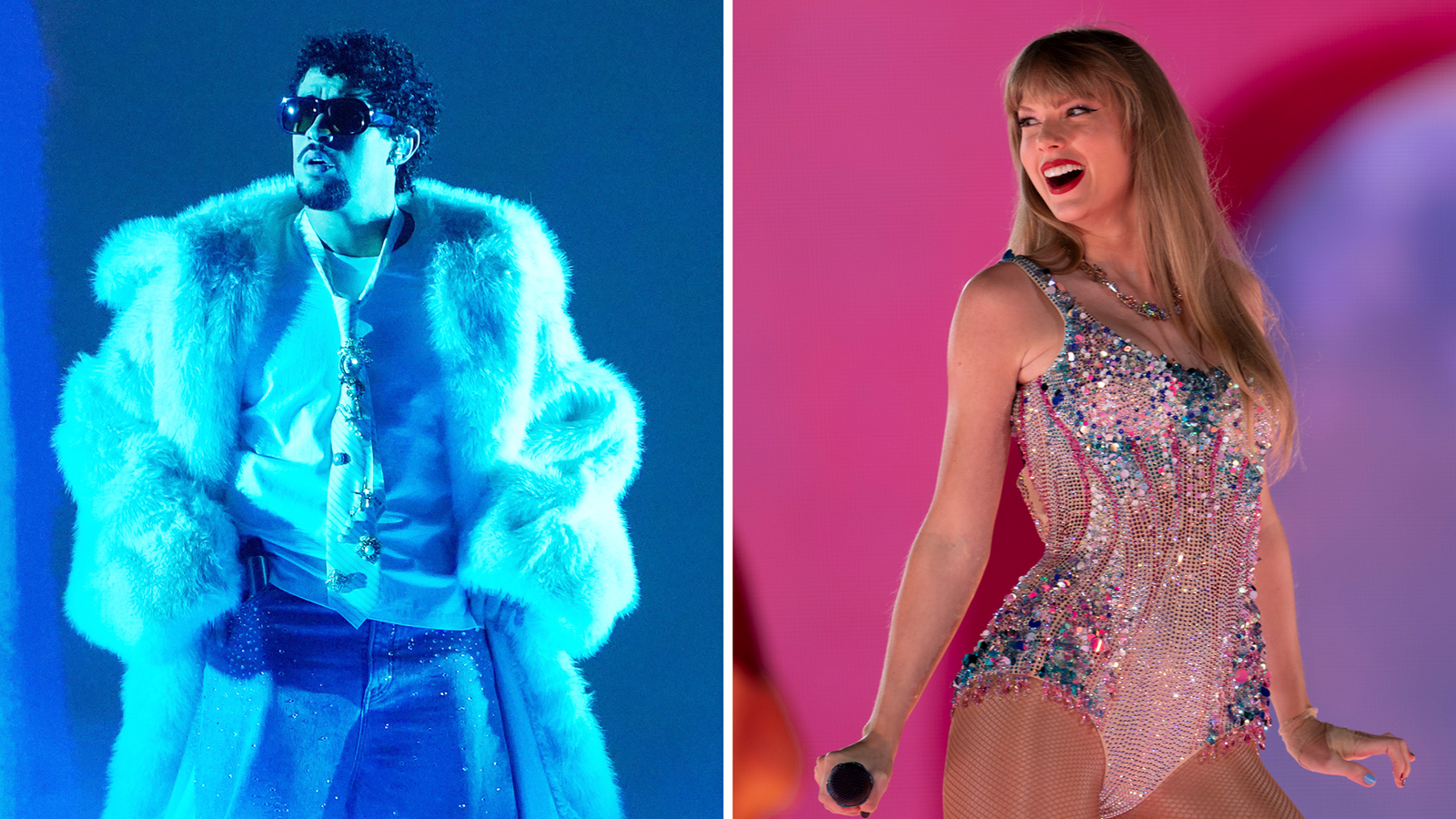
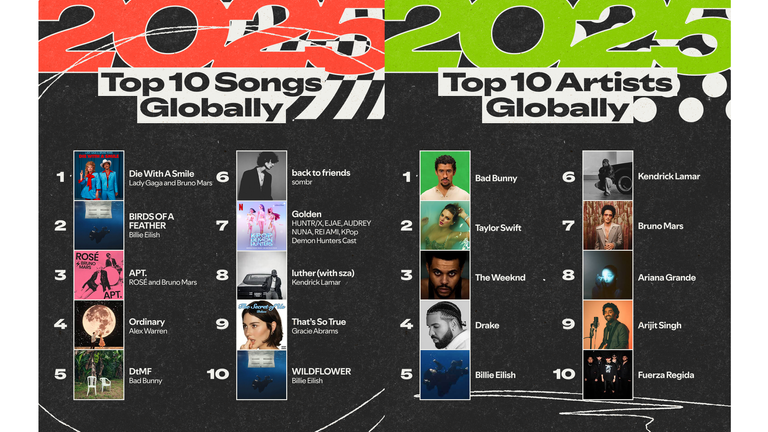
The hotly anticipated Spotify Wrapped is revealing our top tracks, artists and albums for 2025.
But how does the streaming service calculate personalised summaries of users’ listening habits and rank the UK’s hottest artists?
Here’s a look at how your data is used.
The platform describes the annual statistics as “a chance to look back on your year in sound”.
It says data is captured between January and mid-November on every account, although it mostly excludes anything streamed in private mode. (Don’t worry, your passion for the Spice Girls can be kept secret.)
Wrapped presents personalised listening statistics, which Spotify calls the “real story of your year of listening”, alongside global figures for comparison.
The streaming service says Minutes Listened reflects the actual time spent listening to audio on the platform.
Once a user streams at least 30 tracks, Spotify generates a list of Your Top Songs. Similarly, Your Top Artists ranks artists based on total minutes listening to a particular performer.
Other metrics identify the top genres users have played, as well as podcasts and audiobooks ranked by total minutes listened. And if you’ve listened to at least 70% of tracks on a record, you’ll see top albums too.
Spotify also creates Your Listening Age, a guesstimate of your age based on the era of the music “you feel most connected to”.
The streaming service says the statistic is calculated using a five-year span of music which users engaged with more than other listeners of a similar age.
Spotify has been summing up 2025’s most listened to tracks. Pic: Spotify
Swift vs Bunny
Pop superstar Taylor Swift has been named the UK’s most-streamed artist on Spotify for the third year in a row.
But she dropped out of the top spot in the global rankings, coming second to Puerto Rican superstar Bad Bunny, who secured more than 19.8 billion streams. Third were The Weeknd, followed by Drake and Billie Eilish.
Bad Bunny’s LP Debi Tirar Mas Fotos was the most listened-to album worldwide.
Read more from Sky News:
Sabrina Carpenter fury at video
Drake’s lawsuit dismissed
Spotify hikes UK prices
Spotify revealed Drake was the UK’s second most-listened to artist, followed by Sabrina Carpenter in third, The Weeknd in fourth and Billie Eilish in fifth.
Despite being the most listened-to artist, Swift failed to break into the UK’s top five most listened-to songs and albums of the year.
Alex Warren’s Ordinary was the most-streamed song, and Short ‘N’ Sweet, released by Carpenter last year, the top album.
-
 Sports2 years ago
Story injured on diving stop, exits Red Sox game
-
 Sports3 years ago
‘Storybook stuff’: Inside the night Bryce Harper sent the Phillies to the World Series
-
 Sports2 years ago
Game 1 of WS least-watched in recorded history
-
 Sports3 years ago
Button battles heat exhaustion in NASCAR debut
-
 Sports3 years ago
MLB Rank 2023: Ranking baseball’s top 100 players
-
Sports4 years ago
Team Europe easily wins 4th straight Laver Cup
-
 Environment3 years ago
Japan and South Korea have a lot at stake in a free and open South China Sea
-
 Environment1 year ago
Here are the best electric bikes you can buy at every price level in October 2024