
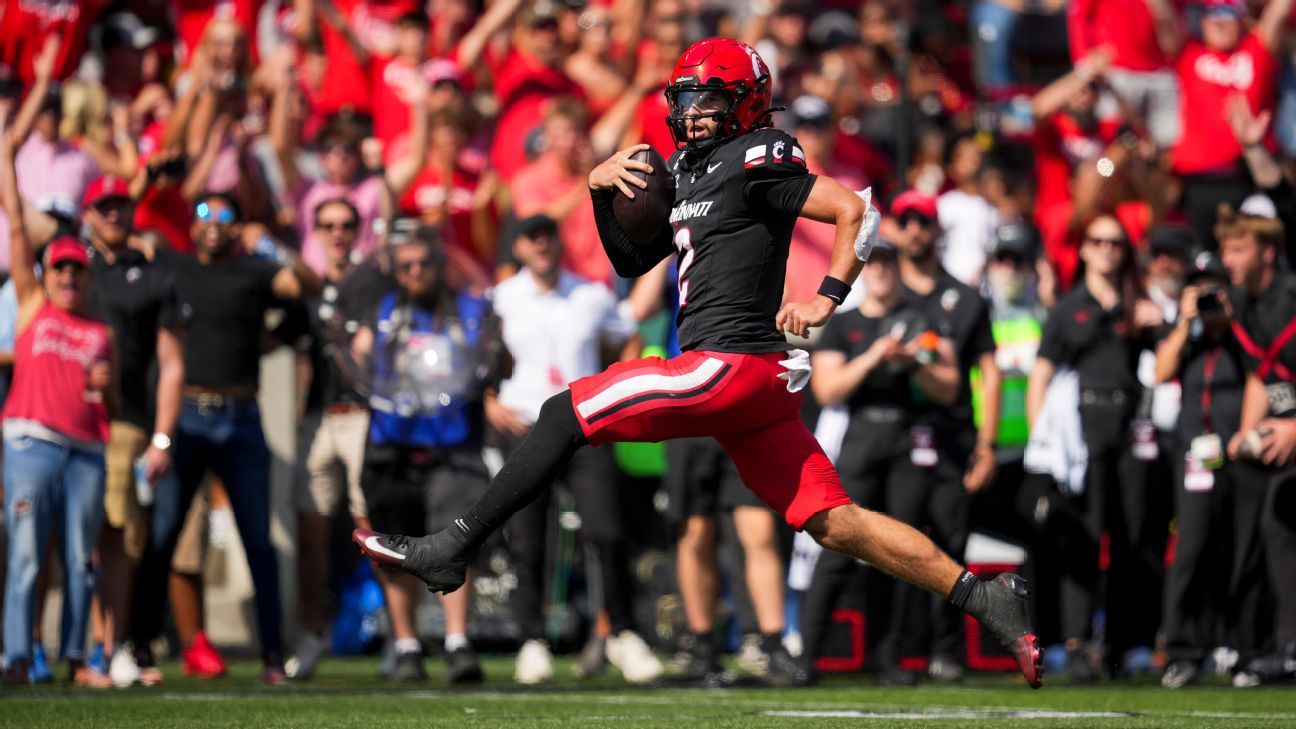
Week 6 takeaways: Cincinnati shines, UCLA shows signs of life, Bama continues to rise


Week 6 was full of surprises. Texas and Penn State fell out of this week’s AP poll after tough losses Saturday, while other programs made the college football universe take notice (hello, UCLA and Cincinnati).
Texas and Penn State both lost to unranked opponents on the road this week (the Nittany Lions fell to UCLA, which was 0-4 entering Saturday’s matchup). On the other hand, Cincinnati showed that it’s a program to watch after a 38-30 win over then-No. 14 Iowa State. While multiple Big 12 quarterbacks got a lot of attention in the offseason, Cincinnati’s Brendan Sorsby wasn’t one of them. But he showed Saturday that he’s someone to keep your eye on throughout the rest of the season.
After a tough weekend for the Longhorns and Nittany Lions, what would they need to do to get back into College Football Playoff conversations? What’s happening with Penn State’s slow-starting offense? And what’s ahead for Cincinnati as it gets into the thick of its conference matchups?
Our college football experts break down key takeaways from Week 6.
Jump to:
Penn State and Texas | Respect for Sorsby
Napier’s recruits | Penn State’s offense
UCLA playing for pride | Alabama bounces back
Pitt freshman delivers
Penn State, Texas falling out of CFP picture
The preseason rankings have never been less relevant. Based on what has unfolded so far, both Penn State and Texas haven’t played like teams capable of contending for their own conference titles, let alone the national title. Both teams likely need to run the table and finish 10-2 to have a chance, but neither will do that if they continue to play the way they have this season.
Technically, neither team is eliminated from the playoff — there’s a lot of season left and both teams have multiple opportunities to impress the selection committee against elite opponents. It’s a similar situation to Notre Dame, which continues to pull itself out of its 0-2 start. The difference is the Irish had two close losses to what should currently be top-five teams and have since looked capable of beating just about anyone, including Penn State and Texas. — Heather Dinich
Time to put some respect on Sorsby
Arizona State’s Sam Leavitt, Baylor’s Sawyer Robertson, TCU’s Josh Hoover, Kansas State’s Avery Johnson and Iowa State’s Rocco Becht got most of the attention this offseason as the leaders of the Big 12’s impressive crop of returning starting quarterbacks. Five games in, it’s clear we didn’t talk enough about Cincinnati’s Brendan Sorsby.
The fourth-year junior is putting it all together in his second year as the Bearcats’ QB1. He’s a 6-foot-3, 235-pound gunslinger with a big-time arm and dual-threat ability, and now he’s playing with consistency and more help at wide receiver.
Sorsby put up 69 passing yards against a quality Nebraska defense in the season opener and got picked off on a potential game-winning drive. Since then, he has the second-best QBR (91.7) in the FBS behind USC’s Jayden Maiava while compiling a killer stat line: 1,188 yards on 69% passing, 206 rushing yards (excluding sacks), 15 total TDs, zero interceptions and just one sack.
On Saturday, he outdueled Becht in a 38-30 upset of the Cyclones, pulling off Cincinnati’s highest-ranked home victory since 2006 and a signature win for the Scott Satterfield era. If the Bearcats can keep playing like this, they’re going to be a factor in the Big 12 title race the rest of the way.
The Bearcats rolled to a 31-7 lead with Sorsby and the tough one-two punch of running backs Evan Pryor and Tawee Walker, scoring on every first-half drive. After the Cyclones rallied, Sorsby tossed an 82-yard bomb to Caleb Goodie late in the fourth quarter to put the game out of reach. He put his arm talent on full display in that moment, effortlessly throwing 40 yards downfield on third-and-long.
Cincinnati does not play Texas Tech in the regular season and gets BYU at home in late November. Road tests at Utah and TCU won’t be easy, but this schedule sets up nicely for the Bearcats to stay in contention and for Sorsby to keep proving he’s one of the best in the country. — Max Olson
Texas upset a testament to Gators’ recruiting under Napier
Just for a second, let’s set aside the broader context of Florida‘s 29-21 win over Texas in terms of coach Billy Napier’s future with the Gators. There’s plenty of time to go there up ahead.
For now, Saturday’s comprehensive upset victory underscored one of the few unquestionable positives of Napier’s tenure in Gainesville: his ability to recruit talent to Florida.
“We’ve been saying all week: Let’s take my guys and beat him and his guys, and [we] did that today,” Napier told ESPN’s Kris Budden afterward, seemingly referring to Longhorns coach Steve Sarkisian.
The Gators outgained Texas 457-341, tripling the Longhorns’ rushing yardage (159-52) behind a 27-carry, 107-yard performance from sophomore running back Jadan Baugh. In his sharpest performance of 2025, former five-star quarterback DJ Lagway made a pair of true freshman receivers his primary targets Saturday; Dallas Wilson‘s star-turn came through six catches for 111 yards and a pair of touchdowns, while Vernell Brown III was Florida’s second-leading receiver. Napier-era recruits accounted for half of the Gators’ six sacks on Texas quarterback Arch Manning. And each of Florida’s fourth-quarter interceptions came from defensive backs signed in Napier’s first two recruiting cycles: Jordan Castell and Devin Moore.
The caliber of talent on the Gators’ roster is part of why their struggles under Napier remain so confounding. It’s also why programs around the country are keenly monitoring Florida’s movements this fall, ready to pounce via the transfer portal if the Gators were to fire Napier.
But Saturday, just like the program’s strong finish last November, offered a glimpse of what this Florida team can be when it clicks. Can the Gators make a run from here? Five of Florida’s seven remaining games come against current AP Top 25 teams. Time will tell whether this is a turning point in Napier’s latest high-wire escape act or just another Florida flash delaying the inevitable. — Eli Lederman
Slow-starting offense has put Penn State on brink
Penn State offensive coordinator Andy Kotelnicki and quarterback Drew Allar are in their second season together — and yet the Nittany Lions seemingly have no offensive identity.
For a second straight week, Penn State’s offense no-showed the first half, and it didn’t help that the defense no-showed Saturday as well, allowing UCLA to score on all five of its first-half drives.
In turn, the winless Bruins led 27-7 at halftime, en route to their 42-37 victory.
The Nittany Lions almost completed a furious rally in the second half. But a curious call on fourth-and-2 on UCLA’s 9-yard line — an Allar jet sweep option read? — resulted in a 3-yard loss and effectively ended the comeback.
With Nicholas Singleton and Kaytron Allen (1,000-yard rushers in 2024), Penn State should boast a ferocious rushing attack. Instead, the Nittany Lions rank 12th in the Big Ten in rushing (63.6 yards) and yards per carry (3.88) in the first half.
Penn State hasn’t been able to establish the run — and at times, hasn’t seemed all that interested in doing so.
Allar, a three-year starter, doesn’t look comfortable operating Kotelnicki’s offense anymore, either. All of Kotelnicki’s gimmicks — end arounds, direct snaps, etc. — aren’t producing big plays and aren’t helping Allar find an early rhythm. Last weekend, the Nittany Lions did virtually nothing offensively against Oregon until midway through the fourth quarter.
The Nittany Lions, with so much returning offensively, began the year with national championship expectations. Now they’ll be lucky just to make the playoff. — Jake Trotter
Tim Skipper and Jerry Neuheisel have UCLA playing for pride
Even with the tarps covering many of the stands at the Rose Bowl, the empty seats were aplenty. Of the 39,256 reported in attendance, many were Penn State fans who had come to witness their team take care of a UCLA side that was reeling.
A plane flew overhead during the pregame with a sign that called for the program to fire athletic director Martin Jarmond. Three interim coaches stood on the UCLA sideline facing off against James Franklin, one of the longest-tenured head coaches in the sport. On paper, it should have been a blowout, another embarrassing result for a Bruins team that was starting to spark conversations about whether they would win any game this season. Instead, it was a shocking upset and the first bright spot in UCLA’s season from hell.
“Saturdays after games have been kind of lonely and sad, and this will be the first Sunday where we kind of celebrate a little bit,” UCLA interim head coach Tim Skipper said. “I’m a passionate, emotional, energetic type guy, and that’s what I bring every single day. You never have a bad day unless you declare it a bad day. Every day is a good day if you want it to be good. Stay positive, figure out solutions, and you keep on rolling.”
Skipper, who has played the role of interim coach before (he went 6-7 as Fresno State’s interim last season) has injected this team with the right kind of energy despite the circumstances. Earlier this week, the program and new offensive coordinator Tino Sunseri parted ways, which left Skipper no choice but to make tight ends coach Jerry Neuheisel the offensive playcaller. The former UCLA backup, who was once carried off the field by his teammates, unlocked quarterback Nico Iamaleava (five total touchdowns) and found himself once again being carried off the field Saturday.
“I love UCLA more than anything, and the kind of kids you see that played on that field today is exactly why you love a place like this,” Neuheisel said. “We had two days to practice a new game plan, and all they did was believe, and we came out and played as hard as we could for 60 full minutes. How can you not love college football when you have days like this? It’s special. Special.”
UCLA’s woes are far from gone, and its future is far from having a clear direction as an impending coaching search and roster overhaul loom. But for one Saturday, the Bruins were able to look like a team, play like one and win.
“I was preaching to the guys that, ‘If y’all don’t want to be here man, leave man,'” Iamaleava said he told teammates this week after Sunseri’s departure. “Whoever still believes that we’re still in this and we still have games ahead of us that we can win, let’s roll.” — Paolo Uggetti
Alabama continuing to build from season-opening loss
There are no moral victories at the highest level of college football — certainly not in the SEC and never at Alabama. But we could ultimately be talking about the Tide’s season-opening loss to Florida State as the spark needed for coach Kalen DeBoer and his team.
Alabama handed an undefeated SEC opponent its first loss for the second consecutive week, and did so with a different approach Saturday. The Tide stifled Vanderbilt star quarterback Diego Pavia in the fourth quarter, limiting him to 5-of-13 passing for 59 yards and picking him off once in their 30-14 win. Alabama twice collected takeaways in its own red zone and received solid performances from quarterback Ty Simpson, running back Jam Miller and others.
Is Alabama a different team than the one that lost in Tallahassee? That loss is part of this squad’s story, and there are lingering problems to correct, including wide receiver Ryan Williams’ puzzling pattern of dropped passes. But it’s impossible not to draw a link between Alabama’s listless showing at FSU and the way the team is performing now on both sides of the ball.
The freakout about DeBoer and the program’s direction after FSU was expected, but it also looks sillier by the week. The guy is 13-2 in matchups of ranked opponents for his career, the best winning percentage for any coach with at least 10 such opportunities. Think they would want that at Penn State right now? Or just about any program in America?
Alabama isn’t perfect and will need to keep making strides, including this week against another undefeated ranked opponent, No. 14 Missouri, on the road. But the Tide are looking more like a team no one wants to face. — Adam Rittenberg
Pitt true freshman Mason Heintschel delivers
Pitt coach Pat Narduzzi knew exactly what he had in freshman quarterback Mason Heintschel back in the spring. But he also tried not to speak too much about him publicly, should others around the country clue in and try to lure him away from the Panthers.
Yes, that is how confident Narduzzi was in the three-star prospect from Oregon, Ohio. Pitt gave him his only Power 4 offer, and Heintschel enrolled in January.
Despite his best efforts to keep Heintschel under wraps, Narduzzi couldn’t resist sharing his thoughts in an interview with ESPN in April, saying, “He’s really freaking good. He’s going to be a future star. I’ve never seen a freshman quarterback ever come in and do what he did this spring. That’s Nick Foles, that’s Kirk Cousins. That’s Kenny Pickett. He’s a great kid. He’s not a greedy, selfish guy. He’ll get his opportunity.”
That opportunity came Saturday, as Narduzzi benched turnover-prone Eli Holstein and started Heintschel. After a few pass attempts, it was obvious why Narduzzi raved about what he saw in the spring.
Heintschel looked in complete command, unruffled and prepared. His passes had zip and were delivered with near perfection. In the end, Heintschel went 30-of-41 for 323 yards and four touchdowns (with zero interceptions) in a 48-7 win over Boston College, becoming Pitt’s first true freshman quarterback to win his debut since Kenny Pickett on Nov. 24, 2017, against No. 2 Miami.
“He prepared his tail off,” Narduzzi said of Heintschel in his postgame news conference. “I think he was in the office at 8 Monday and was there until 6:30. I don’t know if he went to any classes, but he knew what he was doing out there, and he was prepared. I appreciate that.”
Now that there is tape on Heintschel, teams will adjust. A big test comes Saturday, when Pitt travels to Florida State. But no matter what happens, there is no taking away what an impressive job Heintschel did in his debut. — Andrea Adelson

Years ago, I was in the garage at Darlington Raceway chatting with David Pearson, Bobby Allison and Cale Yarborough. All three are among the greatest racers in NASCAR history. All three had long since retired as drivers, but all three had only recently given up trying to be Cup Series team owners, the experience having crushed them all financially.
Yaborough said to me, “You are looking at three NASCAR dinosaurs.”
Pearson laughed and replied, “But we’re doing better than the dinosaurs because we’re still here.”
When I asked them what they’d figured out that the dinosaurs didn’t, Allison explained, “We were smart enough to realize we were dinosaurs and got out of the damn way before we went extinct.”
On Thursday afternoon in a Charlotte courthouse, another NASCAR dinosaur got out of the damn way.
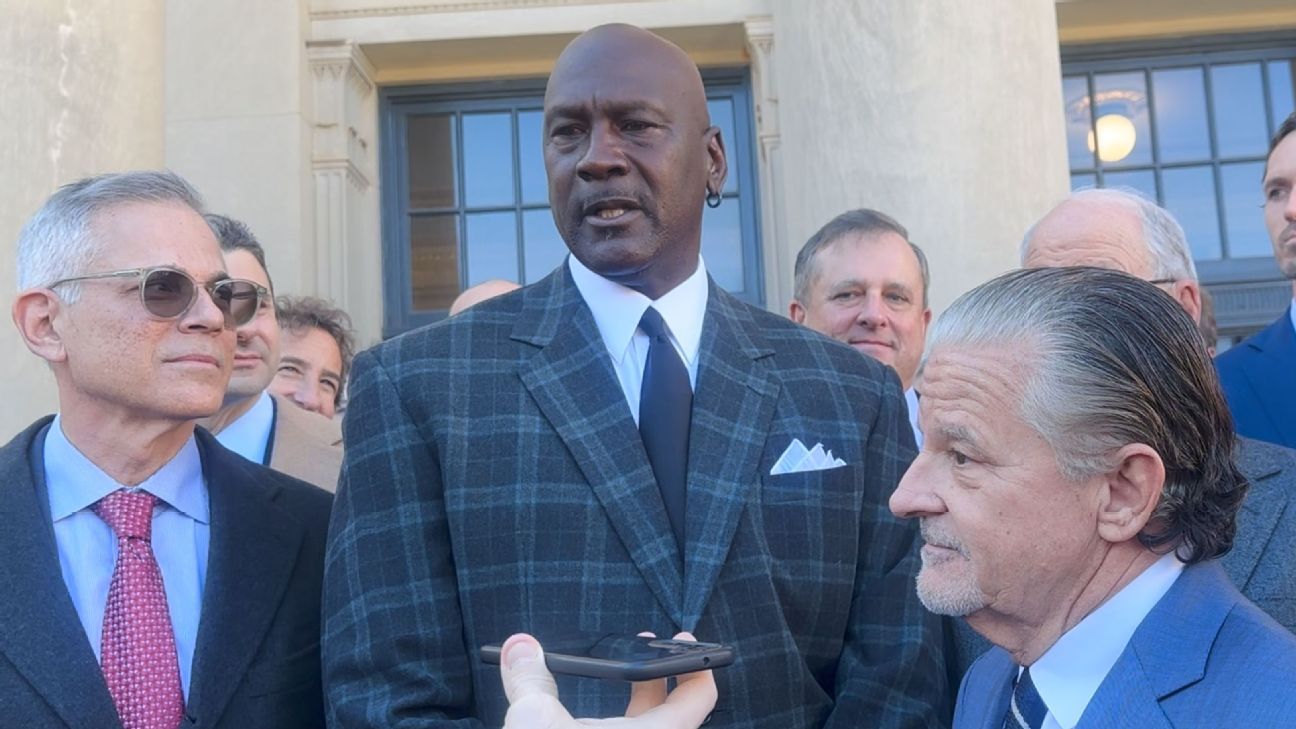
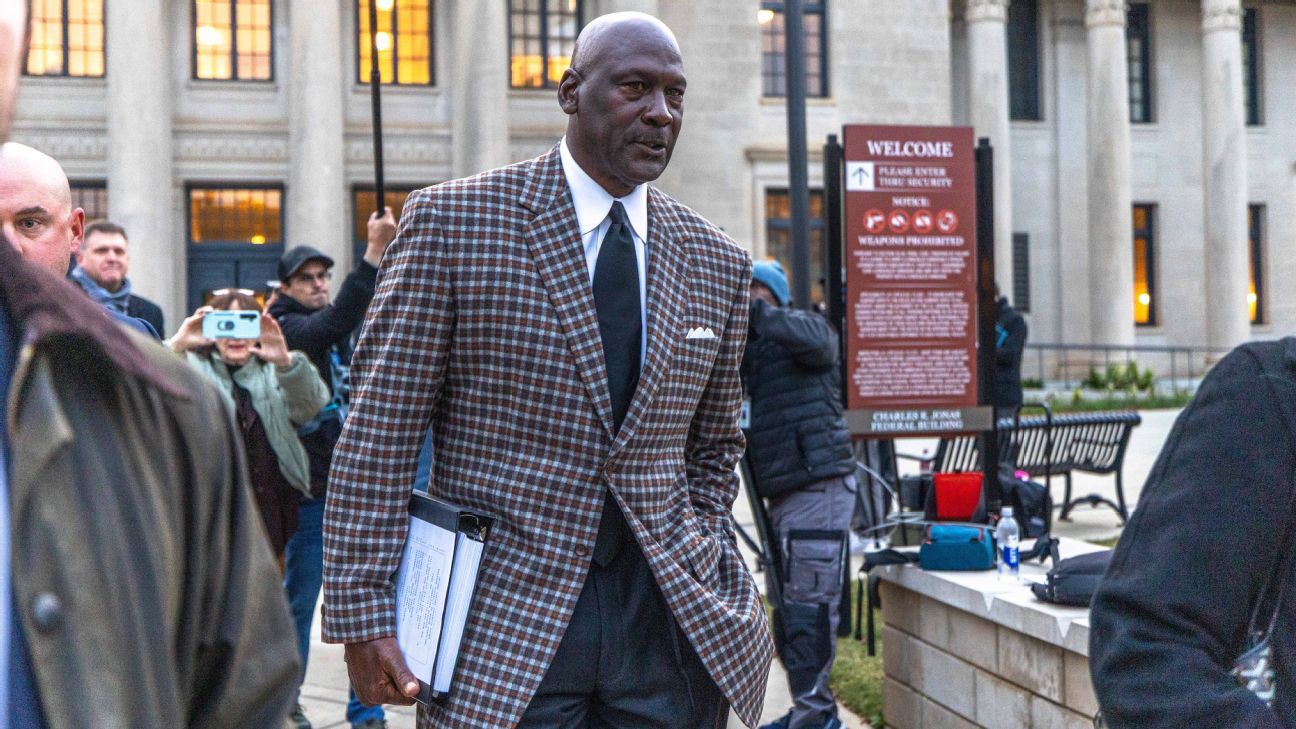
As an antitrust lawsuit against NASCAR, filed by 23XI Racing, co-owned by Michael Jordan and three-time Daytona 500 winner Denny Hamlin, and Front Row Motorsports (FRM), began to grind its way toward the end of its second week, the two sides announced that they had reached a settlement.
As the finer details of the agreement were still being revealed into late afternoon, there was no doubt that the victory belonged to the teams over the sanctioning body because we already knew that their ultimate goal had been achieved. In the end, this was about their fight for NASCAR to make team charters, as close as stock car racing gets to stick-and-ball franchises, permanent — or as their attorney Jeffrey Kessler described it, “evergreen” — as opposed to a contract-to-contract model, renewed in conjunction with NASCAR’s massive media rights deals.
It is very difficult to find someone in the Cup Series paddock who does not believe this is the right move. In fact, every team in the Cup Series garage once stood with 23XI and FRM, although they eventually relented and were willing to let those two teams carry ahead with the fight alone. They won that fight, and as a result, so did every NASCAR team owner who is fortunate enough to have one of those 40 charters. No one calls this franchising, but that’s essentially what it now is, in line with the business model of nearly every other big league sport, such as Jordan’s longtime home, the NBA.
NASCAR lost that fight. As the trial slogged on, a defeat began to feel inevitable, for the same reason that Jordan and his team believed that the latest charter agreement, the one they refused to sign in September 2024, was unsatisfactory. A reason that everyone in that garage, including NASCAR’s commissioner and president, had already talked about behind closed doors — and in emails and texts that were revealed in and around the trial — but no one spoke about publicly until the lawsuit forced them to.
The door to the future was being blocked by a dinosaur.
Jim France is a good man, a brilliant businessman and someone who loves auto racing on a level that few can understand. But he also never wanted the job he now holds as NASCAR’s CEO and chairman. His father, Bill France, originated the position after he oversaw NASCAR’s foundational meetings in 1948. His older brother, Bill France Jr., took over those duties from their father in the early 1970s and ruled the sport for three decades with a highly respected iron fist. His heir was his son Brian, whose tenure at the helm was tumultuous at best and ended prematurely in 2018.
Through it all, legendarily introverted Jim France was happy to remain in the background, racing sports cars and working in the racetrack ownership division while enjoying much sway in the NASCAR boardroom without any of the public spotlight that his father and brother both so loved and his nephew so loathed.
But when Brian France stepped down and NASCAR’s leadership flowchart was unexpectedly detoured, it ran directly over Jim France’s desk, whether he wanted it or not. “The Steves,” NASCAR commissioner Phelps and president O’Donnell, have been the faces of that leadership, a constant paddock presence as they meet with the media and their teams. But both have always been quick to politely remind that whatever decisions they made or moves they pondered, all went through the family first, being Jim, niece Lesa France Kennedy and her son Ben.
That was clear to everyone in the sport when it came to the introduction of charters in 2016, a concept created in conjunction with team owners to help meet their financial demands. It became even clearer that everything ran through France when the latest charter agreement tug-of-war took place over the two years leading into the current agreement.
As was revealed in court, NASCAR’s most powerful team owners pleaded with France personally to make their case for a more favorable charter agreement. When asked about those meetings this week, France testified that he considered them all great friends, but he was unmoved by their pleas.
As was also revealed in court, the people who worked for France were frustrated by their repeated attempts to get him to greenlight the compromises they had reached with those owners but were rebuffed by a man they were obviously referring to in text messages such as “1996 … dictatorship,” although they refused to identify that as France during their time on the stand.
At some point, during all of that, Jim France finally realized that, no, this isn’t 1996, when his brother had the sport picking up speed toward an unparalleled decade of growth. Nor is it 1966, when his father was building and collecting the portfolio of speedways that are still the backbone of NASCAR and the France family fortune. This isn’t even 2016, when charters were born.
Instead, we are staring into 2026. Today’s world is an open book. There are no secrets. No one knows that better than NASCAR and its race teams, having had 77 years of a closed-door/closed-ledger way of doing business laid bare during this trial. For the first time, we now know how much teams and their drivers make — and lose — and we know how much cash flows through the sanctioning body’s Daytona HQ and into the France family’s bank accounts.
And when it comes to collateral damage, race fans are rightfully incensed that the commissioner of NASCAR called Richard Childress, who teamed up with Dale Earnhardt to win six Cup titles, a “stupid redneck.” We now know that Joe Gibbs, a three-time Super Bowl-winning coach and five-time Cup Series champion owner, was moved to tears when he called Jim France to say “Don’t do this us!” and was told it was his fault in part because spending habits on his team were reckless. The France family now knows how displeased their lieutenants have been. Hell, I didn’t know that Hamlin believes that I’ve spent my entire career being scared of NASCAR people until he tweeted it on the eve of the trial.
Nothing says the holiday season like a vicious family fight. An airing out of long-simmering familial grievance that steps and then resteps over a line that had long been regarded as uncrossable. Your uncle finally spoke his mind about your mom’s drinking. Your sister finally got it off her chest that your spouse creeps her out. Your mother-in-law, caught up in the heat of the moment, called you a bad parent and then piled on by adding that you also never split the check at family dinners.
So, once that clash has ended and everyone is done calling out hard truths that everyone in the family already knew but no one dared say aloud, the only thing worse than the shouting is the awkward silence that follows.
Where do you go from there?
On Thursday morning, Jim France stood with Michael Jordan, surrounded by NASCAR executives, members of the France family, Hamlin, and an endless sea of lawyers. As the dinosaur and the GOAT were shoulder-to-shoulder on the steps of the very courthouse where they had just held a very public family fight, that’s the question that hovered over the scene like a storm cloud over the Daytona 500.
Some will say, as Jordan did after the settlement, that it was never personal, but strictly business. The business model of stock car racing is moving forward, and everyone seems to agree that’s the right plan of action. But hurt feelings never heal that quickly, do they?
Few communities in sports are like NASCAR. A relatively small group of people who travel together every weekend nearly year-round. It is genuinely like a family.
It’s never easy for any family to tell the patriarch he needs to hand over his car keys. You always hope he’ll realize he needs to do it first. On Thursday, Jim France did just that. Not every key on the chain, but certainly more than he, his father or his brother had ever given up before.
Hopefully, it wasn’t too late.


-
Andrea Adelson
THE JOKES ARE easy enough to make between “old man” Haynes King and his position coach, the oldest man to ever win the Heisman Trophy.
Twenty-five years ago, when Chris Weinke took home the award as a 28-year-old senior, his age became a nonstop topic of conversation. Today, older quarterbacks dot the college football landscape, their advanced ages met with a collective shrug.
“Sometimes I try and mess with him and say, ‘I couldn’t quite catch you on the age, but I tried. I gave it my all,” the 24-year-old King said of Weinke, his quarterbacks coach at Georgia Tech.
Older players have been normalized, thanks to the transfer portal and the pandemic, which granted freshmen an extra year of eligibility if they wanted it. Nearly 40 quarterbacks from the 2020 class came back this year for one more season at the FBS level. Plus, with NIL and revenue sharing, some quarterbacks are opting to stay in college as opposed to leaving school for the NFL draft. And sixth-year quarterbacks like King and Vanderbilt’s Diego Pavia entered the Heisman conversation this year. (Pavia was named a finalist.) Still, if more quarterbacks are 24 years old these days, nobody is quite as aged as Weinke was when he played.
“The landscape of college football has obviously changed,” Weinke says. “But that was a point of contention when I won it. When I walked into the room that evening when they were making the Heisman announcement, I didn’t think I was going to win it, because there was so much chatter that I didn’t deserve to win it because I was older.
“But I’ve got it now, and they can’t take it away.”
Perhaps the conversation around what Weinke did in 2000 at Florida State should be reframed. What made that season so remarkable had nothing to do with age, and everything to do with how he turned himself into a star after his college football career nearly ended. Twice.
FLORIDA STATE OFFENSIVE coordinator Mark Richt was sitting in his office in 1996, when then-coach Bobby Bowden came in with some news. At the time, Richt was closing in on getting a commitment from the top quarterback prospect in the country, Drew Henson. That is, until Bowden told him about a promise he had made to Weinke six years earlier.
Weinke had initially signed with the Seminoles in 1990, joining a quarterback room that included Brad Johnson, Casey Weldon and fellow freshman Charlie Ward. But he also had a lucrative offer to play baseball with the Toronto Blue Jays organization, after being selected in the second round of the MLB draft. Weinke had until classes started in late August to decide which sport he was going to play, so he opted to begin fall practice with Florida State while weighing his options.
He went through fall two-a-days, and with decision day closing in, Richt remembers one quarterback meeting in particular. To make sure his quarterbacks understood what he was teaching them, he would ask them questions.
Richt turned to Weinke as they watched tape and asked, “What coverage is this on this play?”
“Cover 3?” Weinke guessed.
“No.”
“Cover 1?
“No. It’s quarters coverage,” Richt said.
Weinke responded: “Whatever.”
“That was the day before school started,” Richt said. “I said, ‘I got a feeling this kid is going to leave and play pro baseball.'”
Sure enough, Weinke left. But Bowden told him if he ever decided to return to football, he would have a spot waiting for him at Florida State.
After six years of bouncing around the minor leagues and getting as high as Triple-A, Weinke decided to give up on baseball, but not playing sports entirely. He wanted to go back to football. Richt reminded Bowden that if they took Weinke, they would lose Henson.
“Well, I promised him if ever wanted to play football again, I’d let him come back,” Bowden told Richt.
Richt asked to speak with Weinke first.
“I was telling him all the rules and regs, I was telling him about [quarterback] Dan Kendra already on campus and when I’m done giving him my spiel to try to get him not to come, he says, ‘Hey coach, let me ask you one question. If I’m the best guy, will I play?’ I said, ‘Of course.’ He goes, ‘I’m coming.’ We lost the other quarterback to Michigan. I guess we came out OK with Weinke.”
Nobody quite knew what to expect when he arrived on campus as a 25-year-old freshman in 1997, but he quickly became one of the guys, in part because he had a large house off campus and threw his fair share of parties where all were invited.
The larger issue was that he arrived as a baseball player. Weinke had not picked up a football in six years.
Getting his form back would take time and reps. Lots and lots of reps. Former teammates and coaches described Weinke’s competitiveness, work ethic and relentless demeanor as driving forces. He would never settle for anything less than his best effort; and he expected the same from his teammates.
That is why he woke up before class started and went to watch tape with Richt. Why he organized every voluntary 7-on-7 workout and essentially made them mandatory. Because if someone failed to show up, he would go and find them and bring them out to the practice field. He developed such a great rapport with his receivers that he would be able to anticipate where they would be at any given time on the field.
“Our chemistry was like none other,” said Marvin “Snoop” Minnis, his leading receiver in 2000. “He knew what I was going to do before I did. He would have the ball to me before I even got out of my break, and as a receiver, you love that so you can react and make the move you need to make on the defender.”
Weinke played sparingly in 1997 but won the starting job in 1998. Things started well enough in the opener. Then in his second career start, at NC State, Weinke threw a school-record six interceptions, and the criticism began.
“I remember getting back to the house, we had an answering machine back then. The most brutal messages you could imagine, cursing and threats, and ‘You don’t need to play quarterback,'” said Jeff Purinton, who was working in the Florida State media relations department at the time and was one of Weinke’s roommates. “Even going to the store, people would talk trash. Chris just weathered it and used that as an opportunity to learn.”
Weinke rebounded from there, helping Florida State reel off eight straight wins. That last win, against Virginia, was nearly the last time he saw the field.
TOWARD THE END of the first half, Weinke got sacked and felt pain in his right arm. He initially thought he had a shoulder injury. Weinke went into the locker room at halftime, and as trainers began to lift off his shoulder pads, he had a sharp pain in his neck. He was fitted with a brace and underwent further testing.
When the doctor walked in to deliver the results, Weinke remembers asking, “Before you share any news, I just want to know one thing. Am I ever going to play college football again?”
“Well,” the doctor said. “Do you want the good news or the bad news?”
The doctor said Weinke needed surgery to insert a titanium plate into his neck after X-rays showed a chipped bone lodged against a nerve in a vertebra, ligament damage and a ruptured disc.
“Maybe the better news,” the doctor said. “You were a centimeter away from being paralyzed from the neck down.”
“Mom hears that, and dad hears that. They’re not real excited about me getting back out on the field,” Weinke says. “But they knew that burning desire inside of me that wanted to get back out there and be a part of the team. The doctors told me that I’d be stronger with a titanium plate in my neck, so I was going to do whatever it took. But those were probably the hardest seven months of my life.”
Weinke initially had complications post-surgery and had to be in bed for five weeks. He lost 30 pounds, and his throwing arm atrophied so severely that it became impossible for him to even lift a football. He had to teach himself again how to throw, starting first with a tennis ball. Throwing it 5 yards was a huge accomplishment. Seven hours a day, day after day, he rehabbed, steadily progressing, all the while unsure whether he would make it all the way back.
Then, there he was in the season opener against Louisiana Tech, completing 63% of his passes, throwing for 242 yards and two touchdowns. That was the start of an undefeated national championship-winning season in 1999, as Florida State went wire to wire as the No. 1 team in the nation.
Weinke opted to return for one more season, because he wanted to get Bowden another national championship. After throwing for 3,432 yards, 29 touchdowns and 15 interceptions as a junior and winning the title, Weinke became one of the Heisman front-runners headed into 2000.
TWENTY-FIVE YEARS LATER, there is one play from that season that remains a part of Seminoles lore: Weinke to Minnis, 98 yards, in a 54-7 blowout win over Clemson in mid-November.
On the second series of the game, backed up near the goal line, Florida State ran what Bowden referred to as a “gym play” — one that was never practiced on the field, but rather behind closed doors inside the gym away from prying eyes. “Or spies,” Richt said.
Weinke dropped back deep into the end zone and faked a handoff to Jeff Chaney, turning his back to the defense and tucking the ball as if he no longer had it. Minnis had gone in motion and made the safety think he was blocking for a handoff, then took off down the middle. By the time Weinke delivered the ball, Minnis was wide open. Easy touchdown. Easy 54-7 win.
“He was so ice cold in that moment,” Minnis said. “The confidence that he had in the O-line to just stand there, then turn around and hit me for the touchdown. For him to make that fake as beautiful as he did and then put that ball on a dime just tells you how great Chris Weinke was and how deserving he was of that Heisman Trophy.”
There was another game that added to his legend: The regular-season final against the rival Gators. Weinke had missed the 1998 game in Gainesville because of his neck injury. Nothing would keep him from playing them in The Swamp in 2000. Not even the flu.
Weinke was so sick the night before the game, he stayed at the home of team doctor Kris Stowers so he would not be around the rest of the team in the team hotel. He rode with Stowers to the game on Saturday, and walked through all the tailgate lots on the way to the locker room. Trainers gave him an IV before the game started, and Weinke proceeded to throw for 353 yards and three touchdowns in the 30-7 win.
Florida State was well positioned to make it back to the national title game, and Weinke was also well positioned in the Heisman Trophy race. But as the weeks drew closer to the announcement of the Heisman finalists, critics waged a campaign against Weinke — saying his age should disqualify him from consideration. That angered his teammates.
“He dominated that year, and it had nothing to do with age,” Minnis said. Added running back Travis Minor: “When he got there, he wasn’t looking like a Heisman Trophy candidate or winner. He really put the work in. You saw the difference from when he first got there to when he had that Heisman Trophy season. He earned everything that he won.”
Florida State knew it had to start working on messaging with Heisman voters as the debate over his age raged on. Ultimately, school officials came back to one main point: It was hard to argue with the stats. Weinke had led the nation with 4,167 yards passing and 33 touchdowns and had the Seminoles playing in a third straight national championship game.
“He was playing baseball for six years. It wasn’t like he was throwing the football every day and training to be a starting college quarterback,” Purinton said. “The other part is he could have died when he broke his neck. There were two points in time where he had to go back and start football over again.”
Weinke said the narrative taking shape around his age “pissed me off.”
“I was playing college football, so if I’m playing college football, then I should be eligible to win any award that they’re giving out in college football,” Weinke said. “That was just a little motivating factor for me.”
Weinke ultimately made it to New York with fellow finalists Josh Heupel, LaDainian Tomlinson and Drew Brees. His teammates watched on television screens from the team banquet Florida State had scheduled for that night.
“Sitting in the Downtown Athletic Club coming out of a commercial break and them announcing your name will ring in my head till the day I die,” Weinke said.
Weinke beat out Heupel in one of the closest votes in Heisman history, taking a 76-point margin of victory. His teammates whooped and hollered for him back home. Weinke took the stage and said, “With apologies to Lou Gehrig, I feel like I’m the luckiest man in the world.”
WEINKE BEGAN COACHING 10 years after he won the Heisman. He first came to know King while working as an assistant at Tennessee in 2020. When King hit the portal in 2022, Weinke had moved on to Georgia Tech. His first call was to King.
“Playing quarterback is kind of tricky,” King says. “The stars have to align, whether it’s people around you and or how you’re playing. Even in my class, there were guys like Bryce Young and Anthony Richardson and C.J. Stroud, already in the league, and I’m still in college like Chandler Morris, Diego Pavia, Carson Beck. Everybody’s timeline is different.”
While the debate over his age has been left to the dustbin of history, what Weinke did that year may never be replicated. In an era of sport and position specialization, quarterbacks rarely play multiple sports at elite levels — let alone leave football behind for six years before coming back to it. In the 25 years since Weinke won the Heisman, Brandon Weeden at Oklahoma State is perhaps the only notable quarterback to play baseball and then stick around in college football into his late 20s.
“To go through the things that I went through was clearly the road less traveled,” Weinke said. “Being an older guy and not playing football for seven years, then fulfilling a dream of playing for Coach Bowden, then breaking my neck, and coming back and giving Coach Bowden his first undefeated season, and ultimately having my name called for the Heisman Trophy, I just felt blessed.”
-
 Sports2 years ago
Story injured on diving stop, exits Red Sox game
-
 Sports3 years ago
‘Storybook stuff’: Inside the night Bryce Harper sent the Phillies to the World Series
-
 Sports2 years ago
Game 1 of WS least-watched in recorded history
-
 Sports3 years ago
Button battles heat exhaustion in NASCAR debut
-
 Sports3 years ago
MLB Rank 2023: Ranking baseball’s top 100 players
-
Sports4 years ago
Team Europe easily wins 4th straight Laver Cup
-
 Environment3 years ago
Japan and South Korea have a lot at stake in a free and open South China Sea
-
 Environment1 year ago
Here are the best electric bikes you can buy at every price level in October 2024