
Spying trial collapsed after government refused to brand China a threat, says top prosecutor

A Chinese spying trial collapsed last month after the UK government would not label Beijing a national security threat, a top prosecutor has said.
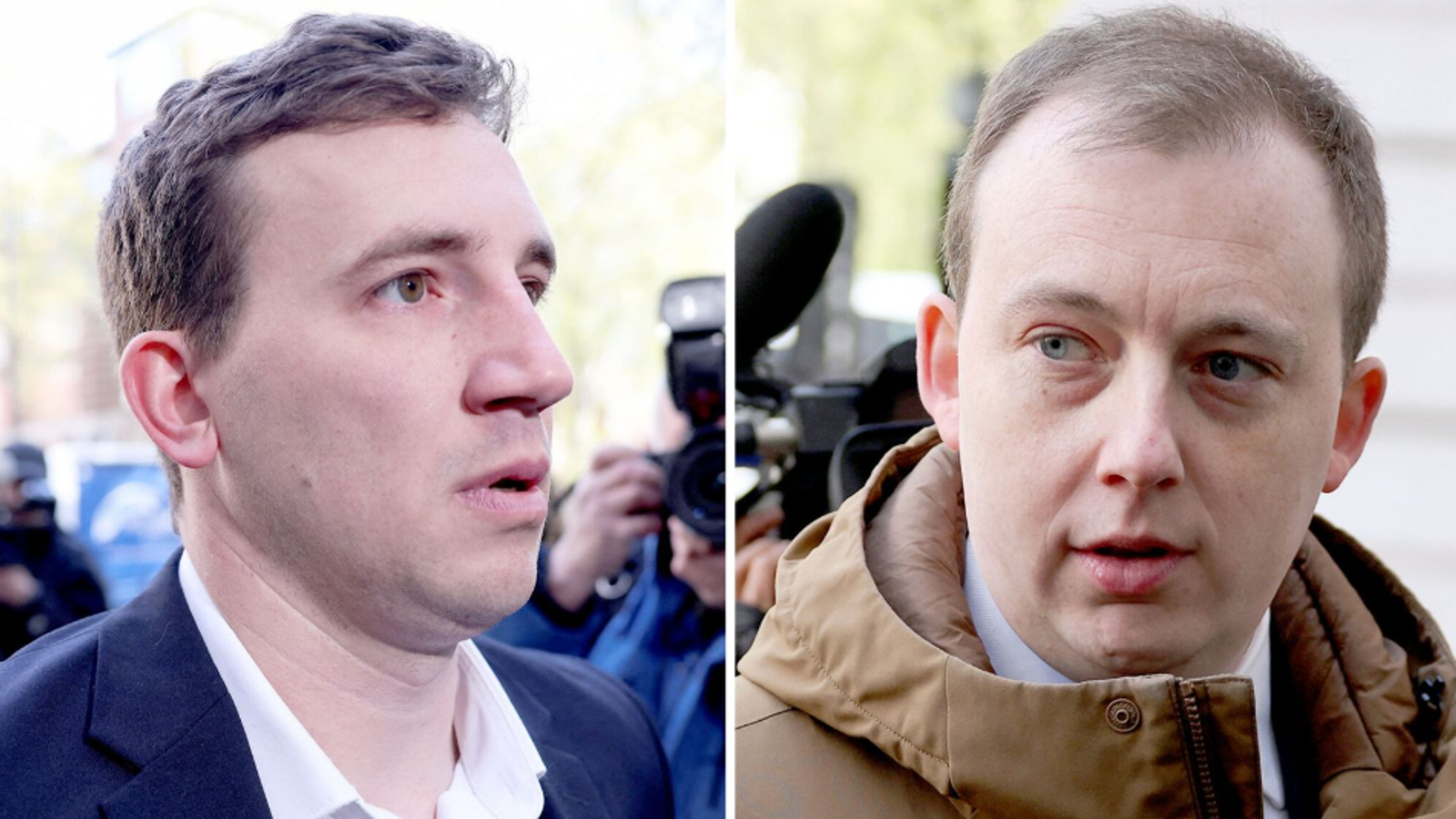
Christopher Berry, 33, and former parliamentary researcher Christopher Cash, 30, were accused of espionage for China.
But the Crown Prosecution Service (CPS) announced on 15 September that the charges would be dropped, sparking criticism from Downing Street and MPs.
Berry, of Witney, Oxfordshire, and Cash, from Whitechapel, east London, had denied accusations of providing information prejudicial to the interests of the state in breach of the Official Secrets Act between December 2021 and February 2023.
Politics latest: Badenoch insists ‘Jenrick is not the Tory leader’
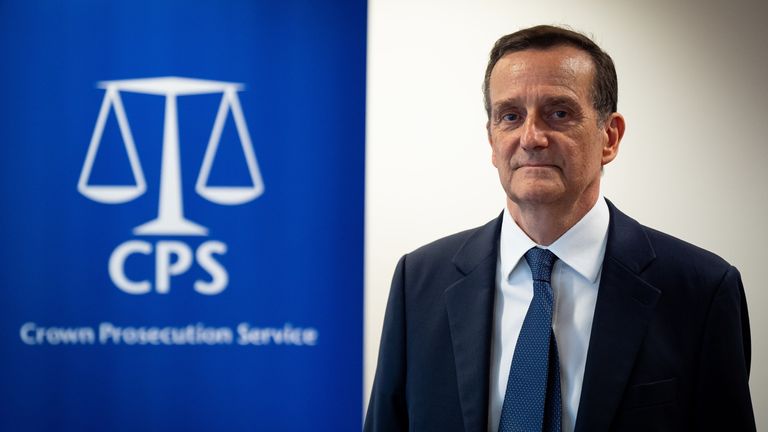
Director of public prosecutions Stephen Parkinson. Pic: PA
Stephen Parkinson, the director of public prosecutions (DPP), told MPs in a letter on Tuesday that the CPS had tried “over many months” to get the evidence it needed to carry out the prosecution, but it had not been forthcoming from the Labour government.
However, Sir Keir Starmer insisted the decision to brand China a threat would have to have been taken under the last Conservative administration.
The prime minister said: “You can’t prosecute someone two years later in relation to a designation that wasn’t in place at the time.”
It is understood that the decision to end the case came after a meeting of senior officials which, according to The Sunday Times, included Jonathan Powell, the national security adviser, and Sir Oliver Robins, the Foreign Office’s top diplomat.
To prove the case under the Official Secrets Act of 1911, prosecutors would have to show the defendants were acting for an “enemy”.
Both the current Labour government and the previous Conservative governments have not labelled China a risk to national security.
In his letter to the chairs of the Commons home and justice select committees, Mr Parkinson said: “It was considered that further evidence should be obtained.
“Efforts to obtain that evidence were made over many months, but notwithstanding the fact that further witness statements were provided, none of these stated that at the time of the offence China represented a threat to national security, and by late August 2025 it was realised that this evidence would not be forthcoming.
“When this became apparent, the case could not proceed.”
He also pointed out that in a separate case about Russian spying last year, a judge ruled that an “enemy” under the 1911 Act must be a country that represents a threat to national security of the UK “at the time of the offence”.
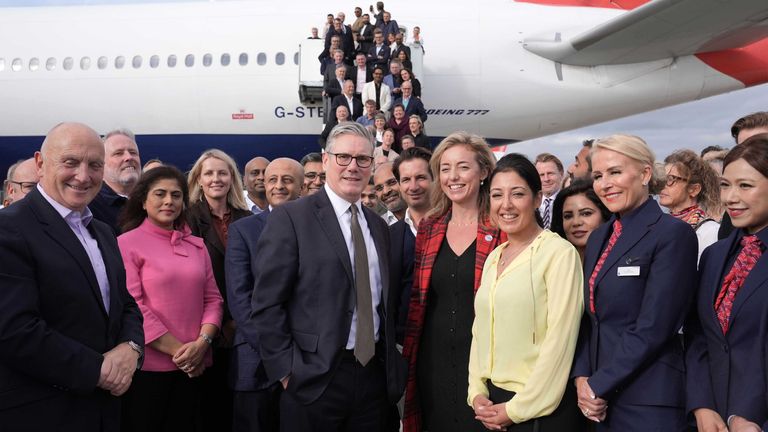
The prime minister answered reporters’ questions about the collapse of the case while on a flight to Mumbai. Pic: PA
How has the government responded?
Sir Keir has addressed the contents of the letter, which he said he had “read at speed”, while on board a flight to Mumbai, as part of the UK’s largest ever trade mission to India.
The PM said: “What matters is what the designation [of China] was in 2023, because that’s when the offence was committed and that’s when the relevant period was.
“Statements were drawn up at the time according to the then government policy, and they haven’t been changed in relation to it, that was the position then.
“I might just add, nor could the position change, because it was the designation at the time that matters.”
Sir Keir, a former director of public prosecutions, added that he wasn’t “saying that defensively”, but because “as a prosecutor, I know that… it is what the situation at the time that matters”.
He also declined to criticise the CPS or the DPP, as he said “it’s wise not to”.
Since the alleged spying offences took place, the new National Security Act has superseded elements of the 1911 Act.
But Conservatives, including shadow home secretary Chris Philp, insist that Sir Keir has “very serious questions to personally answer”.
The US Securities and Exchange Commission has officially dropped its investigation into the New York-based tokenization platform Ondo Finance, which it initiated in 2023.
Ondo Finance has received formal notice that a confidential, multi-year SEC investigation into the platform has been closed without any charges, the company announced on Monday.
“The probe examined whether Ondo’s tokenization of certain real-world assets complied with federal securities laws as well as whether the ONDO token was a security,” the statement said.
The SEC’s decision to end the investigation reflects a broader shift in the US policy regarding real-world asset (RWA) tokenization, bringing it on the authority’s formal agenda, Ondo noted.
A new chapter of tokenization in the US
According to a report by Crypto in America, the SEC initially opened the probe in October 2023 under former SEC Chair Gary Gensler, who was known for his stringent stance toward the crypto industry.
However, since Paul Atkins took over as SEC chair, the agency has closed a number of crypto-related cases involving major companies, including Coinbase, Ripple and Kraken.
“When the inquiry began in 2024, the US regulatory environment for digital assets was defined by caution, confusion, and occasionally overbroad enforcement actions,” Ondo Finance said in its blog post.

Against that backdrop, Ondo was “one of the only firms focused on tokenizing publicly listed equities at scale,” it said, adding: “Being early, and being successful, came with scrutiny.”
According to Ondo, the resolution of the SEC inquiry marks the end of one chapter for Ondo and the beginning of another, where tokenized securities become a “core part of the US capital markets.”
“The future of global finance, including U.S. capital markets, will be onchain and Ondo will help lead that transition,” Ondo said.
Most US tokenization platforms serve overseas markets
The news comes as most tokenization platforms offer tokenized equity products primarily to customers outside the US, including firms such as Kraken-owned Backed, the issuer of xStocks.
While these platforms tokenize major US-listed stocks and exchange-traded funds (ETFs), many of the offerings are aimed at clients located overseas, particularly in Europe.
“The reality is that users in the US already have relatively seamless access to traditional equities such as stocks and ETFs through well-established brokerage platforms,” Alchemy Pay chief marketing officer Ailona Tsik told Cointelegraph in June.
Following the SEC probe’s resolution, it remains to be seen whether RWA platforms like Ondo will begin offering services to US-based clients.
Related: WisdomTree brings options income strategy onchain with new tokenized fund
The news came shortly after Ondo Global Markets received regulatory approval to offer tokenized stocks to European investors in November.
Securitize, a rival US tokenization platform, also obtained regulatory approval to operate as both an Investment Firm and a Trading & Settlement System (TSS) in the EU on Nov. 26. According to the company, the approval positioned it as one of the first operators for regulated digital securities infrastructure in both the US and EU.
Magazine: When privacy and AML laws conflict: Crypto projects’ impossible choice

Argentina is considering allowing local financial institutions to engage more directly with cryptocurrencies in a move that would mark a significant shift from its restrictive stance, according to local media report.
According to a Friday report by local news outlet La Nacion, Banco Central de la República Argentina (BCRA), Argentina’s central bank, is considering allowing traditional banks to trade cryptocurrencies. The story cited “sources close to the organization.” Cointelegraph has not independently verified those claims.
The BCRA stepped in to ban financial institutions from offering crypto trading just days after two of the country’s largest banks signaled they were opening up to digital assets in May 2022. The BCRA said that such initiatives posed risks to users and “to the financial system as a whole.”
New cryptocurrency rules are reportedly being drafted, though La Nación’s sources did not specify when they might be finalized or implemented. Representatives of a locally operated exchange suggested that the measure could be approved as early as April 2026.
Rumors about such a potential shift have circulated for some time among crypto exchanges, bankers and people close to regulators, the report said. A representative of local crypto exchange Lemon told the outlet that the company believes “that a more open financial ecosystem will be a key driver for the mass adoption of digital assets in Argentina.”

Related: An overview of the cryptocurrency regulations in Argentina
Argentina reviews its stance on crypto
The regulatory change suggested in the report aligns with a direction recently taken by Argentina’s government. In mid-March, Argentina’s securities regulator finalized rules for virtual asset service providers, setting clear guidelines for the industry. Crypto service providers have been required to register with local regulators since April 2024.
This followed publicly traded US crypto exchange Coinbase receiving a green light from Argentina’s regulators to expand services in the country in January. In October 2024, Binance also announced that its mobile and web applications were “fully available” to users in Argentina after it was registered as an official crypto service provider. Similarly, crypto exchange Bybit was approved for operations in Argentina in mid-August 2024.
Related: Argentine state-owned energy giant weighs crypto payments for fuel: Report
Argentina sees booming crypto adoption
The country’s crypto industry has also been growing at a steady pace, overtaking Brazil as the top Latin American country in terms of estimated crypto inflows by users in early October 2024. Separate data from July 2024 suggested Argentina was leading the Western Hemisphere in crypto adoption, with analysts often pointing to the peso’s extreme weakness and inflation that had reached around 276% as key drivers.
Until recently, regulators were largely hostile to that trend. In May 2023, the central bank banned payment providers from offering crypto transactions, reinforcing earlier limits on how formal financial institutions could interact with digital assets.
Magazine: Review: The Devil Takes Bitcoin, a wild history of Mt. Gox and Silk Road
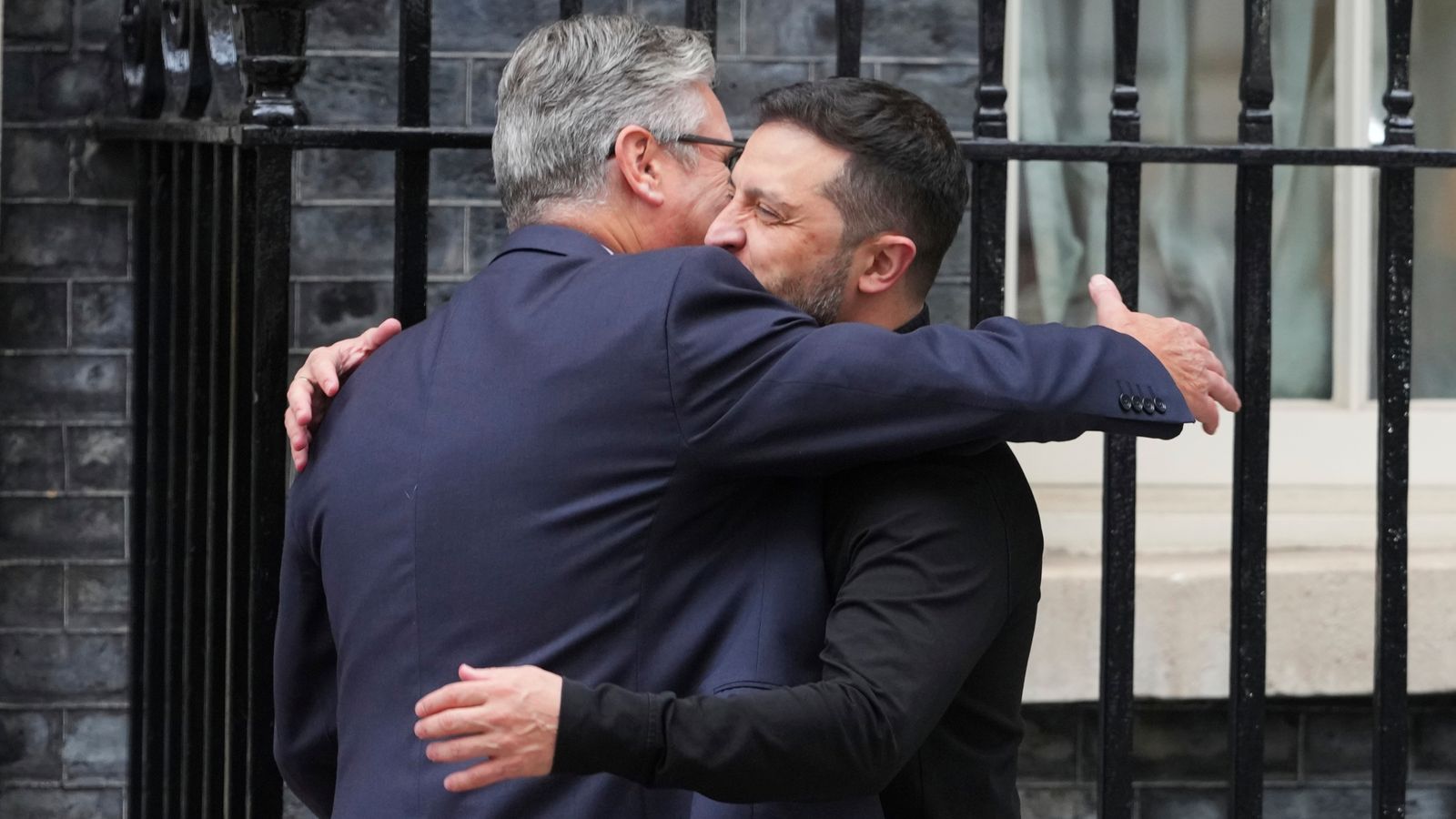
Volodymyr Zelenskyy is heading to Downing Street once again, but Prime Minister Sir Keir Starmer will be keen to make this meeting more than just a photo op.
On Monday the prime minister will welcome not only the Ukrainian president, but also E3 allies France and Germany to discuss the state of the war in Ukraine.
French President Emmanuel Macron and German Chancellor Friedrich Merz will join Sir Keir in showing solidarity and support for Ukraine and its leader, but it’s the update on the peace negotiations that will be the main focus of the meet up.
The four leaders are said to be set to not only discuss those talks between Ukraine, the US and Russia, but also to talk about next steps if a deal were to be reached and what that might look like.
Ahead of the discussions, Sir Keir spoke with the Dutch leader Dick Schoof where both leaders agreed Ukraine’s defence still needs international support, and that Ukraine’s security is vital to European security.
But while Russia’s war machine shows no signs of abating, a warm welcome and kind words won’t be enough to satisfy the embattled Ukrainian president at a time when Russian drone and missile attacks continue to bombard Kyiv.
Keir Starmer welcoming Volodymyr Zelenskyy to Downing Street during a previous visit. Pic: AP
What is the latest in negotiations?
Over the weekend, Mr Zelenskyy said he had discussed “next steps” with US President Donald Trump’s advisers and was “determined to keep working in good faith”.
“The American representatives know the basic Ukrainian positions,” Mr Zelenskyy said in his nightly video address. “The conversation was constructive, although not easy.”
But on Sunday evening, ahead of an event at the Kennedy Center, President Trump said he was “disappointed” with Mr Zelenskyy, as was asked about the next steps in Russia-Ukraine talks following negotiations.
He said: “We’ve been speaking to President Putin and we’ve been speaking to Ukrainian leaders, including Zelenskyy, President Zelenskyy.
“And I have to say that I’m a little bit disappointed that President Zelenskyy hasn’t yet read the proposal. That was as of a few hours ago.
“His people love it. But he hasn’t – Russia’s fine with it. Russia’s you know, Russia, I guess, would rather have the whole country when you think of it. But Russia is, I believe, fine with it, but I’m not sure that Zelenskyy’s fine with it. His people love it but he hasn’t read it.”
Read more:
Ukraine has become Europe’s war – so why doesn’t it act like it?
Inside a secret underground military base in eastern Ukraine
On Saturday, Keith Kellogg, Trump’s outgoing Ukraine envoy, had told the Reagan National Defence Forum that efforts to resolve the conflict were in “the last 10 metres”.
Kremlin spokesman Dmitry Peskov praised new US security strategy over the weekend, adding that Russia hopes this would lead to “further constructive cooperation with Washington on the Ukrainian settlement”.
-
 Sports2 years ago
Story injured on diving stop, exits Red Sox game
-
 Sports3 years ago
‘Storybook stuff’: Inside the night Bryce Harper sent the Phillies to the World Series
-
 Sports2 years ago
Game 1 of WS least-watched in recorded history
-
 Sports3 years ago
Button battles heat exhaustion in NASCAR debut
-
 Sports3 years ago
MLB Rank 2023: Ranking baseball’s top 100 players
-
Sports4 years ago
Team Europe easily wins 4th straight Laver Cup
-
 Environment3 years ago
Japan and South Korea have a lot at stake in a free and open South China Sea
-
 Environment1 year ago
Here are the best electric bikes you can buy at every price level in October 2024