

The hidden deadly threat to scooter and e-bike riders (besides cars)


A recent tragic incident in Portland, Oregon, one of countless similar occurrences, is putting a spotlight on a less-discussed but very real threat to micromobility riders: the condition of our roads.
Earlier this month, a Portland husband and father tragically lost his life while riding an electric scooter along an otherwise innocuous local street. It was marked just 25 mph, but it wasn’t the road’s speed that was the issue, or even the car traffic, which is usually to blame for most riders’ deaths. According to reports, Randy Phelps was thrown from his scooter after hitting a pothole in the road. He spent nearly three weeks on life support before passing away. His organs went on to save the lives of three others.
The loss is heartbreaking – but sadly, not unique.
The pothole had been reported to the city many times, including by local residents and businesses located along the street. Just a few days after Phelps died, the city finally filled in the pothole.
We talk a lot about the dangers that cars pose to cyclists and scooter riders. And for good reason… they are far and away the leading cause of injuries and fatalities for micromobility users. But it’s time we start recognizing that crumbling infrastructure is another deadly factor.
Potholes, cracks, unmarked trenches, and uneven pavement may go unnoticed or simply seem like minor annoyances to drivers in SUVs or pickup trucks. But to someone on an electric scooter or e-bike, they can be catastrophic. Especially at the typical speeds many of these vehicles travel, often between 15 to 28 mph (25 to 45 km/h), a sudden jolt or loss of control from hitting a deep pothole can easily send a rider flying.

Electric scooters are particularly vulnerable here. Commonly available with small 8 to 9-inch wheels, they simply don’t have the ability to roll over wide cracks or potholes that larger diameter wheels have. Instead, they tend to fall into them. Hitting a large pothole on a scooter can often end in an immediate crash. E-bikes usually fare better, with larger diameter wheels offering a bit more forgiveness. But even on a bike, deep pot holes or simply the wrong bump at the wrong angle can flip you over the handlebars or throw off your line, especially if you’re already navigating traffic or a narrow bike lane. And the edge of a pothole can easily puncture an underinflated bicycle innertube with a pinch flat, leading to loss of control at speed.
It’s part of why fat tire e-bikes – with their big, 3 or 4-inch wide tires – are so popular. Not only do they give a cushy ride, but they offer a layer of protection by rolling more smoothly over broken pavement and filling in small potholes instead of dropping into them. They’re not a magic solution, but they help on rougher roads.
I’ve recently been spending time on the new VMAX VX2 Hub e-scooter, which, by electric scooter standards, has relatively large 10-inch tires. They’re also tubeless, functioning closer to motorcycle tires. While 10 inches still isn’t huge, I tend to prefer these types of larger-wheeled scooters versus the small-wheeled budget options precisely for the extra safety that those larger tires offer.
Ultimately though, this isn’t just about tire width or diameter. This is about infrastructure. Many cities across the US have done a great job encouraging people to choose alternative forms of transportation. In fact, Portland is often seen as one of the most cycling-friendly cities in the country, and even there it took the death of a local rider to get a pot hole filled in.
It takes more than just encouraging people to switch from cars to scooters or bikes. It means they have a responsibility to maintain safe conditions for those users. That includes repaving cracked roads, filling potholes quickly, and keeping bike lanes clear and usable – not just painting lines and calling it a day.
And while I hope this doesn’t come across as victim-blaming, we riders also need to recognize that part of surviving on two wheels means riding defensively – not just against cars, but against the road itself. That might mean scanning ahead more actively, slowing down when visibility is poor or the pavement is suspect, and choosing routes with safer surfaces whenever possible. On one of my first e-bikes back in 2010, I turned my wheel from an O-shape into a D-shape while following too close behind a car to see a big pot hole in time, and that taught me a big lesson that I still remember 15 years later.
None of this is meant to place blame on riders. The responsibility is on cities to fix their roads. But until that happens — and while we push for it — we riders have to ride like our lives depend on it. Because often times, they do.



FTC: We use income earning auto affiliate links. More.

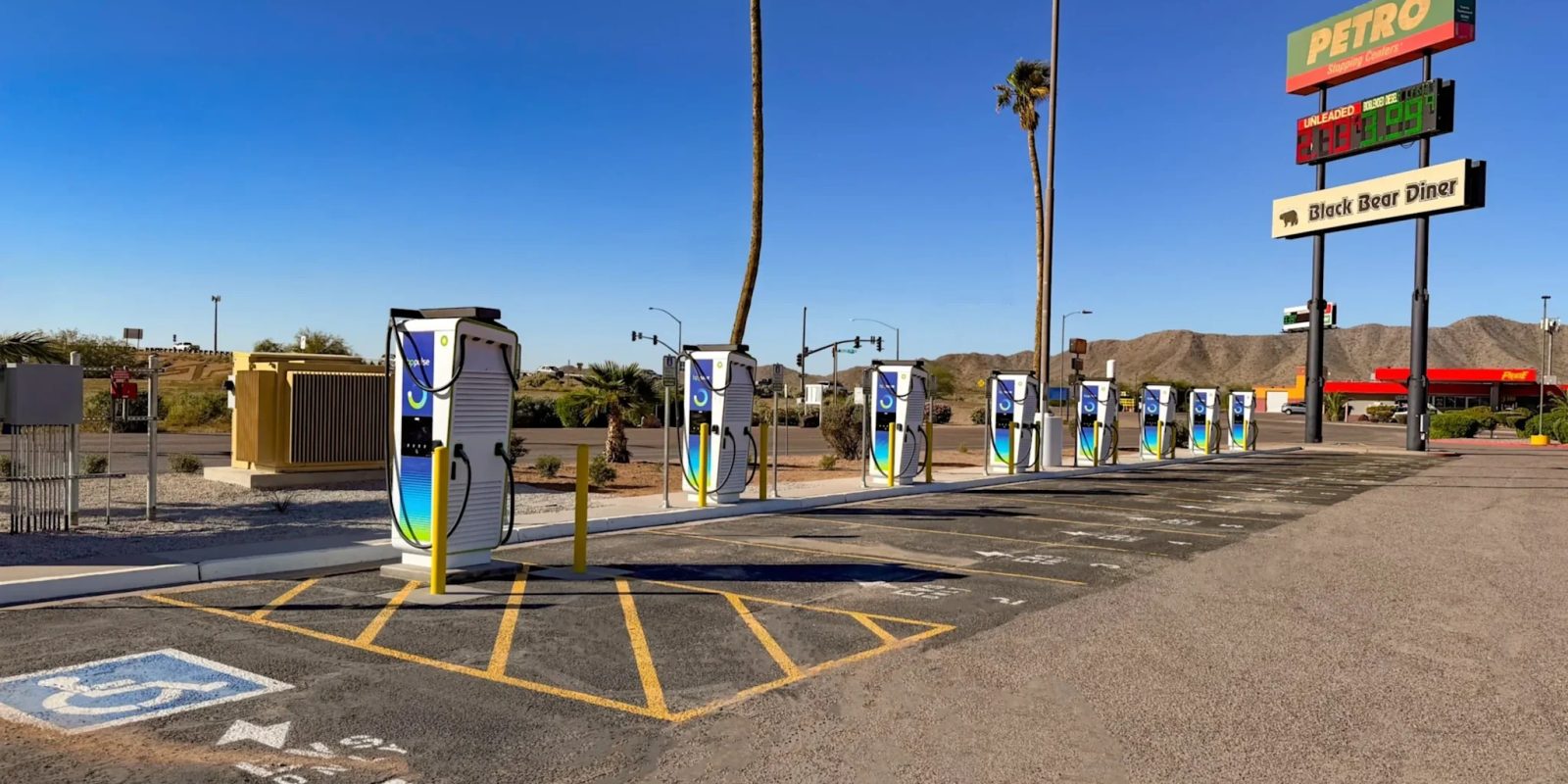
bp pulse is continuing to roll out public DC fast charging across the US, and the company has opened its first-ever site in Arizona, along with new fast-charging locations in Texas, Florida, and Ohio.
In Arizona, bp pulse’s first site is now online at the Petro Travel Center in Eloy, just off Interstate 10 at Exit 200 (pictured). The location features 16 charging bays delivering up to 400 kilowatts, with both CCS and NACS connectors available. While charging, drivers can take advantage of the travel center’s onsite diner, convenience store, ATM, barber shop, and restrooms.
In South Florida, bp pulse’s new fast-charging site is at 2400 Miami Road in Fort Lauderdale, about three miles from Fort Lauderdale–Hollywood International Airport. The site features 16 charging bays, offering a mix of 150 kW and 400 kW speeds, with both CCS and NACS connectors. Its proximity to the airport makes it a handy stop for ride-hail drivers, EV rental returns, and airport pickups and drop-offs, with hotels, restaurants, and convenience stores nearby.
Texas is also getting more high-power charging, with a new bp pulse site at the Petro Travel Center in El Paso, located off Interstate 10 at Exit 37. This location offers 12 charging bays capable of delivering up to 400 kW, again with both CCS and NACS connectors. Drivers can take advantage of the diner, convenience store, barber shop, and restrooms while they charge.
In Ohio, bp pulse has opened a smaller but still high-powered site at a TravelCenters of America location in Hebron, just off Interstate 70 at Exit 126. The site includes six 400 kW charging bays with CCS and NACS connectors, along with access to a convenience store, fast-food options, and restrooms.
These openings are part of bp pulse’s broader plan to build out EV charging across bp’s retail footprint, including bp, Amoco, ampm, Thorntons, and TravelCenters of America locations. Many of those sites are designed to combine fast charging with food, restrooms, and other travel amenities. bp has also said it plans to begin adding EV chargers at Waffle House locations starting in 2026.
Read more: bp pulse opens a huge airport EV fast charging hub in Houston
If you’re looking to replace your old HVAC equipment, it’s always a good idea to get quotes from a few installers. To make sure you’re finding a trusted, reliable HVAC installer near you that offers competitive pricing on heat pumps, check out EnergySage. EnergySage is a free service that makes it easy for you to get a heat pump. They have pre-vetted heat pump installers competing for your business, ensuring you get high quality solutions. Plus, it’s free to use!
Your personalized heat pump quotes are easy to compare online and you’ll get access to unbiased Energy Advisors to help you every step of the way. Get started here. – *ad
FTC: We use income earning auto affiliate links. More.

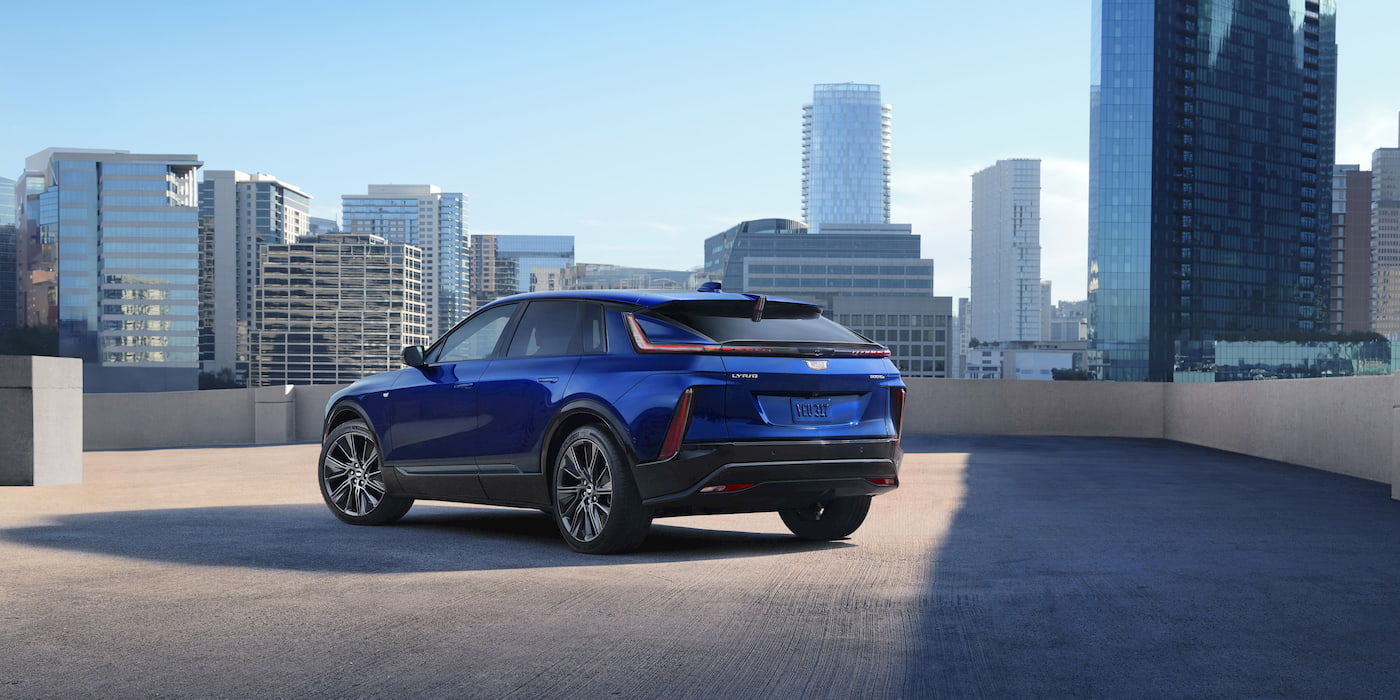
The Cadillac Lyriq and Chevy Blazer EV were among the vehicles that saw the biggest lease price drops in December.
Cadillac and Chevy EV lease prices drop in December
With the $7,500 federal EV tax credit now gone, automakers are filling the gap with their own incentives. Some are passing on the savings as bonus cash, conquest cash, lease discounts, and more.
Two General Motors electric SUVs, the Chevy Blazer EV and the Cadillac Lyriq, had some of the largest lease price drops of any vehicle in December.
The 2026 Cadillac Lyriq AWD Luxury model is now listed at $439 per month for 24 months. With $4,979 due at signing, the effective rate is $646, or $28 less per month than in November.
That’s after the Lyriq already saw prices drop by $115 a month from October. However, the December deal includes a $2,000 competitive bonus for owners and lessees of a 2011 model year or newer non-GM vehicle.
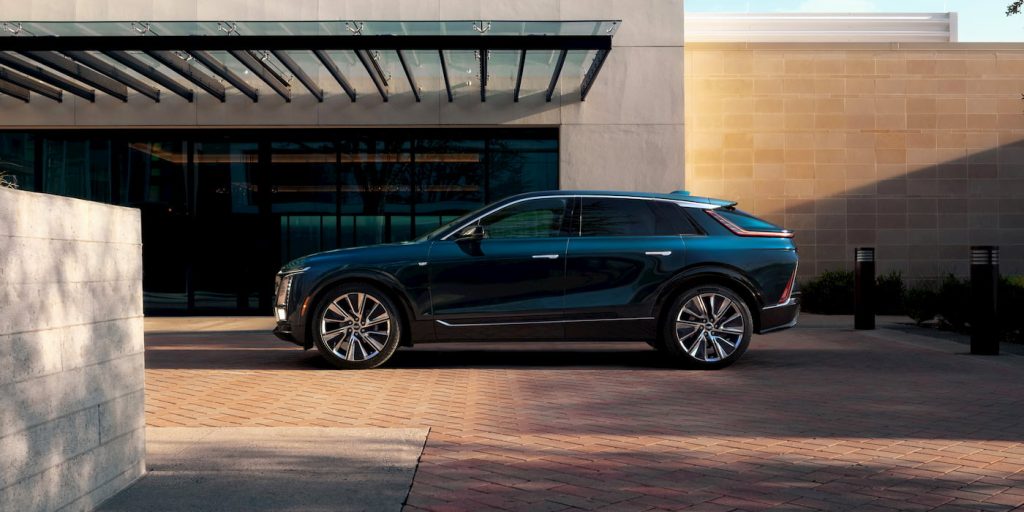
The 2026 Chevy Blazer EV FWD LT is now available to lease for as low as $319 a month for 24 months. With $6,039 due at signing, the effective rate is $571 per month, about $60 less than in November. The deal includes a $750 competitive bonus and $1,000 customer cash allowance.
Chevy and Cadillac are offering discounts across their entire EV lineup. All 2025 Chevy electric vehicles, including the Blazer EV, Equinox EV, and Silverado EV, are available with 0% APR financing for 60 months.


Intestingly, the 2026 Chevy Equinox EV is also available with 0% APR financing, while the 2026 Blazer EV is listed with 1.9% APR for 36 months.
Cadillac is offering a $2,000 conquest or loyalty bonus for the 2026 Cadillac Vistiq and select 2025/2026 Optiq and Lyriq models, plus 2.9% APR for 60 months.
The 2026 Cadillac Optiq is available to lease for as low as $319 per month for 24 months, while the 2026 Vistiq is available to lease for $619 per month for 24 months.
Want to try one out? We’ve got you covered. Check out the links below to see what Cadillac and Chevy EVs are nearby.
FTC: We use income earning auto affiliate links. More.

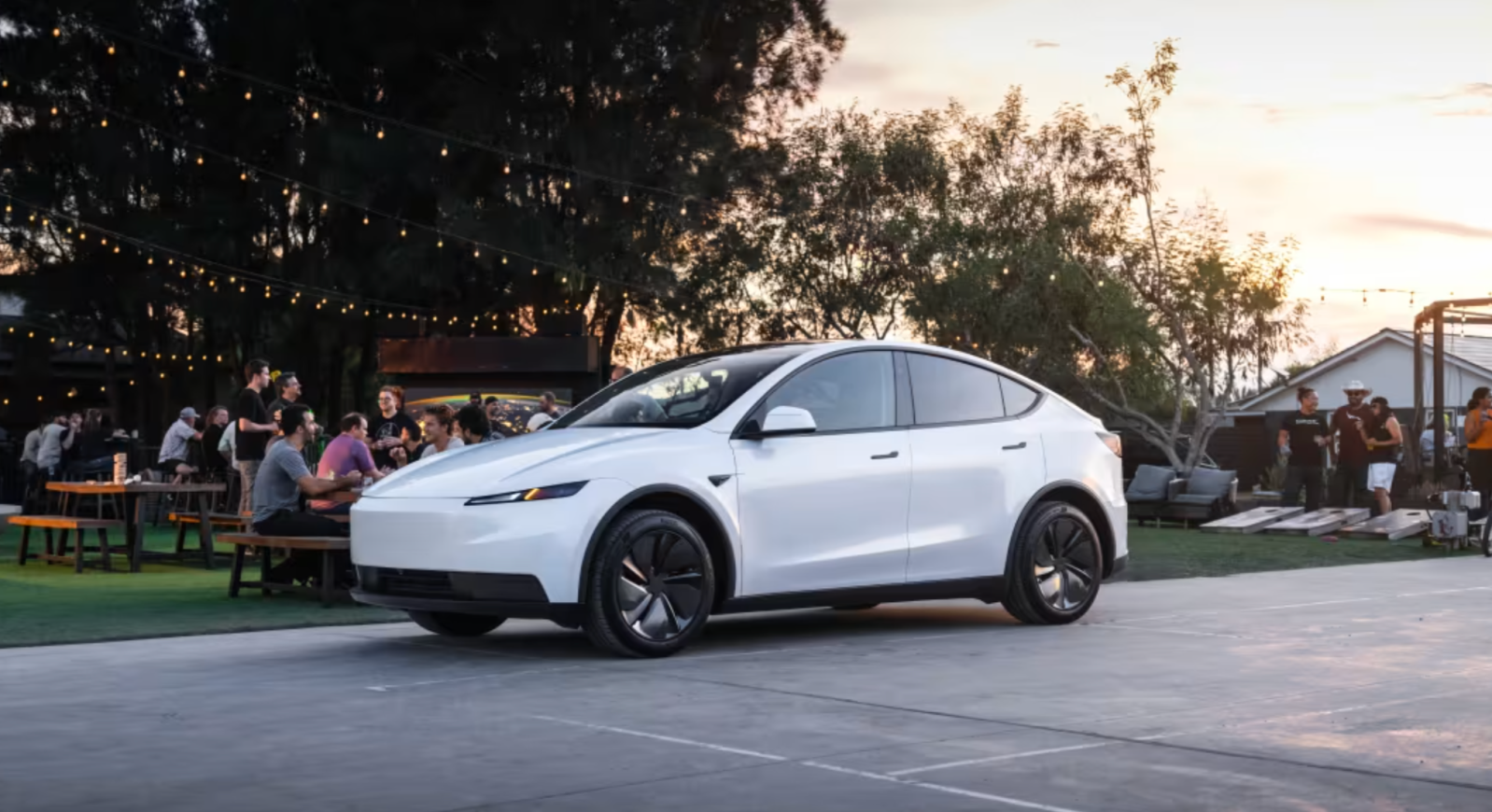
Electric vehicle prices edged lower and incentives jumped in November, but the month still saw a sales slowdown as the US EV market continues to hunt for a new normal.
Initial estimates from Kelley Blue Book show that EV sales came in at just over 70,000 units in November, more than 40% lower than a year ago and about 5% below October’s level.
The average transaction price (ATP) for a new EV in November was $58,638. That’s up 3.7% year-over-year but down 0.8% from October. Incentives told a different story: Discounts averaged 13.3% of ATP, which is lower than in November 2024 but jumped 20.1% compared to October.
Tesla continued to feel the pressure. The automaker’s ATP was $54,310 in November – down 1.7% from the same period a year ago but up 1.5% month-over-month. Sales declined for the second straight month and were down 22.7% year-over-year, mainly because of a drop in Model 3 demand.
Model 3 sales slid 42.1% compared to November 2024 and fell 11.9% from October. Meanwhile, the Model Y, still the best‑selling EV in the US, saw prices increase 0.9% year-over-year and month-over-month. Model Y sales were slightly lower than last November, down 0.5%, but rose 2.5% compared to October.
The Tesla Cybertruck showed signs of cooling. Once the best‑selling vehicle priced above $100,000, Cybertruck sales fell to 1,194 units in November, the lowest monthly total of 2025 so far. Its average price was $94,254, higher both year-over-year and compared to October.
Taken together, the numbers paint a picture of an EV market in transition: prices are easing, incentives are rising, but buyers are still holding back as the industry tries to settle into its next phase.
Cox Automotive executive analyst Erin Keating said, “It’s important to remember that the KBB ATP is a measure of what is bought, not what is available. Nearly half of new-vehicle buyers are over the age of 55 and in their peak earning years. These buyers are more likely shopping for a high-end SUV, not something cheap and cheerful. In November, the over-$75,000 price point saw more volume than under-$30,000.”
Read more: October EV sales slid, but deals and rebates are still in play

If you’re looking to replace your old HVAC equipment, it’s always a good idea to get quotes from a few installers. To make sure you’re finding a trusted, reliable HVAC installer near you that offers competitive pricing on heat pumps, check out EnergySage. EnergySage is a free service that makes it easy for you to get a heat pump. They have pre-vetted heat pump installers competing for your business, ensuring you get high quality solutions. Plus, it’s free to use!
Your personalized heat pump quotes are easy to compare online and you’ll get access to unbiased Energy Advisors to help you every step of the way. Get started here. – *ad
FTC: We use income earning auto affiliate links. More.
-
 Sports2 years ago
Story injured on diving stop, exits Red Sox game
-
 Sports3 years ago
‘Storybook stuff’: Inside the night Bryce Harper sent the Phillies to the World Series
-
 Sports2 years ago
Game 1 of WS least-watched in recorded history
-
 Sports3 years ago
Button battles heat exhaustion in NASCAR debut
-
 Sports3 years ago
MLB Rank 2023: Ranking baseball’s top 100 players
-
Sports4 years ago
Team Europe easily wins 4th straight Laver Cup
-
 Environment3 years ago
Japan and South Korea have a lot at stake in a free and open South China Sea
-
 Environment1 year ago
Here are the best electric bikes you can buy at every price level in October 2024